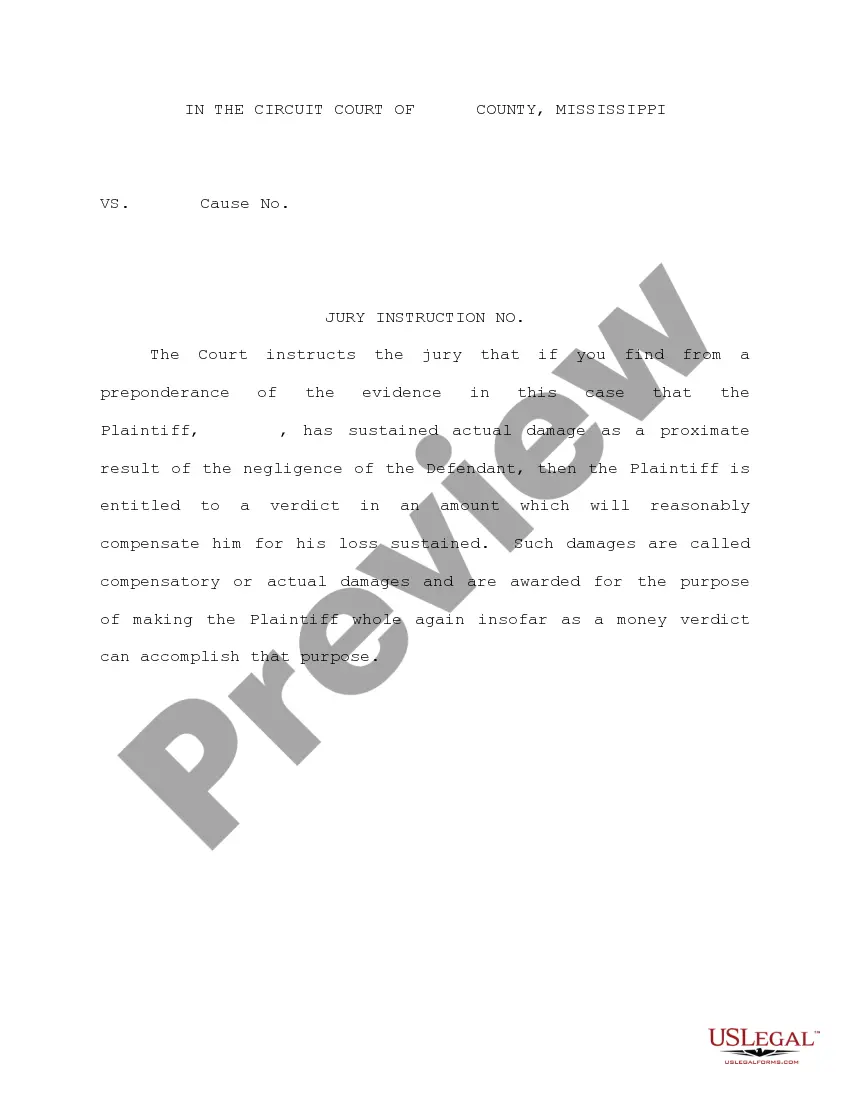
Default Clauses: Contract for Real Property
What this document covers
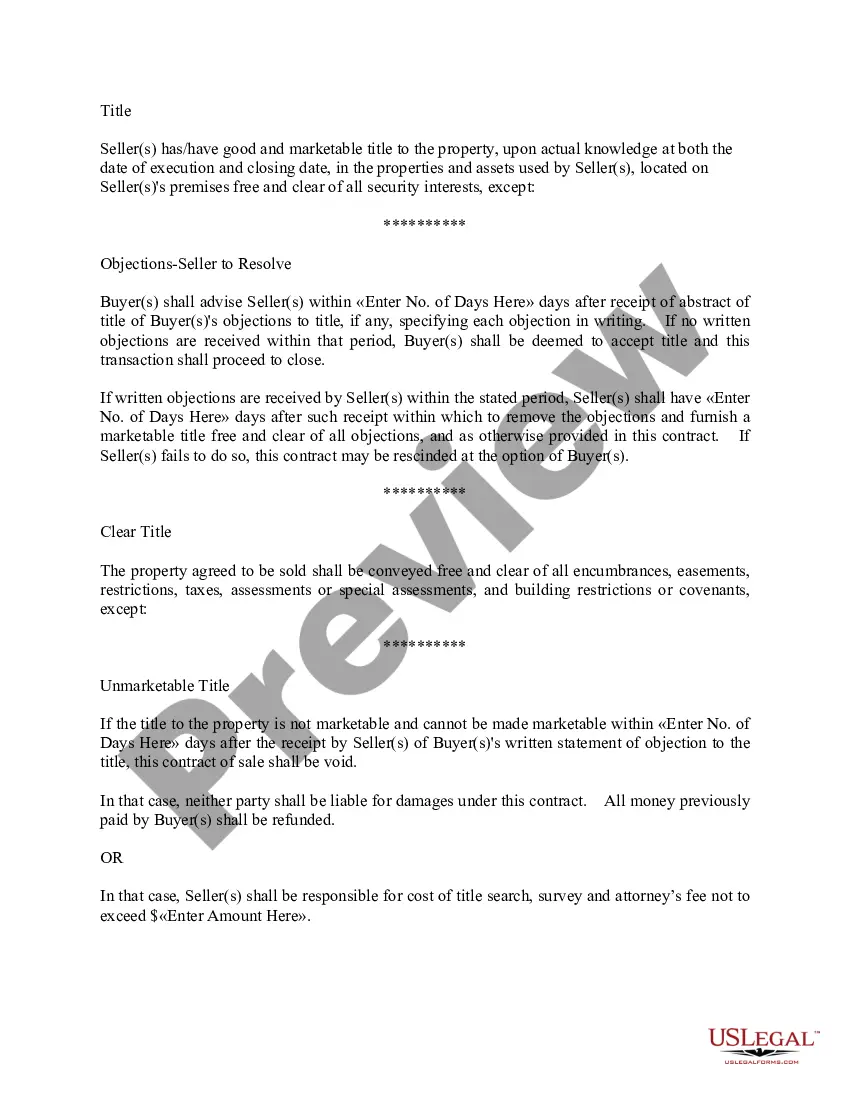
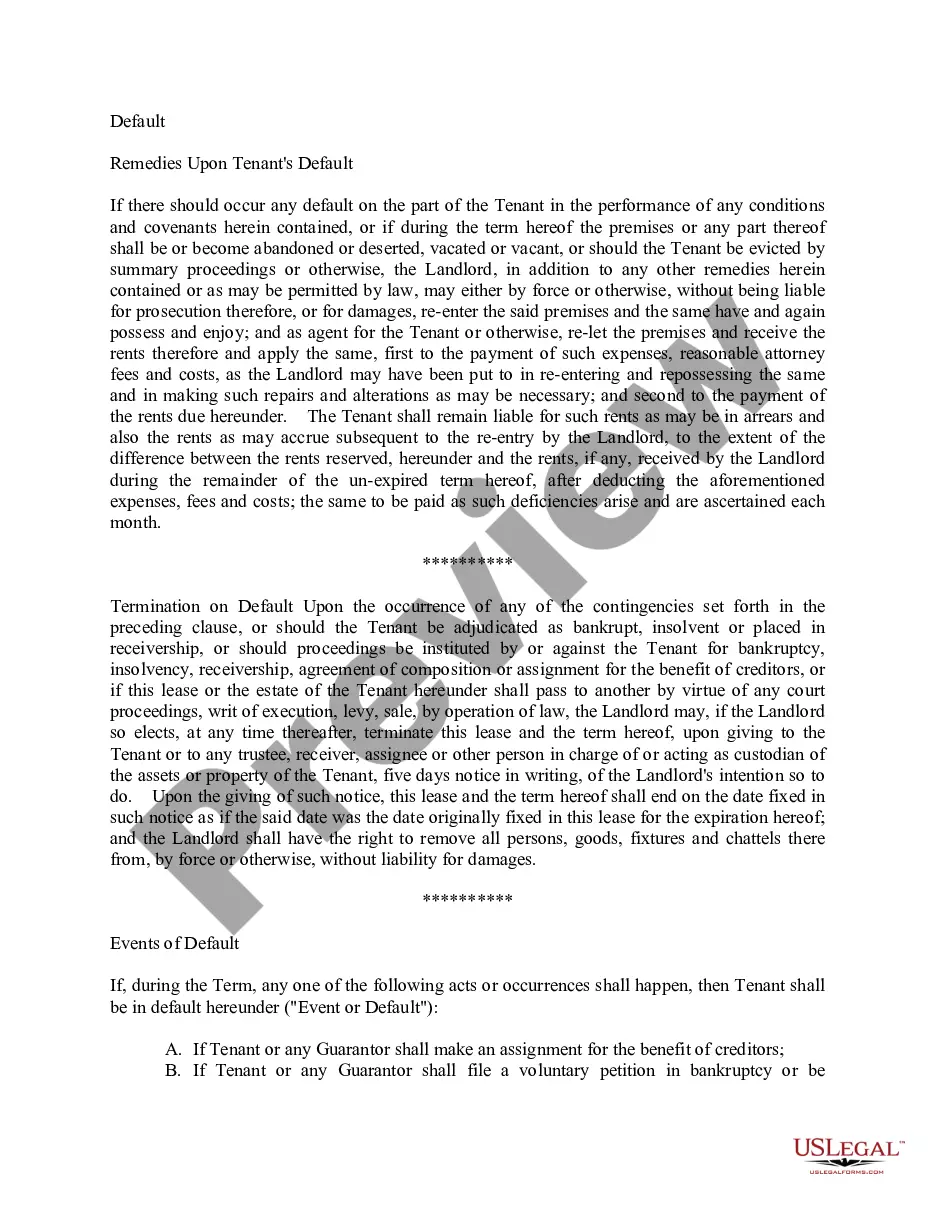
The Default Clauses: Contract for Real Property is a legal document that outlines the terms and conditions concerning default situations in real estate contracts. This form specifies what actions can be taken if either buyer or seller fails to fulfill their obligations. Unlike other legal forms, this document includes specific clauses that directly address potential defaults, helping both parties understand their rights and responsibilities in these scenarios.
What’s included in this form
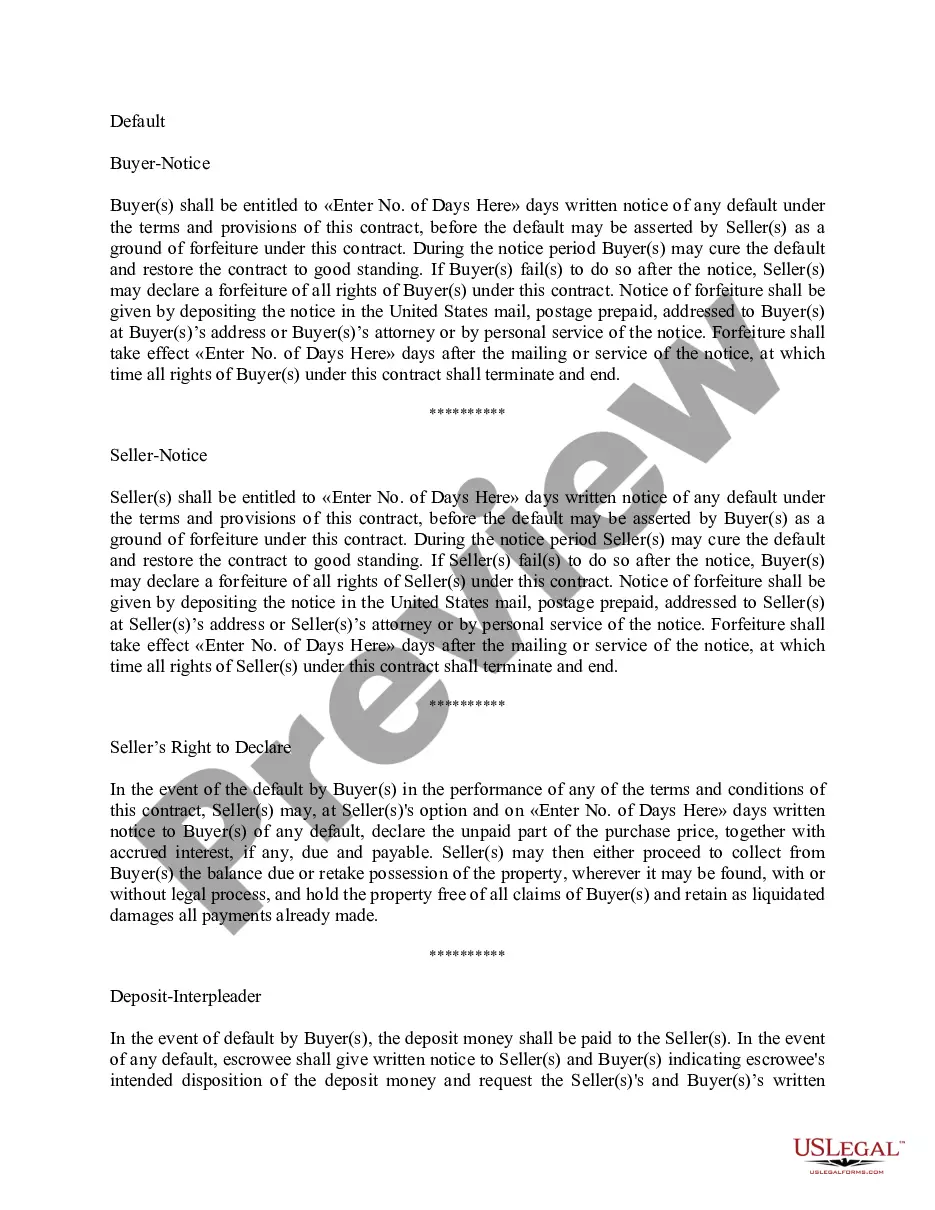
- Buyer-Notice: Details the process for notifying the buyer of a default.
- Seller-Notice: Specifies how the seller will be informed of a default.
- Sellers Right to Declare: Outlines the seller's rights if the buyer defaults.
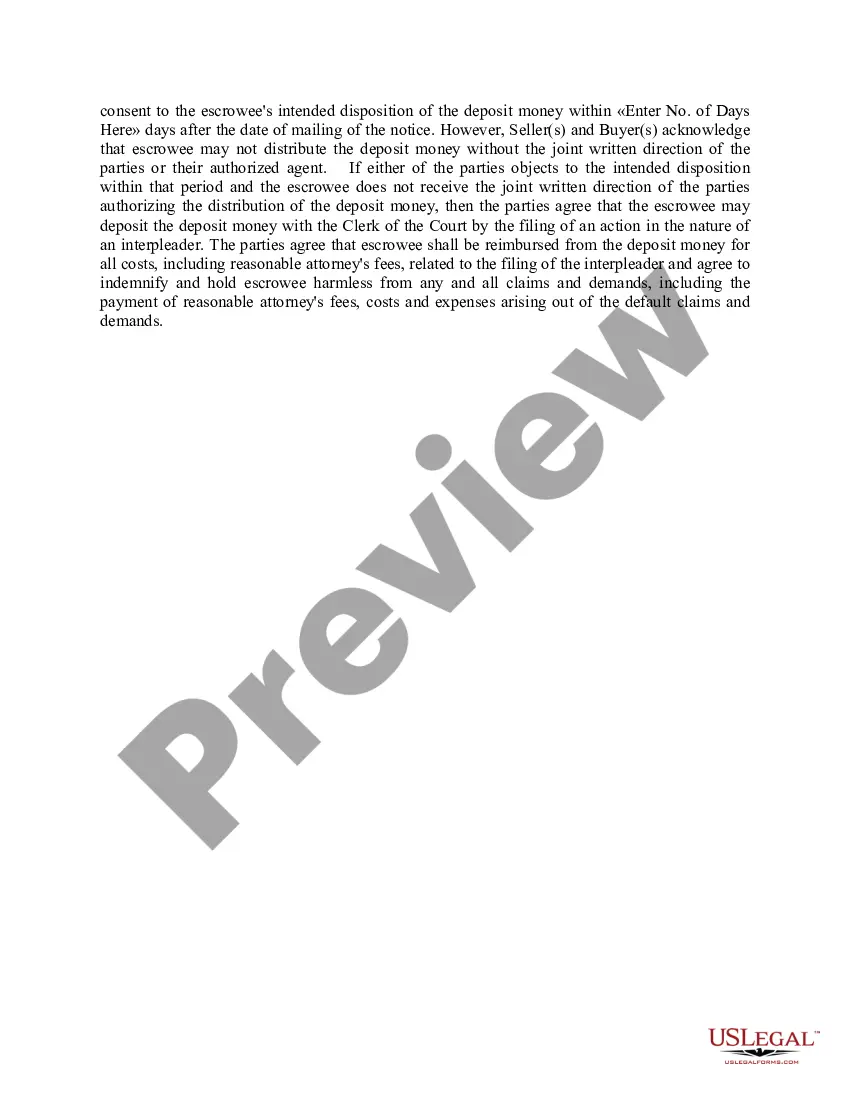
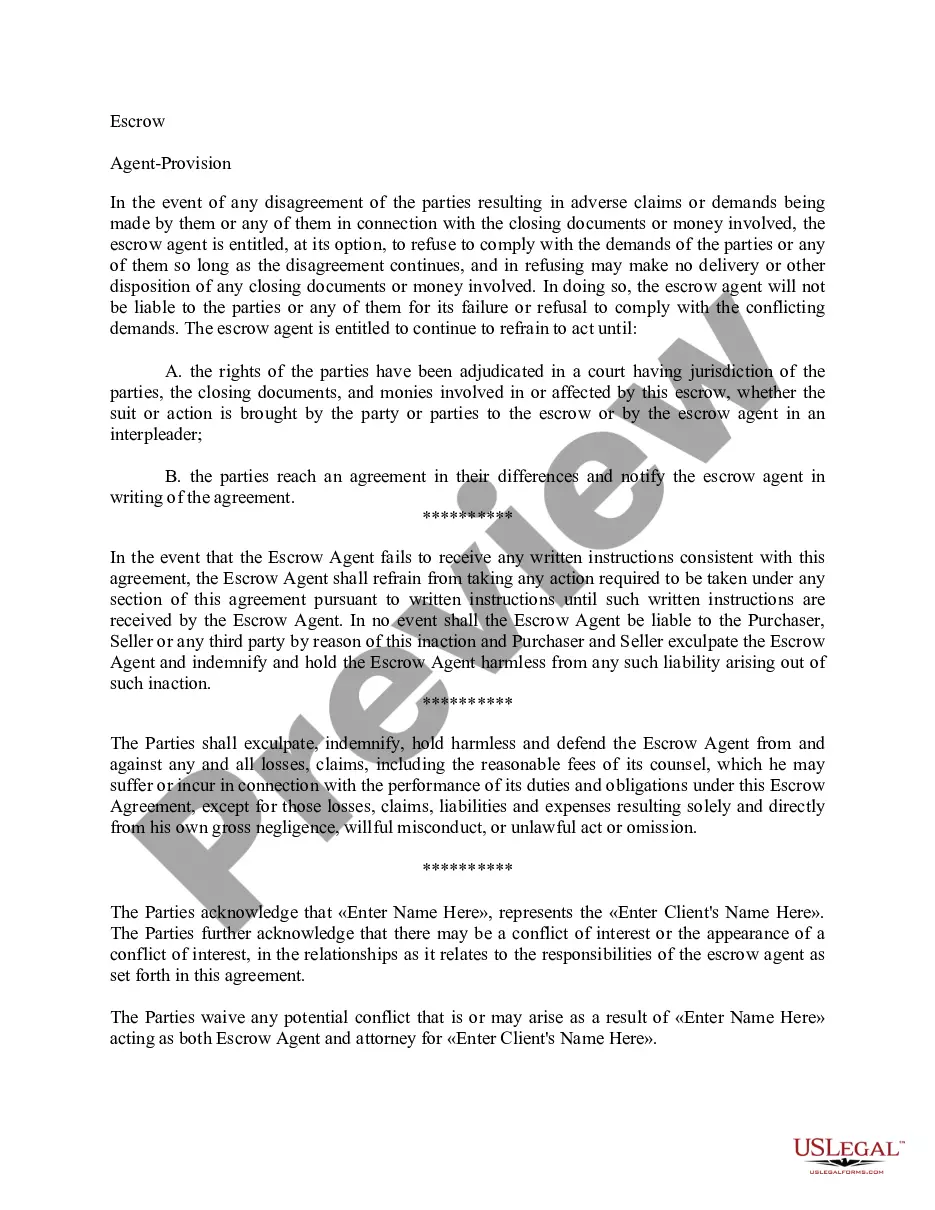
- Deposit-Interpleader: Explains how the deposit funds will be handled in case of a default.
When this form is needed
This form should be used in real estate transactions when entering into a contract where the potential for default exists. It is particularly important for buyers and sellers who want clarity on the procedures that will follow if there is a failure to meet contract terms, ensuring that both parties are protected and informed of their rights.
Who this form is for
This form is suitable for:
- Homebuyers and sellers engaged in real estate transactions.
- Real estate agents wanting to ensure their clients are well-informed.
- Investors involved in property agreements looking to outline default scenarios.
Completing this form step by step
- Identify the parties involved in the contract.
- Specify the property details, including address and description.
- Enter the required notice periods for both buyer and seller.
- Complete the conditions regarding the deposit money and its potential disposition.
- Obtain signatures from all parties involved in the contract.
Does this form need to be notarized?
This form does not typically require notarization unless specified by local law.
Get your form ready online
Our built-in tools help you complete, sign, share, and store your documents in one place.
Make edits, fill in missing information, and update formatting in US Legal Forms—just like you would in MS Word.
Download a copy, print it, send it by email, or mail it via USPS—whatever works best for your next step.
Sign and collect signatures with our SignNow integration. Send to multiple recipients, set reminders, and more. Go Premium to unlock E-Sign.
If this form requires notarization, complete it online through a secure video call—no need to meet a notary in person or wait for an appointment.
We protect your documents and personal data by following strict security and privacy standards.

Make edits, fill in missing information, and update formatting in US Legal Forms—just like you would in MS Word.

Download a copy, print it, send it by email, or mail it via USPS—whatever works best for your next step.

Sign and collect signatures with our SignNow integration. Send to multiple recipients, set reminders, and more. Go Premium to unlock E-Sign.

If this form requires notarization, complete it online through a secure video call—no need to meet a notary in person or wait for an appointment.

We protect your documents and personal data by following strict security and privacy standards.
Typical mistakes to avoid
- Failing to specify the notice period, leading to confusion over timelines.
- Not including all necessary party signatures before submission.
- Overlooking local specific rules or requirements that may apply.
Why complete this form online
- Convenience: Complete and download your form from anywhere at any time.
- Editability: Easily customize the form to fit your specific situation.
- Reliability: Forms are drafted by licensed attorneys to ensure legal compliance.
Legal use & context
- Default clauses are enforceable in court, helping to protect both partiesâ rights.
- Understanding these terms can prevent disputes and misunderstandings during the contract duration.
Summary of main points
- This form defines the implications of defaults in real estate contracts.
- It helps both buyers and sellers understand their legal options in case of a default.
- Using this form can clarify expectations and potentially avoid litigation.
Looking for another form?

Form popularity
FAQ
In real estate contracts, there are contract clauses that outline the terms of the agreement and responsibilities of each party. The contract clauses address all aspects of the sale terms and are legally binding once both parties sign the document.
You will be in default if you break any promise you make under this Agreement. You will be in default if you die, file for bankruptcy or become insolvent, that is, unable to pay your obligations when they become due.
Essential Elements of a Real Estate Contract The identity of the buyer and of the seller. A sufficient description of the real property to be sold. The sale price, or consideration to be paid for the real property by the buyer. The amount of any earnest money deposit to be paid by the buyer.
Navigation5 Essential Contract Clauses to Have on Hand ?As Is? Clause. The ?As Is? Clause is used by sellers to avoid having to disclose latent defects with the property.Home Sale Contingency.?Bump Out? Clause.Escalation Clauses.Backup Offer Clause.
The basic elements required for the agreement to be a legally enforceable contract are: mutual assent, expressed by a valid offer and acceptance; adequate consideration; capacity; and legality.
Writing. All contracts dealing with the purchase or sale of real property must be in writing for a contract to be enforceable.
To be enforceable in a court of law, a real estate contract must be in writing and must be signed by all parties. The parties must also know that they are entering into a contract and intend to be bound by the terms of the agreement.
Offer, acceptance, awareness, consideration, and capacity are the five elements of an enforceable contract.