Washington Demolition Contract for Contractor
Understanding this form
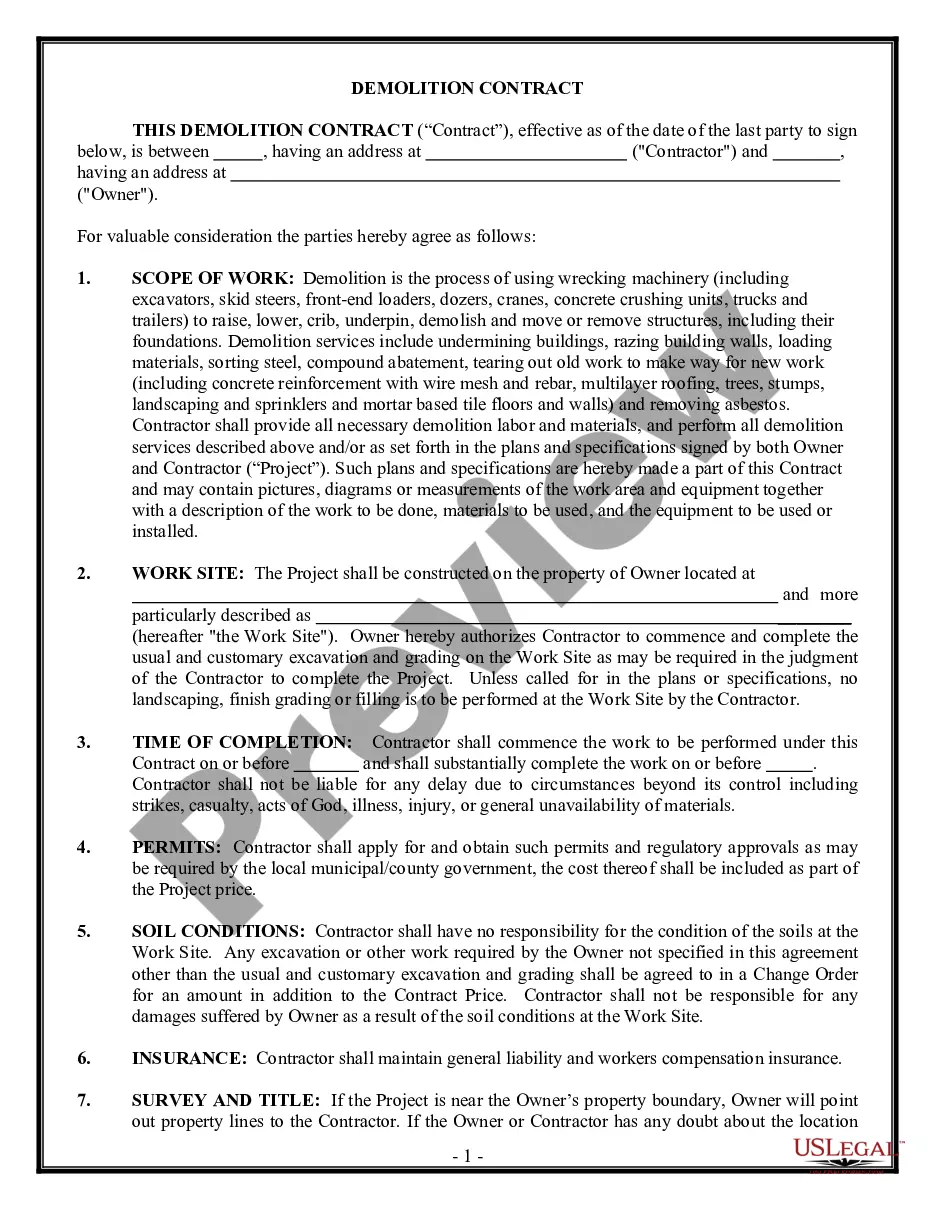
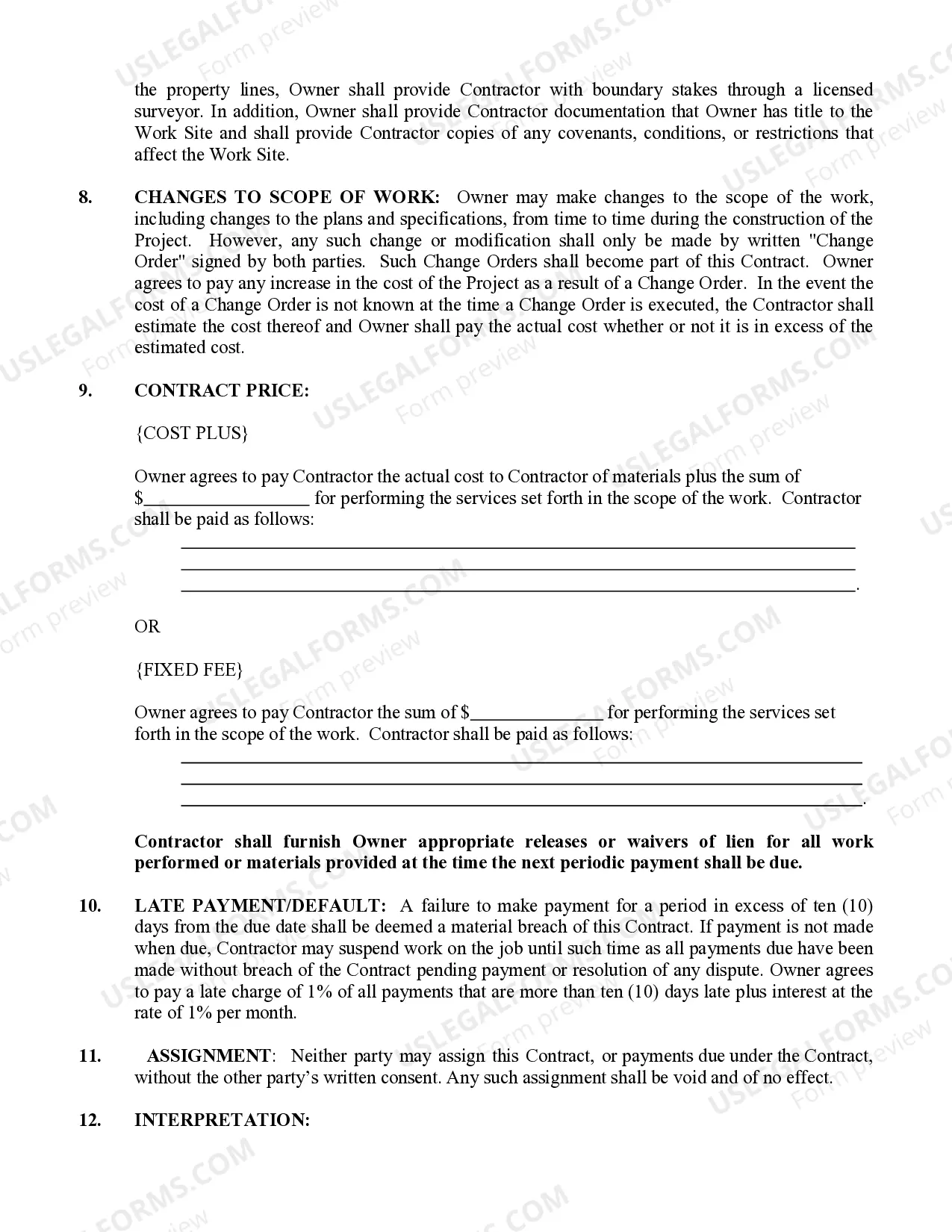
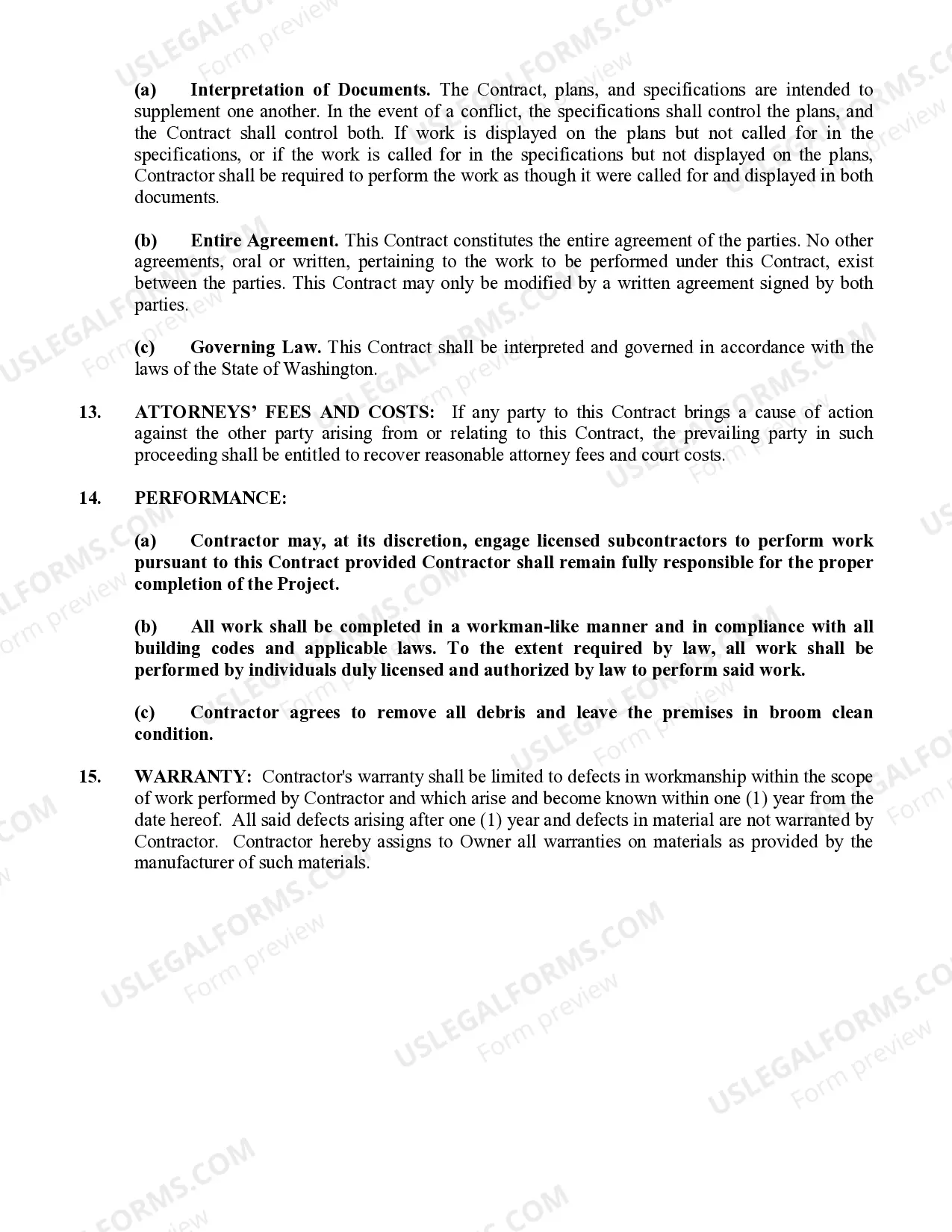
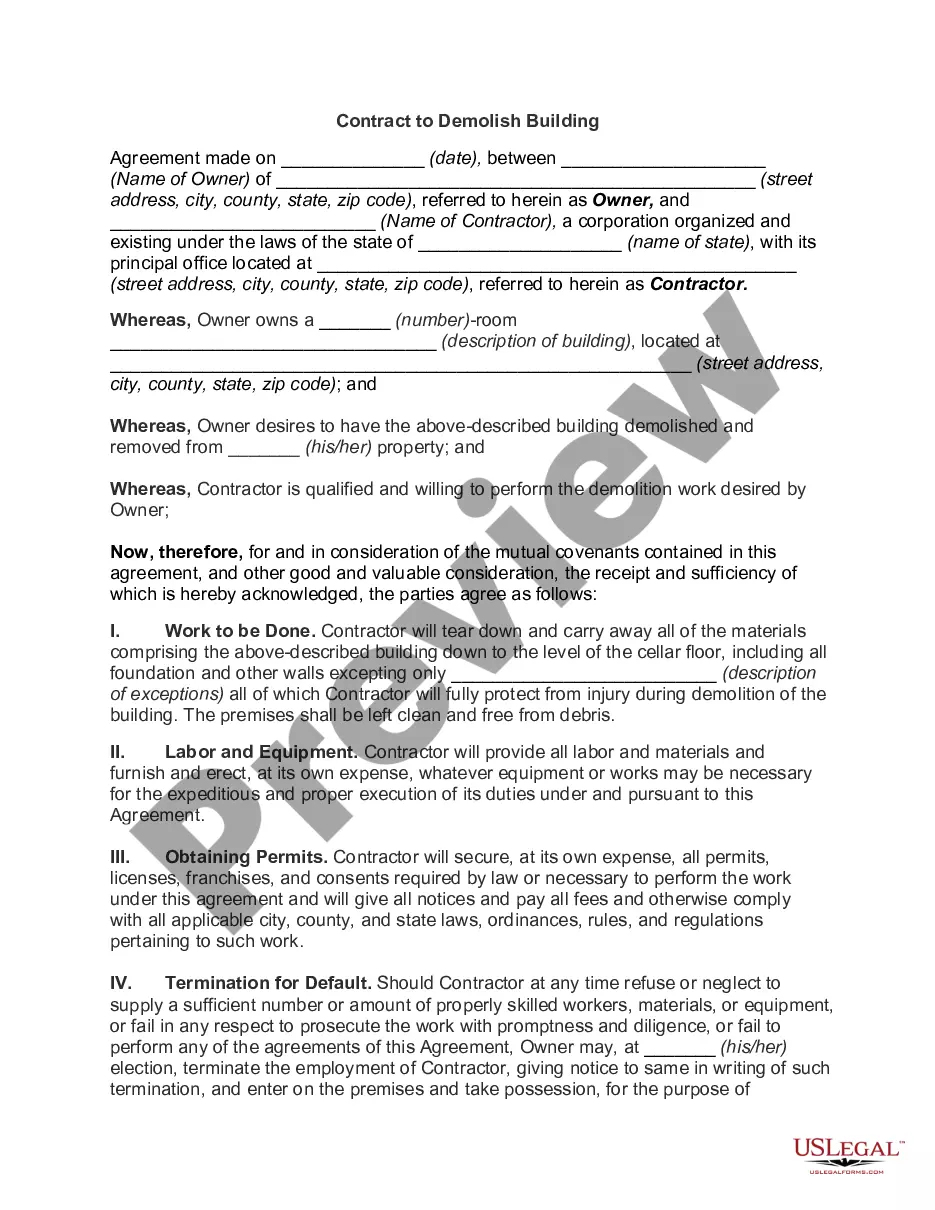
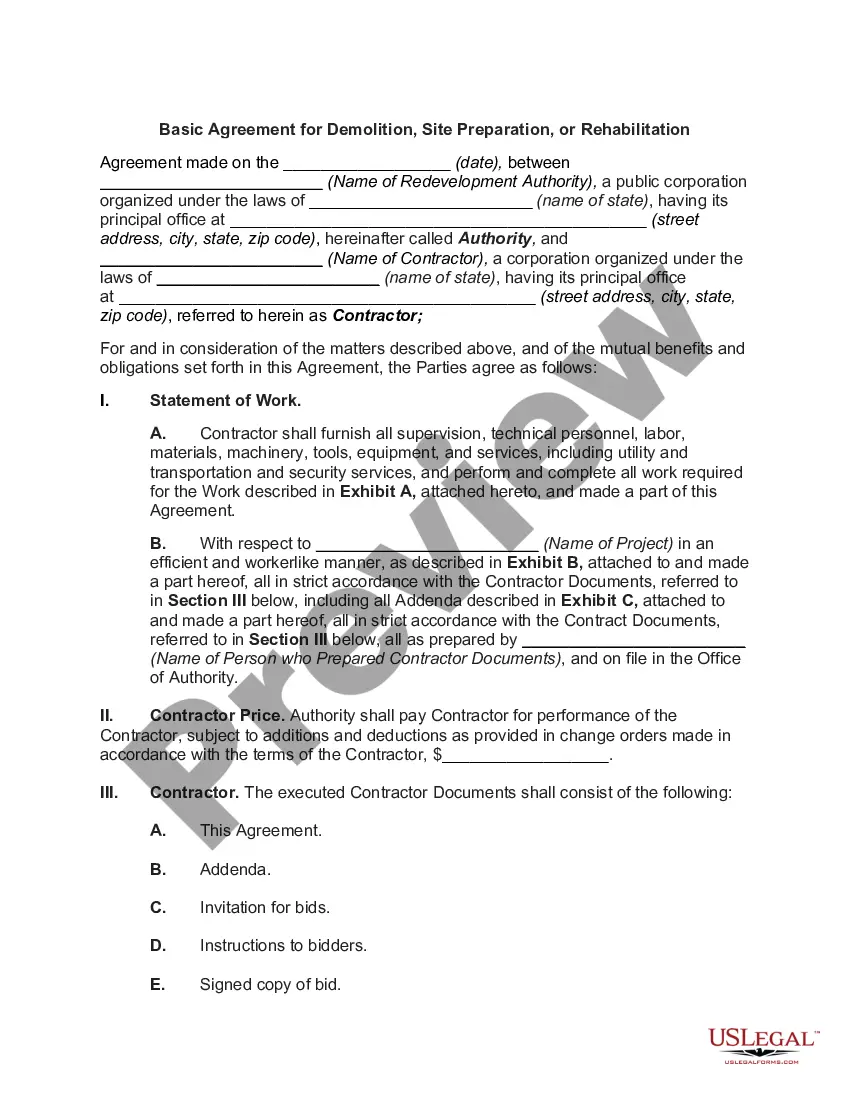
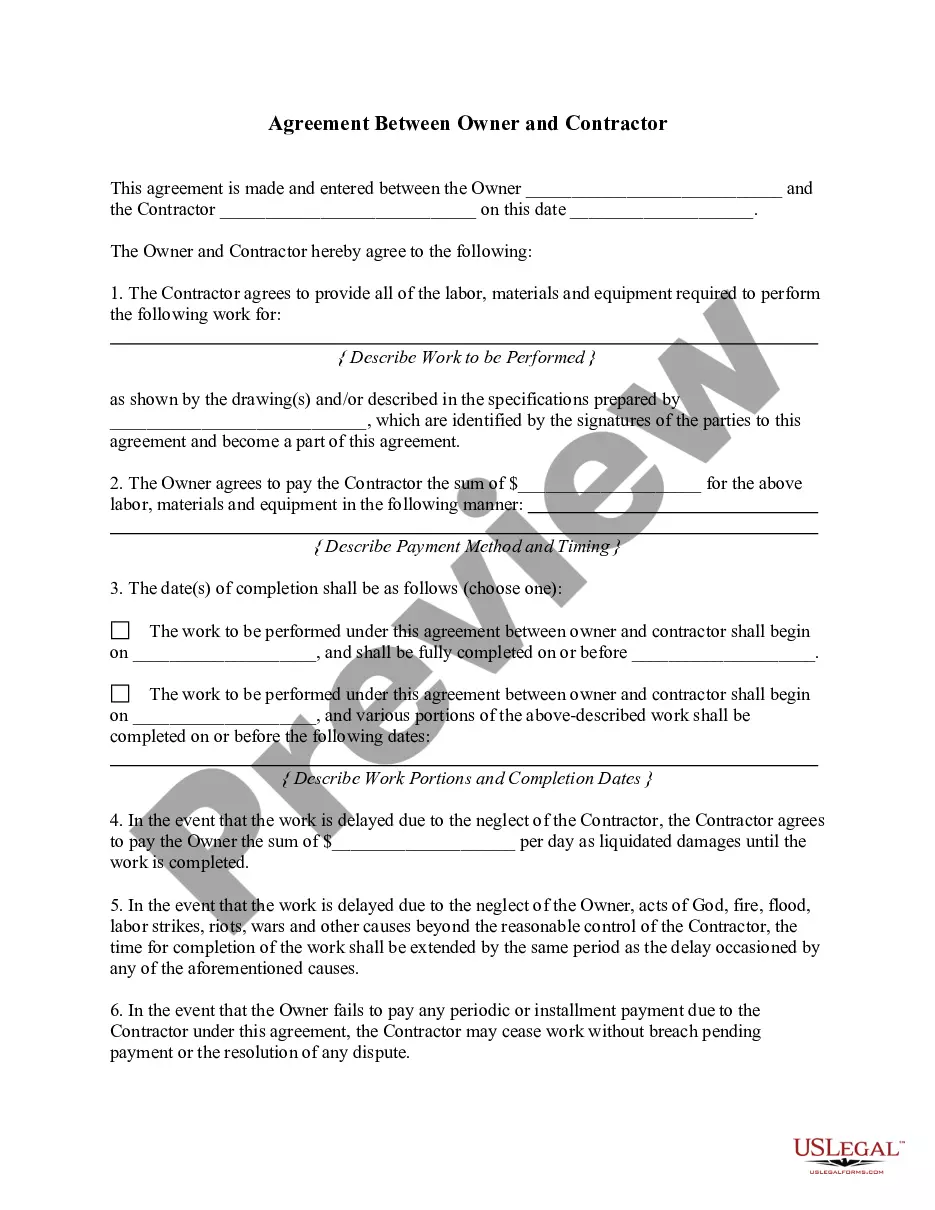
The Demolition Contract for Contractor is a legal document used between demolition contractors and property owners. It outlines the terms and conditions governing the demolition project, whether under a cost plus or fixed fee payment arrangement. This contract includes essential details such as change orders, insurance, and warranty provisions, tailored to comply with the laws of the State of Washington. This form is specifically designed to ensure clarity and protection for both parties involved in the demolition process.
What’s included in this form
- Permits: Contractor is responsible for applying for and obtaining necessary permits.
- Soil Conditions: Contractor holds no liability for soil conditions at the work site.
- Insurance: Contractor must maintain general liability and workers compensation insurance.
- Change Orders: All changes to the work scope require a written change order signed by both parties.
- Late Payments: Details on late payment penalties and contractor's rights regarding suspended work.
- Warranty: Warranty for workmanship is limited to one year.
Common use cases
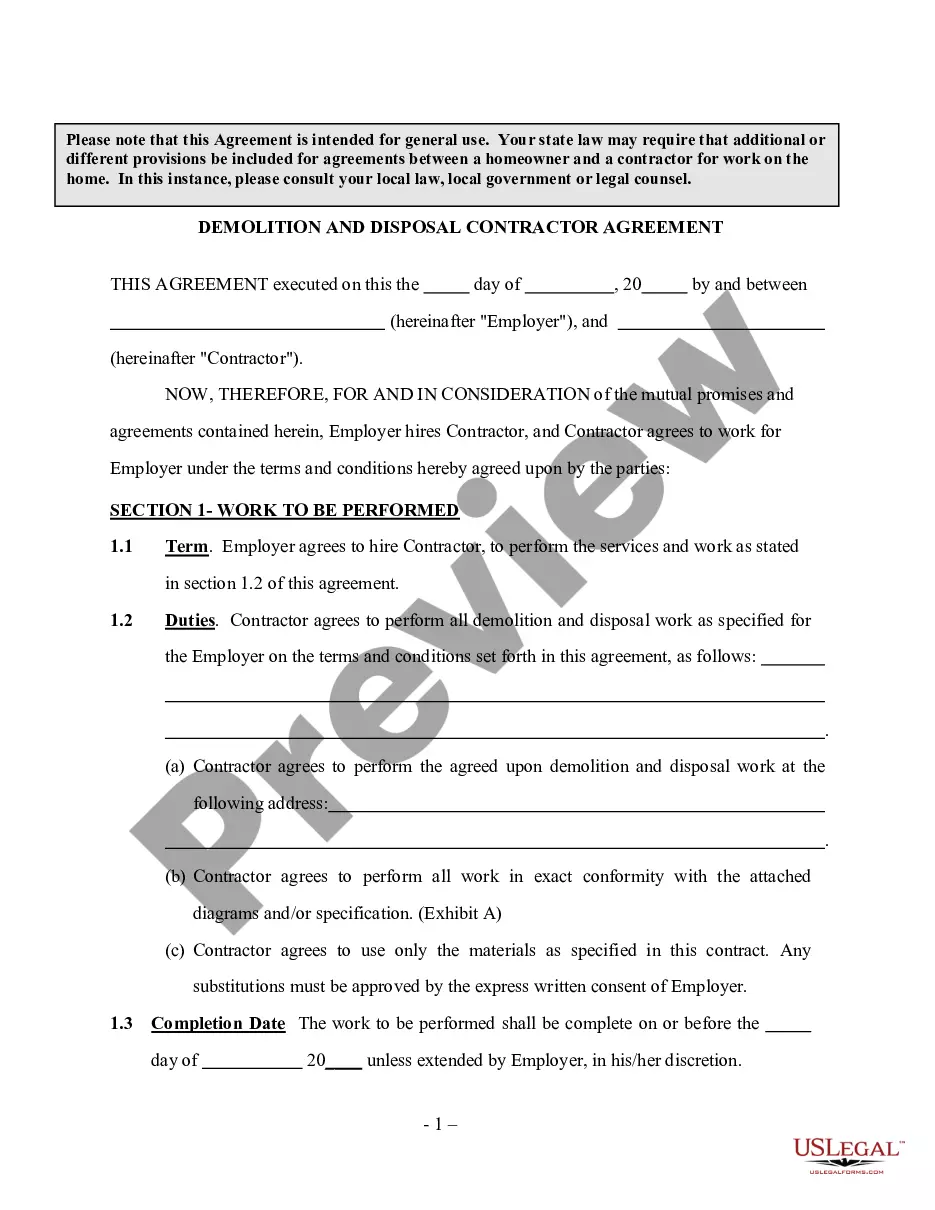
This form should be used when a property owner hires a contractor to demolish or remove structures from their property. It is essential in situations where specific terms of payment, project scope changes, and liability for soil conditions must be clearly defined. Utilize this contract to protect both parties' rights and ensure a smooth demolition process.
Intended users of this form
- Property owners looking to hire a contractor for demolition services.
- Demolition contractors providing services to property owners.
- Individuals or businesses involved in renovation or redevelopment projects.
Steps to complete this form
- Identify and enter the names and contact information of both the contractor and the property owner.
- Specify the project details including the location and description of the demolition work.
- Determine the payment arrangement (cost plus or fixed fee) and enter the agreed contract price.
- Ensure all permits are applied for and documented as part of the Project price.
- Review and sign the contract for both parties, ensuring that all changes are amended via a written change order.
Notarization requirements for this form
Notarization is generally not required for this form. However, certain states or situations might demand it. You can complete notarization online through US Legal Forms, powered by Notarize, using a verified video call available anytime.
Get your form ready online
Our built-in tools help you complete, sign, share, and store your documents in one place.
Make edits, fill in missing information, and update formatting in US Legal Forms—just like you would in MS Word.
Download a copy, print it, send it by email, or mail it via USPS—whatever works best for your next step.
Sign and collect signatures with our SignNow integration. Send to multiple recipients, set reminders, and more. Go Premium to unlock E-Sign.
If this form requires notarization, complete it online through a secure video call—no need to meet a notary in person or wait for an appointment.
We protect your documents and personal data by following strict security and privacy standards.

Make edits, fill in missing information, and update formatting in US Legal Forms—just like you would in MS Word.

Download a copy, print it, send it by email, or mail it via USPS—whatever works best for your next step.

Sign and collect signatures with our SignNow integration. Send to multiple recipients, set reminders, and more. Go Premium to unlock E-Sign.

If this form requires notarization, complete it online through a secure video call—no need to meet a notary in person or wait for an appointment.

We protect your documents and personal data by following strict security and privacy standards.
Mistakes to watch out for
- Failure to specify the scope of work clearly within the contract.
- Not completing necessary change orders for alterations in the project.
- Neglecting to review and understand the late payment penalties described in the contract.
Benefits of using this form online
- Convenience of accessing a legally drafted contract from anywhere.
- Editability to customize specific terms according to your project needs.
- Reliable legal compliance as documents are prepared by licensed attorneys.
Looking for another form?

Form popularity
FAQ
Avoid companies that require an upfront deposit of more than 10 percent. Try to include language in the contract that holds back a percentage of the total price, called a retainage, until you're sure the work was done well. A 10 percent retainage is common for residential remodeling work.
If the contractor requests a large sum of money before work has begun, Mozen says you should ask specifically what types of work or materials those payments are covering.Contractors sometimes have other motives, other than purchasing materials, when they ask for large amounts of money in advance, Fowler says.
A: It's not uncommon for contractors to ask for a down payment up front to secure your spot on their schedule or purchase some of the job materials in advance. Asking for more than half of the project cost up front, though, is a big red flag.I recommend tying payments to progress made during the job.
Estimates, generally, must be professionally reasonable. A 10-20% overage might be considered reasonable, especially if the contractor discovered issues along the way that he couldn't have been aware of initially (for example, mold or flooding).
Licensed general contractors can perform a wide variety of work. It can be earthmoving, plumbing, electrical, foundations, framing, or roofing work.In the State of California there are three distinct classes of general contractor. General Contractor Type A can perform large projects that require engineering knowledge.
In contract actions the applicable contract statute of limitations expires, regardless of discovery, six years after substantial completion of construction, or during the period within six years after the termination of the services enumerated in RCW 4.16.
You shouldn't pay more than 10 percent of the estimated contract price upfront, according to the Contractors State License Board.
Construction Contractors Must Be Registered. Washington State requires all construction contractors to register with L&I.Once registered, contractors can bid, advertise, and perform construction work. This can include constructing, remodeling, repairing and demolishing buildings, roads and other real property.
In Washington state are authorized to perform work in a variety of trades/crafts, including (but not limited to) boiler/steam fitting, cabinetry, and closet installations. To register as a general contractor, applicants must: Be at least 18 years old with a high school diploma or GED.