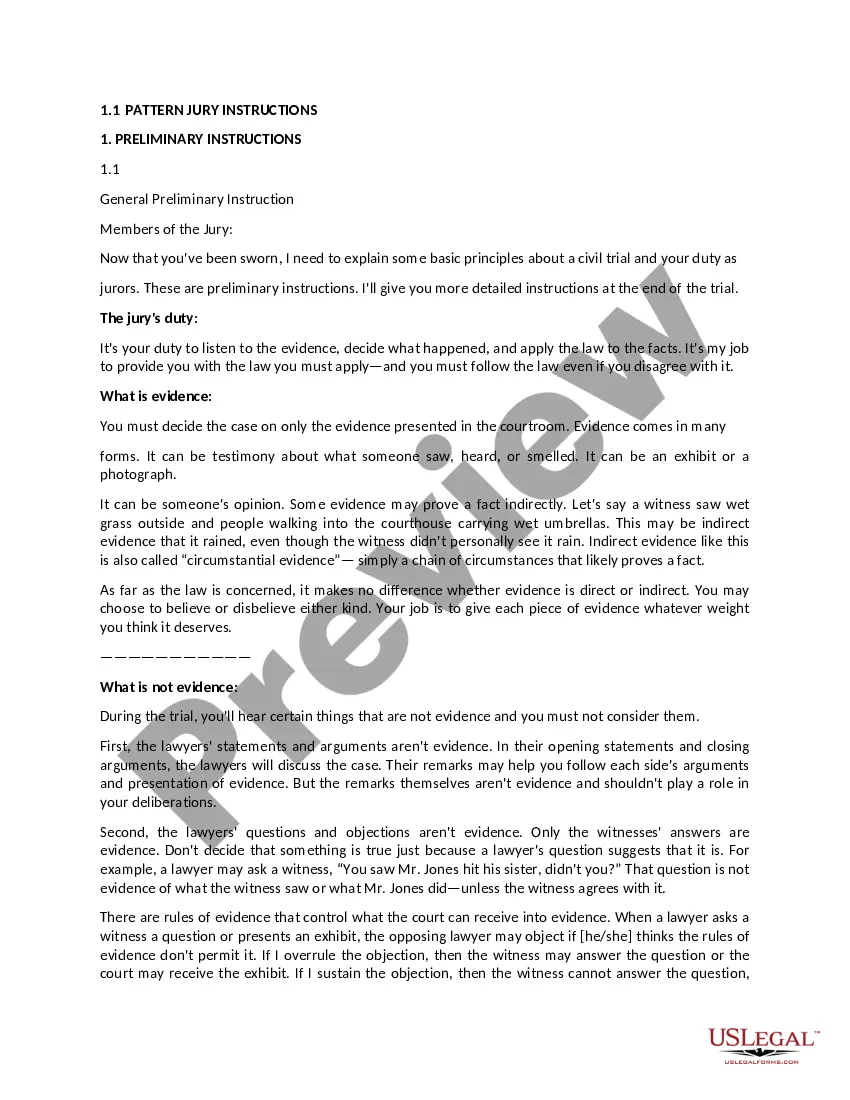
Complaint For Wrongful Termination - Title VII Civil Rights Act - Pregnancy Discrimination Act - Jury Trial Demand
About this form
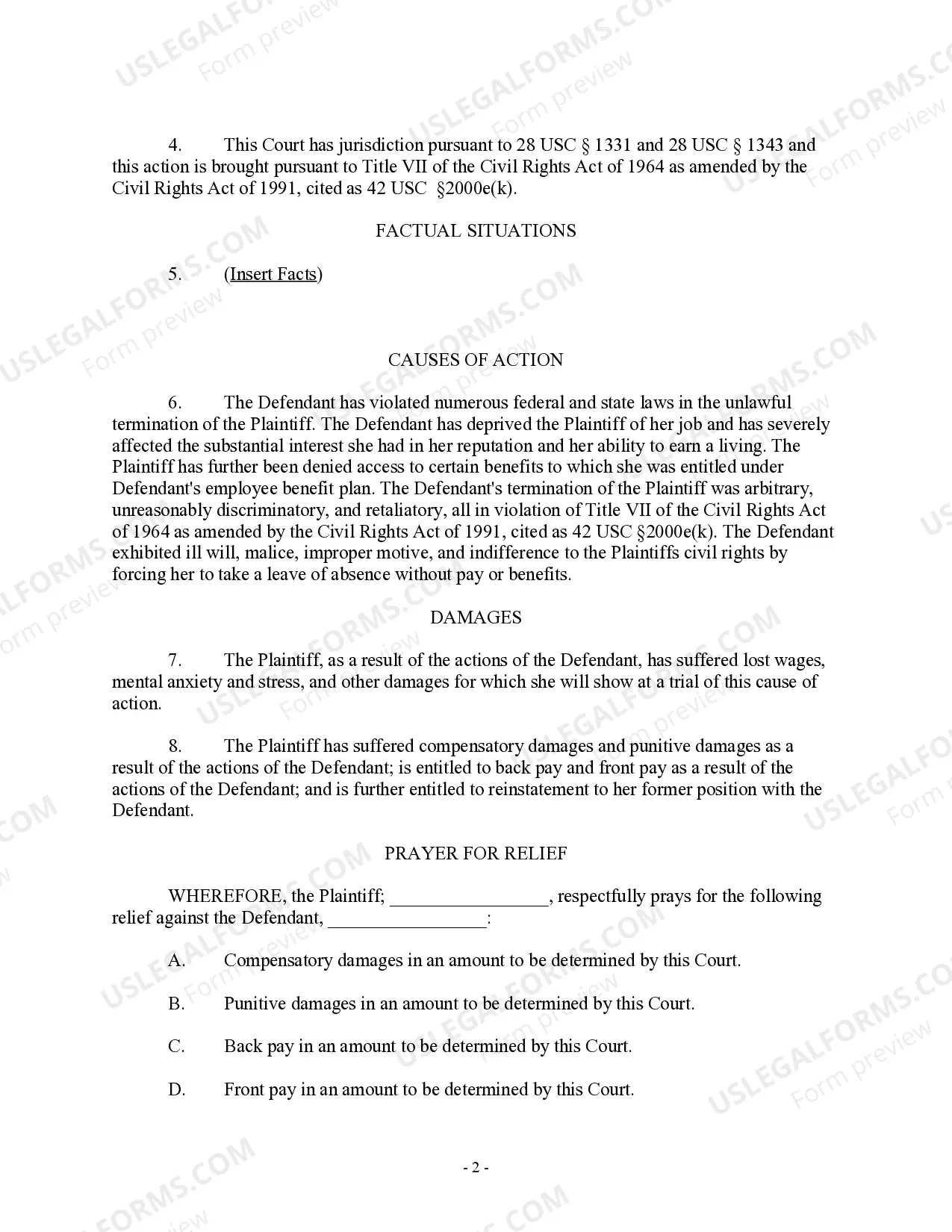
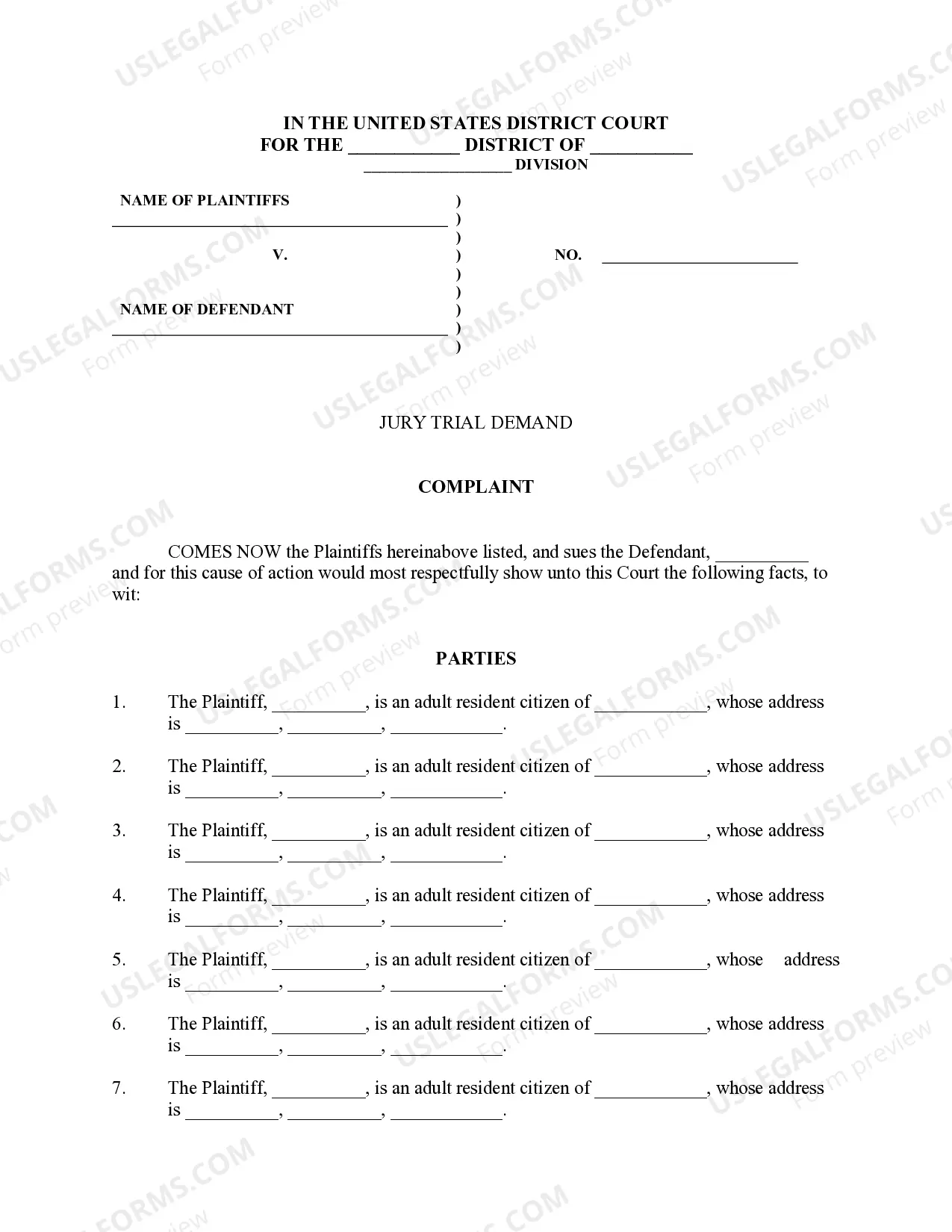
The Complaint For Wrongful Termination is a legal document filed by an employee who believes they have been unjustly terminated from their job due to violations of Title VII of the Civil Rights Act and the Pregnancy Discrimination Act. This form serves to initiate a lawsuit against an employer claiming unlawful termination and requests a jury trial. It is specifically tailored to address discrimination based on pregnancy, separating it from other employment-related complaints.
What’s included in this form
- Parties Involved: Identifies the plaintiff and defendant, including their legal status.
- Jurisdiction and Venue: States the legal grounds for bringing the case in a specific court.
- Factual Situations: Provides space to detail the events leading to the complaint.
- Causes of Action: Outlines specific claims against the employer regarding wrongful termination.
- Damages: Describes the compensation sought for lost wages and emotional distress.
- Prayer for Relief: Lists the specific remedies requested from the court.





Situations where this form applies
This form should be used when an employee has been terminated under circumstances that may violate their legal rights, particularly in relation to pregnancy discrimination. If an individual believes they have been chosen for termination due to their pregnancy or related medical issues, using this complaint can help seek justice and compensation for losses suffered due to the wrongful termination.
Who can use this document
- Pregnant employees who have been terminated or discriminated against at work.
- Individuals seeking to file a lawsuit under Title VII of the Civil Rights Act.
- Employees feeling wrongfully treated by their employer due to pregnancy-related issues.
Instructions for completing this form
- Identify the parties: Fill in your name as the plaintiff and the employer as the defendant.
- Detail the facts: Include specific instances of discrimination and circumstances surrounding your termination.
- Specify damages: Clearly outline any lost wages, emotional distress, and other damages you are claiming.
- Make a demand for relief: List the compensation or actions you are asking the court to provide.
- Sign and date the form: Ensure your signature is added at the designated area before filing.
Notarization requirements for this form
Notarization is generally not required for this form. However, certain states or situations might demand it. You can complete notarization online through US Legal Forms, powered by Notarize, using a verified video call available anytime.
Get your form ready online
Our built-in tools help you complete, sign, share, and store your documents in one place.
Make edits, fill in missing information, and update formatting in US Legal Forms—just like you would in MS Word.
Download a copy, print it, send it by email, or mail it via USPS—whatever works best for your next step.
Sign and collect signatures with our SignNow integration. Send to multiple recipients, set reminders, and more. Go Premium to unlock E-Sign.
If this form requires notarization, complete it online through a secure video call—no need to meet a notary in person or wait for an appointment.
We protect your documents and personal data by following strict security and privacy standards.

Make edits, fill in missing information, and update formatting in US Legal Forms—just like you would in MS Word.

Download a copy, print it, send it by email, or mail it via USPS—whatever works best for your next step.

Sign and collect signatures with our SignNow integration. Send to multiple recipients, set reminders, and more. Go Premium to unlock E-Sign.

If this form requires notarization, complete it online through a secure video call—no need to meet a notary in person or wait for an appointment.

We protect your documents and personal data by following strict security and privacy standards.
Avoid these common issues
- Failing to accurately identify all parties involved in the case.
- Omitting critical details regarding the factual basis for the claim.
- Not specifying all damages being claimed.
- Incorrectly filling out jurisdictional information.
Benefits of completing this form online
- Convenience: Easily download and complete the form from anywhere.
- Editability: Tailor the document to suit your specific case requirements.
- Guided process: Access step-by-step instructions to ensure proper completion.
Looking for another form?

Form popularity
FAQ
If you believe your employer has discriminated against you because of your pregnancy, you can file a charge of discrimination with the federal Equal Employment Opportunity Commission (EEOC). In fact, you must file a charge if you want to file a discrimination lawsuit; it's a legal requirement.
The Pregnancy Discrimination Act amended Title VII of the Civil Rights Act of 1964. Discrimination on the basis of pregnancy, childbirth, or related medical conditions constitutes unlawful sex discrimination under Title VII, which covers employers with 15 or more employees, including state and local governments.
The short answer to both questions is yes, as evidenced by a recent court decision involving the Equal Employment Opportunity Commission (EEOC) that awarded a pregnant former employee more than $74,000 in damages.
The Pregnancy Discrimination Act (PDA) forbids discrimination based on pregnancy when it comes to any aspect of employment, including hiring, firing, pay, job assignments, promotions, layoff, training, fringe benefits, such as leave and health insurance, and any other term or condition of employment.
Pregnancy Is a Protected Class Under The California Fair Employment and Housing Act (FEHA) Sex discrimination and harassment are prohibited in the California workplace under the Fair Employment and Housing Act (FEHA).In order to come under the protections of the PDL, an employer must employ 5 or more employees.
Claim settlements reached $22.4 million in 2019, marking a 32% increase from the yearly average of around $17 million from 2010 to 2018 - and that's without taking out of court settlements into account.
California. Protection against pregnancy discrimination: The California Fair Employment and Housing Act prohibits employment discrimination on the basis of sex, which is explicitly defined to include discrimination on the basis of pregnancy, childbirth, breastfeeding, or related medical conditions.
The Pregnancy Discrimination Act of 1978, which amended Title VII of the Civil Rights Act of 1964, 42 U.S.C. ? 2000e et seq., prohibits discrimination on the basis of pregnancy, childbirth, or related medical conditions.
Title VII prohibits employment discrimination based on race, color, religion, sex and national origin. The Civil Rights Act of 1991 (Pub.