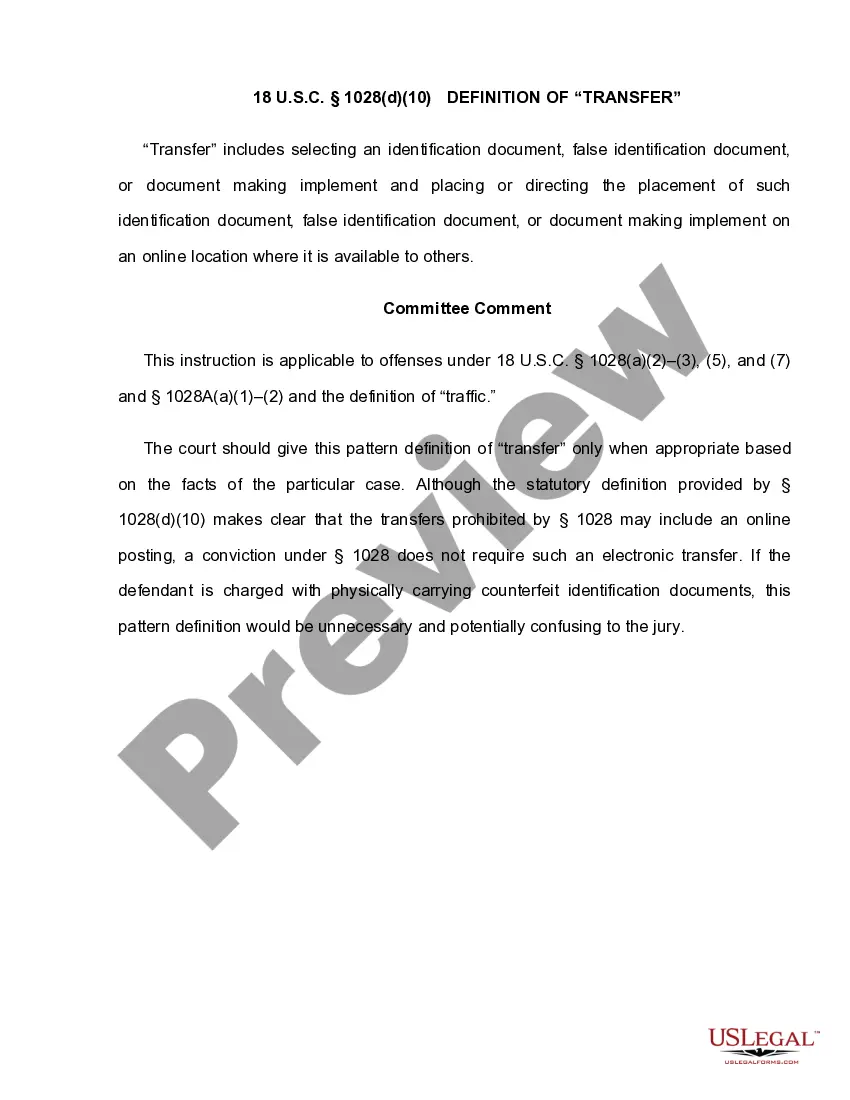
E-Commerce Vendor Buying Agreement
What this document covers
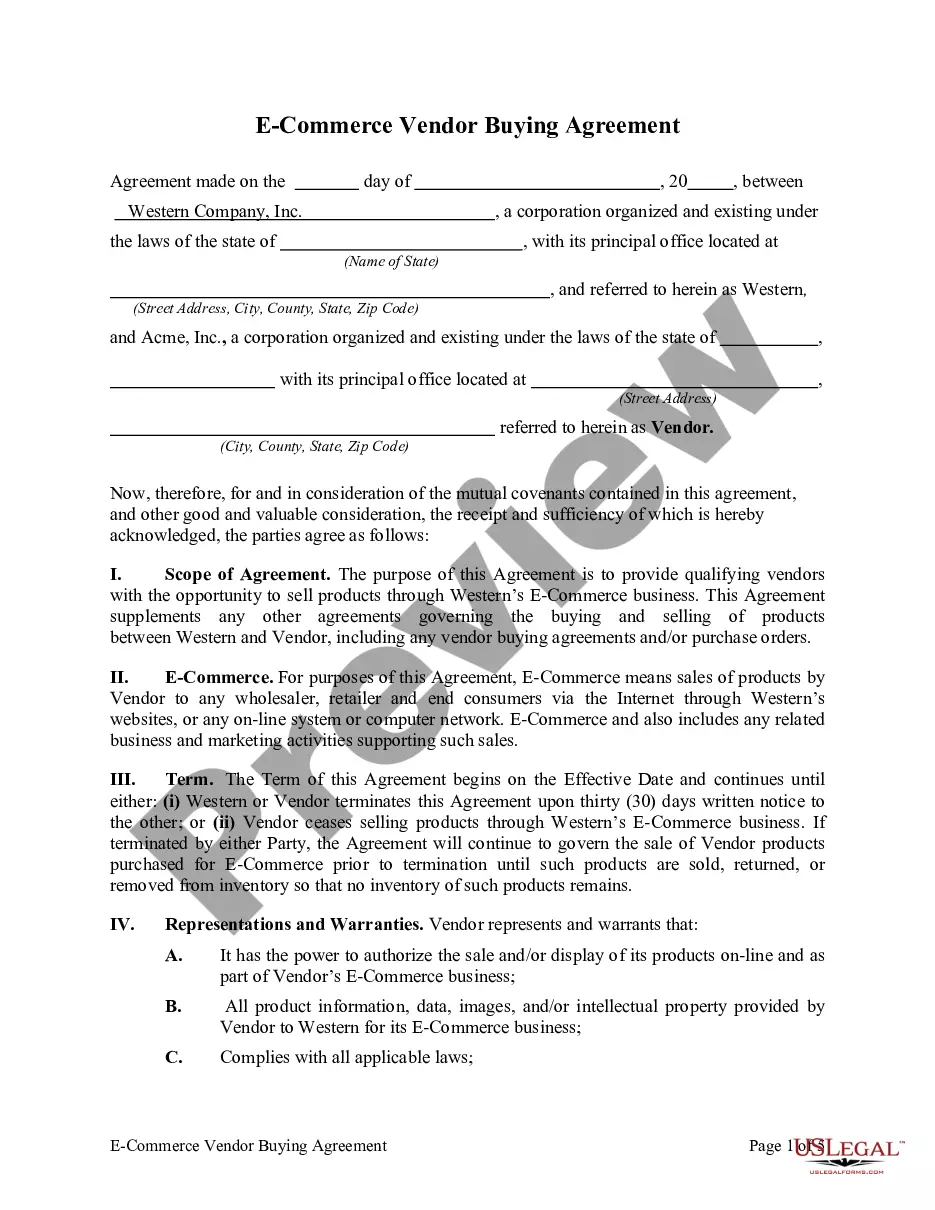
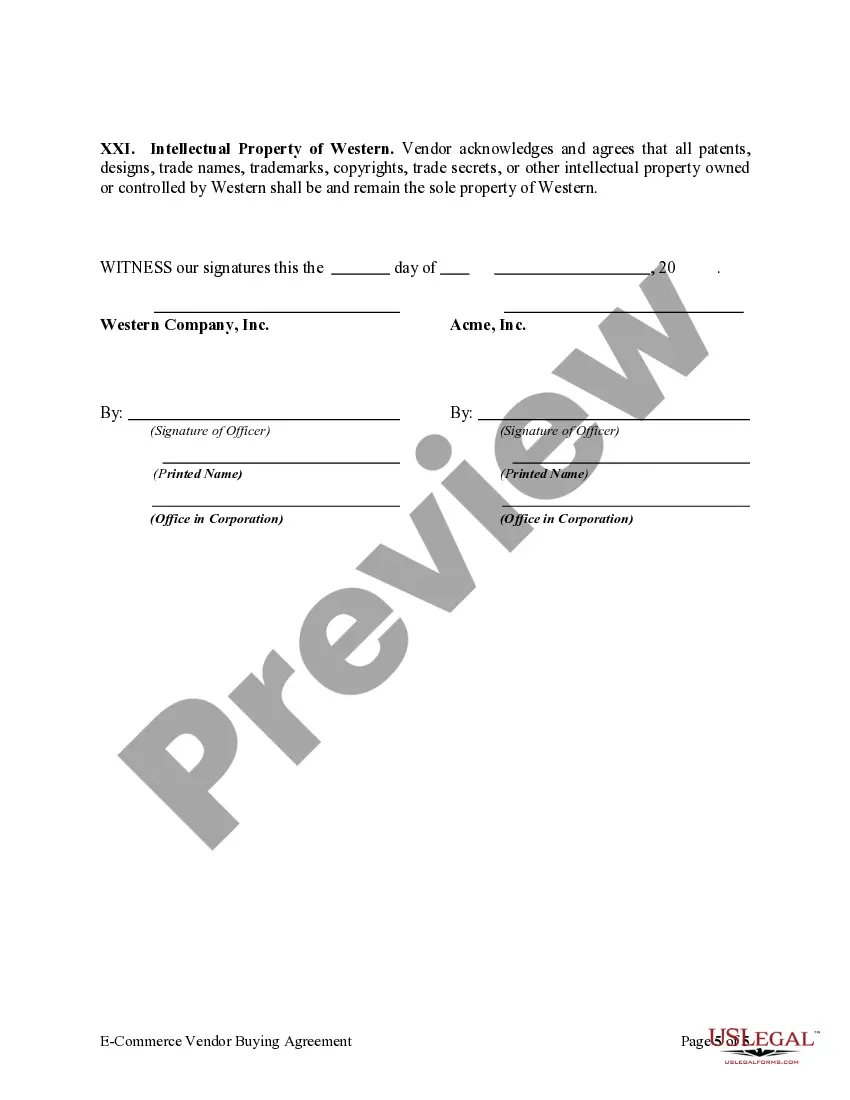
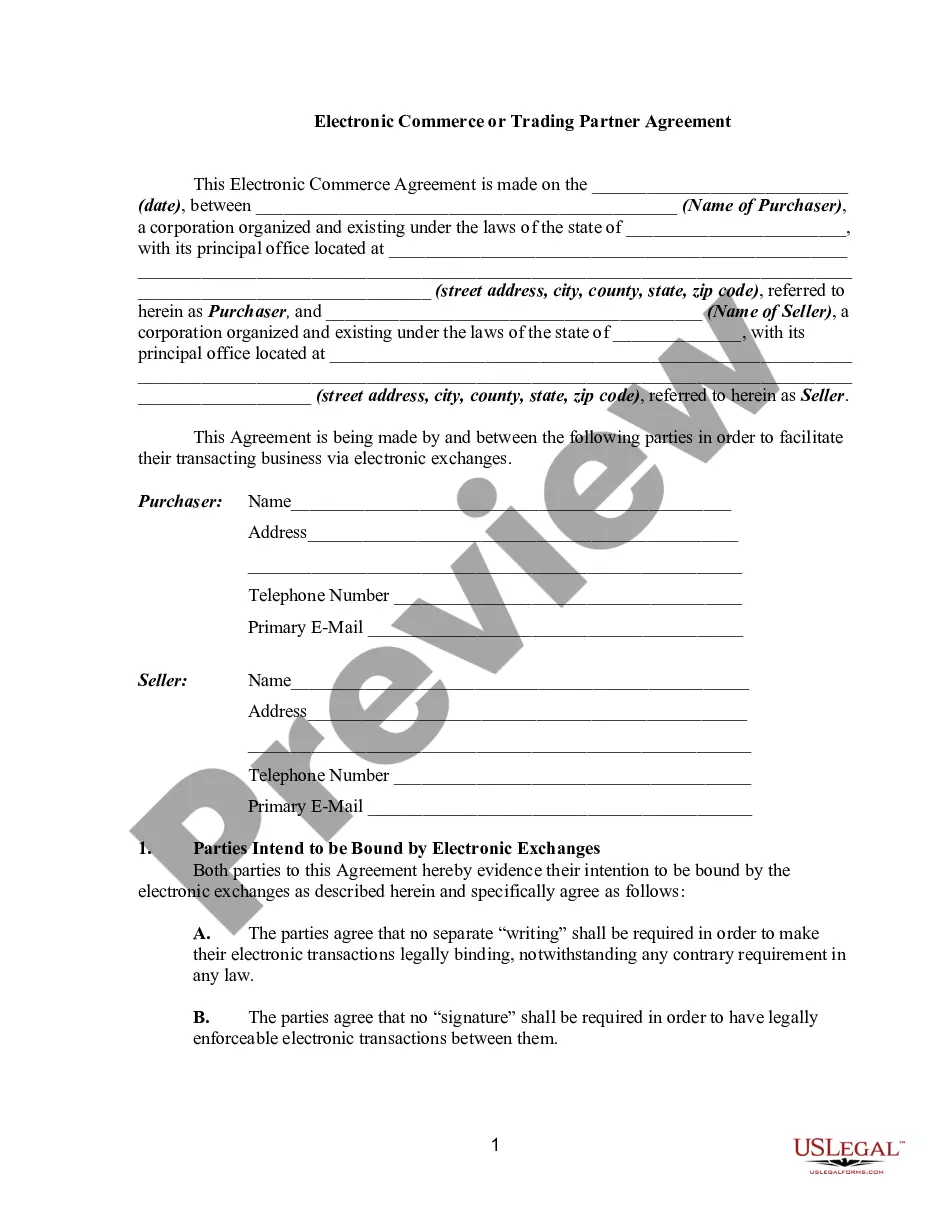
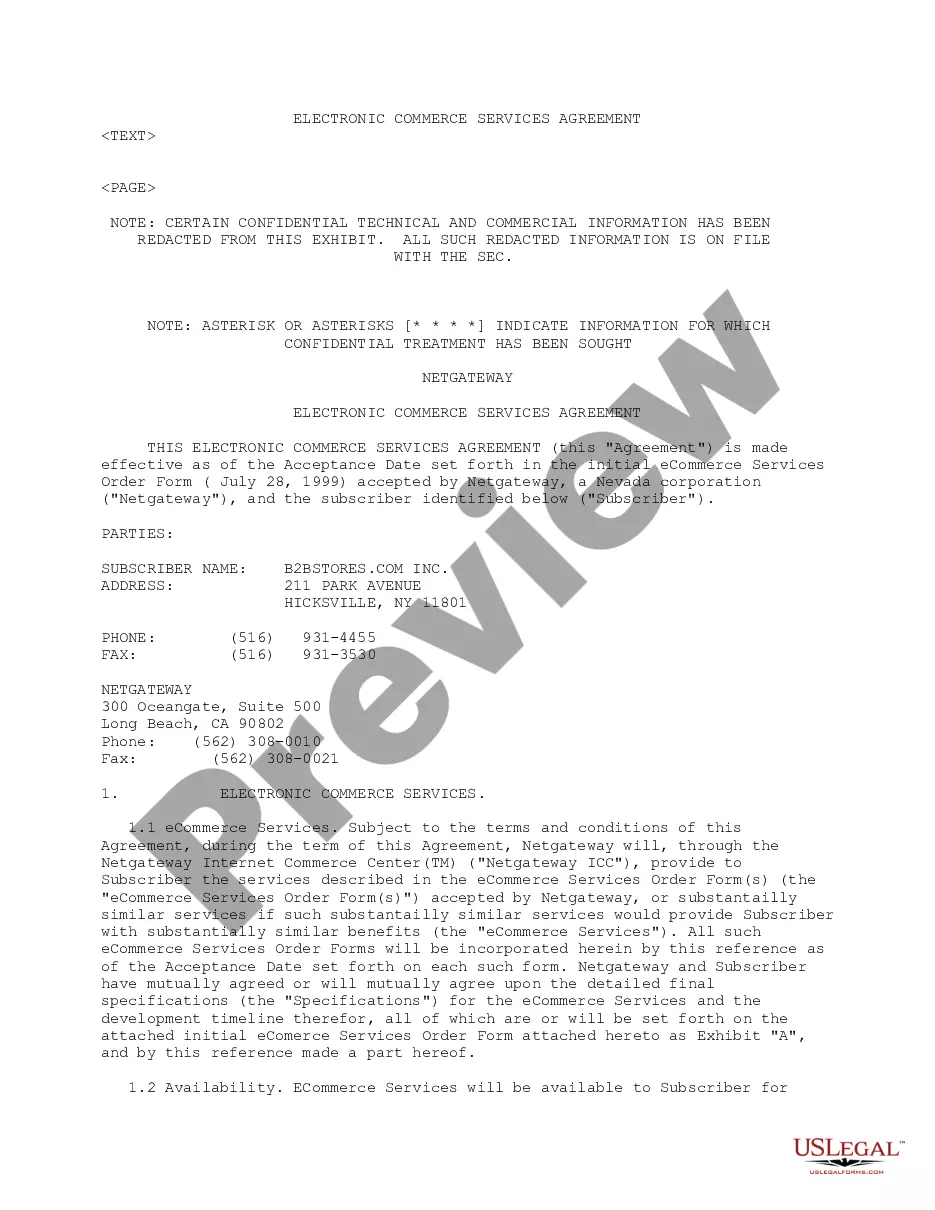
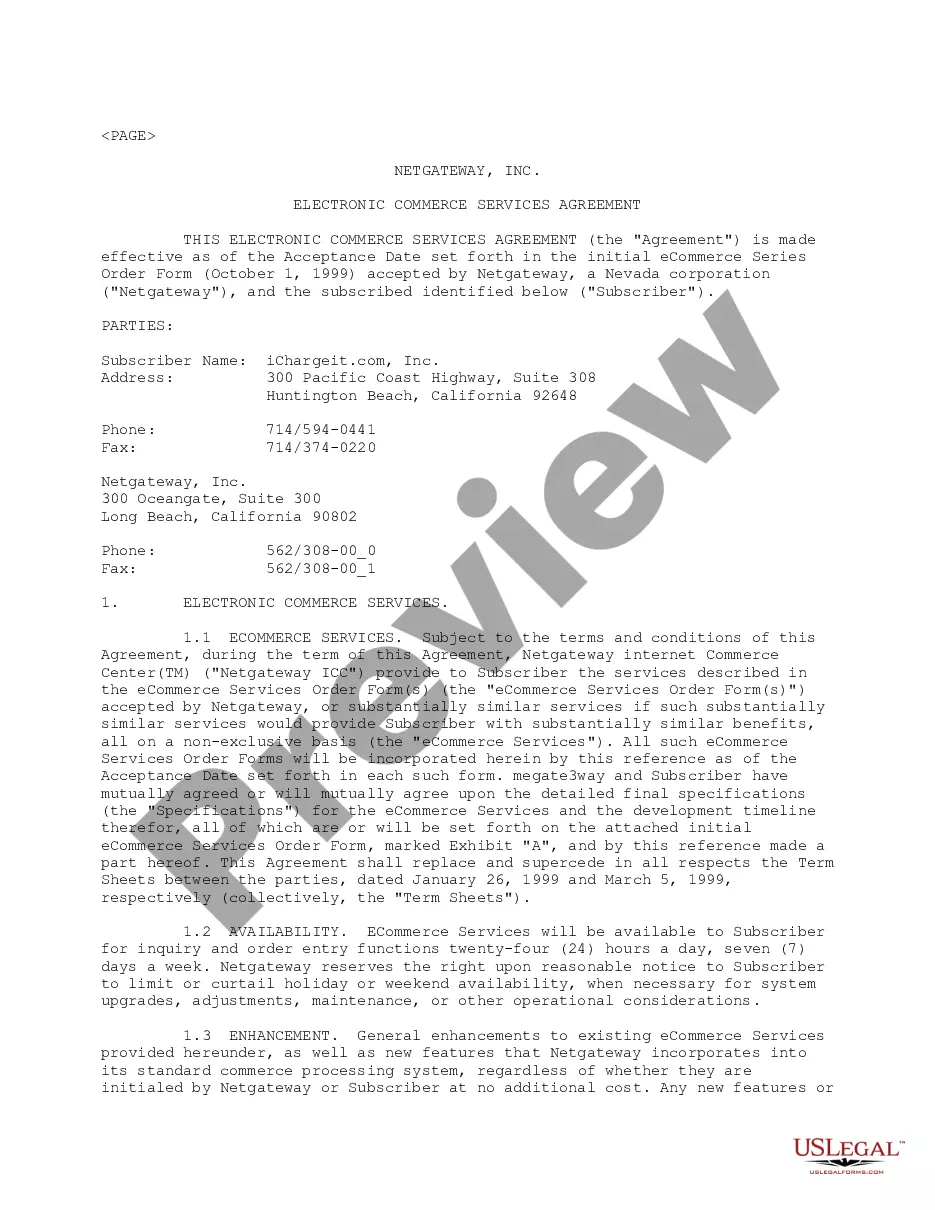
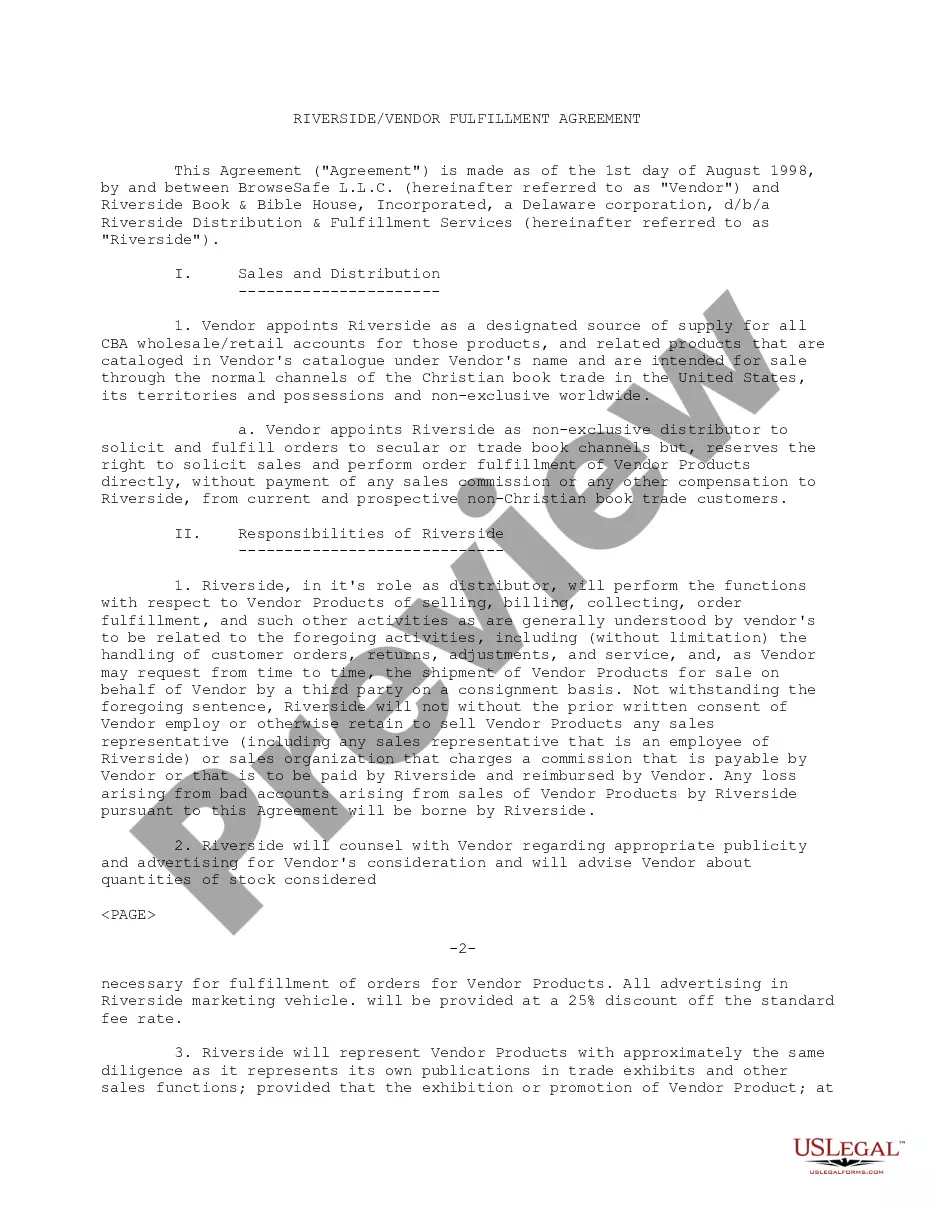
The E-Commerce Vendor Buying Agreement is a legal document designed for vendors who wish to sell products through an online platform. This agreement establishes the terms and conditions for the vendor's participation in the e-commerce business, ensuring that both parties understand their rights and responsibilities. It differs from other agreements by focusing on e-commerce transactions specifically, managing licensing, indemnification, and representations related to online sales.
Main sections of this form
- Scope of Agreement: Defines the relationship between the vendor and the e-commerce business.
- E-Commerce Definition: Clarifies what constitutes e-commerce in the context of this agreement.
- Term: Outlines the duration of the agreement and termination conditions.
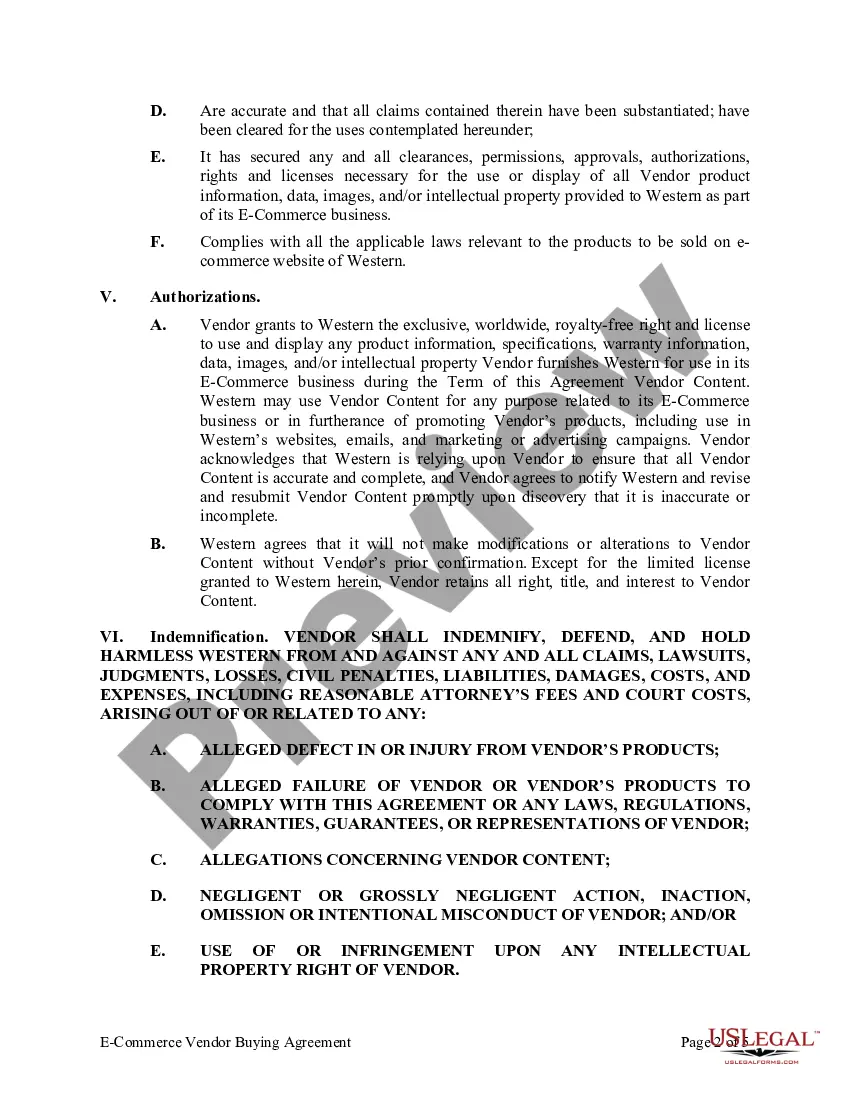
- Representations and Warranties: Vendors must affirm that their products comply with applicable laws.
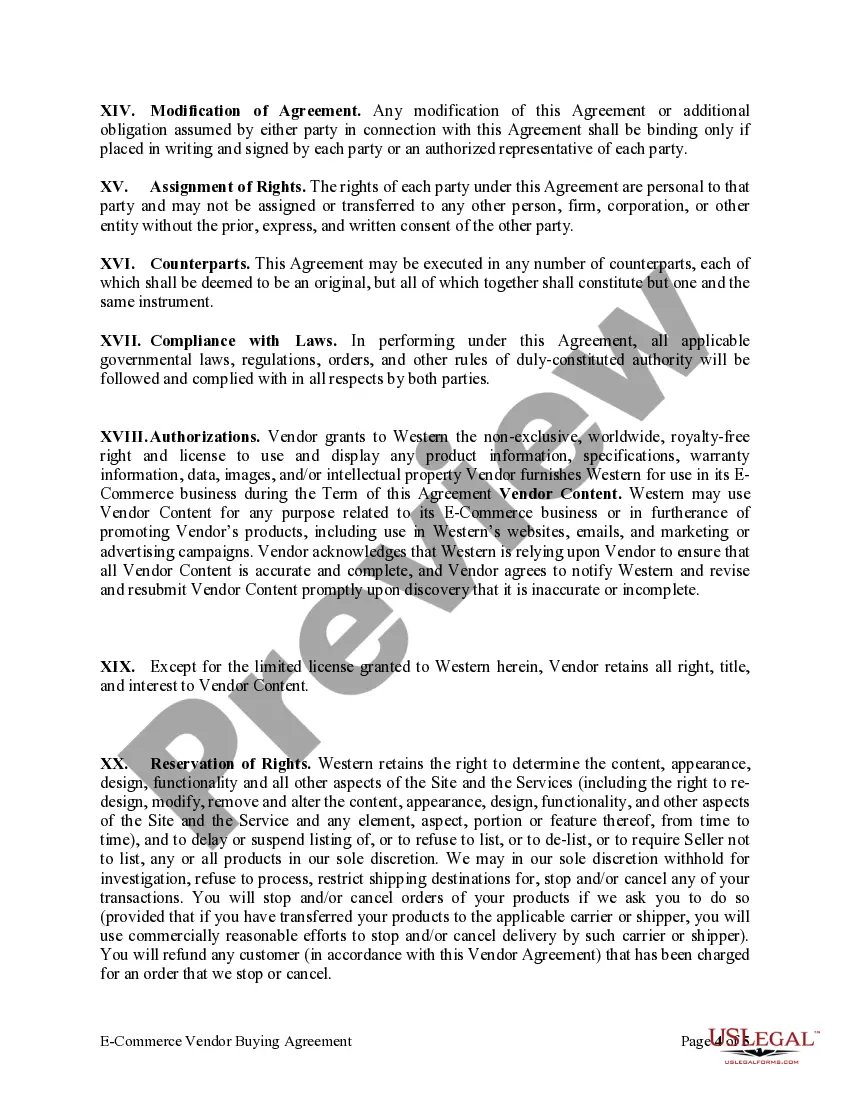
- Authorizations: Grants rights to the e-commerce platform regarding product content.
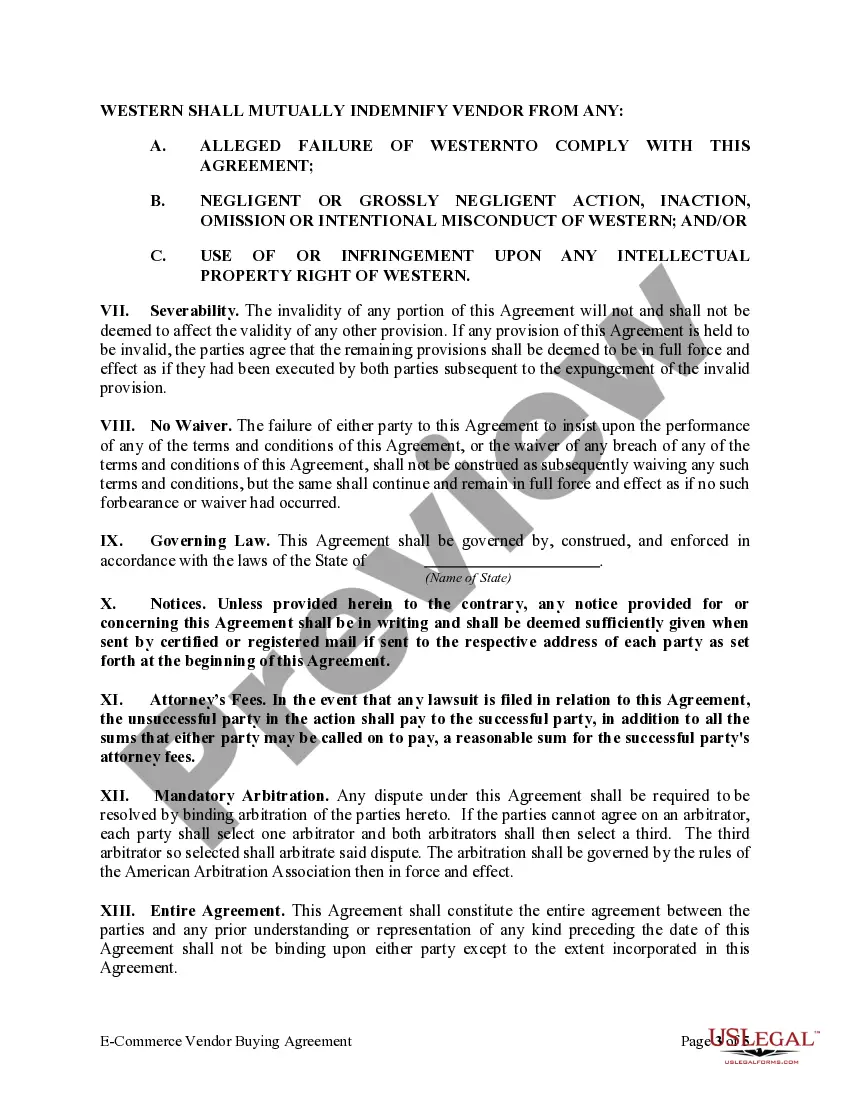
- Indemnification: Addresses liability for product-related claims against both parties.

Common use cases
This form is used when a vendor is entering into an agreement to sell products online through an e-commerce platform. It is essential for situations where both the vendor and the platform need to outline their respective obligations and rights regarding product sales, marketing, and compliance with legal standards.
Who can use this document
- Vendors interested in selling their products through an e-commerce platform.
- Businesses looking to establish formal agreements with vendors for online sales.
- Those engaged in e-commerce who need clarity on rights and responsibilities.
Instructions for completing this form
- Identify the parties involved: Enter the names and contact information of the vendor and the e-commerce platform.
- Define the scope: Clearly outline the products and services covered under the agreement.
- Specify the term: Establish the effective date and conditions under which the agreement may be terminated.
- Include representations and warranties: Ensure that all product information provided is accurate and compliant with laws.
- Authorize use of vendor content: Grant permission for the e-commerce platform to utilize product information and marketing materials.
Does this form need to be notarized?
This form usually doesn’t need to be notarized. However, local laws or specific transactions may require it. Our online notarization service, powered by Notarize, lets you complete it remotely through a secure video session, available 24/7.
Get your form ready online
Our built-in tools help you complete, sign, share, and store your documents in one place.
Make edits, fill in missing information, and update formatting in US Legal Forms—just like you would in MS Word.
Download a copy, print it, send it by email, or mail it via USPS—whatever works best for your next step.
Sign and collect signatures with our SignNow integration. Send to multiple recipients, set reminders, and more. Go Premium to unlock E-Sign.
If this form requires notarization, complete it online through a secure video call—no need to meet a notary in person or wait for an appointment.
We protect your documents and personal data by following strict security and privacy standards.

Make edits, fill in missing information, and update formatting in US Legal Forms—just like you would in MS Word.

Download a copy, print it, send it by email, or mail it via USPS—whatever works best for your next step.

Sign and collect signatures with our SignNow integration. Send to multiple recipients, set reminders, and more. Go Premium to unlock E-Sign.

If this form requires notarization, complete it online through a secure video call—no need to meet a notary in person or wait for an appointment.

We protect your documents and personal data by following strict security and privacy standards.
Mistakes to watch out for
- Failing to provide accurate product information and intellectual property rights.
- Not following the terms of termination or the effective dates as specified in the agreement.
- Neglecting to review local laws that may affect the scope of the e-commerce operations.
Benefits of completing this form online
- Convenience of downloading the form instantly without the need for in-person visits.
- Editability before submission ensures accuracy and compliance with specific vendor needs.
- Reliability of the form drafted by licensed attorneys ensures legal soundness.
Looking for another form?
Form popularity
FAQ
What is a Vendor Agreement? Simply put, a Vendor Agreement is a business contract between two parties covering the exchange of goods or services in return for compensation. Vendor Agreements establish the business relationship conditions and include details on each party's obligations under the contract.
1) Scope Of The Services Or Products. 2) Contract Length And Duration. 3) Price And How It Will Be Paid. 4) How To Get Out Of The Contract. 5) What Happens If Someone Doesn't Follow The Vendor Agreement.
Limitations of liability. Intellectual property/trademark protection. Pricing and payment terms, including shipping, returns, exchanges and cancellations. Product information. Dispute resolution.
Get it in writing. Keep it simple. Deal with the right person. Identify each party correctly. Spell out all of the details. Specify payment obligations. Agree on circumstances that terminate the contract. Agree on a way to resolve disputes.
Simply put, a Vendor Agreement is a business contract between two parties covering the exchange of goods or services in return for compensation. Vendor Agreements establish the business relationship conditions and include details on each party's obligations under the contract.
A preferred vendor agreement is a contract between an organization and a vendor that explicitly defines the terms of their relationship.In exchange for these guarantees, the organizations tend to receive lower rates and other special treatment.
Details of the business and vendor. The details of the business and vendor, like the names, address and office address must be in the vendor contract. Details of goods and services. Payment terms. Period of functionality. Confidentiality. Exclusivity. Intellectual Property. Indemnity.
1: Know which vendor contracts affect your work. 2: Identify a direct contact for each vendor. SEE: Special report: How to choose and manage great tech partners (free PDF) (TechRepublic) 3: Monitor the status of every vendor contract. 4: Be wary of vendor sunsetting practices. 5: Bone up on contract management.
Ownership and copyright of the website's content. acceptable and unacceptable use of the website and content. registration, password and security procedures. availability of the website. use of cookies. links to other websites.