10.2 Elements of FMLA Interference Claim
Understanding this form
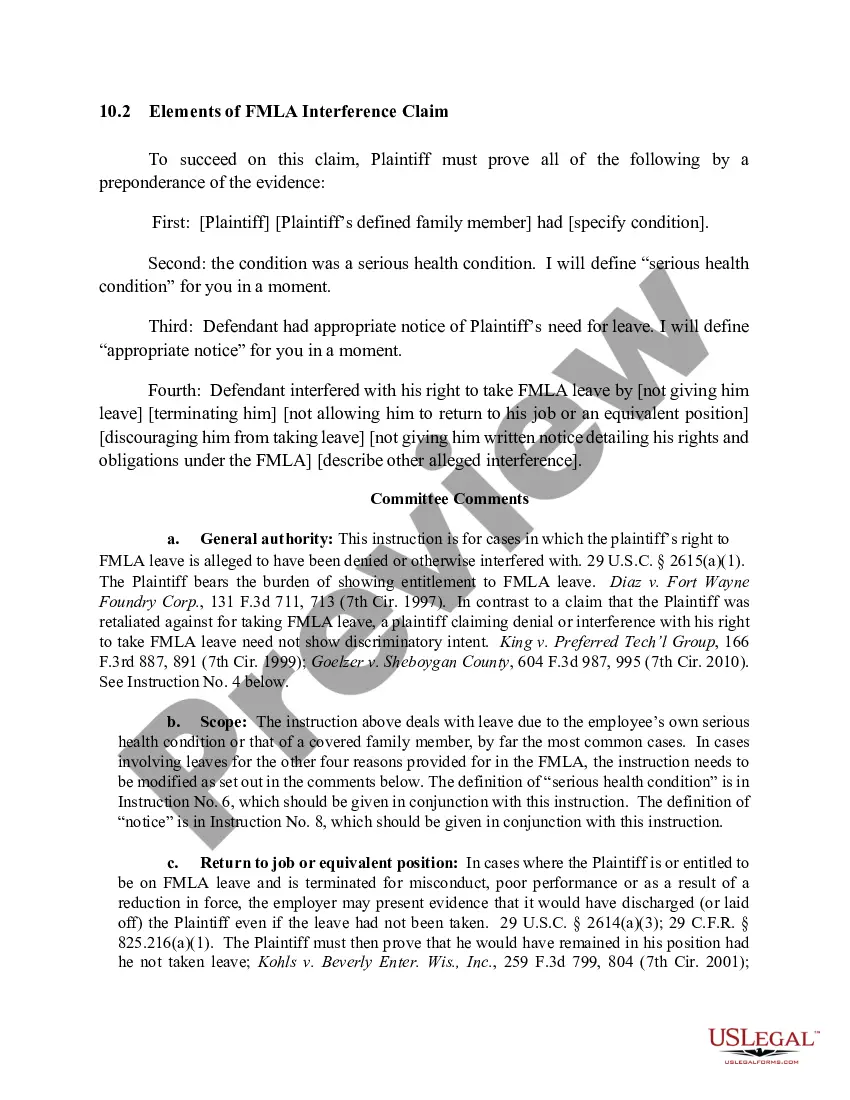
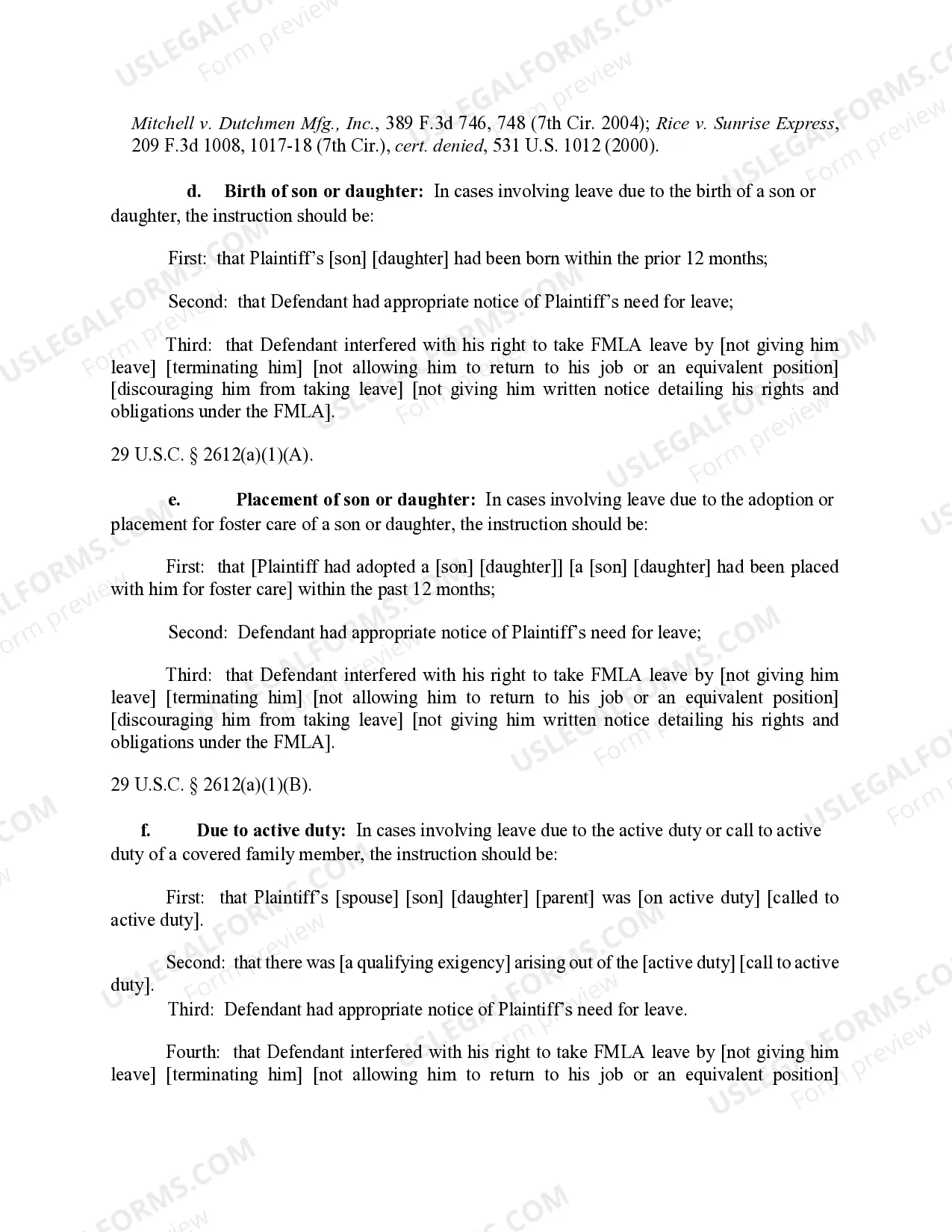
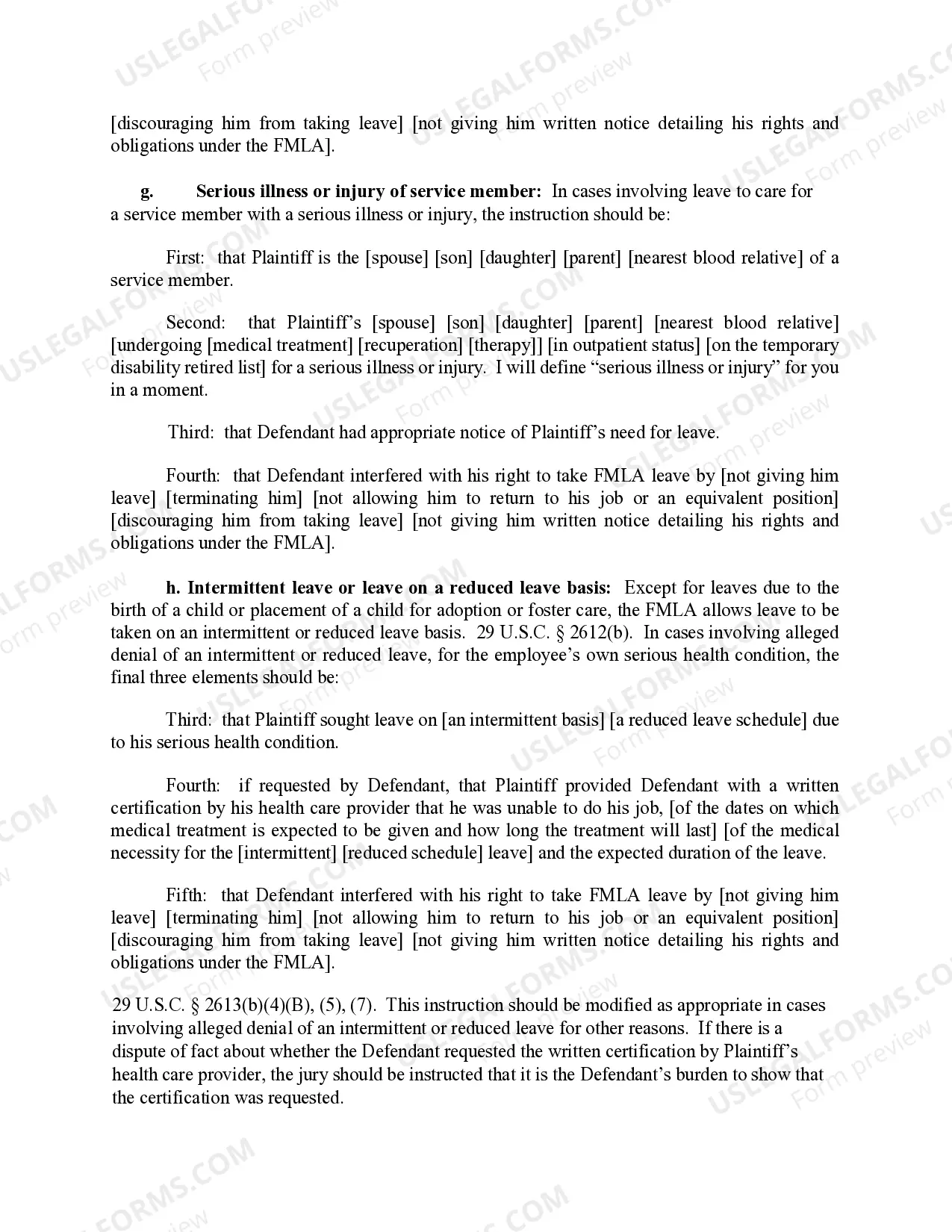
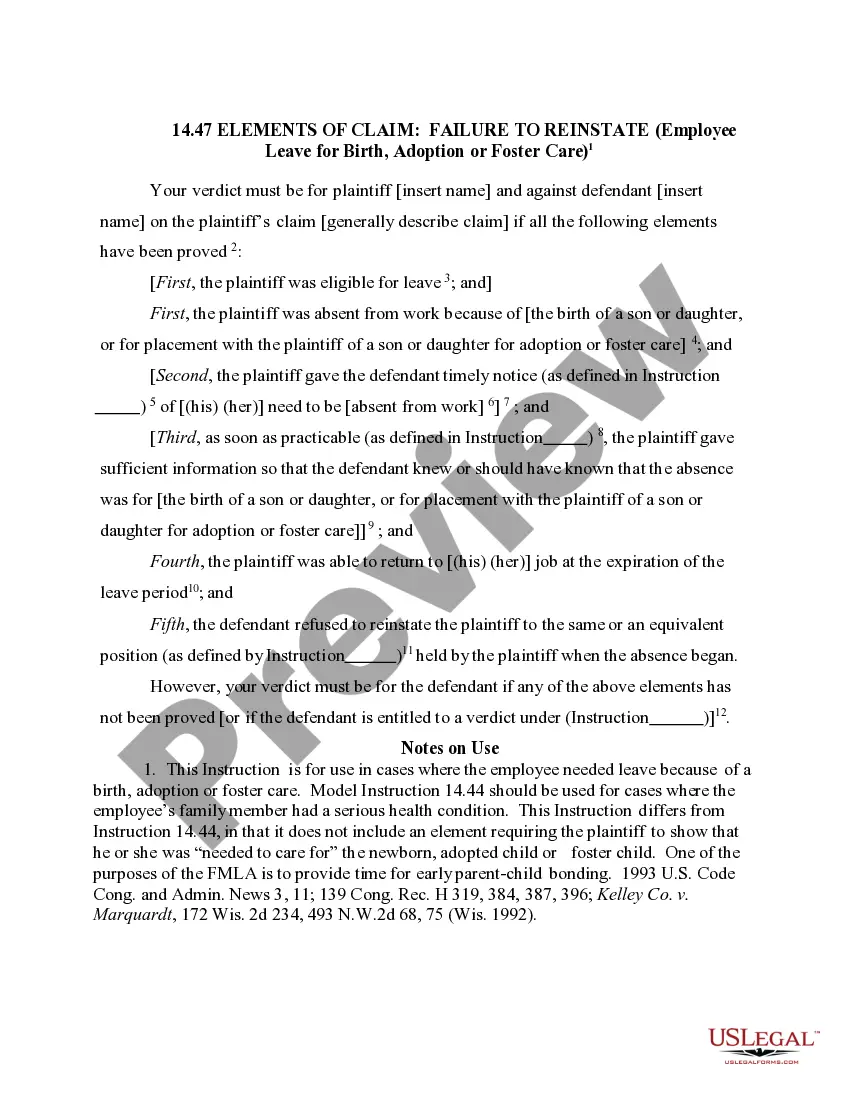
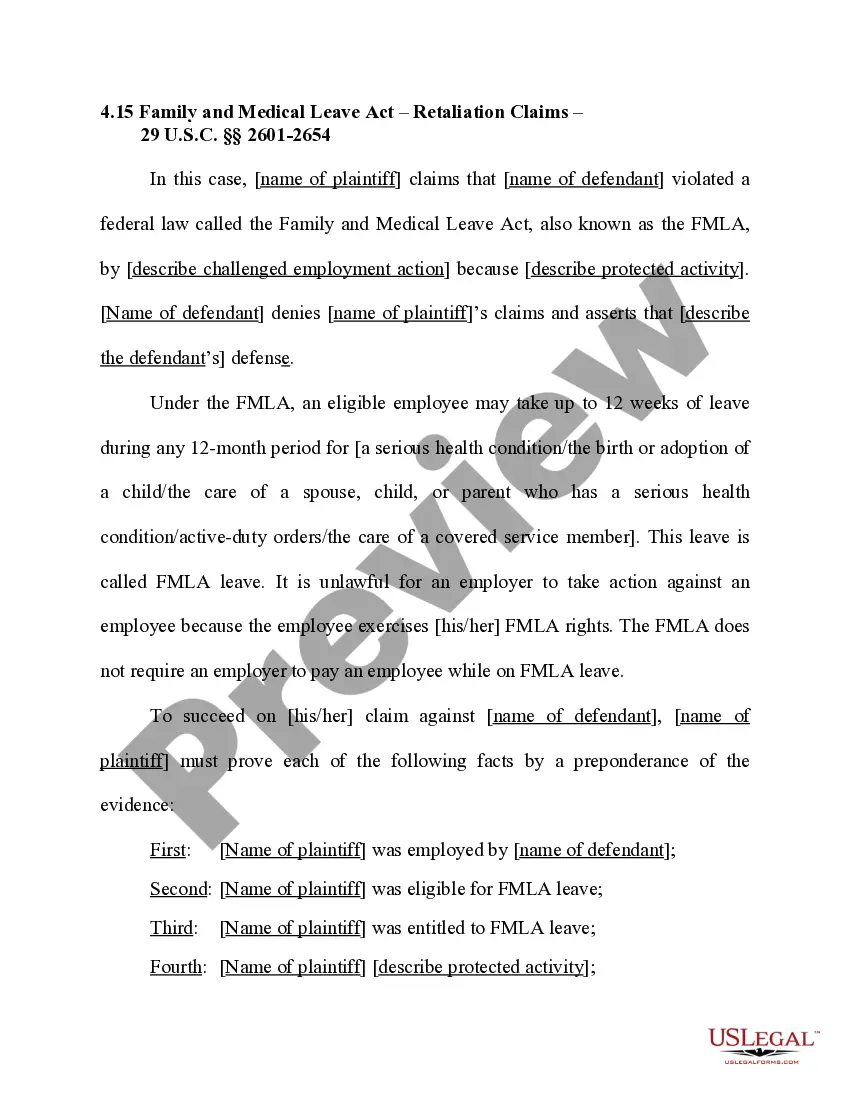
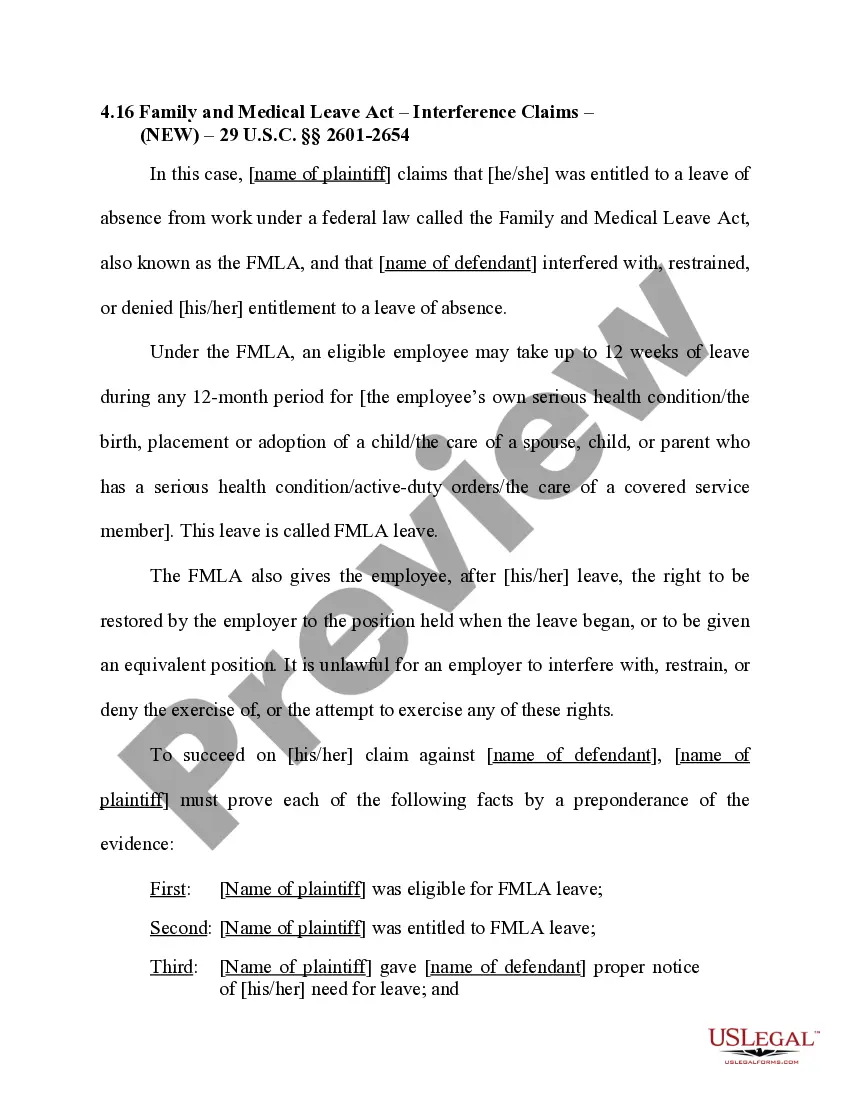
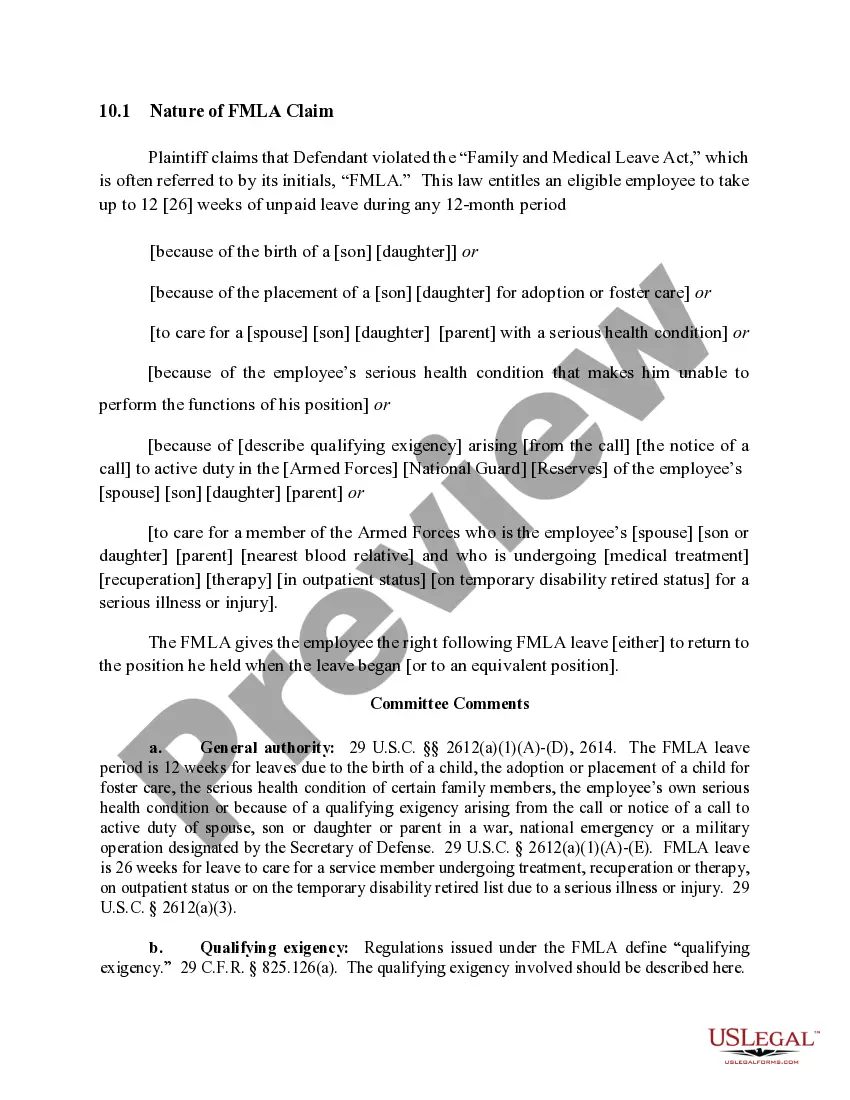
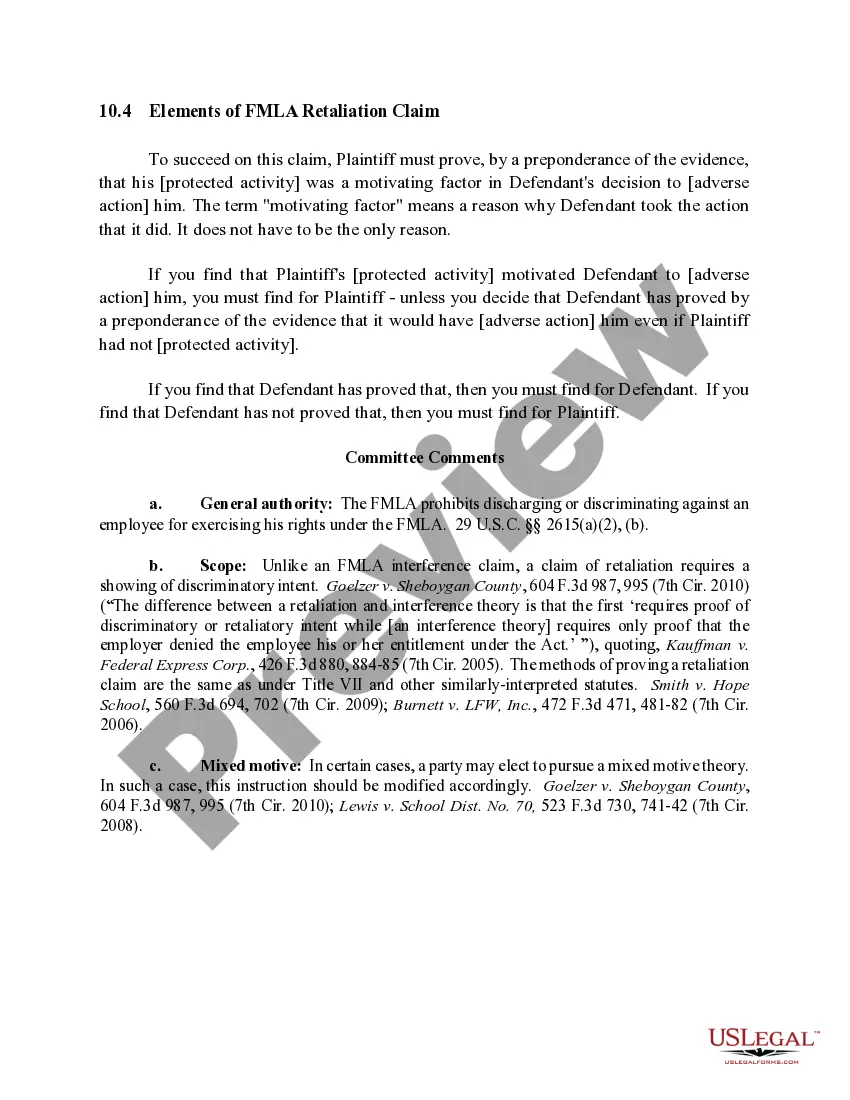
The 10.2 Elements of FMLA Interference Claim form outlines the necessary criteria that a plaintiff must prove to establish an interference claim under the Family and Medical Leave Act (FMLA). This form is essential for those who believe their rights to take FMLA leave have been compromised. It helps clarify the legal requirements that differentiate FMLA interference claims from retaliation claims, providing a structured way for plaintiffs to present their case.
Key parts of this document
- Definition of the condition related to a serious health issue.
- Criteria for appropriate notice to the defendant regarding leave.
- Examples of potential interference actions by the defendant.
- Legal standards governing FMLA interference claims.
- Guidance on modifying the instruction for specific leave reasons.
When to use this form
This form is utilized in situations where an employee's right to take FMLA leave has been denied or interfered with. Common scenarios include an employer not granting leave due to serious health conditions, terminating an employee for taking leave, or failing to provide necessary information about FMLA rights. It is crucial for employees who suspect their workplace rights under FMLA have been violated to use this form to build their legal case.
Who needs this form
- Employees who believe their FMLA leave has been unjustly denied.
- Individuals seeking to take leave for their own serious health condition or that of a family member.
- Workers needing to assert their rights after facing retaliation for requesting FMLA leave.
- Those involved in legal disputes regarding FMLA leave with their employer.
How to complete this form
- Identify and specify the condition of the plaintiff or the family member.
- Determine and confirm that the condition qualifies as a serious health condition.
- Document the notice provided to the employer regarding the need for leave.
- List the specific ways the employer interfered with the plaintiffâs right to take leave.
- Prepare to provide evidence that supports each of the required elements of the claim.
Does this document require notarization?
This form does not typically require notarization to be legally valid. However, some jurisdictions or document types may still require it. US Legal Forms provides secure online notarization powered by Notarize, available 24/7 for added convenience.
Get your form ready online
Our built-in tools help you complete, sign, share, and store your documents in one place.
Make edits, fill in missing information, and update formatting in US Legal Forms—just like you would in MS Word.
Download a copy, print it, send it by email, or mail it via USPS—whatever works best for your next step.
Sign and collect signatures with our SignNow integration. Send to multiple recipients, set reminders, and more. Go Premium to unlock E-Sign.
If this form requires notarization, complete it online through a secure video call—no need to meet a notary in person or wait for an appointment.
We protect your documents and personal data by following strict security and privacy standards.

Make edits, fill in missing information, and update formatting in US Legal Forms—just like you would in MS Word.

Download a copy, print it, send it by email, or mail it via USPS—whatever works best for your next step.

Sign and collect signatures with our SignNow integration. Send to multiple recipients, set reminders, and more. Go Premium to unlock E-Sign.

If this form requires notarization, complete it online through a secure video call—no need to meet a notary in person or wait for an appointment.

We protect your documents and personal data by following strict security and privacy standards.
Mistakes to watch out for
- Failing to establish the serious health condition clearly.
- Insufficient documentation of notice given to the employer.
- Not specifying all forms of interference experienced.
- Overlooking relevant case law that may strengthen the claim.
Benefits of using this form online
- Convenience of downloading the form and filling it out from home.
- Editability allows for updates as your case evolves.
- Access to reliable legal language drafted by licensed attorneys.
- A streamlined process reduces the time spent on paperwork.
Legal use & context
- This form is legally recognized for establishing claims under the FMLA.
- Utilization of this form helps ensure compliance with federal regulations.
- It supports plaintiffs in demonstrating their entitlement to family medical leave.
- Adhering to the guidelines in this form can enhance the chances of a successful claim.
Key takeaways
- The 10.2 Elements of FMLA Interference Claim form is critical for asserting rights under FMLA.
- Proper documentation and specification of claims significantly impact the success of the case.
- This form is adaptable for various types of leave situations covered by FMLA regulations.
- Utilizing this form aids in navigating the legal complexities of FMLA claims.
Looking for another form?
Form popularity
FAQ
An adverse employment action is a change in the terms and conditions of your job that puts you in a worse position. It includes anything from termination to something that reduces your benefits, lowers your rank or decreases your chances of a promotion.
To prove interference, the employee must show entitlement to leave (and that he or she gave proper notice); that the employer took adverse action against the employee that interfered with the ability to take leave; and that the adverse action was related to the taking, or attempting to take, FMLA leave.
California law states that an adverse employment action is anything the employer does that ?materially and adversely affected the terms, conditions or privileges? of a worker's employment. The most serious adverse employment actions are firing the employee, or refusing to hire an applicant.
?then the employee will have a claim of interference. An interference claim requires that the employee was actually prevented from taking the full, protected leave, while a retaliation can be brought even if the employee managed to take the full leave.
For purposes of an FMLA retaliation claim, the legal definition of an adverse employment action is ?any action by the employer that is likely to dissuade a reasonable worker in the plaintiff's position from exercising his legal rights.? Millea v.
The following are examples of adverse actions employers might take: discharging the worker; demoting the worker; reprimanding the worker; committing harassment; creating a hostile work environment; laying the worker off; failing to hire or promote a worker; blacklisting the worker; transferring the worker to another
Therefore, if an employee would have been terminated or disciplined prior to, or regardless of, their leave status, employers can take action while an employee is on active FMLA, including those on intermittent leave, for appropriate disciplinary reasons independent of the FMLA leave.
Common examples of FMLA retaliation may include: Counting FMLA leave as an absence under attendance policies. Terminating an employee shortly after returning from protected medical leave. Denying a promotion to an employee who otherwise would have been promoted.