Counterfeiting
What is this form?
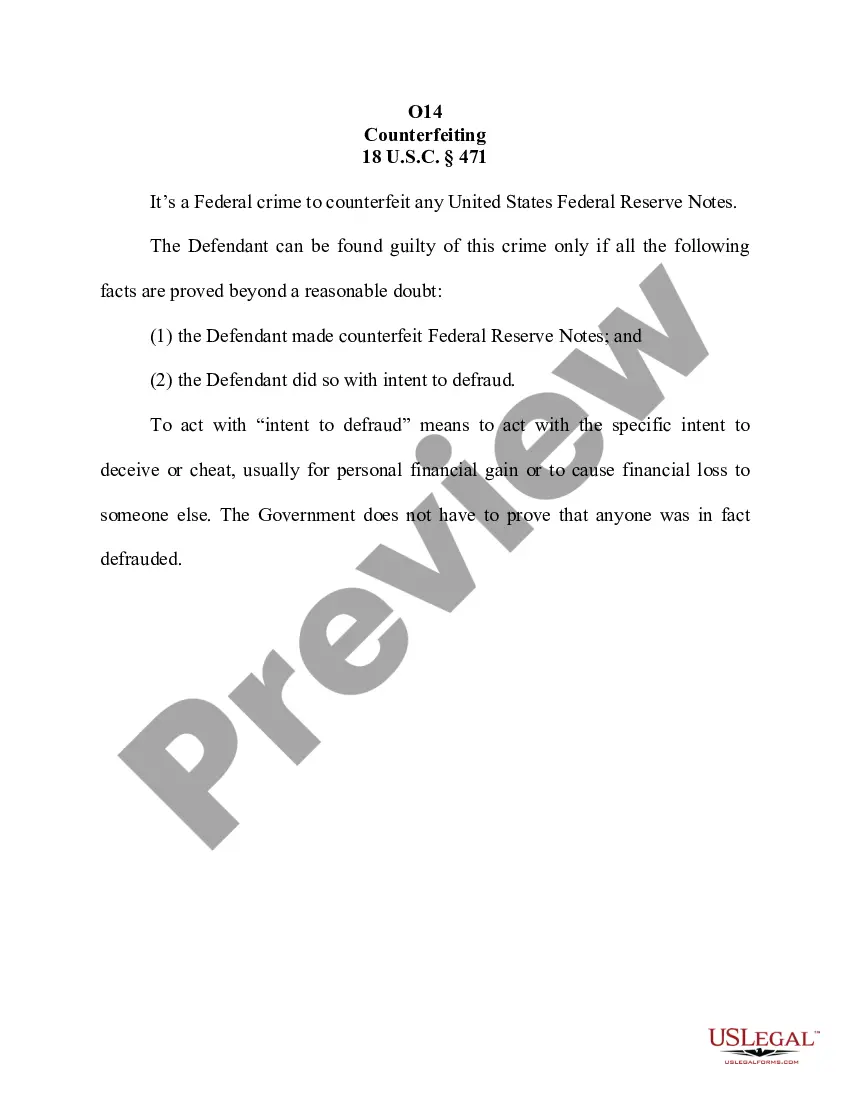
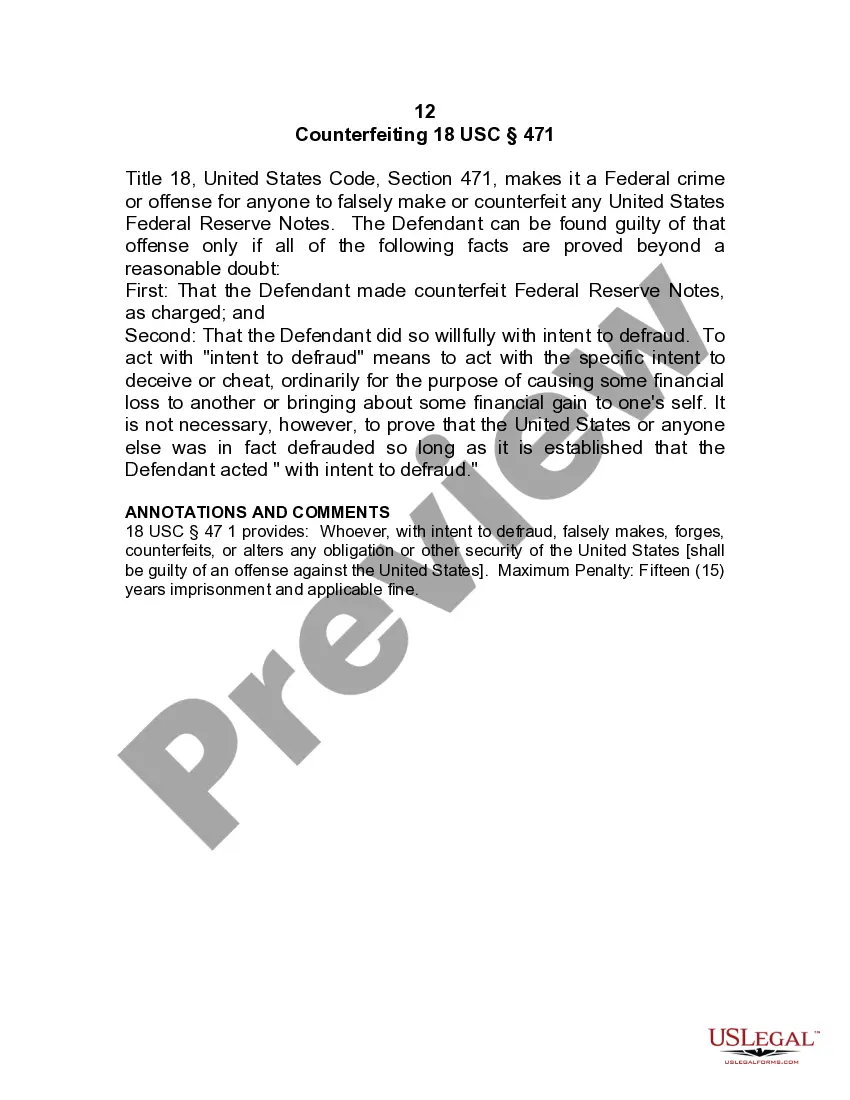
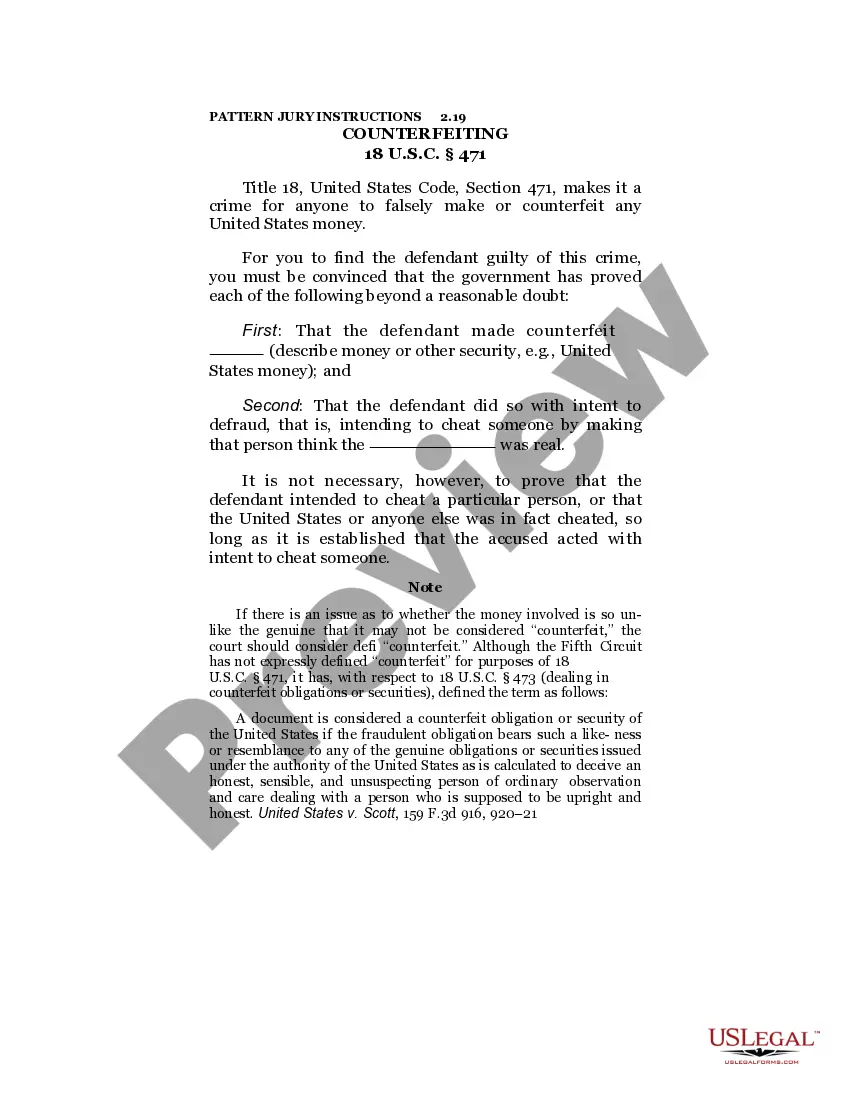
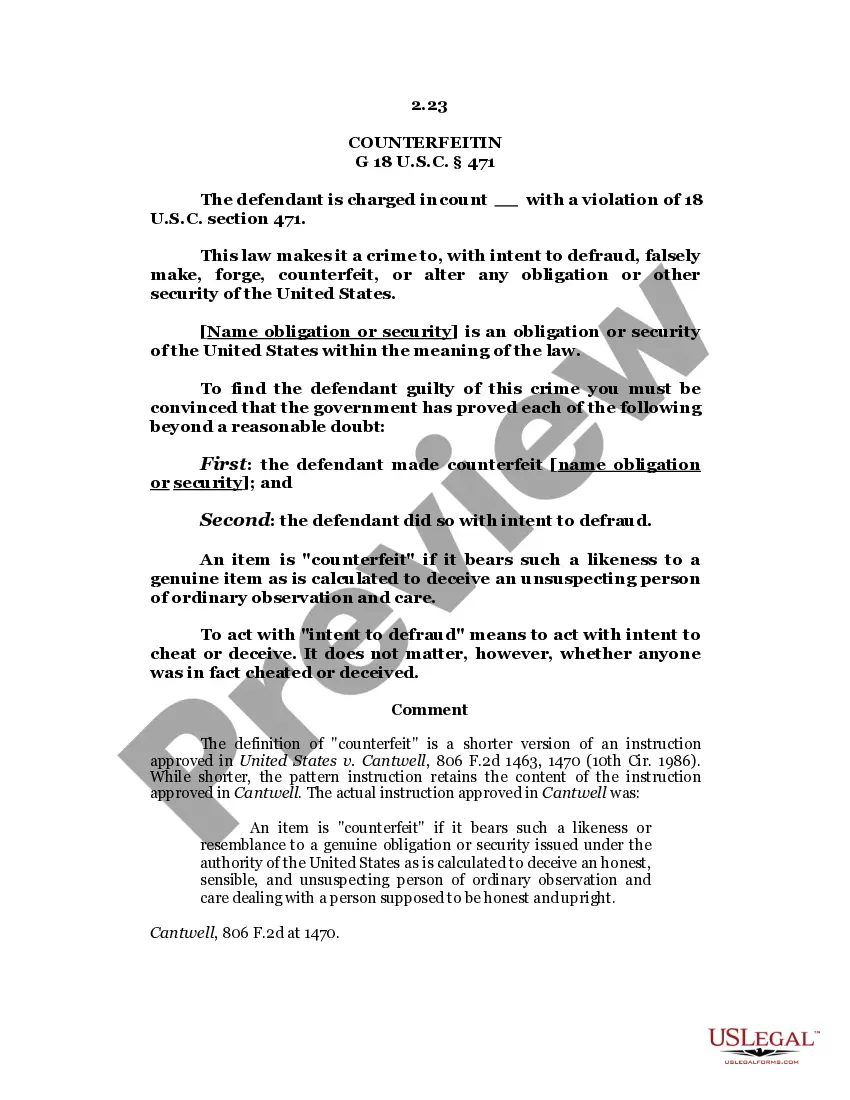
The Counterfeiting form is a legal template used in cases involving the crime of counterfeiting United States Federal Reserve Notes, as defined under 18 U.S.C. § 471. It includes specific jury instructions that help clarify the criteria needed for a guilty verdict in federal court. This form is designed to facilitate a clear understanding of the legal standards involved, distinguishing it from other types of legal instructions that may not pertain directly to counterfeiting.
Form components explained
- The definition of counterfeiting Federal Reserve Notes.
- Criteria for establishing intent to defraud.
- Elements that must be proven beyond a reasonable doubt to secure a conviction.
When to use this form
This form is utilized when preparing for a federal trial involving allegations of counterfeiting. It is crucial for jury instructions to ensure that jurors understand the legal standards that must be met for a conviction. Legal professionals may refer to this form in cases where individuals are accused of producing, distributing, or possessing counterfeit currency with intent to deceive.
Intended users of this form
This form is intended for:
- Attorneys handling criminal defense cases related to counterfeiting.
- Prosecutors pursuing charges of counterfeiting against individuals.
- Judges and court officials requiring clear instructions for juries in counterfeiting cases.
Completing this form step by step
- Review the legal definition of counterfeiting as specified.
- Ensure clarity on what constitutes intent to defraud.
- Outline the elements that must be proven for a guilty verdict.
- Use the instructions to prepare the juryâs understanding appropriately.
Is notarization required?
This form does not typically require notarization unless specified by local law. However, verifying specific requirements in your jurisdiction is advisable to ensure compliance with all legal standards.
Get your form ready online
Our built-in tools help you complete, sign, share, and store your documents in one place.
Make edits, fill in missing information, and update formatting in US Legal Forms—just like you would in MS Word.
Download a copy, print it, send it by email, or mail it via USPS—whatever works best for your next step.
Sign and collect signatures with our SignNow integration. Send to multiple recipients, set reminders, and more. Go Premium to unlock E-Sign.
If this form requires notarization, complete it online through a secure video call—no need to meet a notary in person or wait for an appointment.
We protect your documents and personal data by following strict security and privacy standards.

Make edits, fill in missing information, and update formatting in US Legal Forms—just like you would in MS Word.

Download a copy, print it, send it by email, or mail it via USPS—whatever works best for your next step.

Sign and collect signatures with our SignNow integration. Send to multiple recipients, set reminders, and more. Go Premium to unlock E-Sign.

If this form requires notarization, complete it online through a secure video call—no need to meet a notary in person or wait for an appointment.

We protect your documents and personal data by following strict security and privacy standards.
Common mistakes to avoid
- Failing to fully explain the definition of intent to defraud.
- Not clearly outlining the necessary elements required for a conviction.
- Ignoring the requirement to prove facts beyond a reasonable doubt.
Benefits of completing this form online
- Convenience of downloading and accessing the form at any time.
- Editability to accommodate specific case circumstances.
- Reliability of using templates drafted by licensed attorneys.
Looking for another form?

Form popularity
FAQ
A counterfeit is an item that uses someone else's trademark without their permission. By making or selling a counterfeit, criminals seek to profit unfairly from the trademark owner's reputation. Counterfeiting is a fraudulent imitation (a forgery) of a trusted brand and product, and it is a serious crime.
Counterfeit is also a noun. They sold luxury watches and handbags ? all counterfeits. If someone counterfeits something, they make a version of it that is not genuine but has been made to look genuine in order to deceive people.
This could include knock-off clothing and accessories, imitation electronics, or even copies of software. Counterfeiters typically produce these goods using substandard materials and processes in order to maximize their profits.
THE TWO CHIEF METHODS OF COUNTERFEITING COINS ARE CASTING AND STRIKING.
Counterfeiting is the unlawful duplication of something valuable in order to deceive. Counterfeit items can include money, coupons, credit or debit cards, clothes, and jewelry.
: to imitate or feign especially with intent to deceive. also : to make a fraudulent replica of. counterfeiting $20 bills. intransitive verb. : to try to deceive by pretense or dissembling.
Legal Implications It is illegal to purchase counterfeit goods. Bringing them into the United States may result in civil or criminal penalties and purchasing counterfeit goods often supports criminal activities, such as forced labor or human trafficking.