Trademark Counterfeiting
Overview of this form
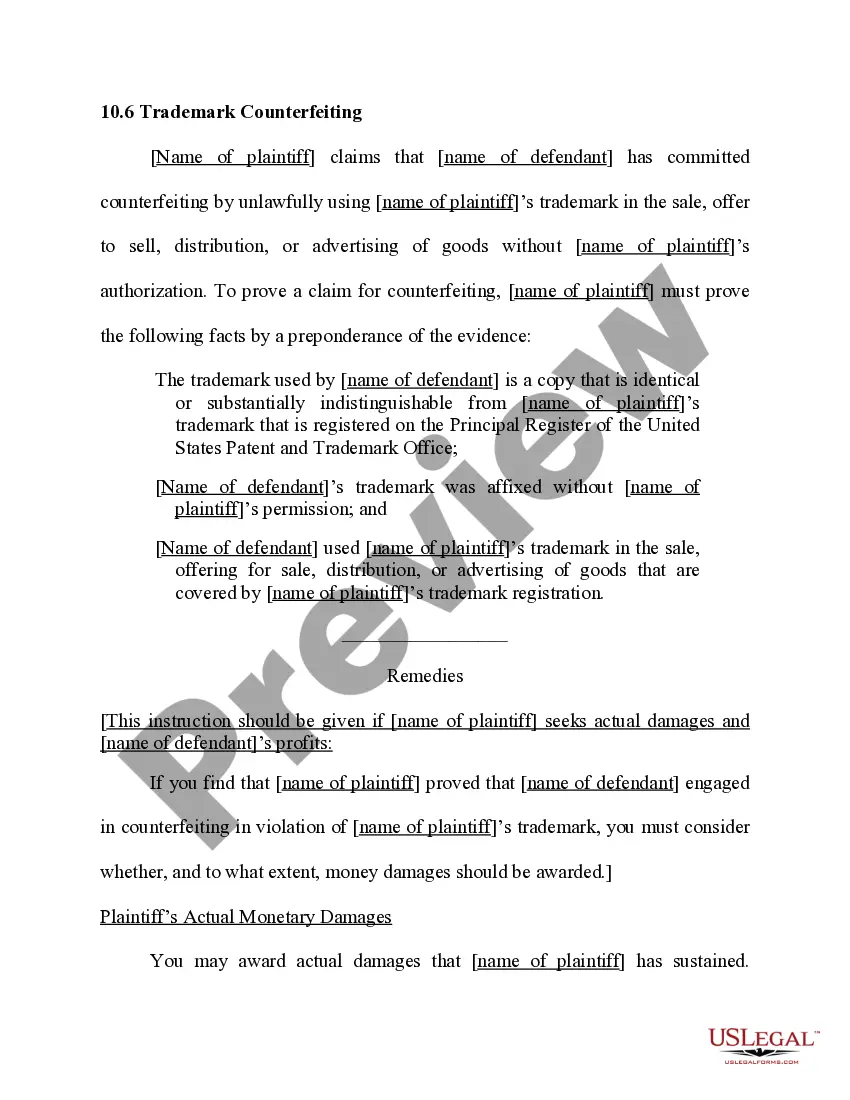
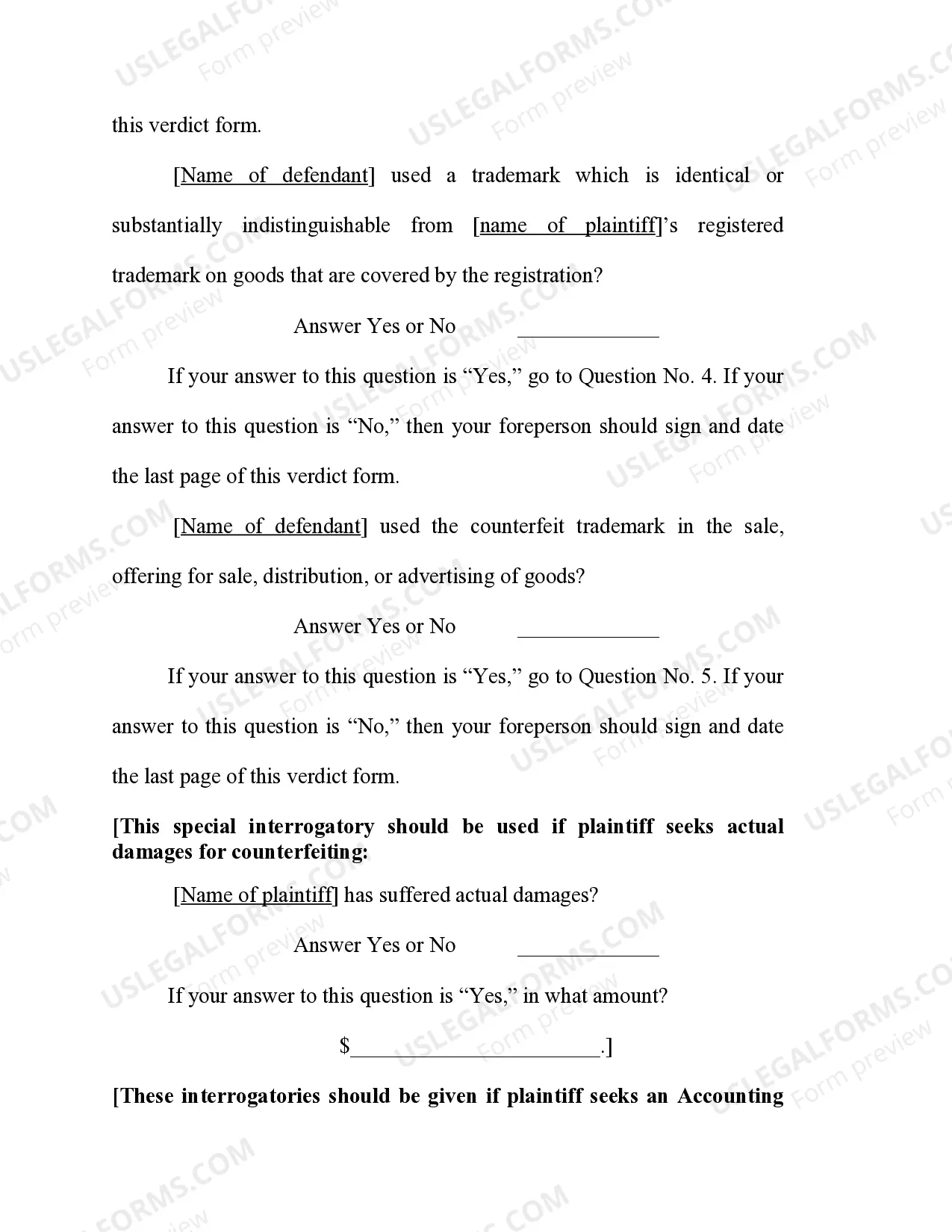
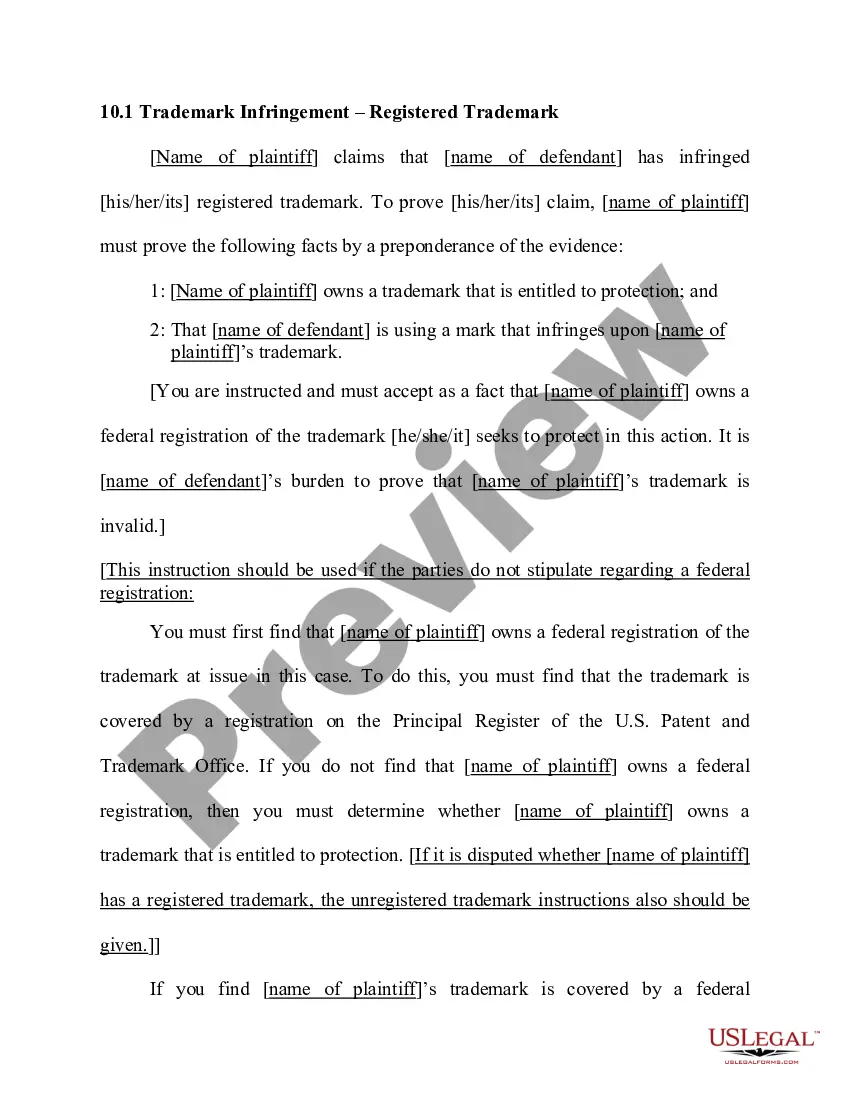
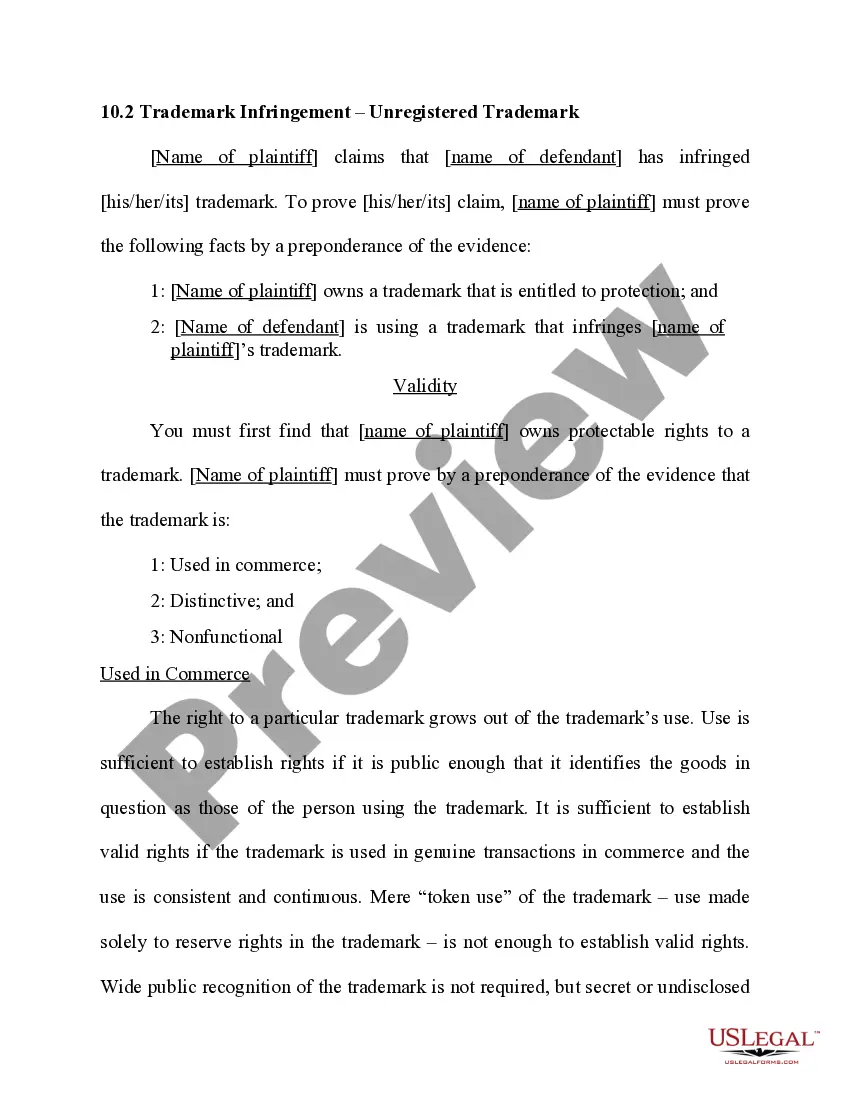
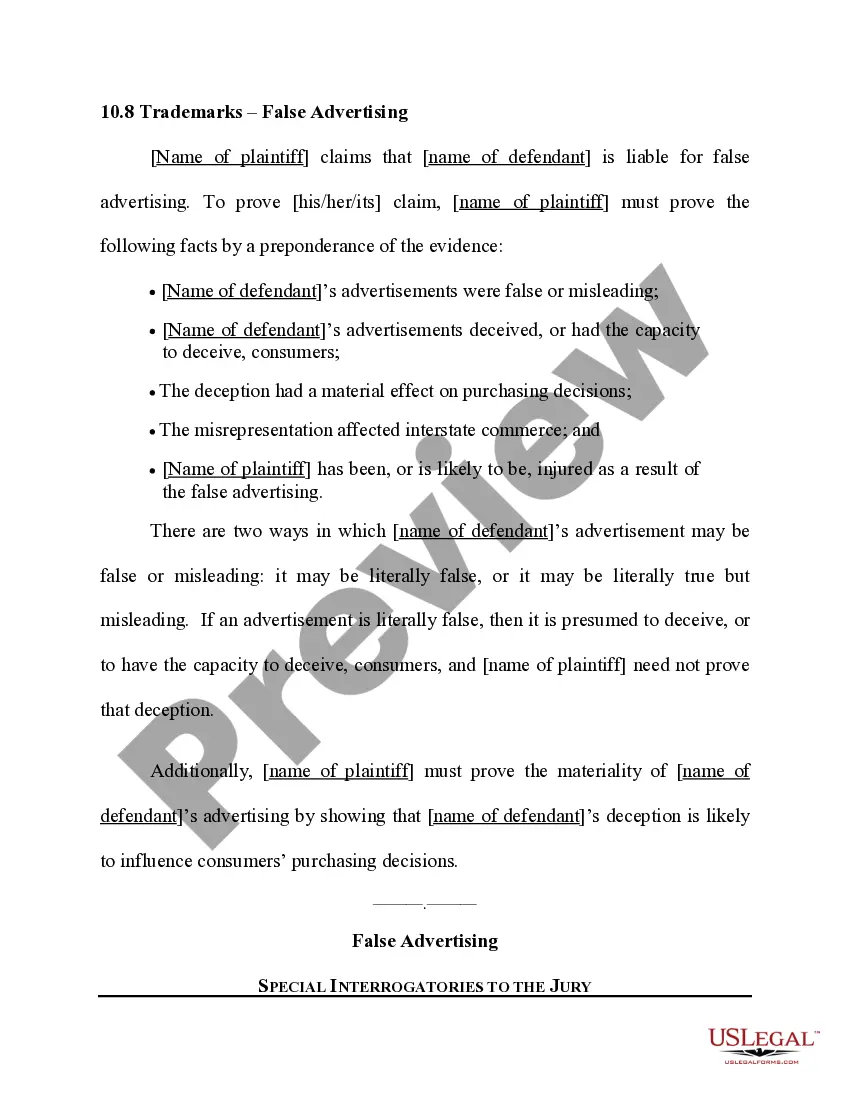
The Trademark Counterfeiting form is a legal document used to establish claims of trademark infringement due to counterfeiting. This form specifically addresses situations where one party unlawfully uses another party's registered trademark without authorization. It helps plaintiffs outline their claims in a structured way, differing from other trademark forms by focusing on counterfeit actions and the necessary legal instructions for a jury to consider when determining damages or statutory penalties.
Main sections of this form
- Identification of the plaintiff and defendant involved in the counterfeiting claim.
- Criteria for proving counterfeiting, including trademark registration status and unauthorized use.
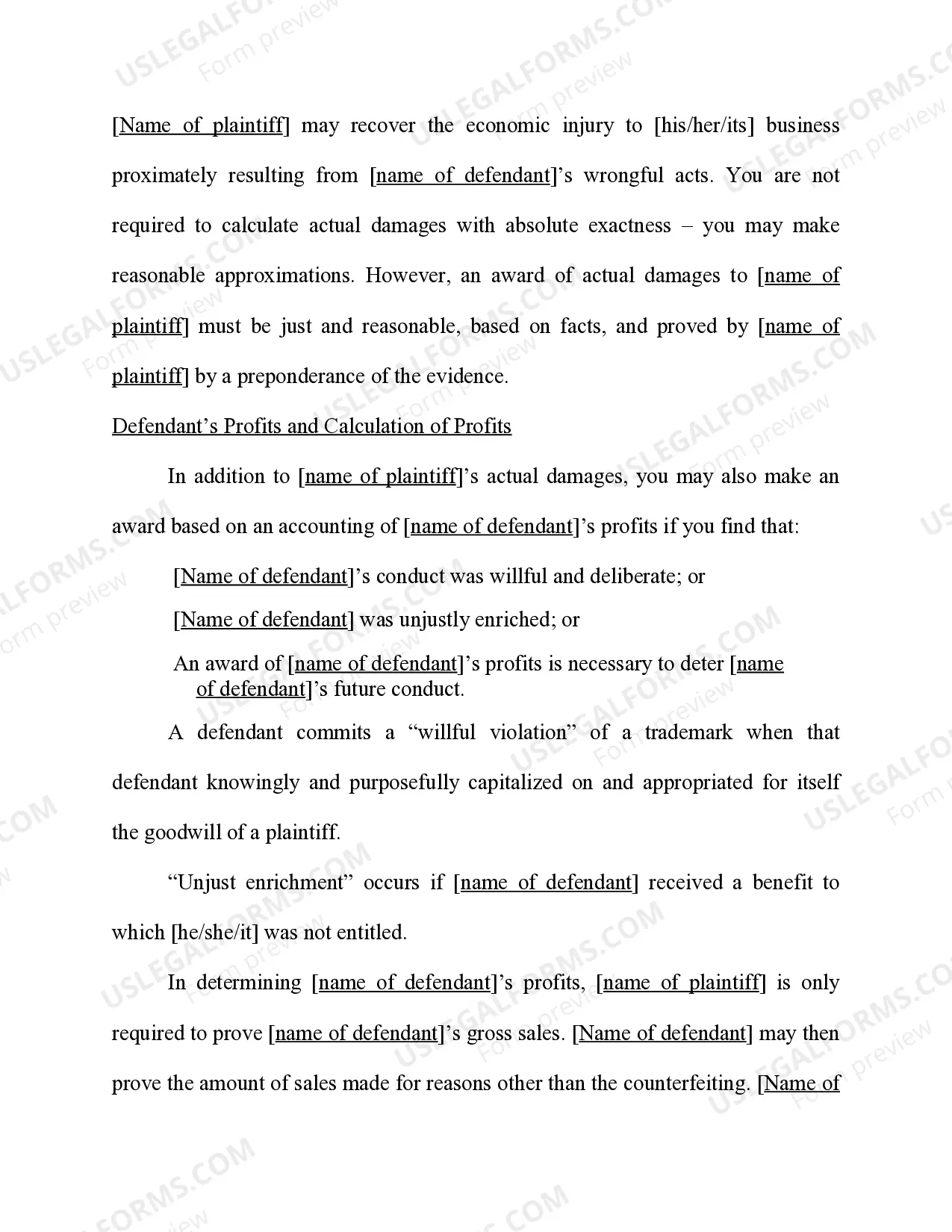
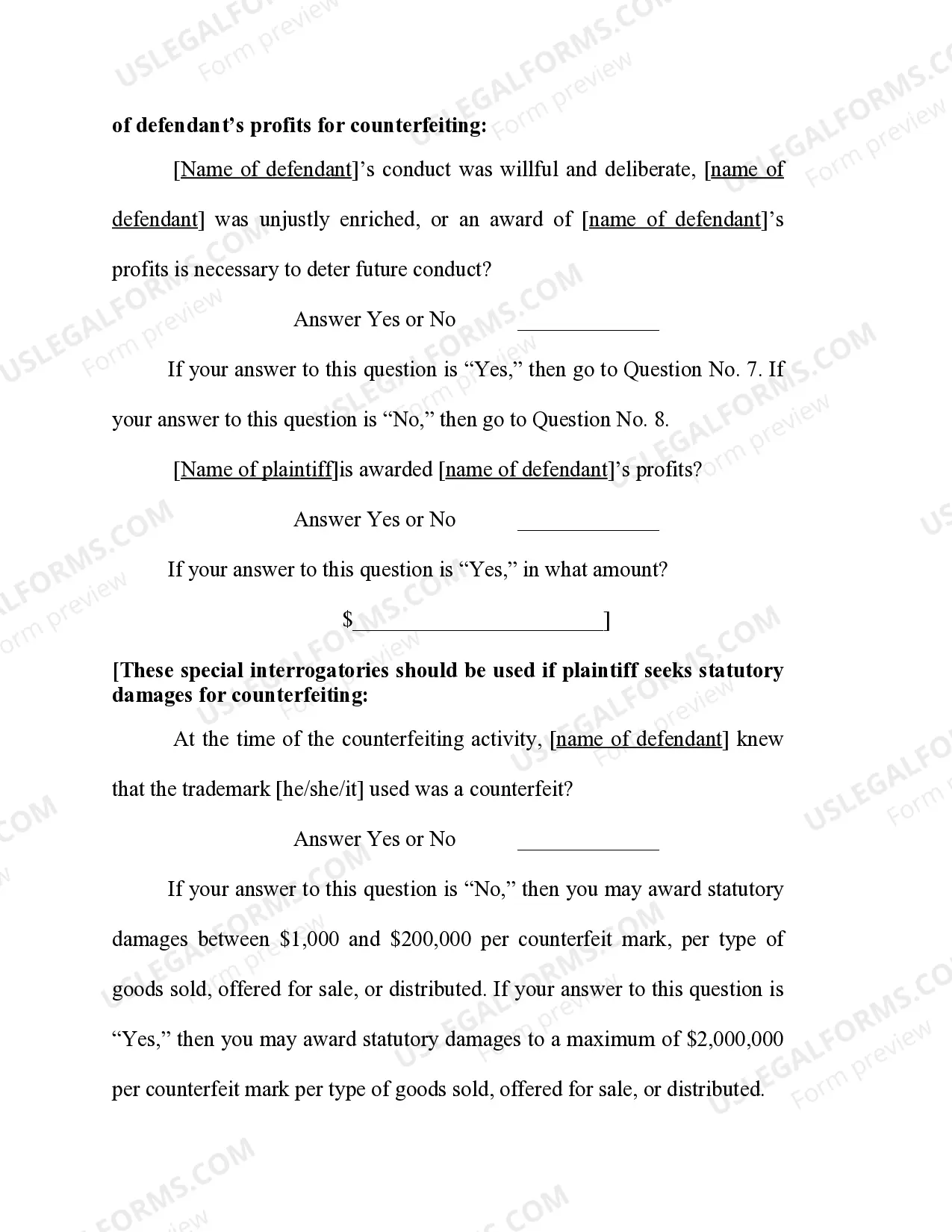
- Specific instructions regarding remedies, including actual damages and defendant's profits.
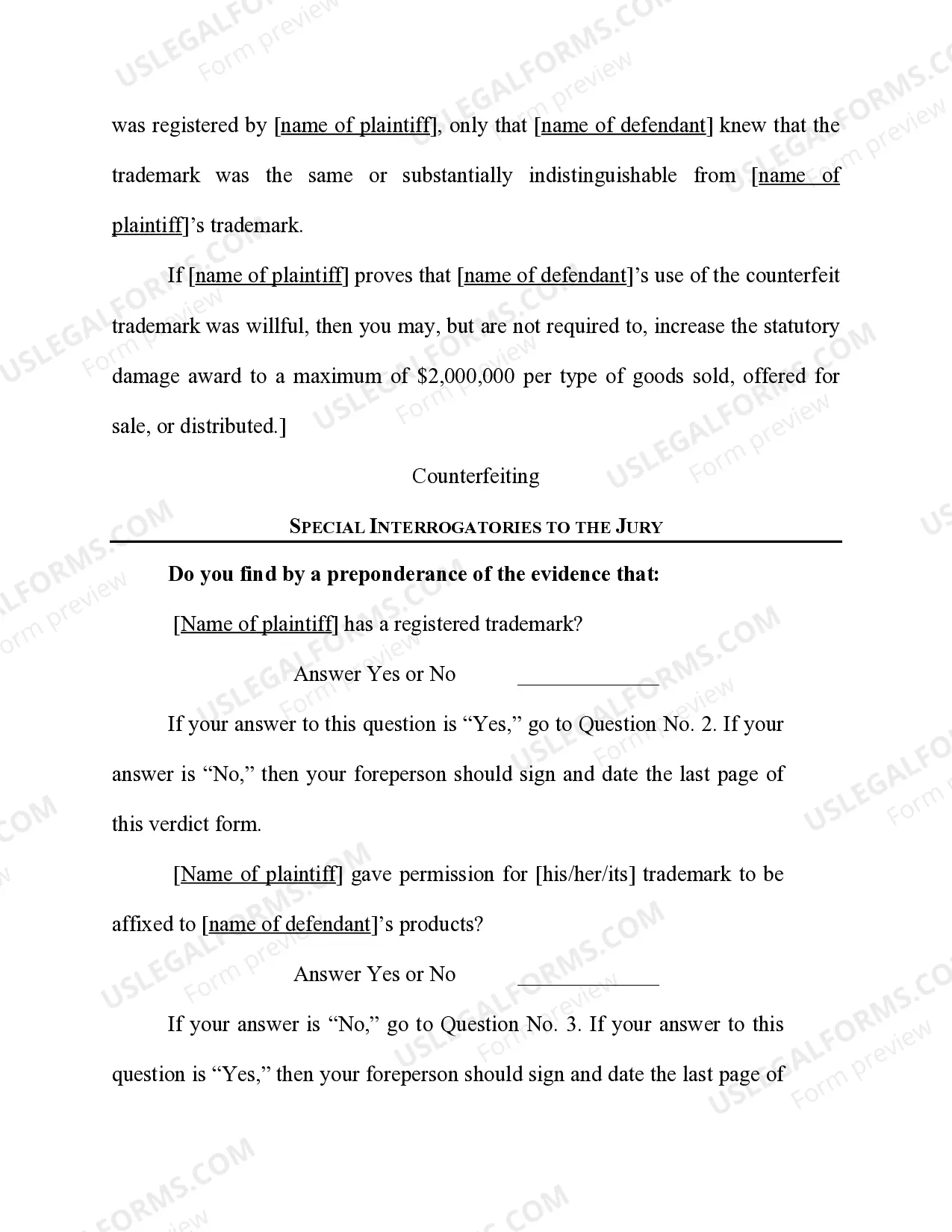
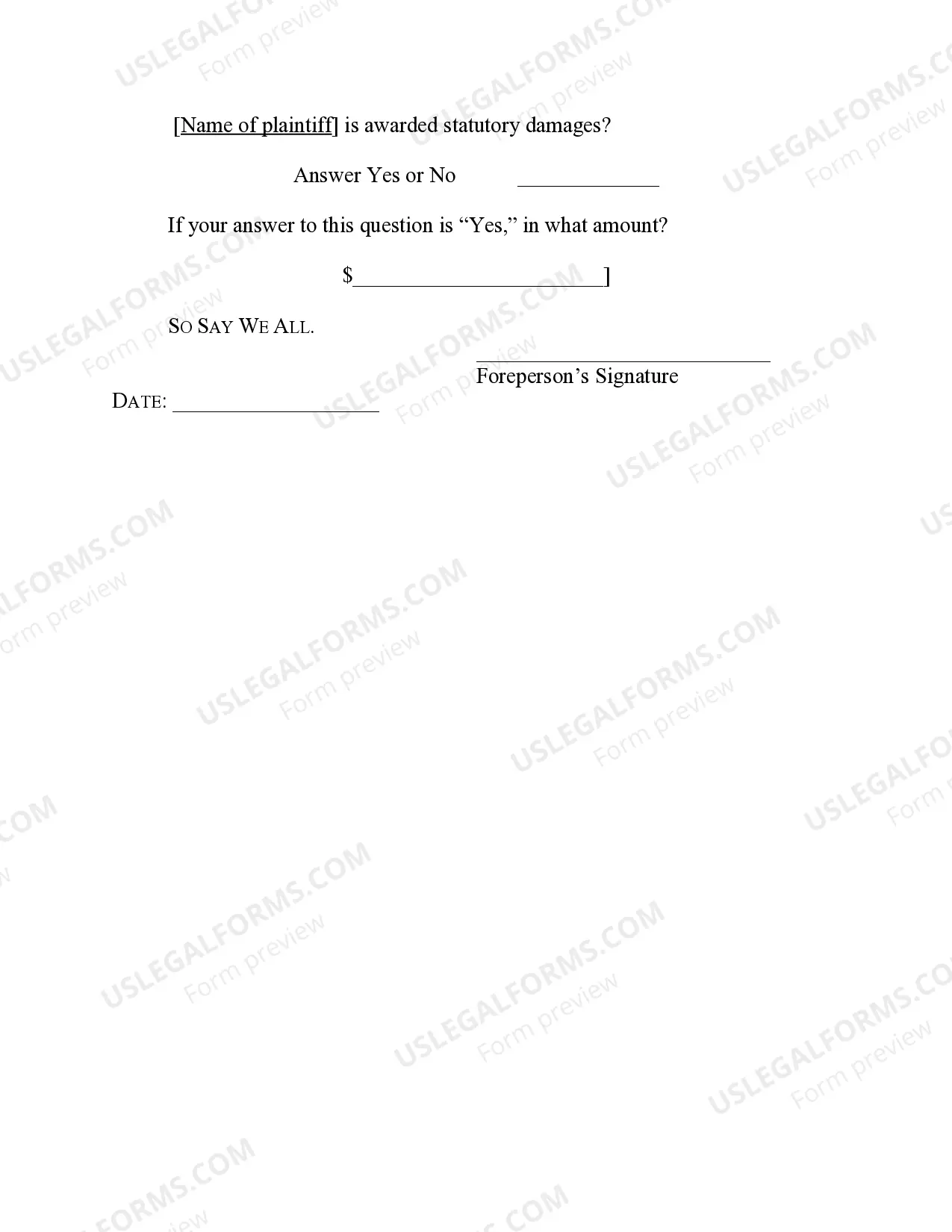
- Special interrogatories for the jury to ascertain critical facts pertaining to the case.
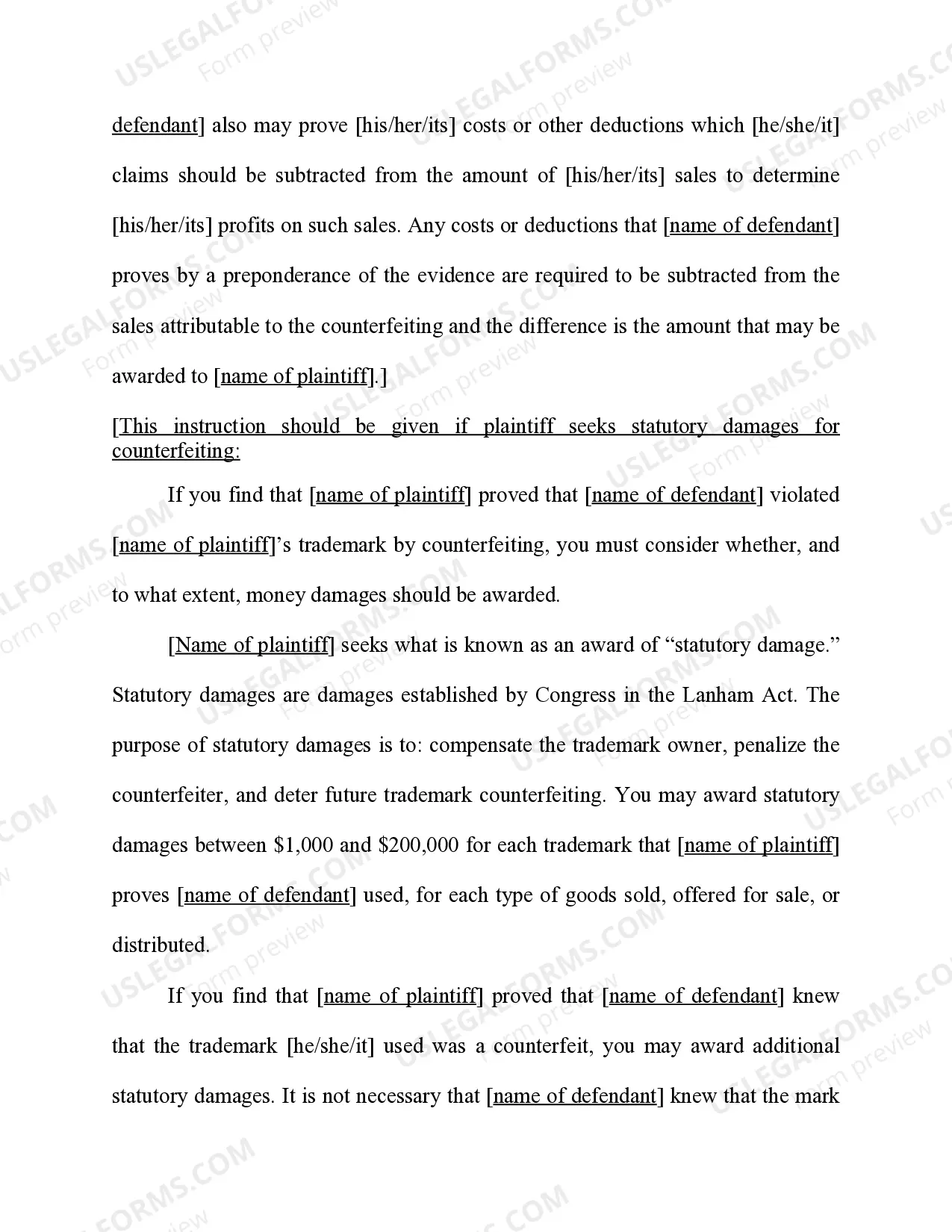
- Parameters for statutory damages as defined by the Lanham Act.
When to use this form
This form should be used when a trademark holder believes that another party has engaged in counterfeiting activities. Situations can include unauthorized sales of goods bearing the trademark, using a confusingly similar mark for similar goods, or other acts that may harm the trademark's reputation and value. It is essential for ensuring that trademark rights are enforced and to seek appropriate damages for the infringement.
Who needs this form
This form is intended for:
- Business owners or individuals who hold a registered trademark and suspect it has been counterfeited.
- Legal representatives seeking to file a claim on behalf of a trademark holder.
- Anyone who has experienced damages due to trademark infringement by another party.
Completing this form step by step
- Identify and enter the names of the plaintiff and defendant.
- Ensure the trademark being infringed upon is clearly described and specify its registration status.
- Detail the circumstances of the alleged counterfeiting, such as the unauthorized use or sale of goods.
- Determine the appropriate remedies sought, including actual damages or statutory damages, and provide relevant calculations.
- Complete the special interrogatories by answering yes or no to key questions related to the trademark and counterfeiting activities.
Notarization requirements for this form
This form does not typically require notarization unless specified by local law. Always check state regulations or consult a legal professional if you are unsure about the requirements.
Get your form ready online
Our built-in tools help you complete, sign, share, and store your documents in one place.
Make edits, fill in missing information, and update formatting in US Legal Forms—just like you would in MS Word.
Download a copy, print it, send it by email, or mail it via USPS—whatever works best for your next step.
Sign and collect signatures with our SignNow integration. Send to multiple recipients, set reminders, and more. Go Premium to unlock E-Sign.
If this form requires notarization, complete it online through a secure video call—no need to meet a notary in person or wait for an appointment.
We protect your documents and personal data by following strict security and privacy standards.

Make edits, fill in missing information, and update formatting in US Legal Forms—just like you would in MS Word.

Download a copy, print it, send it by email, or mail it via USPS—whatever works best for your next step.

Sign and collect signatures with our SignNow integration. Send to multiple recipients, set reminders, and more. Go Premium to unlock E-Sign.

If this form requires notarization, complete it online through a secure video call—no need to meet a notary in person or wait for an appointment.

We protect your documents and personal data by following strict security and privacy standards.
Mistakes to watch out for
- Failing to properly register the trademark before filing a counterfeiting claim.
- Not providing sufficient evidence to prove that the trademark is registered and has been used without authorization.
- Misunderstanding the threshold for willfulness in the defendant's conduct.
- Omitting necessary details regarding actual damages suffered due to the counterfeiting.
Benefits of completing this form online
- Easy access to a compliant and professionally drafted legal form.
- Ability to download and customize the form for specific legal needs.
- Secure storage of form data and documents for future reference.
- Immediate availability without waiting for paper-based processing.
Looking for another form?



Form popularity
FAQ
Trademark counterfeiting is when an established trademark is placed on a product or service that is not one of the legitimate goods offered by the trademark owner. It can be defined as any known manufacture, distribution, or intent to distribute items bearing counterfeit trademarks.
Counterfeiting is the unlawful duplication of something valuable in order to deceive. Counterfeit items can include money, coupons, credit or debit cards, clothes, and jewelry.
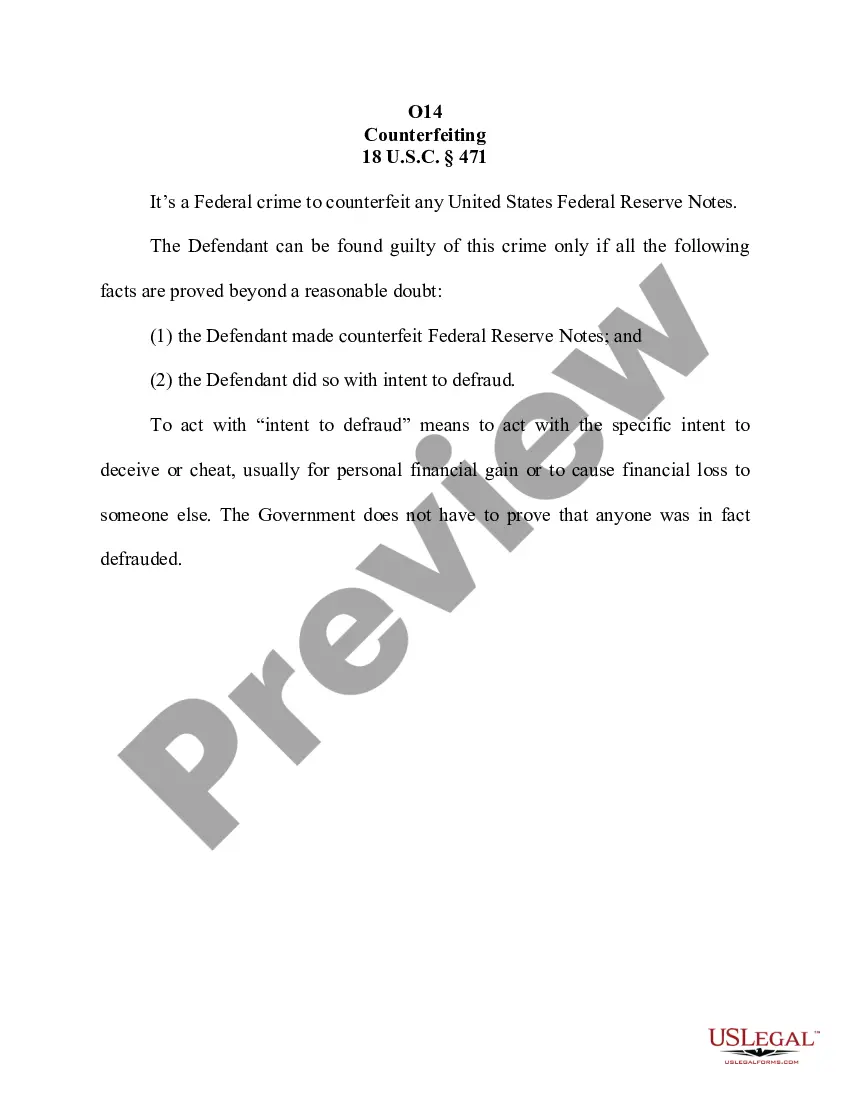
The Trademark Counterfeiting Act of 1984 is a United States federal law that amended the federal criminal code to make it a federal offense to violate the Lanham Act by the intentional use of a counterfeit trademark or the unauthorized use of a counterfeit trademark.
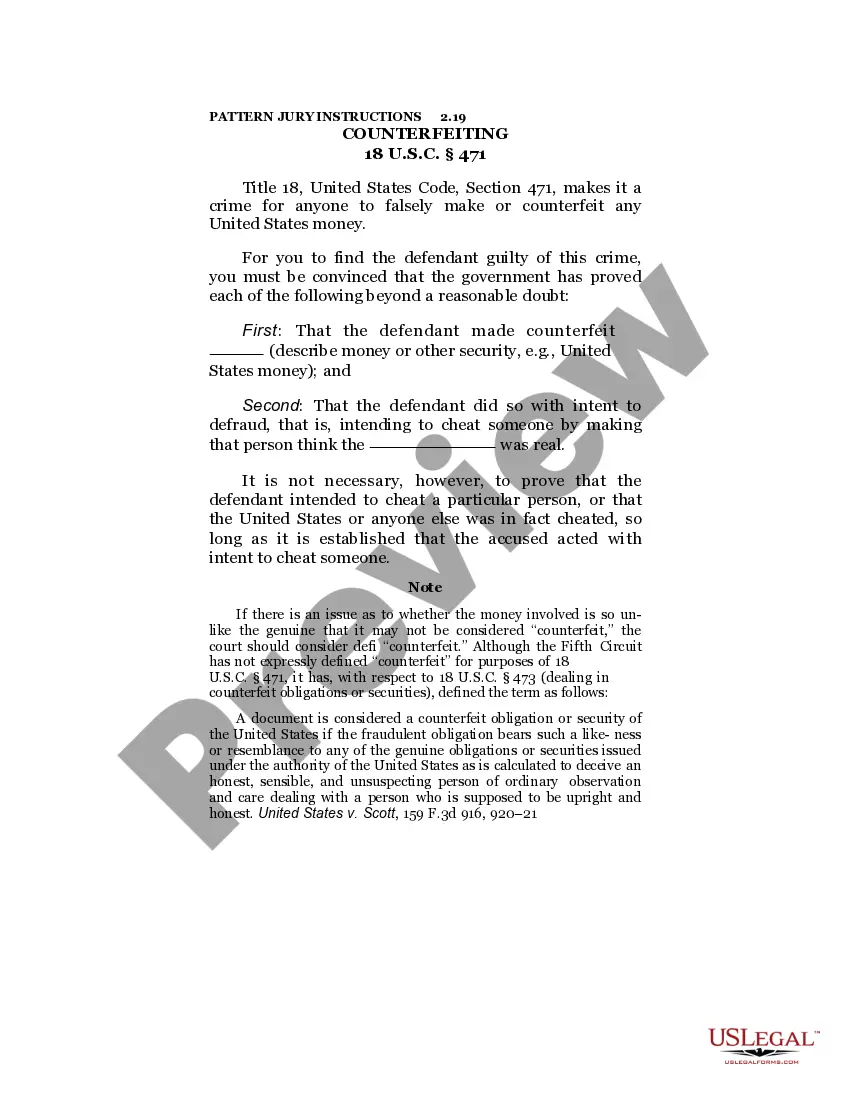
The 1984 Act created an offense, codified at 18 U.S.C. § 2320, which provides that "(w)hoever intentionally traffics or attempts to traffic in goods and services and knowingly uses a counterfeit mark on or in connection with such goods or services" shall be guilty of a felony.
Some instances of infringement are clear. If, for example, you have a jewelry company with a trademarked name of Romantic Stones, and another company comes along and starts selling jewelry under the name Romantic Stones, you have a pretty clear-cut claim for trademark infringement on your hands.
A counterfeit trademark includes marks that are largely identical to the real mark. Infringements include marks that are similar but not identical to the genuine mark. A similar mark is more likely to qualify as an infringement than as counterfeiting.
For example, if an individual buys a computer that bears an apple logo, but that computer is counterfeit and is lower quality than an actual apple computer, then the owner of the trademark will have their reputation and business goodwill harmed.
Some of the most common examples of counterfeit goods include counterfeit handbags, clothing, accessories, perfumes, and electronics. However, the most commonly seized counterfeit goods are athletic shoes, specifically, from brands like Nike and Adidas.