Trademarks - False Advertising
Understanding this form
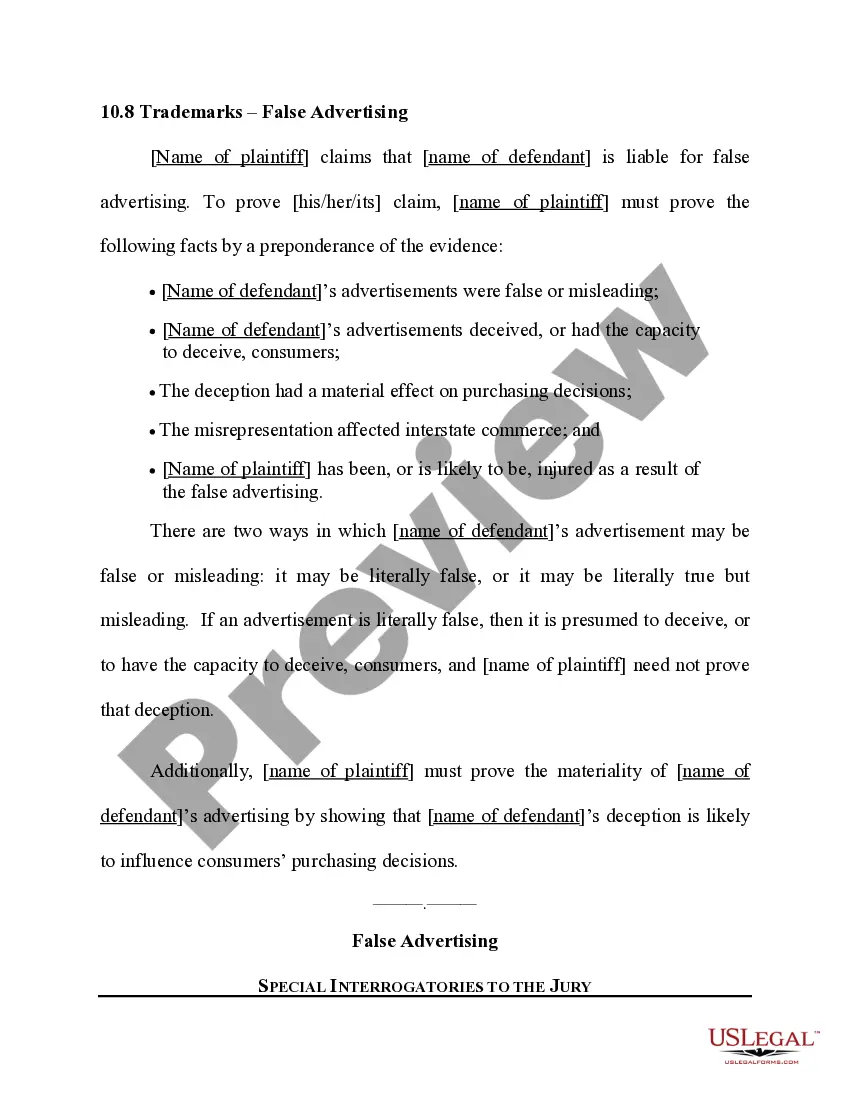
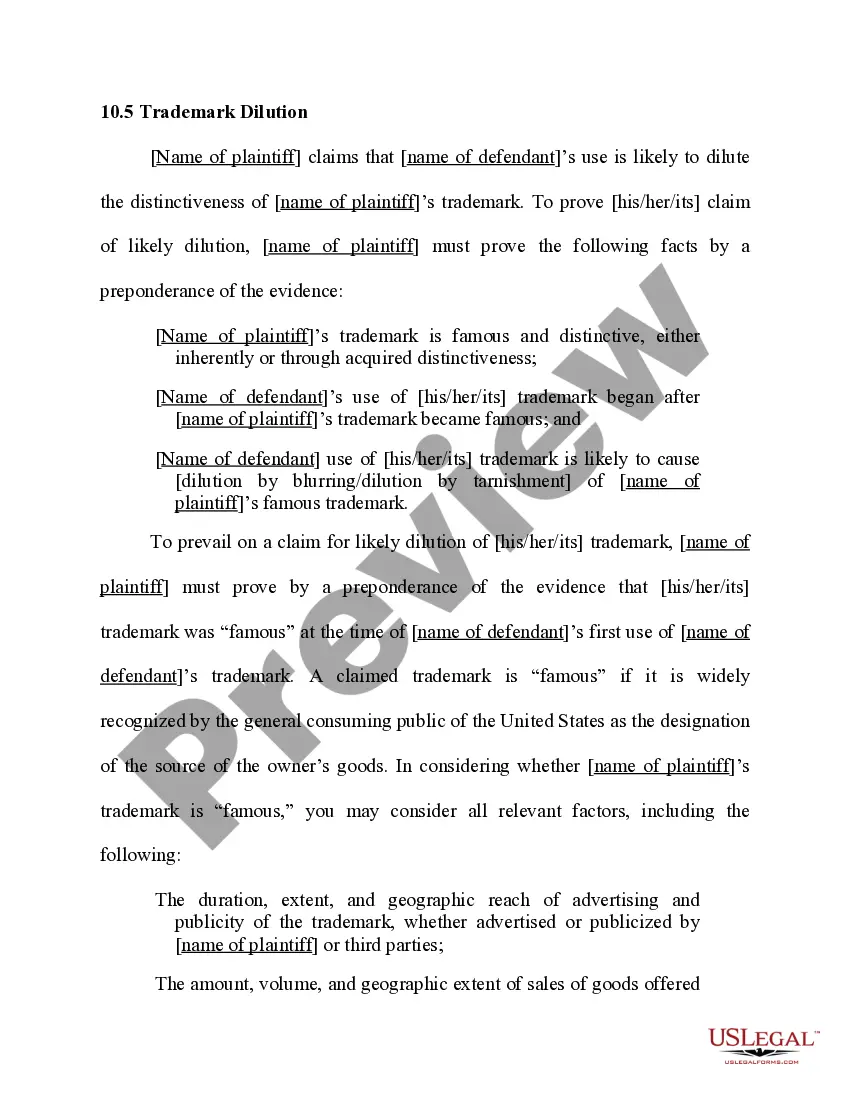
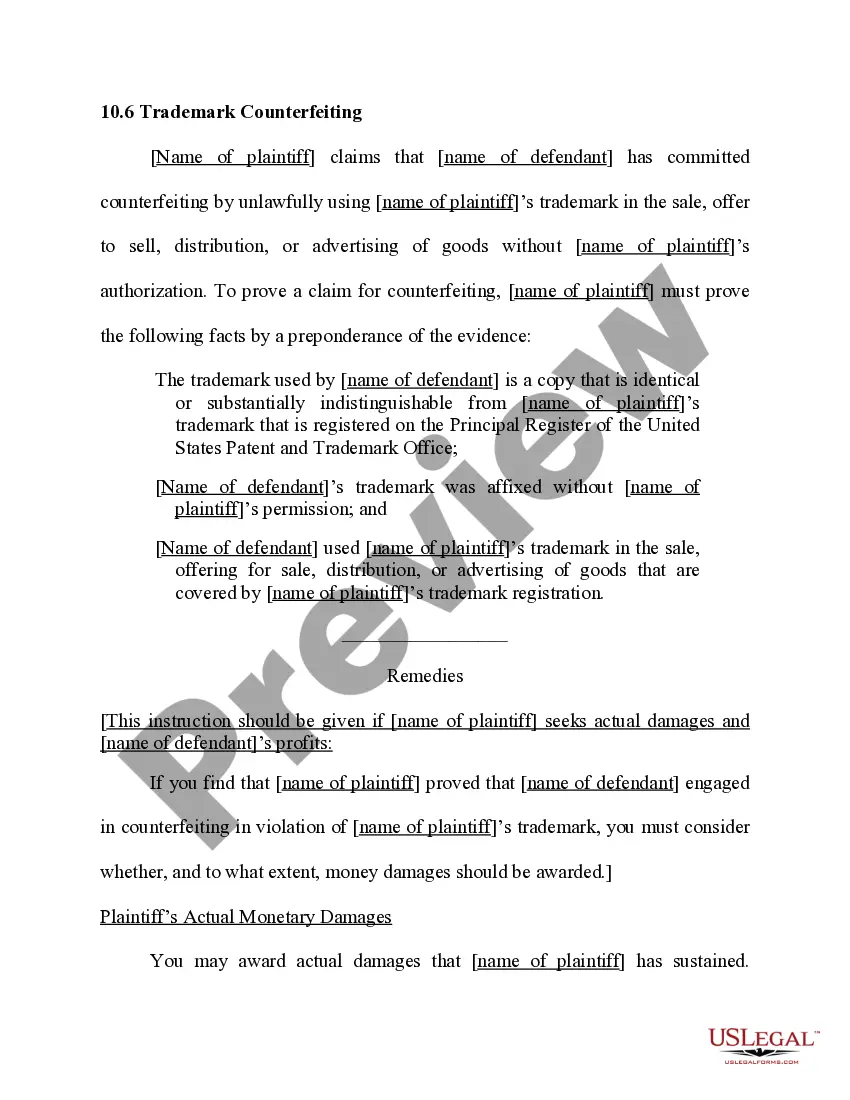
This form addresses claims of false advertising concerning trademarks. It serves as a structured guide for juries when determining if misleading or false advertising has affected consumer decisions. This specialized trademark false advertising form outlines exact points plaintiffs must prove to establish their case, making it distinct from general advertising complaint templates.
Key parts of this document
- Clarification on the elements of a false advertising claim.
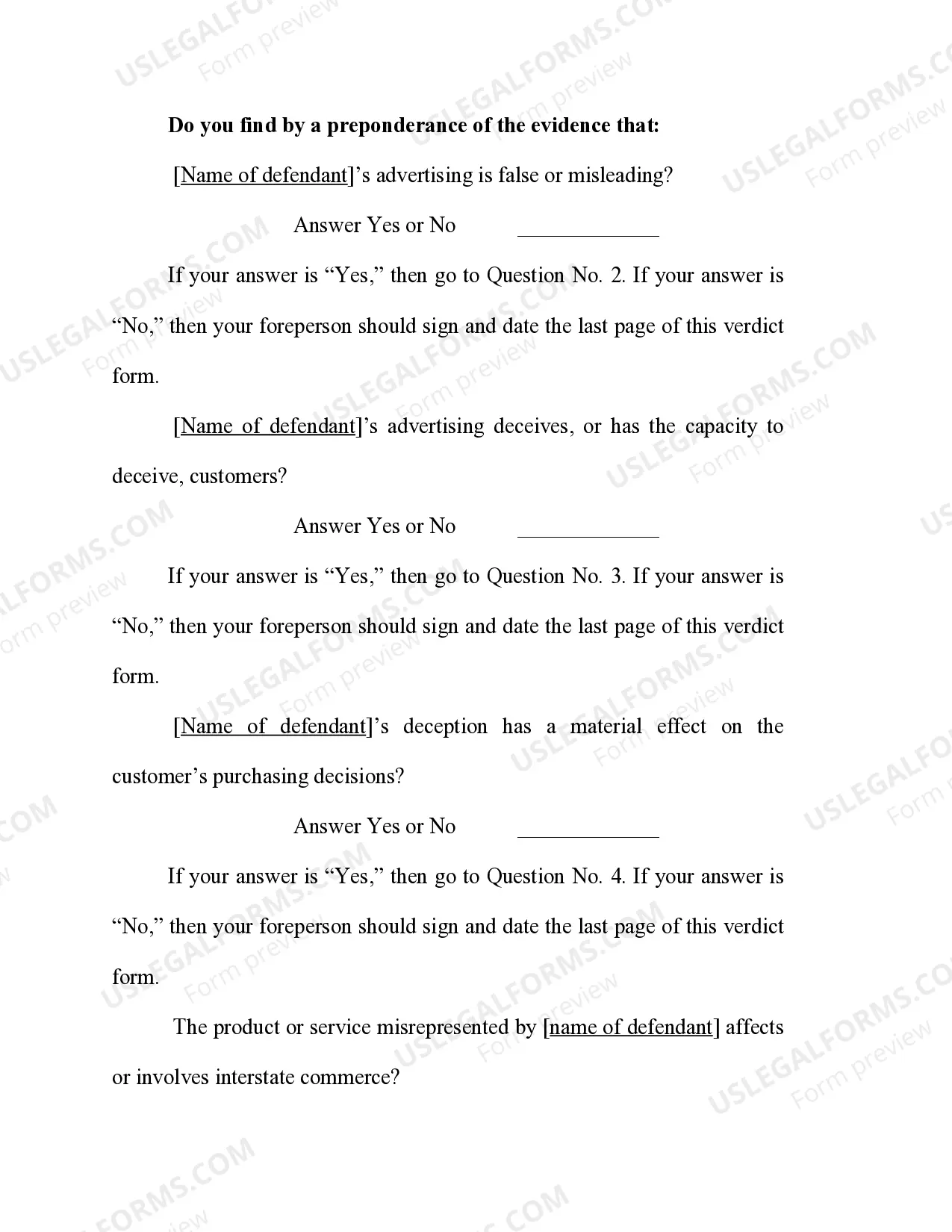
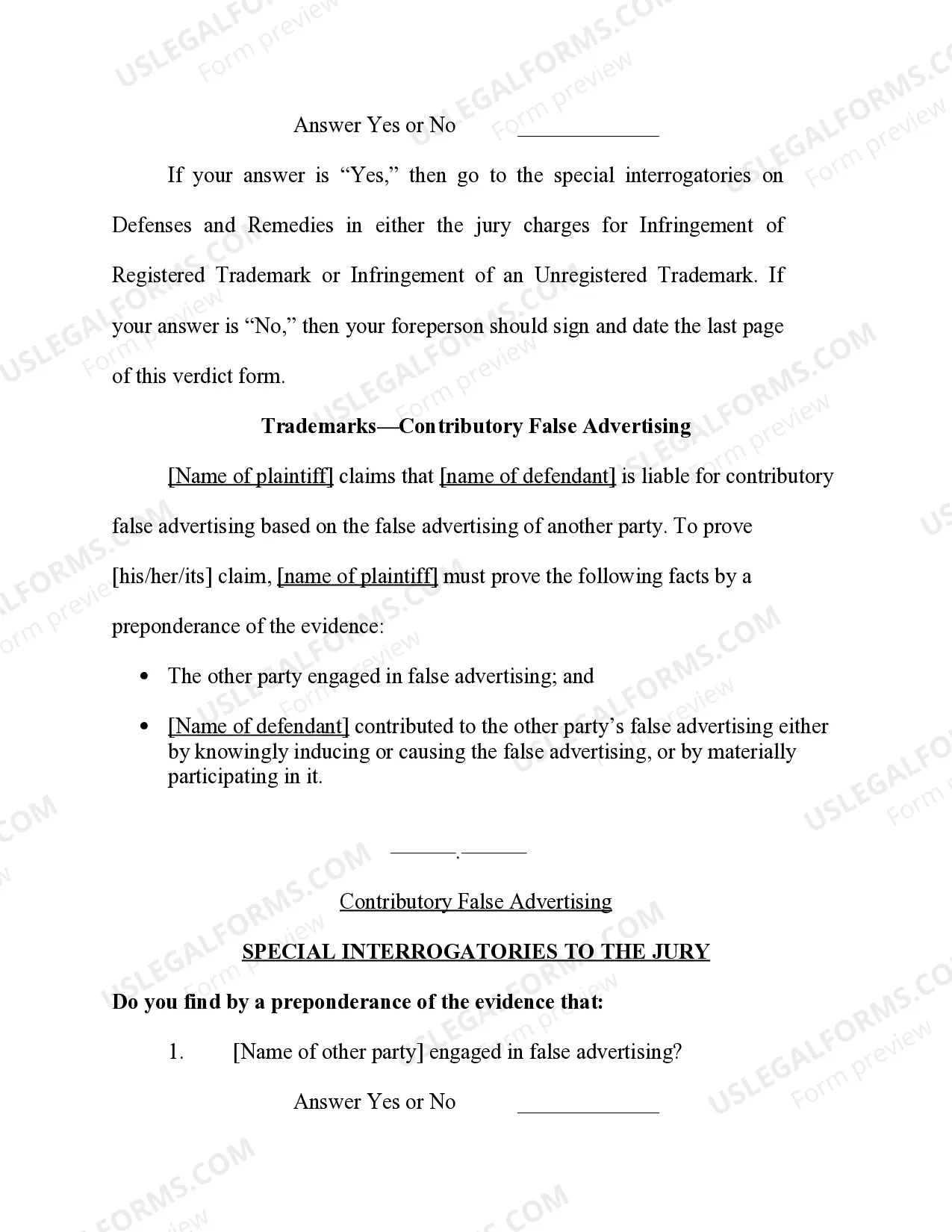
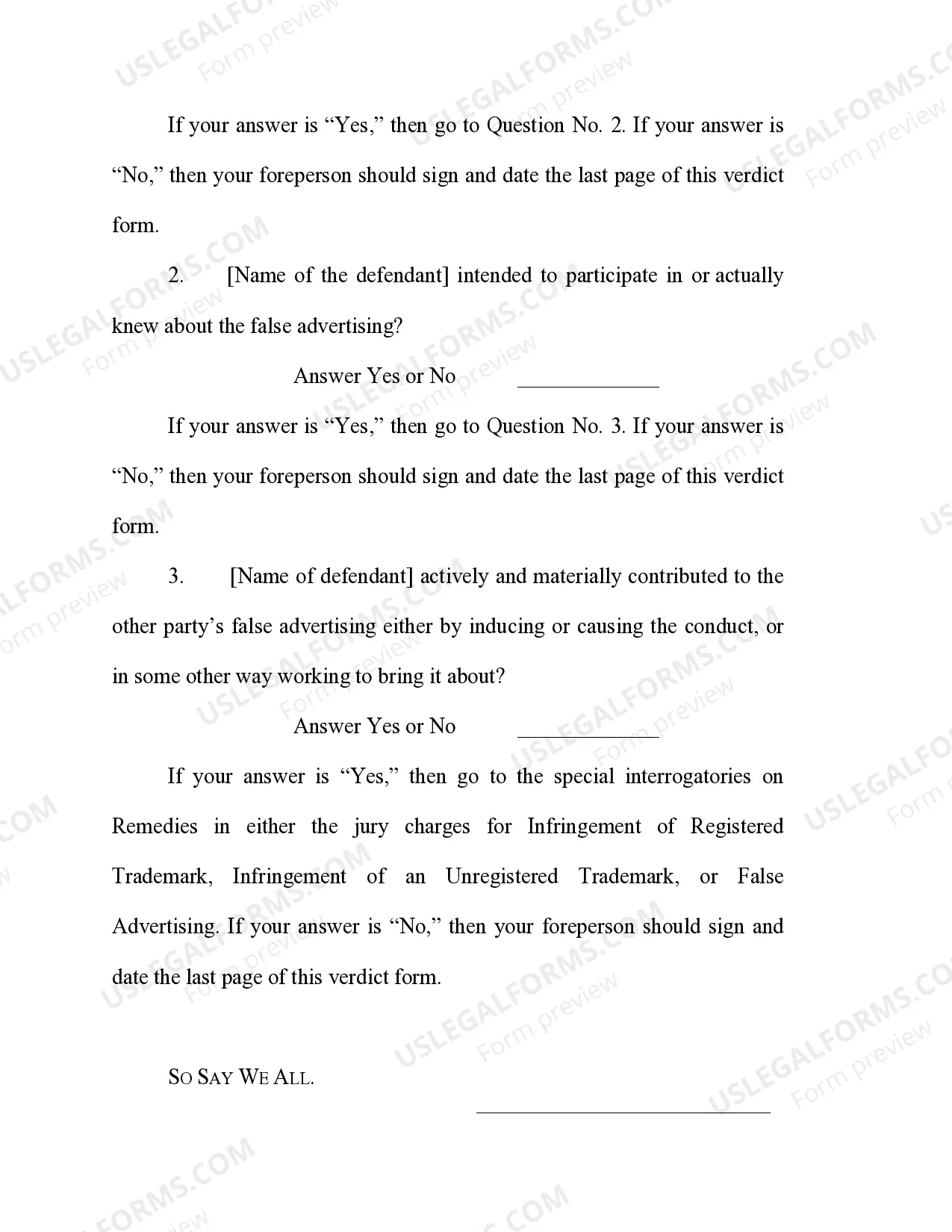
- Special interrogatories to guide jury decision-making.
- Consideration of contributory false advertising claims.
- Required proofs concerning consumer deception and material impact.
- Instructions for determining the involvement of interstate commerce.
Situations where this form applies
This form should be used in cases where a plaintiff believes that a defendant's advertising has caused consumer deception. Situations can include when a competitor is accused of making false claims about a product, leading to financial losses or damaged reputations. Additionally, it is applicable when a party contributes to another's false advertising practices.
Intended users of this form
This form is intended for:
- Plaintiffs who need to establish a case against a defendant for false advertising.
- Legal professionals assisting clients in trademark-related disputes.
- Juries that need guidance in evaluating false advertising claims.
Instructions for completing this form
- Identify the parties involved in the case, including the plaintiff and defendant.
- Review the allegations to establish the advertising claims made by the defendant.
- Outline the evidence that supports claims of false or misleading advertisements.
- Complete the special interrogatories provided to guide the jury on essential questions related to the case.
- Ensure that all portions are properly signed and dated by the foreperson of the jury.
Notarization requirements for this form
In most cases, this form does not require notarization. However, some jurisdictions or signing circumstances might. US Legal Forms offers online notarization powered by Notarize, accessible 24/7 for a quick, remote process.
Get your form ready online
Our built-in tools help you complete, sign, share, and store your documents in one place.
Make edits, fill in missing information, and update formatting in US Legal Forms—just like you would in MS Word.
Download a copy, print it, send it by email, or mail it via USPS—whatever works best for your next step.
Sign and collect signatures with our SignNow integration. Send to multiple recipients, set reminders, and more. Go Premium to unlock E-Sign.
If this form requires notarization, complete it online through a secure video call—no need to meet a notary in person or wait for an appointment.
We protect your documents and personal data by following strict security and privacy standards.

Make edits, fill in missing information, and update formatting in US Legal Forms—just like you would in MS Word.

Download a copy, print it, send it by email, or mail it via USPS—whatever works best for your next step.

Sign and collect signatures with our SignNow integration. Send to multiple recipients, set reminders, and more. Go Premium to unlock E-Sign.

If this form requires notarization, complete it online through a secure video call—no need to meet a notary in person or wait for an appointment.

We protect your documents and personal data by following strict security and privacy standards.
Common mistakes to avoid
- Failing to provide sufficient evidence for each element of the claim.
- Neglecting to address the specific nature of the advertisements in question.
- Overlooking the need for proof that the deception affected purchasing decisions.
- Not properly completing the special interrogatories before submission.
Benefits of using this form online
- Convenience of downloading and completing the form from any location.
- Immediate availability of expert-drafted content, ensuring compliance with legal standards.
- Editability that allows customization to fit specific cases and needs.
- Access to additional resources and instructions for completing the form effectively.
Legal use & context
- This form is designed to be legally enforceable in trademark-related disputes regarding false advertising.
- Proper use of this form can significantly strengthen a plaintiff's case in court.
- Participants should understand that different states may have varying interpretations of false advertising laws.
Key takeaways
- The form is essential for structuring claims related to false advertising in trademark disputes.
- Clear definitions and interrogatories help juries assess complicated advertising cases.
- Proper completion of the form is critical for a successful outcome in court.
Looking for another form?
Form popularity
FAQ
Yes, there are laws that forbid companies from misleading consumers with deceptive product labels or false advertisements. An attorney can help you determine the laws under which you can file a false advertising lawsuit in your state.
The FTC has primary responsibility for determining whether specific advertising is false or misleading, and for taking action against the sponsors of such material. To file a complaint with the FTC, go to ReportFraud.ftc.gov/#/? orgcode=FCC or call toll-free 1-877-FTC-HELP (1-877-382-4357).
Deceptive misdecriptive trademarks suggest a component, ingredient or objective that would mislead consumers. For example, an ice cream branded VANILLA SNOW but flavored chocolate might be deemed deceptive. Misdescriptive marks are not ?deceptively misdescriptive? unless there is some element of deception.
To bring a claim for false advertising, the plaintiff must show: The defendant made false or misleading statements as to their own products (or another's); Actual deception occurred, or at least a tendency to deceive a substantial portion of the intended audience;
There must be a representation, omission, or practice that misleads or is likely to mislead the consumer. An act or practice may be found to be deceptive if there is a representation, omission, or practice that misleads or is likely to mislead a consumer.
Importance of the Lanham Act in protecting against false advertising. Overall, the Lanham Act provides important protections against false advertising, allowing individuals and companies to seek legal recourse when they have been harmed by false or misleading advertising.
California Law: False or Deceptive Advertising is Prohibited Under state law (California Business and Professions Code § 17500), false and deceptive advertising is strictly prohibited. A company that violates the state's false advertising regulations could be held both civilly and criminally liable.
The best defense against potential claims of false advertising is substantiation. The best time to get substantiation is before the alleged false advertising claims are made. Third Circuit ? Marketing ?that is not deceptive, for no one would rely on its exaggerated claims.?