Illegal Entry by False or Misleading Representation
What this document covers
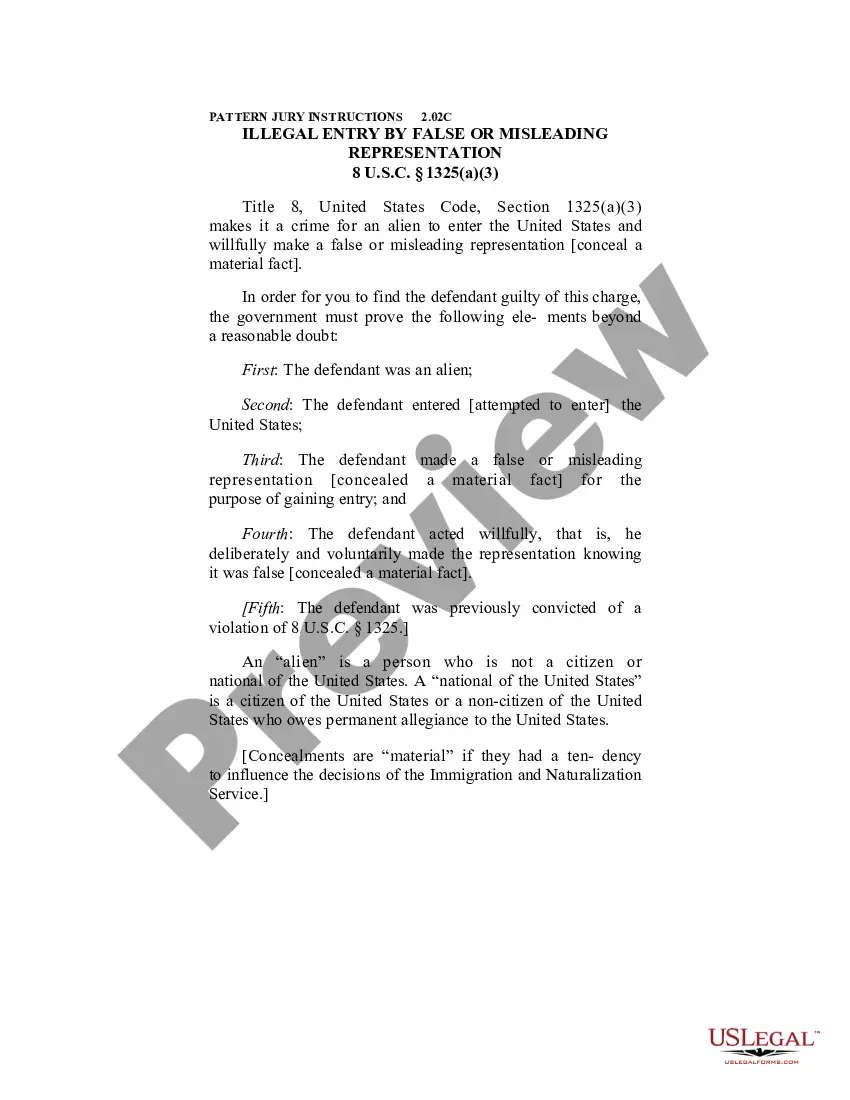
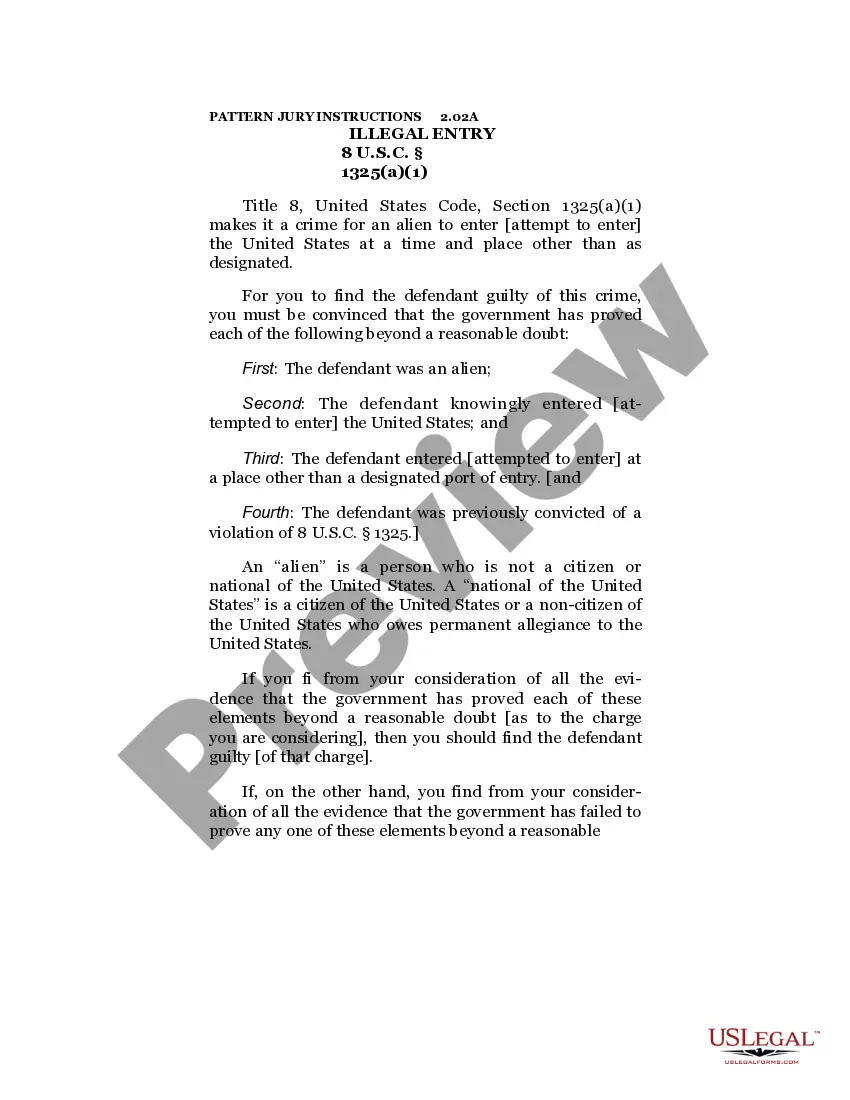
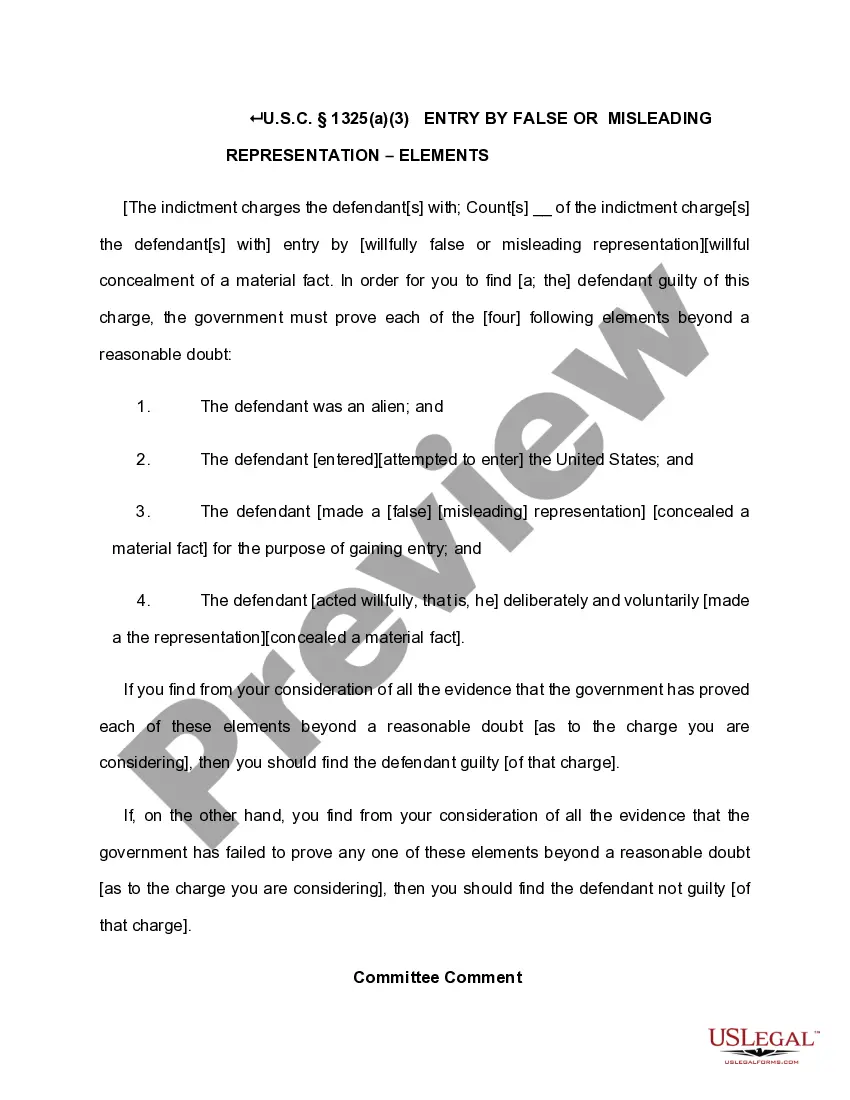
The form titled "Illegal Entry by False or Misleading Representation" is designed to address the legal circumstances surrounding the crime of unlawfully entering the United States by providing false or misleading information. This form outlines the legal framework and specific criteria under which an alien can be charged with making deceptive representations to gain entry. It serves as a critical document to understand the elements required for prosecution under Title 8, U.S.C. Section 1325(a)(3). Unlike other immigration forms, this one specifically pertains to criminal acts of misrepresentation during the entry process.
Main sections of this form
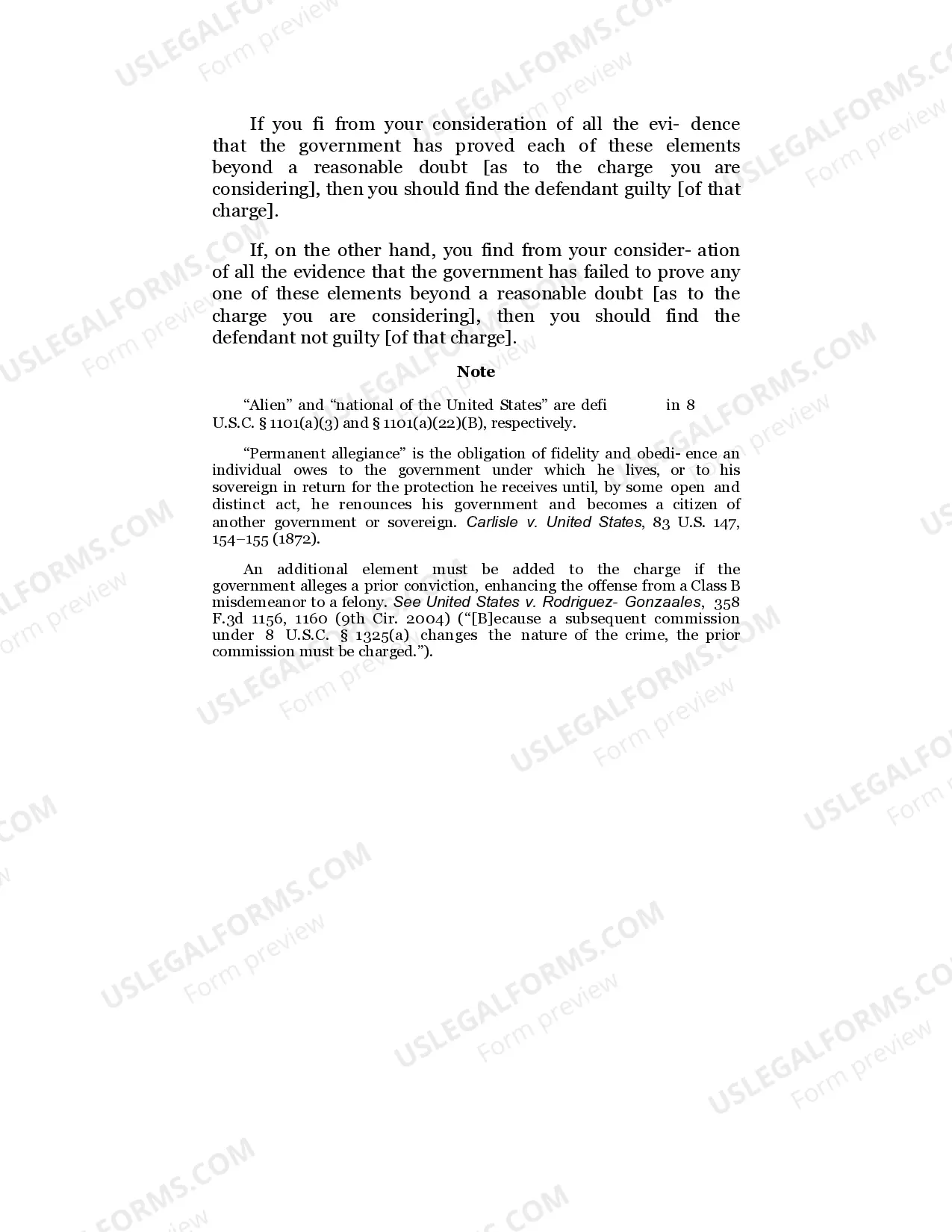
- Definition of terms such as "alien" and "national of the United States."
- Elements of the crime, including willfulness in making false statements.
- Details on the requirement of a prior conviction for enhanced charges.
- Clarification of what constitutes material concealments in representations.
- Guidelines on assessing guilt based on evidence presented.

Common use cases
This form is necessary in situations where an alien is accused of unlawfully entering the United States by providing false or misleading information. It may be relevant in criminal defense situations, where the accused wishes to understand the legal implications of their actions or prepare for legal proceedings. Additionally, immigration attorneys may use this form to outline defenses or strategies when handling cases involving charges under U.S. immigration law.
Who needs this form
- Aliens accused of illegal entry based on false representations.
- Immigration lawyers representing clients facing such allegations.
- Court personnel involved in evaluating cases related to immigration offenses.
- Individuals seeking to understand the legal risks associated with prior entry attempts.
How to complete this form
- Identify the parties involved in the case, including the defendant and the state.
- Provide details about the alleged actions that led to the charge.
- Specify any prior convictions relevant to the current charge.
- Gather and present any evidence of false or misleading representations made.
- Consult legal counsel to ensure all elements of the charge are understood and addressed.
Does this document require notarization?
This form does not typically require notarization to be legally valid. However, some jurisdictions or document types may still require it. US Legal Forms provides secure online notarization powered by Notarize, available 24/7 for added convenience.
Get your form ready online
Our built-in tools help you complete, sign, share, and store your documents in one place.
Make edits, fill in missing information, and update formatting in US Legal Forms—just like you would in MS Word.
Download a copy, print it, send it by email, or mail it via USPS—whatever works best for your next step.
Sign and collect signatures with our SignNow integration. Send to multiple recipients, set reminders, and more. Go Premium to unlock E-Sign.
If this form requires notarization, complete it online through a secure video call—no need to meet a notary in person or wait for an appointment.
We protect your documents and personal data by following strict security and privacy standards.

Make edits, fill in missing information, and update formatting in US Legal Forms—just like you would in MS Word.

Download a copy, print it, send it by email, or mail it via USPS—whatever works best for your next step.

Sign and collect signatures with our SignNow integration. Send to multiple recipients, set reminders, and more. Go Premium to unlock E-Sign.

If this form requires notarization, complete it online through a secure video call—no need to meet a notary in person or wait for an appointment.

We protect your documents and personal data by following strict security and privacy standards.
Typical mistakes to avoid
- Failing to recognize the importance of prior convictions in enhancing charges.
- Misunderstanding the definitions of material facts that must be disclosed.
- Neglecting to provide adequate evidence or documentation to support defenses.
- Assuming that all statements made during the entry process are irrelevant.
Benefits of using this form online
- Convenience of downloading and completing the form at your own pace.
- Editability allows users to tailor the document to their specific case.
- Access to forms drafted by licensed attorneys, ensuring reliability.
- Immediate availability without the need for physical office visits.
Looking for another form?
Form popularity
FAQ
The first offense is a misdemeanor ing to the Immigration and Nationality Act of 1965, which prohibits non-nationals from entering or attempting to enter the United States at any time or place which has not been designated by an immigration officer, and also prohibits non-nationals from eluding inspection by
If you entered the United States illegally (as opposed to overstaying), you cannot apply for a green card from inside the United States.
?Illegal Re-Entry?/8 U.S.C. § 1326 makes it a crime to unlawfully reenter, attempt to unlawfully reenter, or to be found in the United States after having been deported, ordered removed, or denied admission. This crime is punishable as a felony with a maximum sentence of two years in prison.
When a person is caught illegally crossing the border?lawfully known as an improper entry?the first offense may include: Civil penalty fine of $50 to $250. Imprisonment for up to six months. Both fines and imprisonment.
Yes, unlawful entry is a felony. And having a felony offense makes it extremely difficult to legally reenter the United States. A list of undocumented immigration civil offenses and violation consequences are listed below.
Under federal law, it is a crime for anyone to enter into the US without the approval of an immigration officer ? it's a misdemeanor offense that carries fines and no more than six months in prison.
?Illegal Entry?/8 U.S.C. § 1325 makes it a crime to unlawfully enter the United States. It applies to people who do not enter with proper inspection at a port of entry, such as those who enter between ports of entry, avoid examination or inspection, or who make false statements while entering or attempting to enter.
?Any person, to include U.S. citizens, who attempt to circumvent the ports of entry in order to illegally enter the United States faces consequences ranging from financial fines to imprisonment.?