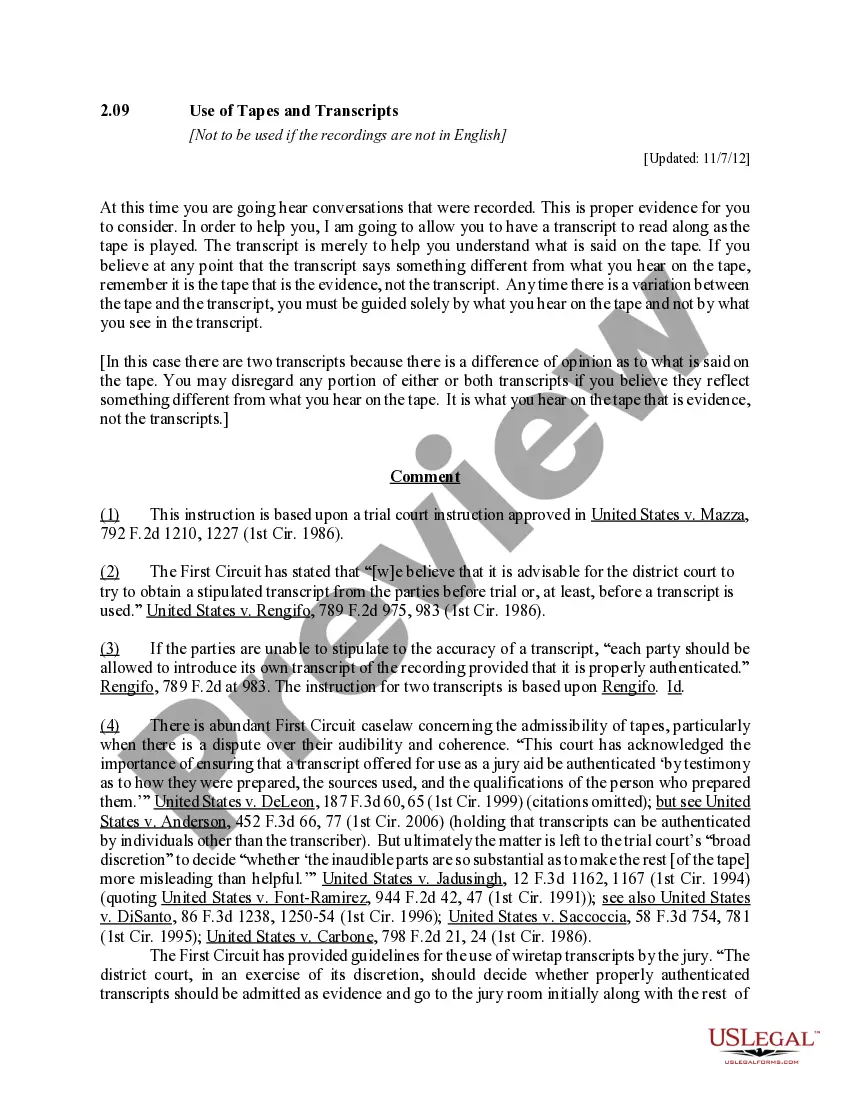
Misrepresentation of Citizenship
Overview of this form
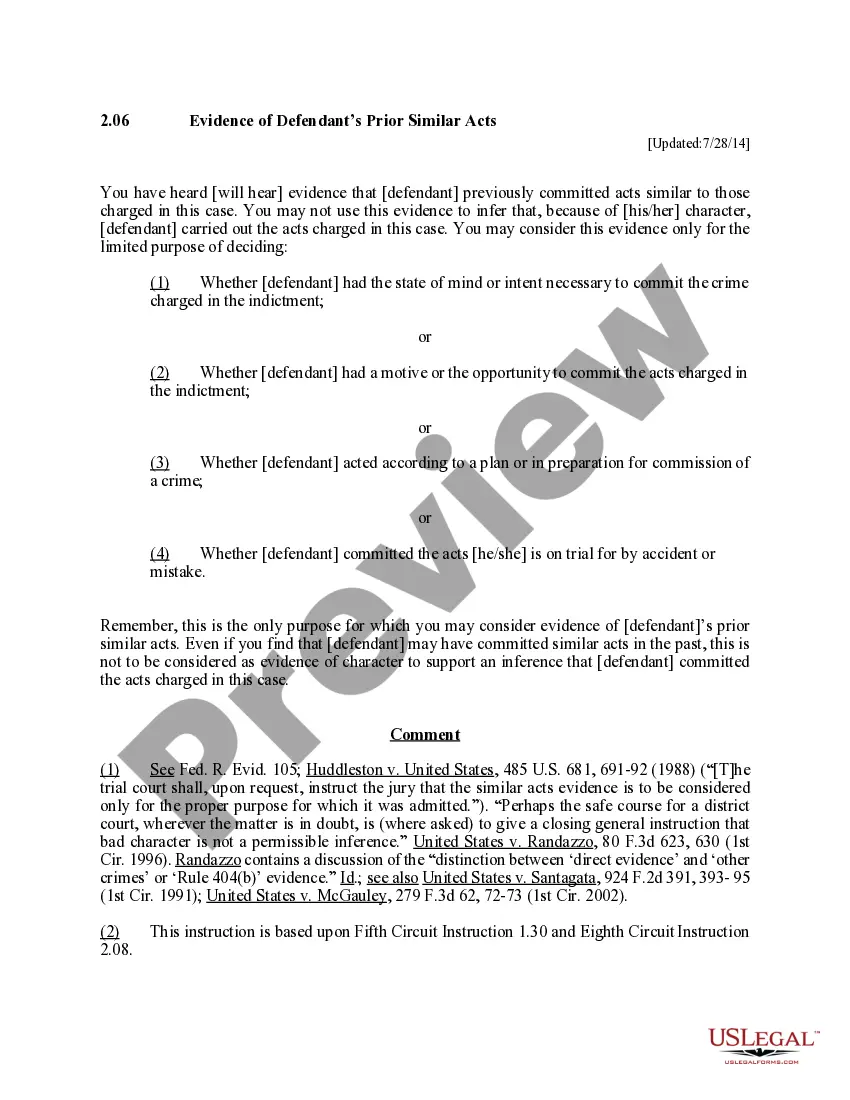
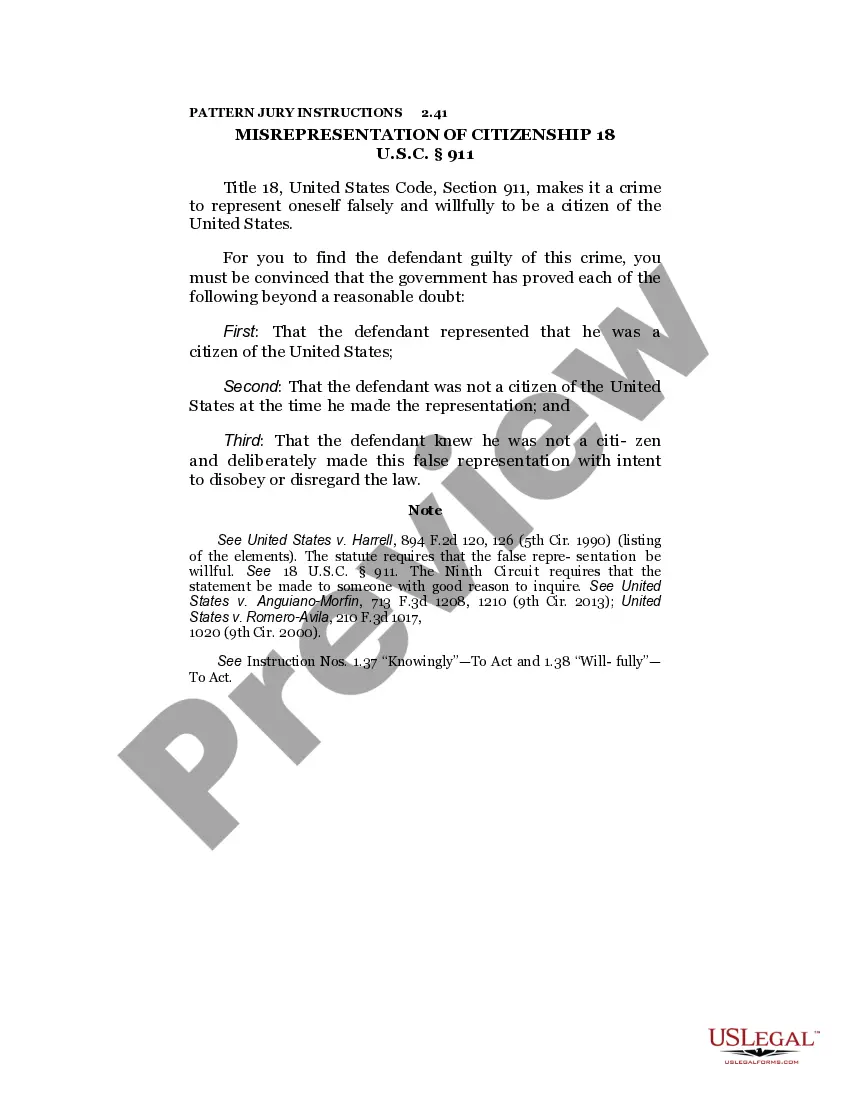
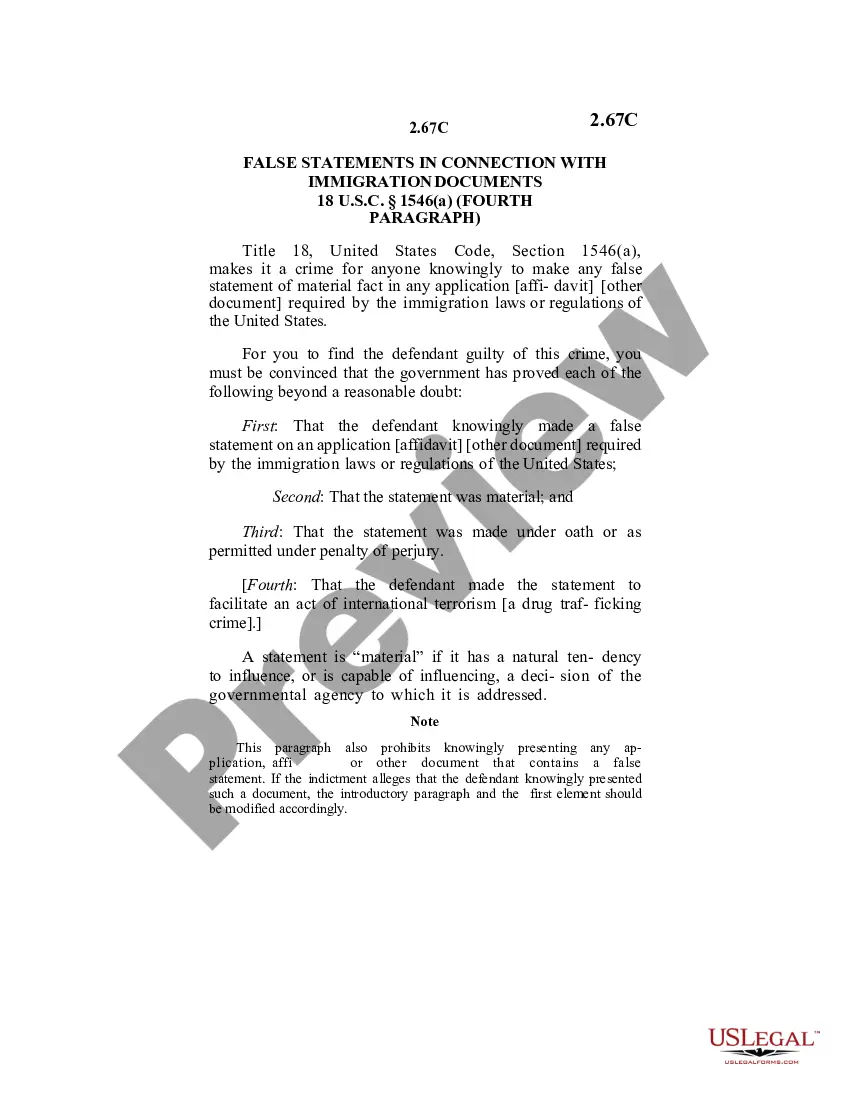
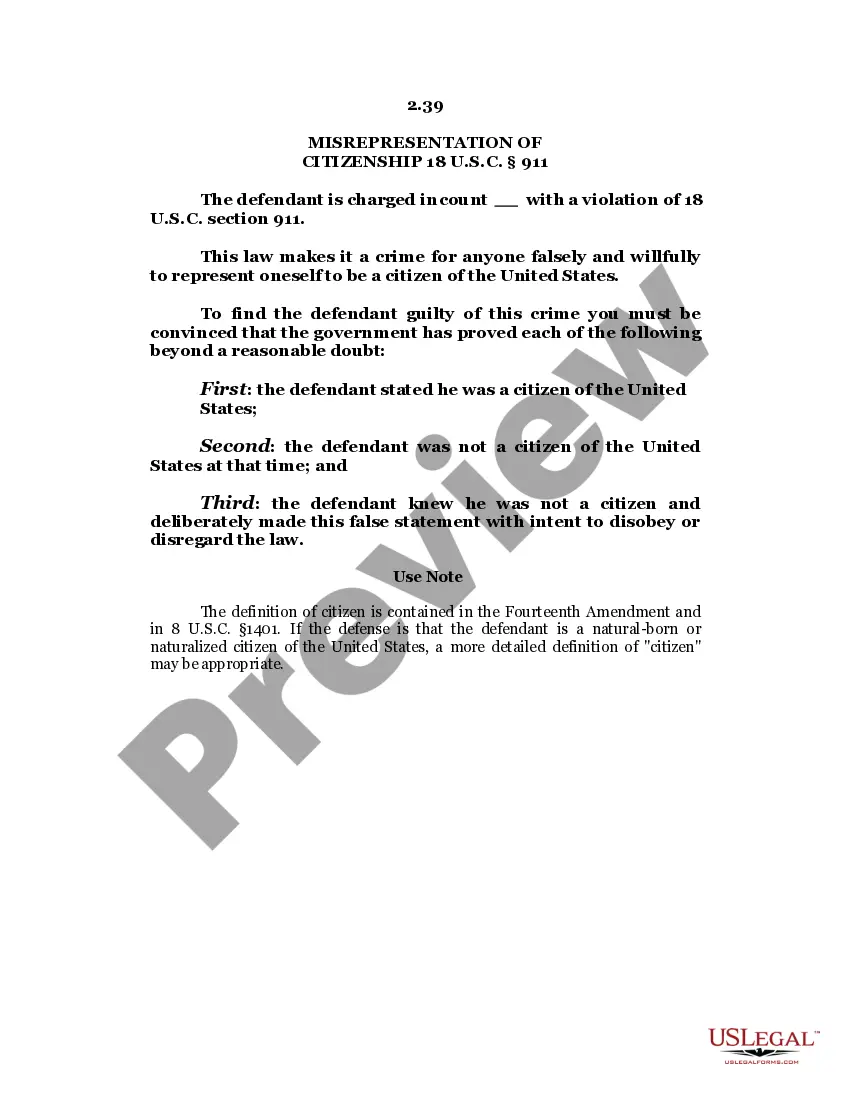
The Misrepresentation of Citizenship form is an important legal document that addresses the act of falsely representing oneself as a citizen of the United States. Under Title 18, United States Code, Section 911, it is considered a crime to willfully make such false representations. This form is crucial in situations involving legal accountability and immigration processes, distinguishing it from other legal forms related to citizenship or residency.
What’s included in this form
- The definition of misrepresentation in terms of U.S. citizenship.
- The elements required to prove guilt beyond a reasonable doubt.
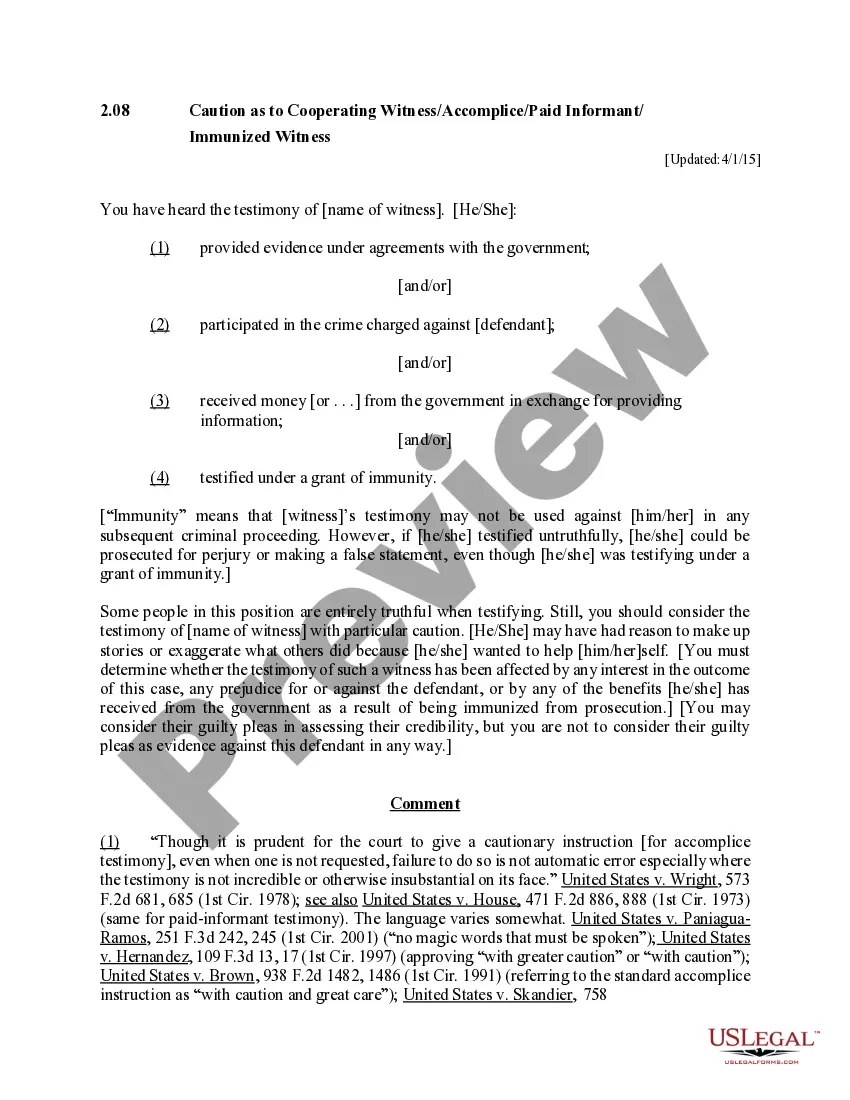
- The necessity for the defendant to knowingly make false statements.
- Legal precedents and interpretations of relevant case law.
When to use this form
This form is needed in scenarios where an individual is accused of falsely claiming U.S. citizenship. It is relevant in criminal cases, immigration hearings, and citizenship applications where legitimacy is questioned. Utilizing this form can help clarify legal standing and responsibilities in such situations.
Who this form is for
- Individuals accused of misrepresenting their citizenship status.
- Legal professionals handling cases of citizenship misrepresentation.
- Immigrants navigating legal challenges related to citizenship claims.
Steps to complete this form
- Read the form carefully to understand all legal definitions related to citizenship misrepresentation.
- Identify any parties involved, including the accused and the representatives.
- Document specific instances or evidence of misrepresentation.
- Sign and date the form to affirm information accuracy under oath.
- Consult legal expertise if necessary to ensure compliance with relevant laws and regulations.
Does this form need to be notarized?
This form does not typically require notarization unless specified by local law. Always check local regulations to ensure compliance.
Get your form ready online
Our built-in tools help you complete, sign, share, and store your documents in one place.
Make edits, fill in missing information, and update formatting in US Legal Forms—just like you would in MS Word.
Download a copy, print it, send it by email, or mail it via USPS—whatever works best for your next step.
Sign and collect signatures with our SignNow integration. Send to multiple recipients, set reminders, and more. Go Premium to unlock E-Sign.
If this form requires notarization, complete it online through a secure video call—no need to meet a notary in person or wait for an appointment.
We protect your documents and personal data by following strict security and privacy standards.

Make edits, fill in missing information, and update formatting in US Legal Forms—just like you would in MS Word.

Download a copy, print it, send it by email, or mail it via USPS—whatever works best for your next step.

Sign and collect signatures with our SignNow integration. Send to multiple recipients, set reminders, and more. Go Premium to unlock E-Sign.

If this form requires notarization, complete it online through a secure video call—no need to meet a notary in person or wait for an appointment.

We protect your documents and personal data by following strict security and privacy standards.
Common mistakes to avoid
- Failing to provide accurate details related to citizenship status.
- Not understanding the legal implications of signing the form.
- Overlooking required signatures or dates.
- Mitigating the seriousness of the misrepresentation.
Advantages of online completion
- Immediate access to legally vetted templates drafted by licensed attorneys.
- Convenient and editable formats for quick customization.
- Direct download capabilities, allowing for offline completion.
- Increased reliability by using standardized legal language and structures.
Legal use & context
- The Misrepresentation of Citizenship form outlines the legal framework for identifying and prosecuting claims of false citizenship.
- Understanding this form is vital in legal contexts to avoid penalties associated with false claims.
- Individuals using this form should seek to ensure all statements made are accurate and truthful to avoid legal repercussions.
What to keep in mind
- The Misrepresentation of Citizenship form is crucial in understanding the legal implications of claiming false citizenship.
- It serves as a guide for those involved in legal proceedings regarding citizenship claims.
- Proper completion of the form is essential to ensure compliance with legal requirements.
Looking for another form?
Form popularity
FAQ
Lying to an immigration officer can have extreme consequences including permanent inadmissibility, deportability, and not being allowed to apply for U.S. citizenship. Need Immigration Help? We've helped 85 clients find attorneys today. By clicking "Find a Lawyer", you agree to the Martindale-Nolo Texting Terms.
For example, if an individual falsely asserted to be a U.S. citizen in order to obtain employment, but had a valid Employment Authorization Document (EAD), there would be no ?purpose or benefit? in such false claim to U.S. citizenship since the individual could be employed without making the false claim to U.S.
Willfully misrepresenting a material fact, seeks to. procure (or has sought to procure or has procured) a visa, other documentation, or admission to the United States or other benefit provided under this chapter of the INA is inadmissible.?
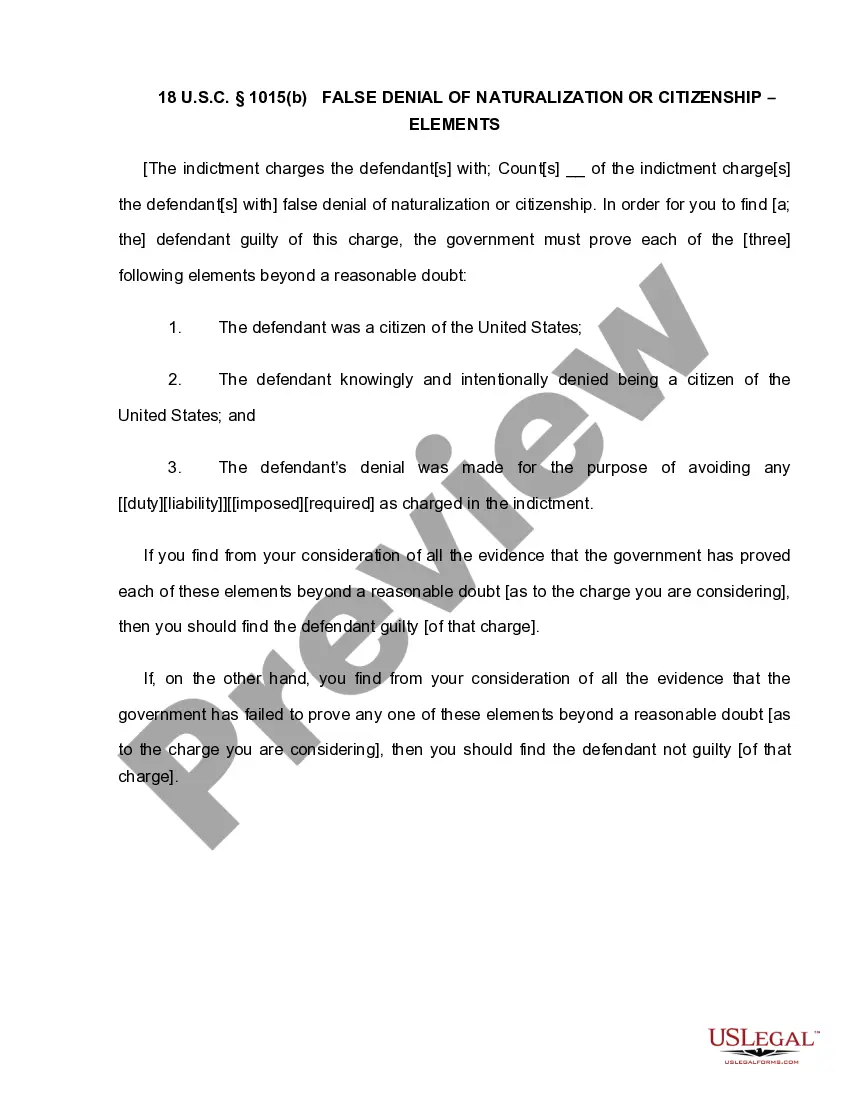
Naturalized U.S. citizens who acquired their citizenship illegally (were not really eligible for naturalization when they applied) or by deliberate deceit (lied or hid important information about themselves during the application process) can have their naturalization revoked. (See 8 U.S.C. § 1451(e).)
A false claim also may occur when a foreign national tries to get a U.S. passport, tries to get a student loan that requires being a citizen, or states that they are a citizen on an I-9 Employment Eligibility Verification form.
No matter what you do, you should not lie on your citizenship or naturalization application. If you lie, misrepresent facts or conceal information on your citizenship application, you could face serious penalties, including criminal charges, loss of citizenship (called denaturalization) and deportation.
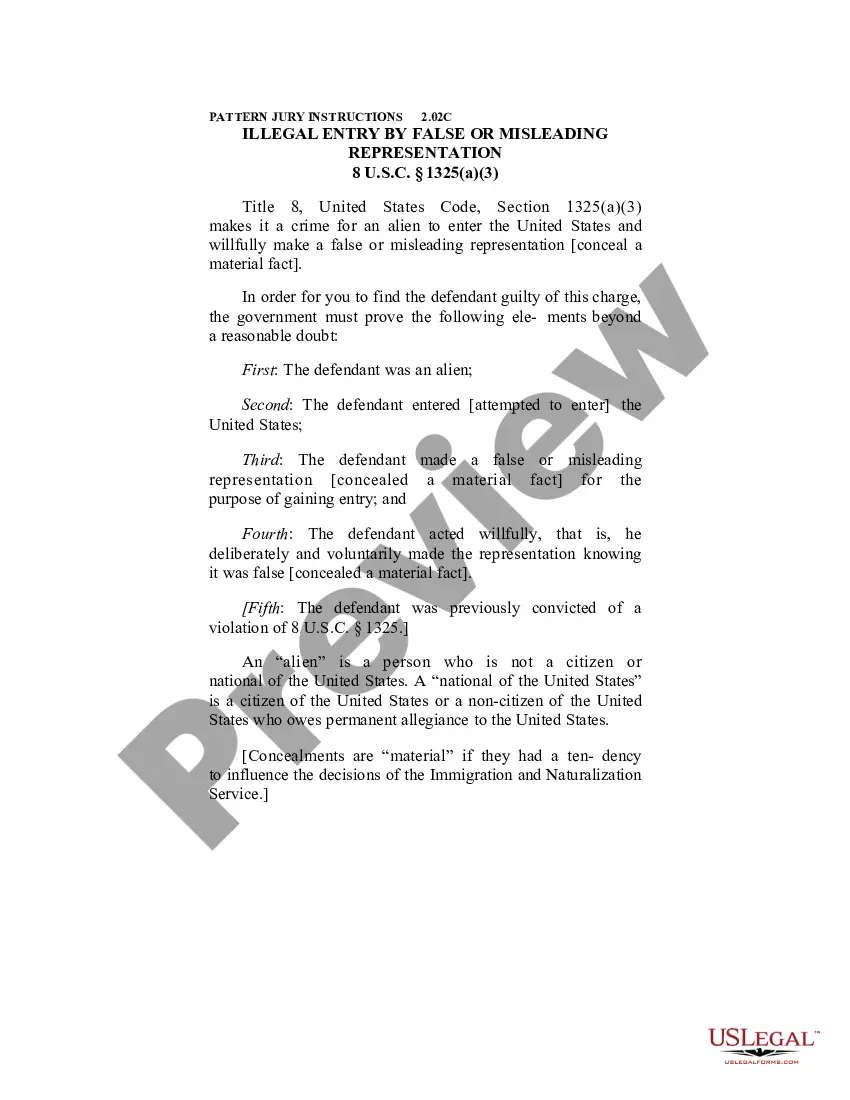
Under the law, an alien is inadmissible or deportable if the alien falsely represents him or herself to be a citizen of the United States for any purpose or benefit under immigration law or under other federal or state law.
Under the law, an alien is inadmissible or deportable if the alien falsely represents him or herself to be a citizen of the United States for any purpose or benefit under immigration law or under other federal or state law.
No matter what you do, you should not lie on your citizenship or naturalization application. If you lie, misrepresent facts or conceal information on your citizenship application, you could face serious penalties, including criminal charges, loss of citizenship (called denaturalization) and deportation.