Checklist For Intellectual Property Audit
What is this form?
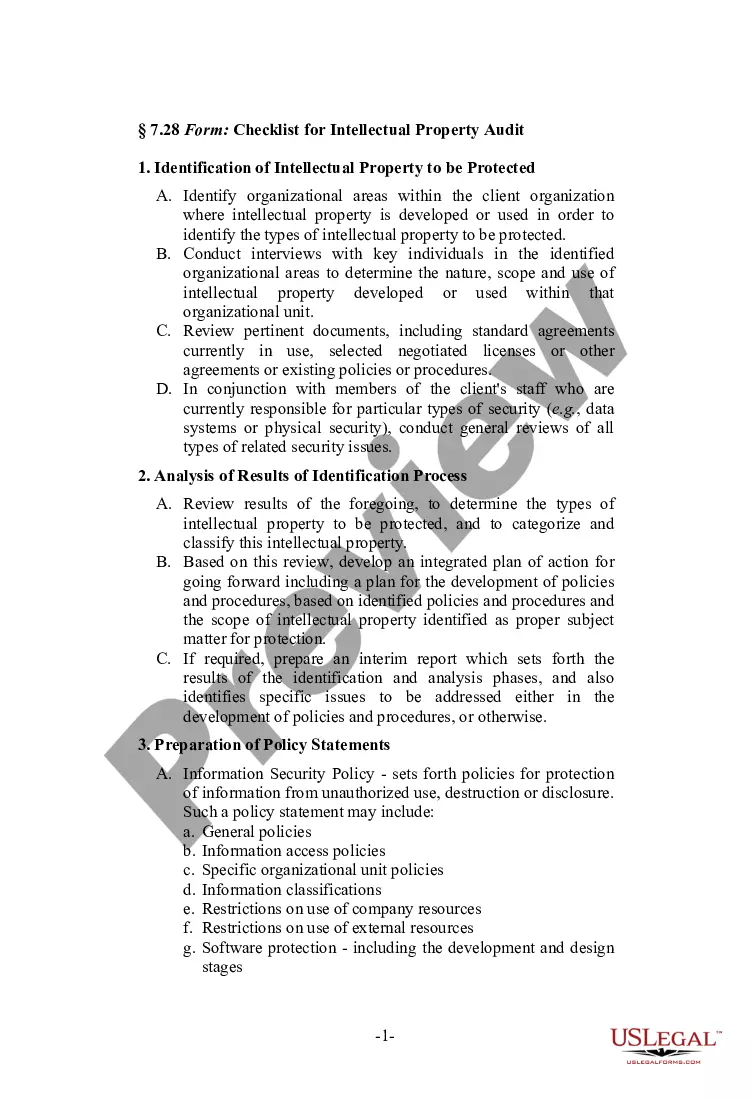
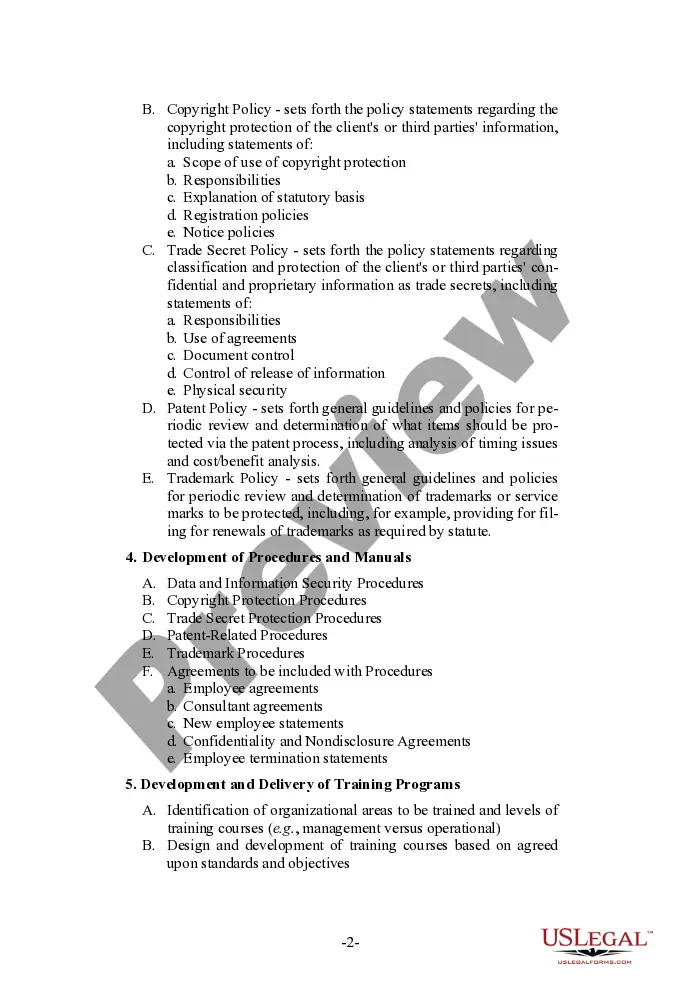
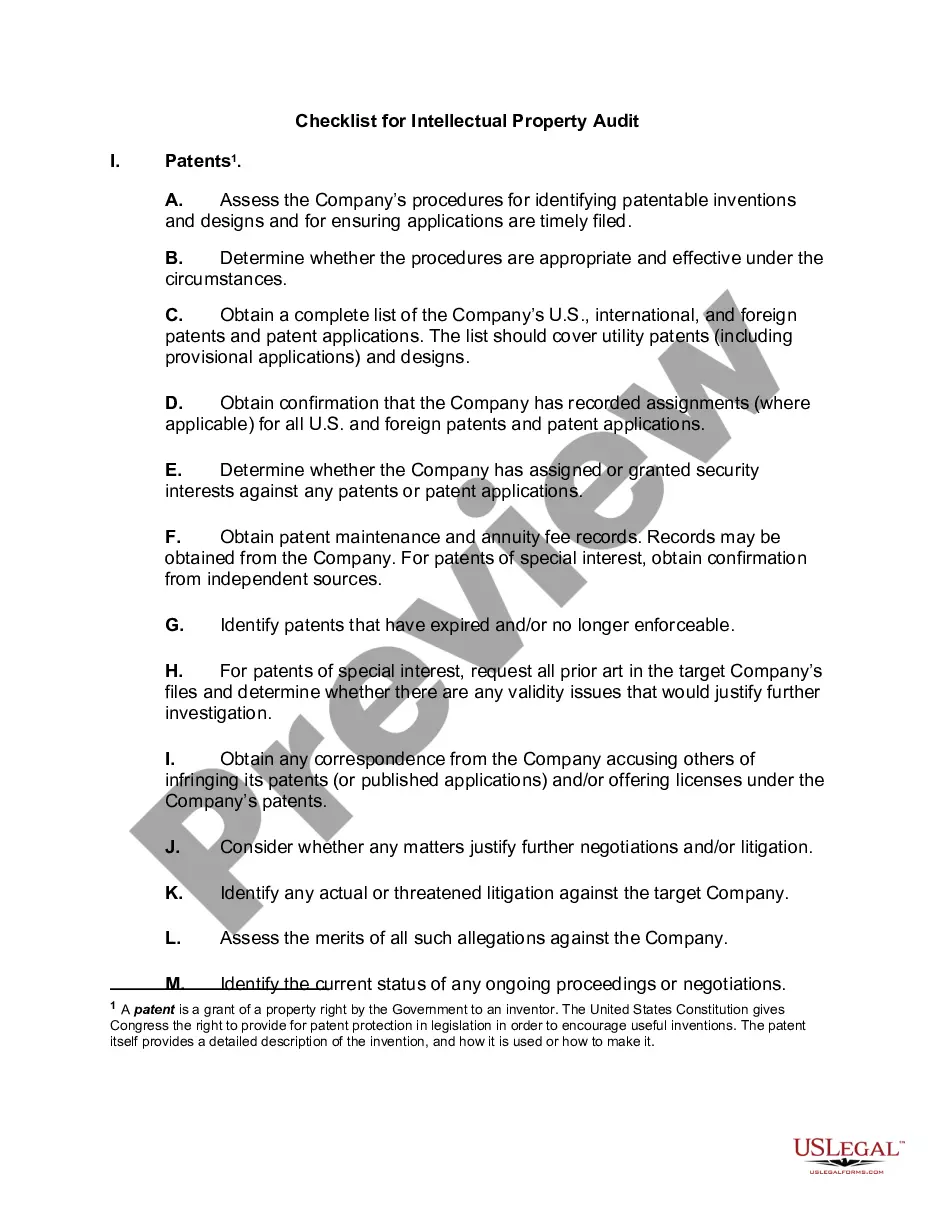
The Checklist for Intellectual Property Audit is a structured document designed to guide organizations in identifying, categorizing, and protecting their intellectual property. It differs from other forms by emphasizing the comprehensive assessment of IP assets and the development of relevant policies and procedures, making it essential for businesses and contractors who rely on innovative ideas, brands, and proprietary information.
What’s included in this form
- Identification of intellectual property to be protected.
- Analysis of results to categorize and classify intellectual property.
- Preparation of policy statements on information security, copyright, trade secrets, patents, and trademarks.
- Development of procedures and manuals for information protection.
- Creation and delivery of training programs on intellectual property management.


When this form is needed
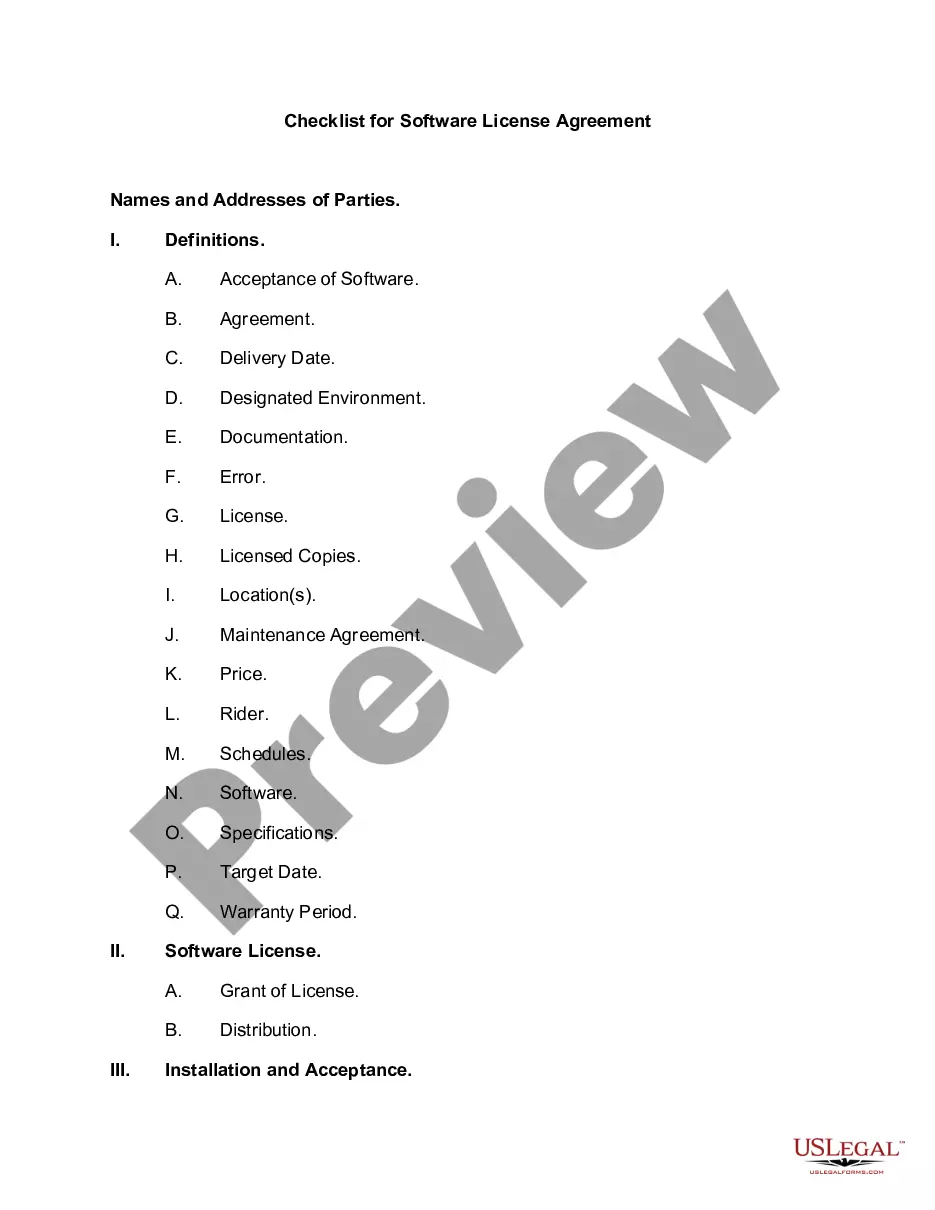
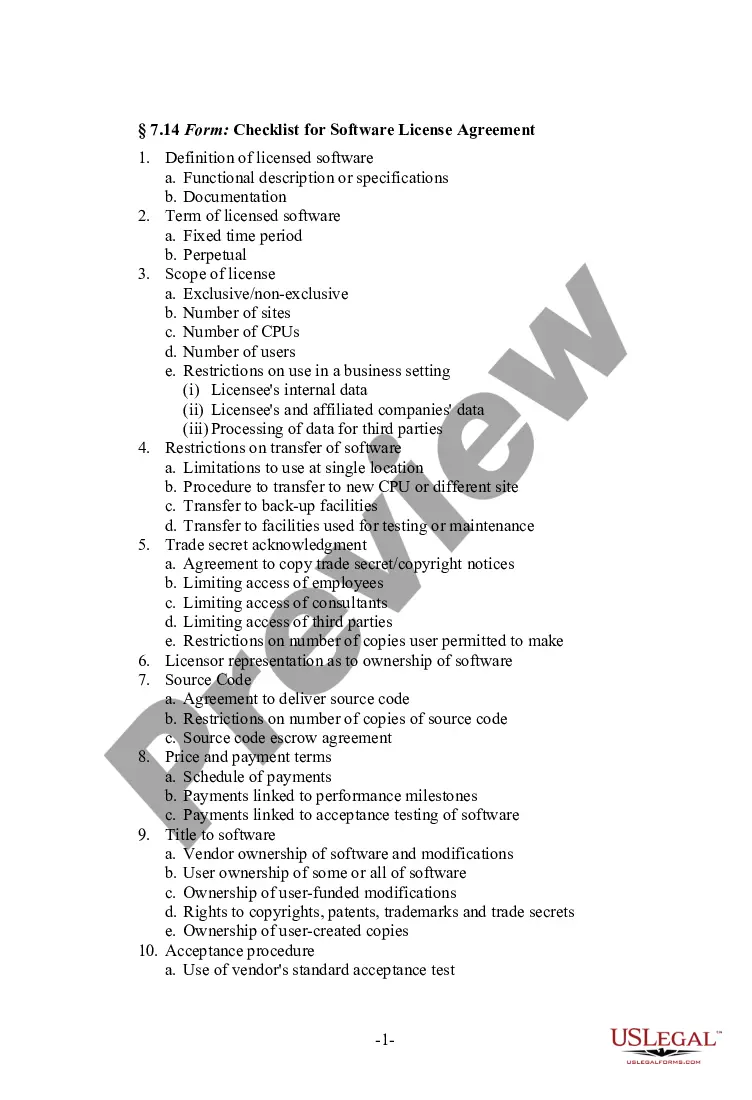
This form is useful when an organization wants to conduct a thorough audit of its intellectual property assets. It is particularly relevant during times of business expansion, product development, or when entering new markets. If your company is concerned about protecting sensitive information or maintaining compliance with intellectual property laws, this form will help create a proactive strategy.
Who needs this form
- Businesses seeking to protect their intellectual property.
- Independent contractors who develop proprietary materials.
- Legal departments responsible for compliance and risk management.
- Startups and entrepreneurs aiming to safeguard their innovations.
Steps to complete this form
- Identify the areas within your organization where intellectual property is developed or used.
- Conduct interviews with key individuals to determine the types of intellectual property present.
- Review relevant documents such as agreements and policies that affect IP management.
- Develop comprehensive policy statements regarding copyright, trade secrets, and security measures.
- Create a training program to ensure that staff members understand IP policies and procedures.
Does this form need to be notarized?
Notarization is generally not required for this form. However, certain states or situations might demand it. You can complete notarization online through US Legal Forms, powered by Notarize, using a verified video call available anytime.
Get your form ready online
Our built-in tools help you complete, sign, share, and store your documents in one place.
Make edits, fill in missing information, and update formatting in US Legal Forms—just like you would in MS Word.
Download a copy, print it, send it by email, or mail it via USPS—whatever works best for your next step.
Sign and collect signatures with our SignNow integration. Send to multiple recipients, set reminders, and more. Go Premium to unlock E-Sign.
If this form requires notarization, complete it online through a secure video call—no need to meet a notary in person or wait for an appointment.
We protect your documents and personal data by following strict security and privacy standards.

Make edits, fill in missing information, and update formatting in US Legal Forms—just like you would in MS Word.

Download a copy, print it, send it by email, or mail it via USPS—whatever works best for your next step.

Sign and collect signatures with our SignNow integration. Send to multiple recipients, set reminders, and more. Go Premium to unlock E-Sign.

If this form requires notarization, complete it online through a secure video call—no need to meet a notary in person or wait for an appointment.

We protect your documents and personal data by following strict security and privacy standards.
Mistakes to watch out for
- Neglecting to identify all types of intellectual property in use.
- Failing to involve key personnel in the IP audit process.
- Overlooking the importance of regular updates to IP policies.
- Not providing adequate training for employees on intellectual property issues.
Why complete this form online
- Convenient accessibility for immediate use and download.
- Editability allows you to tailor the form to your organization's specific needs.
- Reliability of having forms prepared by licensed attorneys.
- Structured formats simplify compliance with legal requirements.
Legal use & context
- The form serves as a guideline for identifying and protecting intellectual property legally.
- Failure to adequately audit IP may result in legal vulnerabilities.
- Proper use of the form can help in defending your IP rights in case of infringement.
Main things to remember
- The Checklist for Intellectual Property Audit is vital for organizations that want to protect innovative assets.
- Regular audits are essential to stay compliant with IP laws and safeguard proprietary information.
- Training and policy development are crucial components of effectively managing intellectual property.
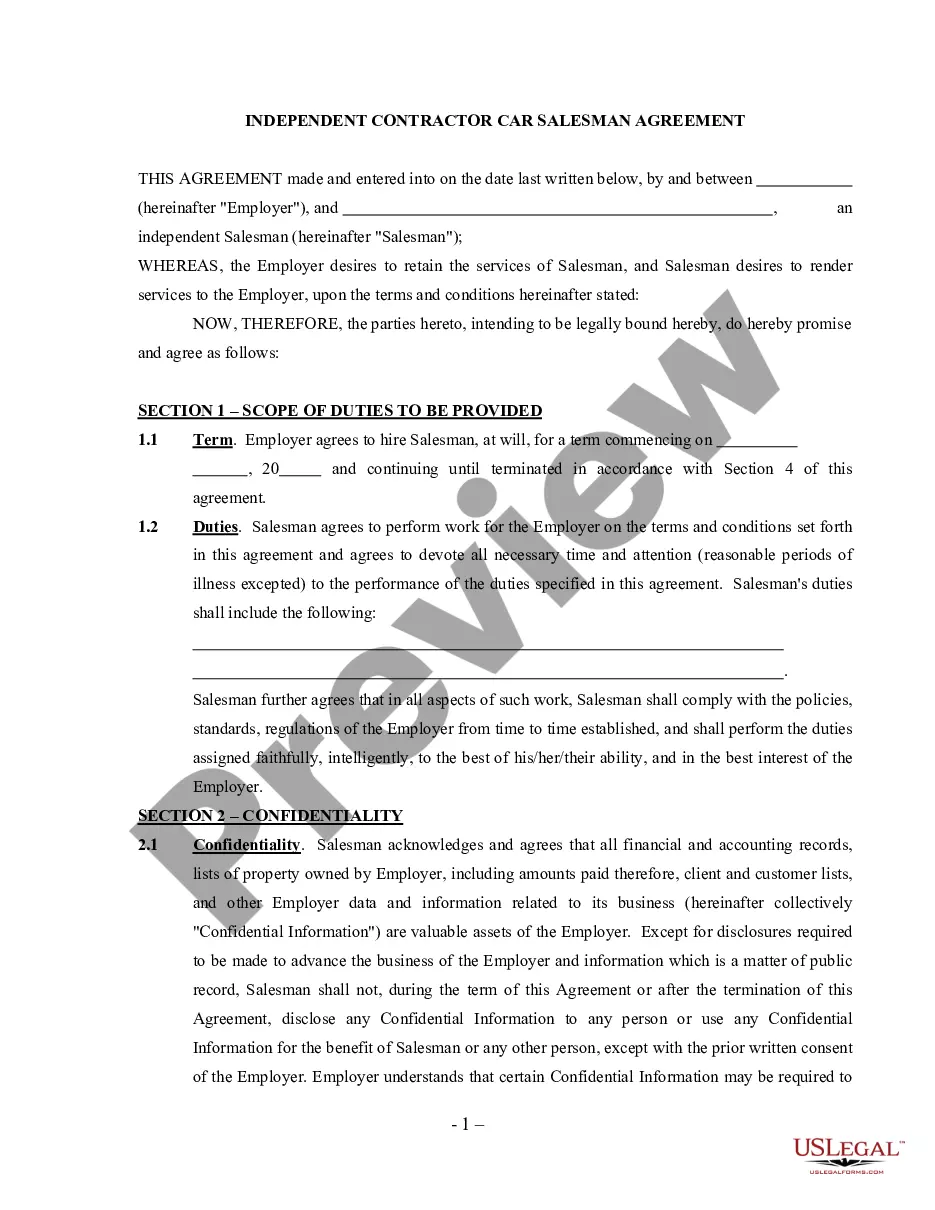
Looking for another form?
Form popularity
FAQ
Understand the Protections Available for Your IP Assets. Establish Goals for the Audit. Identify the Stakeholders and Align Yourself with Their Interests. Discovery. Select a Program and Create a Centralized Catalog. Establish or Review the IP Assets' Valuation. Review Your Contract Management Process.
Intellectual property protection isn't as simple as declaring ownership of a particular product or asset. In most countries, there are four primary types of intellectual property (IP) that can be legally protected: patents, trademarks, copyrights, and trade secrets.
An intellectual property (IP) audit is a tool for identifying your potential IP assets.Uncover unused or under-utilized assets. Determine ownership of these assets. Identify any related threats, i.e. IP infringement from your side or by others.
Keep it under scrutiny. Be aware of your Intellectual Property Rights. Consult an expert. Double check if your idea is unique. Hire an auditor. Keep a record of almost everything related. Protect your IP without delay.
Trade Secrets. Trade secrets refer to specific, private information that is important to a business because it gives the business a competitive advantage in its marketplace. Patents. Copyrights. Trademarks.
Examples of intellectual property include an author's copyright on a book or article, a distinctive logo design representing a soft drink company and its products, unique design elements of a web site, or a patent on a particular process to, for example, manufacture chewing gum.
Copyrights. Trademarks. Patents. Trade Dress. Trade Secrets.
Income method. The income method is the most commonly used method for IP valuation. Market method. The market method is based on a comparison with the actual price paid for the transfer of rights to a similar IP asset under comparable circumstances. Cost method.
Intellectual property rights are the rights given to persons over the creations of their minds. They usually give the creator an exclusive right over the use of his/her creation for a certain period of time.