Sample Letter for Motion to Strike Plaintiff's Amended Complaint and Second Amended Complaint
Overview of this form
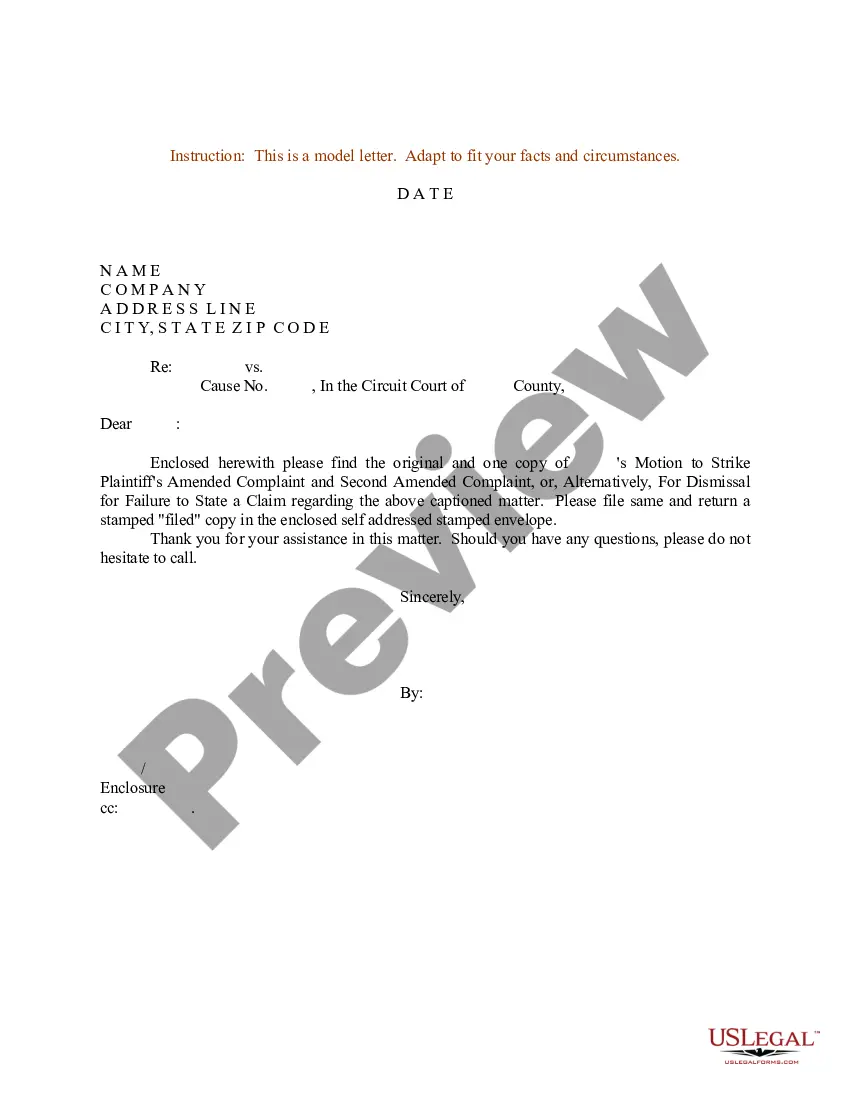
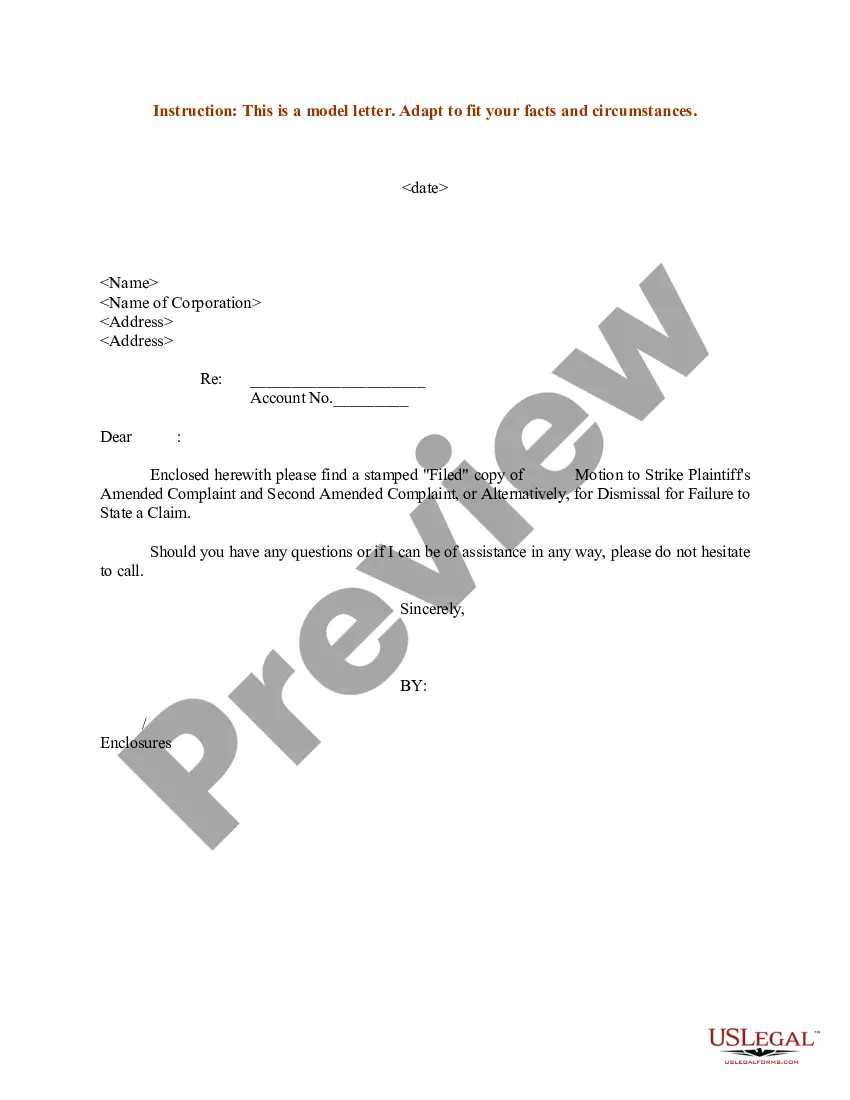
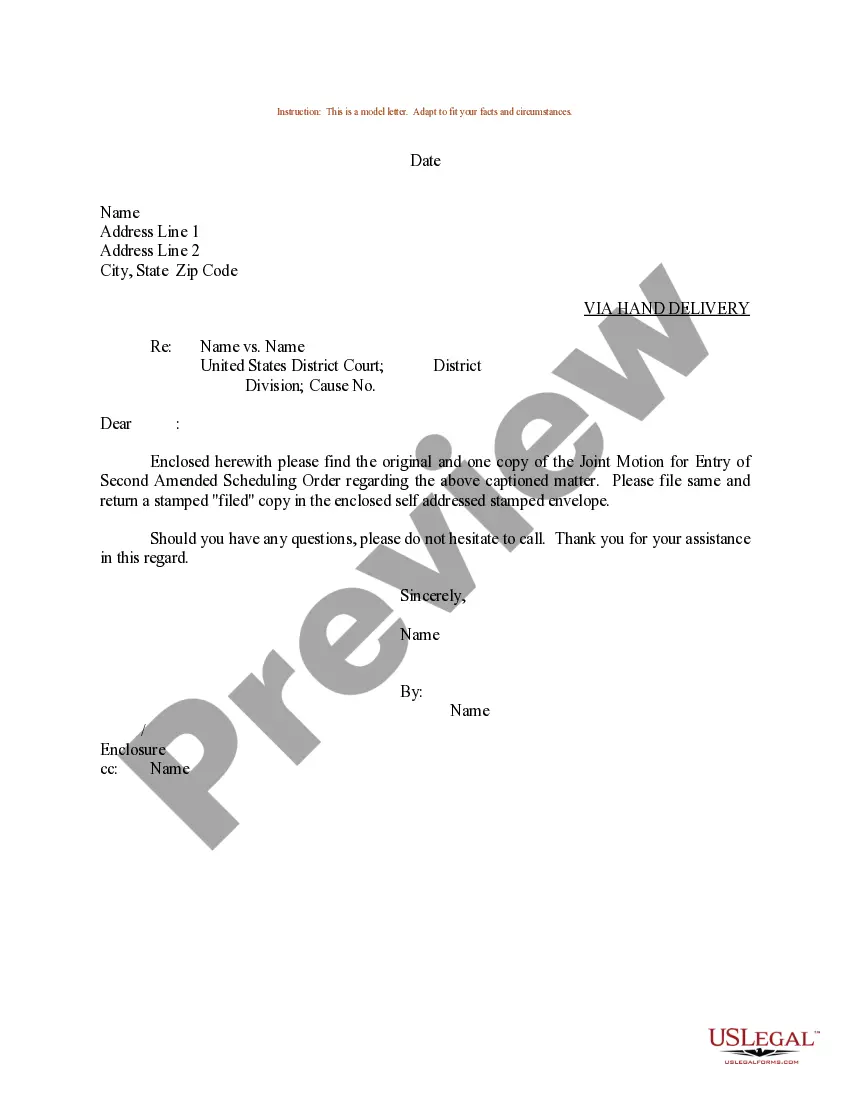
This Sample Letter for Motion to Strike Plaintiff's Amended Complaint and Second Amended Complaint is a template that serves as a guide for composing a formal request to a court. It is designed for use in legal proceedings where a party seeks to challenge the validity of an amended complaint. This form is distinct because it provides a structured letter format rather than a general motion, focusing on the specific objections to the complaints filed by the plaintiff.
Main sections of this form
- Date: Include the date of the letter.
- Recipient's name and address: Specify the intended recipient of the letter.
- Content of the letter: Express appreciation for assistance and offer contact for questions.
- Signature line: Include a place for the sender's name to be signed.
When to use this document
Who can use this document
- Defendants in civil litigation.
- Legal representatives assisting clients in preparing court documents.
- Individuals with legal knowledge seeking to challenge a complaint filed against them.
How to prepare this document
- Enter the date at the top of the letter.
- Fill in the recipient's name and address accurately.
- Compose the main body of the letter, ensuring it clearly states your request.
- Sign the letter to authenticate it before submission.
- Retain a copy for your records and ensure timely delivery to the court.
Is notarization required?
In most cases, this form does not require notarization. However, some jurisdictions or signing circumstances might. US Legal Forms offers online notarization powered by Notarize, accessible 24/7 for a quick, remote process.
Get your form ready online
Our built-in tools help you complete, sign, share, and store your documents in one place.
Make edits, fill in missing information, and update formatting in US Legal Forms—just like you would in MS Word.
Download a copy, print it, send it by email, or mail it via USPS—whatever works best for your next step.
Sign and collect signatures with our SignNow integration. Send to multiple recipients, set reminders, and more. Go Premium to unlock E-Sign.
If this form requires notarization, complete it online through a secure video call—no need to meet a notary in person or wait for an appointment.
We protect your documents and personal data by following strict security and privacy standards.

Make edits, fill in missing information, and update formatting in US Legal Forms—just like you would in MS Word.

Download a copy, print it, send it by email, or mail it via USPS—whatever works best for your next step.

Sign and collect signatures with our SignNow integration. Send to multiple recipients, set reminders, and more. Go Premium to unlock E-Sign.

If this form requires notarization, complete it online through a secure video call—no need to meet a notary in person or wait for an appointment.

We protect your documents and personal data by following strict security and privacy standards.
Avoid these common issues
- Failing to include the correct date.
- Not addressing the letter to the appropriate court or recipient.
- Omitting a signature or including an incomplete signature.
- Writing unclear or vague reasons for the motion to strike.
Benefits of completing this form online
- Immediate access to a professionally drafted template.
- Easy customization to suit individual case specifics.
- Downloadable in Word format for convenient editing.
- Time-efficient process for legal document preparation.
Legal use & context
- The letter serves as a formal request to the court, making it essential to convey clear legal arguments.
- Incorrectly drafted motions can result in the denial of the request to strike, impacting the overall case.
- Understanding the context and relevance of the objections is vital to ensure effective legal representation.
Looking for another form?




Form popularity
FAQ
2d 504, 508 (5th Cir. 1985) ("An amended complaint ordinarily supersedes the original and renders it of no legal effect, unless the amended complaint specifically refers to or adopts the earlier pleading."). Accordingly, the filing of an amended complaint moots a motion to dismiss the original complaint.
Once a defendant has answered, a first amended complaint can only be filed and served with leave of court. If the plaintiff did not get the court's permission, it is not deemed a valid first amended complaint.
2021 California Rules of Court (2) "Amended pleading" means a pleading that completely restates and supersedes the pleading it amends for all purposes.A supplement to a pleading may add information to or may correct omissions in the modified pleading.
Amend. v. to alter or change by adding, subtracting, or substituting. One can amend a statute, a contract or a written pleading filed in a law -suit. The change is usually called an amendment.
It means to change the basis for the case in some way. A motion to amend a complaint is the formal way of asking the court for permission to change the original complaint.
The defendant shall answer the amendments, or the complaint as amended, within 30 days after service thereof, or such other time as the court may direct, and judgment by default may be entered upon failure to answer, as in other cases.
Amended complaint. n. what results when the party suing (plaintiff or petitioner) changes the complaint he/she has filed. It must be in writing, and can be done before the complaint is served on any defendant, by agreement between the parties (usually their lawyers), or upon order of the court.
Amend- ed pleadings allow the party to add claims, parties, or defenses based on facts that occurred before the original pleading was filed. Supplemental pleadings allow the party to add claims or defenses based on facts that occurred after the original plead- ing was filed.
(e) (1) In response to a demurrer and prior to the case being at issue, a complaint or cross-complaint shall not be amended more than three times, absent an offer to the trial court as to such additional facts to be pleaded that there is a reasonable possibility the defect can be cured to state a cause of action.