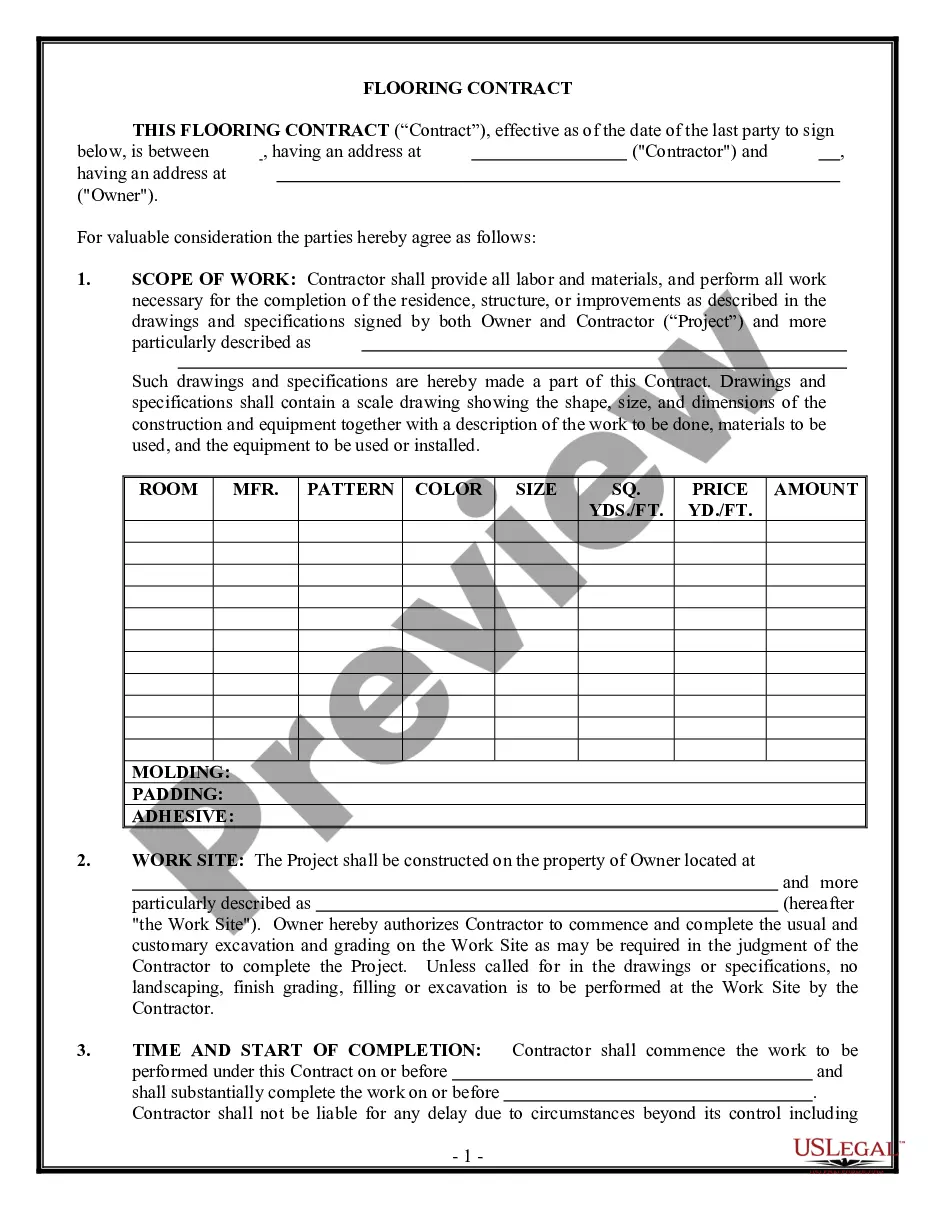
Electrical Service Clauses General Approach
Understanding this form
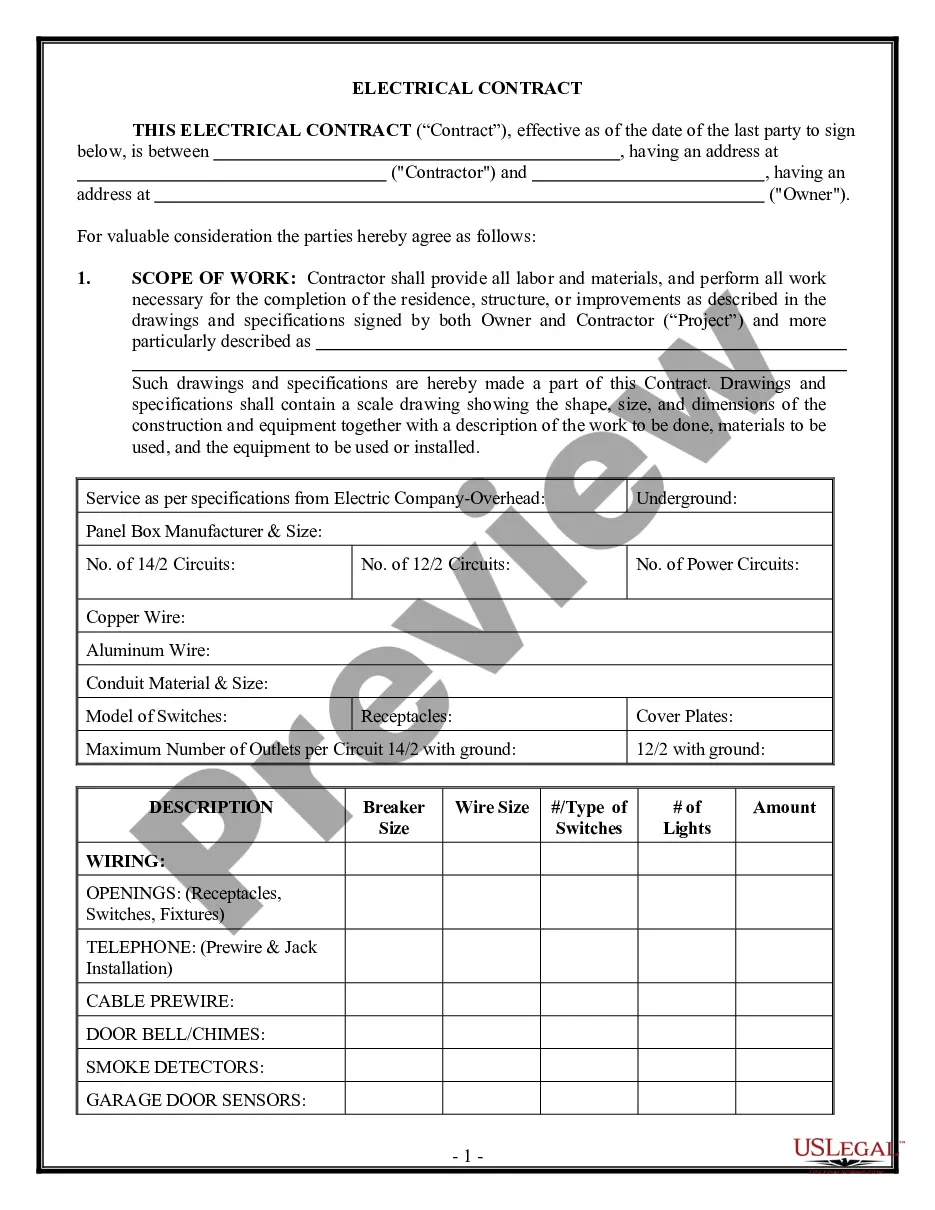
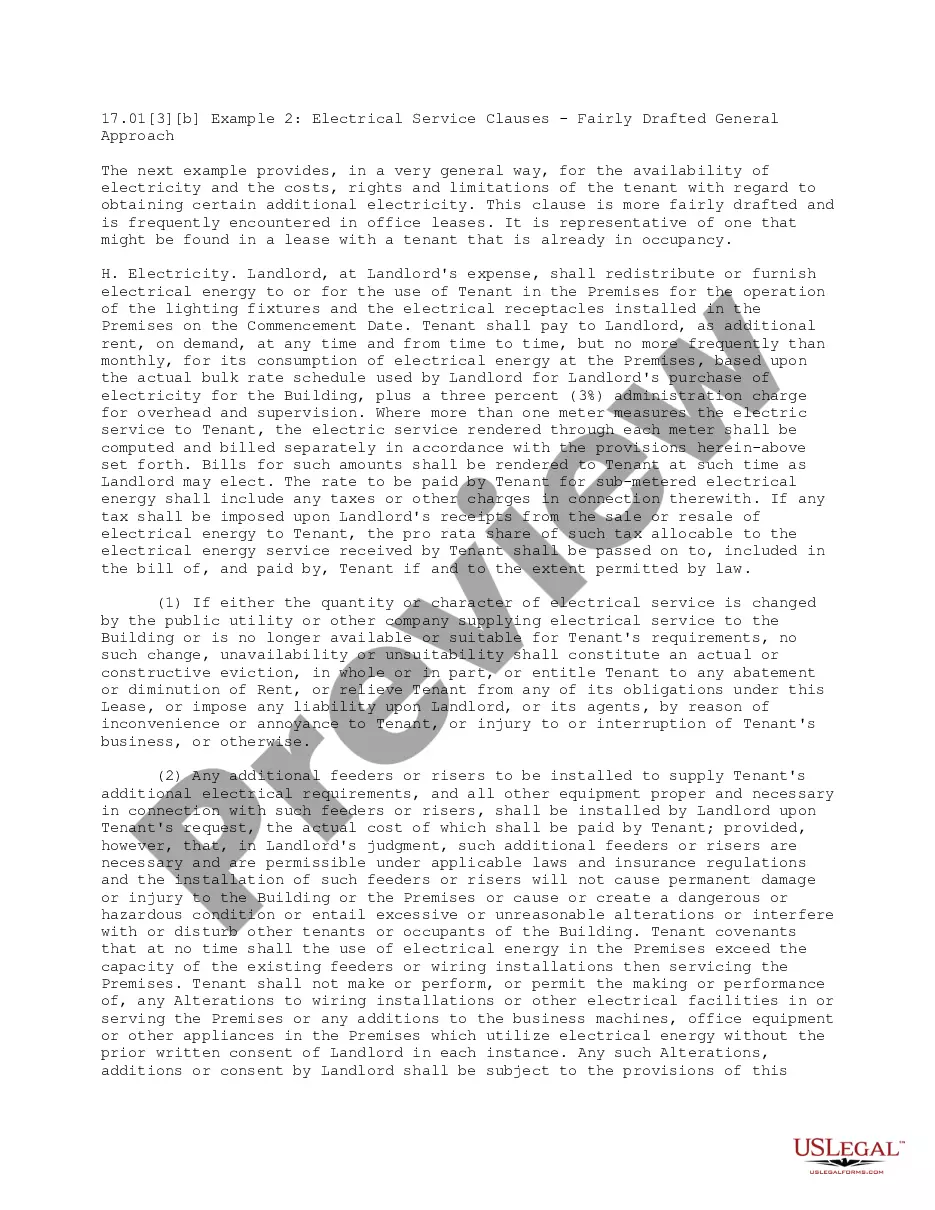
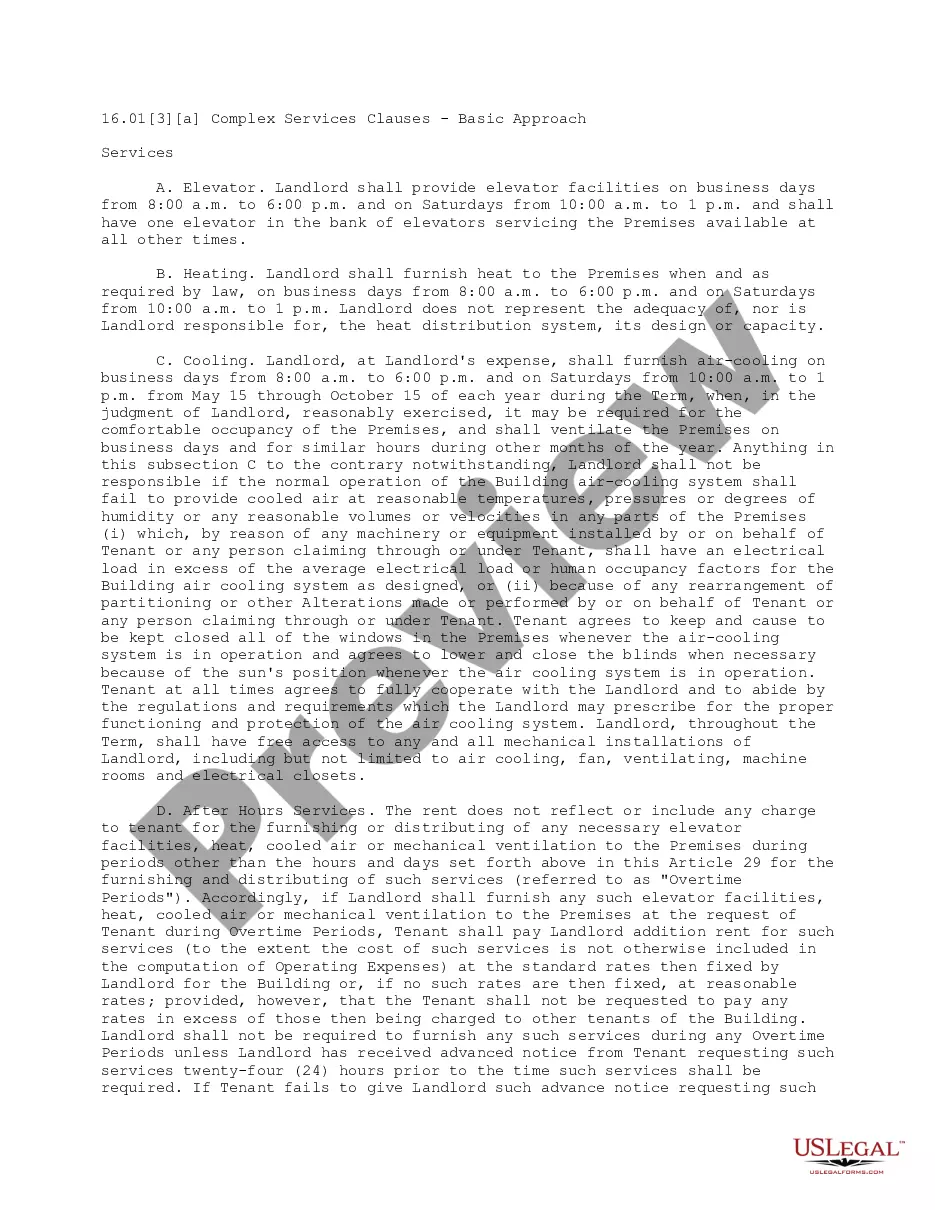
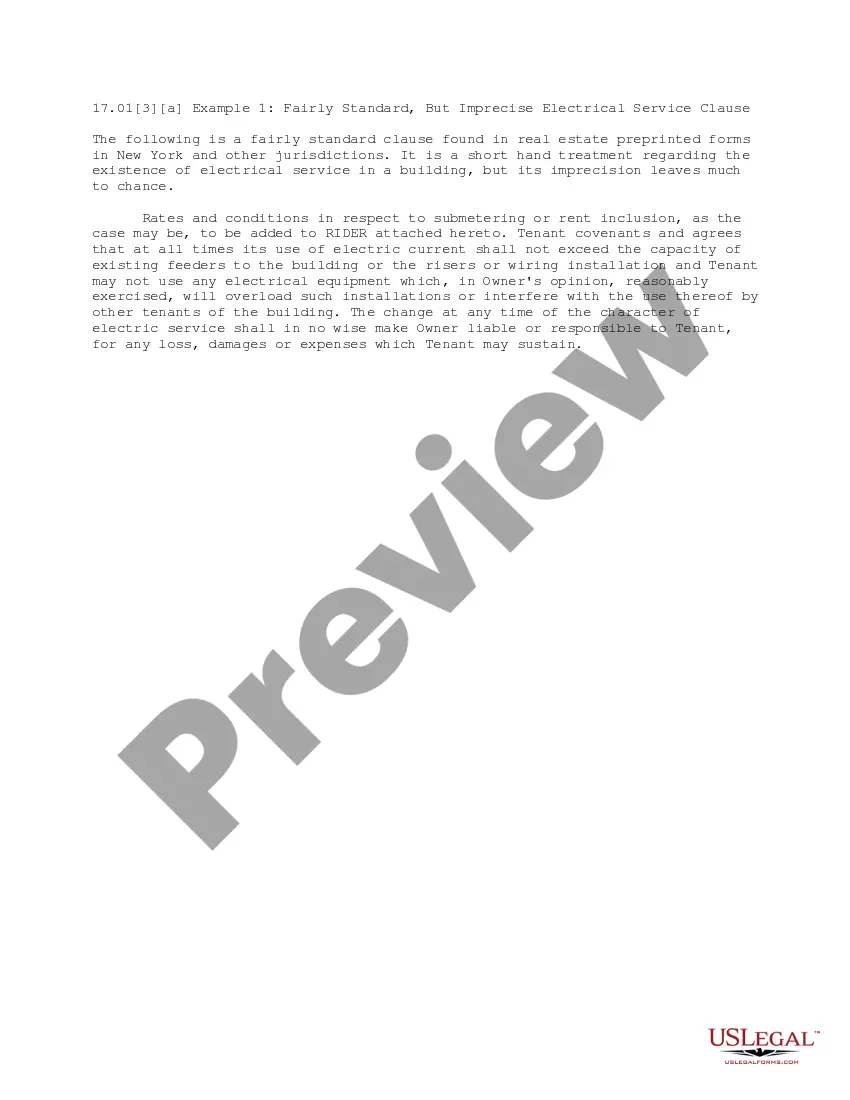
The Electrical Service Clauses General Approach form is a legal document that outlines the responsibilities and conditions related to the provision of electrical services in a leased office space. This clause details the rights and obligations of both the landlord and tenant regarding electricity usage, billing, and potential service changes. Unlike other lease agreements, this form specifically addresses the nuances of electrical service and consumption within commercial leases.
Form components explained
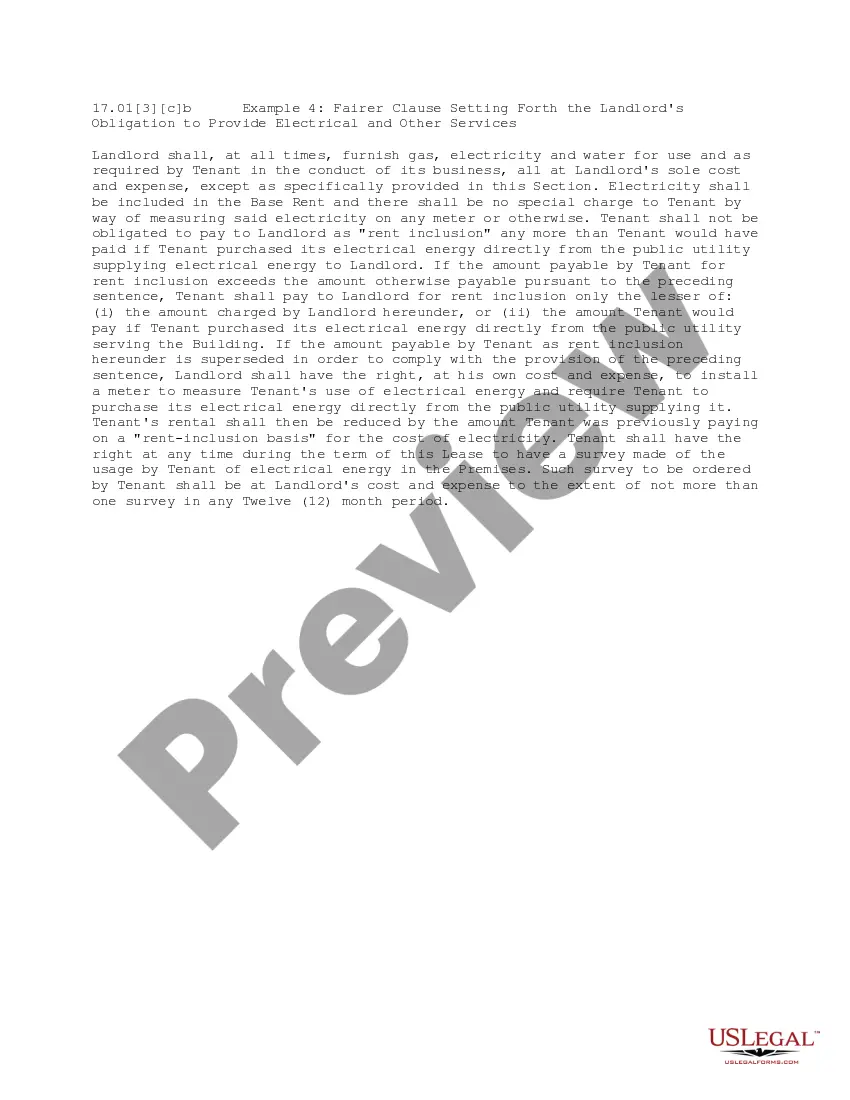
- Responsibilities of the landlord to provide electricity and related services.
- Tenant's obligation to pay for electricity consumed, including an administration charge.
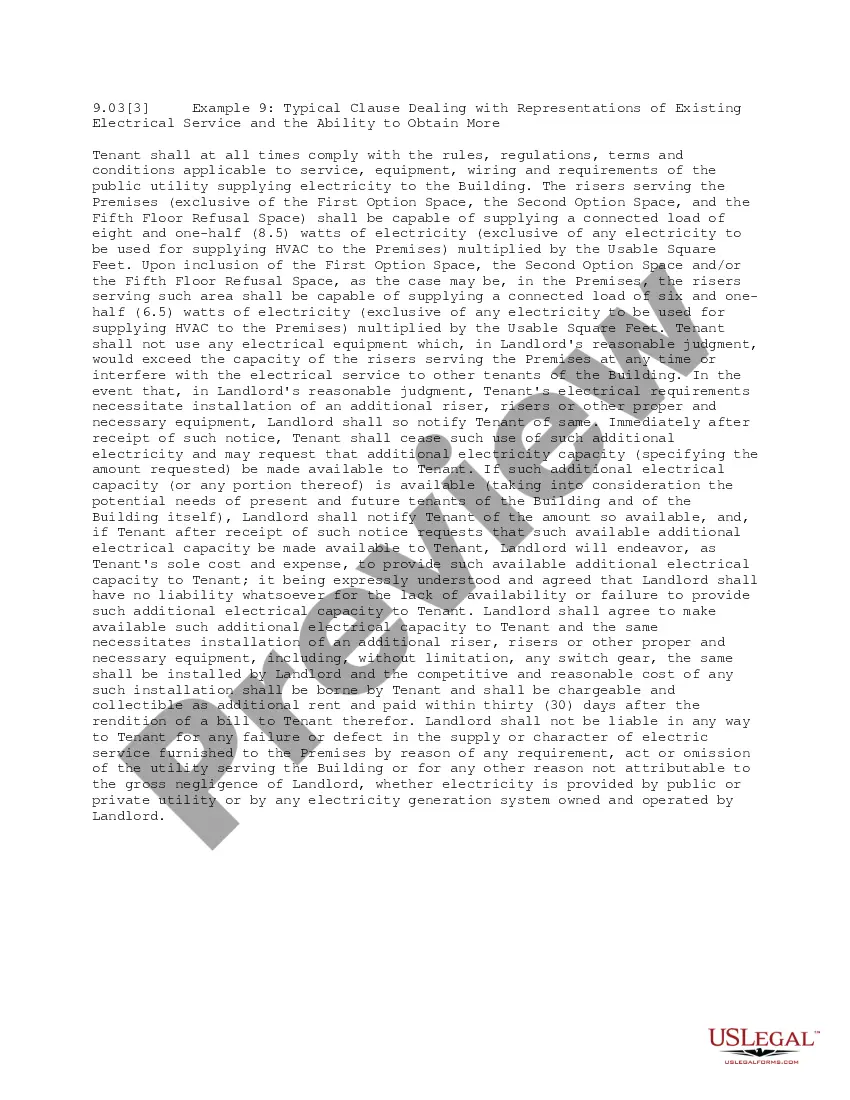
- Conditions under which additional electrical service may be requested and charged to the tenant.
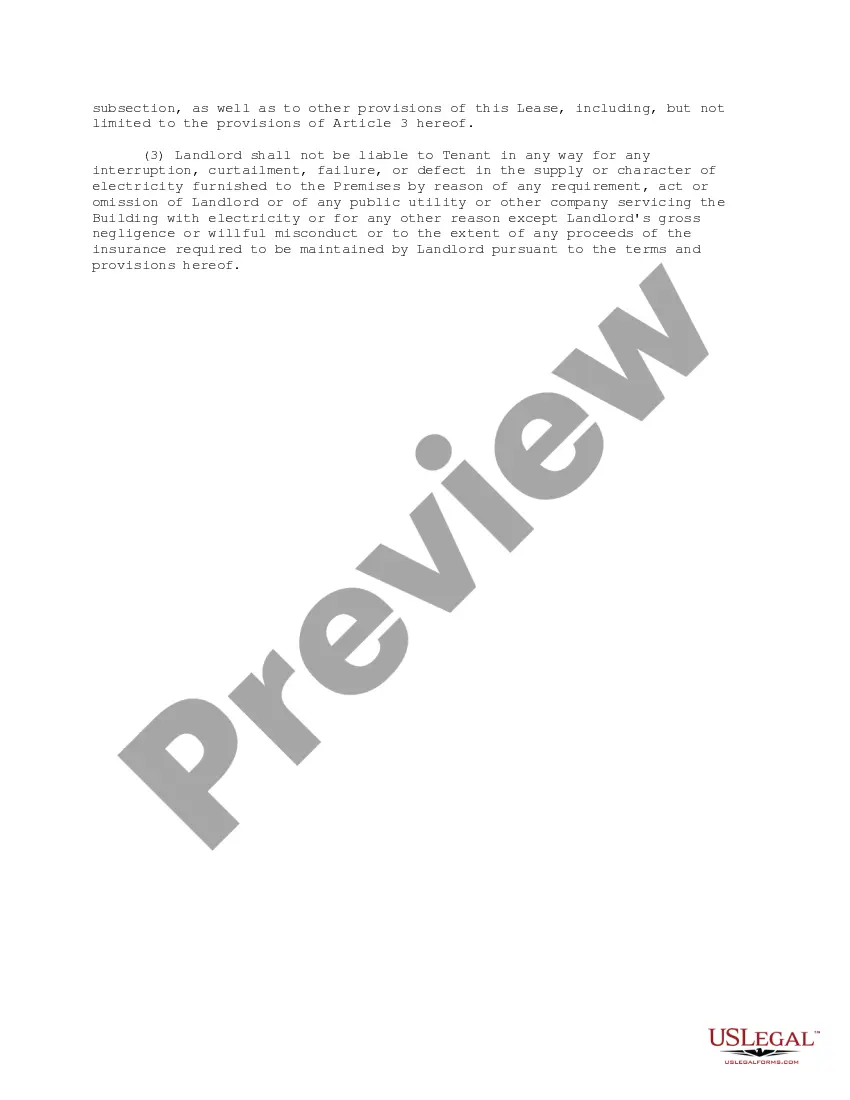
- Exemptions of landlord liability for service disruptions or deficiencies.
- Limitations on tenant alterations to electrical wiring without landlord consent.

When this form is needed
This form is useful when drafting or reviewing an office lease agreement that includes provisions for electrical services. It is particularly relevant for tenants who may require additional electrical capacity or those concerned about the costs and management of electricity usage in their rented office space.
Who should use this form
- Commercial landlords looking to outline electrical service clauses in their lease agreements.
- Tenants of office spaces who want clarity on their rights and responsibilities concerning electricity usage.
- Real estate professionals involved in preparing or negotiating lease agreements.
How to complete this form
- Identify the parties involved: Include the names of the landlord and tenant.
- Specify the leased premises: Clearly describe the office space being leased.
- Outline the electrical services provided: Detail the landlord's responsibilities for providing electricity.
- State the payment terms: Note how and when the tenant will be billed for electricity usage.
- Include restrictions on alterations: Specify tenant limitations regarding changes to electrical installations.
Notarization guidance
In most cases, this form does not require notarization. However, some jurisdictions or signing circumstances might. US Legal Forms offers online notarization powered by Notarize, accessible 24/7 for a quick, remote process.
Get your form ready online
Our built-in tools help you complete, sign, share, and store your documents in one place.
Make edits, fill in missing information, and update formatting in US Legal Forms—just like you would in MS Word.
Download a copy, print it, send it by email, or mail it via USPS—whatever works best for your next step.
Sign and collect signatures with our SignNow integration. Send to multiple recipients, set reminders, and more. Go Premium to unlock E-Sign.
If this form requires notarization, complete it online through a secure video call—no need to meet a notary in person or wait for an appointment.
We protect your documents and personal data by following strict security and privacy standards.

Make edits, fill in missing information, and update formatting in US Legal Forms—just like you would in MS Word.

Download a copy, print it, send it by email, or mail it via USPS—whatever works best for your next step.

Sign and collect signatures with our SignNow integration. Send to multiple recipients, set reminders, and more. Go Premium to unlock E-Sign.

If this form requires notarization, complete it online through a secure video call—no need to meet a notary in person or wait for an appointment.

We protect your documents and personal data by following strict security and privacy standards.
Common mistakes to avoid
- Failing to specify the basis for electricity billing, which can lead to disputes.
- Not including terms for liability concerning electrical service interruptions.
- Overlooking the need for tenant consent for electrical alterations.
Why use this form online
- Instant access to a professionally drafted document tailored for commercial leases.
- Editability that allows customization to meet specific contractual needs.
- Convenience of obtaining required legal forms without in-person visits or lengthy consultations.
Legal use & context
- This form is legally binding once signed by both parties, establishing clear terms around electrical service.
- It helps prevent disputes over electricity costs and responsibilities during the lease term.
- Functions as an important supplement to the main lease agreement, enhancing transparency regarding utilities.
What to keep in mind
- The form clearly defines the rights and responsibilities concerning electrical services in office leases.
- It highlights the importance of clearly articulated terms to minimize disputes.
- Using this form helps ensure compliance with state regulations related to utility services in commercial leases.
Looking for another form?

Form popularity
FAQ
Clauses are specific provisions or sections in your contract that address a specific aspect of the agreement. Clauses clearly define each party's duties, rights, and privileges under the terms of the contract. There are several different types of clauses, and the ones you use depend on the parties' needs.
General contract provisions are requirements including standard conditions in contracts like terms of payment, terms of delivery, and recommended measures against contract violation. Parties usually add boilerplate conditions to their contracts for the following reasons: For increased efficiency.
The five requirements for creating a valid contract are an offer, acceptance, consideration, competency and legal intent.
General provisions are balance sheet items representing funds set aside by a company as assets to pay for anticipated future losses. The amounts set aside are based on estimates of future losses. Lenders are required to set up general provisions every time they make a loan in case borrowers default.
Obligations of all parties. Ownership. Termination rights. Confidentiality. Limitation/indemnification of liability.
Contracts are made up of three basic parts an offer, an acceptance and consideration.
Seven essential elements must be present before a contract is binding: the offer, acceptance, mutual assent (also known as meeting of the minds), consideration, capacity, and legality. Contracts are typically in writing and signed to prove all of those elements are present.
General contracts are legal documents that outline the terms and conditions of an agreement and are signed by both parties involved.A general contract clarifies the conditions of the agreement to make sure both parties have a clear understanding of what they are signing.
Clauses are specific provisions or sections in your contract that address a specific aspect of the agreement. Clauses clearly define each party's duties, rights, and privileges under the terms of the contract.One you might use is a choice of venue clause.