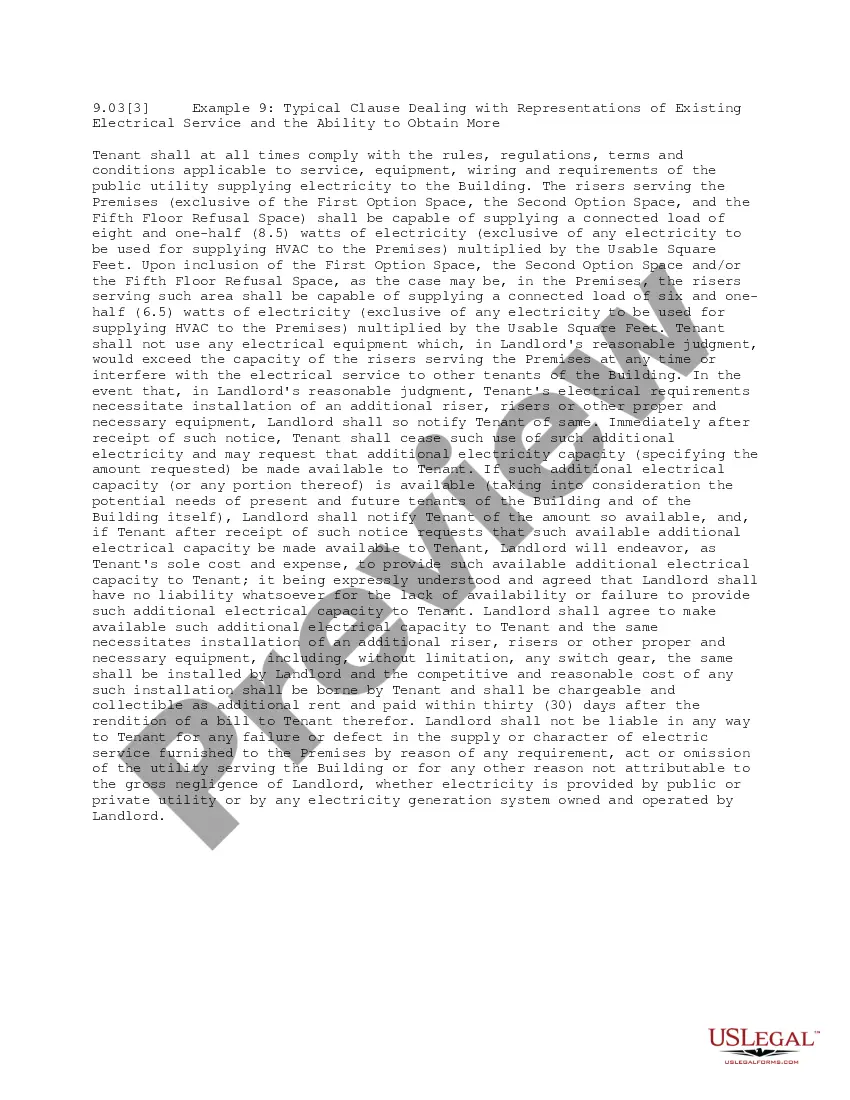
Clause Dealing with Representations of Existing Electrical Service and the Ability to Obtain More
What is this form?
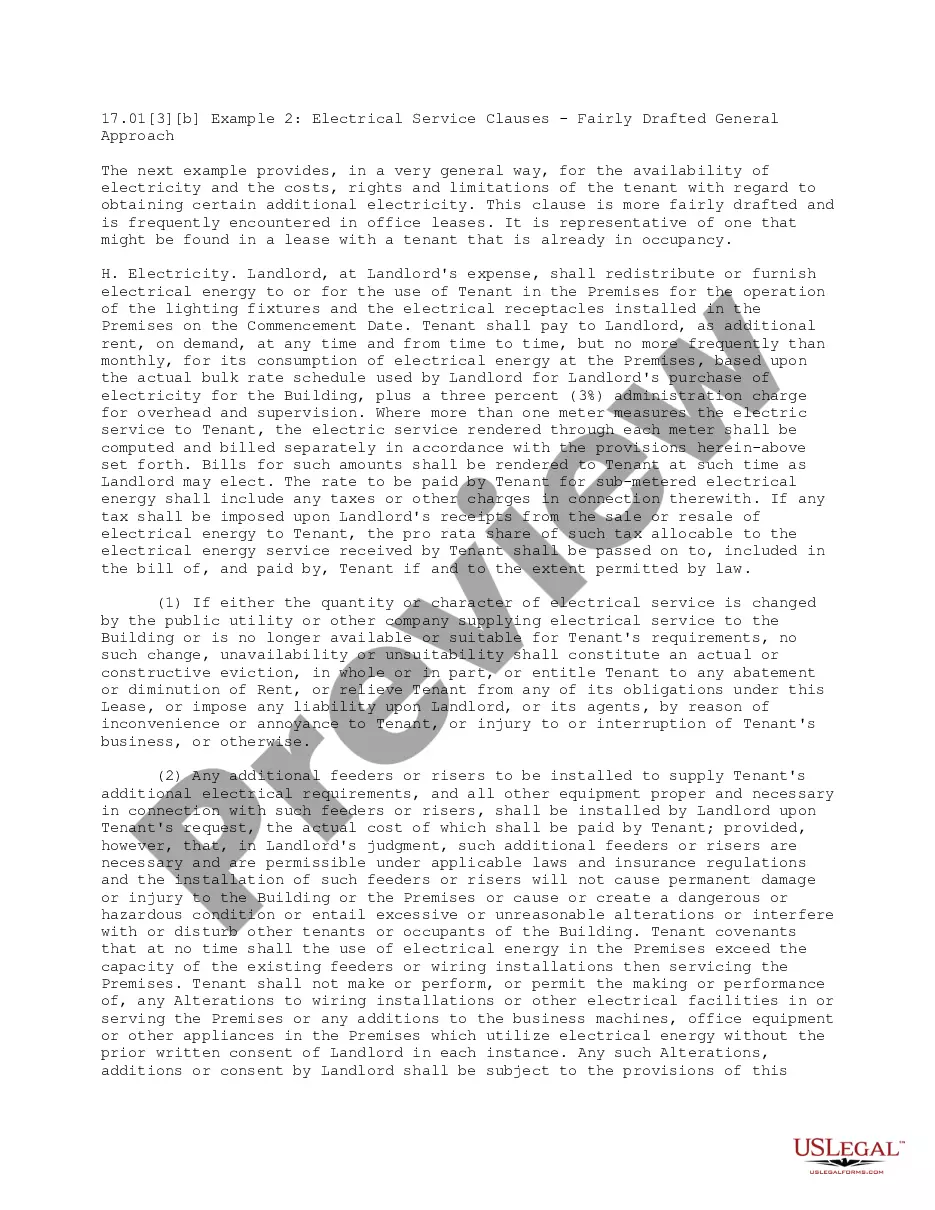
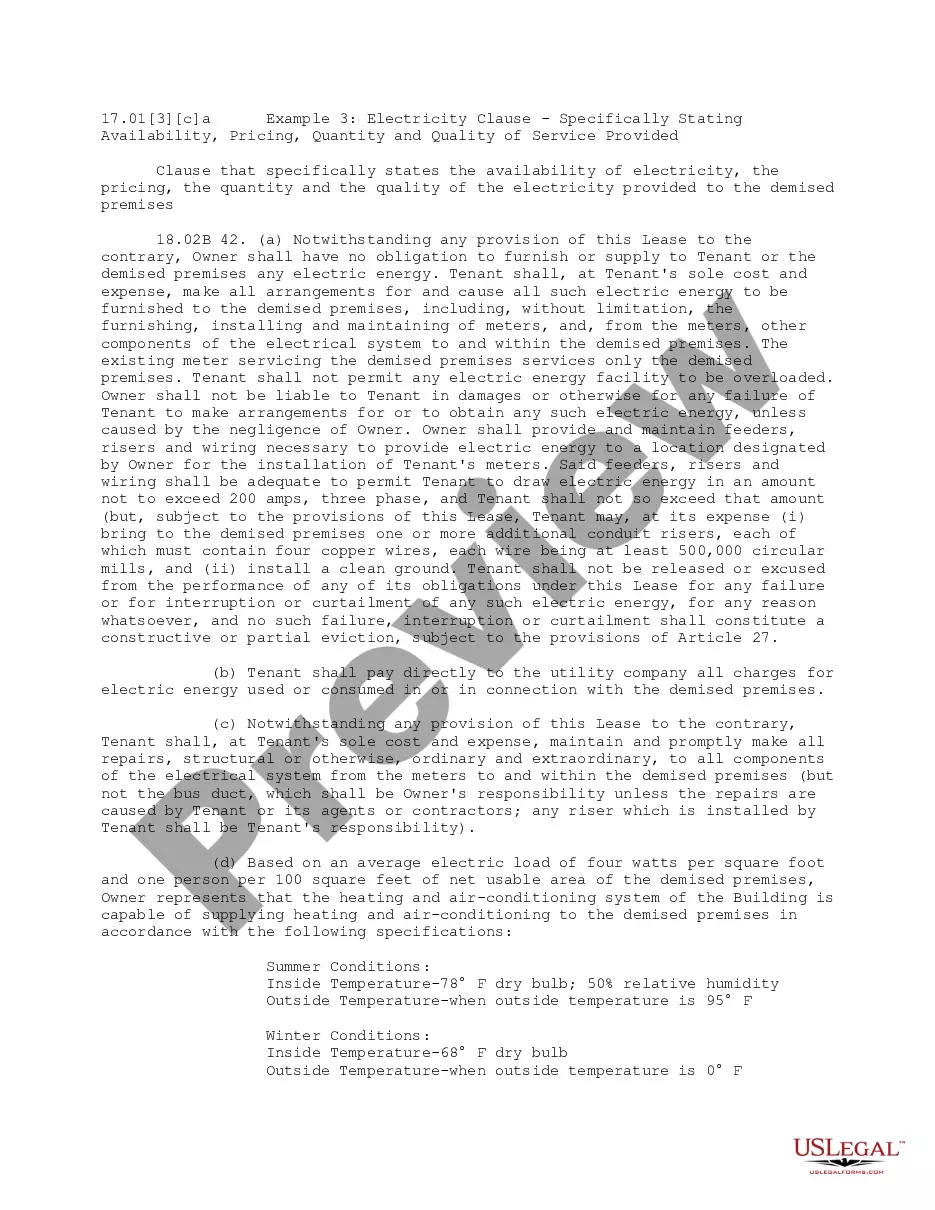
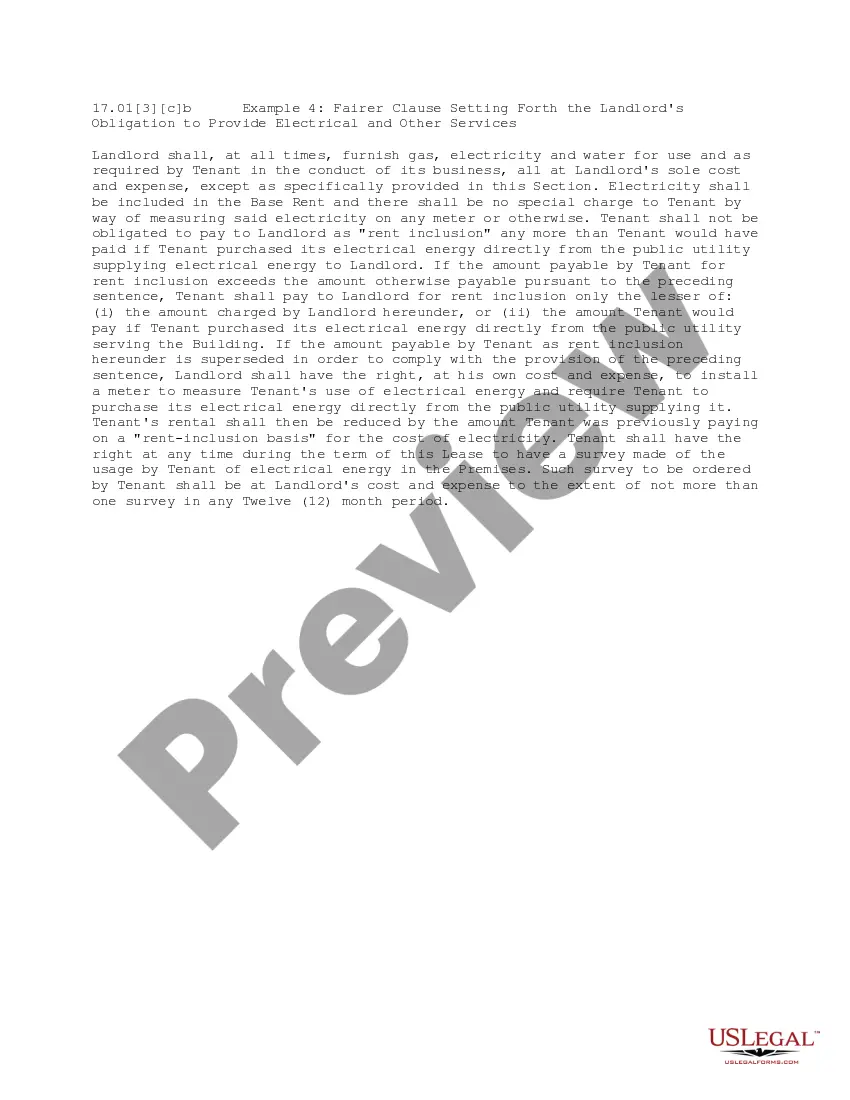
The Clause Dealing with Representations of Existing Electrical Service and the Ability to Obtain More is a legal document that addresses the responsibilities of tenants regarding electrical service in a commercial building. This form outlines how tenants must comply with specific rules, regulations, and terms related to electric service and usage, ensuring that the electrical capacity meets their needs without exceeding the building's limits. It is essential for managing electric service reliability and tenant obligations in a shared space.
Main sections of this form
- Tenant's compliance with utility service regulations
- Specifications for electrical capacity based on usable square footage
- Provisions about potential additional electrical capacity requests
- Liability clauses regarding electrical service failures
- Cost responsibilities for electrical infrastructure changes
When this form is needed
This form is typically used when entering into a lease agreement for commercial premises where electrical service is a significant concern. It is necessary when tenants require specific electrical capacities for their operations or when there may be changes in the premises occupied that could affect the electrical load. Use this form to establish clear expectations regarding electrical service and tenant responsibilities from the outset of the rental agreement.
Who needs this form
- Commercial landlords looking to define electrical service terms in leases
- Tenants requiring clarity on their electrical usage rights and obligations
- Property managers overseeing multiple tenants within a building
- Attorneys drafting lease agreements for clients in commercial real estate
How to complete this form
- Identify the parties involved in the lease agreement.
- Specify the property details, including the address and description.
- Detail any existing electrical service capabilities and limitations.
- Include clauses addressing additional electrical capacity requests and responsibilities.
- Sign and date the document to finalize the agreement.
Notarization requirements for this form
Notarization is generally not required for this form. However, certain states or situations might demand it. You can complete notarization online through US Legal Forms, powered by Notarize, using a verified video call available anytime.
Get your form ready online
Our built-in tools help you complete, sign, share, and store your documents in one place.
Make edits, fill in missing information, and update formatting in US Legal Forms—just like you would in MS Word.
Download a copy, print it, send it by email, or mail it via USPS—whatever works best for your next step.
Sign and collect signatures with our SignNow integration. Send to multiple recipients, set reminders, and more. Go Premium to unlock E-Sign.
If this form requires notarization, complete it online through a secure video call—no need to meet a notary in person or wait for an appointment.
We protect your documents and personal data by following strict security and privacy standards.

Make edits, fill in missing information, and update formatting in US Legal Forms—just like you would in MS Word.

Download a copy, print it, send it by email, or mail it via USPS—whatever works best for your next step.

Sign and collect signatures with our SignNow integration. Send to multiple recipients, set reminders, and more. Go Premium to unlock E-Sign.

If this form requires notarization, complete it online through a secure video call—no need to meet a notary in person or wait for an appointment.

We protect your documents and personal data by following strict security and privacy standards.
Avoid these common issues
- Failing to specify electrical load requirements accurately.
- Not including provisions for future changes in tenant space.
- Ignoring local regulations that may override standard clauses.
- Not understanding liability limitations regarding electrical service interruptions.
Advantages of online completion
- Easy access to professionally drafted templates tailored for various states.
- Quick downloads allow for immediate use and application.
- Editable formats enable customization to fit specific operational needs.
- Reliable legal language provides confidence in the agreements made.
Looking for another form?

Form popularity
FAQ
10 Key Contract Clauses You Should Know. R. Termination. Another key term, often found at the end of the contract, is the termination clause. Dispute Resolution. Merger (Integration) Clause. Governing Law. Confidentiality. Non-Compete and Non-Solicitation. Indemnification.
Related Content. A statement, which relates to a matter of fact or present intention, made during contractual negotiations, which the parties do not ordinarily intend will become a contractual term, but which may induce another party to enter into a contract.
Confidentiality. Force Majeure. Termination Triggers. Jurisdiction. Dispute Resolution. Damages. Planning. Implementation.
A representation is basically an assertion of a past or existing fact, true on the date that it is made. It is generally given to induce another party to enter into a contract. A warranty on the other hand, is similar to a representation but it refers to the present or future i.e. a present or future promise of a fact.
Covenants have been distinguished from representations because they are promises of performance in the future, in contrast to statements of the existence of a past or present fact.
Write a concise statement that illustrates exactly what purpose you want the contract clause to achieve. Write in plain English, not in "legalese." For example, "I want to prevent Company A from using its access to Company B's corporate records to steal business secrets from Company B."
A representation is a statement of past or present fact (either express or implied) made by one party to induce the other party to enter into the agreement.
A representation is a statement of fact that induces a party to enter into the contract. The statement, made before or at the time of making the contract, regards a past fact or existing circumstance related to the contract which influences such party to enter the contract.