Real Estate Commission Clause
About this form
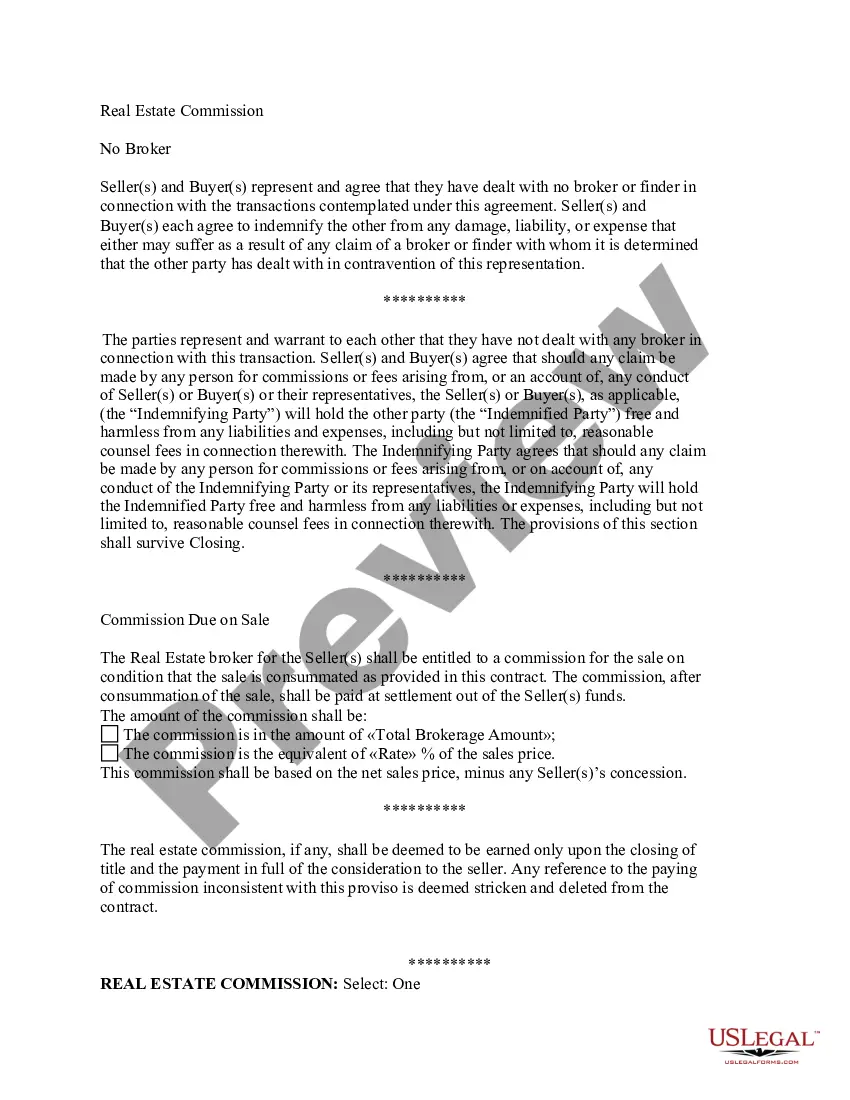
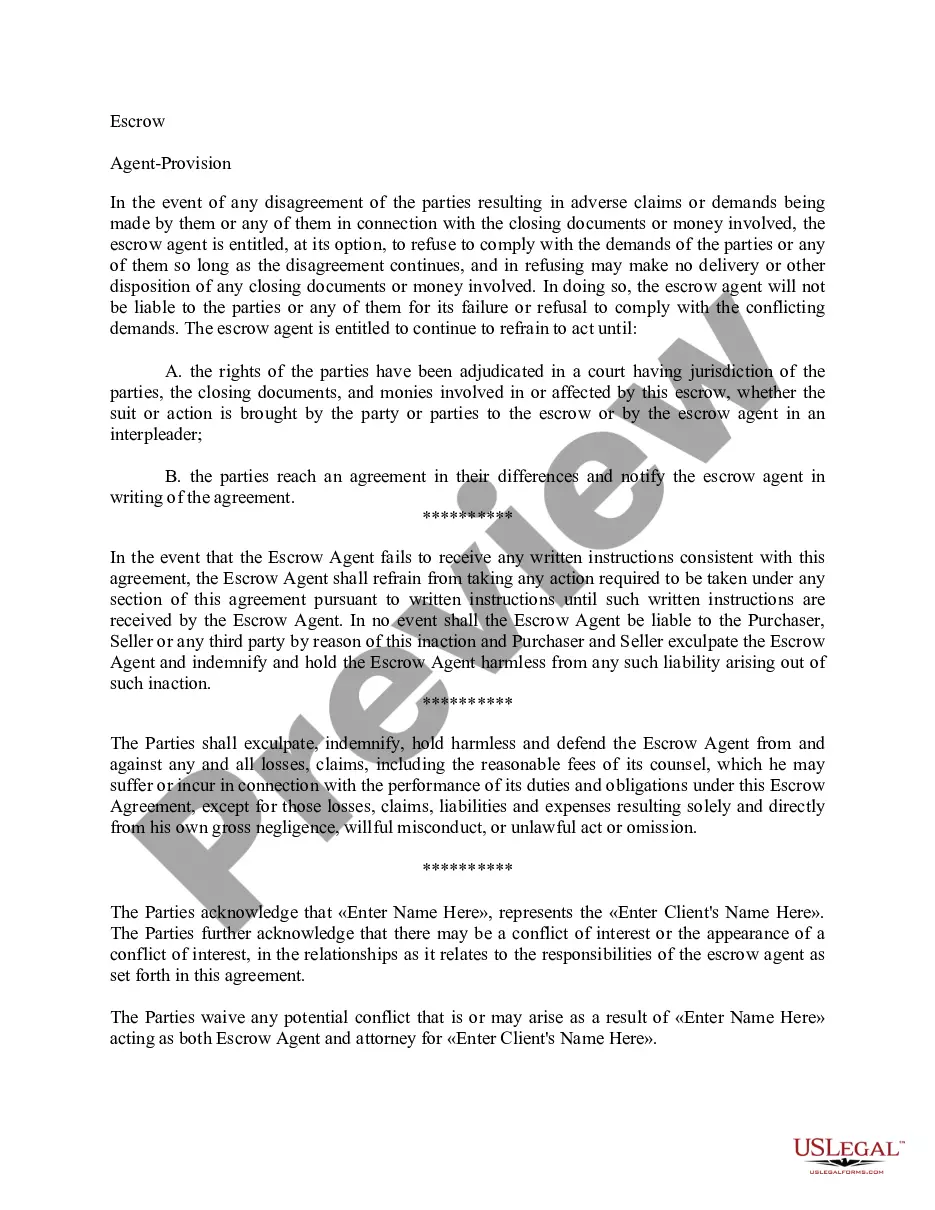
The Real Estate Commission Clause is a legal document that outlines the responsibilities of parties in a real estate transaction regarding the payment of commissions to brokers. This form clarifies the terms of payment, commission structure, and conditions under which agents are compensated for their services. Unlike other real estate forms, this clause specifically addresses the commission-related aspects, ensuring transparency between landlords and real estate agents.
Form components explained
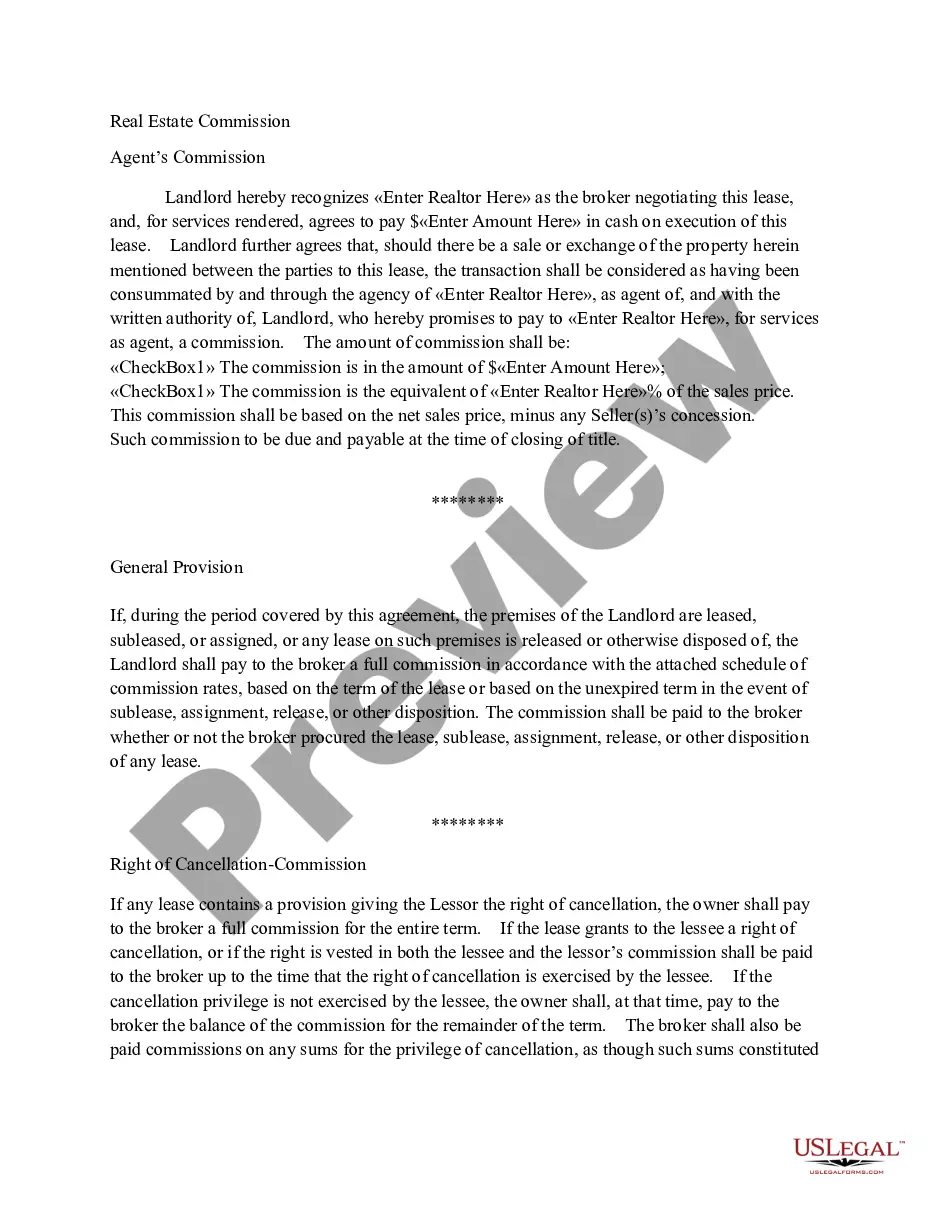
- Agents Commission: Identifies the broker and the agreed commission amount upon the execution of the lease.
- General Provision: Outlines commission terms for leasing, subleasing, or assignment of the property.
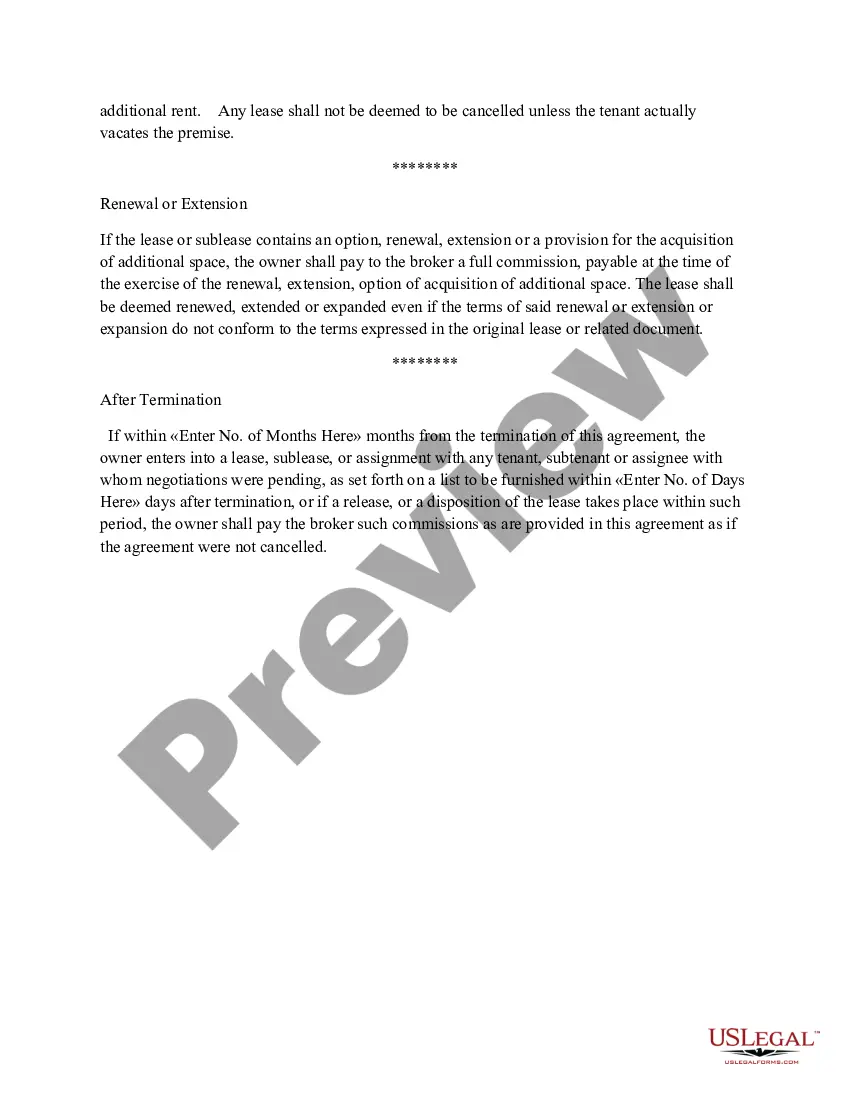
- Right of Cancellation: Explains commission obligations if either party has the right to cancel the lease.
- Renewal or Extension: Details commission terms for renewals, extensions, or acquisition of additional space.
- After Termination: Specifies commission payment obligations if a lease is entered into post-termination of the agreement.
When this form is needed
This form is useful when entering into a lease agreement where a broker is involved. It is particularly necessary when parties want to establish clear terms regarding commission payments, especially in complex leasing situations involving negotiations for renewals, extensions, or property transactions. Use this form if you are a landlord negotiating with a real estate broker or if you are a broker representing a landlord in a leasing arrangement.
Who needs this form
- Landlords or property owners entering into a lease agreement who wish to clarify commission obligations.
- Real estate agents or brokers representing landlords in lease negotiations.
- Anyone involved in leasing arrangements who needs to define commission structures and payment terms.
How to prepare this document
- Identify the parties involved, including the landlord and the broker.
- Specify the commission amount to be paid to the broker upon execution of the lease.
- Detail the terms regarding lease renewals, extensions, or cancellation rights.
- Review the commission structure for leasing, subleasing, or assignment of the property.
- Ensure all parties sign and date the document for it to be legally binding.
Does this document require notarization?
This form does not typically require notarization unless specified by local law. Check with local regulations to confirm your specific needs.
Get your form ready online
Our built-in tools help you complete, sign, share, and store your documents in one place.
Make edits, fill in missing information, and update formatting in US Legal Forms—just like you would in MS Word.
Download a copy, print it, send it by email, or mail it via USPS—whatever works best for your next step.
Sign and collect signatures with our SignNow integration. Send to multiple recipients, set reminders, and more. Go Premium to unlock E-Sign.
If this form requires notarization, complete it online through a secure video call—no need to meet a notary in person or wait for an appointment.
We protect your documents and personal data by following strict security and privacy standards.

Make edits, fill in missing information, and update formatting in US Legal Forms—just like you would in MS Word.

Download a copy, print it, send it by email, or mail it via USPS—whatever works best for your next step.

Sign and collect signatures with our SignNow integration. Send to multiple recipients, set reminders, and more. Go Premium to unlock E-Sign.

If this form requires notarization, complete it online through a secure video call—no need to meet a notary in person or wait for an appointment.

We protect your documents and personal data by following strict security and privacy standards.
Mistakes to watch out for
- Failing to accurately specify the commission amount can lead to disputes later.
- Not clarifying rights of cancellation may create confusion if the lease is terminated prematurely.
- Neglecting to check state-specific requirements that may affect the enforceability of this form.
Why use this form online
- Convenience of downloading and filling the form at any time.
- Editability allows for customization to match specific needs.
- Access to templates reviewed by licensed attorneys to ensure accuracy and legal compliance.
Looking for another form?

Form popularity
FAQ
Advice When Drafting and Signing a Commission Agreement Use a Commission Agreement Template.Define Worker Type and Commission Structure.List All Activities That Will Provide Commission Pay.Define the Commission Rate.Identify Any Potential Bonuses Above And Beyond Commission.Explain Termination Procedures.
(a) You shall be entitled to receive a sales commission from the Fund in an amount equal to 1.00% of the gross sales price per Share, of which 0.80% will be re-allowed to the sub-sales agent.
Example of a Brokerage Fee An investor asks his broker to buy $100 shares of stock in Company ABC on behalf of the investor. The price of the stock is $15/share, so the total expenditure is $1,500. The broker charges a brokerage fee of 2%, so the fee is $30, which is calculated as $1,500 x . 02 = $30.
The Commission Compensation clause in a Sales Representative Agreement details: (a) the amount (typically defined as a percentage) of commisison; (b) how the commission is calculated, and (c) may define the circumstances when no commisson is payable.
A tail period is the time period during which an investment banker working on a company's sale is entitled to payment, even after termination of services, if the deal closes within the period. It is a provision in the engagement letter and is found under clauses relating to termination of services.
Seller shall be solely responsible for, and shall pay in cash at Closing, and only if Closing shall occur, a real estate commission to x /Nation's Capital Realty Advisors, LLC (the ?Broker?) pursuant to the terms of a separate agreement.
A holdover clause permits your real estate brokerage to collect its fee or commission from you if you enter into a purchase contract with a buyer within a specific number of days after your listing agreement ends and that buyer was introduced to your property during the term of the listing agreement.