Complaint or Petition by Purchaser Against Possessor of Real Property After a Foreclosure Sale Pursuant to a Deed of Trust
Understanding this form
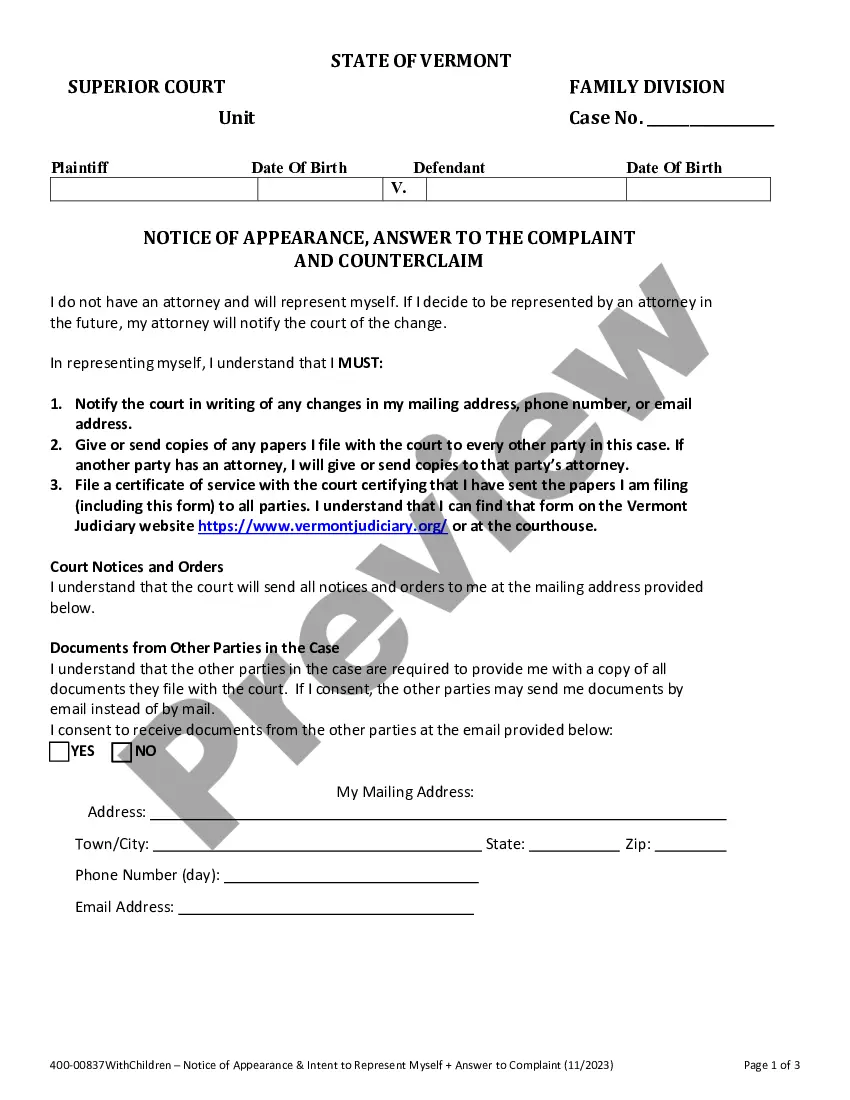
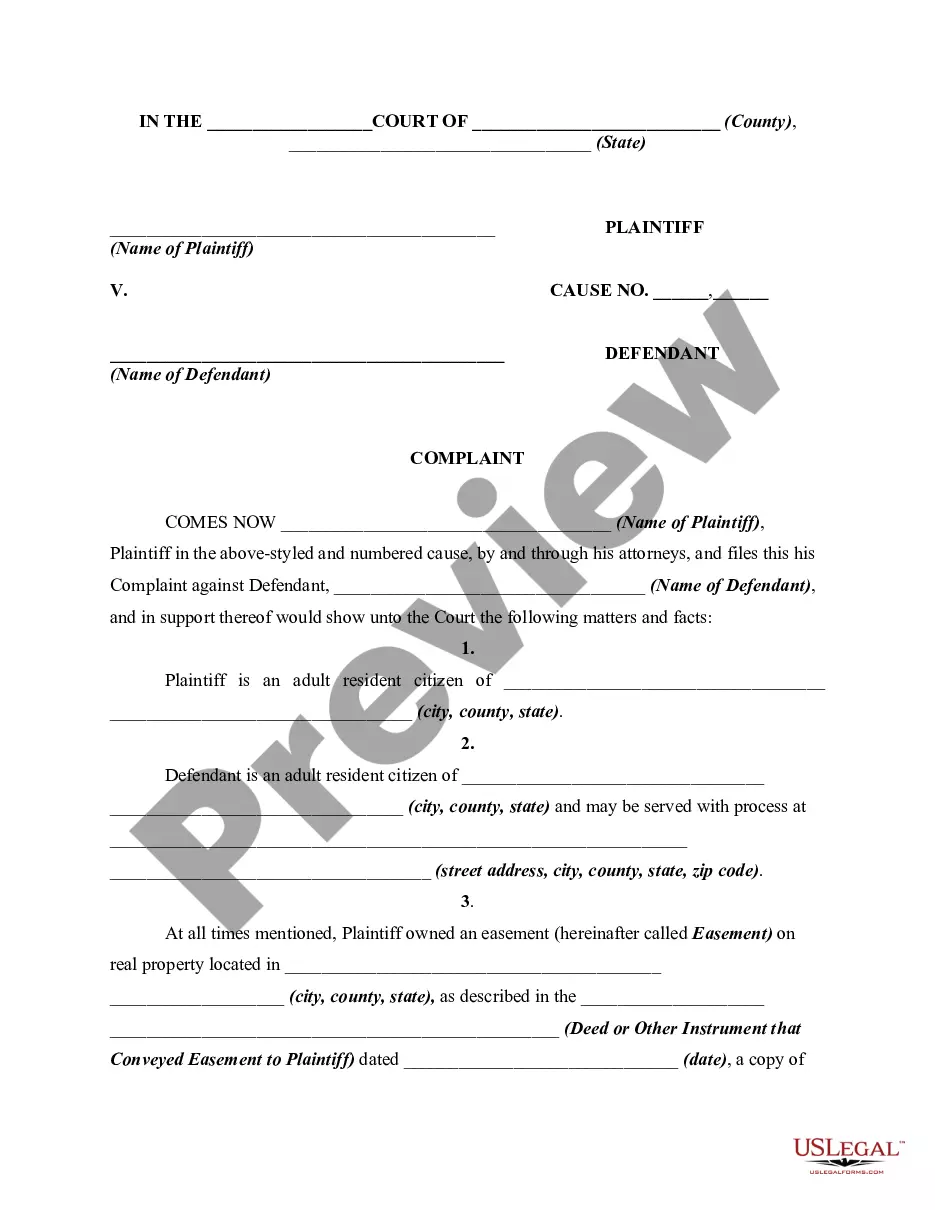
This form is a legal document titled "Complaint or Petition by Purchaser Against Possessor of Real Property After a Foreclosure Sale Pursuant to a Deed of Trust." It enables a purchaser to initiate a lawsuit against an individual who is unlawfully occupying real property after the property has been sold through a foreclosure process. This complaint differs from other forms used in eviction processes due to its specific focus on foreclosure sales and the legal rights of the purchaser under such circumstances.
Form components explained
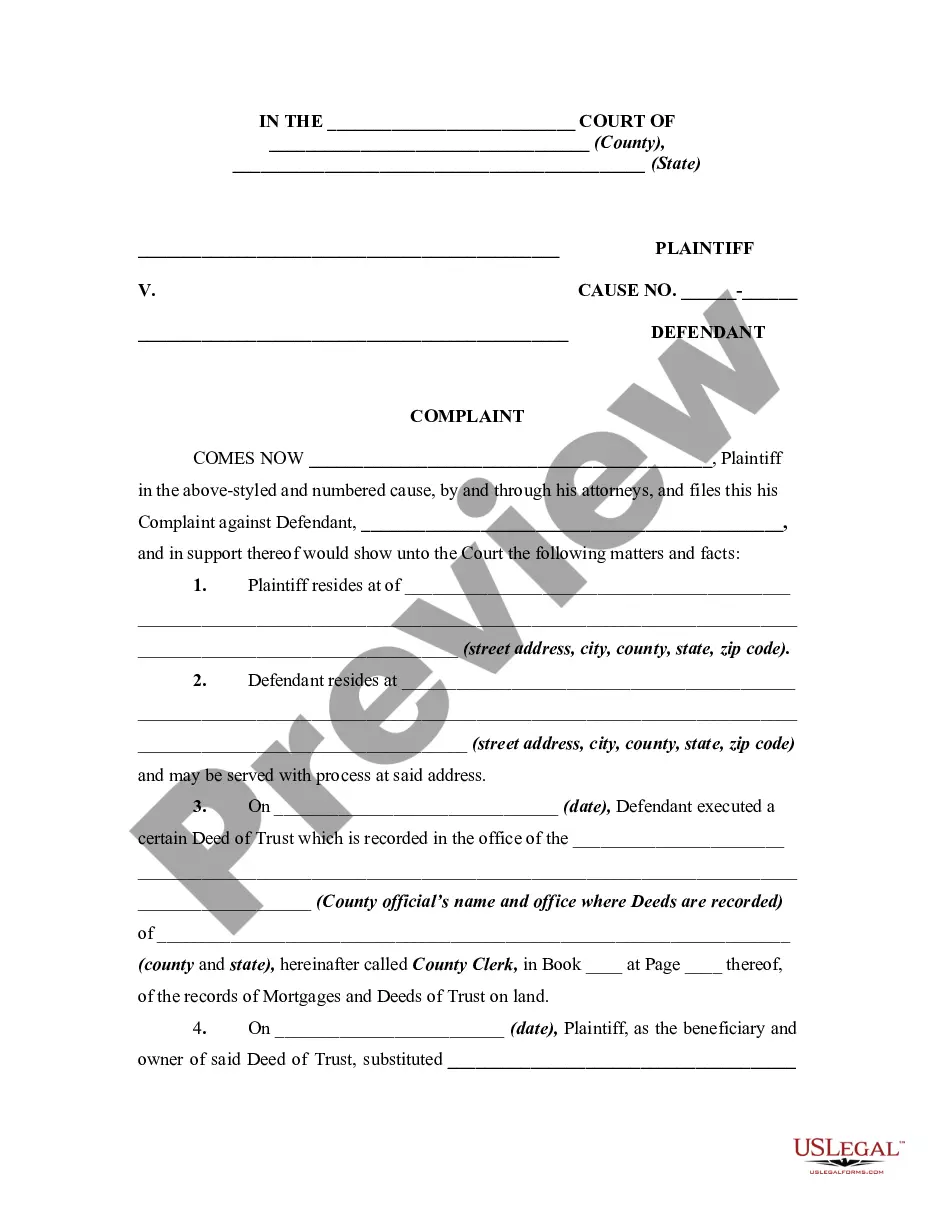
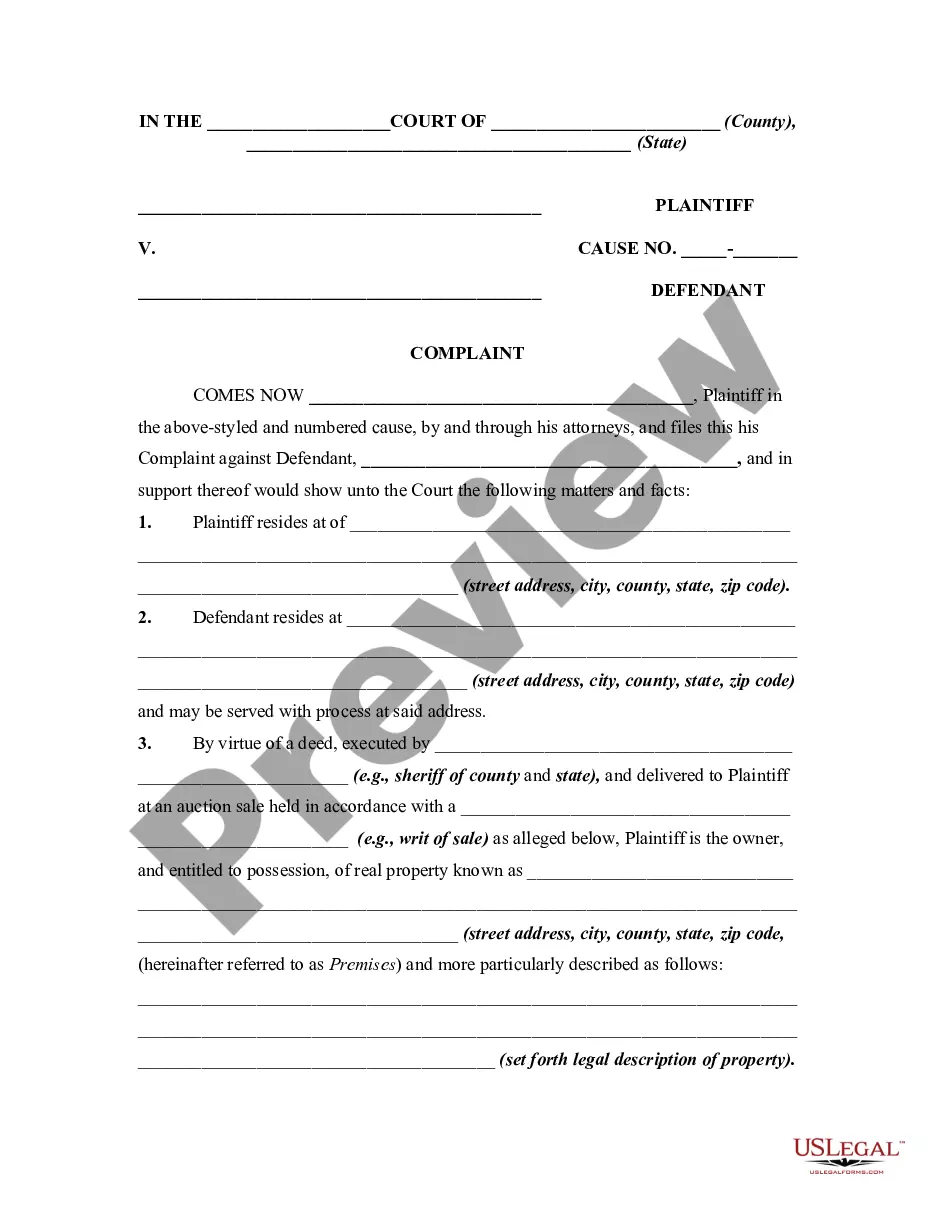
- Title of the case with plaintiff and defendant details
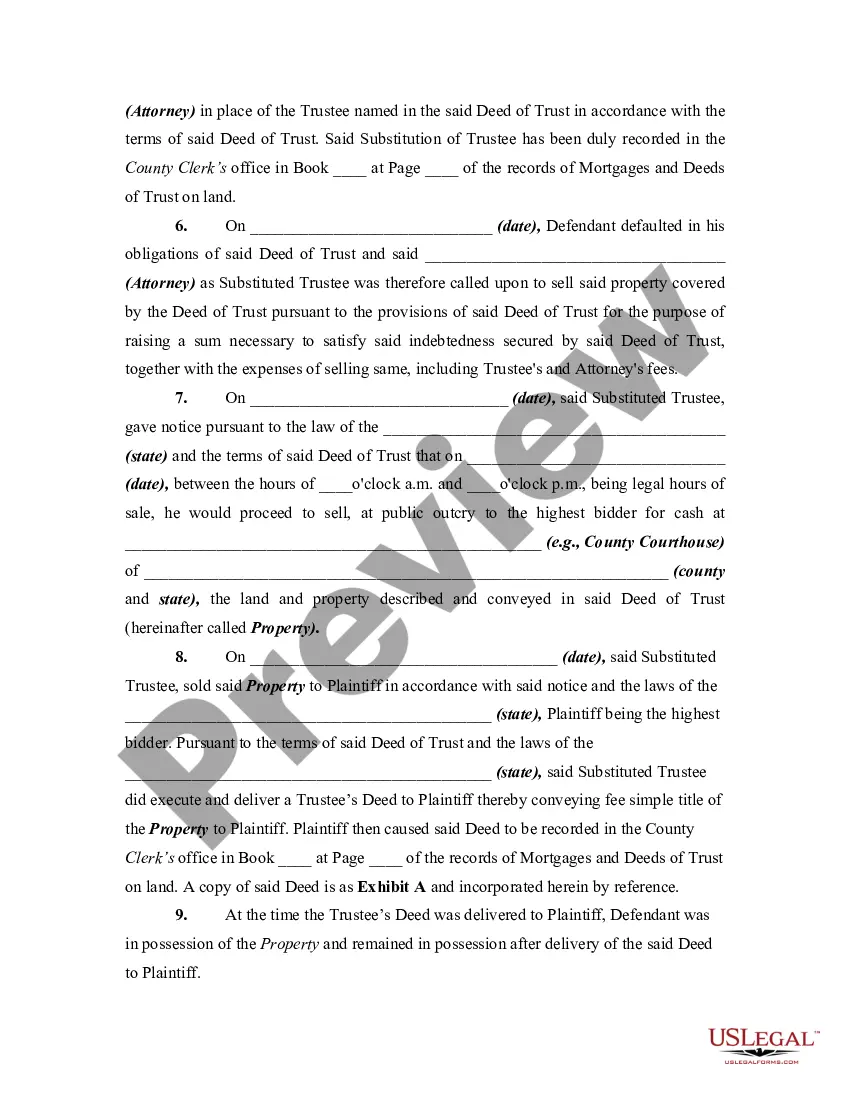
- Allegations relating to the deed of trust and property ownership
- Details on the foreclosure sale, including dates and locations
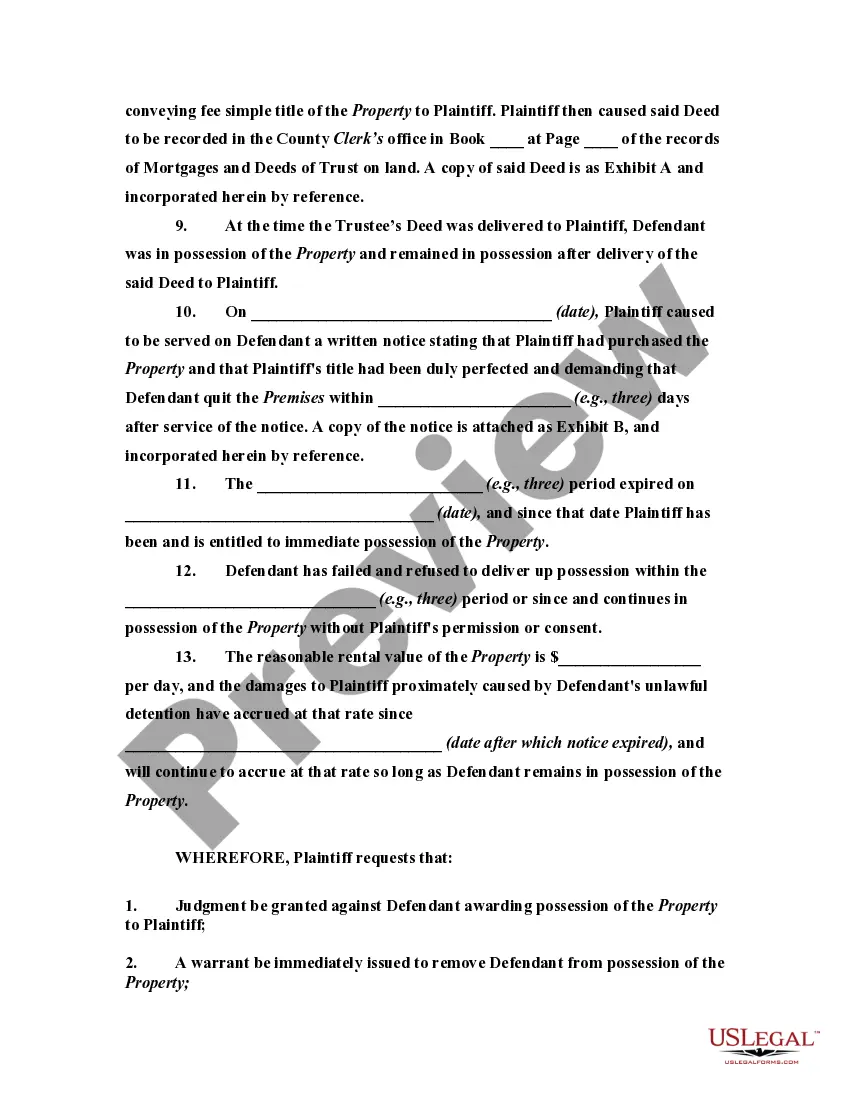
- Notice requirements provided to the possessor of the property
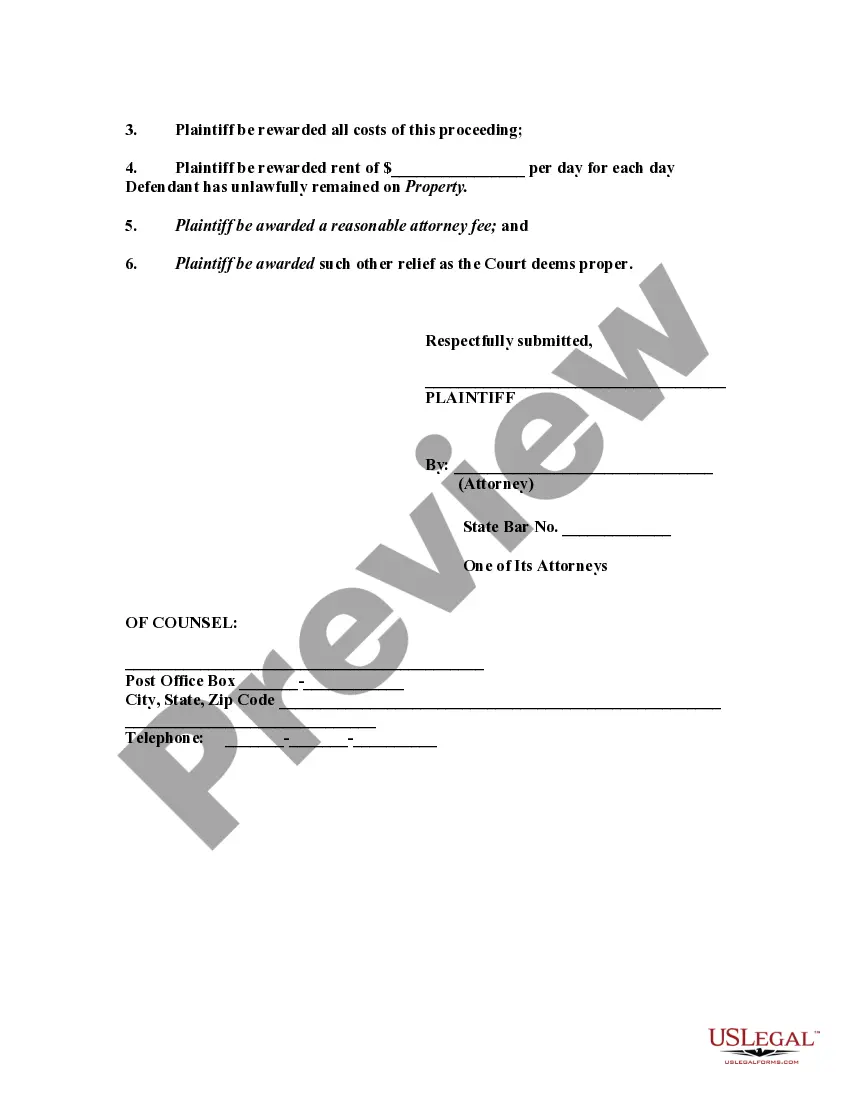
- Requests for judgment including possession, damages, and attorney fees
When to use this document
You would use this form when you have purchased real property through a foreclosure sale and the former possessor has not vacated the premises. If you have fulfilled all requirements for ownership but the previous occupant refuses to leave, this complaint serves as a formal request for a court order to regain possession of the property.
Intended users of this form
- New property owners who obtained their property through a foreclosure sale
- Individuals facing challenges in reclaiming possession of their property
- Real estate investors or agents dealing with foreclosed properties
Completing this form step by step
- Identify and enter the names and addresses of the plaintiff and defendant.
- Detail the relevant information about the deed of trust, including the date and recording location.
- Recount the foreclosure sale process, including the dates and details of the sale.
- Provide the date on which the notice was served and the time frame given to vacate the property.
- Specify the damages and reasonable rental value of the property since the notice period expired.
Does this form need to be notarized?
This form needs to be notarized to ensure legal validity. US Legal Forms provides secure online notarization powered by Notarize, allowing you to complete the process through a verified video call, available anytime.
Get your form ready online
Our built-in tools help you complete, sign, share, and store your documents in one place.
Make edits, fill in missing information, and update formatting in US Legal Forms—just like you would in MS Word.
Download a copy, print it, send it by email, or mail it via USPS—whatever works best for your next step.
Sign and collect signatures with our SignNow integration. Send to multiple recipients, set reminders, and more. Go Premium to unlock E-Sign.
If this form requires notarization, complete it online through a secure video call—no need to meet a notary in person or wait for an appointment.
We protect your documents and personal data by following strict security and privacy standards.

Make edits, fill in missing information, and update formatting in US Legal Forms—just like you would in MS Word.

Download a copy, print it, send it by email, or mail it via USPS—whatever works best for your next step.

Sign and collect signatures with our SignNow integration. Send to multiple recipients, set reminders, and more. Go Premium to unlock E-Sign.

If this form requires notarization, complete it online through a secure video call—no need to meet a notary in person or wait for an appointment.

We protect your documents and personal data by following strict security and privacy standards.
Common mistakes
- Failing to provide accurate names or addresses for the parties involved.
- Missing specific dates or details related to the foreclosure process.
- Not serving the notice properly or not adhering to the required time frames.
Advantages of online completion
- Convenient access to legal forms without needing to visit a lawyer.
- Editable templates that allow customization based on individual circumstances.
- Reliability from using professionally drafted templates by licensed attorneys.
Quick recap
- This form allows purchasers to reclaim possession of real property post-foreclosure.
- Proper completion and submission of the complaint can expedite the legal process of eviction.
- Verification of local laws is crucial for adherence to specific legal requirements.
Looking for another form?


Form popularity
FAQ
More specifically, it's a legal process by which the owner forfeits all rights to the property. If the owner can't pay off the outstanding debt, or sell the property via short sale, the property then goes to a foreclosure auction. If the property doesn't sell there, the lending institution takes possession of it.
To contest a judicial foreclosure, you have to file a written answer to the complaint (the lawsuit). You'll need to present your defenses and explain the reasons why the lender shouldn't be able to foreclose. You might need to defend yourself against a motion for summary judgment and at trial.
Kentucky is a judicial foreclosure state and a lawsuit must be filed by a licensed attorney for any corporation to foreclose on a mortgage.
It takes approximately 5 months to foreclose on a Kentucky property. That process may be lengthened if the borrower contests the foreclosure or it may be shortened if the borrower abandons the property during the foreclosure process.
When available, the right of redemption allows you to get your home back after a foreclosure. If you stop making your mortgage payments, the bank may use a process called foreclosure to sell your home and use the proceeds to repay the amount you borrowed, plus fees and costs.
Homeowner. A homeowner can bid on their own property at the foreclosure auction.If your lender foreclosed, your state may give you a specific amount of time after the auction -- known as a redemption period -- to buy your home back, even if another person won it.
When a borrower loses their home to foreclosure and still owes their lender money after the sale, the remaining debt is usually referred to as a deficiency. Lenders can sue to recover this amount.
Negotiate With Your Lender. If you are having financial difficulties, the worst thing that you can do is bury your head in the sand. Request a Forbearance. Modify Your Loan. Make a Claim. Get a Housing Counselor. Declare Bankruptcy. Use A Foreclosure Defense Strategy. Make Them Produce The Not.
In Kentucky, the purchaser from the foreclosure sale is entitled to possession of the property after ten days' notice to the former owners.