USLegal Guide to Temporary Custody
Understanding this form
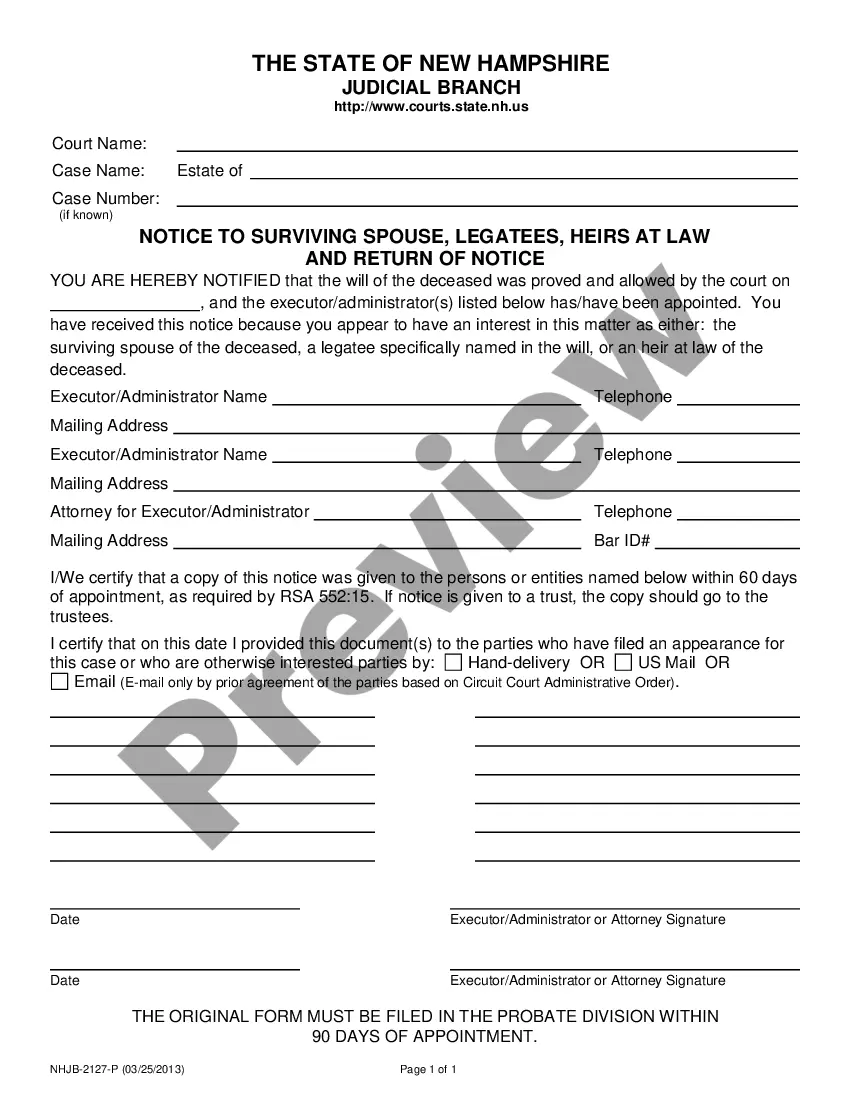
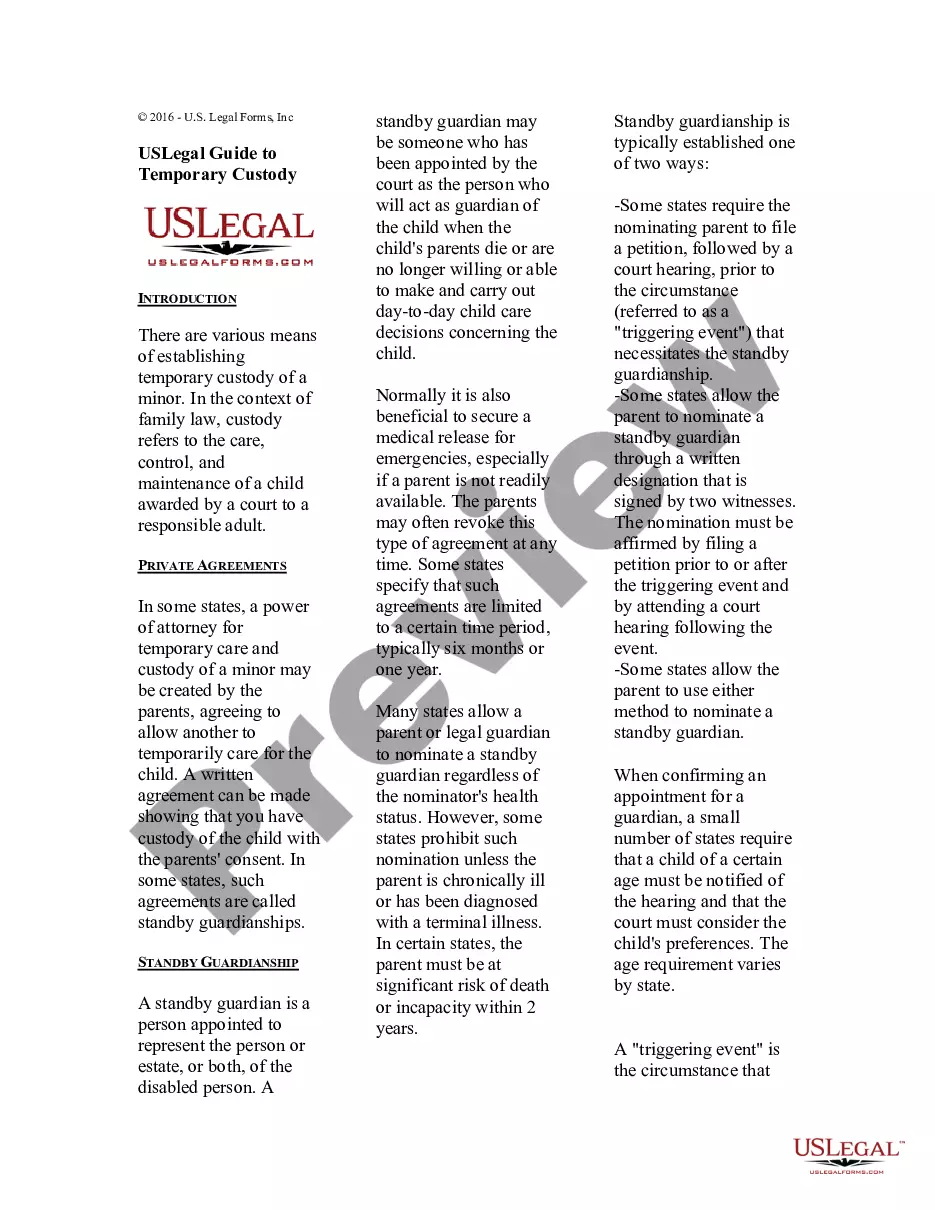
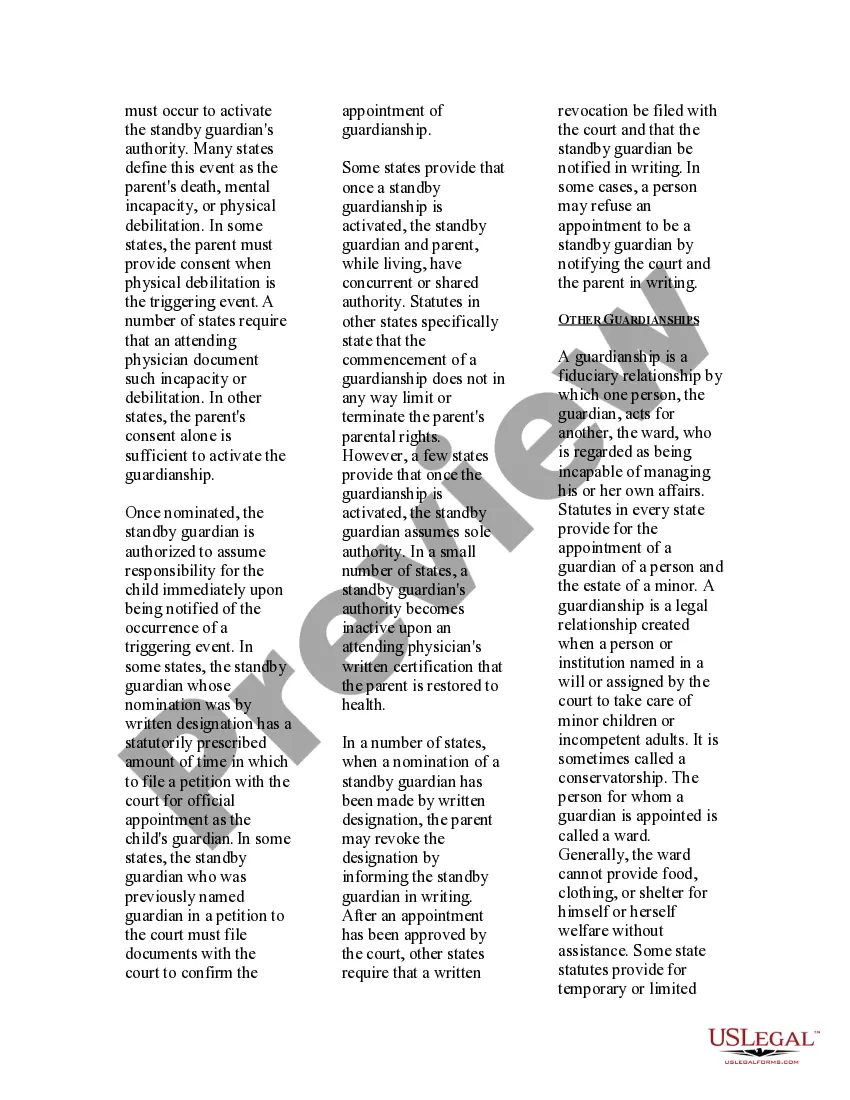
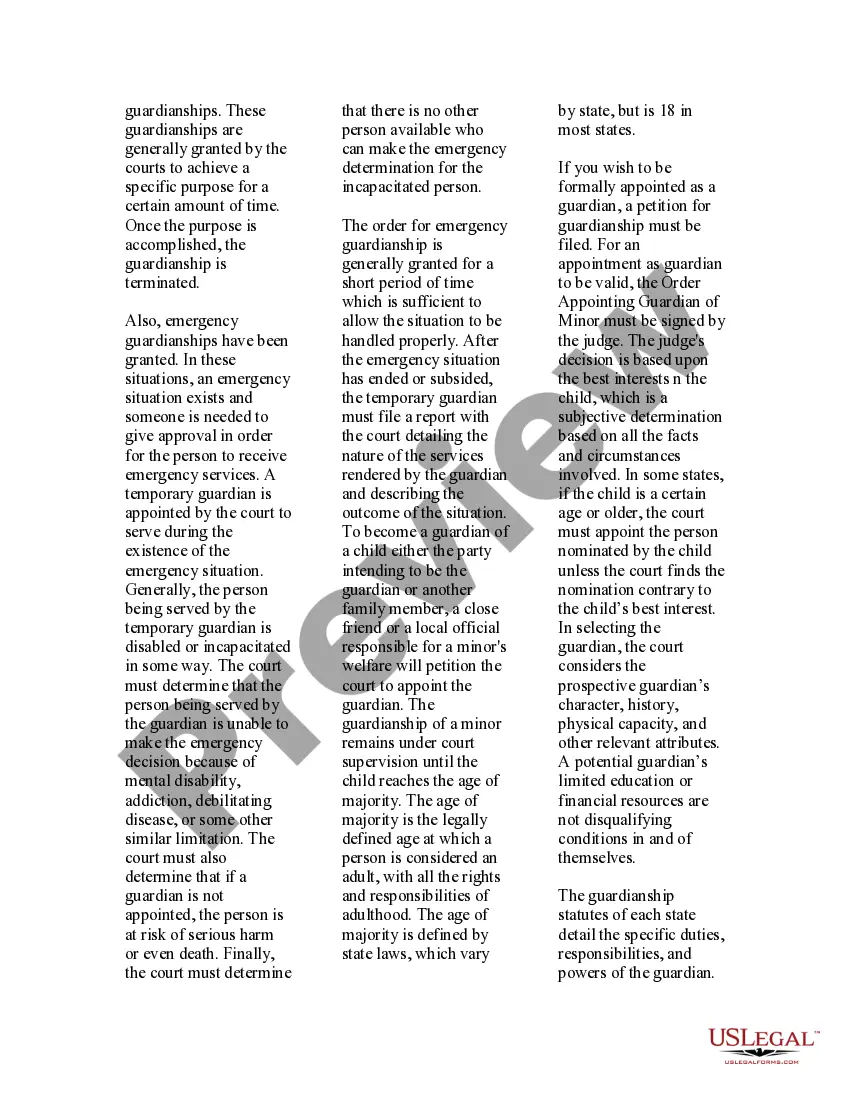
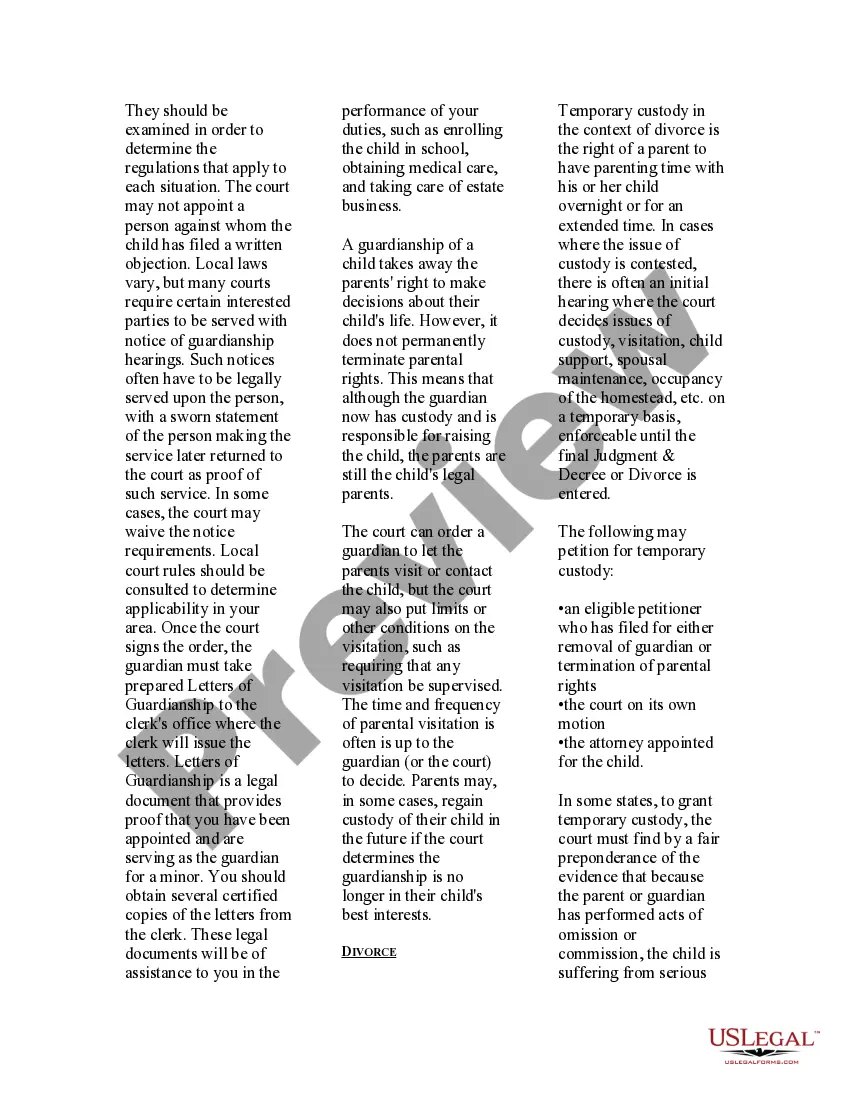
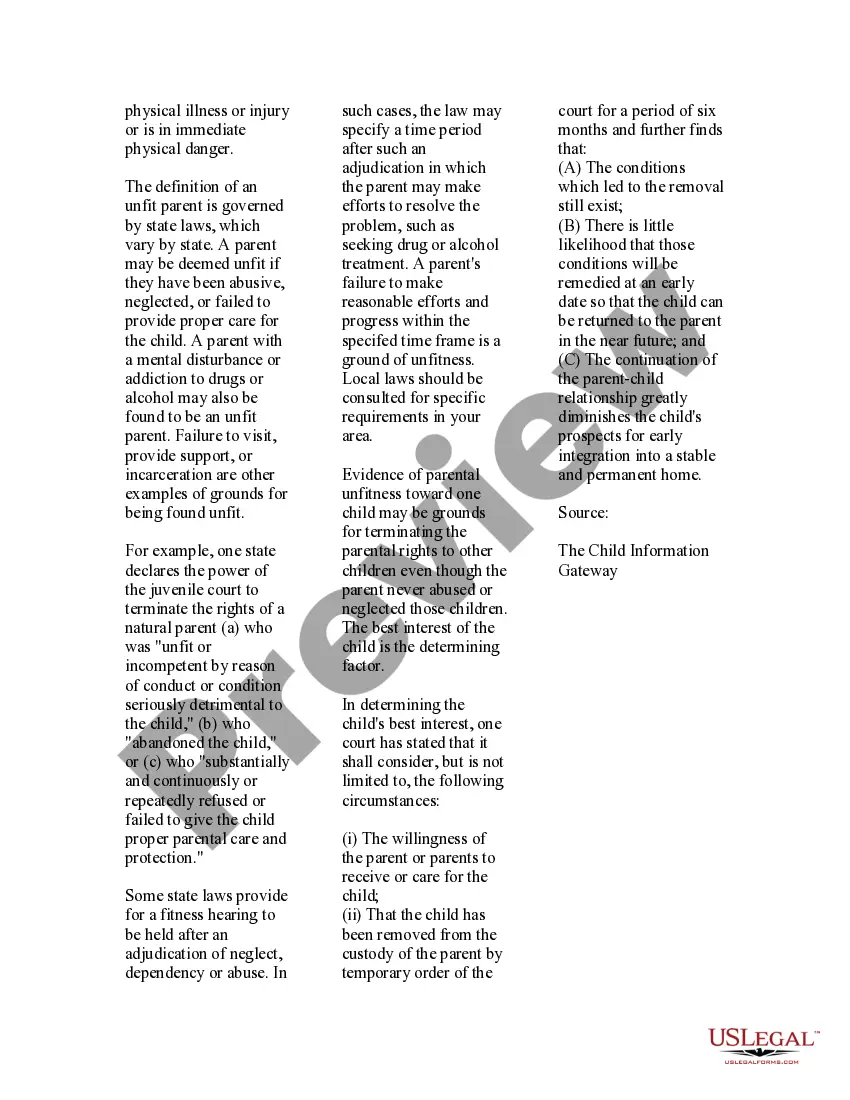
The USLegal Guide to Temporary Custody is a comprehensive resource designed to help individuals navigate the complex process of obtaining temporary custody of a minor. This form is distinct from other custody forms because it not only covers various types of temporary custody arrangements, such as powers of attorney and standby guardianships, but it also addresses temporary custody situations arising in the context of divorce. This guide aims to clarify the definition of custody, the legal options available, and the necessary steps for obtaining temporary custody rights.
Form components explained
- Definition of custody in the context of family law.
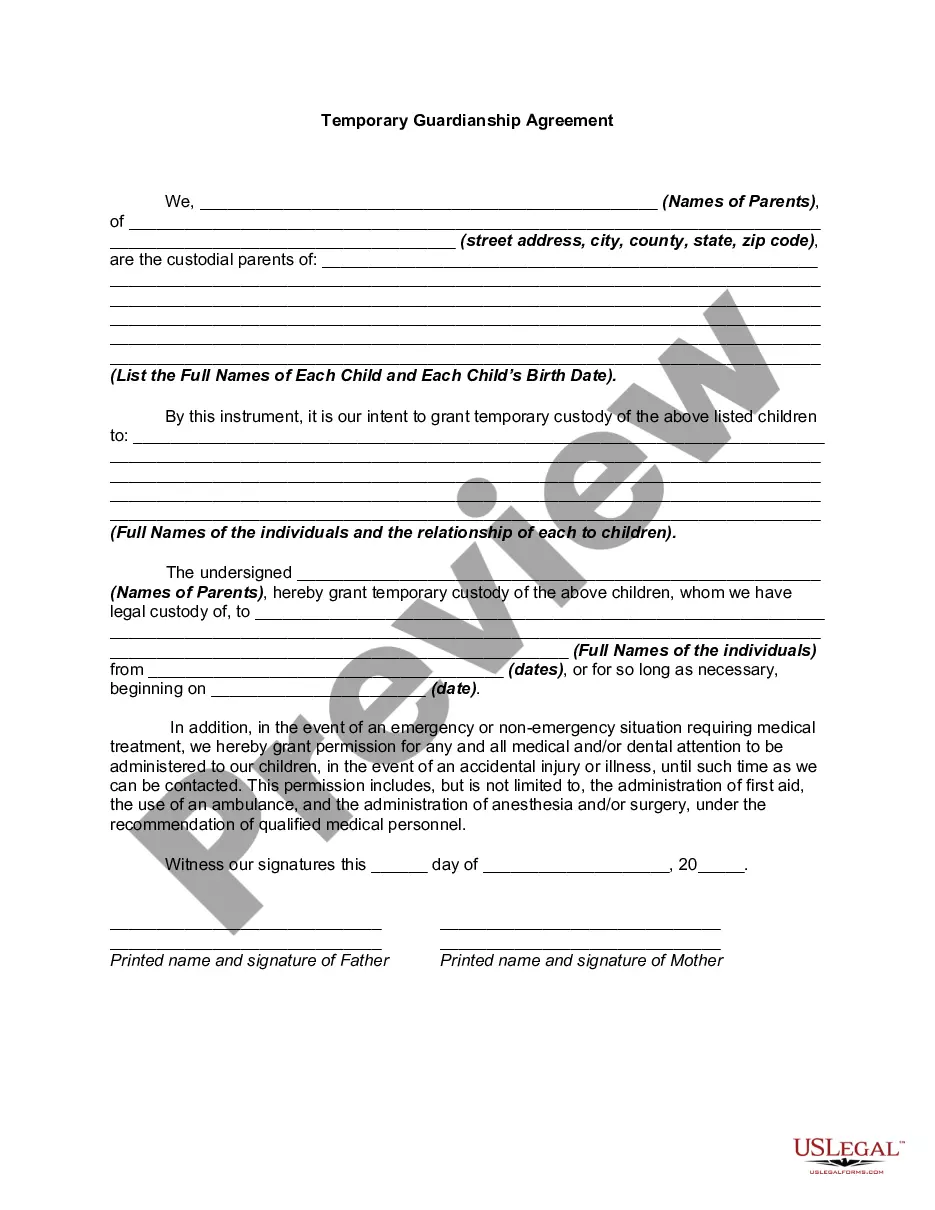
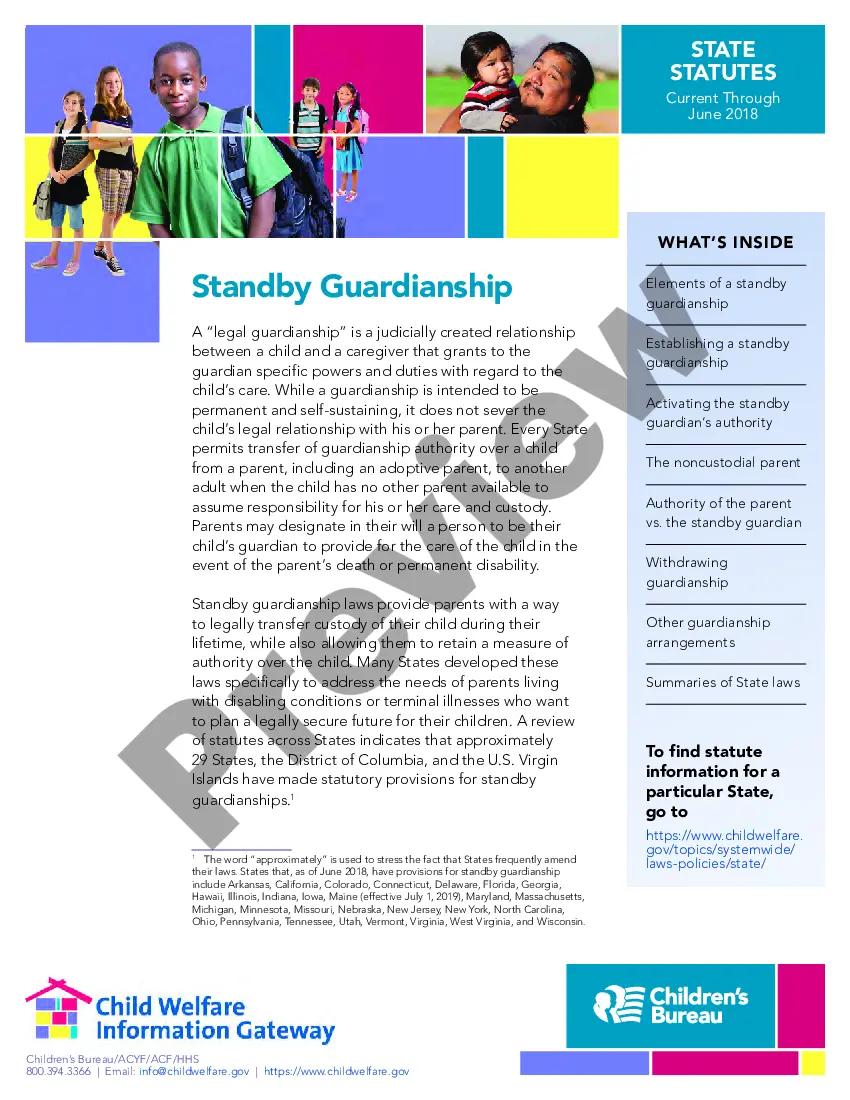
- Explanation of private agreements and standby guardianships.
- Details on emergency and temporary guardianships.
- Conditions for temporary custody in divorce scenarios.
- Guidelines for petitioning the court for custody rights.
When to use this form
This guide is essential when you need to secure temporary custody of a minor for situations such as unforeseen emergencies, parental incapacity, or during divorce proceedings. It is also useful for individuals wishing to set up a standby guardianship to prepare for potential future situations where they may be unable to care for their child.
Who this form is for
- Biological parents seeking temporary custody arrangements.
- Grandparents or other relatives looking to care for their minor relatives.
- Friends of the family appointed as guardians in emergencies.
- Individuals navigating custody issues during divorce proceedings.
Instructions for completing this form
- Identify all parties involved, including the child and current guardians.
- Determine the type of temporary custody arrangement needed.
- Document any agreements or consents from the current custodial parents.
- Submit the necessary petitions to the court, if required.
- Attend the court hearing to present your case for temporary custody.
Notarization requirements for this form
Notarization is generally not required for this form. However, certain states or situations might demand it. You can complete notarization online through US Legal Forms, powered by Notarize, using a verified video call available anytime.
Get your form ready online
Our built-in tools help you complete, sign, share, and store your documents in one place.
Make edits, fill in missing information, and update formatting in US Legal Forms—just like you would in MS Word.
Download a copy, print it, send it by email, or mail it via USPS—whatever works best for your next step.
Sign and collect signatures with our SignNow integration. Send to multiple recipients, set reminders, and more. Go Premium to unlock E-Sign.
If this form requires notarization, complete it online through a secure video call—no need to meet a notary in person or wait for an appointment.
We protect your documents and personal data by following strict security and privacy standards.

Make edits, fill in missing information, and update formatting in US Legal Forms—just like you would in MS Word.

Download a copy, print it, send it by email, or mail it via USPS—whatever works best for your next step.

Sign and collect signatures with our SignNow integration. Send to multiple recipients, set reminders, and more. Go Premium to unlock E-Sign.

If this form requires notarization, complete it online through a secure video call—no need to meet a notary in person or wait for an appointment.

We protect your documents and personal data by following strict security and privacy standards.
Avoid these common issues
- Failing to obtain proper consent from the biological parents.
- Not filing petitions with the court in a timely manner.
- Neglecting to gather documentation supporting the need for temporary custody.
Why use this form online
- Convenient access to legally vetted resources at any time.
- Editability allows users to customize documents to fit specific needs.
- Reliability of forms drafted by licensed attorneys ensures compliance.
Summary of main points
- Temporary custody is crucial in urgent situations or during divorce.
- Legal processes vary by state; local laws should be checked.
- Proper documentation and consent are vital to safeguard custody rights.
Looking for another form?
Form popularity
FAQ
Have an independent report from the police or DHS documenting the dangerous situation OR. Have a notarized affidavit from someone with personal knowledge of the dangerous situation AND. The situation must be likely to cause harm or irreparable damage to the child.
Write a detailed history about your marital relationship, which should include dates and facts that support your case. Do not forget to pick the pictures, videos and other visual aids that you will present before the court as evidence.
The letter should be addressed to the person who is being granted temporary custody. It should state the reason for the letter and give permission to the addressee to have guardianship over the sender's child or children in the beginning. The child's full name should be stated.
The main difference between custody and guardianship is the child's parents - custody is provided to the child's biological parents while guardianship is given to a non-biological parent.
Temporary custody is a gap filler arrangment intended to provide structure until a permanent custody decision is made. Permanent custody is intended to as a longer term arrangment that lasts until something changes that necessitates a new arrangement.
A child may be taken into emergency custody because the youngster is in immediate danger and needs protection. The child may also be removed from the home because current living arrangements pose an immediate danger to the child's safety and welfare.