Employee Payroll Records Checklist
What is this form?
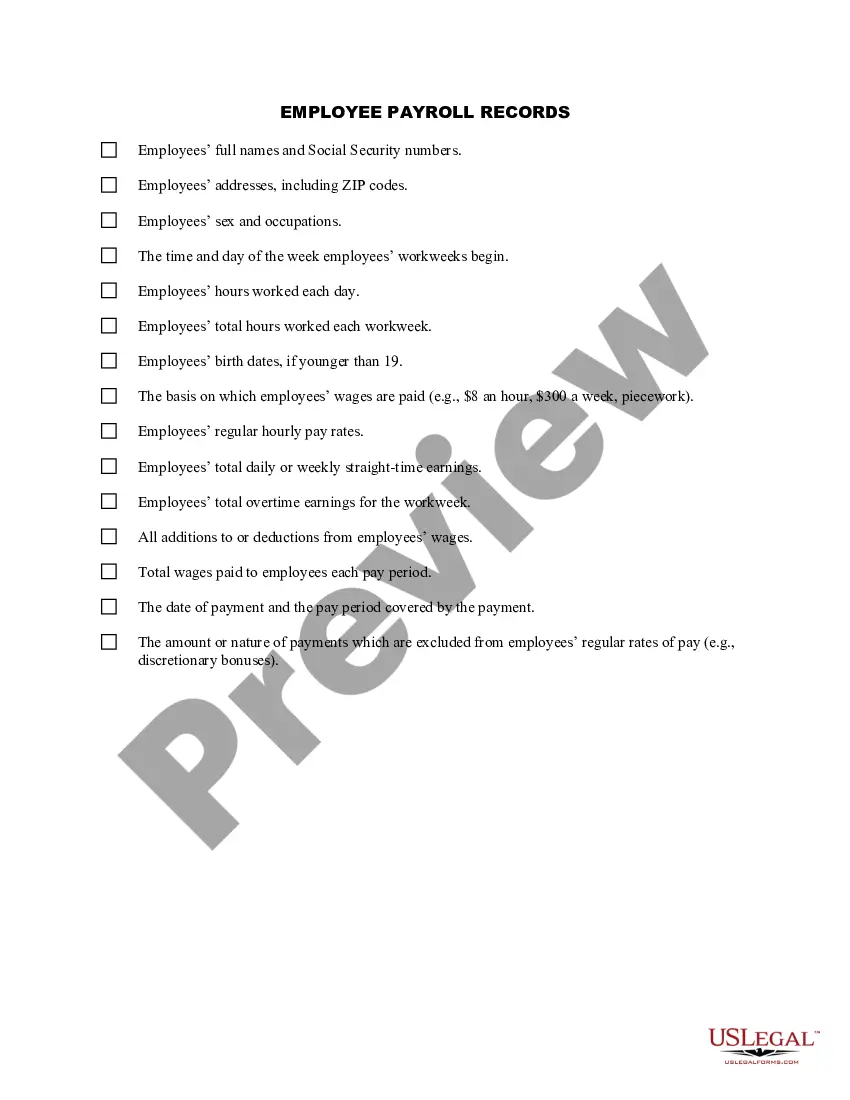
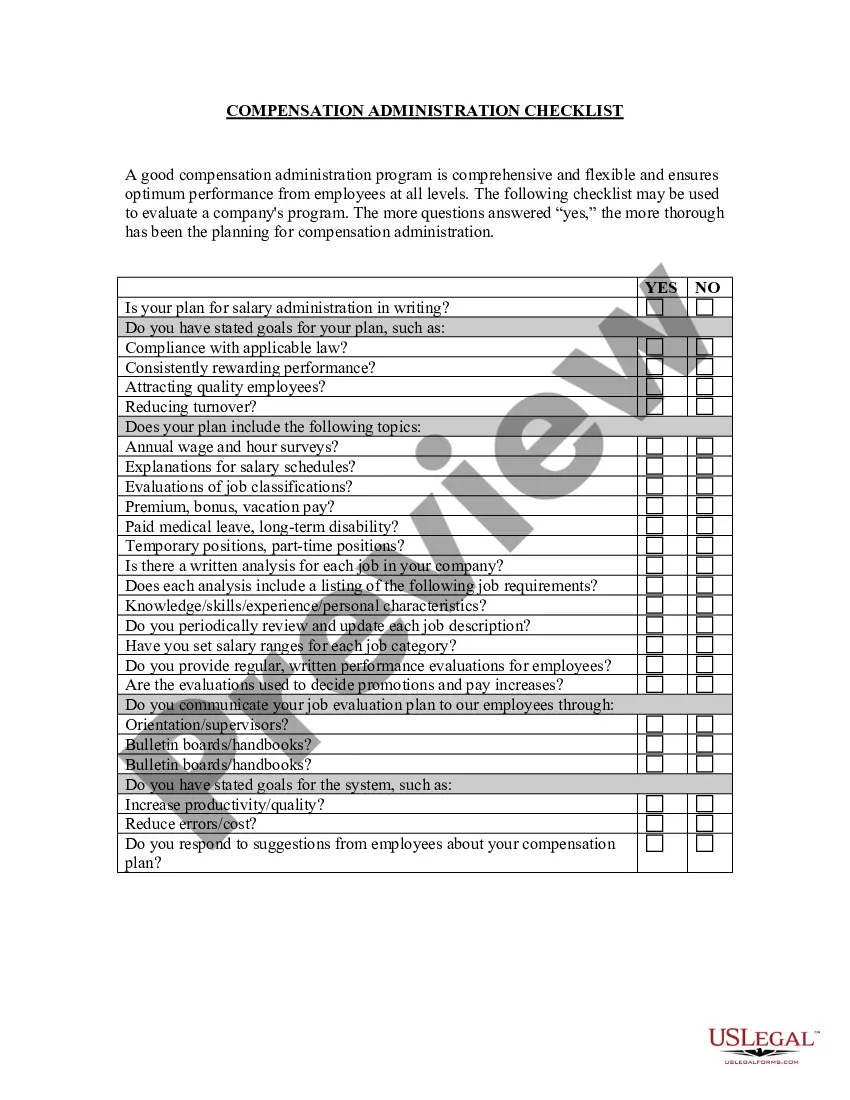
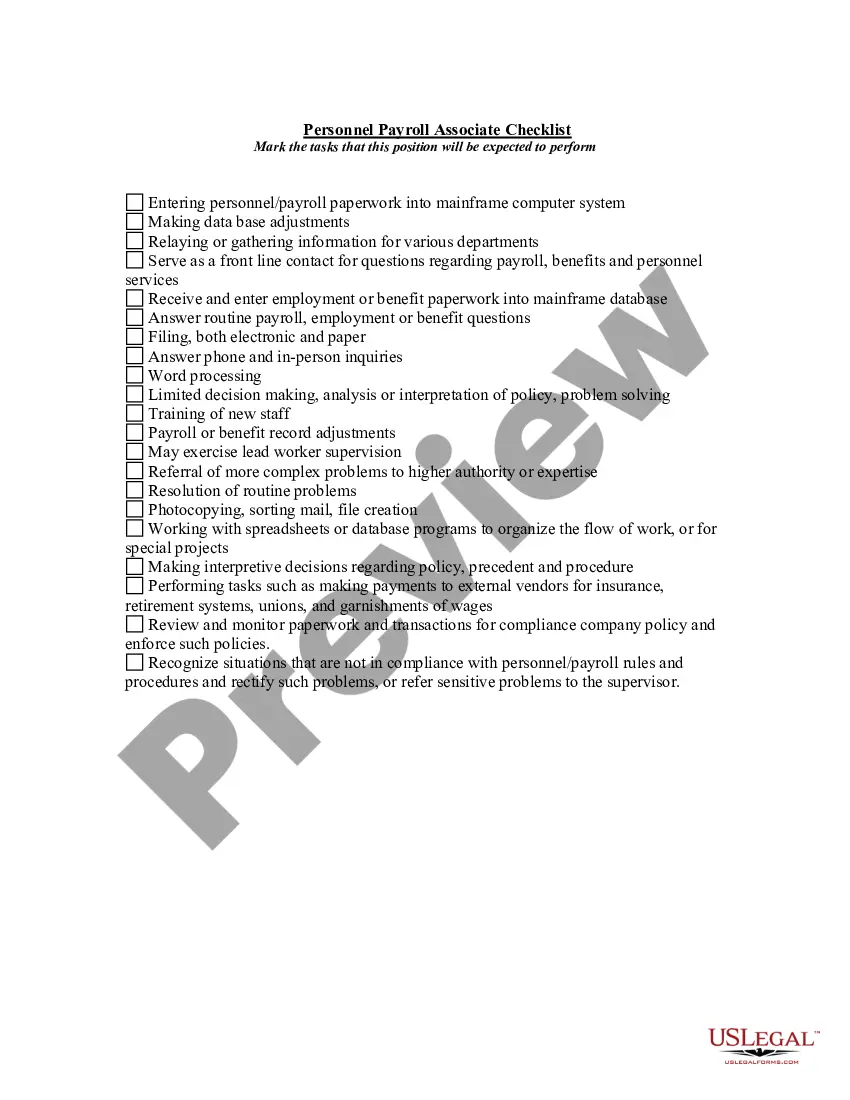
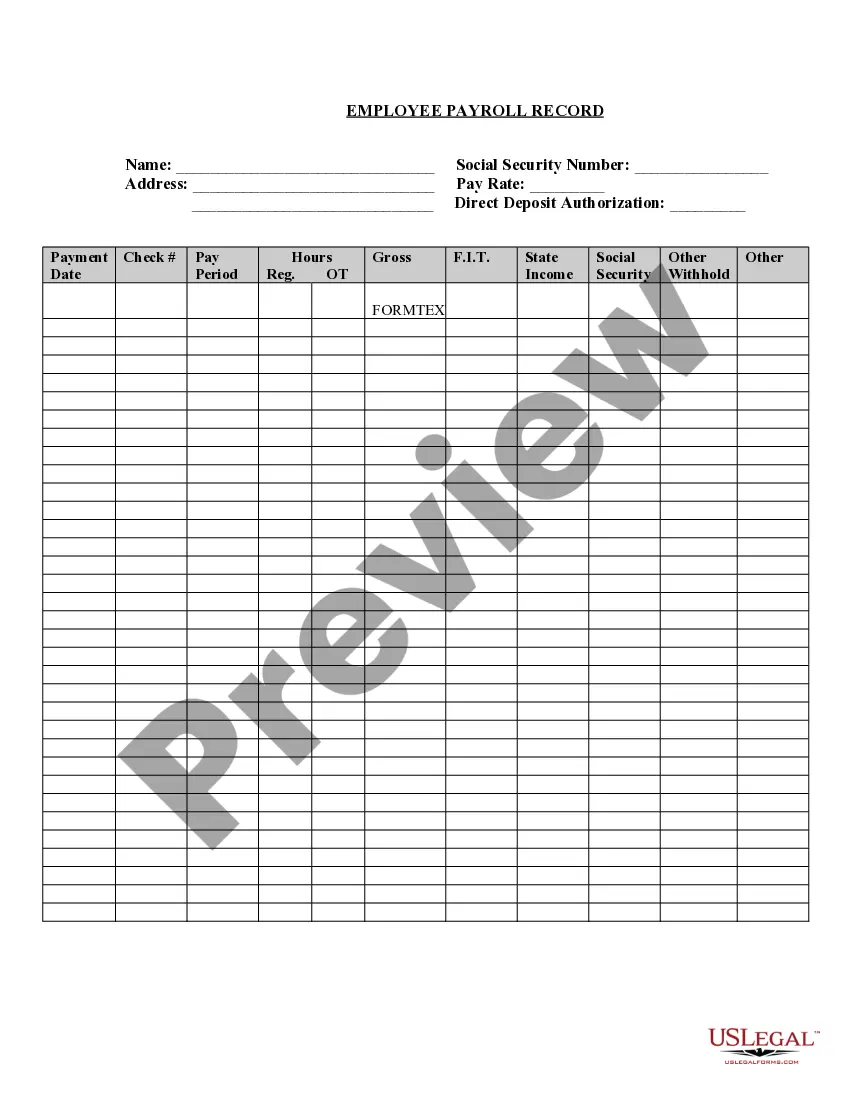
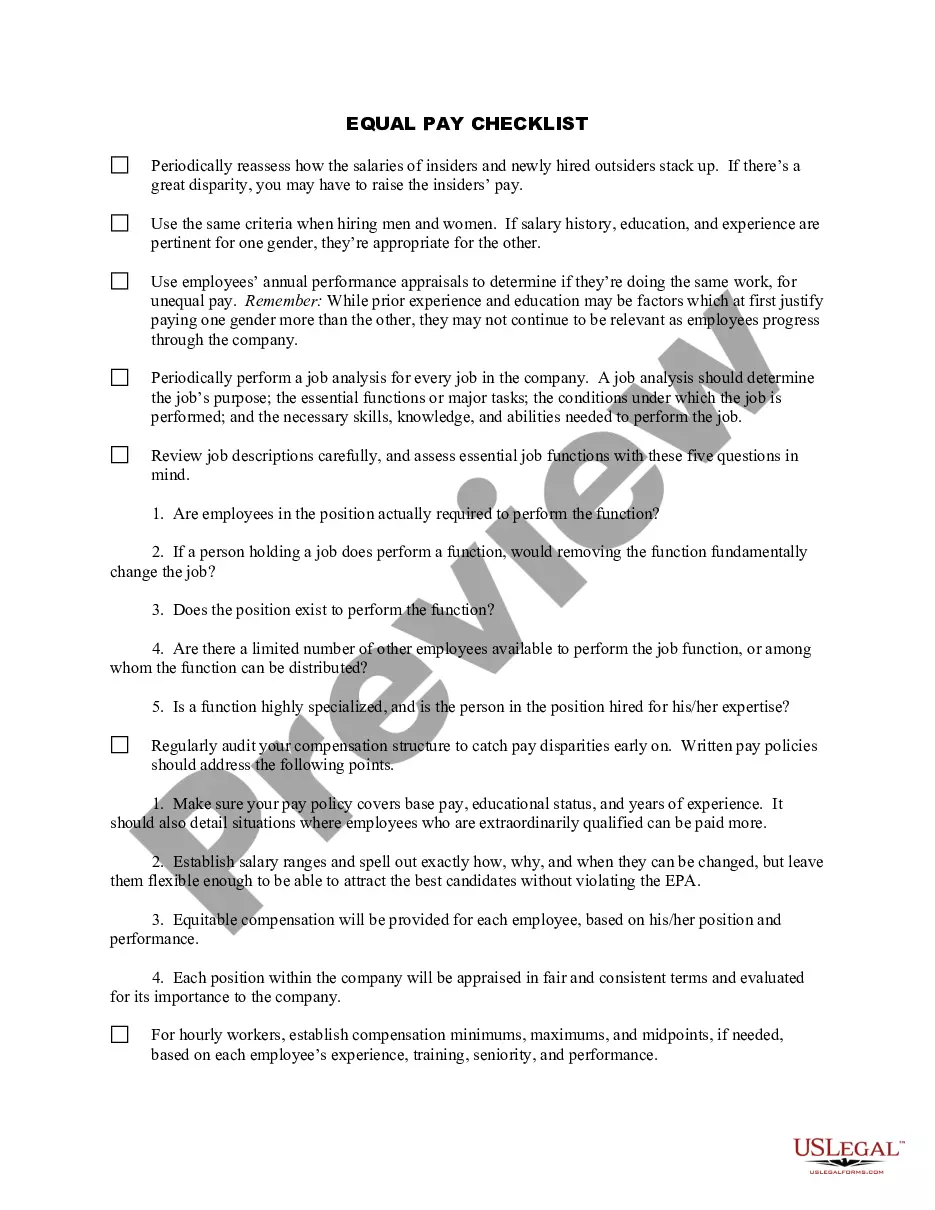
The Employee Payroll Records Checklist is a crucial document designed to help employers maintain accurate and complete payroll records for their employees. Unlike other payroll forms that may focus solely on wages or hours worked, this checklist ensures all necessary employee information is collected and organized systematically. By using this form, employers can streamline their payroll processes and comply with relevant regulations.
Key parts of this document
- Employee full names and Social Security numbers.
- Employee addresses, including ZIP codes.
- Employee sex and occupations.
- Start days of the workweek for employees.
- Hours worked each day by employees.
- Total hours worked each workweek.
- Employee birth dates (if younger than 19).
- Basis for calculating employees' wages (e.g., hourly, salary).
- Regular hourly pay rates for employees.
- Total daily or weekly straight-time earnings.
- Total overtime earnings for the workweek.
- Additions or deductions from wages.
- Total wages paid to employees each pay period.
- Date of payment and the pay period covered by the payment.
Common use cases
This form should be used when setting up or updating payroll records for employees. It is particularly necessary when onboarding new employees, conducting regular payroll audits, or ensuring compliance with labor laws and regulations. Employers should refer to this checklist to ensure that all relevant information is collected and documented correctly for each employee to facilitate smooth payroll management.
Who needs this form
- Employers and business owners responsible for payroll management.
- HR professionals involved in employee recordkeeping.
- Payroll administrators ensuring compliance with laws and regulations.
- Small business owners handling their own payroll.
Instructions for completing this form
- Gather all relevant employee information, including full name, address, and Social Security number.
- Document each employee's position and sex for payroll records.
- Specify the start date of the workweek for each employee.
- Record daily hours worked and total hours per workweek for each employee.
- Fill in wages, overtime earnings, and any deductions or additions related to pay.
- Include payment dates and periods covered to ensure accuracy in payroll processing.
Does this document require notarization?
Notarization is generally not required for this form. However, certain states or situations might demand it. You can complete notarization online through US Legal Forms, powered by Notarize, using a verified video call available anytime.
Get your form ready online
Our built-in tools help you complete, sign, share, and store your documents in one place.
Make edits, fill in missing information, and update formatting in US Legal Forms—just like you would in MS Word.
Download a copy, print it, send it by email, or mail it via USPS—whatever works best for your next step.
Sign and collect signatures with our SignNow integration. Send to multiple recipients, set reminders, and more. Go Premium to unlock E-Sign.
If this form requires notarization, complete it online through a secure video call—no need to meet a notary in person or wait for an appointment.
We protect your documents and personal data by following strict security and privacy standards.

Make edits, fill in missing information, and update formatting in US Legal Forms—just like you would in MS Word.

Download a copy, print it, send it by email, or mail it via USPS—whatever works best for your next step.

Sign and collect signatures with our SignNow integration. Send to multiple recipients, set reminders, and more. Go Premium to unlock E-Sign.

If this form requires notarization, complete it online through a secure video call—no need to meet a notary in person or wait for an appointment.

We protect your documents and personal data by following strict security and privacy standards.
Common mistakes to avoid
- Failing to collect all required employee information.
- Not keeping records up-to-date when employee details change.
- Inaccurately calculating hours worked or wages due.
- Neglecting to record overtime earnings correctly.
Advantages of online completion
- Easy access and download for quick use, anytime and anywhere.
- Editable fields that allow personalization for specific business needs.
- Reliability in maintaining compliance with federal and state regulations.
What to keep in mind
- The Employee Payroll Records Checklist helps ensure complete and accurate payroll documentation.
- It is essential for managing employee records and payroll compliance.
- Completing this form correctly can prevent payroll errors and legal issues.
Looking for another form?
Form popularity
FAQ
Whether you use paper, electronic files or both, consistency is the key to effective recordkeeping. For example, if your hiring records are sorted by employee name, organize payroll records the same way. Keep the same system across all types of records, and make sure your file folders have accurate, uniform names.
Employee's full name and social security number; Address, including zip code; Birth date, if younger than 19; Sex and occupation; Time and day of week when employee's workweek begins. Basis on which employee's wages are paid;
Employee's full name. Social Security number. Complete address. Birth date, if younger than 19. Sex. Occupation. Offer letter signed by you and the employee. Time and day when the workweek begins.
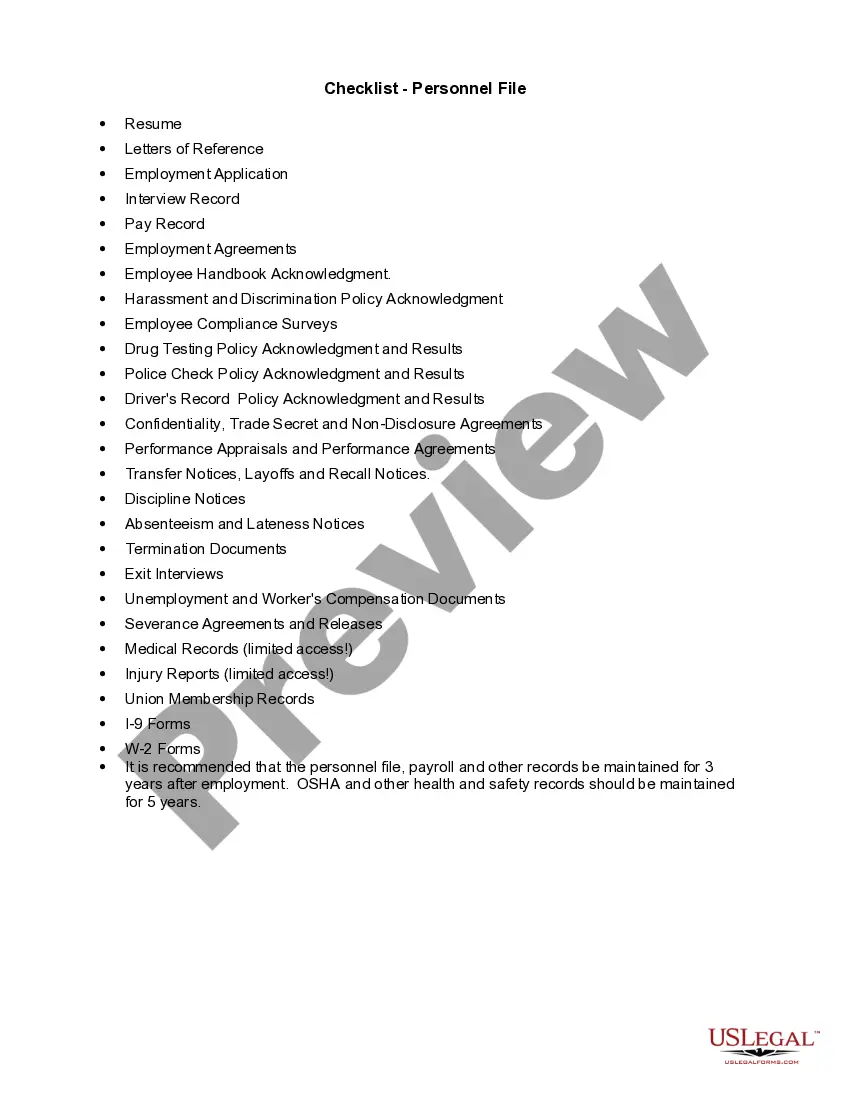
Employers should keep all job-related documentation such as hiring records, performance reviews, disciplinary actions and job descriptions in an employee's general personnel file. Consider whether the document would be relevant to a supervisor who may review this file when making employment decisions.
Storing payroll records You can store payroll records via paper or online files. Develop a recordkeeping system that works best for you. With paper-based recordkeeping, you can store files in locked cabinets. Be sure to label each of your folders so you can easily access your records.
Bereavement pay. Bonuses. Commissions. Deductions for pensions, benefits, charitable contributions, garnishments, stock purchase plans, and so forth. Direct deposit authorization forms. Gross wages. Hours worked. Manual check payments.
Job application, CV and cover letter. Education and past employment info. Role description. Job offer letter and employment contract. Emergency contact information. Training records. Payroll and benefits information (but not bank details) Performance appraisal forms.
Whether you use paper, electronic files or both, consistency is the key to effective recordkeeping. For example, if your hiring records are sorted by employee name, organize payroll records the same way. Keep the same system across all types of records, and make sure your file folders have accurate, uniform names.