International Independent Contractor Agreement
Overview of this form
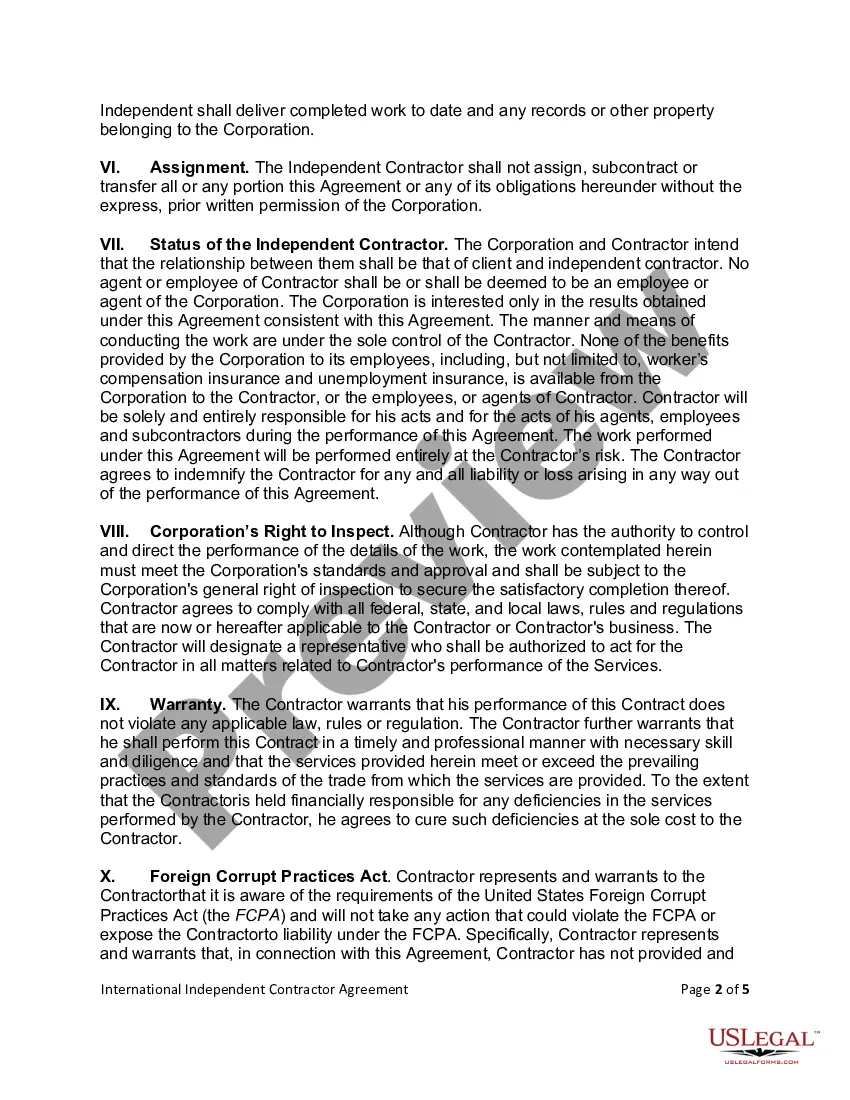
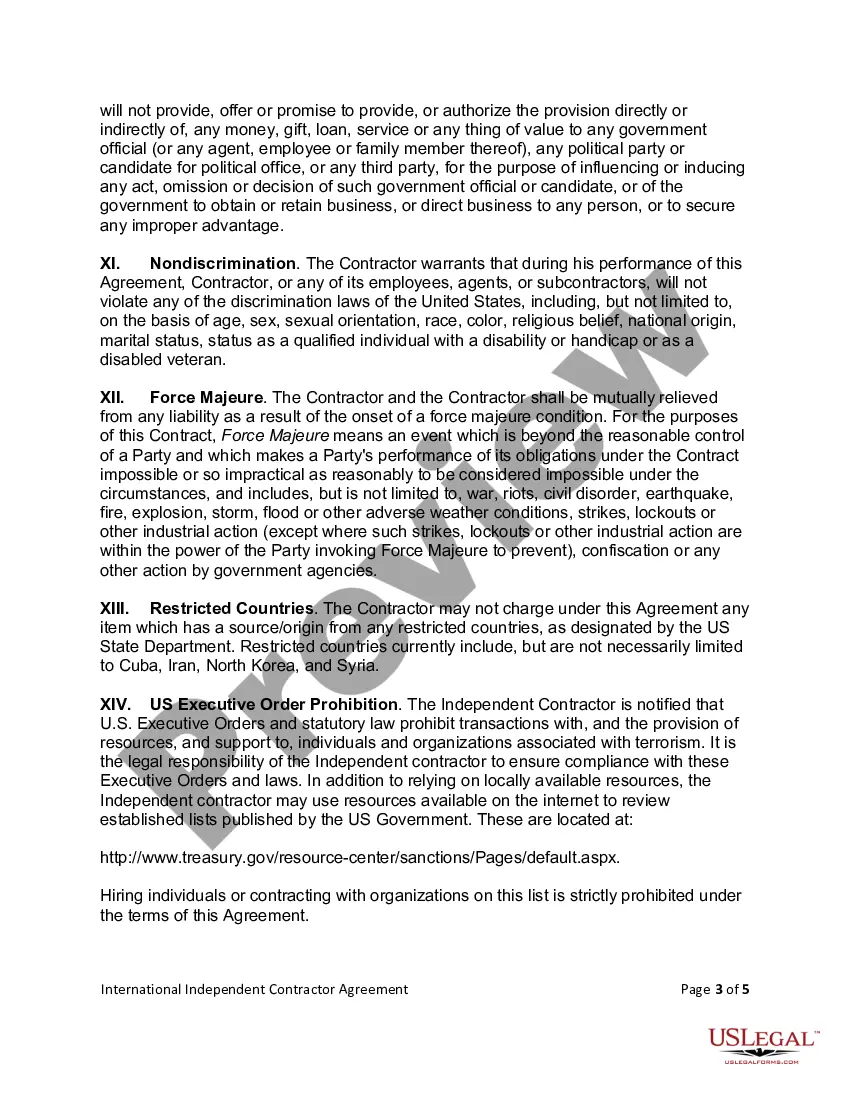
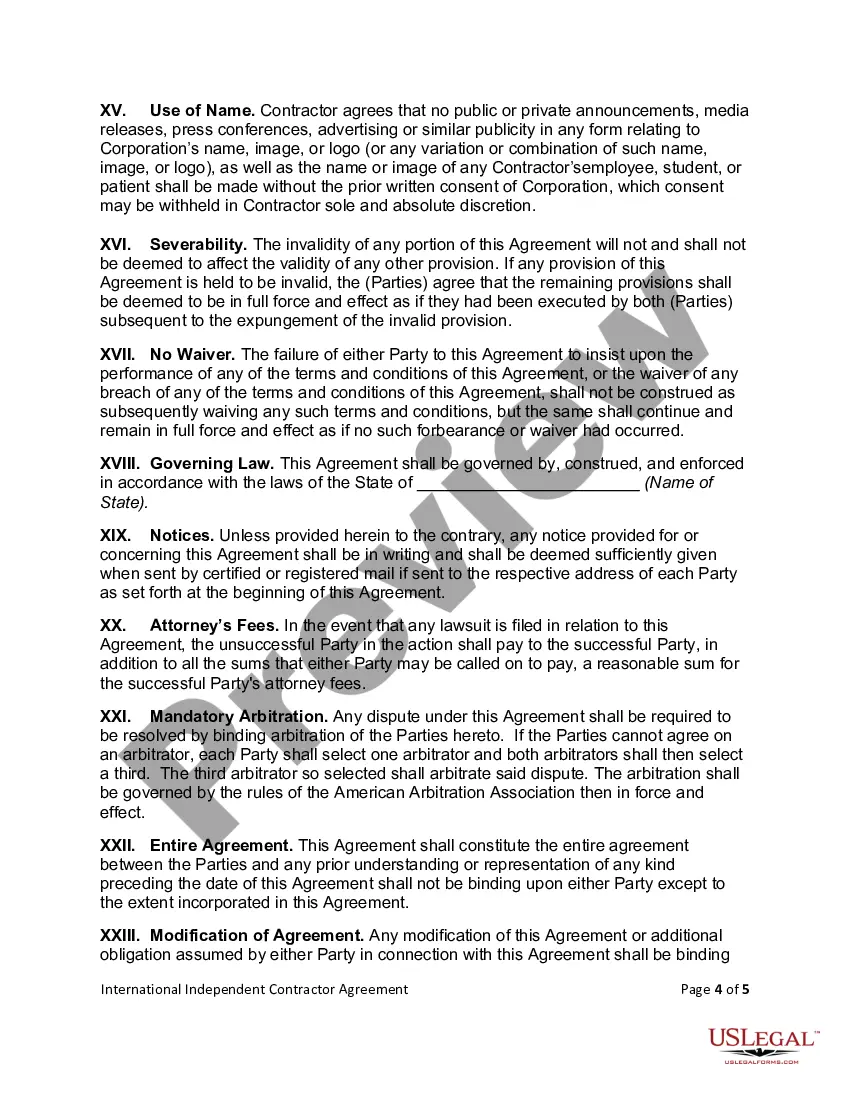
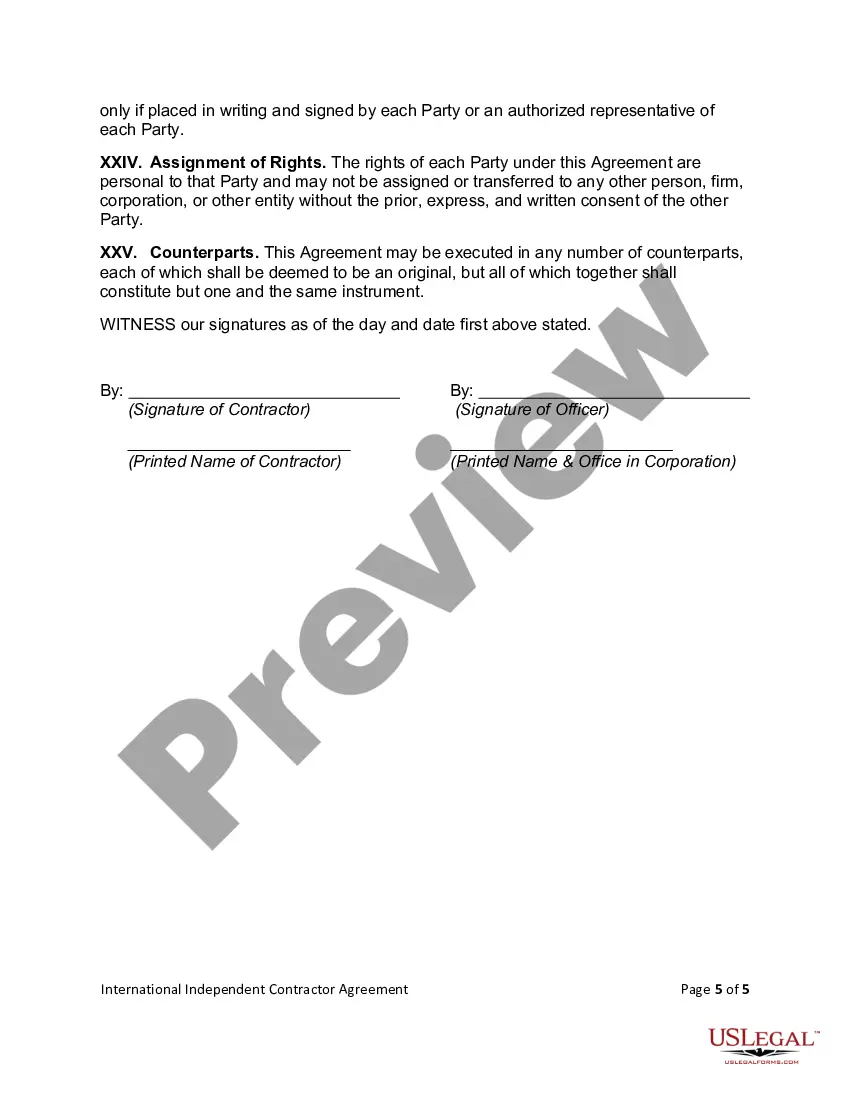
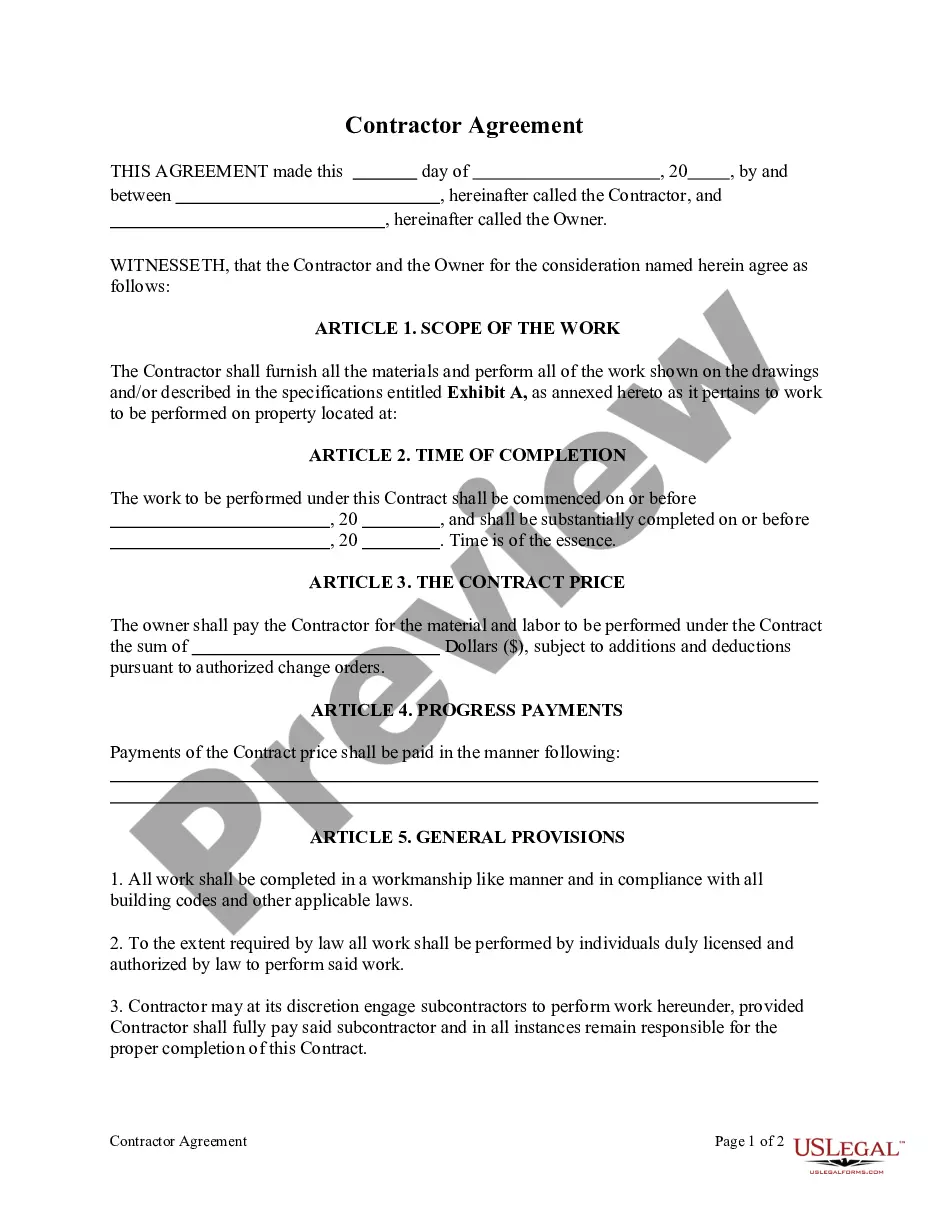
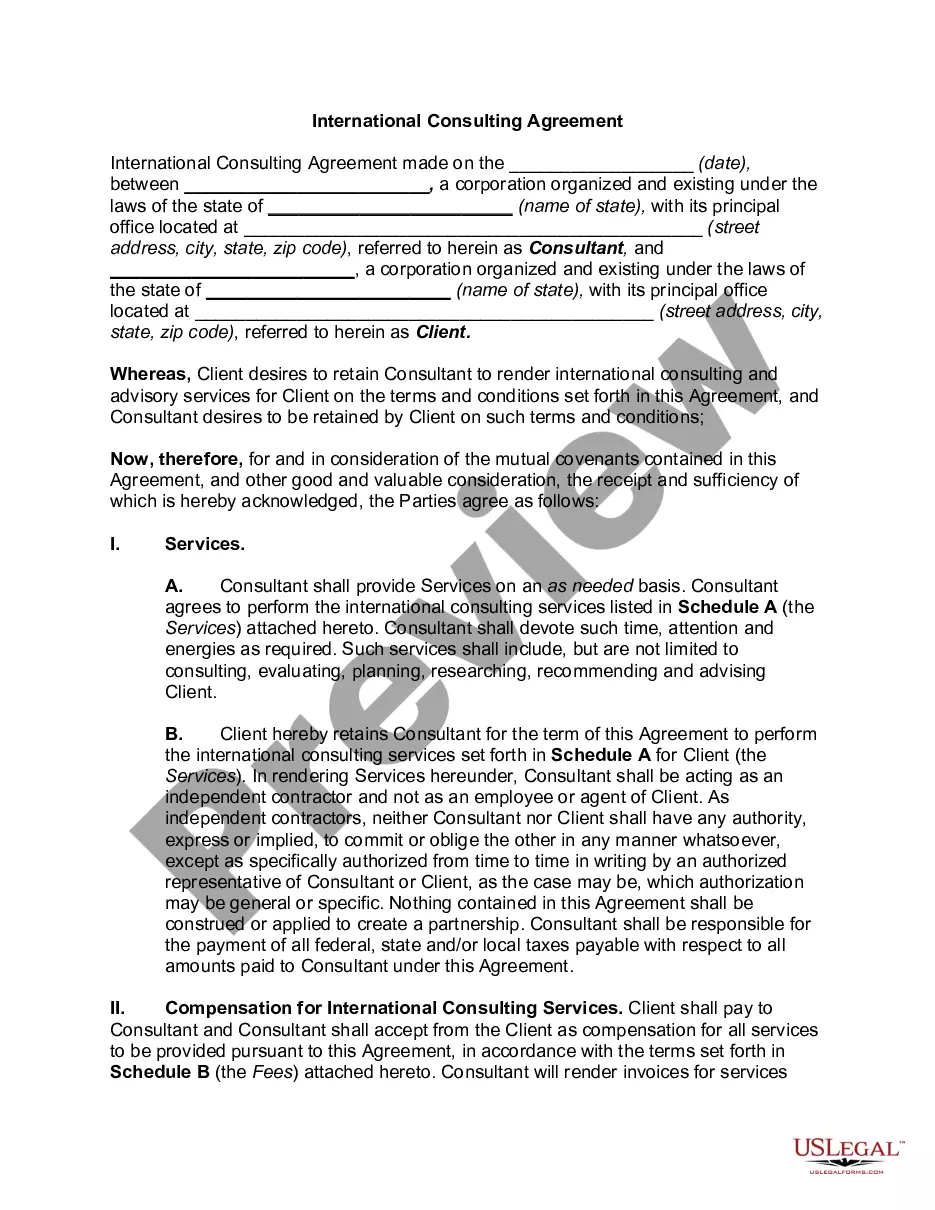
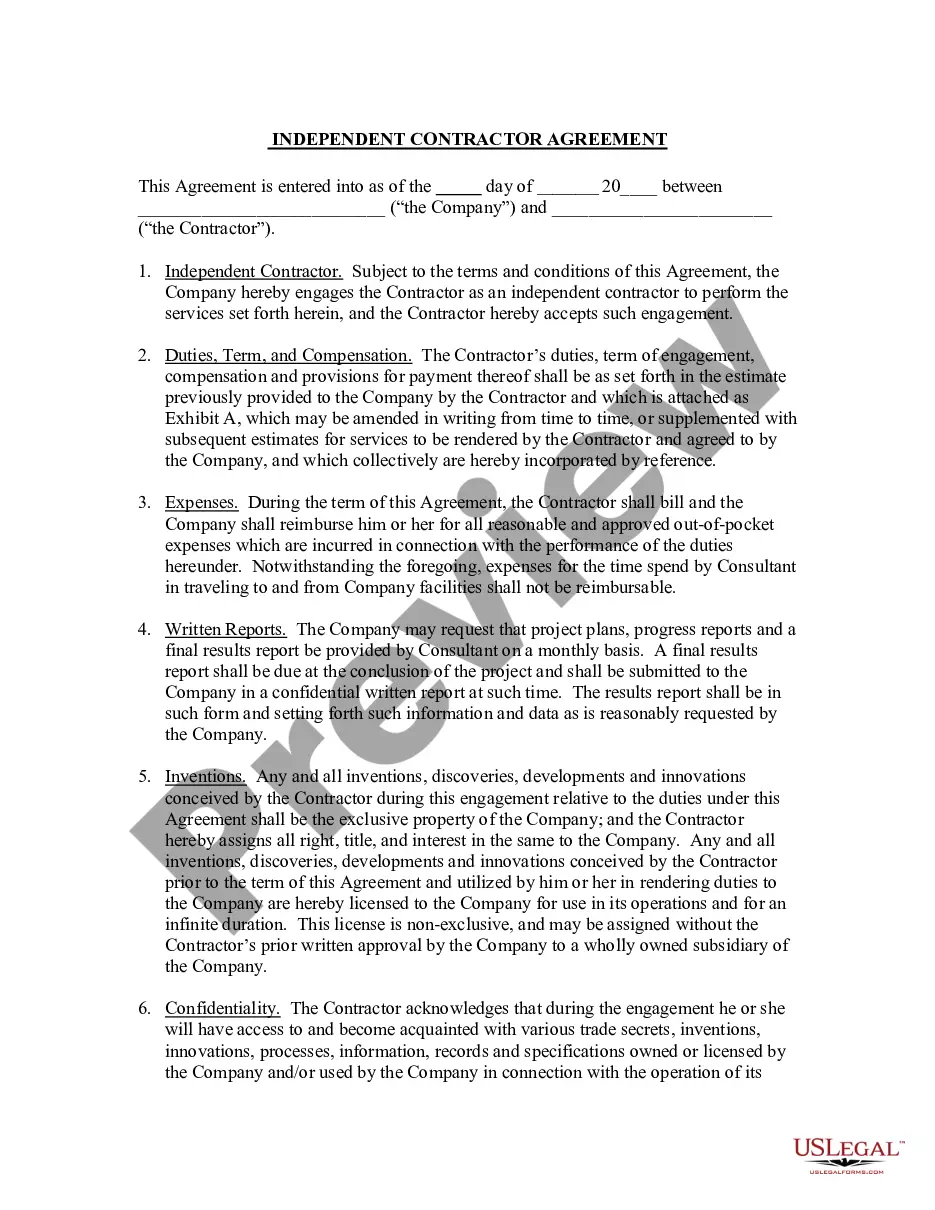
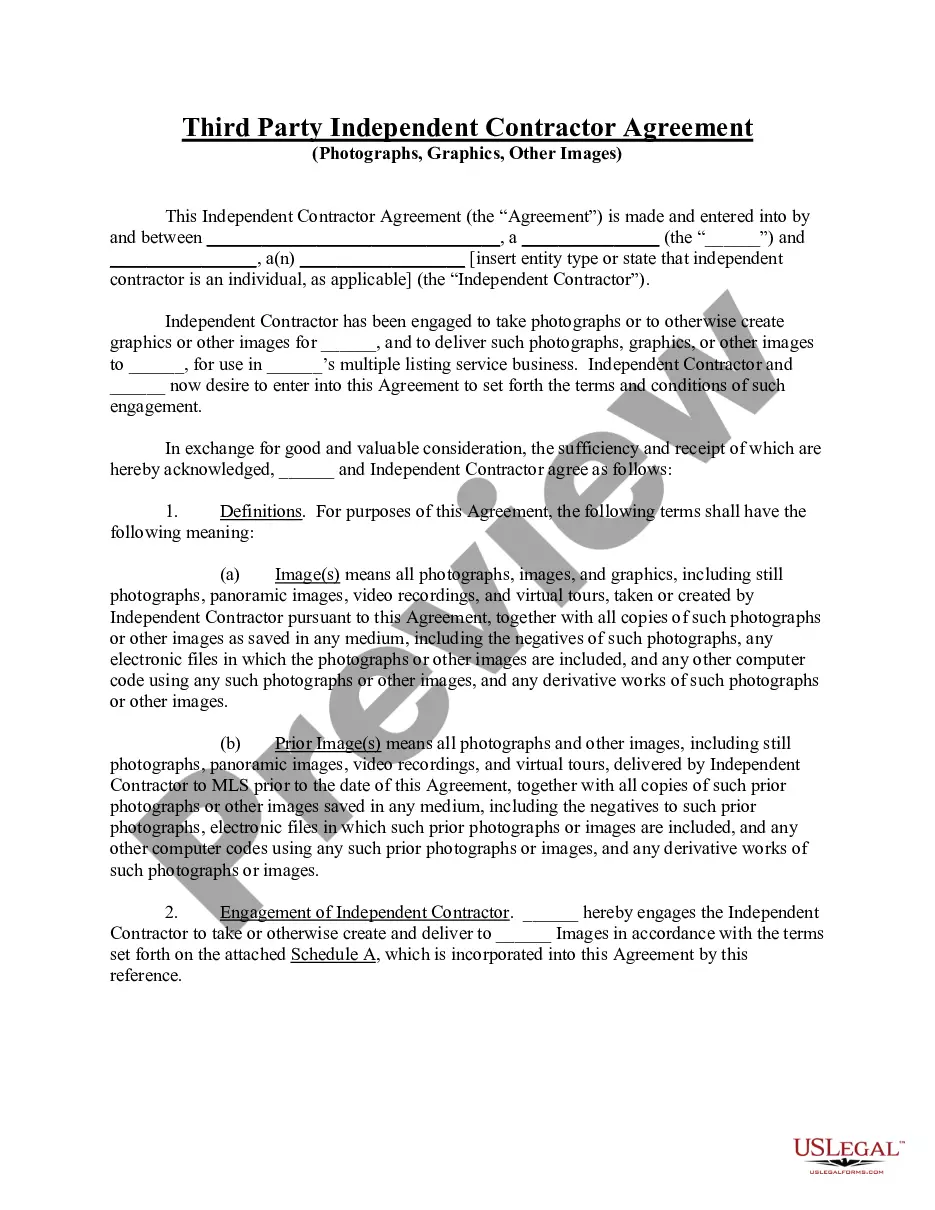
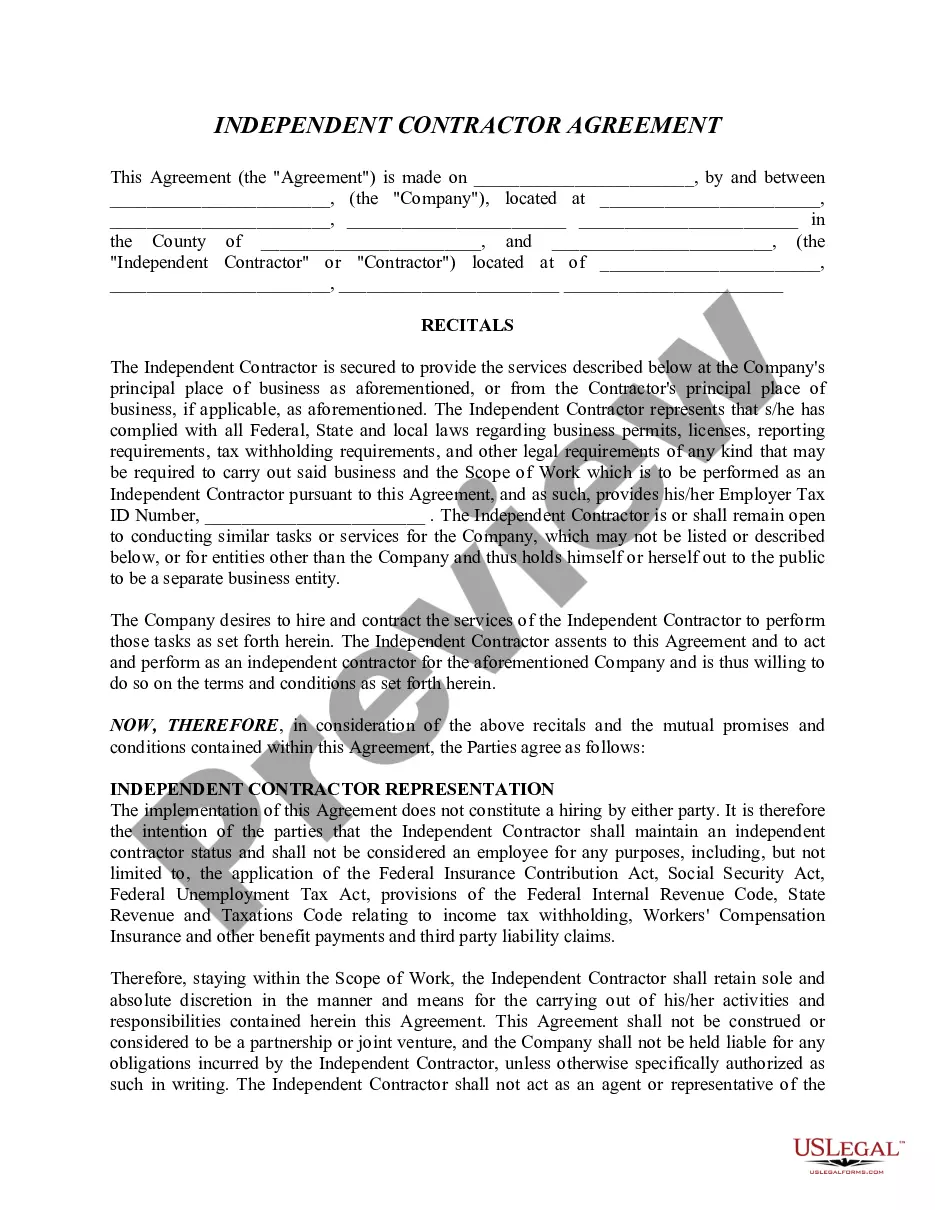
The International Independent Contractor Agreement is a legal document that establishes the relationship between a corporation and an independent contractor. This form outlines the terms and conditions under which the contractor will provide services to the corporation while ensuring compliance with the Foreign Corrupt Practices Act and other applicable laws. Unlike employment agreements, this contract clarifies that the contractor is not an employee but an independent entity responsible for their own actions and decisions.
Main sections of this form
- Ownership of deliverables: Clarifies that all work produced by the contractor becomes the property of the corporation.
- Status of the independent contractor: Defines the relationship and confirms that the contractor is not an employee.
- Foreign Corrupt Practices Act compliance: Includes warranties regarding adherence to anti-corruption laws.
- Termination clauses: Outlines the conditions under which either party may terminate the agreement.
- Indemnity provisions: Specifies the contractor's responsibility for any liabilities arising from their work.

When to use this document
This form should be utilized when a corporation seeks to engage an independent contractor for specific services across international borders. It is particularly relevant when the contractor must ensure compliance with anti-corruption laws and other regulatory requirements that may vary by jurisdiction. Common scenarios include technology development, consulting projects, or any service that requires specialized skills not available within the corporation.
Who this form is for
- Corporations hiring independent contractors for international projects.
- Independent contractors offering specialized services to corporations.
- Businesses needing clear terms to manage remote or cross-border work relationships.
Steps to complete this form
- Identify the parties: Include the legal names and addresses of the corporation and the contractor.
- Define the scope of work: Clearly state the services to be provided by the contractor.
- Specify ownership rights: Indicate that all deliverables will belong to the corporation.
- Outline the payment terms: Detail how and when the contractor will be compensated.
- Include compliance declarations: Ensure both parties acknowledge adherence to applicable laws.
Does this document require notarization?
This form does not typically require notarization unless specified by local law.
Get your form ready online
Our built-in tools help you complete, sign, share, and store your documents in one place.
Make edits, fill in missing information, and update formatting in US Legal Forms—just like you would in MS Word.
Download a copy, print it, send it by email, or mail it via USPS—whatever works best for your next step.
Sign and collect signatures with our SignNow integration. Send to multiple recipients, set reminders, and more. Go Premium to unlock E-Sign.
If this form requires notarization, complete it online through a secure video call—no need to meet a notary in person or wait for an appointment.
We protect your documents and personal data by following strict security and privacy standards.

Make edits, fill in missing information, and update formatting in US Legal Forms—just like you would in MS Word.

Download a copy, print it, send it by email, or mail it via USPS—whatever works best for your next step.

Sign and collect signatures with our SignNow integration. Send to multiple recipients, set reminders, and more. Go Premium to unlock E-Sign.

If this form requires notarization, complete it online through a secure video call—no need to meet a notary in person or wait for an appointment.

We protect your documents and personal data by following strict security and privacy standards.
Avoid these common issues
- Failing to clearly define the scope of work, leading to disputes down the line.
- Neglecting to specify payment terms, which can cause confusion over compensation.
- Not including compliance language related to the Foreign Corrupt Practices Act.
Why complete this form online
- Convenience: Complete the form anywhere and anytime, without the need for physical visits.
- Editability: Easily customize the contract to meet specific project needs.
- Efficiency: Streamlined access to legal resources, ensuring quick completion.
- This agreement is enforceable in international jurisdictions as long as it complies with local laws.
- It is critical to recognize the implications of the Foreign Corrupt Practices Act when dealing with international contracts.
Quick recap
- The International Independent Contractor Agreement sets clear expectations between parties in an international context.
- Understanding independent contractor status is vital for compliance and liability issues.
- Completing this agreement correctly ensures proper legal protections and adherence to regulatory requirements.
Looking for another form?


Form popularity
FAQ
There is no requirement for U.S. companies to file an IRS 1099 Form to pay a foreign contractor. But as noted above, the company should require the contractor file IRS Form W-8BEN, which formally certifies the worker's foreign status.
1099 Contractors and Freelancers The IRS taxes 1099 contractors as self-employed. If you made more than $400, you need to pay self-employment tax. Self-employment taxes total roughly 15.3%, which includes Medicare and Social Security taxes. Your income tax bracket determines how much you should save for income tax.
Terms. This is the first section of any agreement or contract and states the names and locations of the parties involved. Responsibilities & Deliverables. Payment-Related Details. Confidentiality Clause. Contract Termination. Choice of Law.
Backup withholding rules apply, currently 24% (28% in 2017). Compensation payments of U.S. source income made to nonresident aliens are subject to 30% federal withholding (unless exemption exists) and are reported on Form 1042-S, Foreign Person's U.S. Source Income Subject to withholding, not a Form 1099.
However, the IRS has special rules for a business hiring contractors from foreign countries. Such businesses will not have any tax withholding or reporting obligations in most cases where a foreign contractor performs service outside of US.
The IRS requires contractors to fill out a Form W-9, request for Taxpayer Identification Number and Certification, which you should keep on file for at least four years after the hiring. This form is used to request the correct name and Taxpayer Identification Number, or TIN, of the worker or their entity.
The self-employment tax rate is 15.3%, consisting of 12.4% for Social Security and 2.9% for Medicare. Unless you pay yourself as a W-2 employee, you'll need to pay the self-employment tax and your income tax directly to the IRS. Typically, you'll do this when you make quarterly estimated tax payments.
Generally, you must withhold income taxes, withhold and pay Social Security and Medicare taxes, and pay unemployment tax on wages paid to an employee. You do not generally have to withhold or pay any taxes on payments to independent contractors.