Security And Alarm Services Contract - Self-Employed
What this document covers
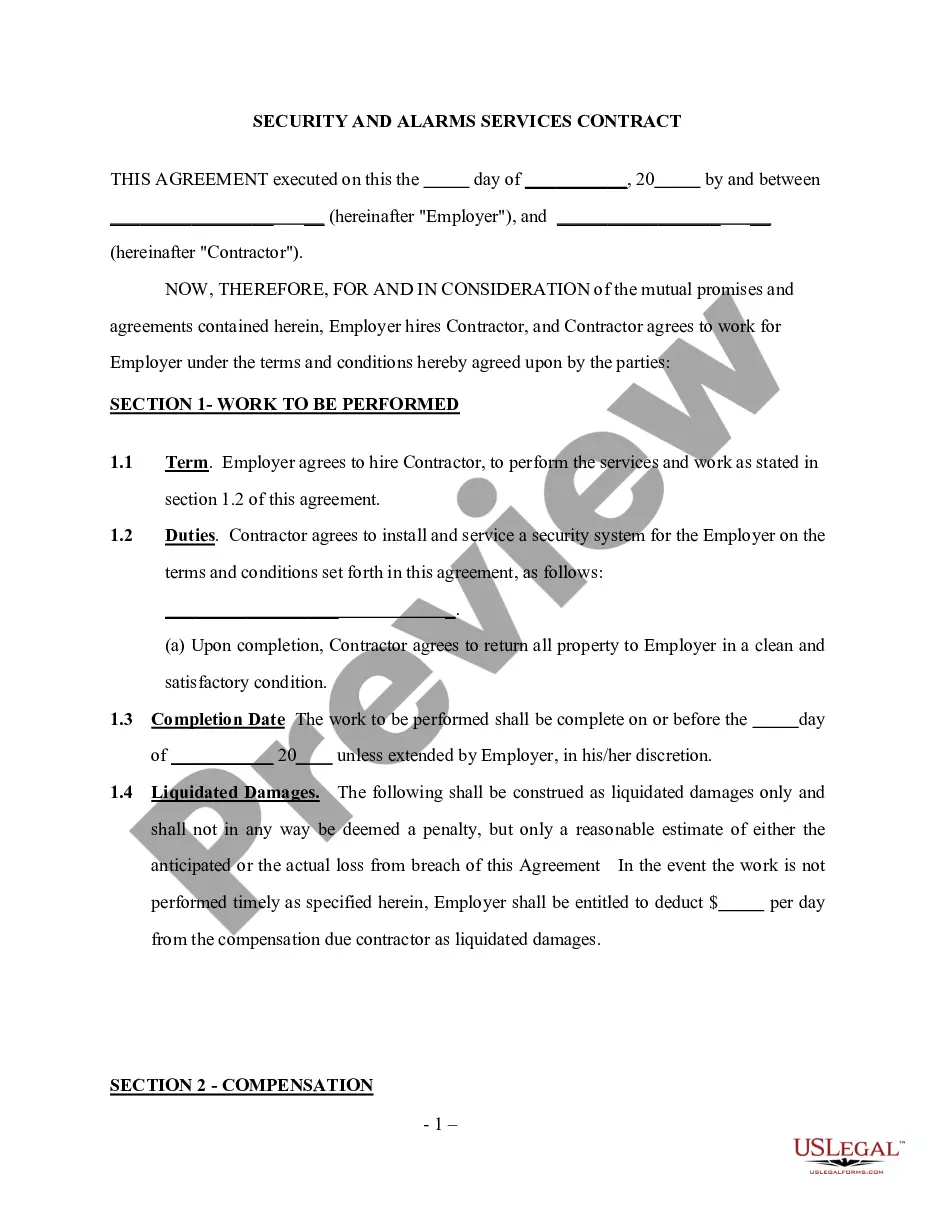
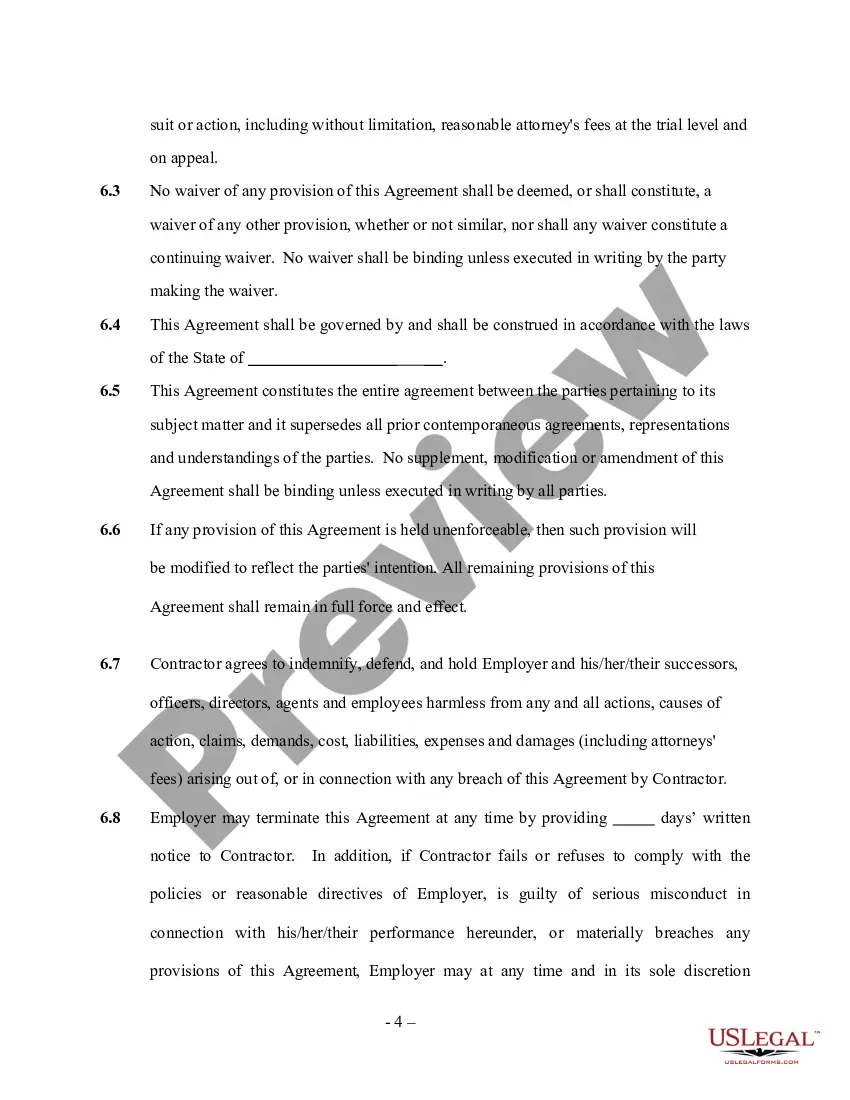
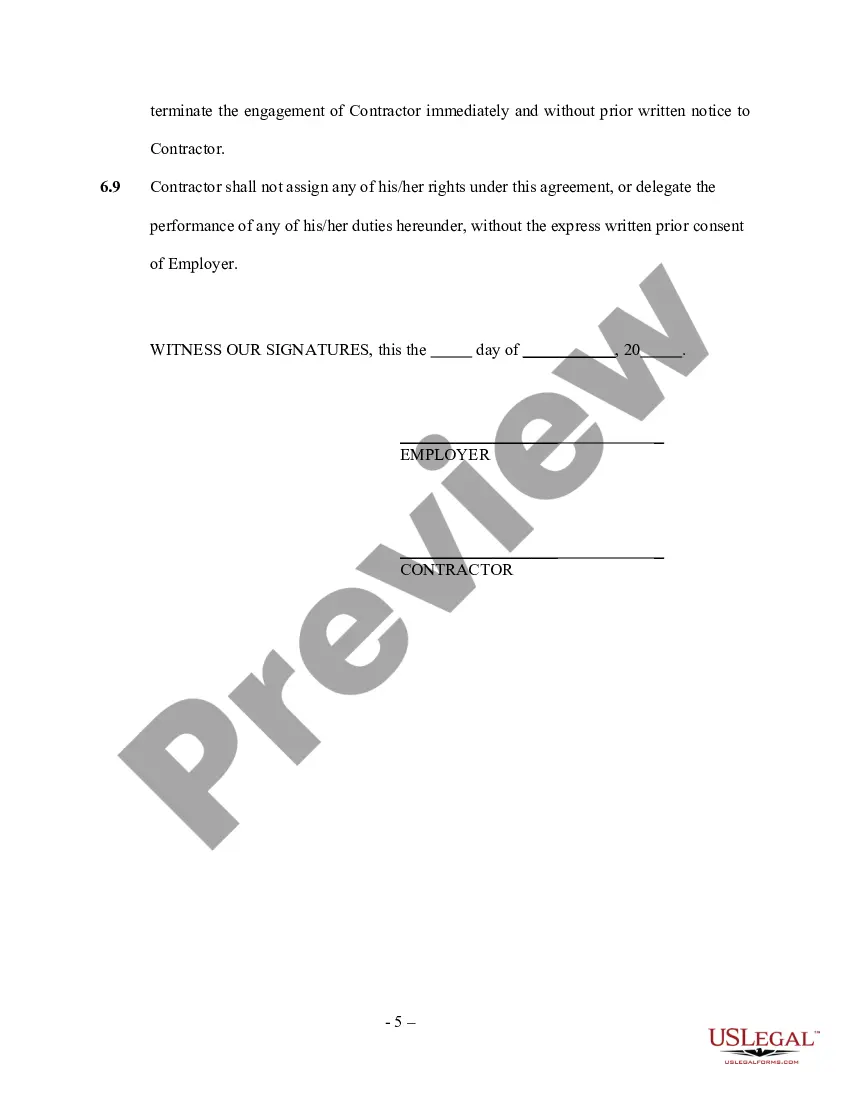
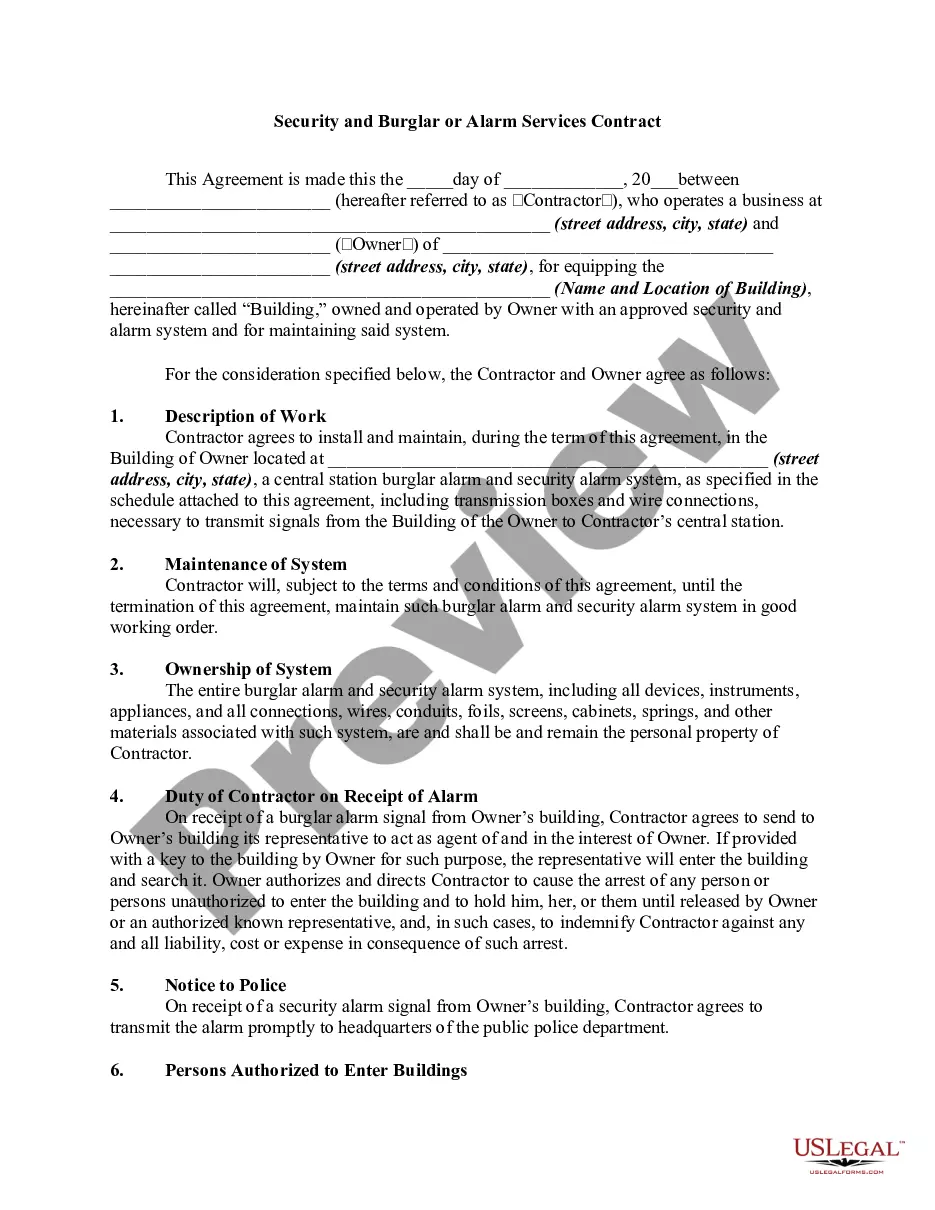
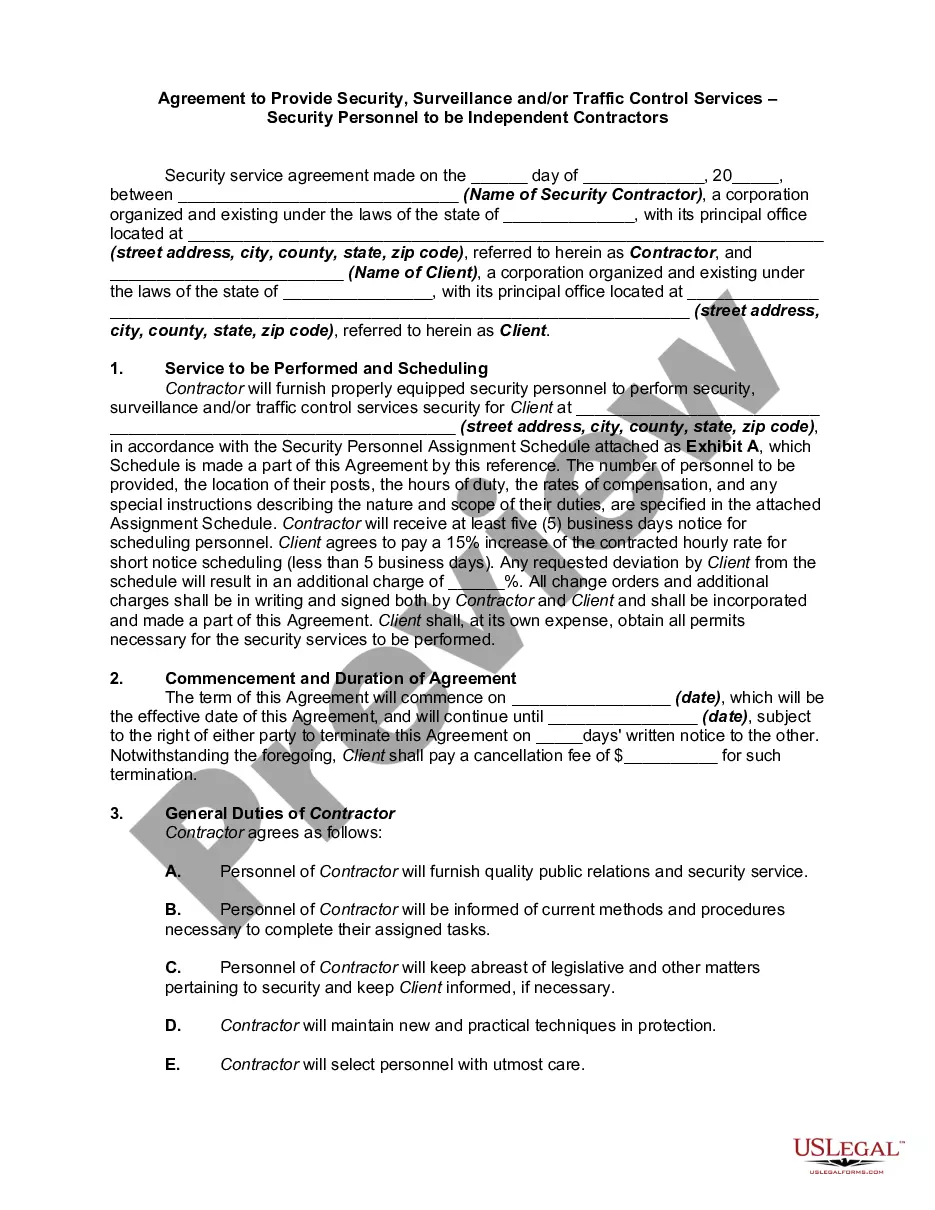
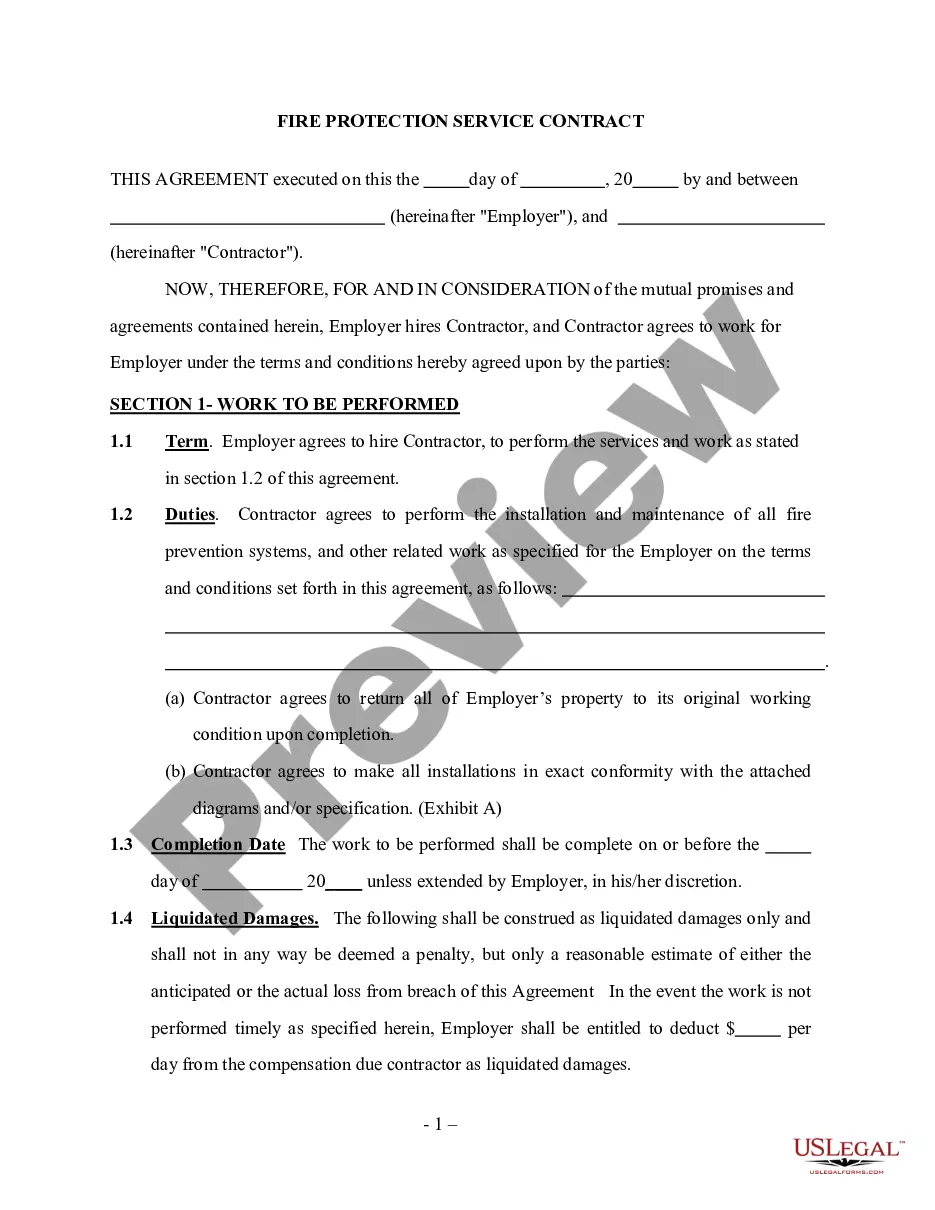
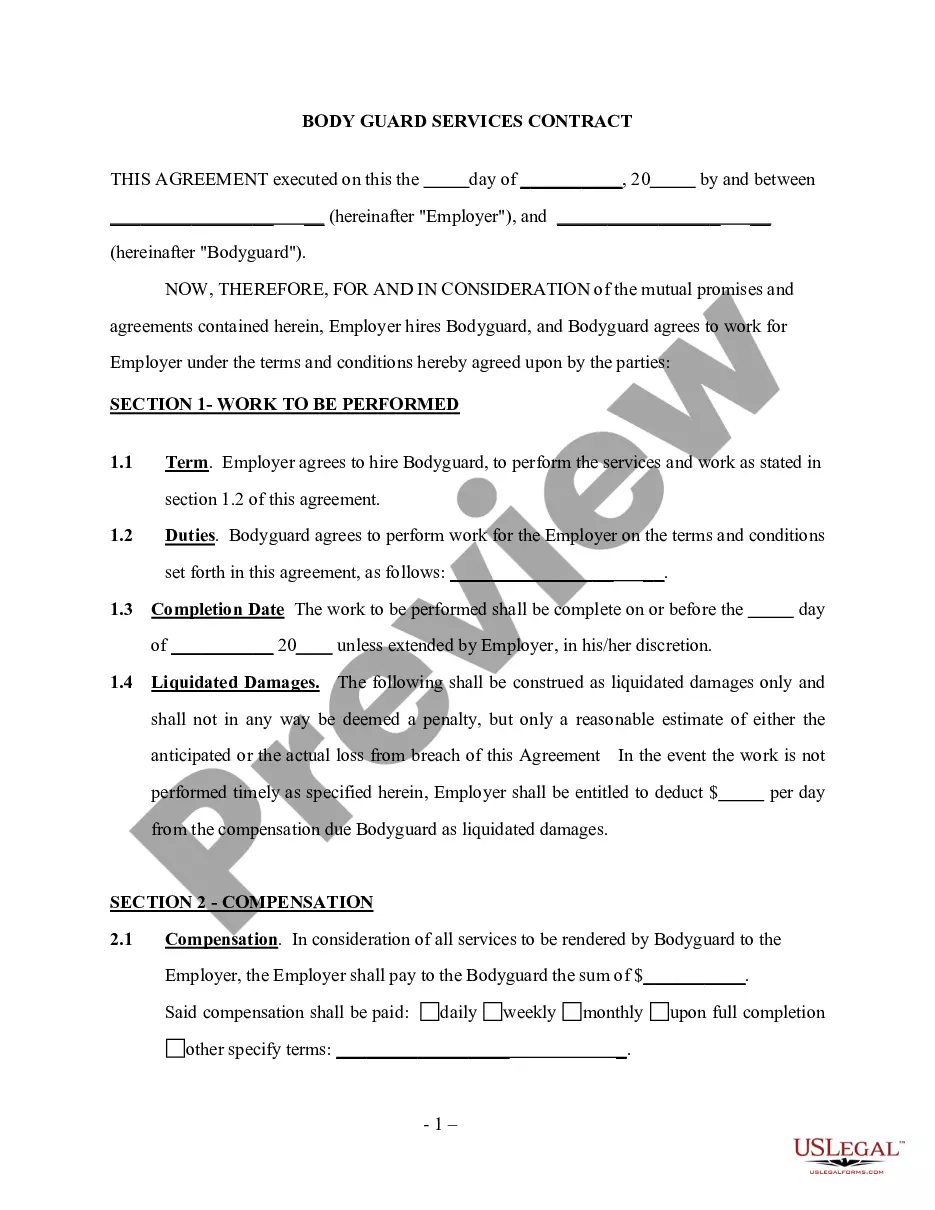
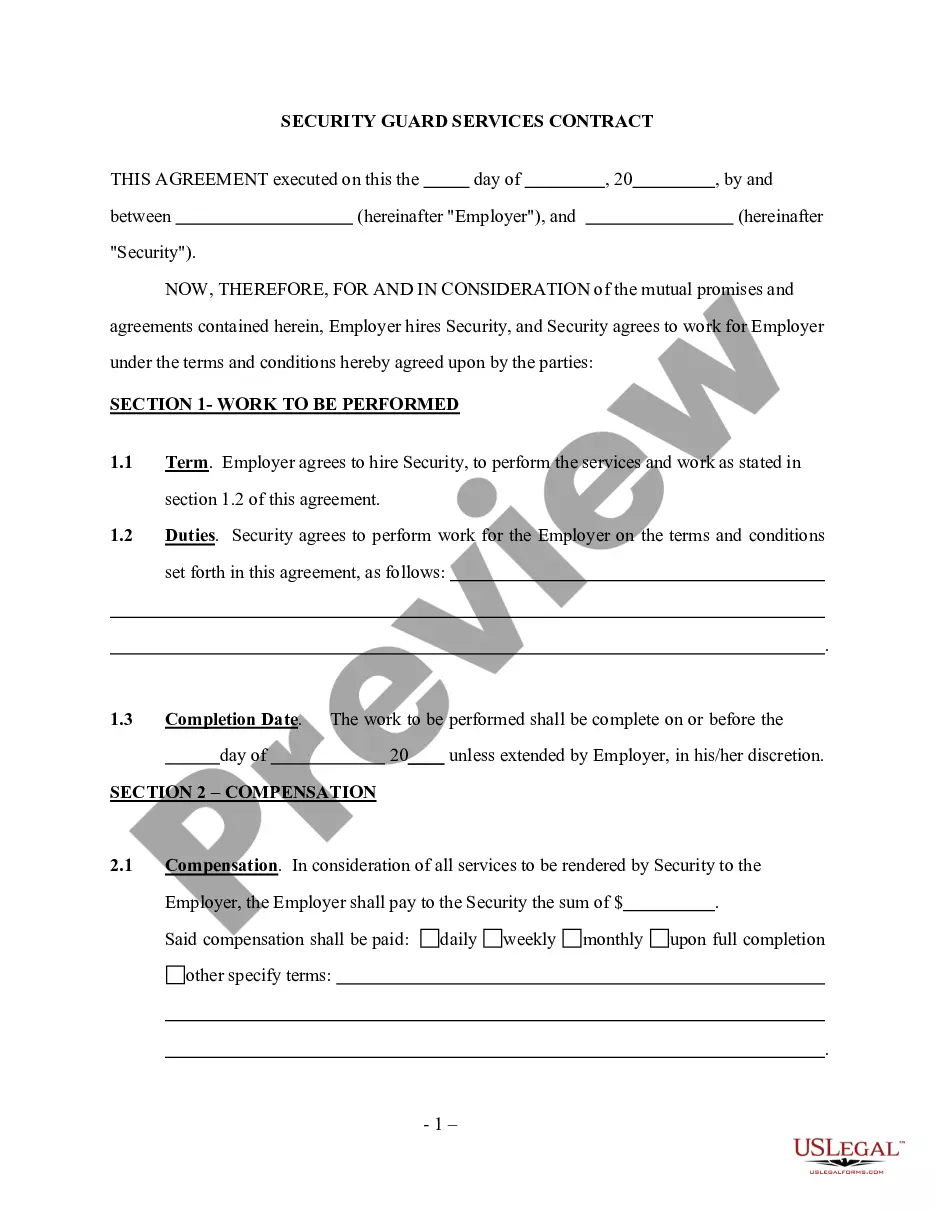
The Security and Alarm Services Contract - Self-Employed is a legal document that formalizes an agreement between an employer and an independent contractor for the installation and servicing of security systems. This contract outlines the scope of work, compensatory terms, and the independent status of the contractor, distinguishing it from standard employee agreements and other service contracts.
Key components of this form
- Section 1 - Work to Be Performed: Details the services the contractor will provide, including installation and maintenance of the security systems.
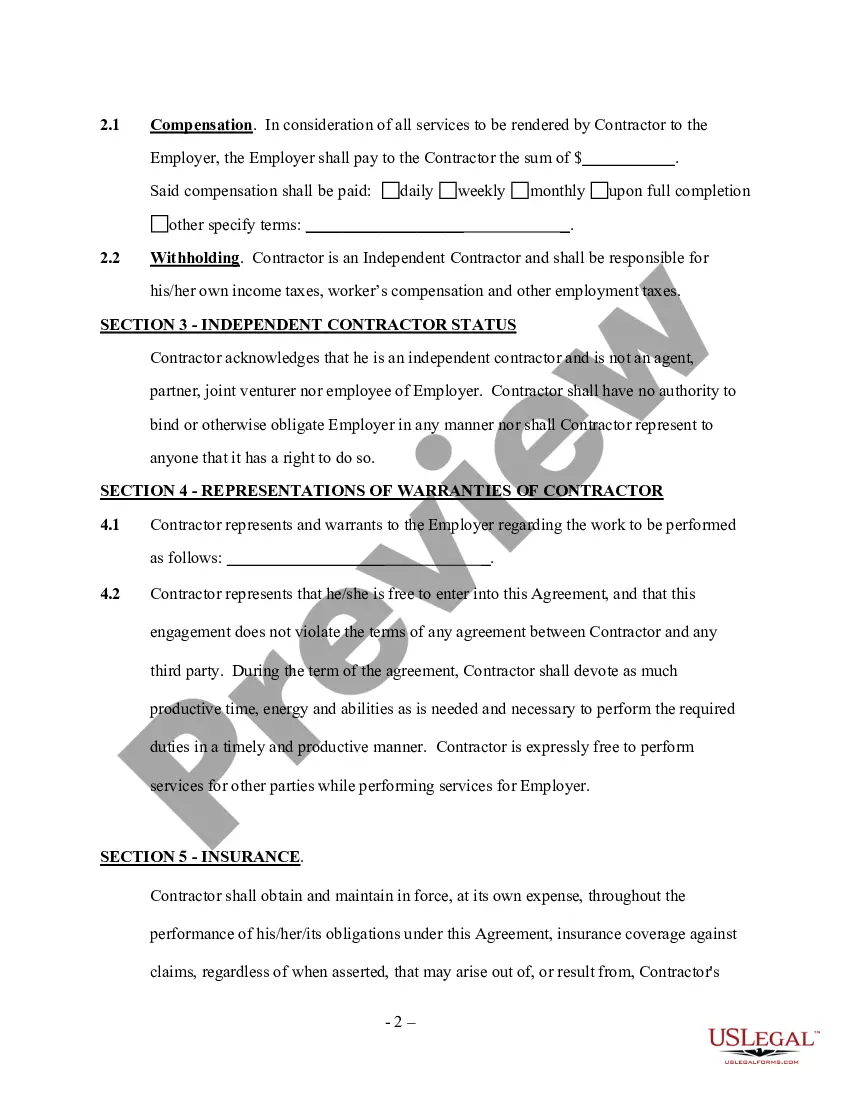
- Section 2 - Compensation: Specifies the payment terms and the contractor's responsibility for taxes and other obligations.
- Section 3 - Independent Contractor Status: Confirms the contractor's independent status, clarifying they are not an employee of the employer.
- Section 4 - Representations and Warranties: Outlines the contractor's assurances about their ability to fulfill the contract without violating other agreements.
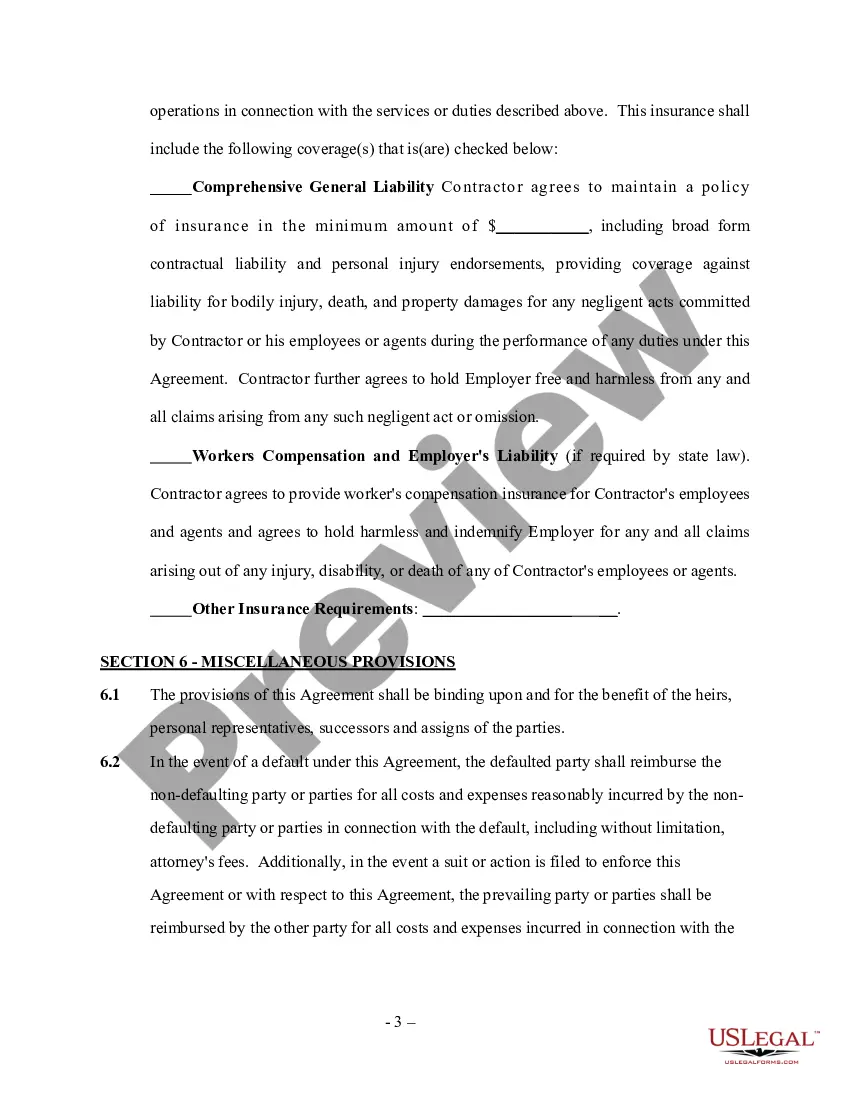
- Section 5 - Insurance: Addresses potential liabilities and the obligations of the parties in case of default.
Common use cases
This form should be used when an employer wishes to hire an independent contractor to install or maintain a security system. It is particularly useful in situations where the employer does not want to hire a full-time employee but still requires professional services for security installations. Examples include residential security installations, commercial security system updates, and routine maintenance agreements for surveillance systems.
Who can use this document
This form is suitable for:
- Employers seeking to contract independent contractors for security services.
- Independent contractors looking to formalize business agreements with employers.
Completing this form step by step
- Identify the parties involved: Fill in the employer's and contractor's names and contact information.
- Specify the duties: Clearly outline the security services to be performed by the contractor.
- Determine compensation: State the agreed amount and payment schedule (daily, weekly, monthly, etc.).
- Clarify insurance and liability terms: Include provisions related to insurance and liabilities in case of default.
- Sign and date the contract: Ensure both parties sign to validate the agreement legally.
Does this document require notarization?
In most cases, this form does not require notarization. However, some jurisdictions or signing circumstances might. US Legal Forms offers online notarization powered by Notarize, accessible 24/7 for a quick, remote process.
Get your form ready online
Our built-in tools help you complete, sign, share, and store your documents in one place.
Make edits, fill in missing information, and update formatting in US Legal Forms—just like you would in MS Word.
Download a copy, print it, send it by email, or mail it via USPS—whatever works best for your next step.
Sign and collect signatures with our SignNow integration. Send to multiple recipients, set reminders, and more. Go Premium to unlock E-Sign.
If this form requires notarization, complete it online through a secure video call—no need to meet a notary in person or wait for an appointment.
We protect your documents and personal data by following strict security and privacy standards.

Make edits, fill in missing information, and update formatting in US Legal Forms—just like you would in MS Word.

Download a copy, print it, send it by email, or mail it via USPS—whatever works best for your next step.

Sign and collect signatures with our SignNow integration. Send to multiple recipients, set reminders, and more. Go Premium to unlock E-Sign.

If this form requires notarization, complete it online through a secure video call—no need to meet a notary in person or wait for an appointment.

We protect your documents and personal data by following strict security and privacy standards.
Common mistakes
- Failing to clearly outline the scope of work in the contract.
- Neglecting to specify payment terms, leading to misunderstandings later.
- Not addressing liability insurance requirements appropriately.
- Omitting signatures, which can nullify the contract's enforceability.
Advantages of online completion
- Convenience: Download and complete the form from anywhere at any time.
- Editability: Fill in the required information easily without the need for paper and pen.
- Reliability: Forms provided by licensed attorneys ensure compliance with legal standards.
Looking for another form?
Form popularity
FAQ
Yes, most CCTV, intercom, and new security system installations are considered a capital improvement and do not require sales tax.
"Utilities" generally means water, sewage, electricity, and heat (e.g. oil, gas, etc.). As commonly understood, it does not mean a security system. If the lease only required you to pay utilities, you should not have to pay for the security system.
Requires 36-month term contract starting at $49.99/mo. with QSP and enrollment in ADT Easy Pay. Service and Installation charges vary depending on system configuration, equipment and services selected. Offer includes $200 off installation of an Intrusion Detection Package and 10% off Intrusion Detection accessories.
Most commonly, you'll need to send a written letter to cancel your contract. We even recommend you use a signature confirmation or other proof that they received the document. You then have proof, and you know when they received it. Save a copy of your letter before sending so you know exactly what you sent.
Typically, though, a home security system does not qualify for a tax deduction.If your security system is only used to safeguard your personal property then it would fall under the Internal Revenue Service's (IRS) list of nondeductible expenses.
Today, the average cost for home security system monitoring services ranges from $15 to $35/month. The upfront cost of home security equipment typically ranges from $100 to $250 and monthly security equipment costs range from $10 to $35/month.
If the security system only covers your home office, it's considered a direct cost, and you can deduct the entire cost of installation and monitoring. If the security system covers your entire house, however, then it's considered an indirect cost and you may only claim the percentage of it that covers your home office.
If you are asking if ADT offers any of their monitoring services without requiring you to sign a contract, then no, they don't. All ADT monitoring services require you to sign a 36-month contract, or a 24-month contract if you live in California.
1 Make Sure You Know the Terms of Your Contract. 2 Take the System with You. 3 Transfer Your Contract. 4 Terminate with Proper Notice. 5 Get on a Month-to-Month Plan. 6 Switch Providers. 7 Confirm Your Cancellation. 8 Take Legal Action.