Agreement to Provide Security or Alarm, Surveillance and/or Traffic Control Services - Security Personnel to be Independent Contractors - Self-Employed
What this document covers
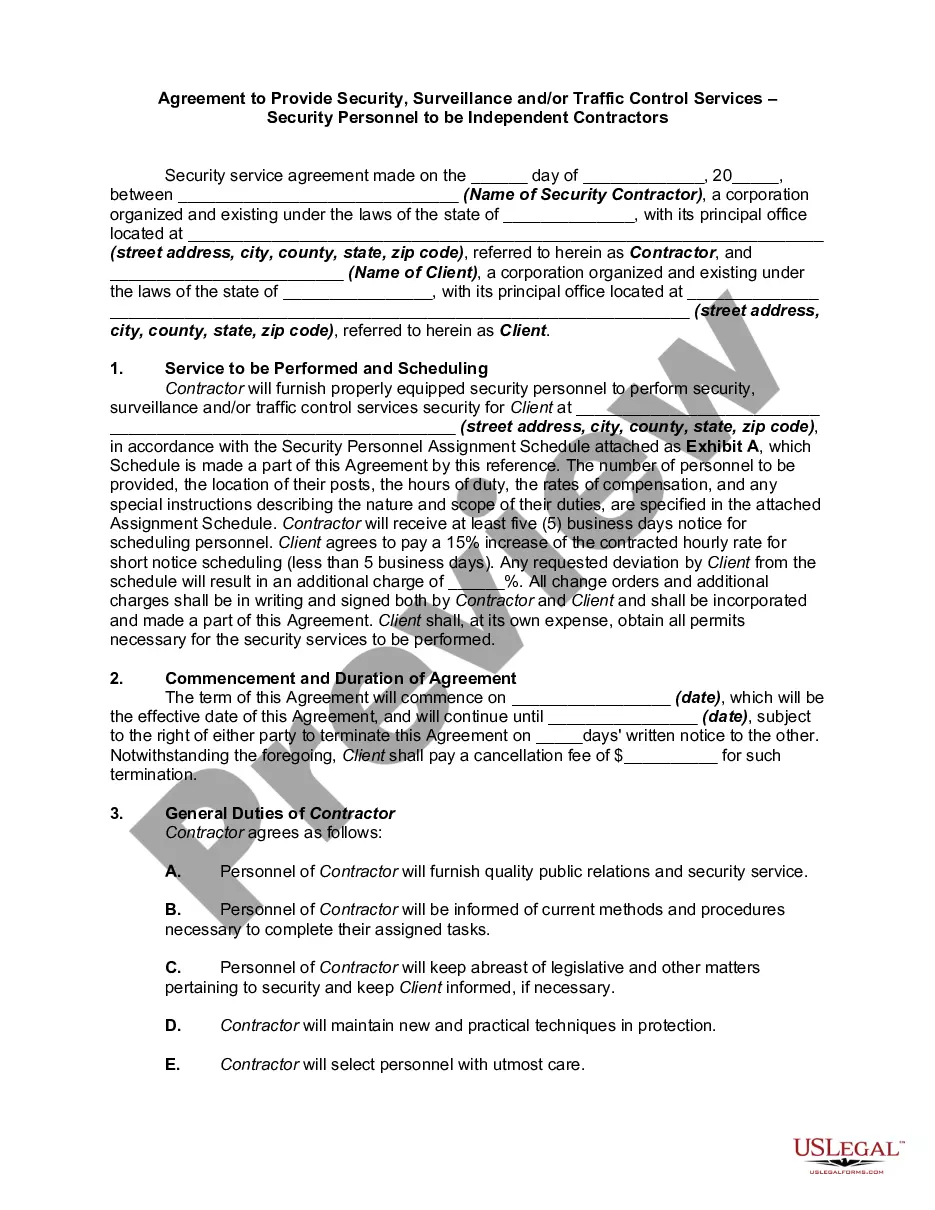
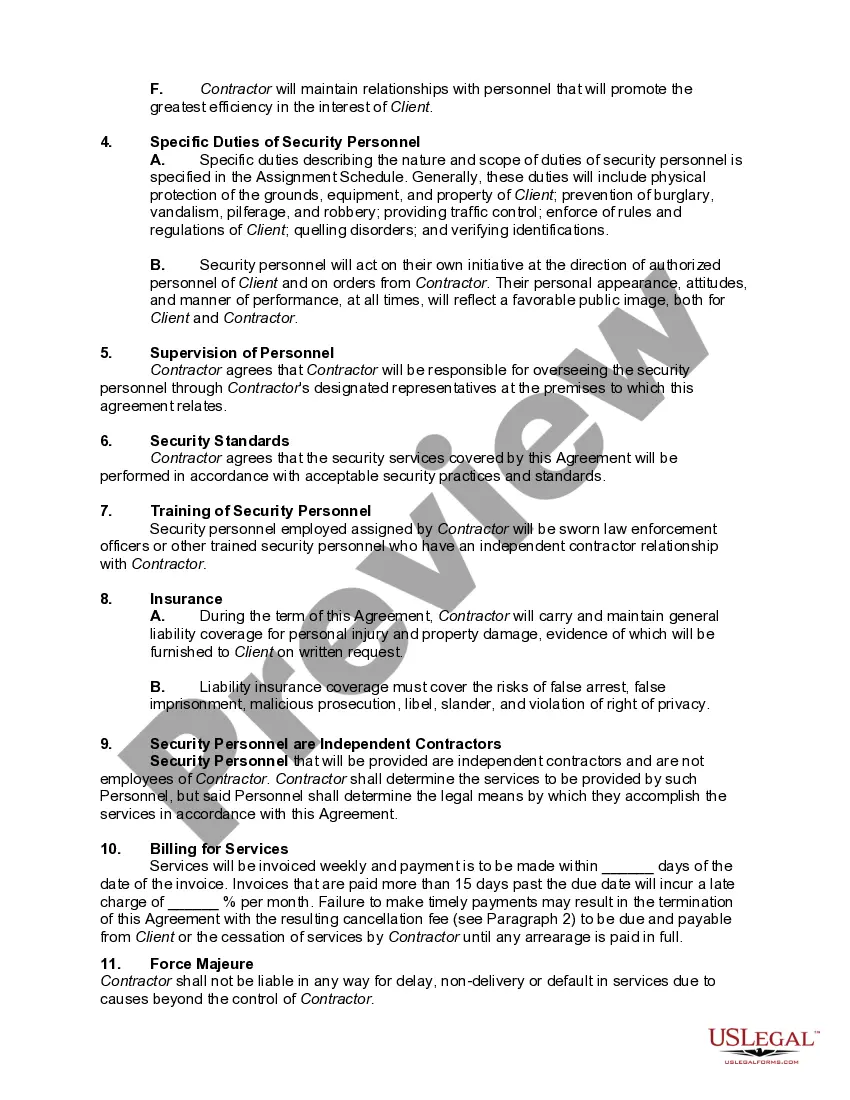
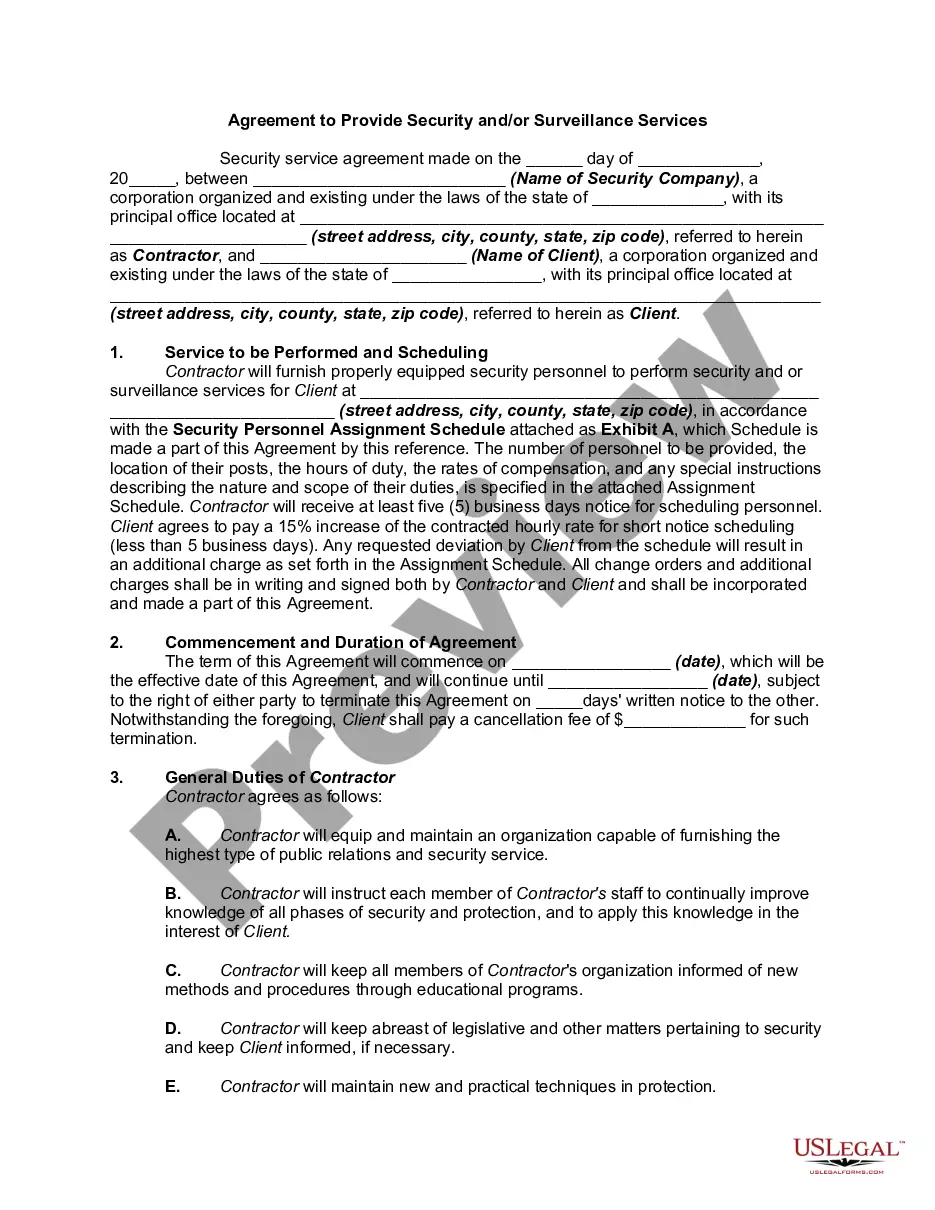
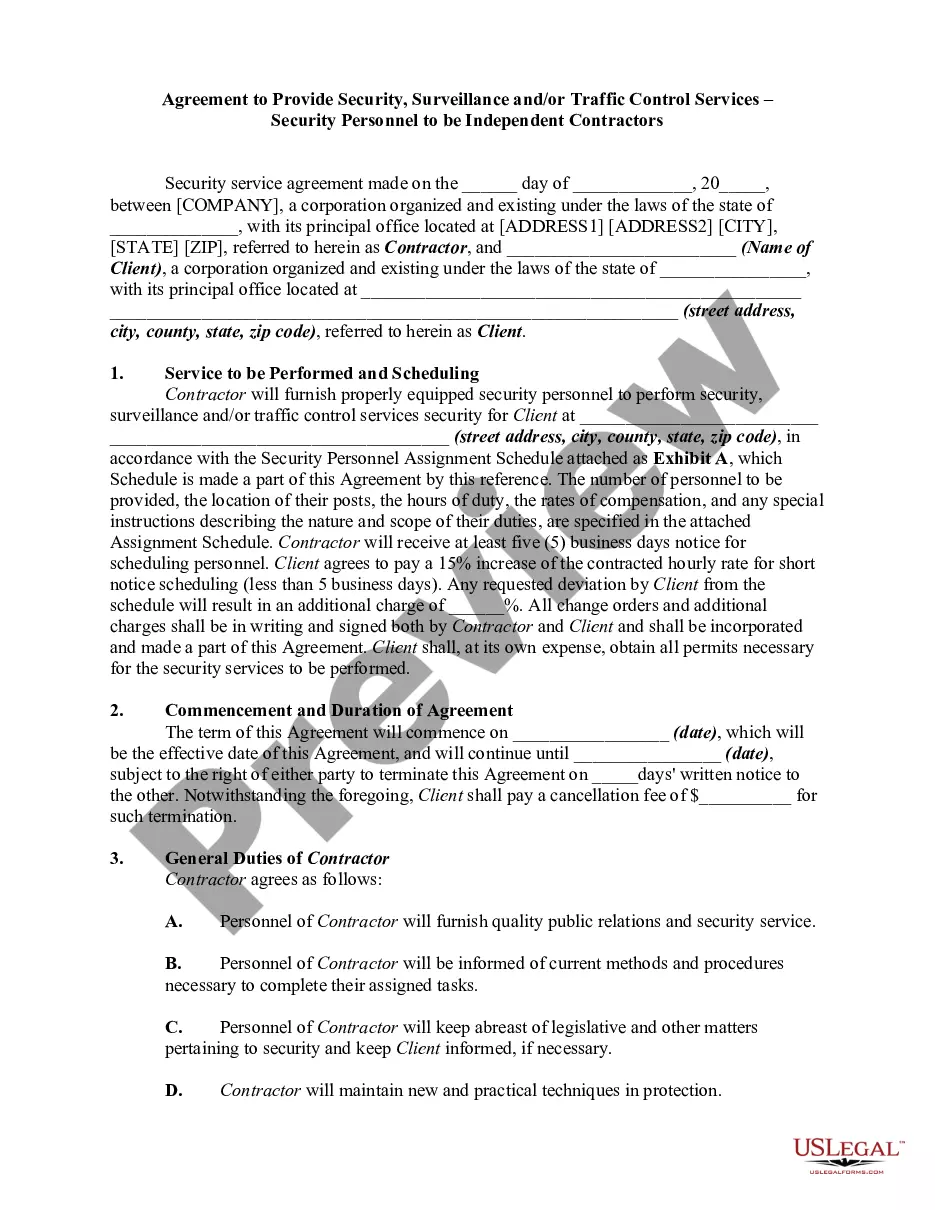
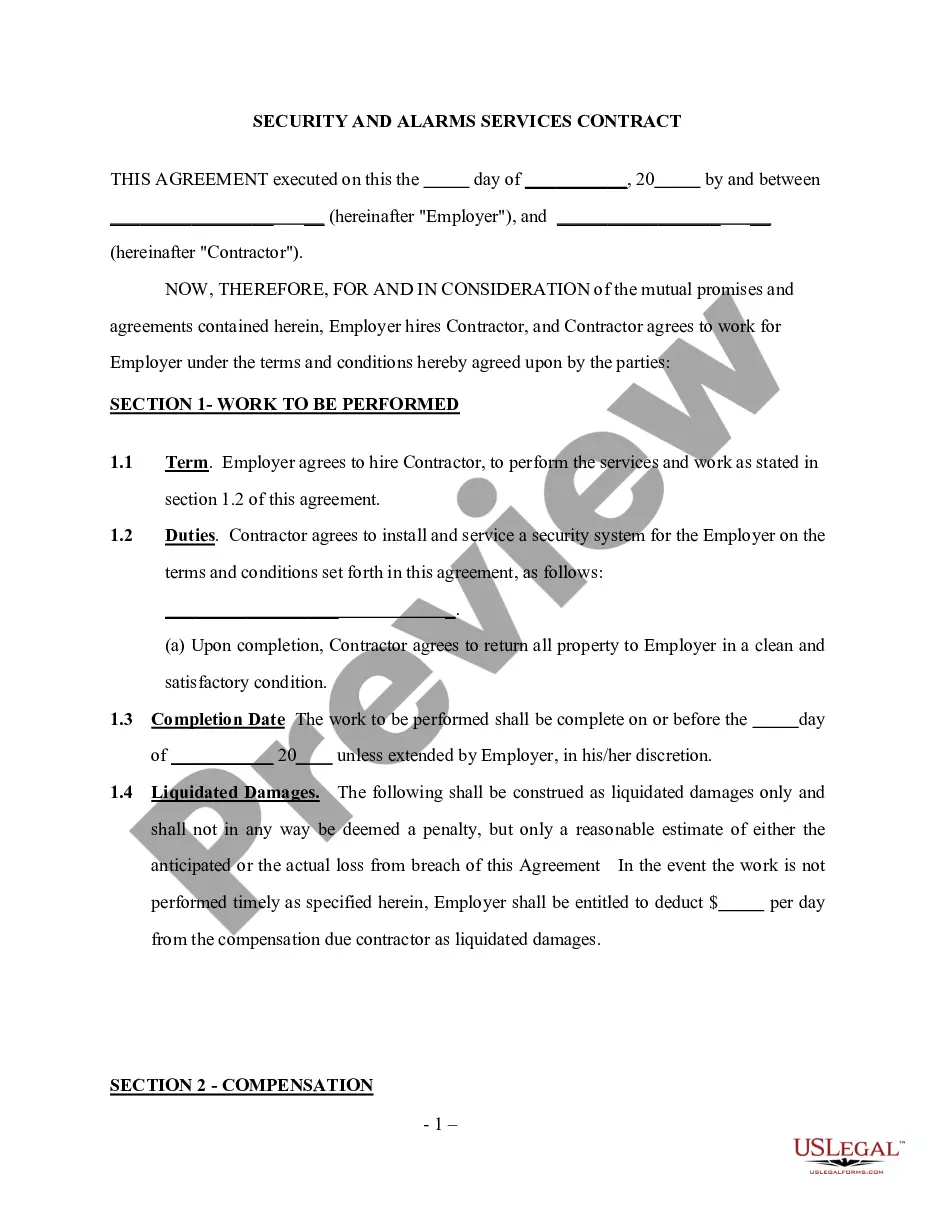
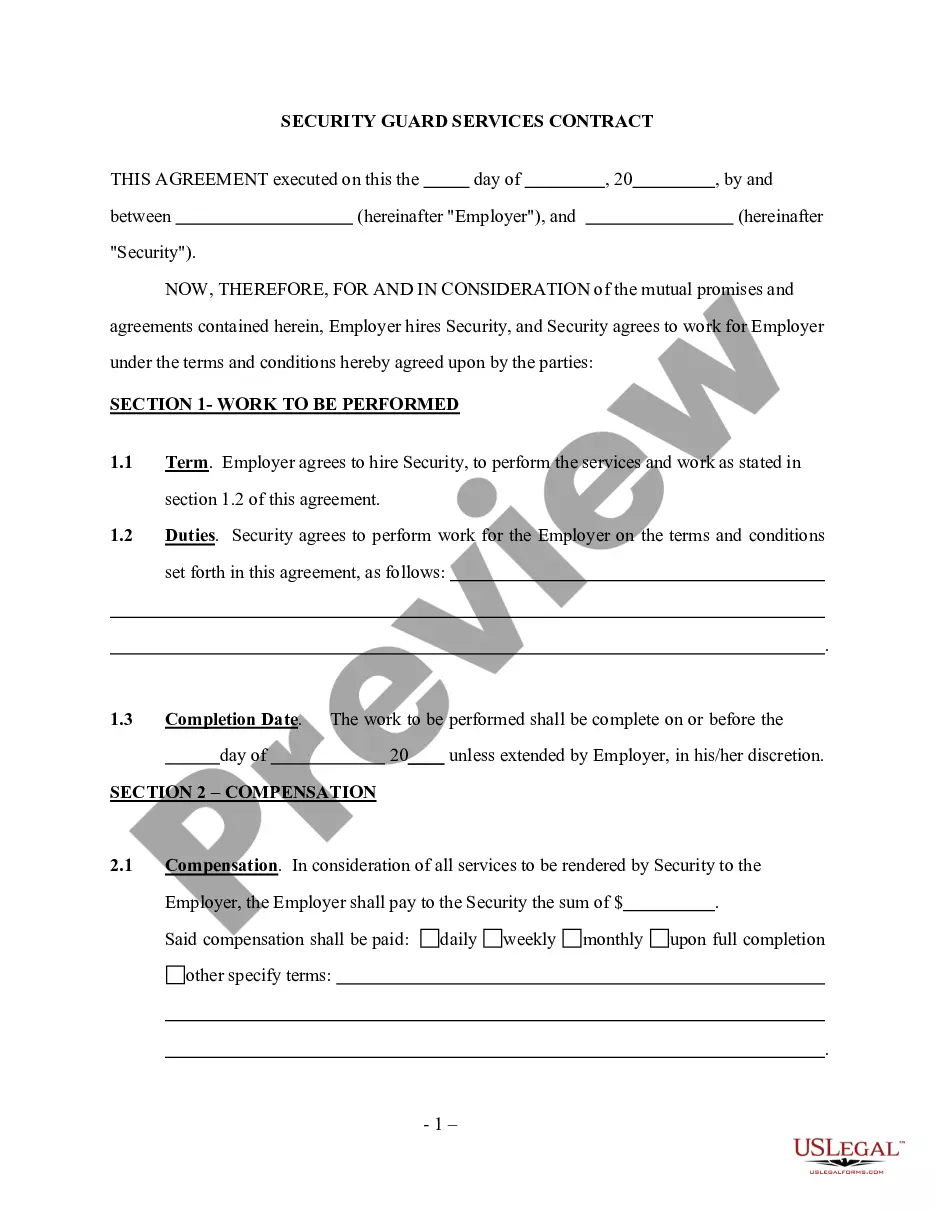
The Agreement to Provide Security or Alarm, Surveillance and/or Traffic Control Services form outlines the terms and conditions between a client and a security contractor. This specialized contract ensures that security personnel are engaged as independent contractors, allowing for flexible management and responsiveness to security needs. Unlike employment agreements, this form emphasizes the independent nature of the contractor's services, providing clarity in the relationship between the client and the contractor. It ensures that both parties understand their rights, obligations, and the expected standards for security services.
Key parts of this document
- The names and addresses of the Contractor and Client.
- Specific services to be performed and the schedule for such services.
- Terms of agreement commencement and duration, including cancellation fees.
- General and specific duties of the security personnel involved.
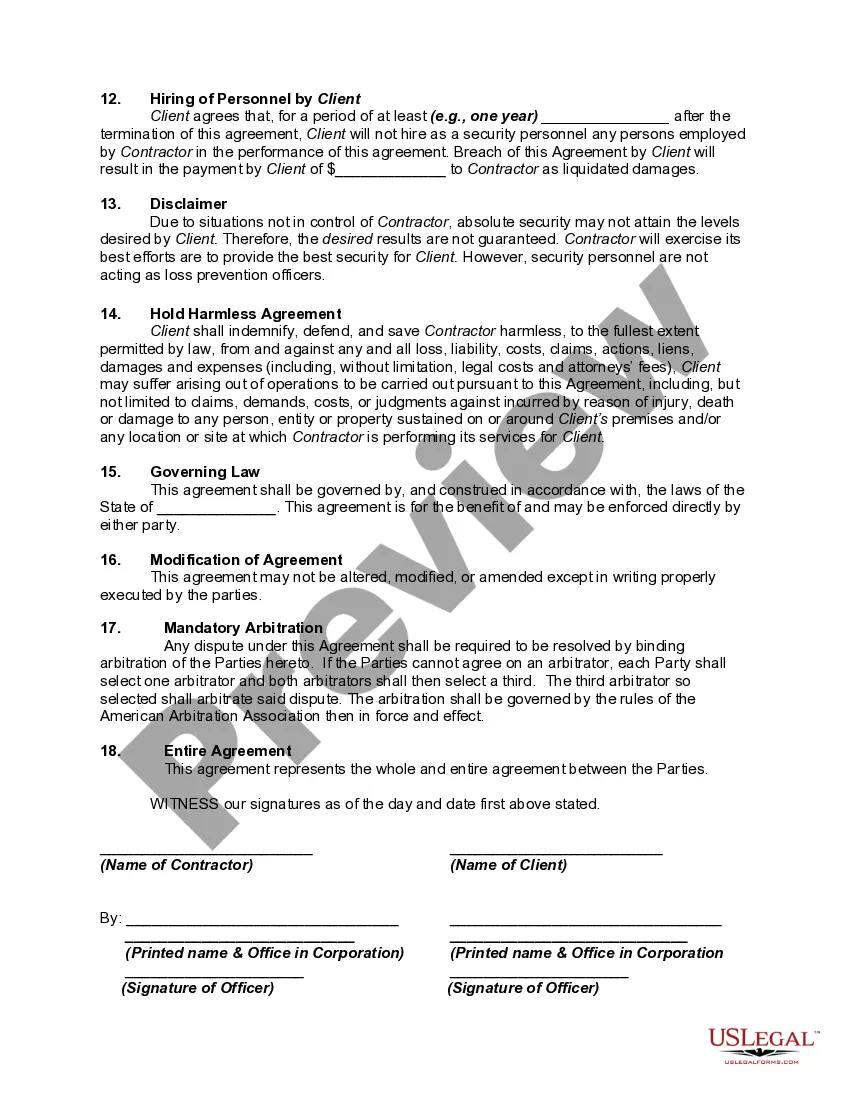
- Provisions regarding insurance and liability coverage.
- Clauses addressing confidentiality and the hiring of personnel post-agreement.

Situations where this form applies
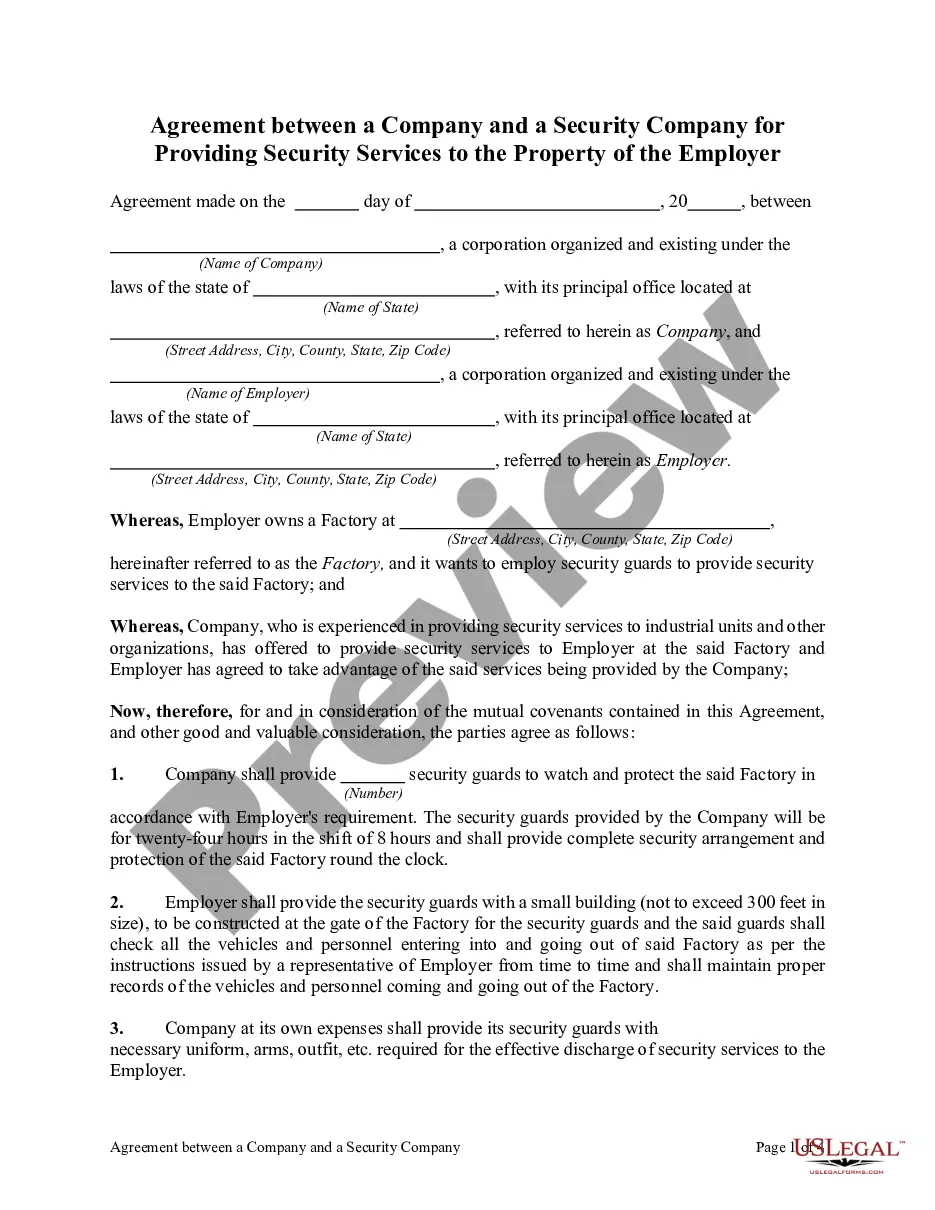
This form is typically used when a business or individual requires professional security services on a contracted basis. It is suited for situations where security personnel are needed for events, ongoing security at a facility, or temporary surveillance during critical periods. Use this agreement when you want to clearly define the responsibilities of the security contractor and ensure that both parties have agreed to the same terms.
Who needs this form
This form is ideal for:
- Business owners seeking to hire independent security contractors.
- Event planners needing temporary security for gatherings.
- Corporations managing ongoing surveillance needs at their facilities.
- Individuals or organizations requiring traffic control and safety personnel.
How to complete this form
- Identify the parties: Fill in the names and addresses of both the Contractor and the Client.
- Specify services: Clearly outline the services to be provided as well as the expected schedule.
- Enter dates: Input the commencement date and duration of the agreement, including any cancellation terms.
- Detail responsibilities: Describe the specific duties of the security personnel in the attached Assignment Schedule.
- Sign the agreement: Both parties must date and sign the agreement to make it legally binding.
Does this form need to be notarized?
This form does not typically require notarization unless specified by local law. Always check your jurisdiction's requirements to confirm.
Get your form ready online
Our built-in tools help you complete, sign, share, and store your documents in one place.
Make edits, fill in missing information, and update formatting in US Legal Forms—just like you would in MS Word.
Download a copy, print it, send it by email, or mail it via USPS—whatever works best for your next step.
Sign and collect signatures with our SignNow integration. Send to multiple recipients, set reminders, and more. Go Premium to unlock E-Sign.
If this form requires notarization, complete it online through a secure video call—no need to meet a notary in person or wait for an appointment.
We protect your documents and personal data by following strict security and privacy standards.

Make edits, fill in missing information, and update formatting in US Legal Forms—just like you would in MS Word.

Download a copy, print it, send it by email, or mail it via USPS—whatever works best for your next step.

Sign and collect signatures with our SignNow integration. Send to multiple recipients, set reminders, and more. Go Premium to unlock E-Sign.

If this form requires notarization, complete it online through a secure video call—no need to meet a notary in person or wait for an appointment.

We protect your documents and personal data by following strict security and privacy standards.
Mistakes to watch out for
- Failing to specify all services in detail, leading to ambiguity.
- Not including the required notice period for scheduling changes.
- Overlooking necessary insurance requirements for liability coverage.
- Neglecting the need for written modifications or amendments to the agreement.
Why use this form online
- Immediate access: Download and customize the form at your convenience.
- Editable format: Easily modify sections to meet your specific needs before finalizing.
- Prepared by experts: Forms are reviewed by licensed attorneys to ensure compliance and effectiveness.
Legal use & context
- This agreement serves as a binding contract between the client and the contractor, establishing clearly defined roles and responsibilities.
- It helps protect both parties by outlining cancellation fees, insurance requirements, and liability disclaimers.
- Ensures compliance with industry standards for security services and operational procedures.
Looking for another form?



Form popularity
FAQ
Get it in writing. Keep it simple. Deal with the right person. Identify each party correctly. Spell out all of the details. Specify payment obligations. Agree on circumstances that terminate the contract. Agree on a way to resolve disputes.
A. No. Being labeled an independent contractor, being required to sign an agreement stating that one is an independent contractor, or being paid as an independent contractor (that is, without payroll deductions and with income reported by an IRS Form 1099 rather than a W-2), is not what determines employment status.
If you run a small business that hires 1099 contractors, also known as independent contractors, it is vital that you have them sign an independent contractor contract. This is because there is a significant gray area between who is classified as an independent contractor and who is classified as an employee.
Form W-9. The IRS requires contractors to fill out a Form W-9, request for Taxpayer Identification Number and Certification, which you should keep on file for at least four years after the hiring. This form is used to request the correct name and Taxpayer Identification Number, or TIN, of the worker or their entity.
1. Not Having a Written Contract.The taxing, labor and employment, and insurance authorities expect a written contract that states that the worker is an independent contractor and will be paid as such with no tax withholding, no benefits, etc.
Terms. This is the first section of any agreement or contract and states the names and locations of the parties involved. Responsibilities & Deliverables. Payment-Related Details. Confidentiality Clause. Contract Termination. Choice of Law.
Many people ask, Can you tell an independent contractor when to work? As an independent, you are free to work where and when you like. The exception to this may be if a particular project requires you to be on-site with a client.
How long is an independent contractor agreement valid for? Best to renew contracts yearly though! - The broker will not treat the licensee as an employee for federal or state tax purposes. - The licensee can work whatever hours he or she chooses to work.
Name of contractor and contact information. Name of homeowner and contact information. Describe property in legal terms. List attachments to the contract. The cost. Failure of homeowner to obtain financing. Description of the work and the completion date. Right to stop the project.