New Hampshire Acknowledgment of Rights Class A Misdemeanors
About this form
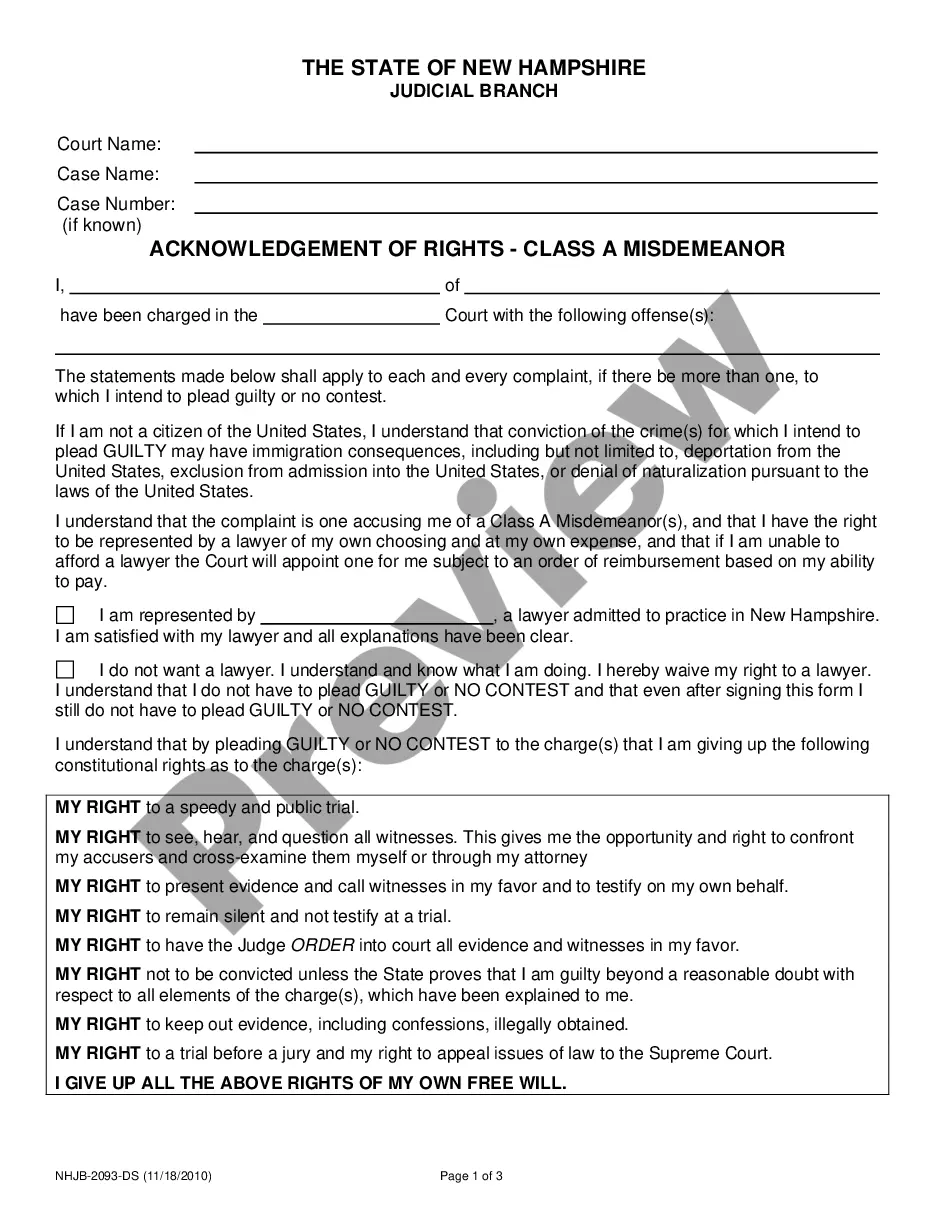
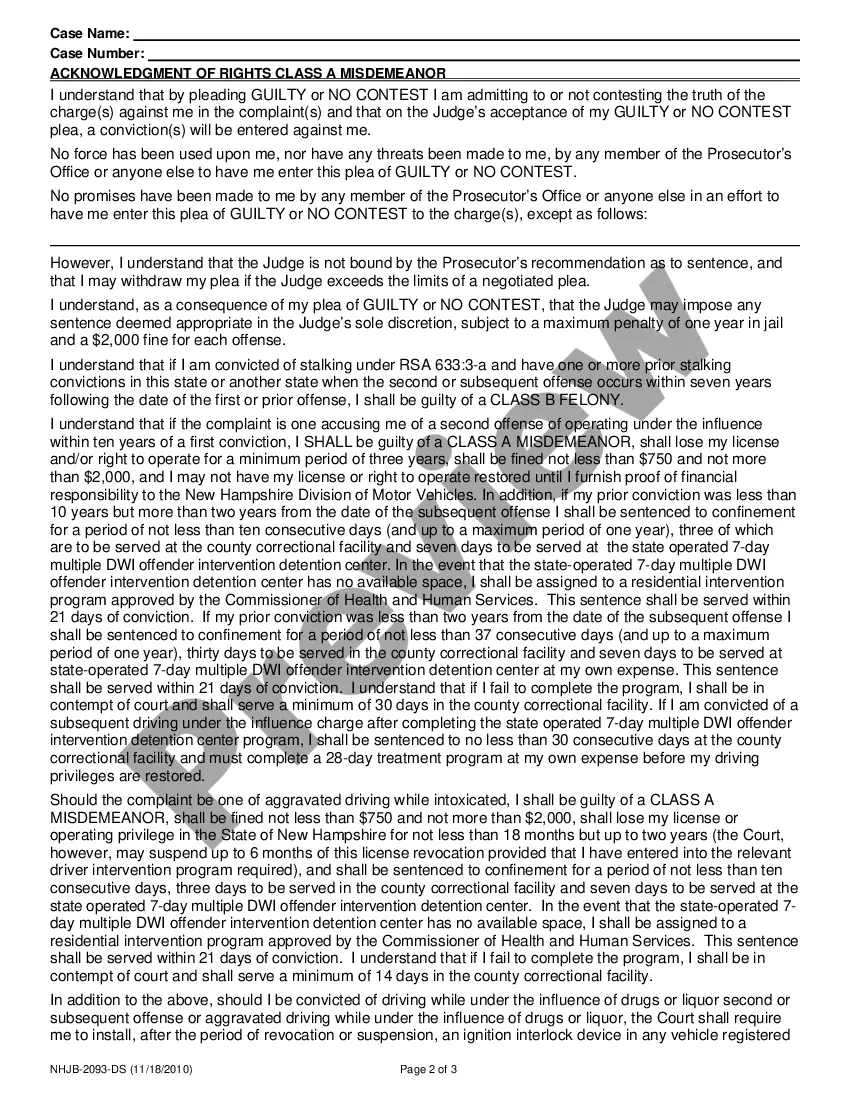
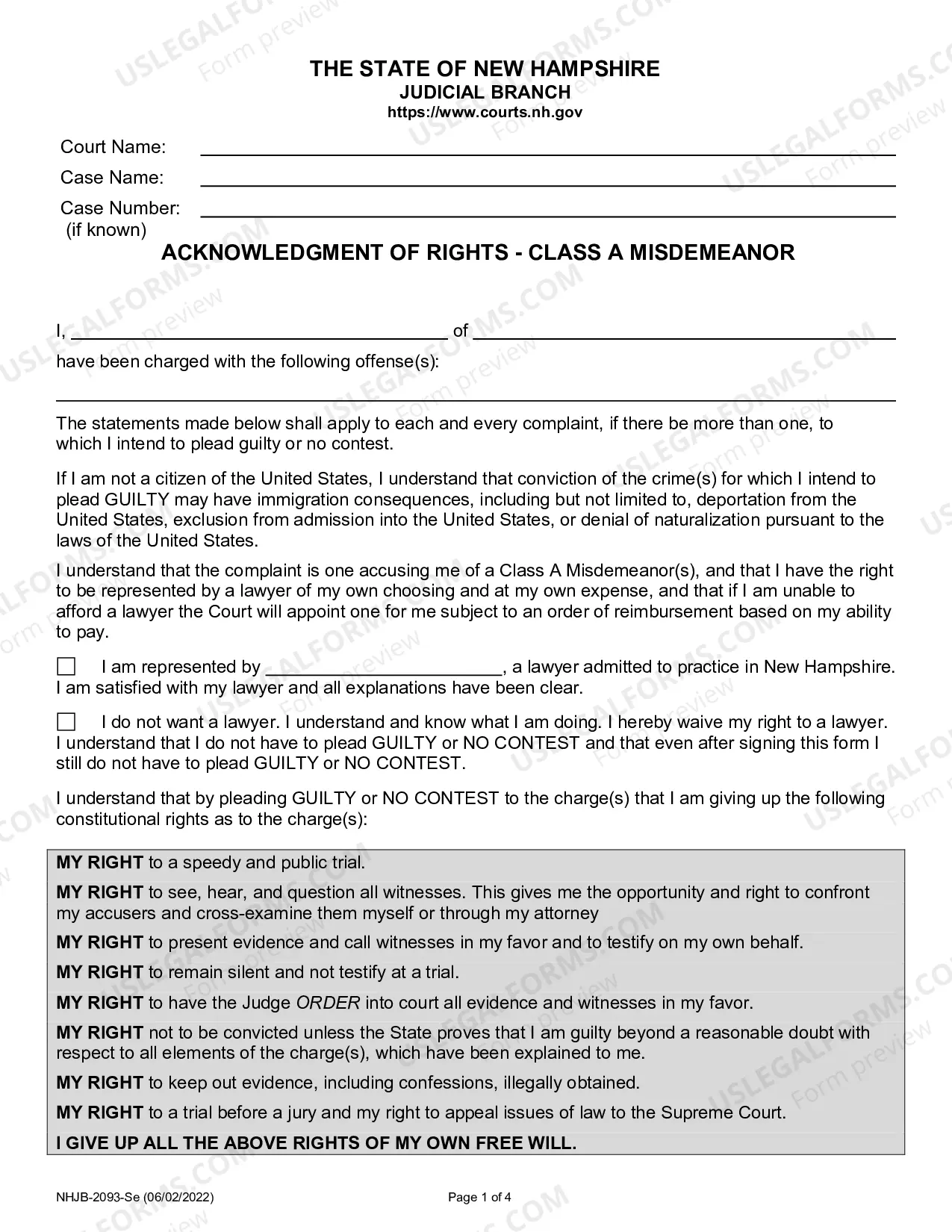
The Acknowledgment of Rights Class A Misdemeanors form is an official document used in New Hampshire that is completed by defendants facing Class A misdemeanor charges. This form is crucial for understanding the rights being waived when pleading guilty or no contest and ensures compliance with applicable laws and statutes. The form has been drafted and updated by licensed attorneys to meet New Hampshire's legal standards.
Main sections of this form
- Defendant's information, including name and address.
- Charges against the defendant and the court where the case is filed.
- A detailed acknowledgment of the rights being waived, including the right to a lawyer.
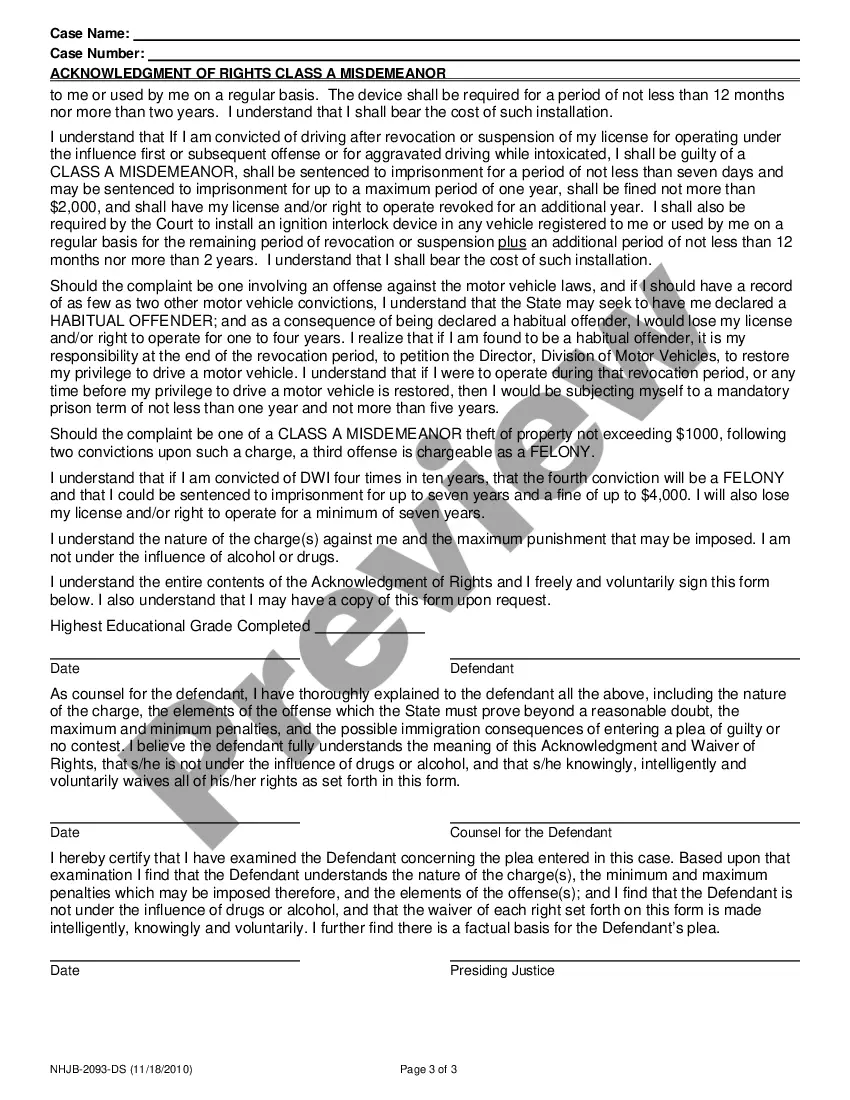
- Consequences of pleading guilty or no contest, including potential penalties.
- Signature lines for both the defendant and the attorney confirming understanding.
When to use this form
This form should be used when an individual charged with a Class A misdemeanor in New Hampshire decides to plead guilty or no contest. It is essential for outlining the legal rights that a defendant is waiving by entering such a plea. If you find yourself in a legal situation involving a Class A misdemeanor charge, this form will help ensure that your rights are fully acknowledged and understood.
Who should use this form
- Defendants charged with a Class A misdemeanor in New Hampshire.
- Individuals who wish to waive their right to an attorney and plead guilty or no contest.
- Those who want to understand the legal consequences of their plea before proceeding with their case.
Completing this form step by step
- Enter your name and address at the top of the form.
- Indicate the specific misdemeanor charges you are facing.
- Read each acknowledgment statement carefully and ensure you understand the rights you are waiving.
- Sign and date the form to confirm your understanding and agreement.
- If represented by an attorney, have them sign to verify they have reviewed the form with you.
Notarization guidance
This form does not typically require notarization unless specified by local law. However, it is important to ensure all signatures are properly completed to maintain legal validity.
Get your form ready online
Our built-in tools help you complete, sign, share, and store your documents in one place.
Make edits, fill in missing information, and update formatting in US Legal Forms—just like you would in MS Word.
Download a copy, print it, send it by email, or mail it via USPS—whatever works best for your next step.
Sign and collect signatures with our SignNow integration. Send to multiple recipients, set reminders, and more. Go Premium to unlock E-Sign.
If this form requires notarization, complete it online through a secure video call—no need to meet a notary in person or wait for an appointment.
We protect your documents and personal data by following strict security and privacy standards.

Make edits, fill in missing information, and update formatting in US Legal Forms—just like you would in MS Word.

Download a copy, print it, send it by email, or mail it via USPS—whatever works best for your next step.

Sign and collect signatures with our SignNow integration. Send to multiple recipients, set reminders, and more. Go Premium to unlock E-Sign.

If this form requires notarization, complete it online through a secure video call—no need to meet a notary in person or wait for an appointment.

We protect your documents and personal data by following strict security and privacy standards.
Mistakes to watch out for
- Failing to read and understand the rights being waived.
- Incomplete or inaccurate information provided in the defendant's details.
- Signing the form without discussing it with an attorney when needed.
Benefits of using this form online
- Convenient access to legal forms from anywhere at any time.
- Easy to download and complete at your own pace.
- Forms are regularly updated to comply with the latest legal standards.
Legal use & context
- This form is legally recognized in New Hampshire for defendants entering a plea in Class A misdemeanor cases.
- Completing this form correctly can help prevent potential legal issues related to waiving rights.
- Understanding the implications of this form is critical for protecting your legal rights during the court process.
Quick recap
- The Acknowledgment of Rights Class A Misdemeanors form is essential for defendants facing misdemeanor charges in New Hampshire.
- Providing accurate information and understanding all rights being waived is crucial.
- This form helps clarify the legal consequences of pleading guilty or no contest and ensures compliance with state law.
Looking for another form?

Form popularity
FAQ
A violation (other than offenses specified under habitual offender laws): 1 year. A Class A misdemeanor: 3 years. A Class B misdemeanor: 3 years. A Class A felony: 10 years.
A crime that's a Class A federal felony is the worst, with a maximum prison term of life in prison and a maximum fine of $250,000.A Class A federal misdemeanor involves a prison term of one year or less, as long as it's more than six months, and a maximum fine of $100,000.
Felonies classified as Class A or Level One are the most serious crimes, short of death penalty crimes. They incur long prison sentences and hefty fines.
Defendants found guilty of Class A Misdemeanors are typically sentenced to between six months and one year in a local jail. Fines imposed for Class A misdemeanors will vary depending on the jurisdiction.
Less serious than Class A/Level One felonies, Class B/Level Two crimes nonetheless carry significant prison sentences and fines. All states and the federal criminal code distinguish between felony crimes (serious offenses) and misdemeanors (less serious).Several states also levy fines for class B felonies.
You may expunge a wide variety of criminal records in New Hampshire, including some adult felonies, misdemeanors, and arrest records. You may file a Petition to Annul Record once you have completed the terms of your sentence and a waiting period. A separate petition must be filed for each conviction or criminal charge.
A violation is an offense, other than a traffic infraction, where the maximum possible punishment is fifteen days in jail.Misdemeanors are generally low-level, petty offenses that don't have a possible sentence of greater than one year in jail. Misdemeanors can be unclassified or divided into Class A and Class B.
Class A offenses are the most serious of class felony charges there are and are sometimes referred to as Class felony 1 crimes. The two most common of felonies in this categorization though every crime varies according to state governance is first degree intentional homicide and felony murder.
These felonies can be classified from Class E or F felonies, such as the lowest levels of theft, up to Class A felonies, which carry a life's sentence in prison or the death penalty. Class A felonies are generally murder or first degree intentional homicide.