Trademark License Agreement
Overview of this form
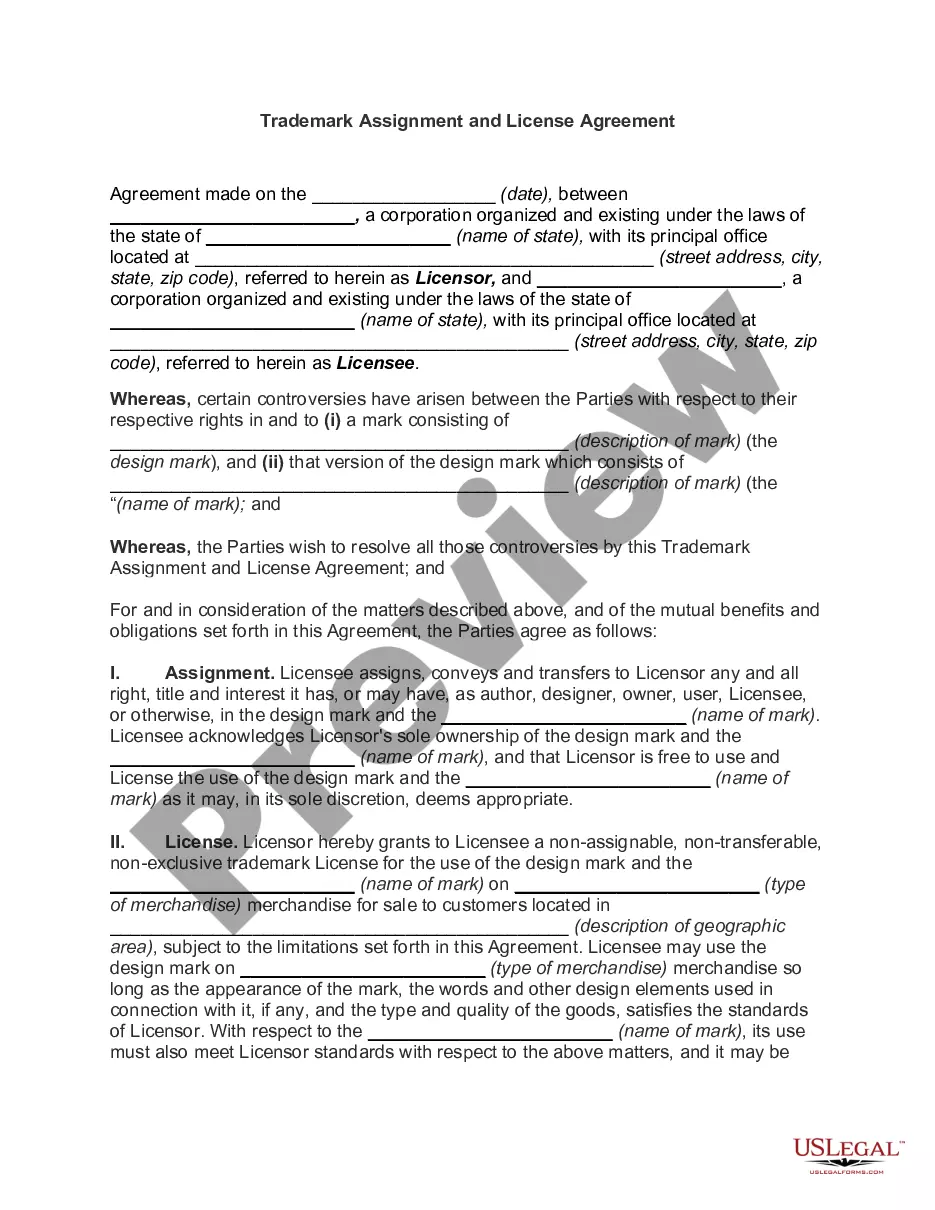
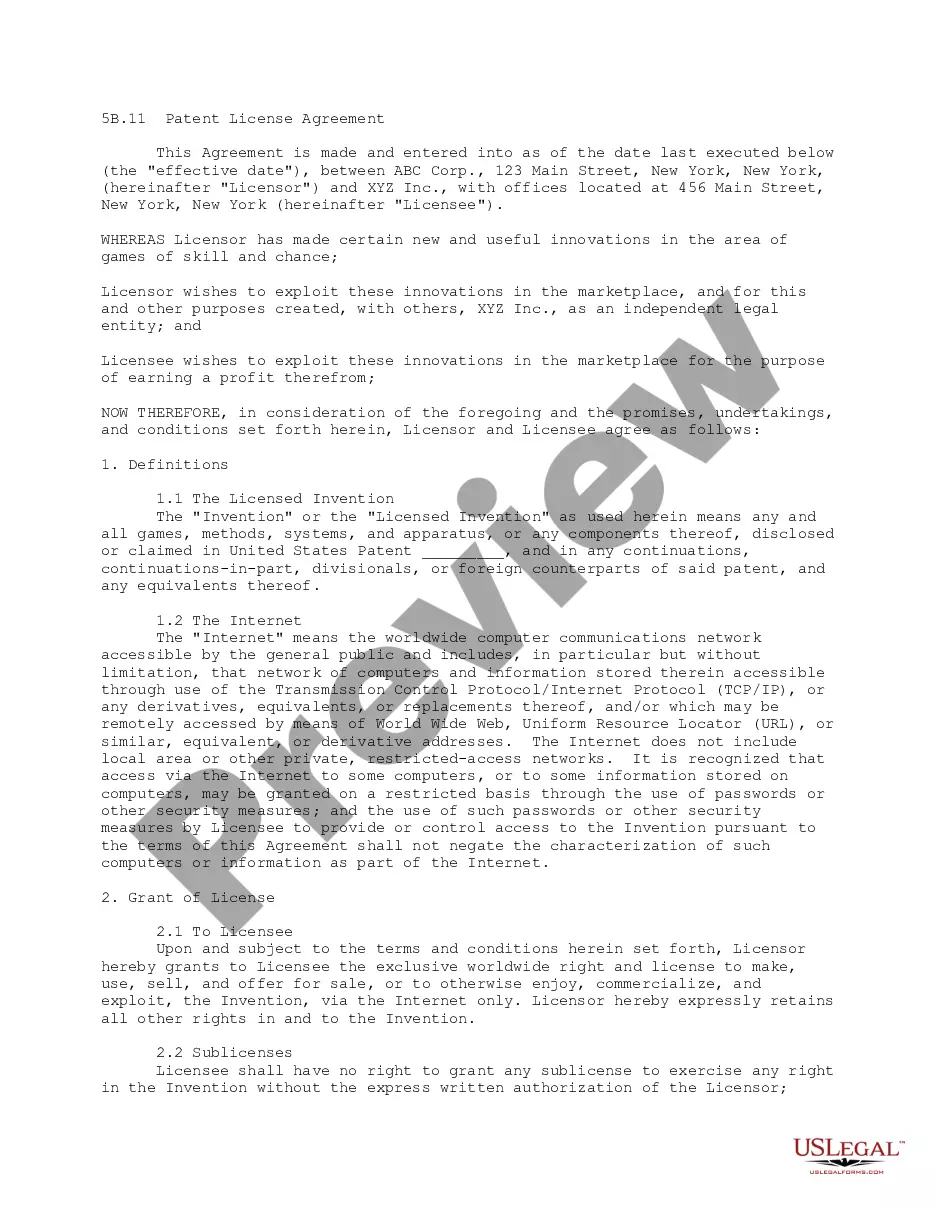
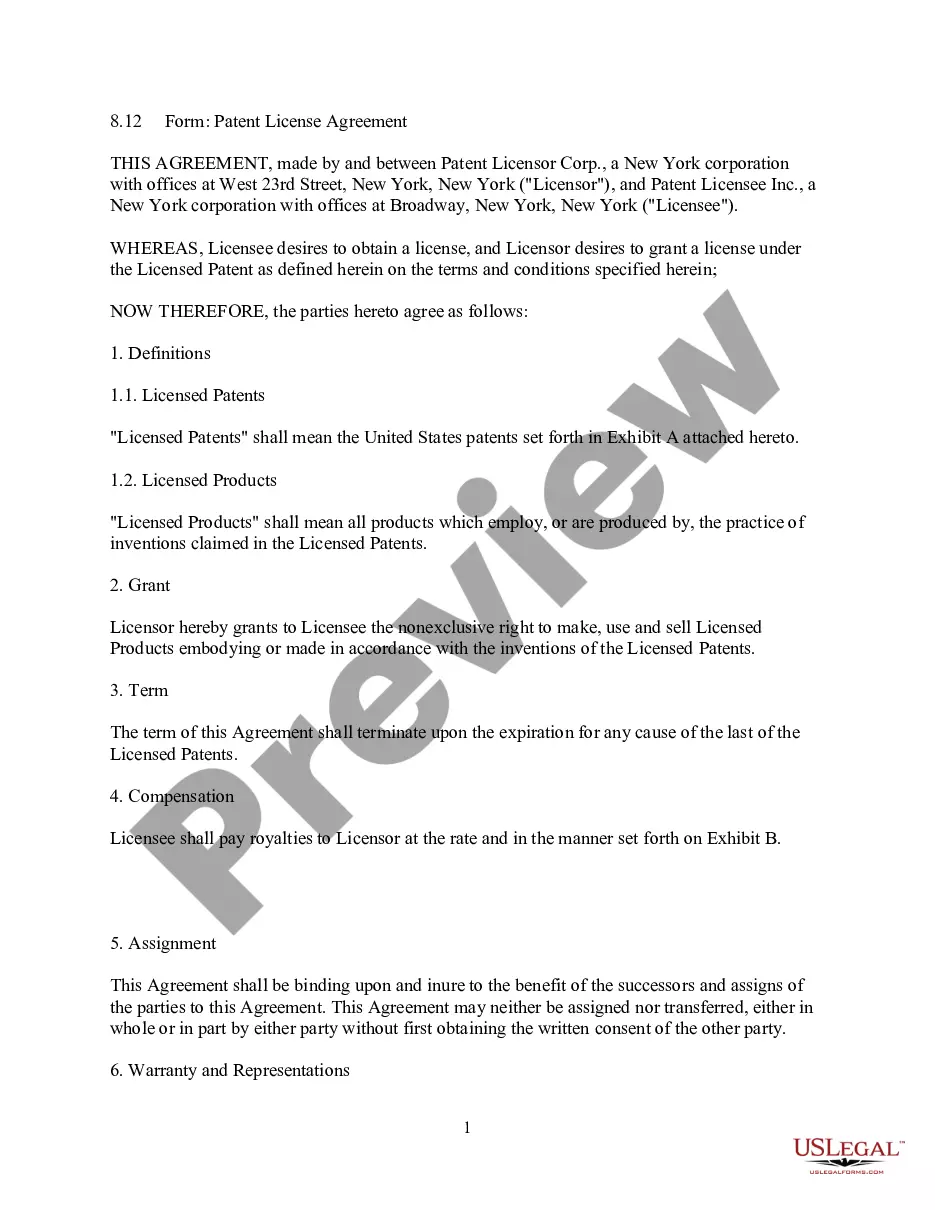
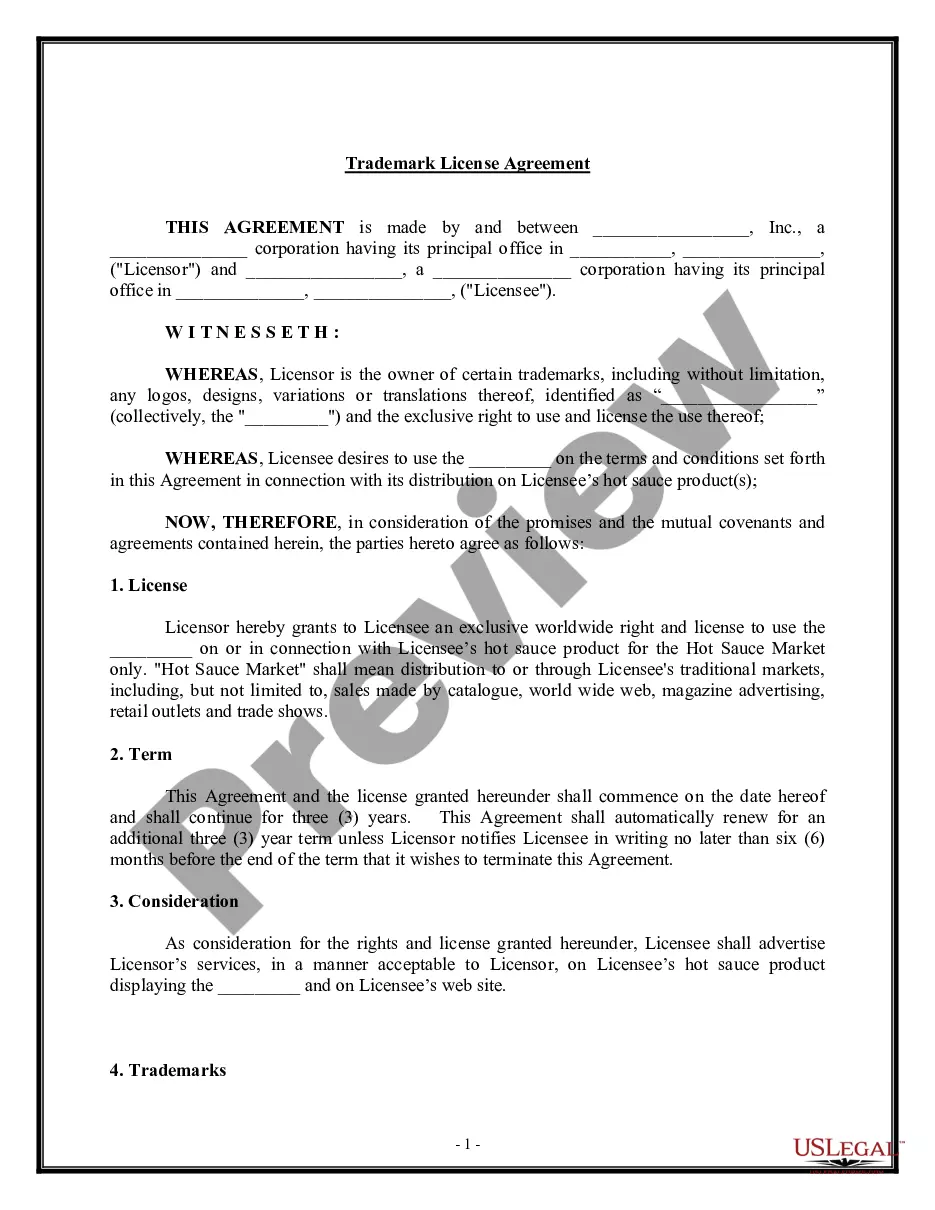
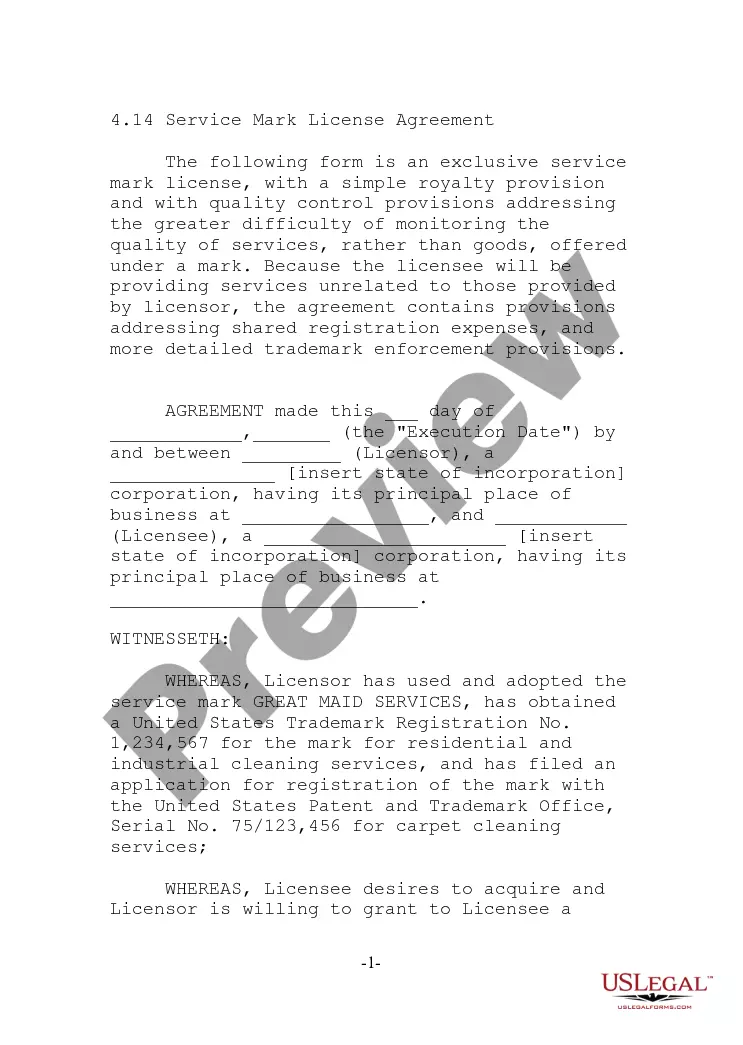
The Trademark License Agreement allows a Licensor to grant a Licensee an exclusive license to use specific trademarks in connection with a product or service. This agreement outlines the terms under which the Licensee can use the trademarks, and it is essential for protecting the Licensor's rights while permitting the Licensee to distribute products within designated markets. It differs from other agreements by specifically focusing on trademark usage rather than licensing of the product itself.
Main sections of this form
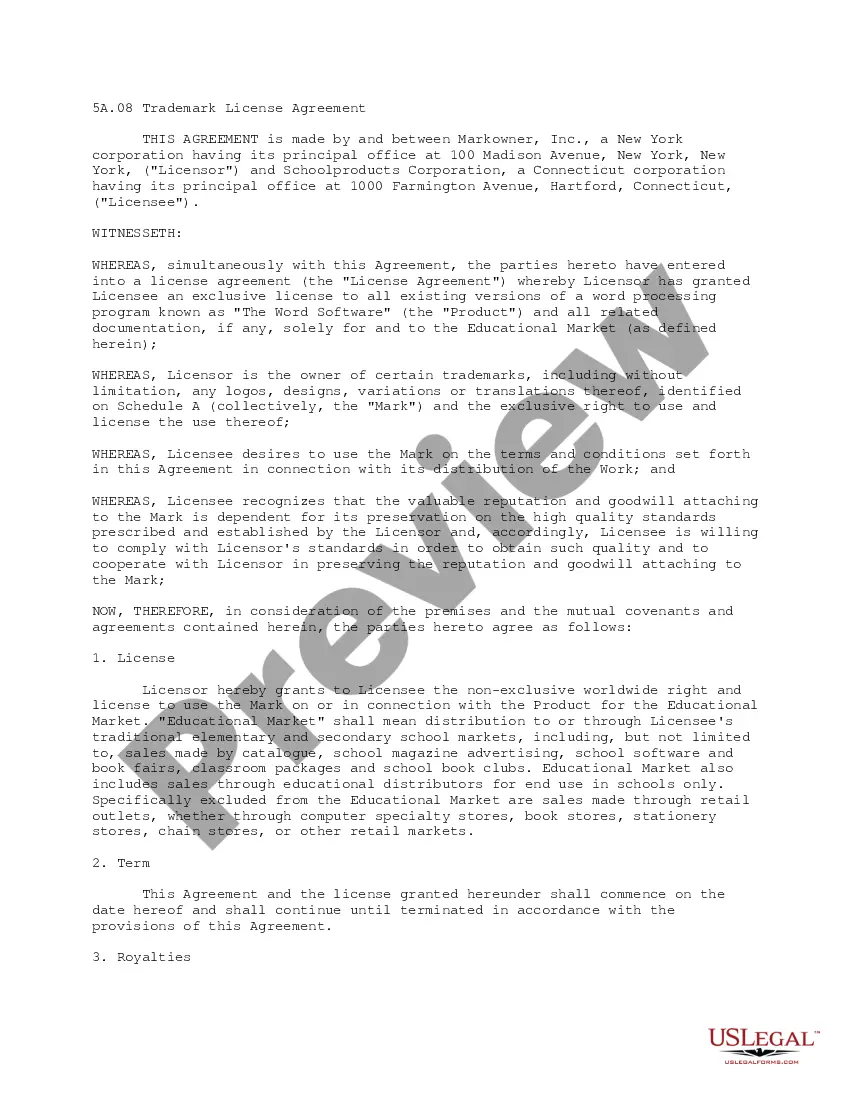
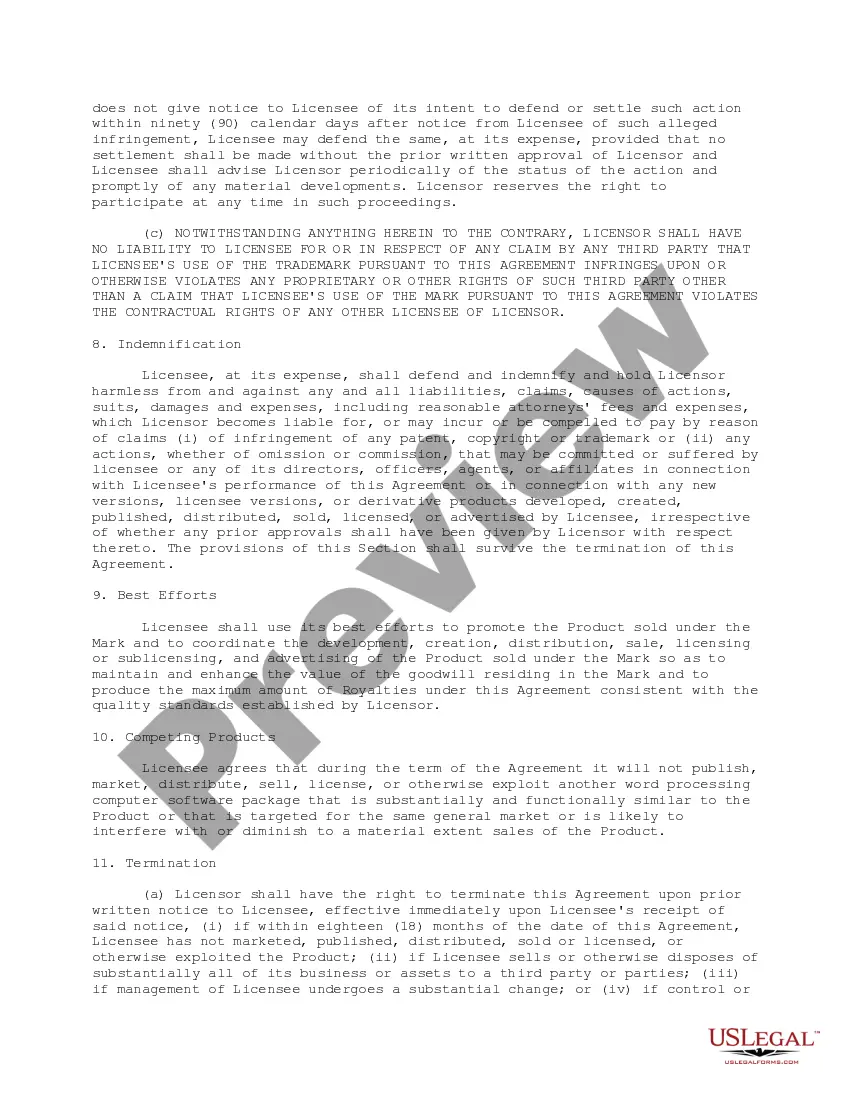
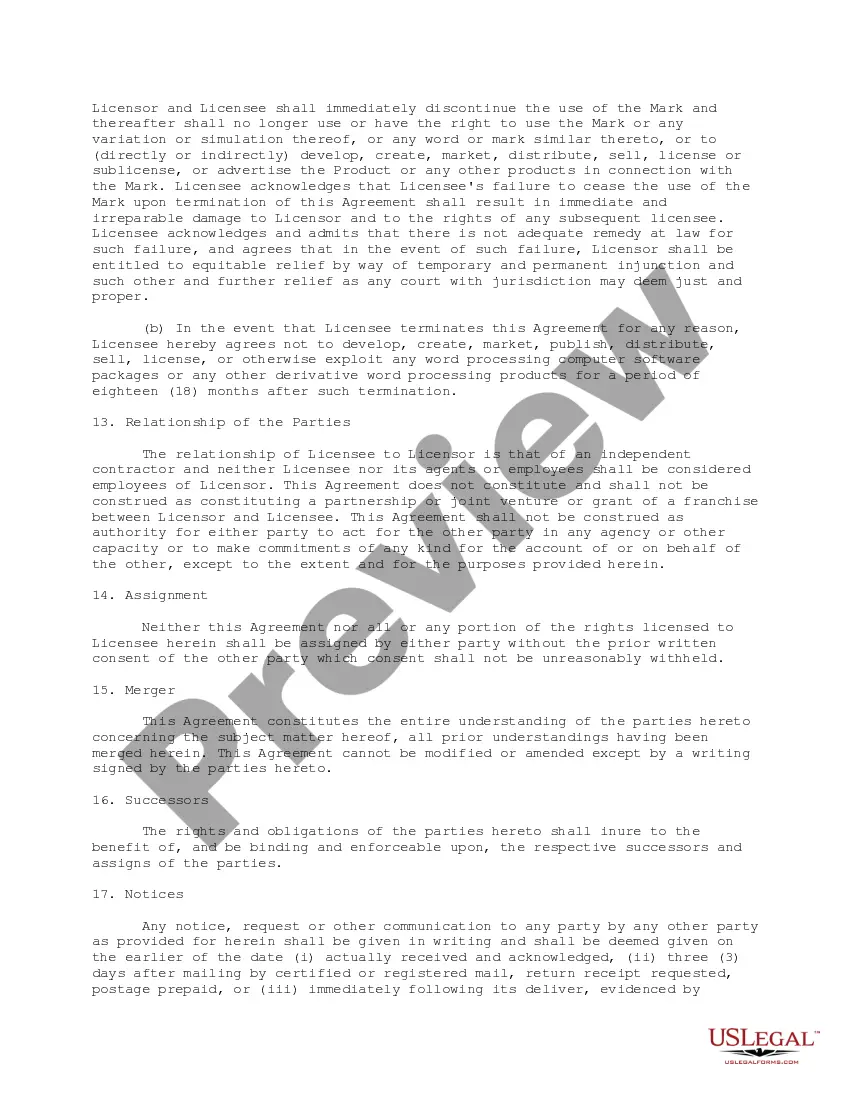
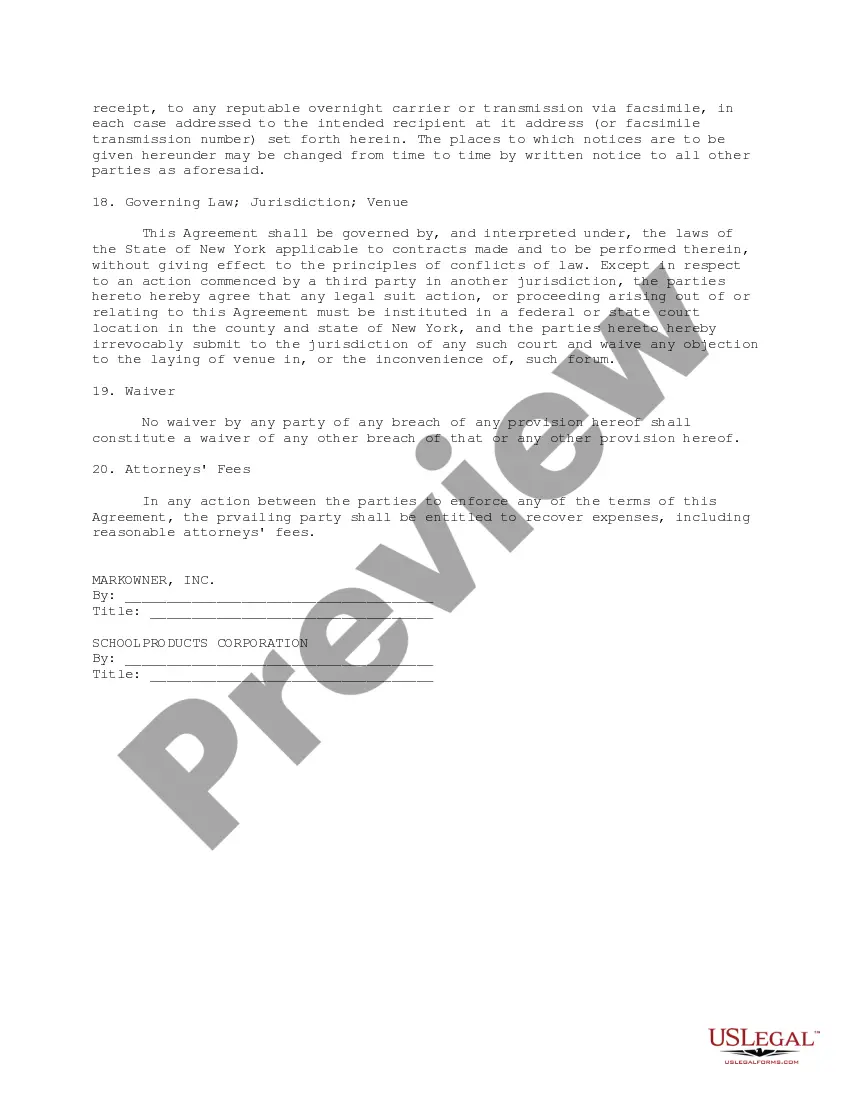
- License: Grants the Licensee the right to use the trademark in association with the designated product.
- Term: Specifies the length of the agreement and conditions for termination.
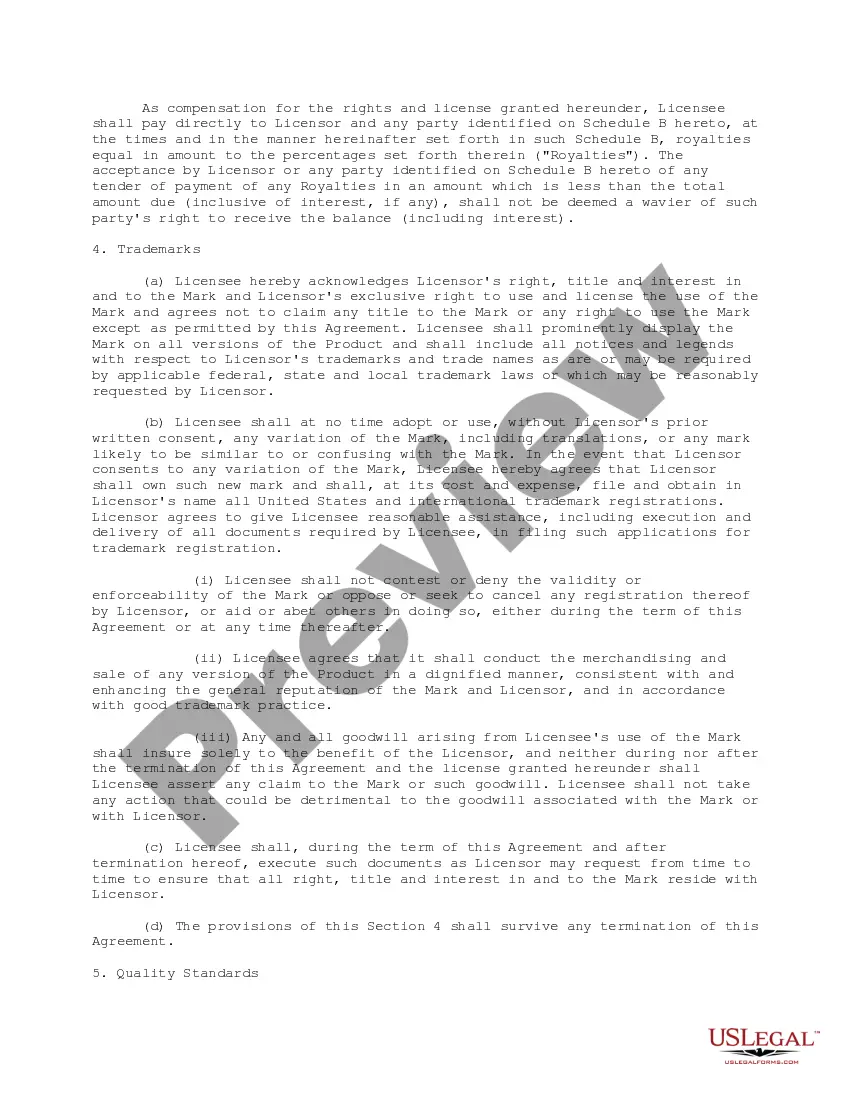
- Royalties: Outlines the payment structure for the rights granted under the agreement.
- Quality Standards: Ensures the Licensee adheres to the high-quality standards established by the Licensor.
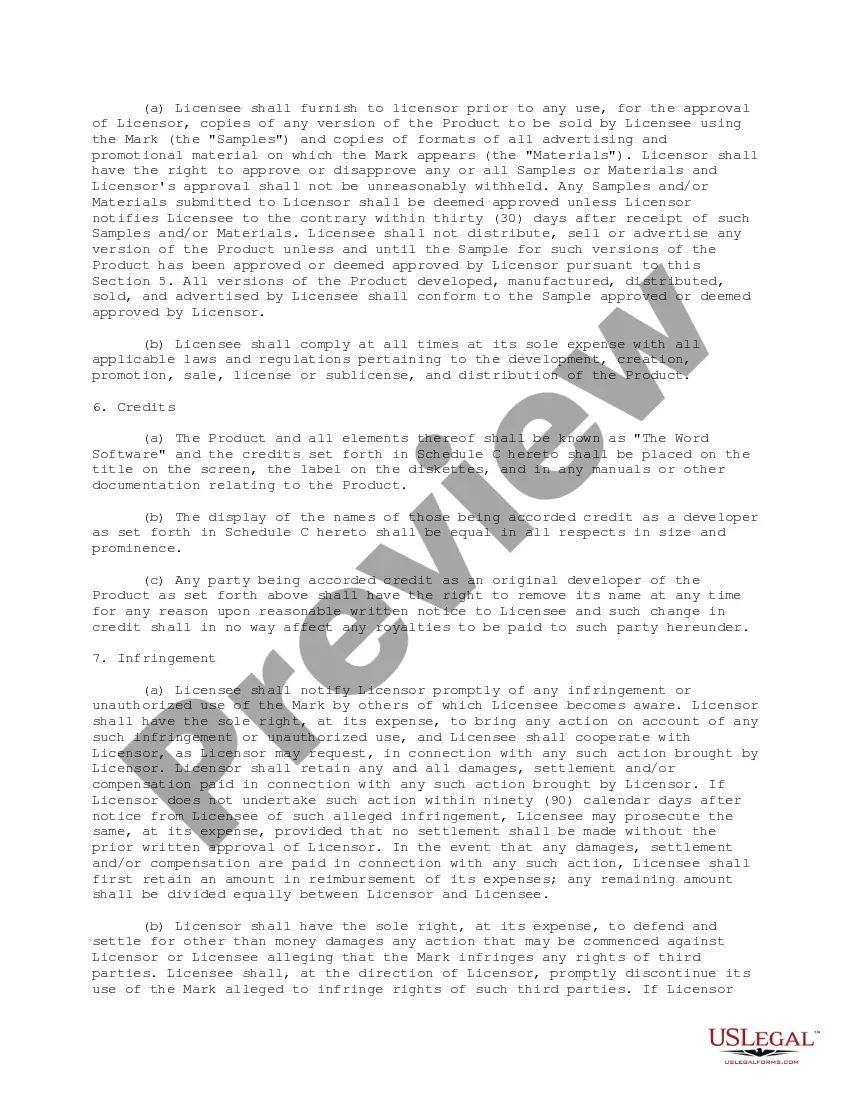
- Infringement: Details the process for handling unauthorized use of the trademark.
- Indemnification: Protects the Licensor from liabilities arising from the Licensee's actions.

When to use this document
This agreement should be used when a Licensor wants to authorize a Licensee to use their trademark for specific purposes, such as distributing software within a particular market. It is particularly important in cases where the trademarkâs reputation needs to be protected while allowing others to leverage its value for commercial success.
Who this form is for
- Businesses wishing to license their trademarks to other companies.
- Organizations wanting to ensure proper use of their brand in commercial activities.
- Entrepreneurs involved in software development and distribution.
- Parties entering into agreements in contexts where trademark protection is crucial to business strategy.
Steps to complete this form
- Identify the parties involved: Fill in the names and addresses of the Licensor and Licensee.
- Specify the trademarks: List the trademarks that the Licensee is allowed to use under this agreement.
- Define the license scope: Clearly state the specific markets and purposes for which the trademarks can be used.
- Determine payment terms: Include the royalty structure and payment schedule as per the agreement.
- Include quality control provisions: Outline any requirements for quality assurance in the use of the trademarks.
- Sign and date the agreement: Ensure both parties sign the document to make it legally binding.
Is notarization required?
This form does not typically require notarization unless specified by local law. However, having the agreement notarized can provide an additional layer of authenticity and protection for both parties.
Get your form ready online
Our built-in tools help you complete, sign, share, and store your documents in one place.
Make edits, fill in missing information, and update formatting in US Legal Forms—just like you would in MS Word.
Download a copy, print it, send it by email, or mail it via USPS—whatever works best for your next step.
Sign and collect signatures with our SignNow integration. Send to multiple recipients, set reminders, and more. Go Premium to unlock E-Sign.
If this form requires notarization, complete it online through a secure video call—no need to meet a notary in person or wait for an appointment.
We protect your documents and personal data by following strict security and privacy standards.

Make edits, fill in missing information, and update formatting in US Legal Forms—just like you would in MS Word.

Download a copy, print it, send it by email, or mail it via USPS—whatever works best for your next step.

Sign and collect signatures with our SignNow integration. Send to multiple recipients, set reminders, and more. Go Premium to unlock E-Sign.

If this form requires notarization, complete it online through a secure video call—no need to meet a notary in person or wait for an appointment.

We protect your documents and personal data by following strict security and privacy standards.
Common mistakes to avoid
- Failing to specify the scope of the trademark usage.
- Neglecting to outline quality control standards.
- Omitting the payment terms or royalty percentages.
- Not including clear termination clauses.
- Forgetting to have both parties sign the agreement.
Advantages of online completion
- Conveniece: Download and complete the form from anywhere at any time.
- Editability: Tailor the agreement to specific needs easily.
- Reliability: Access professionally drafted templates created by licensed attorneys.
- Efficiency: Save time with a structured format that allows for quick completion.
- This agreement provides a clear framework for trademark licensing, helping to avoid potential disputes.
- Compliance with state and federal trademark laws is necessary for the agreement to be legally enforceable.
- Failure to follow the terms outlined in the agreement can lead to termination or legal action.
Quick recap
- The Trademark License Agreement grants specific rights regarding the use of a trademark.
- It includes vital clauses on royalties, quality control, and termination rights.
- Careful completion and understanding of this agreement is crucial for ensuring legal protection.
Looking for another form?
Form popularity
FAQ
What is a Licensing Agreement? A licensing agreement is a contract between two parties (the licensor and licensee) in which the licensor grants the licensee the right to use the brand name, trademark, patented technology, or ability to produce and sell goods owned by the licensor.
Get it in writing. Develop a detailed licensing agreement that is signed by both licensor and licensee. Work with an experienced trademark attorney, who has knowledge in both drafting agreements and enforcing proper use. Establish brand guidelines that clearly dictate how and where the trademark can be used.
Although a trademark license agreement isn't generally required to be in writing to be legally enforceable, it's strongly recommended that all trademark licensing agreements be in writing and signed by both the licensor and licensee.
Cost: Government fees are Rs. 4,500/- in case of Individual/ Startup/ Small Enterprise (it would be 9,000/- in all other cases) and trademark attorney professional fees is Rs. 3500/- per application per class. The Trademarks Office will first check your application to see if it's already been taken.
A trademark license agreement allows the licensee to use (but not own) the licensor's trademark in connection with agreed-on products or services. Licensing can help a company expand into new markets effectively and easily while lending the licensee an established name and reputation.
What is the purpose of trademark law? The primary purpose of the trademark laws is to prevent unfair competition by applying a test of consumer confusion and providing rights and remedies to the owner of the trademark.
Trademark licensing is the process by which a registered trademark owner, called a licensor or proprietor, allows another party, called a licensee, to make and distribute specific products or services under the licensor's trademark agreement. Trademark licensing is a type of merchandise agreement.
An example of a licensing agreement is a contract between the copyright holders of software and another company, allowing the latter to use the computer software for their daily business operations.