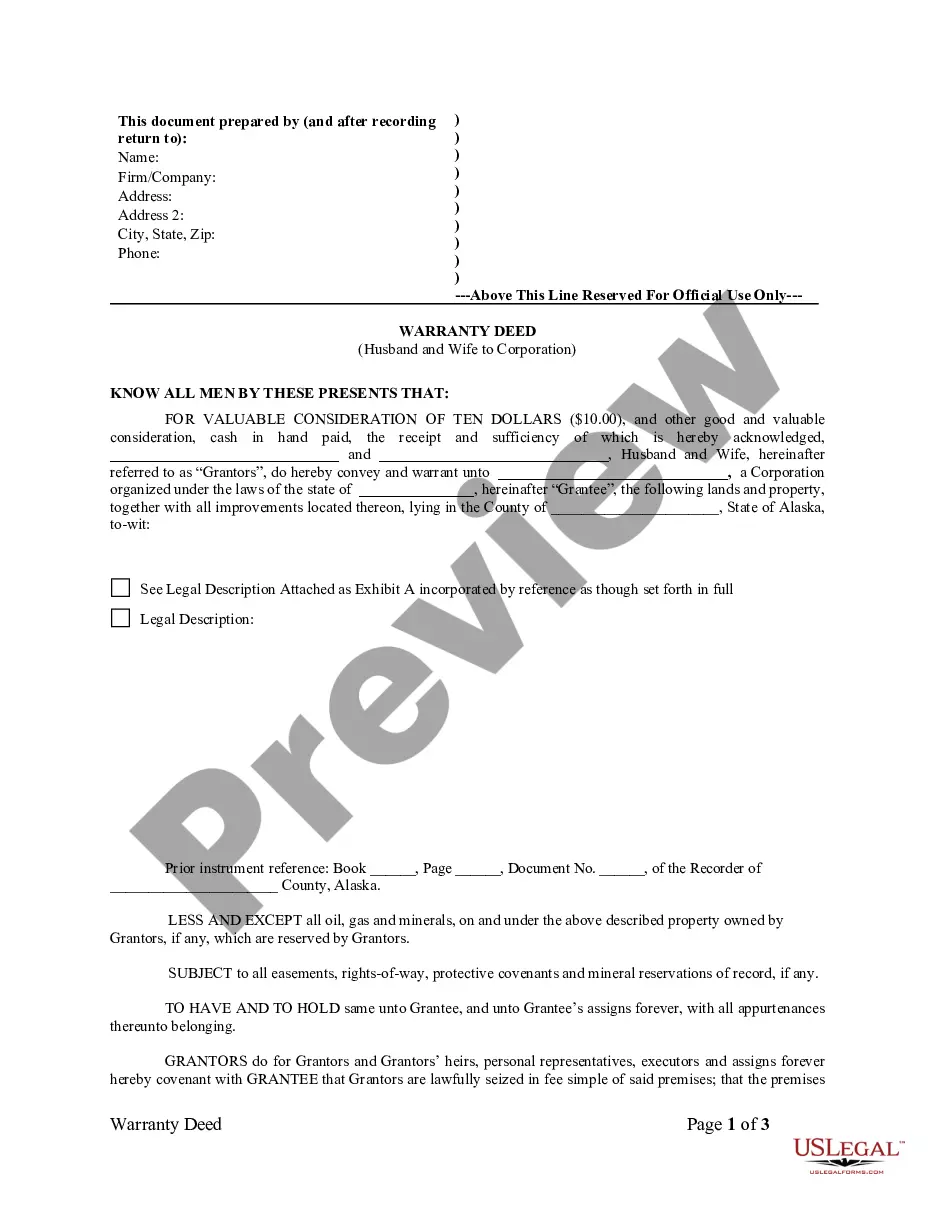
Funeral Agreement with Authorization to Prepare a Decedent for Burial and a Guaranty of Payment
What is this form?
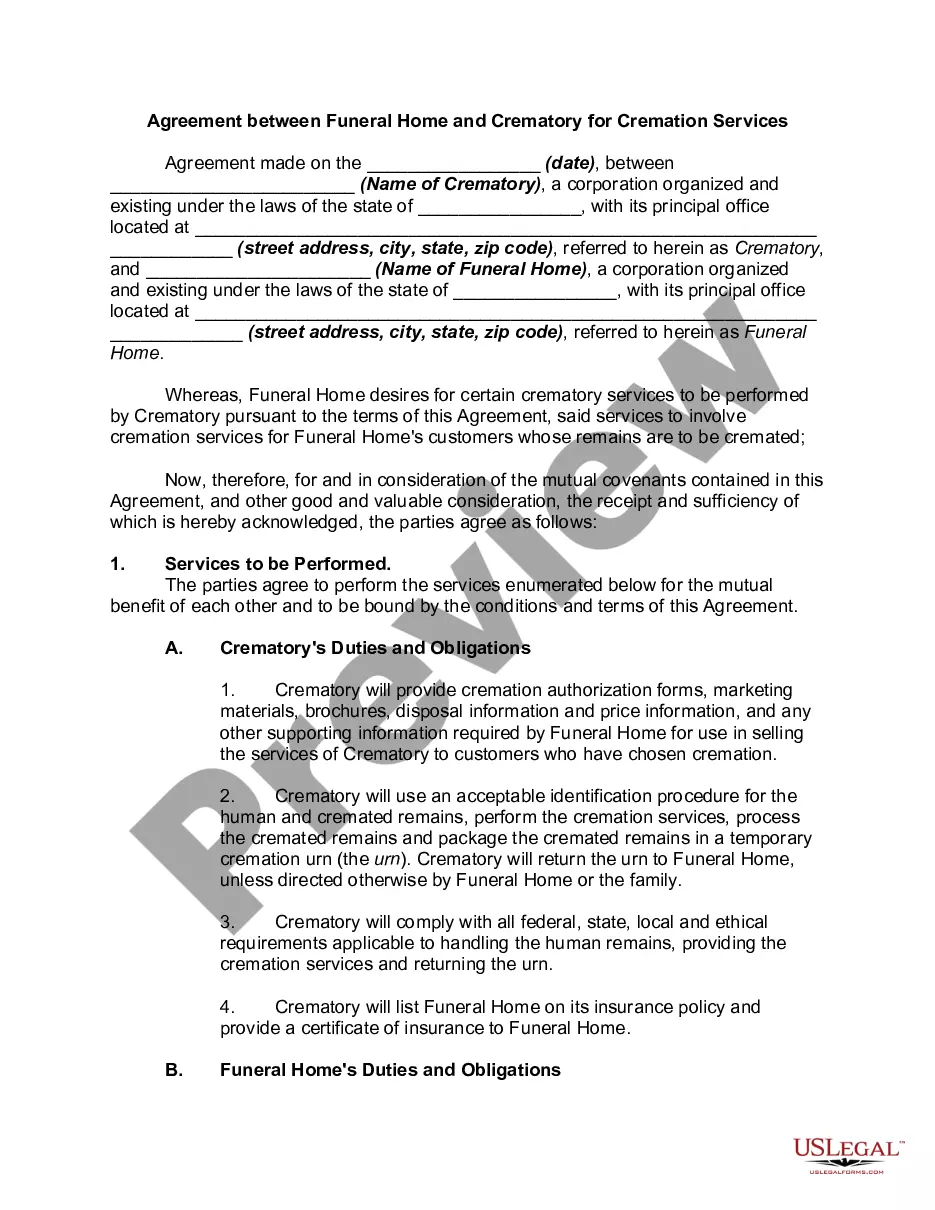
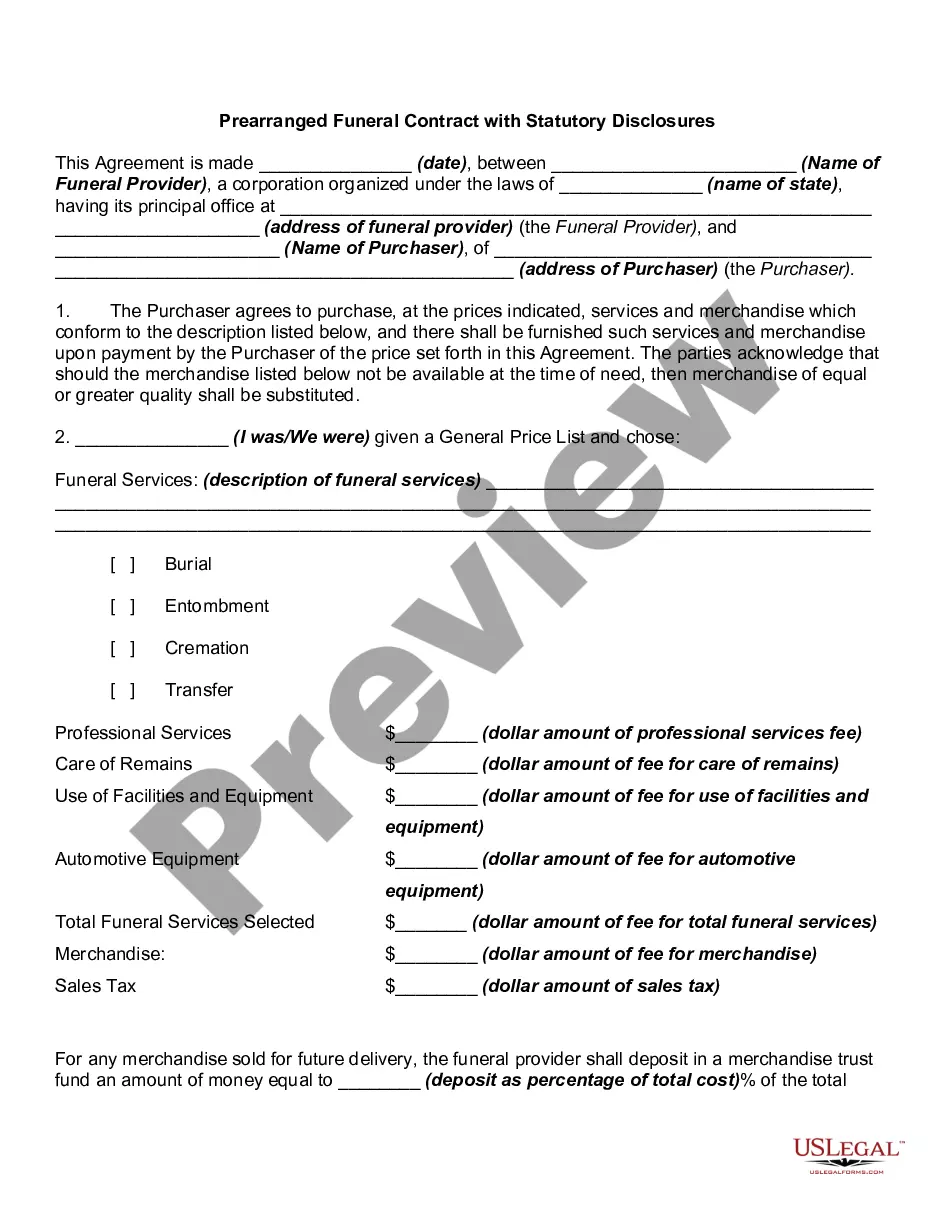
The Funeral Agreement with Authorization to Prepare a Decedent for Burial and a Guaranty of Payment is a legal document used to outline the arrangements and responsibilities for the burial of a deceased person. It establishes a guarantor who agrees to pay the funeral home for services rendered when the deceased's estate may not cover the costs. This distinct agreement ensures that funeral arrangements can proceed without delay while clarifying payment expectations and responsibilities for all parties involved.
Key components of this form
- Date of the agreement and names of the guarantor and funeral home.
- Authorization for the funeral home to prepare the body of the deceased.
- Agreement on the total payment for funeral expenses and payment due date.
- Clauses addressing severability, waiver, governing law, and notices.
- Provisions for attorney fees and mandatory arbitration in disputes.
- Entire agreement clause and terms for modification and assignment of rights.
When this form is needed
This form is necessary when family members or another authorized person need to arrange for the burial of a deceased individual but may require a formal agreement to handle the payment of funeral expenses. It is particularly useful when immediate family members are not financially able to cover the costs upfront, or when the estate of the deceased may take time to settle.
Intended users of this form
This form is intended for:
- Individuals who have been designated as guarantors for a deceased's funeral expenses.
- Funeral homes providing services to families needing to formalize payment arrangements.
- Families or representatives of the deceased who wish to clarify their responsibilities and financial obligations regarding funeral services.
How to complete this form
- Identify and enter the date of the agreement.
- Fill in the name and address of the guarantor and funeral home.
- Provide the name and address of the deceased.
- Specify the total amount to be paid for the funeral services and the payment due date.
- Have both parties sign and date the form for legal validation.
Notarization guidance
This form does not typically require notarization unless specified by local law. Always confirm any notarization requirements specific to your jurisdiction before finalizing the agreement.
Get your form ready online
Our built-in tools help you complete, sign, share, and store your documents in one place.
Make edits, fill in missing information, and update formatting in US Legal Forms—just like you would in MS Word.
Download a copy, print it, send it by email, or mail it via USPS—whatever works best for your next step.
Sign and collect signatures with our SignNow integration. Send to multiple recipients, set reminders, and more. Go Premium to unlock E-Sign.
If this form requires notarization, complete it online through a secure video call—no need to meet a notary in person or wait for an appointment.
We protect your documents and personal data by following strict security and privacy standards.

Make edits, fill in missing information, and update formatting in US Legal Forms—just like you would in MS Word.

Download a copy, print it, send it by email, or mail it via USPS—whatever works best for your next step.

Sign and collect signatures with our SignNow integration. Send to multiple recipients, set reminders, and more. Go Premium to unlock E-Sign.

If this form requires notarization, complete it online through a secure video call—no need to meet a notary in person or wait for an appointment.

We protect your documents and personal data by following strict security and privacy standards.
Avoid these common issues
- Failing to completely fill in the names and addresses of all parties involved.
- Not specifying a clear payment amount or due date.
- Forget to sign or date the agreement, rendering it invalid.
- Overlooking local jurisdiction-specific requirements that may affect the agreement.
Why complete this form online
- Convenience of completing the form from home at any time.
- Immediate access to the document for editing and customization to suit personal needs.
- Reliability, knowing that the forms are drafted with legal expertise.
Legal use & context
- The agreement serves as a formal contract binding the guarantor to cover funeral expenses.
- It protects the interests of the funeral home by ensuring payment is secured.
- Must be executed according to local laws for enforceability.
Main things to remember
- The form provides a clear agreement on funeral expenses and responsibilities.
- It helps prevent disputes over payments between family members and the funeral home.
- Consult local laws for any specific requirements regarding funeral agreements.
Looking for another form?

Form popularity
FAQ
Your spouse or registered domestic partner. your adult child, or a majority of your children if you have more than one. your parents. your siblings.
Funeral expenses can usually be paid for from the deceased person's Estate, but you may have to wait until the Probate process has been completed for funds to become available.This means you may need to cover the funeral costs yourself in the short term while Probate is ongoing.
In short, no. Under current law, funeral wishes in a will are not legally binding. The executors appointed in a will have ownership of the body and are technically considered the decision-makers with regards to funeral arrangements.
In addition to preservation, embalming helps guard against health hazards.To embalm the body, they inject preservative chemicals into the circulatory system. Using a special machine, the blood is removed and replaced with the embalming fluid. Refrigeration can also preserve the body, but it's not always available.
It is the executors appointed in the Will who have authority to arrange payment of the funeral account. Where there is sufficient money, the deceased's bank will usually release funds to cover the funeral even before a grant of probate is issued.
Most families will use cash, check or credit card to pay for all or part of the funeral expenses. Most funeral homes today expect payment in full up-front. Sometimes you can pay a portion using an installment plan negotiated with the funeral home.
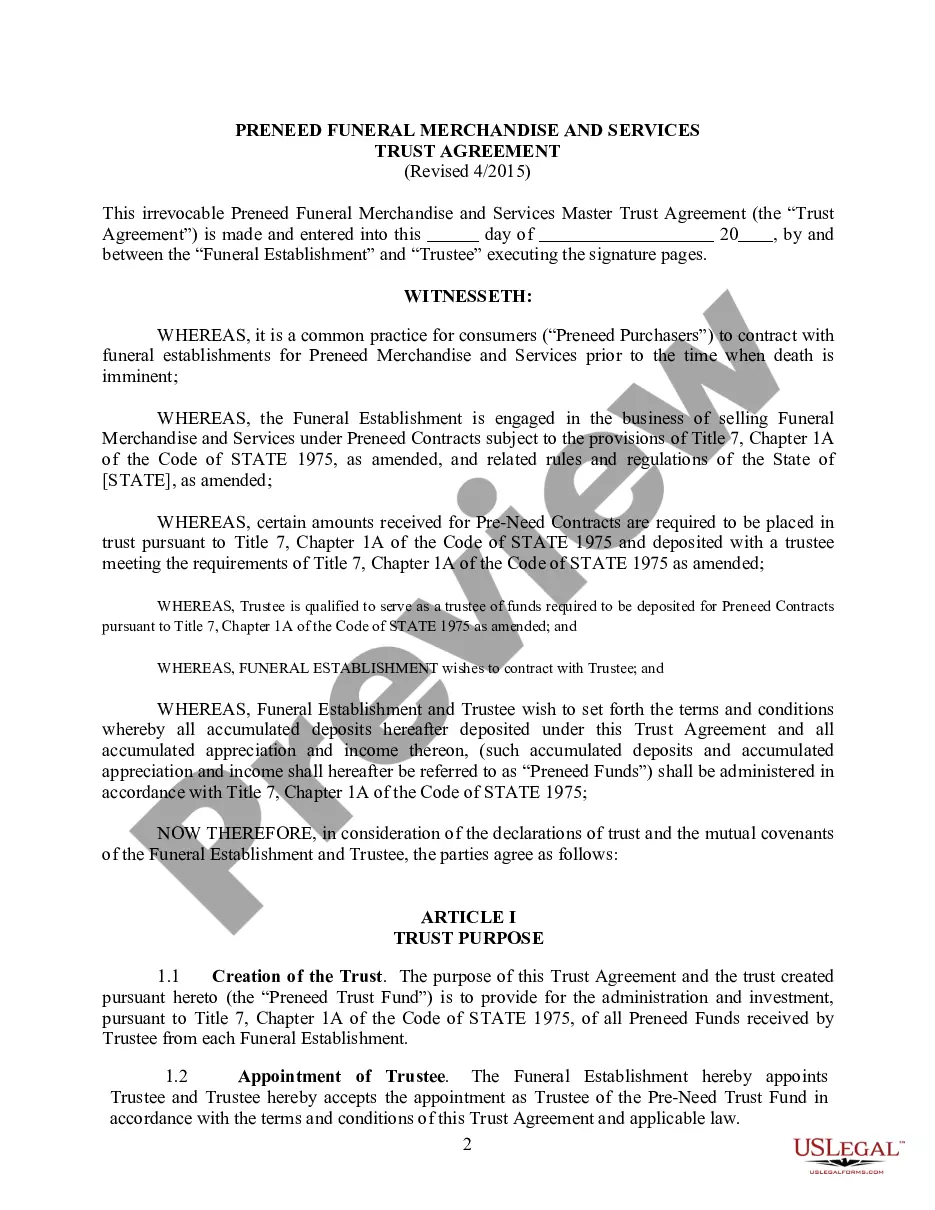
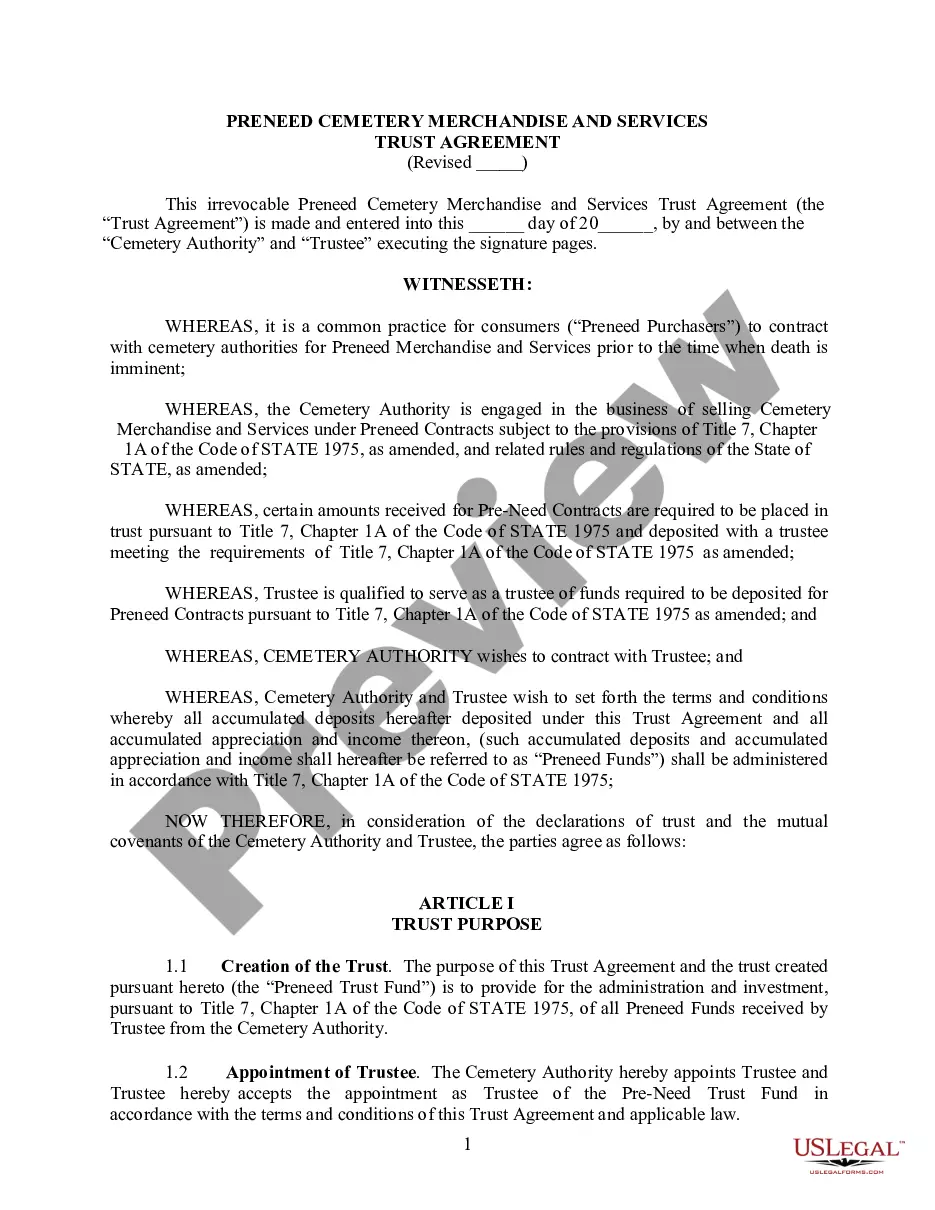
Individuals prepay for funerals and burials by entering into a preneed agreement, or contract, to pay in advance for goods or services they will receive upon death.Upon the individual's death, the funds are used by the representative of the funeral home or cemetery to provide the designated goods and services.