Publisher Oriented Software Royalty and License Agreement
About this form
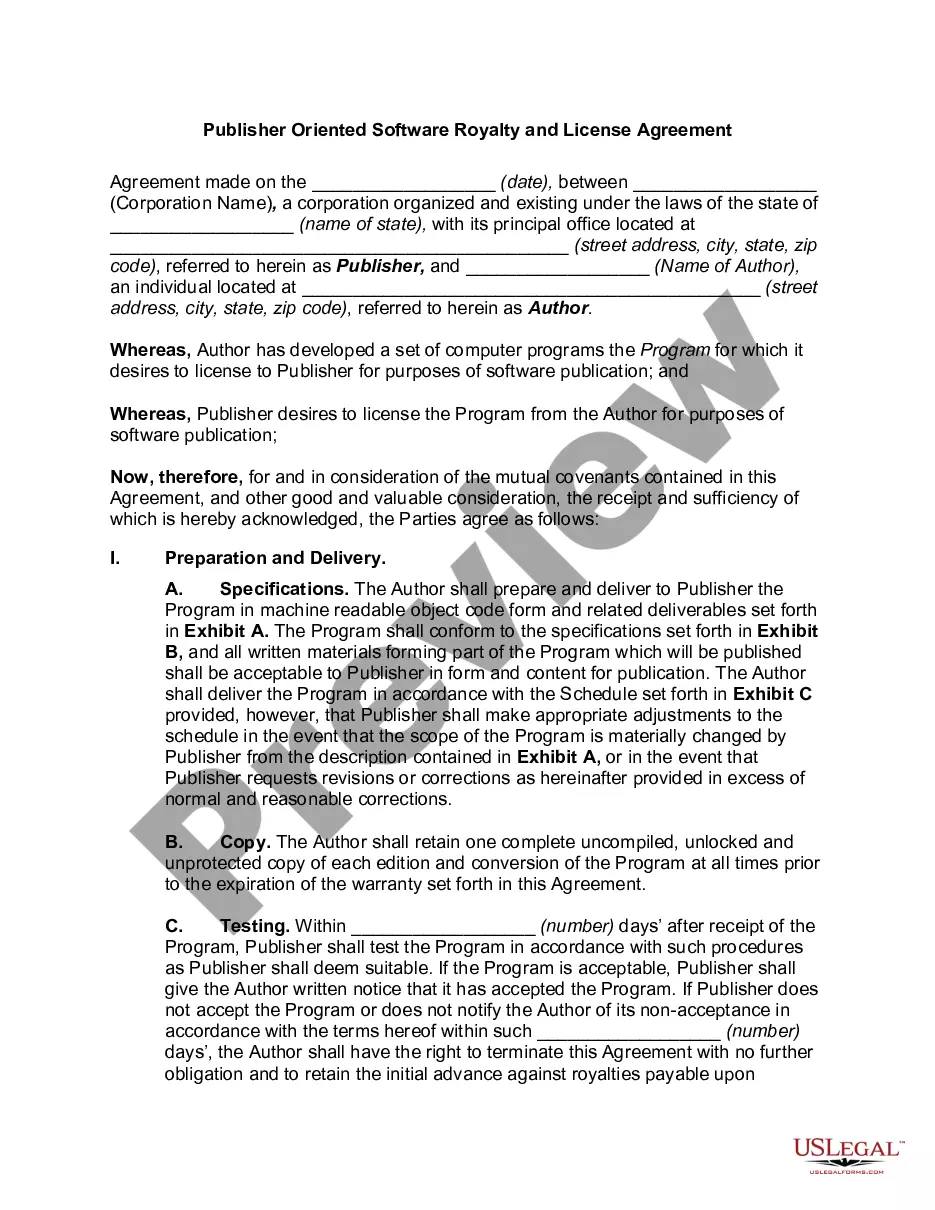
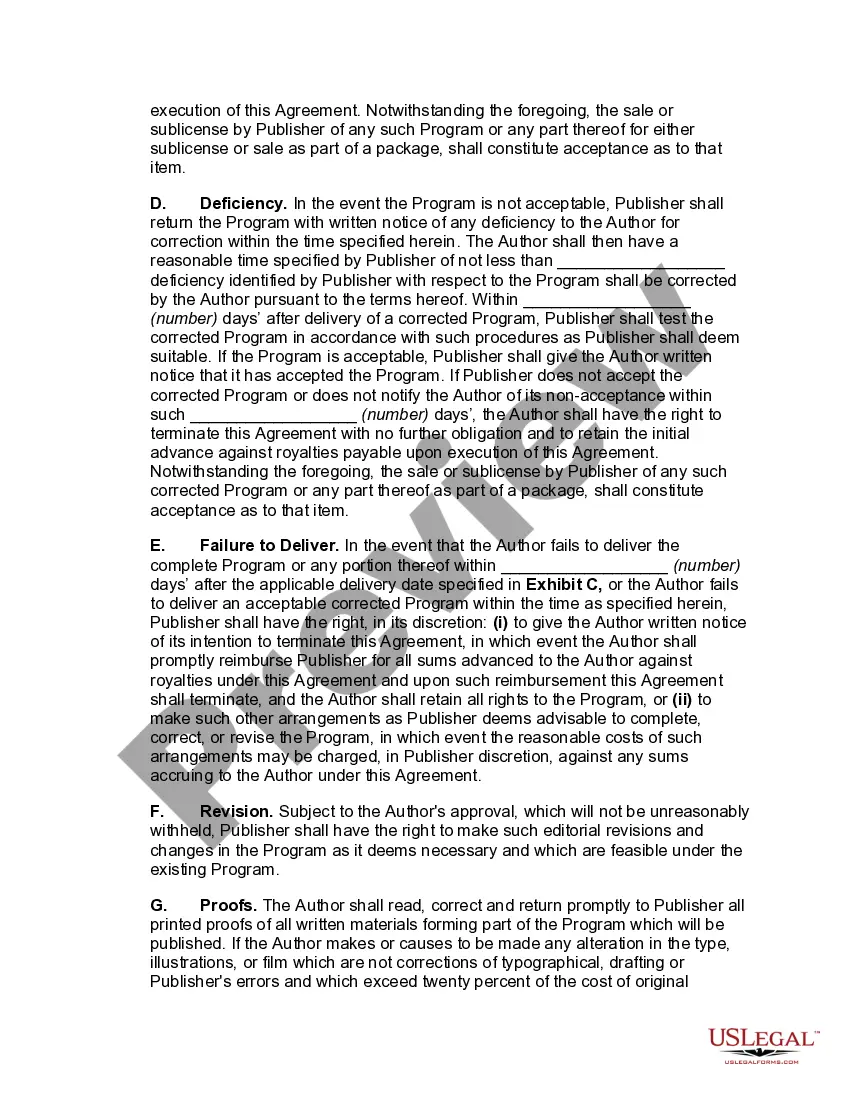
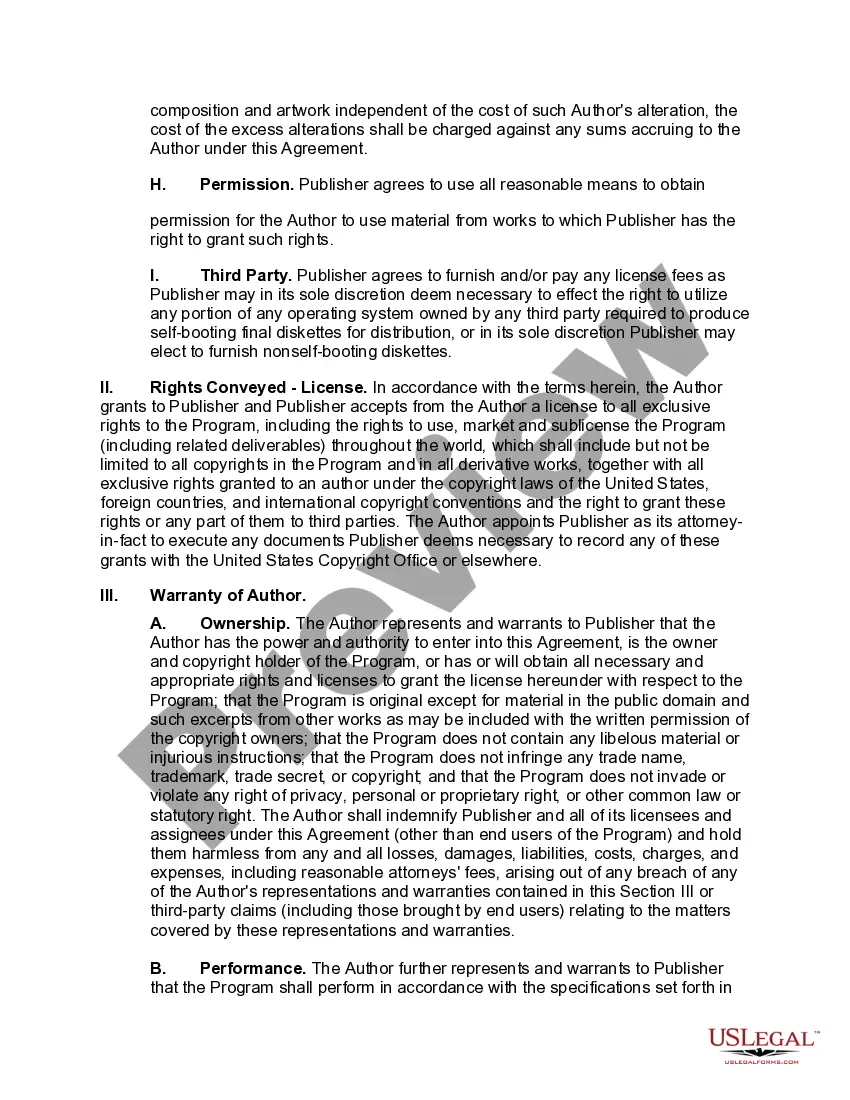
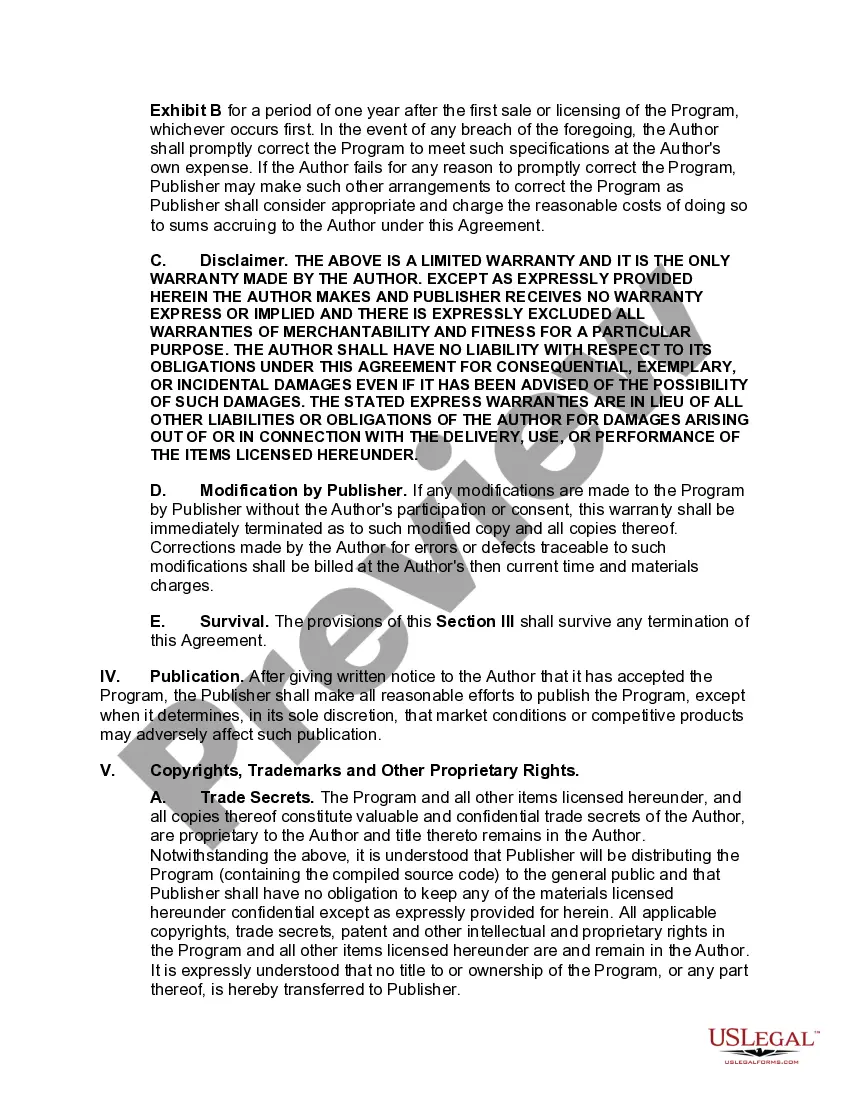
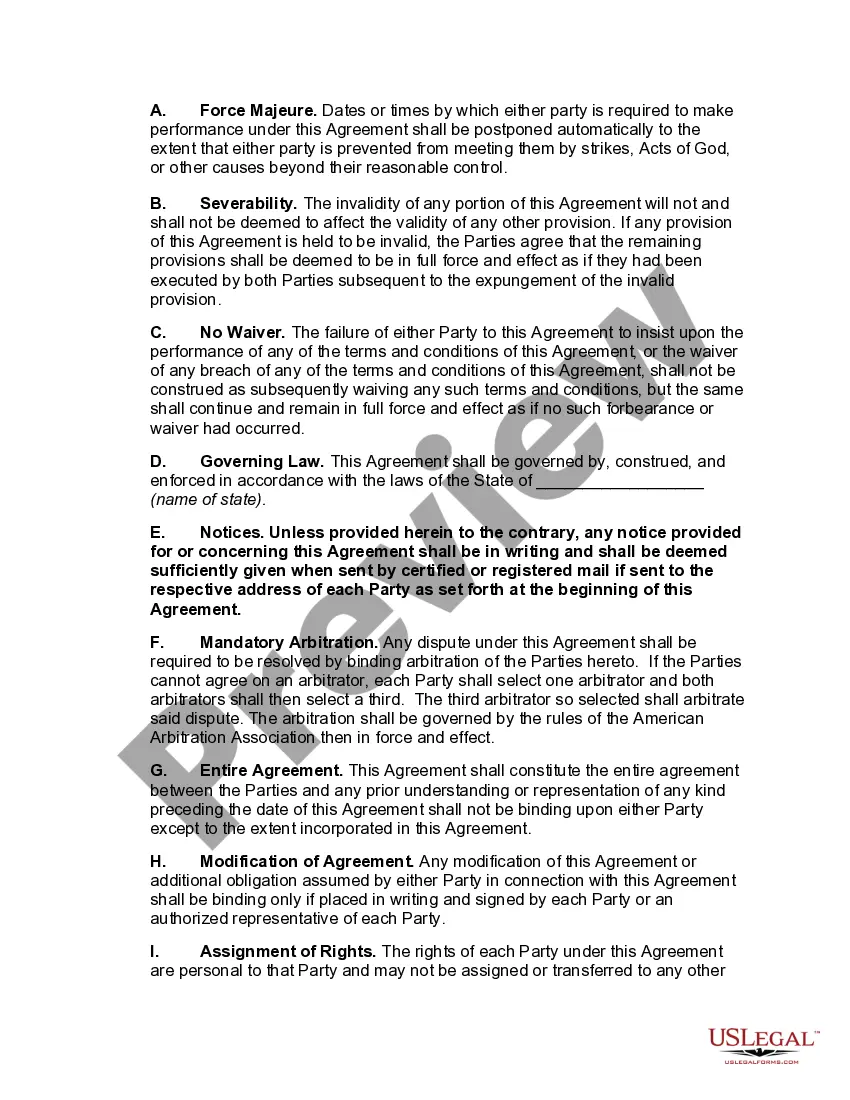
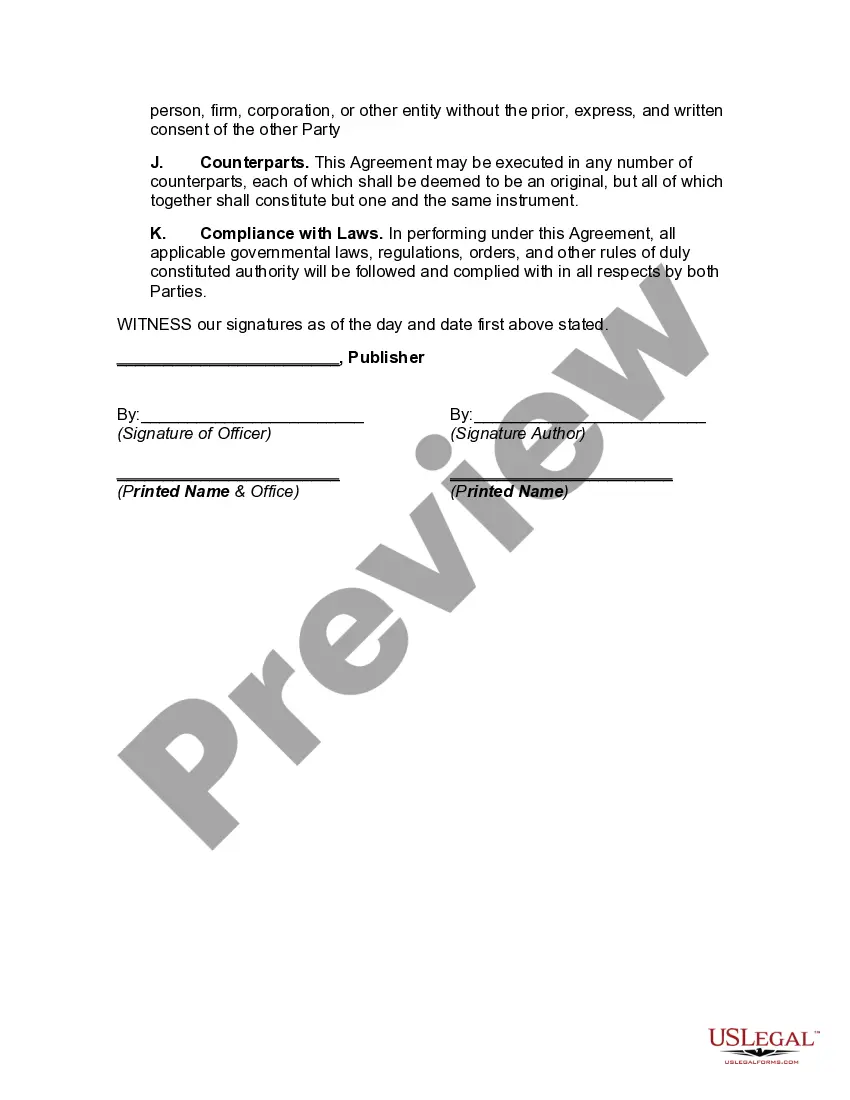
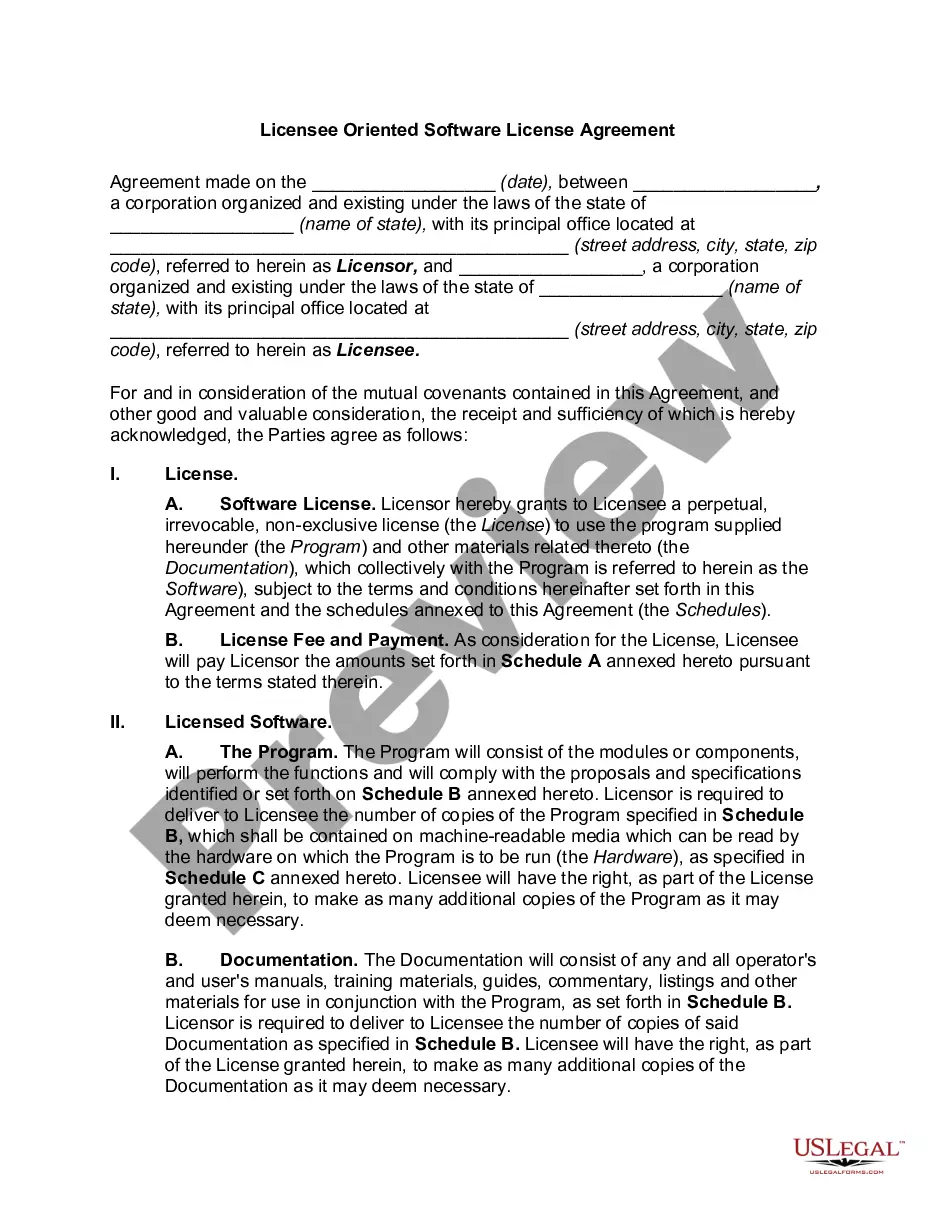
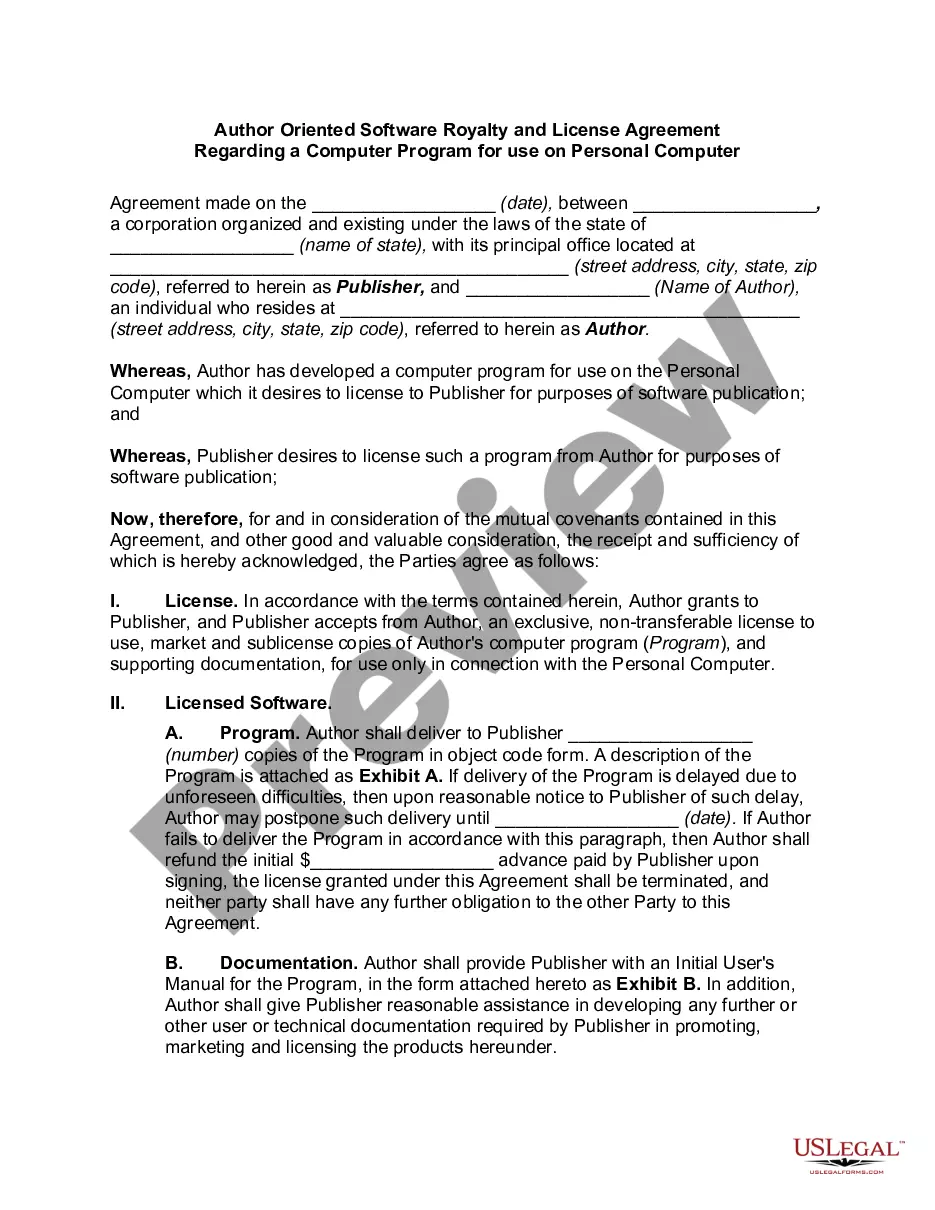
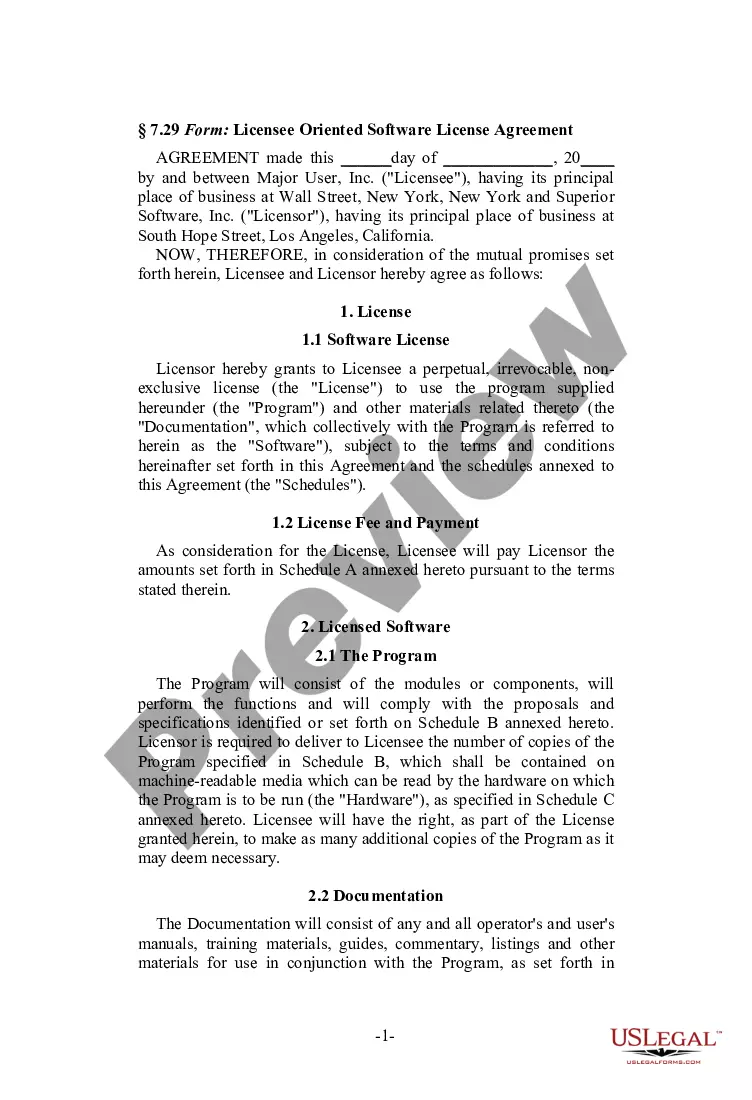
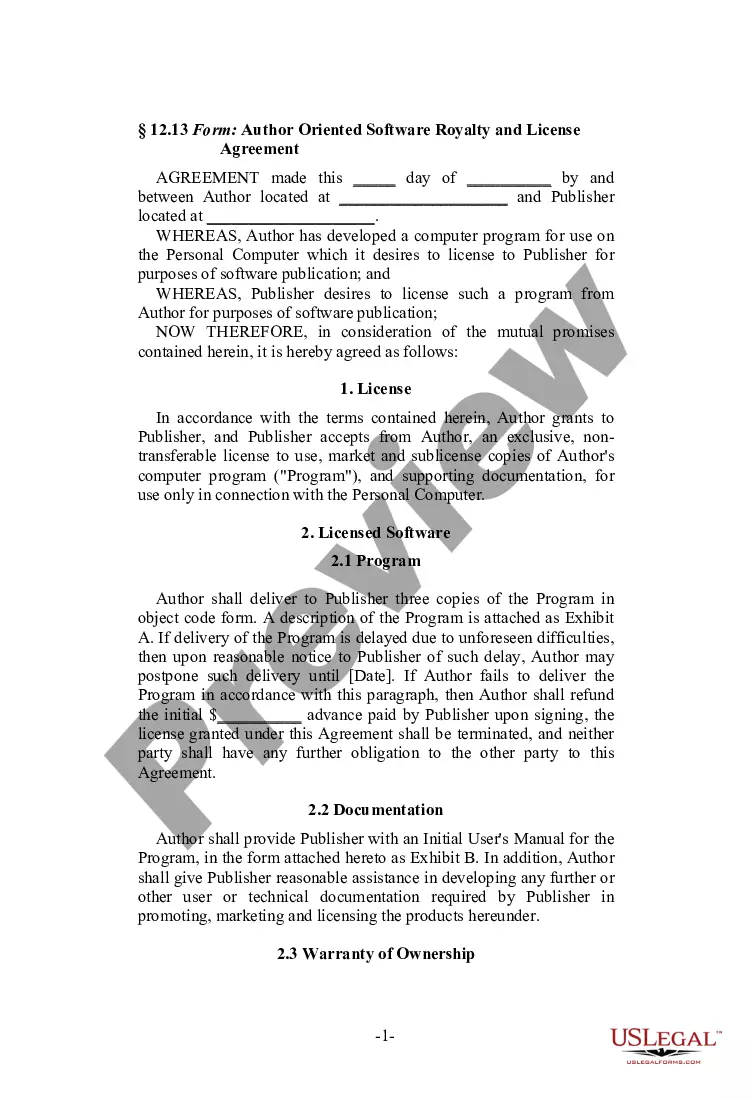
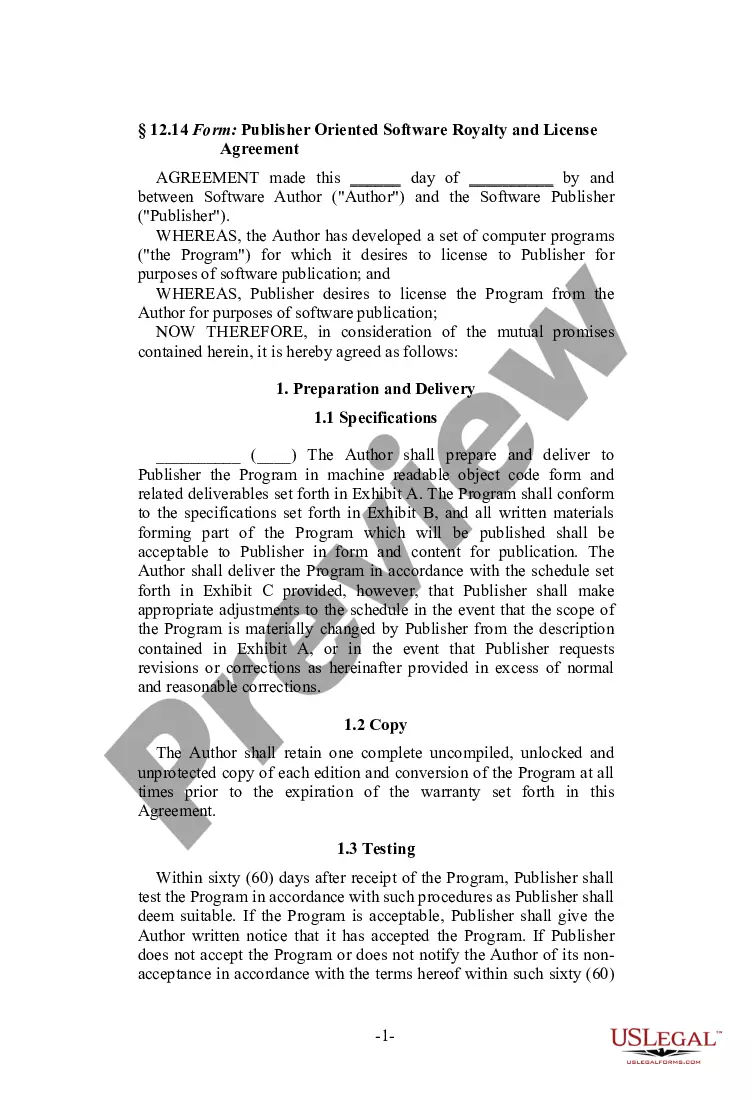
The Publisher Oriented Software Royalty and License Agreement is a legal document designed for use in the computer, internet, and software industries. This agreement establishes the terms under which an author licenses their software programs to a publisher, outlining rights, responsibilities, and financial arrangements. It ensures that both parties understand their obligations, thereby facilitating a smooth collaboration in software publication.
Main sections of this form
- Details of the parties involved: publisher and author information.
- Specifications for preparation and delivery of the software program.
- Licensing terms and rights conveyed to the publisher.
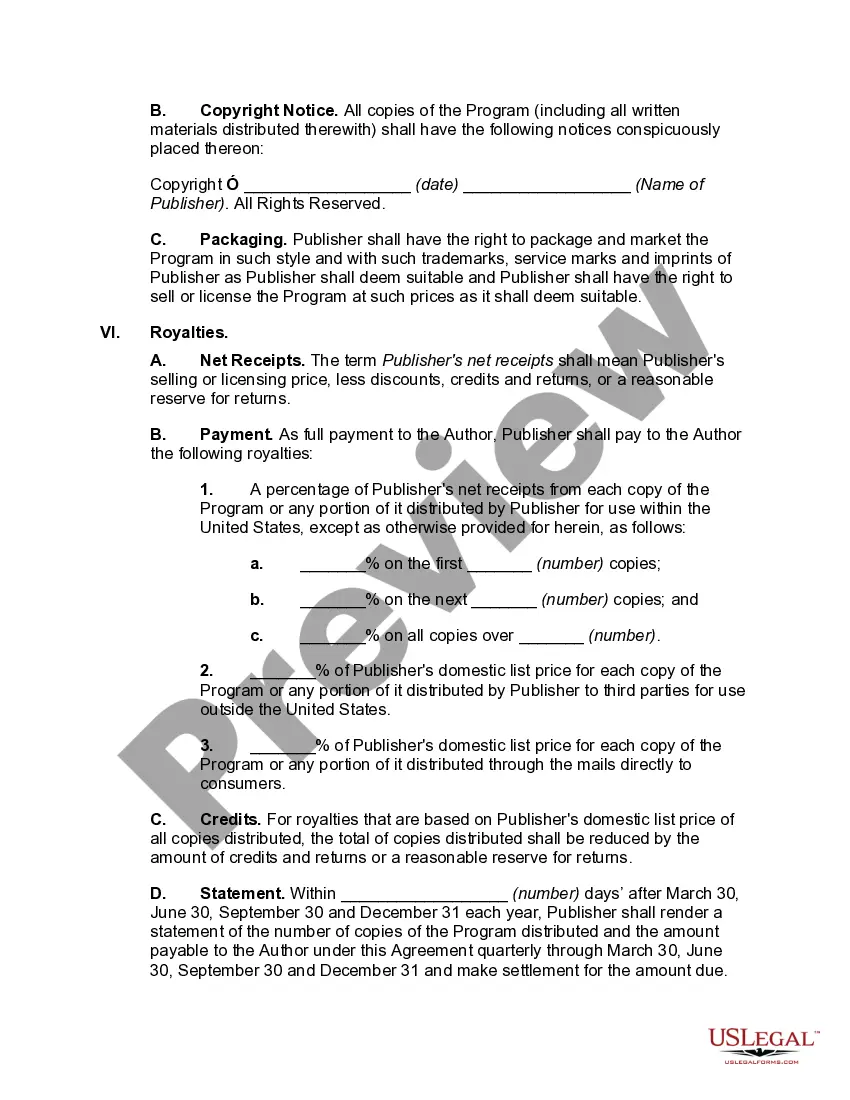
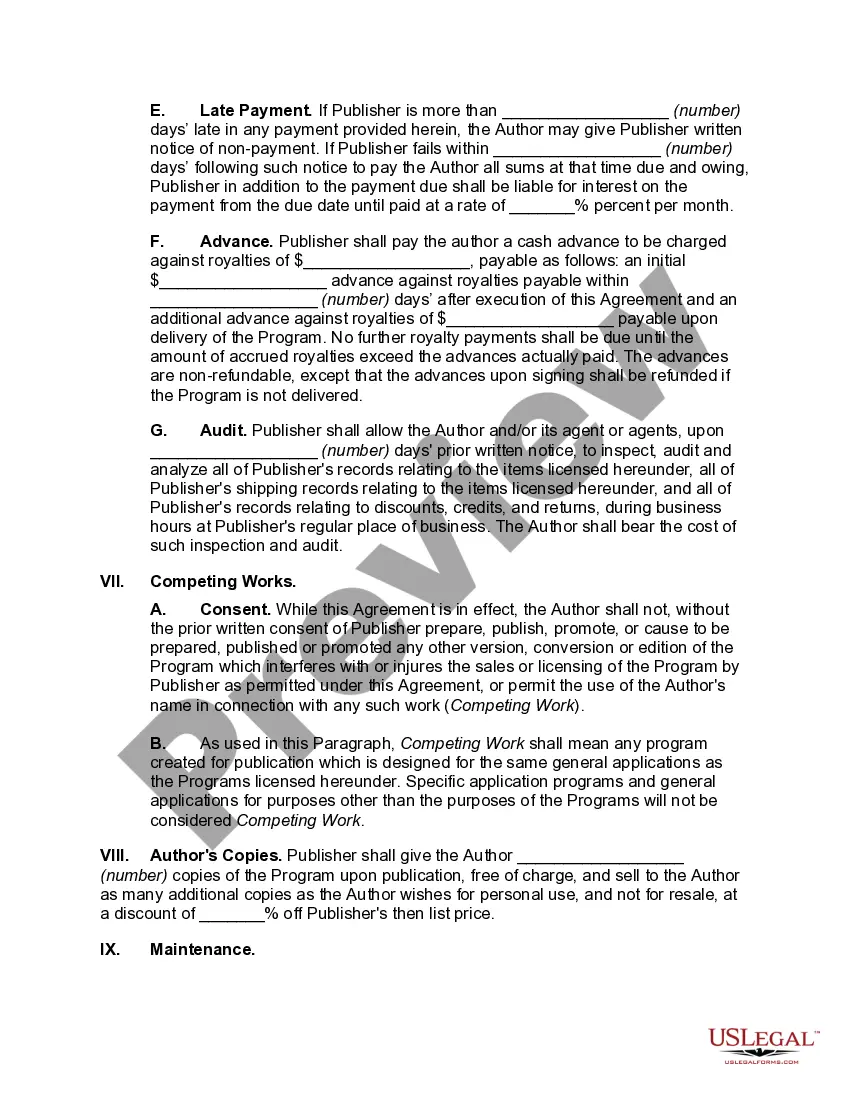
- Royalties structure, including payment terms and percentages.
- Warranties from the author regarding the originality and functionality of the software.
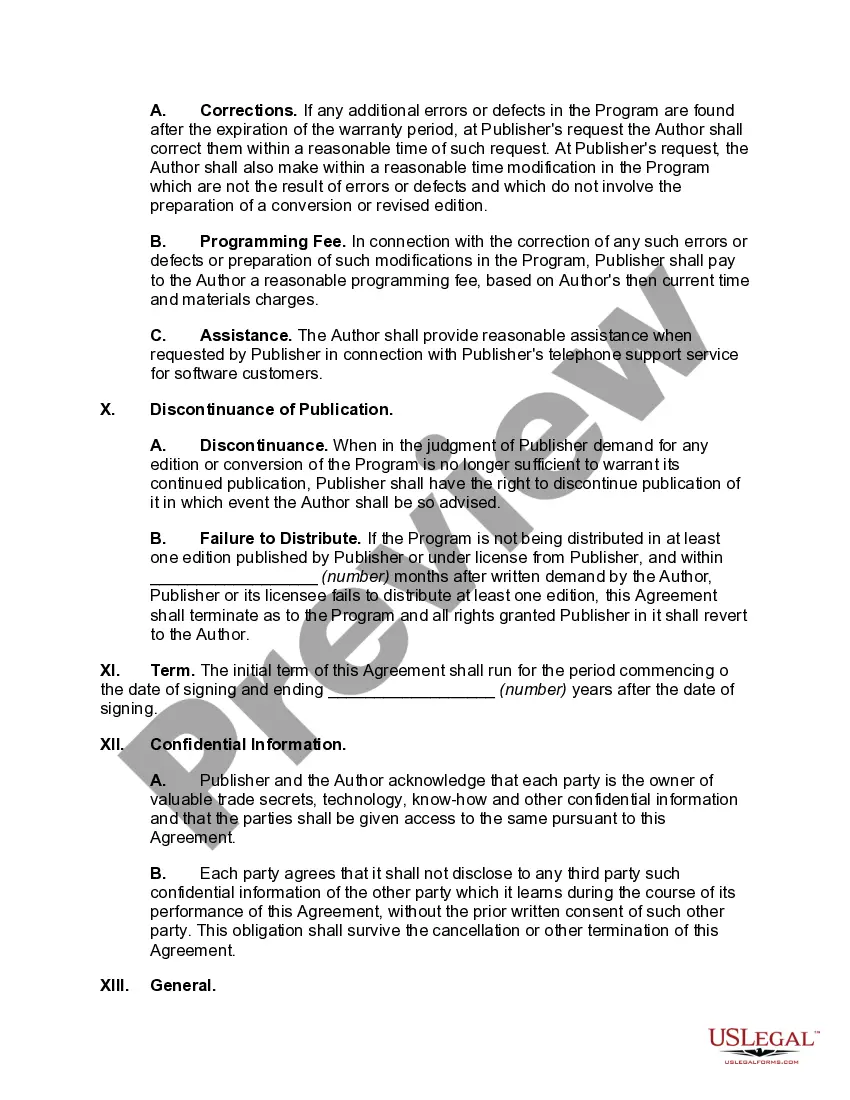
- Provisions for maintenance, corrections, and discontinuation of publication.
When to use this document
This form is needed when an author wants to license their software programs to a publisher. It is particularly useful in situations where the author requires clarity on royalties, usage rights, and the responsibilities of both parties involved. Whether you are a software developer looking to publish your software or a publisher aiming to secure rights to distribute software, this agreement ensures all bases are covered.
Who can use this document
- Authors or developers of software looking to license their work.
- Publishers in the computer or software industry seeking to acquire rights to software programs.
- Legal professionals advising clients in software publishing agreements.
How to prepare this document
- Identify the parties: Fill in the names and addresses of the publisher and the author.
- Specify the software program: Describe the software and include relevant specifications.
- Outline the delivery schedule: Indicate deadlines for delivering the software.
- Detail the royalties: Enter the percentage of net receipts the author will receive.
- Review and sign the agreement: Ensure both parties understand and agree to the terms before signing.
Does this form need to be notarized?
This form does not typically require notarization unless specified by local law. It is advisable to check jurisdiction-specific requirements to confirm.
Get your form ready online
Our built-in tools help you complete, sign, share, and store your documents in one place.
Make edits, fill in missing information, and update formatting in US Legal Forms—just like you would in MS Word.
Download a copy, print it, send it by email, or mail it via USPS—whatever works best for your next step.
Sign and collect signatures with our SignNow integration. Send to multiple recipients, set reminders, and more. Go Premium to unlock E-Sign.
If this form requires notarization, complete it online through a secure video call—no need to meet a notary in person or wait for an appointment.
We protect your documents and personal data by following strict security and privacy standards.

Make edits, fill in missing information, and update formatting in US Legal Forms—just like you would in MS Word.

Download a copy, print it, send it by email, or mail it via USPS—whatever works best for your next step.

Sign and collect signatures with our SignNow integration. Send to multiple recipients, set reminders, and more. Go Premium to unlock E-Sign.

If this form requires notarization, complete it online through a secure video call—no need to meet a notary in person or wait for an appointment.

We protect your documents and personal data by following strict security and privacy standards.
Common mistakes to avoid
- Failing to specify the delivery schedule for the software.
- Not clearly outlining royalty percentages and payment terms.
- Overlooking the need for a mutual agreement on corrections and maintenance.
- Neglecting to define the scope of the rights being granted.
Benefits of using this form online
- Convenient access to legal templates drafted by licensed attorneys.
- Editability allows for customization to fit your specific needs.
- Reliable and up-to-date legal language tailored for modern software agreements.
What to keep in mind
- The agreement lays out the framework for licensing software from an author to a publisher.
- It clarifies the financial obligations, including royalties, for both parties.
- Both parties are responsible for upholding their commitments as stated in the contract.
Looking for another form?

Form popularity
FAQ
A royalty agreement of a company is a legal contract between a licensor and a licensee. It grants the licensee the rights to use the licensor's intellectual property, under specific terms, in exchange for royalty payments.
What is a Licensing Agreement? A licensing agreement is a contract between two parties (the licensor and licensee) in which the licensor grants the licensee the right to use the brand name, trademark, patented technology, or ability to produce and sell goods owned by the licensor.
An example of a licensing agreement is a contract between the copyright holders of software and another company, allowing the latter to use the computer software for their daily business operations.
Download a template for a licensing agreement. Choose your role as the licensor or licensee. Define the license(s) in the agreement. Decide whether the license is exclusive or not. Settle the matter of fees and payment schedule. Add a renewal date and rules.
An example of a licensing agreement is a contract between the copyright holders of software and another company, allowing the latter to use the computer software for their daily business operations.
Royalties are usage-based payments for using an asset or property. It's generally a percentage of gross revenue or net profit. Meanwhile, a licensing fee is money paid by someone using someone's property, but this fee is generally a fixed amount.
The general rule based on several IRS Revenue Rulings is that royalty income from the license of a software copyright should be sourced to the place where the licensee sells the product or provides the service which utilizes the licensed software.
A license agreement is a business contract between two parties. The licensor (the seller of the license) owns the asset being licensed and the licensee (the buyer) pays for the right to use the license. The licensee pays royalties to the owner in exchange for the right to sell the product or use the technology.
A licensing agreement is a legal contract between two parties, known as the licensor and the licensee. In a typical licensing agreement, the licensor grants the licensee the right to produce and sell goods, apply a brand name or trademark, or use patented technology owned by the licensor.
Exclusive or non-exclusive. In an exclusive license, the intellectual property holder is licensing the work only to one person, for that particular use/territory. Territory. Use. Attribution. Derivative works. Confidentiality. Time frame. Termination.