STATEMENT BY DEFENDANT
What is this form?
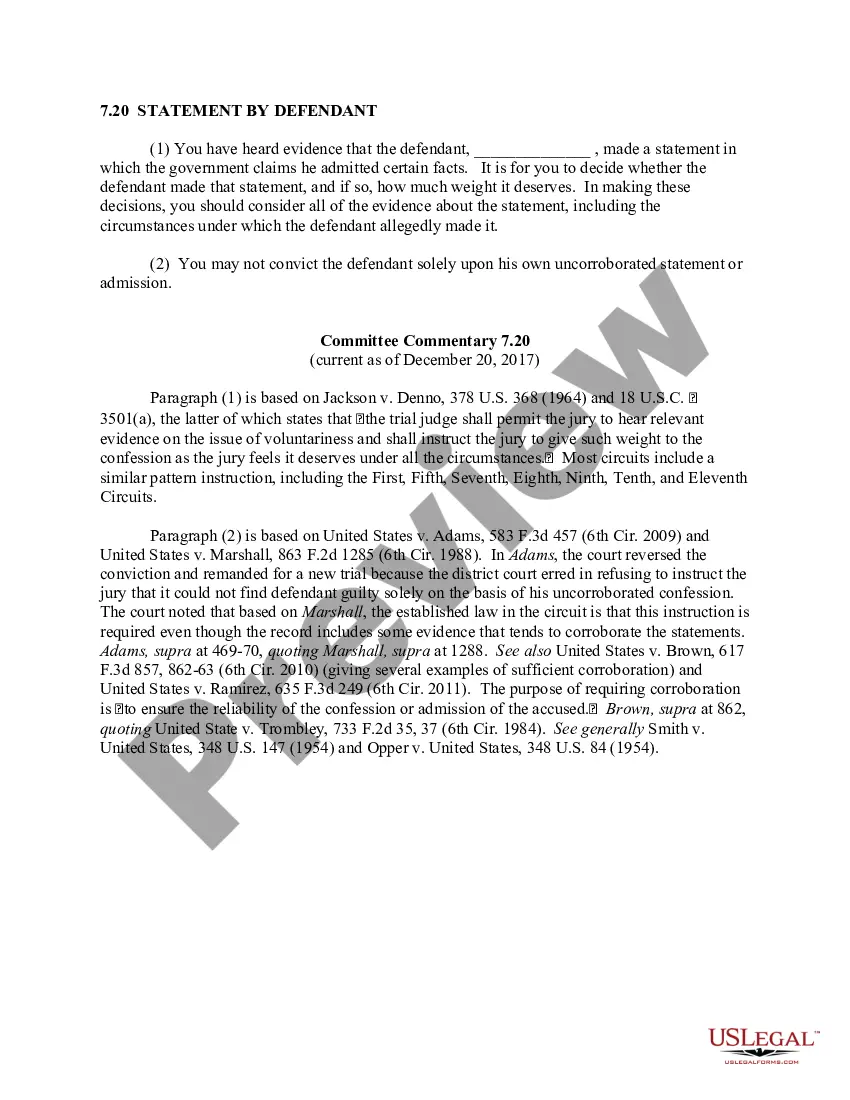
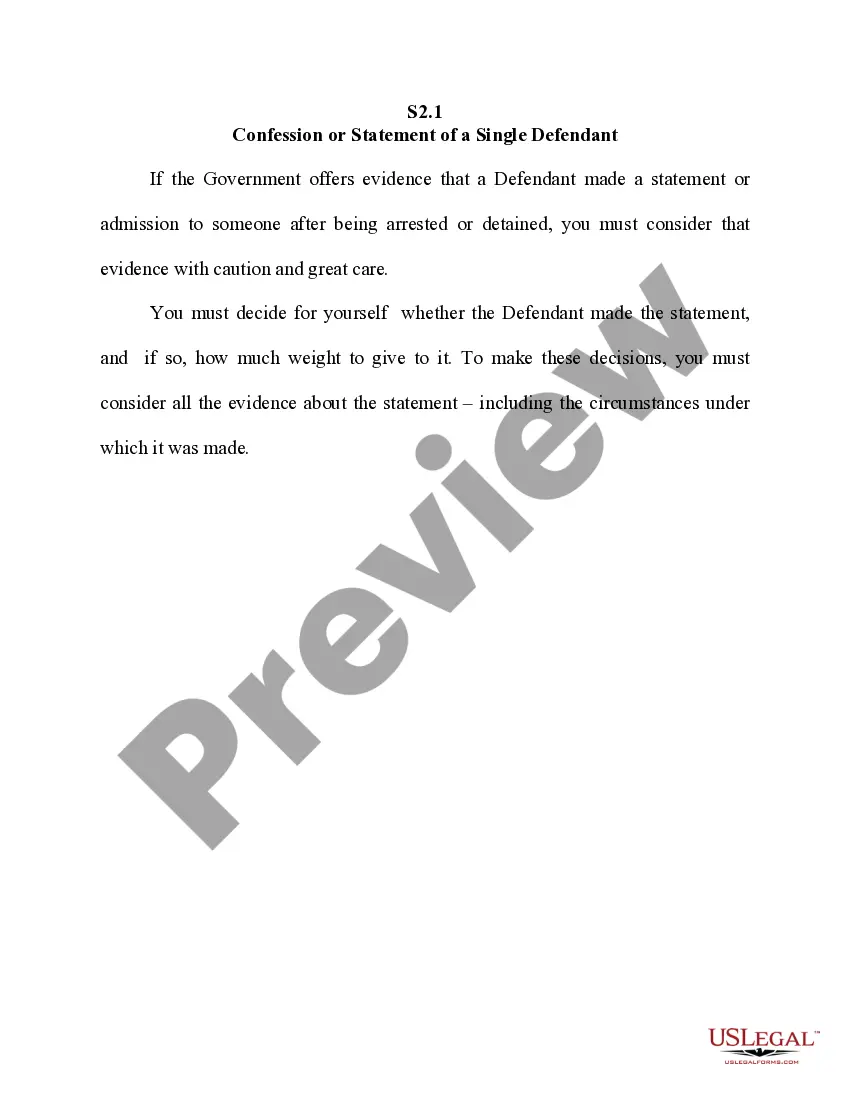
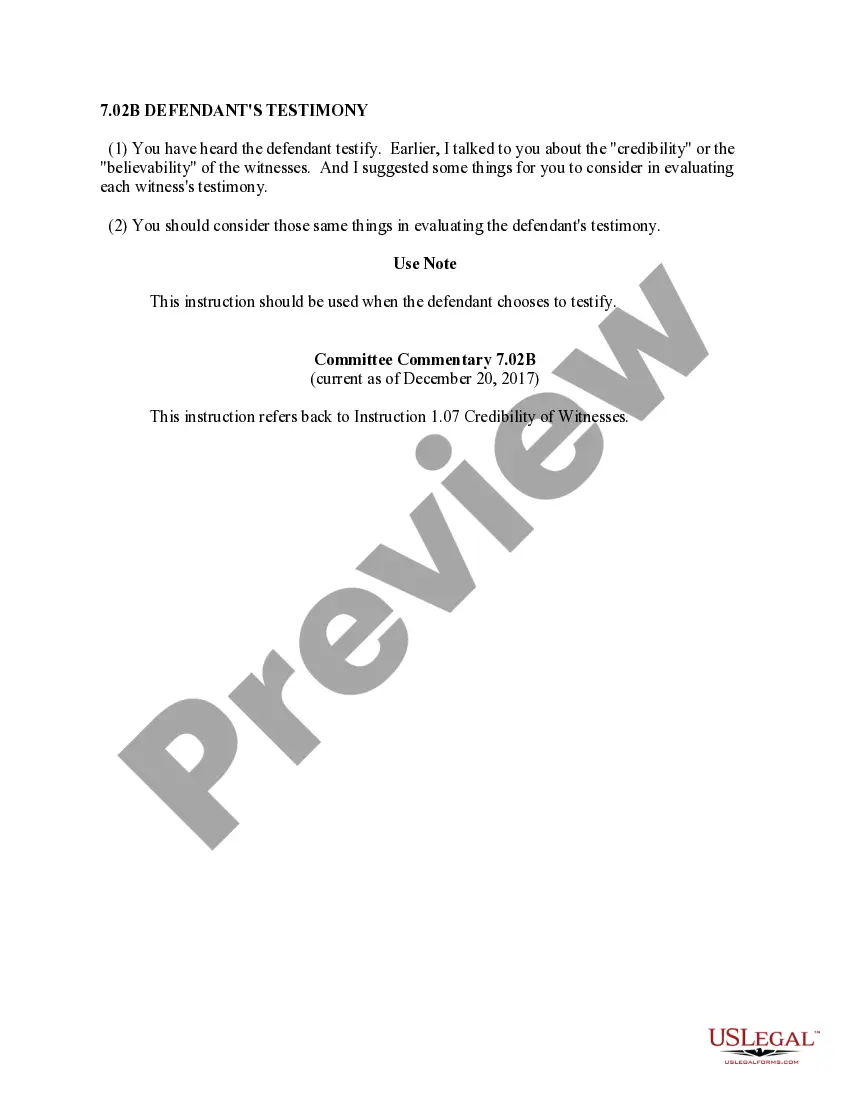
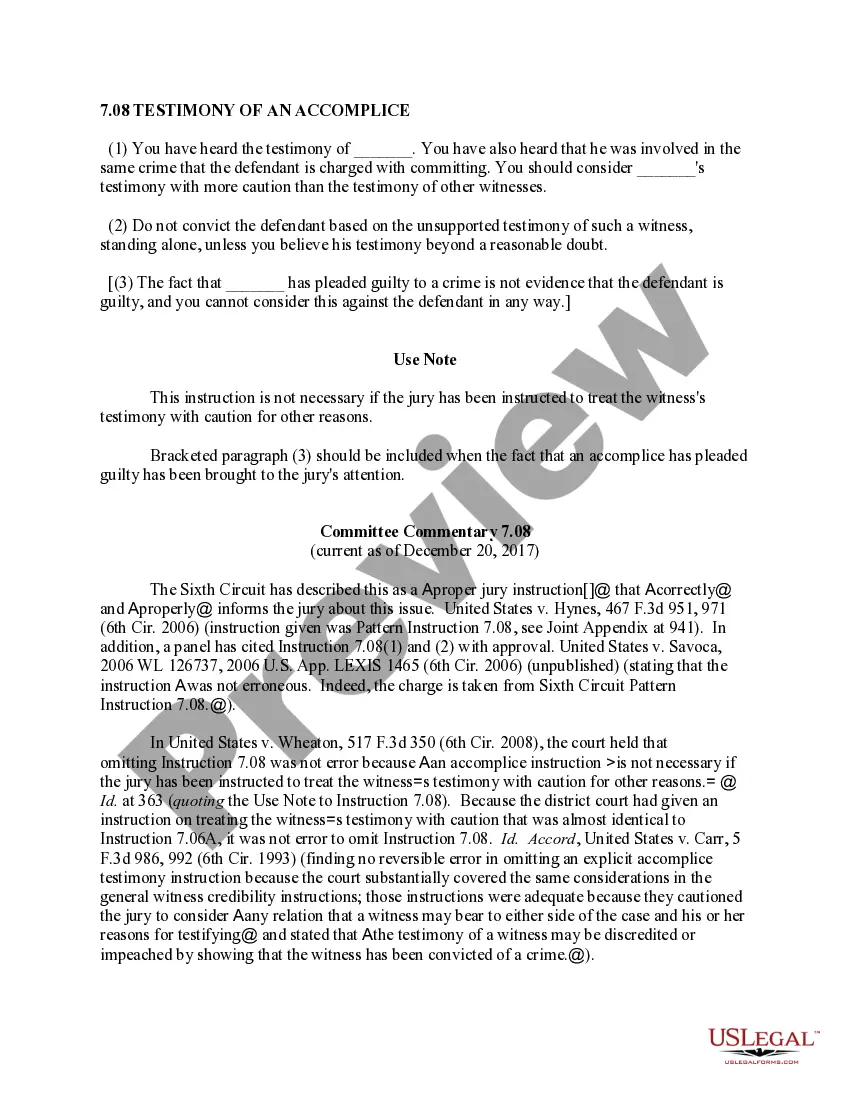
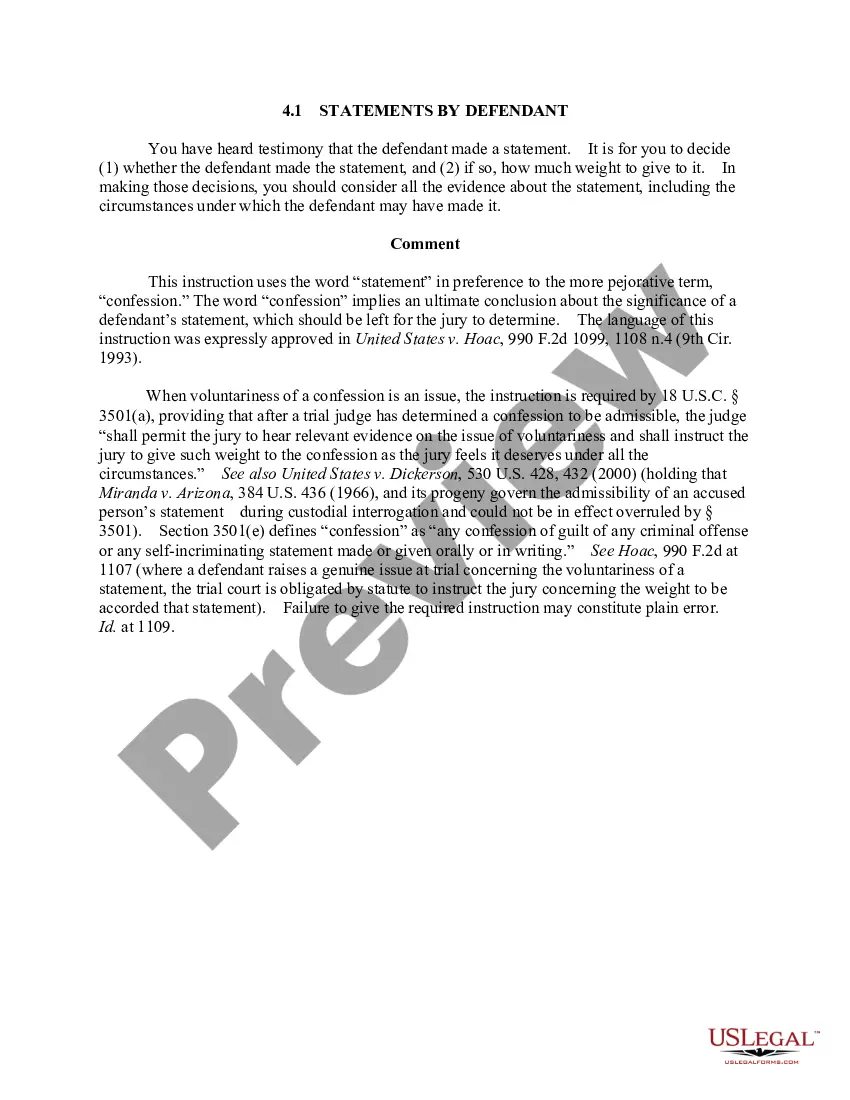
The Statement by Defendant is a legal document used during court proceedings where the defendant's statements or admissions are relevant. This form helps juries assess the credibility of the defendant's words and is crucial in ensuring that convictions are not solely based on uncorroborated statements. Unlike other forms that may document statements for personal or less formal use, this form specifically pertains to judicial contexts, emphasizing the necessity of corroboration.
Key parts of this document
- Identification of the defendant making the statement.
- Assessment of the circumstances surrounding the statement.
- Guidance on the jury's obligation to consider corroborating evidence.
- Emphasis on not convicting based solely on the defendant's uncorroborated statements.
When to use this form
This form is utilized during criminal trials where the defendant's statements are introduced as evidence. It is particularly relevant when the prosecution relies on the defendant's own words to establish guilt, allowing jurors to evaluate the reliability of those admissions in light of other evidence presented during the trial.
Who should use this form
- Defendants in criminal cases who have made statements that are being used as evidence against them.
- Attorneys advising defendants on issues related to the admissibility of statements in court.
- Judges instructing juries on how to consider statements made by defendants.
Completing this form step by step
- Fill in the defendant's name where indicated.
- Summarize the statement made by the defendant.
- Include any relevant circumstances that provide context to the statement.
- Prepare to present corroborating evidence that may support or dispute the statement.
- Review the form for completeness and accuracy before submission in court.
Does this form need to be notarized?
This form does not typically require notarization unless specified by local law. It is crucial to check specific legal requirements that may apply in your jurisdiction.
Get your form ready online
Our built-in tools help you complete, sign, share, and store your documents in one place.
Make edits, fill in missing information, and update formatting in US Legal Forms—just like you would in MS Word.
Download a copy, print it, send it by email, or mail it via USPS—whatever works best for your next step.
Sign and collect signatures with our SignNow integration. Send to multiple recipients, set reminders, and more. Go Premium to unlock E-Sign.
If this form requires notarization, complete it online through a secure video call—no need to meet a notary in person or wait for an appointment.
We protect your documents and personal data by following strict security and privacy standards.

Make edits, fill in missing information, and update formatting in US Legal Forms—just like you would in MS Word.

Download a copy, print it, send it by email, or mail it via USPS—whatever works best for your next step.

Sign and collect signatures with our SignNow integration. Send to multiple recipients, set reminders, and more. Go Premium to unlock E-Sign.

If this form requires notarization, complete it online through a secure video call—no need to meet a notary in person or wait for an appointment.

We protect your documents and personal data by following strict security and privacy standards.
Common mistakes to avoid
- Failing to provide context for the statement, which can affect its interpretation.
- Neglecting to specify corroborating evidence that supports or contradicts the statement.
- Using vague language that may lead to misunderstandings about the statement's significance.
Benefits of using this form online
- Easy access to legally sound templates drafted by licensed attorneys.
- Convenient downloading for immediate use in legal proceedings.
- Editable formats allow for personalized information to be entered quickly.
Legal use & context
- Statements must be corroborated with other evidence to support conviction.
- Jury instructions on evaluating the credibility of defendant statements can vary by jurisdiction.
- Importance of ensuring statements were made voluntarily and without coercion is paramount in legal contexts.
Quick recap
- The Statement by Defendant form is essential for legal proceedings involving admissions by the defendant.
- Corroboration of statements is necessary to prevent wrongful convictions.
- Understanding the jury's role in evaluating these statements is critical for both defendants and their legal representation.
Looking for another form?
Form popularity
FAQ
Allocution, or a defendant's right to make a statement on his or her own behalf before the pronouncement of a sentence, was a right granted to a defendant at common law.
Their statements should be truthful, sincere and explain why they regret committing the crime. Also, a statement should be made accepting responsibility for the crime and reasons why they are writing the letter to the judge ? a defendant should ask for a lesser fine or a shorter sentence.
An allocution is the Defendant's personal statement prior to sentencing. For example, after the Prosecution and the Defense have both presented their cases, the judge will ask the Defendant whether he has anything further to say.
After pleading guilty, a defendant is typically offered a formal opportunity to address the court to express remorse, and explain personal circumstances that might be considered in sentencing. This is known as an allocution statement.
Pleadings - Written statements of the parties in a civil case of their positions. In federal courts, the principal pleadings are the complaint and the answer.
One can put an out of court statement into evidence if the purpose is not to prove the truth of the out of court statement but to prove what was heard or seen directly. That is not hearsay. An example: I need to show someone was angry to prove his intent to assault.
Allocution is the direct address between the judge and the convicted defendant prior to sentencing. During the address, the judge speaks directly to the defendant and asks if the defendant has anything to add prior to hearing the sentence.
?One of the best allocutions I have ever heard was 'Judge, I want to atone for what I did to the victims and my family. I deserve some prison time. I hurt the victims, I hurt my family and I've hurt myself.