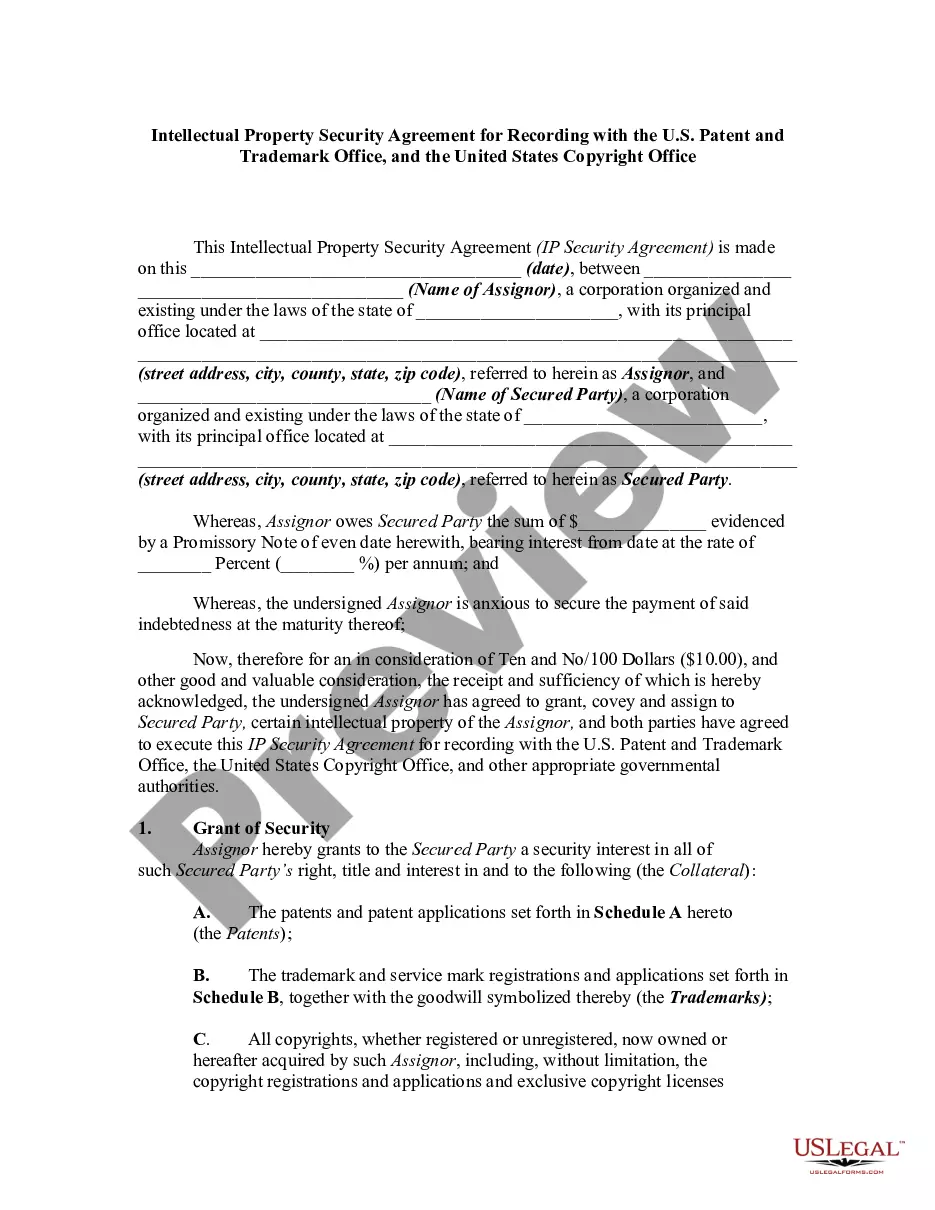
Intellectual Property Security Agreement for Recording with the U.S. Patent and Trademark Office, and the United States Copyright Office
About this form
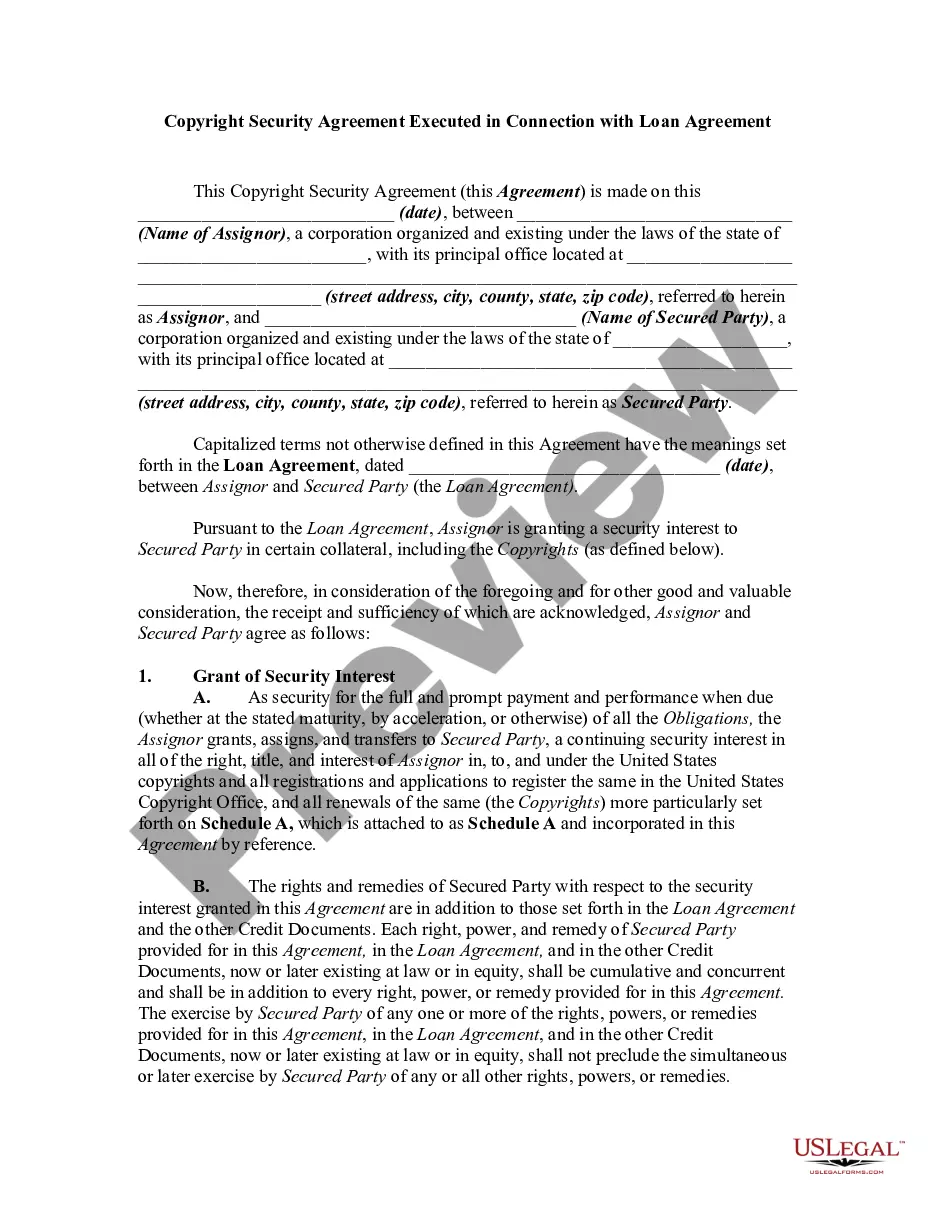
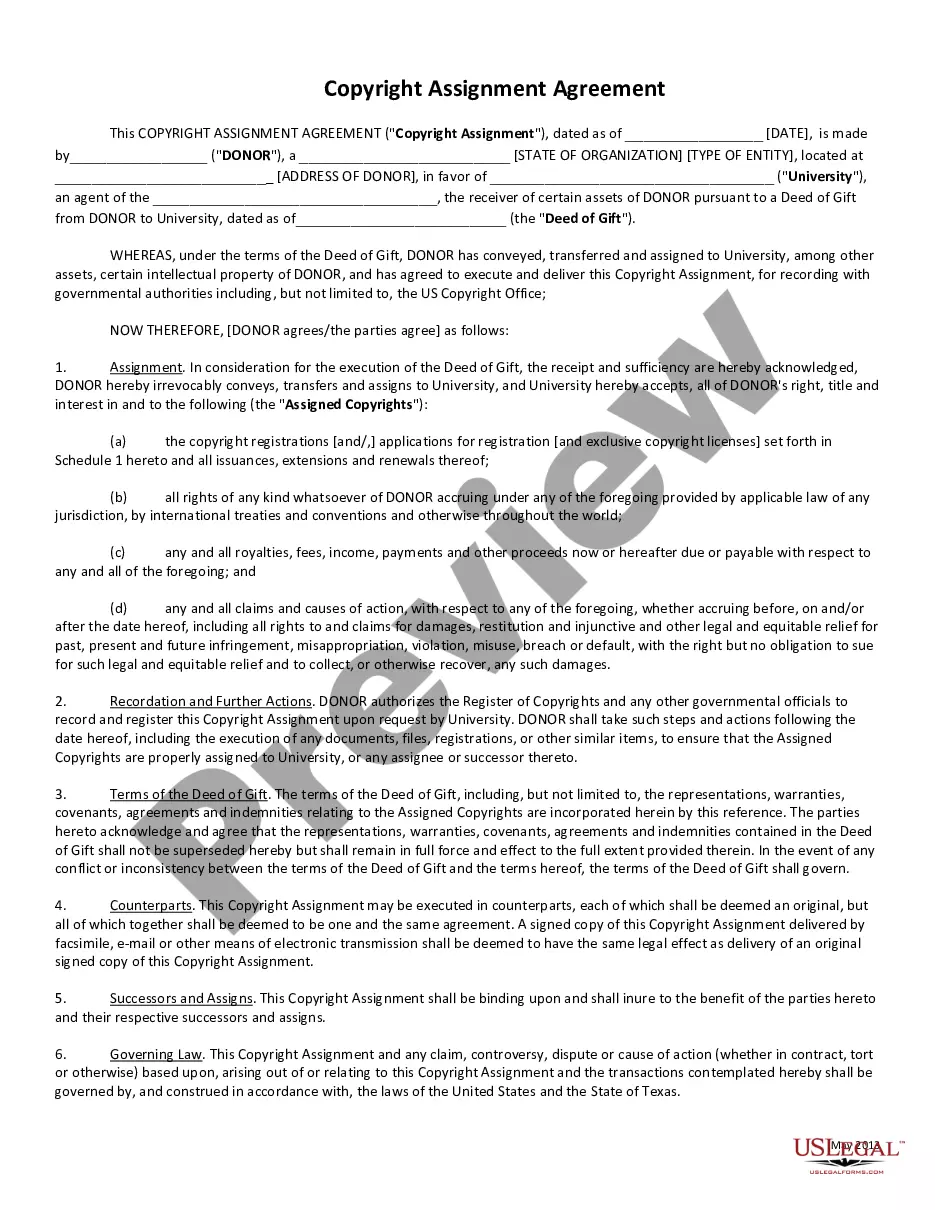
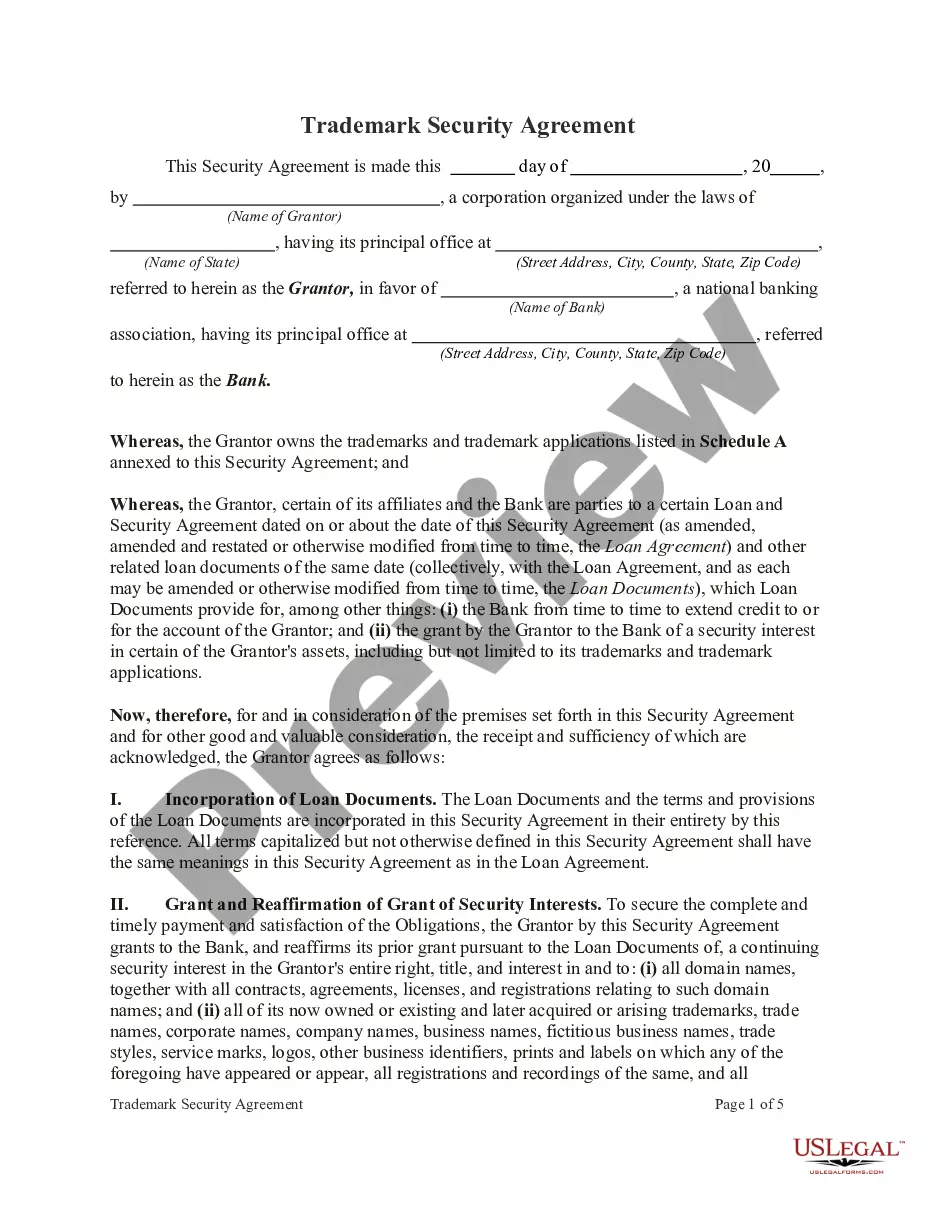
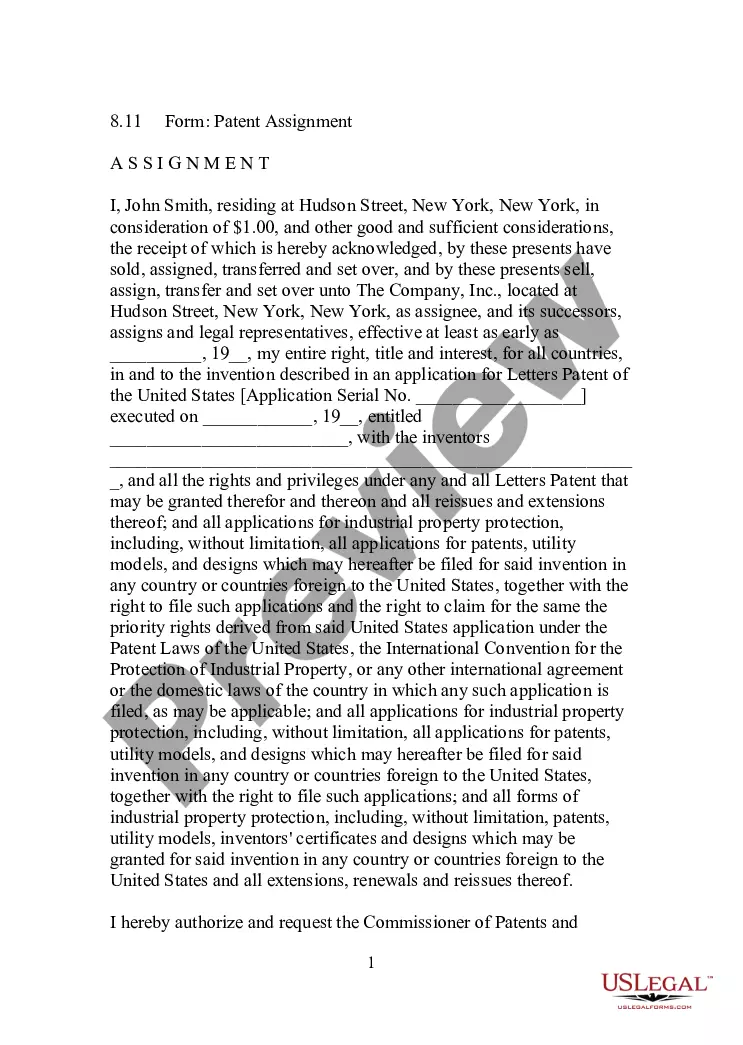
The Intellectual Property Security Agreement is a legal document used to secure a lender's interest in the intellectual property of a borrower. This agreement is essential when the borrower uses intellectual property, such as patents, trademarks, or copyrights, as collateral for a loan. Unlike standard loan agreements, this form ensures that both parties understand the specifics of the secured interest in intellectual property, including the need for recording with the U.S. Patent and Trademark Office and the U.S. Copyright Office.
Form components explained
- Names and addresses of the Assignor (borrower) and Secured Party (lender)
- Details of the obligations secured by the intellectual property, including the amount owed
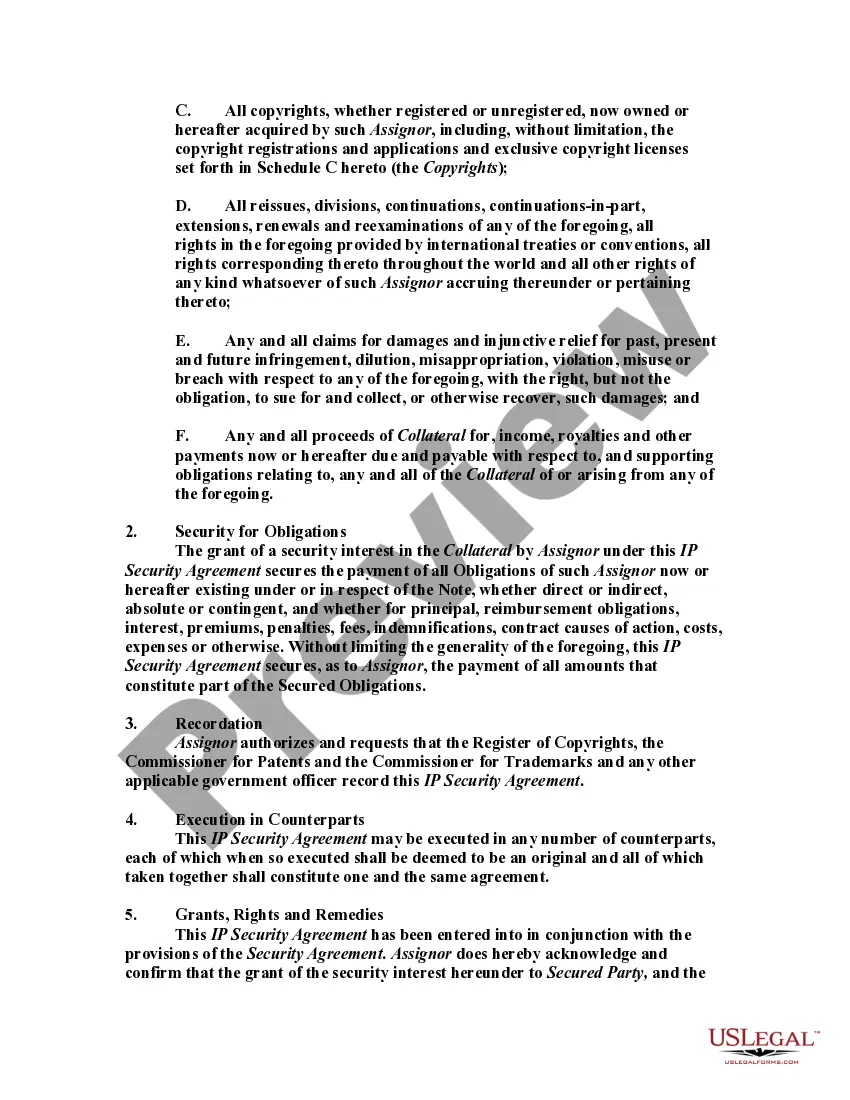
- Specification of the intellectual property being secured, including patents, trademarks, and copyrights
- Clauses for recordation with relevant governmental authorities
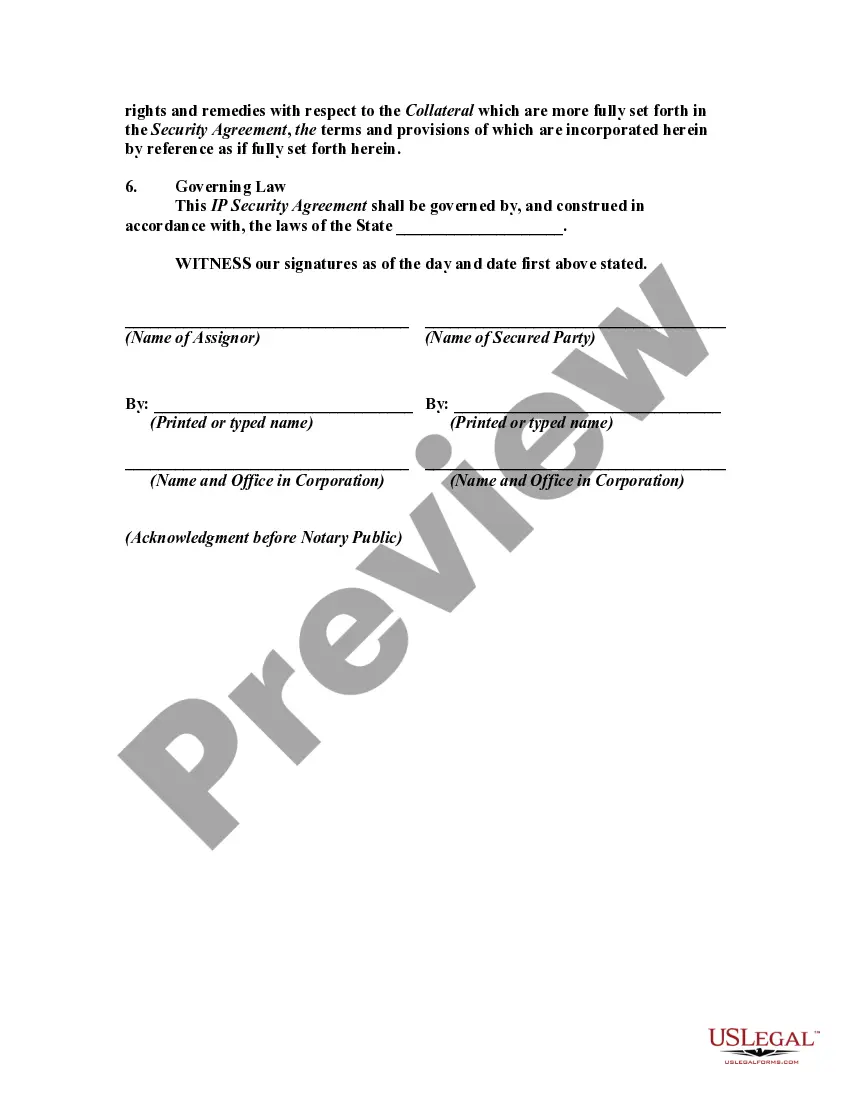
- Governing law indicating the applicable jurisdiction
When this form is needed
This form should be used when a lender requires a security interest in the borrower's intellectual property as collateral for a loan. It may be particularly relevant in situations involving startups or businesses that hold significant intellectual property assets, such as technology, branding, or creative works. Using this agreement can help clarify the relationship between the lender and borrower concerning the management and rights to the intellectual property.
Who can use this document
This form is designed for:
- Business owners seeking financing with intellectual property as collateral.
- Lenders who want to formally secure their interest in the borrower's intellectual property.
- Legal professionals advising clients on financing arrangements involving intellectual property.
How to complete this form
- Identify and enter the date of the agreement.
- Fill in the names and addresses of both the Assignor and the Secured Party.
- Specify the amount owed and the interest rate as per the Promissory Note.
- Detail the intellectual property being secured in the specified schedules.
- Obtain the signatures of both parties, ensuring they are printed or typed clearly.
Does this document require notarization?
This form does not typically require notarization unless specified by local law. However, having it notarized can provide an additional layer of validation.
Get your form ready online
Our built-in tools help you complete, sign, share, and store your documents in one place.
Make edits, fill in missing information, and update formatting in US Legal Forms—just like you would in MS Word.
Download a copy, print it, send it by email, or mail it via USPS—whatever works best for your next step.
Sign and collect signatures with our SignNow integration. Send to multiple recipients, set reminders, and more. Go Premium to unlock E-Sign.
If this form requires notarization, complete it online through a secure video call—no need to meet a notary in person or wait for an appointment.
We protect your documents and personal data by following strict security and privacy standards.

Make edits, fill in missing information, and update formatting in US Legal Forms—just like you would in MS Word.

Download a copy, print it, send it by email, or mail it via USPS—whatever works best for your next step.

Sign and collect signatures with our SignNow integration. Send to multiple recipients, set reminders, and more. Go Premium to unlock E-Sign.

If this form requires notarization, complete it online through a secure video call—no need to meet a notary in person or wait for an appointment.

We protect your documents and personal data by following strict security and privacy standards.
Common mistakes to avoid
- Failing to accurately list all intellectual property being secured.
- Not recording the agreement with the appropriate governmental offices.
- Ignoring state-specific requirements or variations in intellectual property law.
Advantages of online completion
- Convenient access and immediate download, saving time on legal preparation.
- Editability allows users to tailor clauses to their specific needs before finalizing.
- Reliability as the forms are drafted by licensed attorneys, ensuring compliance with legal standards.
Main things to remember
- The Intellectual Property Security Agreement is essential for securing loans against intellectual property assets.
- Proper recording with federal offices enhances the legal enforceability of the agreement.
- Understanding jurisdiction-specific requirements ensures compliance and protects all parties involved.
Looking for another form?
Form popularity
FAQ
Registering a trademark for a company name is pretty straightforward. Many businesses can file an application online in less than 90 minutes, without a lawyer's help. The simplest way to register is on the U.S. Patent and Trademark Office's Web site, www.uspto.gov.
Keep it under scrutiny.Be aware of your Intellectual Property Rights.Consult an expert.Double check if your idea is unique.Hire an auditor.Keep a record of almost everything related.Protect your IP without delay.
The trademark security agreement filed with the USPTO must specifically identify the trademarks, which is typically accomplished by attaching a schedule which lists the mark, the jurisdiction, registration number, registration date, and record owner.
1Copyrights. Copyright protection is available for written and artistic works.2Trademarks.3Patents.4Trade Secrets.
Once a trademark is registered, its owner should monitor its use.It is certainly possible for entrepreneurs to file applications and successfully register trademarks on their own.
Filing a Copyright Registration Application Go to the U.S. Copyright Office website. Select "Electronic Copyright Registration" to fill in the Form VA online for registration of a work of Visual Arts. Name the creator of the logo and include contact information for the owner. Many logos are works for hire.
You can not register a trademark for free. However, you can establish something known as a "common law trademark" for free, simply by opening for business. The benefit of relying on common law trademark rights is that it's free, and you don't need to do any specific work filling out forms, etc.
Copyrights and Trademarks DefinedCopyrights and trademarks protect distinct creations. Generally, copyrights protect creative or intellectual works, and trademarks apply to commercial names, phrases, and logos.
Register copyrights, trademarks, and patents. Register business, product or domain names. Create confidentiality, non-disclosure or licensing contracts for employees and partners. Implement security measures. Avoid joint ownership.