Confession or Statement of a Single Defendant
What this document covers
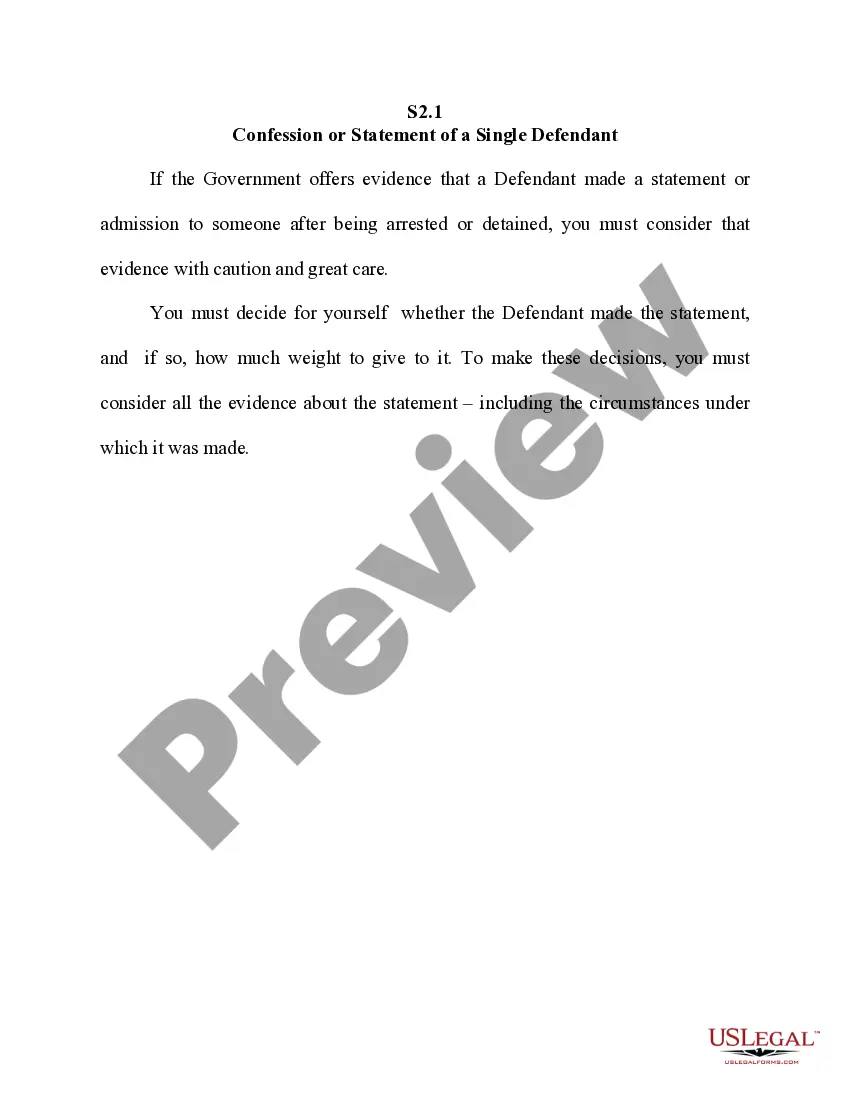
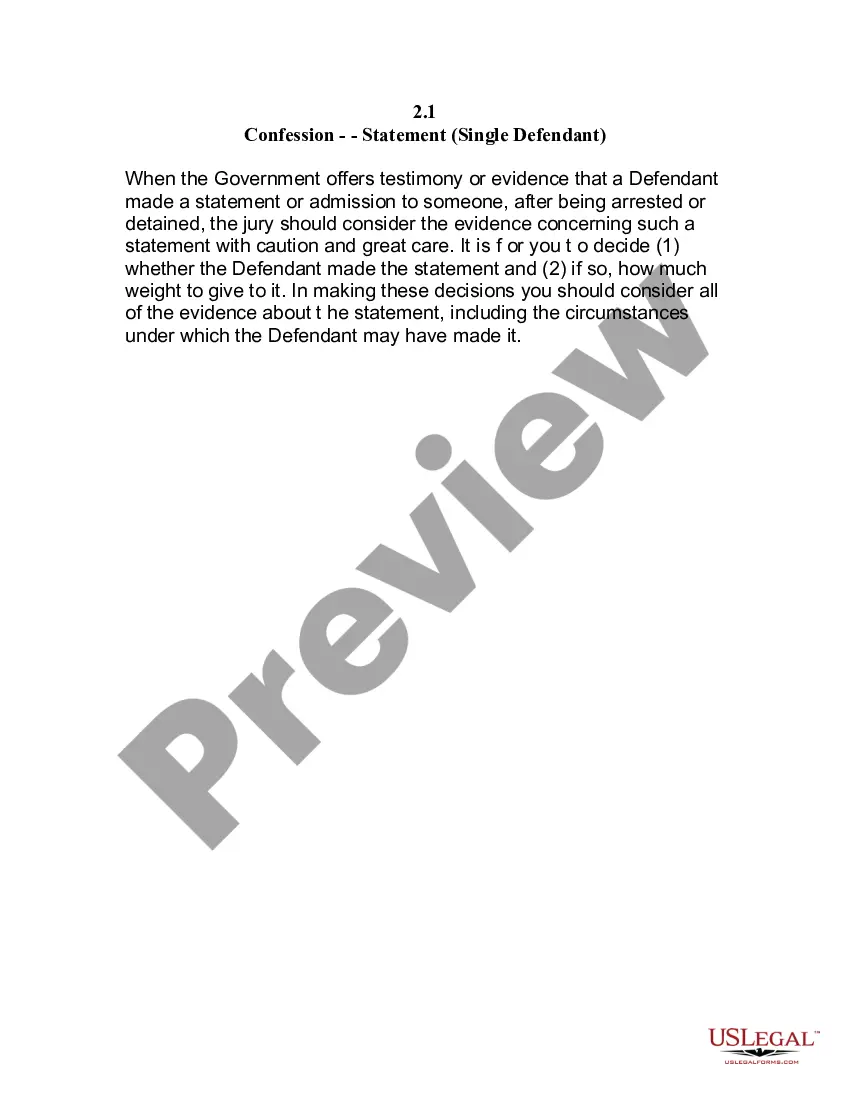
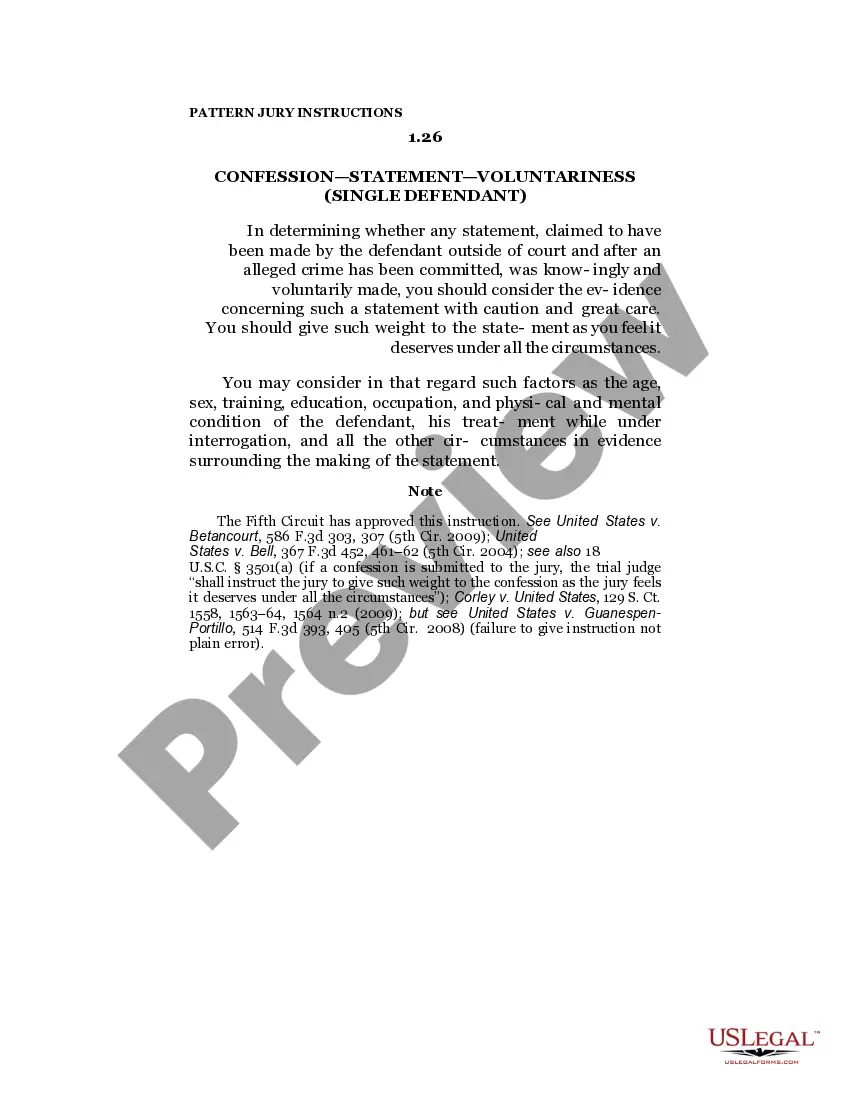
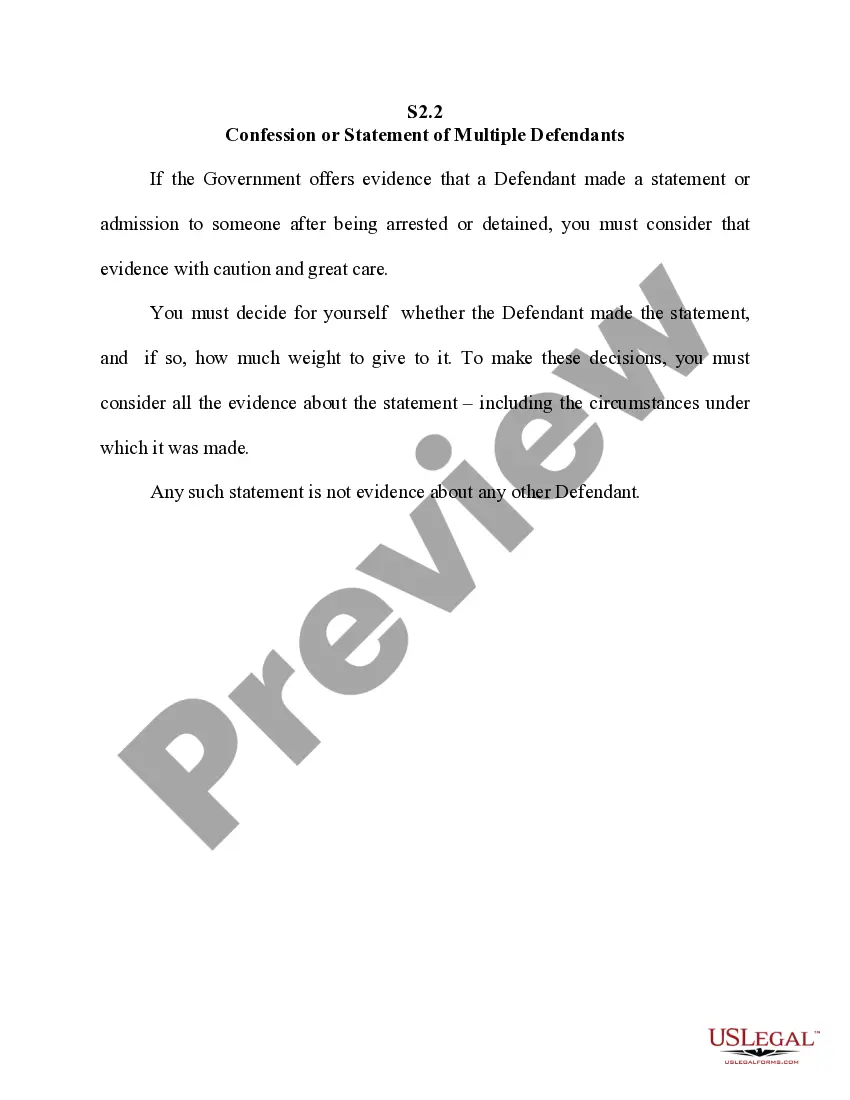
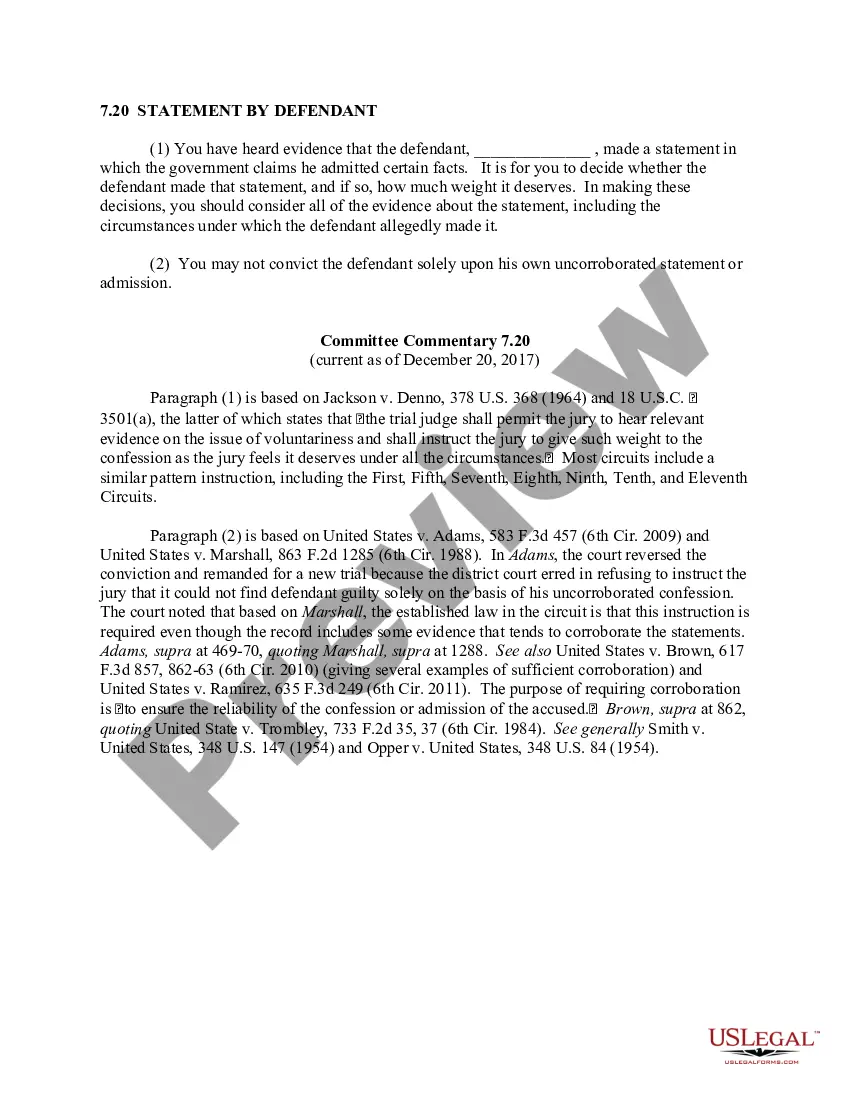
The Confession or Statement of a Single Defendant form is a legal document used to evaluate evidence regarding a defendant's statements made after arrest. This form provides specific guidelines for jurors to assess such statements with caution. It is essential in legal proceedings to ensure that jurors understand the weight and credibility of a defendant's confession against the backdrop of the circumstances under which it was made. Unlike other legal forms, this document focuses on the assessment criteria for confessions rather than the confessions themselves.
Form components explained
- Definition of confession and its significance in a trial.
- Instructions for jurors on evaluating the credibility of a statement.
- Consideration of the circumstances surrounding the confession.
- Guidelines to determine the weight attributed to the statement.
- Standard of caution required when considering confession evidence.
When to use this form
This form is needed in legal cases where a defendant has made statements or confessions after being arrested. It becomes particularly relevant during jury trials, when jurors must weigh the significance of any admissions made by the defendant as part of the evidence. Scenarios include criminal trials for theft, assault, or other felonies where confessions may impact the jury's verdict.
Intended users of this form
Eligibility for this form includes:
- Jurors assessing the weight of a confession in criminal trials.
- Judges providing instructions to jurors regarding confessions.
- Legal professionals involved in criminal defense or prosecution.
How to complete this form
- Review the relevant evidence regarding the defendant's statement.
- Determine whether the defendant made the statement.
- Assess the conditions under which the statement was made.
- Decide on the credibility of the confession based on the context.
- Evaluate how much weight to give to the defendant's statement in the overall case.
Notarization requirements for this form
In most cases, this form does not require notarization. However, some jurisdictions or signing circumstances might. US Legal Forms offers online notarization powered by Notarize, accessible 24/7 for a quick, remote process.
Get your form ready online
Our built-in tools help you complete, sign, share, and store your documents in one place.
Make edits, fill in missing information, and update formatting in US Legal Forms—just like you would in MS Word.
Download a copy, print it, send it by email, or mail it via USPS—whatever works best for your next step.
Sign and collect signatures with our SignNow integration. Send to multiple recipients, set reminders, and more. Go Premium to unlock E-Sign.
If this form requires notarization, complete it online through a secure video call—no need to meet a notary in person or wait for an appointment.
We protect your documents and personal data by following strict security and privacy standards.

Make edits, fill in missing information, and update formatting in US Legal Forms—just like you would in MS Word.

Download a copy, print it, send it by email, or mail it via USPS—whatever works best for your next step.

Sign and collect signatures with our SignNow integration. Send to multiple recipients, set reminders, and more. Go Premium to unlock E-Sign.

If this form requires notarization, complete it online through a secure video call—no need to meet a notary in person or wait for an appointment.

We protect your documents and personal data by following strict security and privacy standards.
Common mistakes
- Failing to consider the context of the confession, which may affect its credibility.
- Overestimating the reliability of a confession without corroborating evidence.
- Ignoring specific guidelines outlined for jurors regarding confessions.
Why complete this form online
- Convenience of accessing essential legal documents from anywhere.
- Editability allows users to customize instructions based on specific case needs.
- Reliability ensured by documents drafted by licensed attorneys.
What to keep in mind
- The Confession or Statement of a Single Defendant form is crucial for jurors in evaluating confessions.
- If a statement is made, jurors must weigh its credibility carefully.
- This form reflects the legal standards set by the 11th Circuit Federal Court.
Looking for another form?
Form popularity
FAQ
In civil cases, a confession is sometimes also known as a statement against interest.
Confession is a statement made by an accused person which is sought to be proved against him in criminal proceeding to establish the commission of an offence by him.
Type of confession Formal Confession (Judicial Confession) Informal Confession (Extra judicial Confession) Retracted Confession.
CONFESSIONS ARE ADMISSIBLE ONLY WHEN THEY ARE MADE VOLUNTARILY, AND THE BURDEN FOR PROVING THAT A CONFESSION WAS MADE VOLUNTARILY RESTS WITH THE PROSECUTION. THE PROSECUTION MUST SHOW THAT THE CONFESSION WAS NOT EXTRACTED BY ANY SORT OF THREAT OR VIOLENCE OR OBTAINED BY ANY PROMISE OR EXERTION OF IMPROPER INFLUENCE.
Confession of faith, formal statement of doctrinal belief ordinarily intended for public avowal by an individual, a group, a congregation, a synod, or a church; confessions are similar to creeds, although usually more extensive. They are especially associated with the churches of the Protestant Reformation.
A general criminal law principle known as the corpus delicti rule provides that a confession, standing alone, isn't enough for a conviction. With its design of preventing wrongful convictions, the rule implicitly acknowledges the phenomenon of false confessions.
: a statement of what is confessed: such as. : a written or oral acknowledgment of guilt by a party accused of an offense. : a formal statement of religious beliefs : creed.
There are two types of evidence -- direct and circumstantial. Direct evidence usually is that which speaks for itself: eyewitness accounts, a confession, or a weapon.