Jury Instruction - Confession - Statement - Single Defendant
Understanding this form
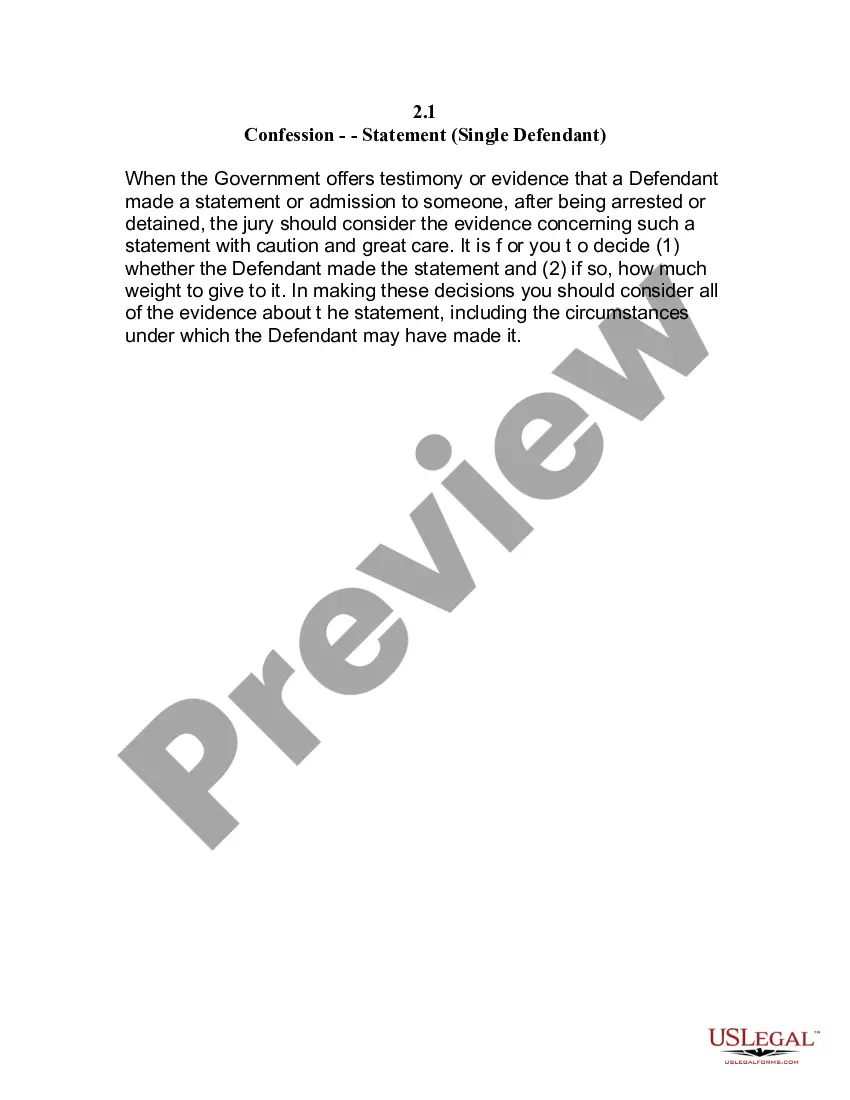
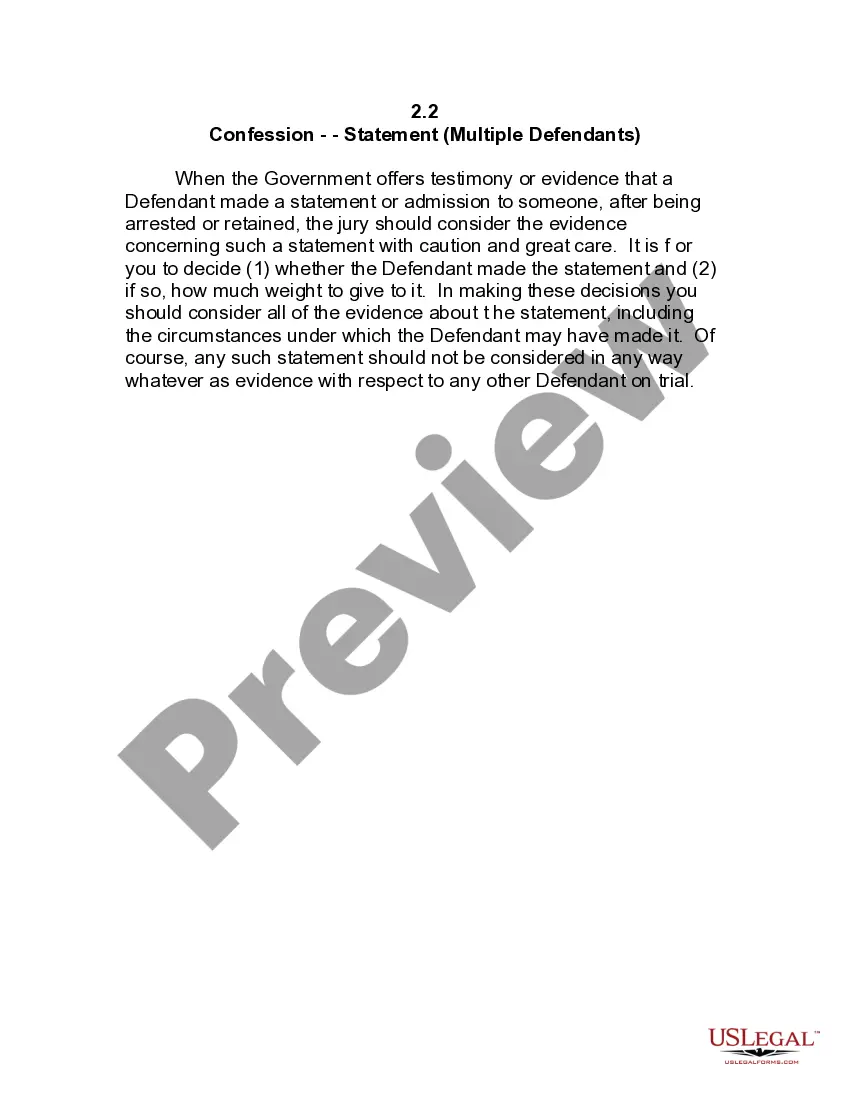
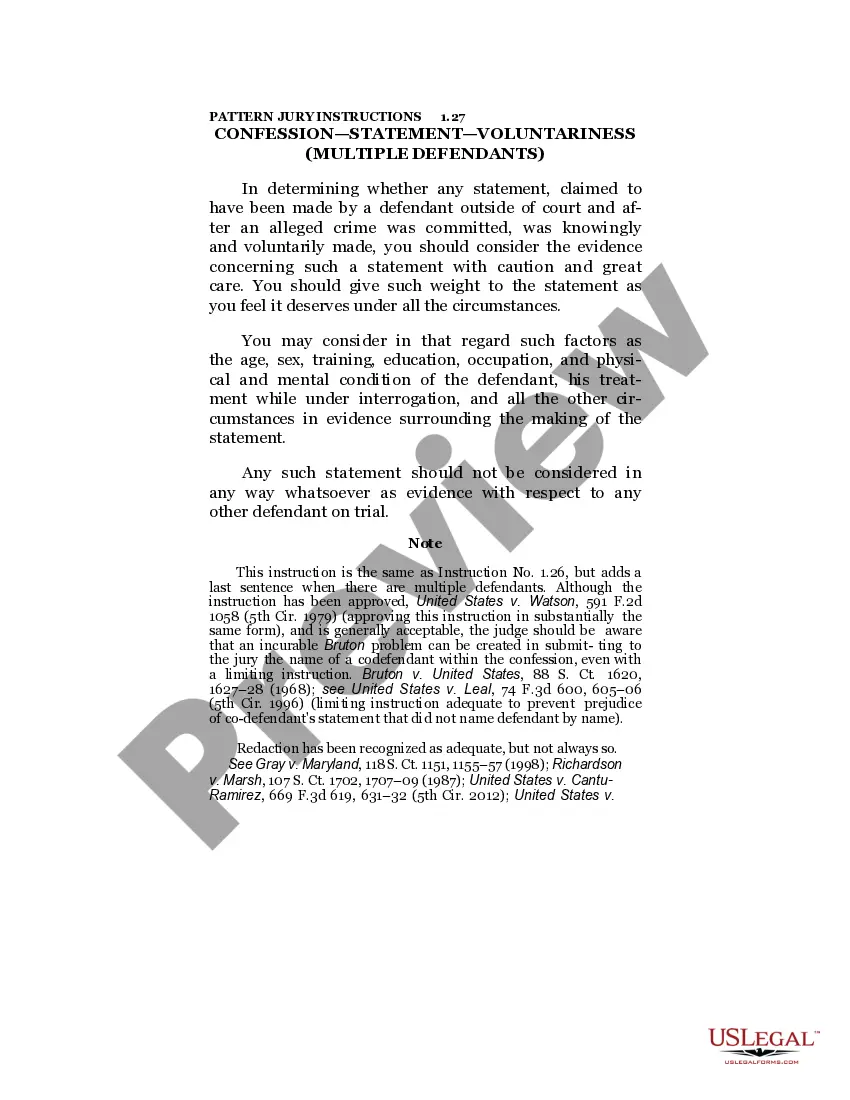
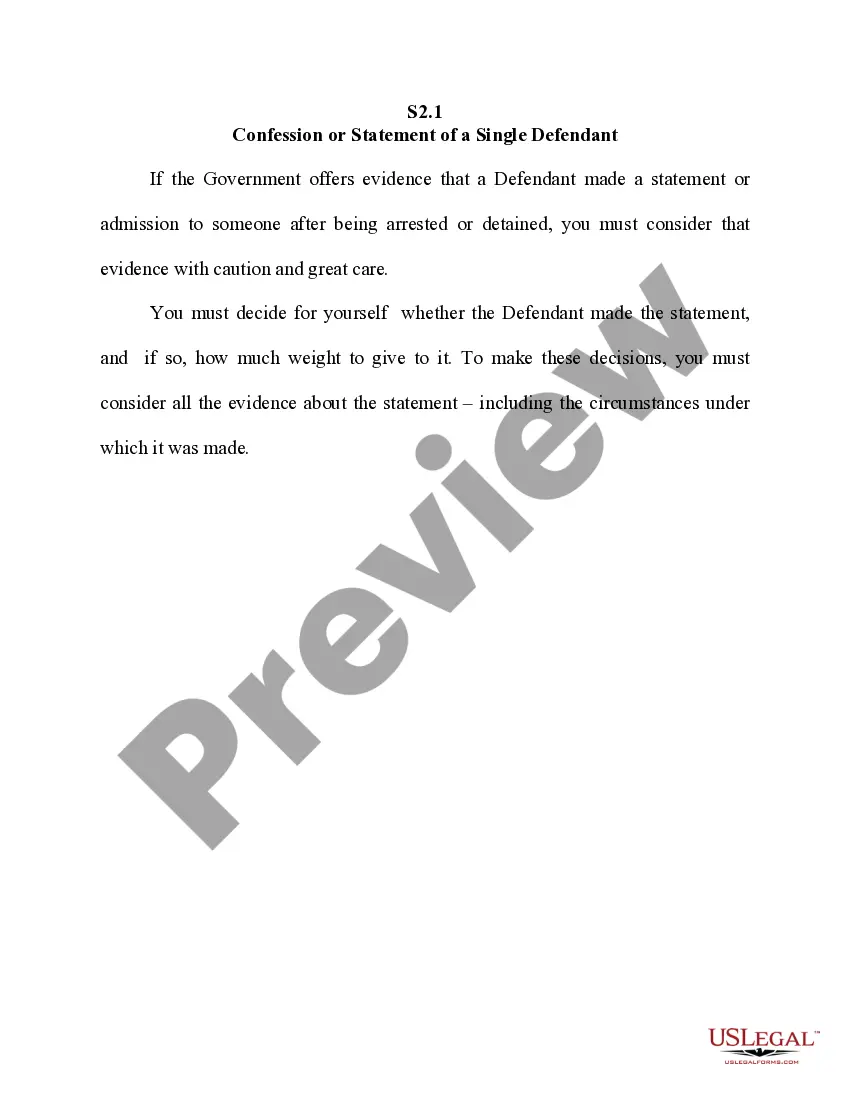
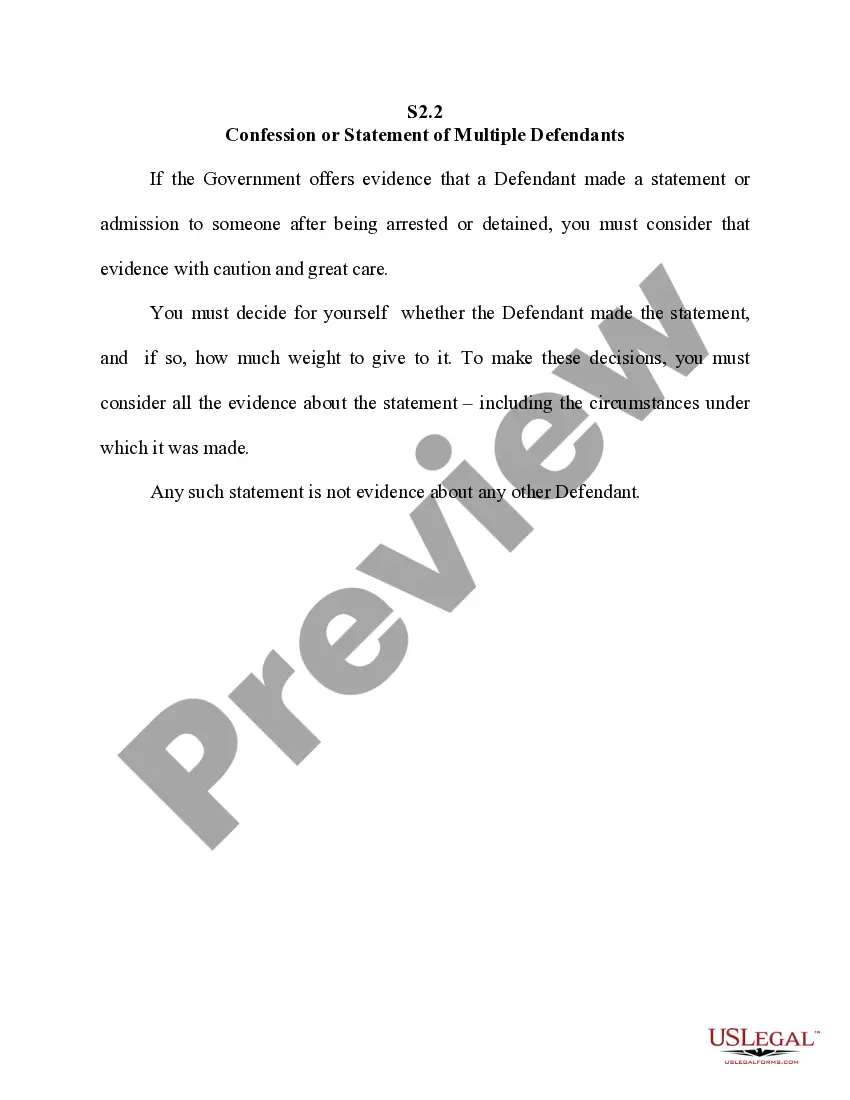
The Jury Instruction - Confession - Statement - Single Defendant form provides sample jury instructions tailored for situations where a defendant's statement is presented in court. This form guides jurors in evaluating such statements with caution and care. Unlike other legal forms, this one specifically addresses the nuances of confession statements, highlighting how to weigh their relevance and credibility based on the surrounding circumstances.
What’s included in this form
- Introduction to the instructions regarding the consideration of defendant statements.
- Guidelines on how jurors should evaluate the weight of the statement.
- Discussion on the circumstances under which statements are made.
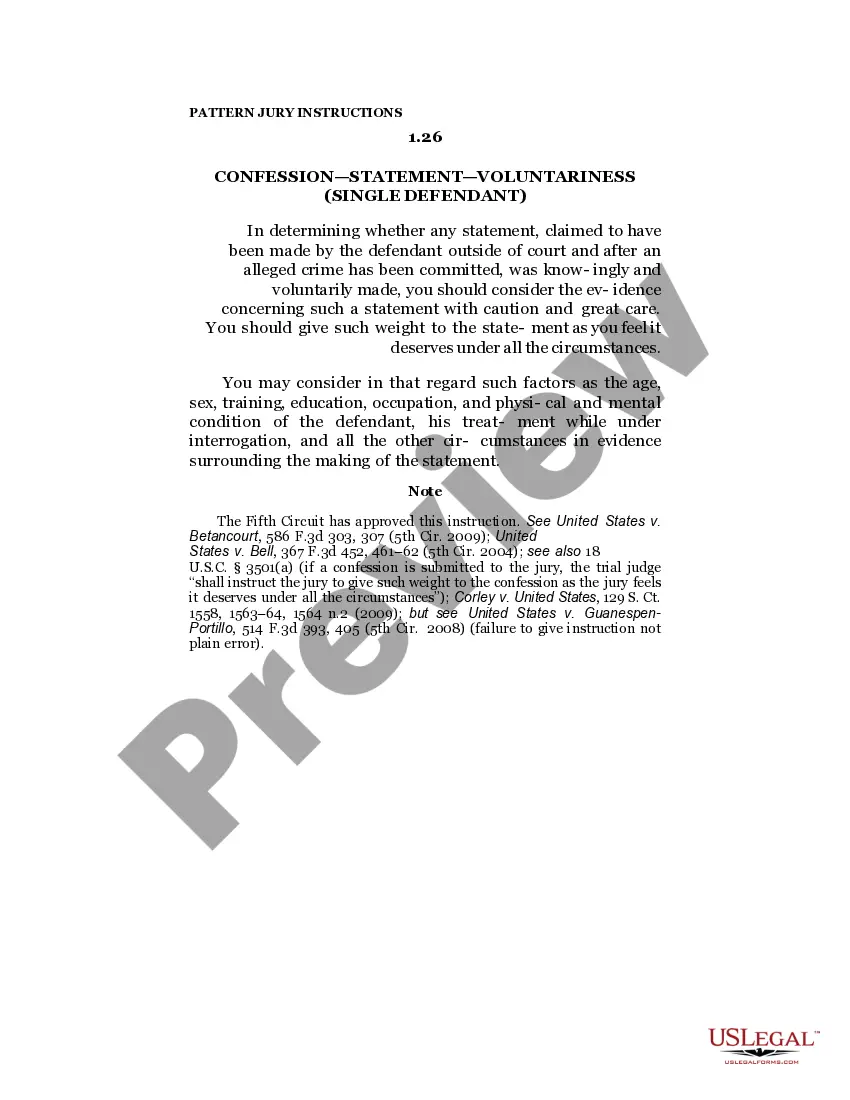
- Reference to relevant case law supporting the instructions.

Situations where this form applies
This form is used in legal cases where a defendant has made a confession or admission. It is particularly relevant in criminal trials where the defendant's statements could significantly influence the jury's decision. If the prosecution presents evidence of a confession after an arrest, this form provides the necessary instructions for jurors to fairly consider that evidence.
Who this form is for
- Judges presiding over criminal trials.
- Legal practitioners preparing jury instructions.
- Prosecutors and defense attorneys involved in cases where confessions are introduced as evidence.
- Law students studying jury instructions and their applications in court.
Instructions for completing this form
- Review the form's components to understand the context of jury instructions.
- Edit the sample instructions to fit the particulars of your case.
- Include any relevant state laws or case precedents that support the instructions.
- Ensure that the language is clear and accessible for jurors.
- Finalize and submit the instructions for court approval prior to trial.
Notarization requirements for this form
This form does not typically require notarization unless specified by local law.
Get your form ready online
Our built-in tools help you complete, sign, share, and store your documents in one place.
Make edits, fill in missing information, and update formatting in US Legal Forms—just like you would in MS Word.
Download a copy, print it, send it by email, or mail it via USPS—whatever works best for your next step.
Sign and collect signatures with our SignNow integration. Send to multiple recipients, set reminders, and more. Go Premium to unlock E-Sign.
If this form requires notarization, complete it online through a secure video call—no need to meet a notary in person or wait for an appointment.
We protect your documents and personal data by following strict security and privacy standards.

Make edits, fill in missing information, and update formatting in US Legal Forms—just like you would in MS Word.

Download a copy, print it, send it by email, or mail it via USPS—whatever works best for your next step.

Sign and collect signatures with our SignNow integration. Send to multiple recipients, set reminders, and more. Go Premium to unlock E-Sign.

If this form requires notarization, complete it online through a secure video call—no need to meet a notary in person or wait for an appointment.

We protect your documents and personal data by following strict security and privacy standards.
Common mistakes
- Failing to tailor the instructions to the specific actions of the defendant.
- Using overly complex language that may confuse jurors.
- Neglecting to reference applicable legal standards or statutes.
Benefits of completing this form online
- Convenient access to professionally drafted jury instruction templates.
- Editable format allows for customization to your case specifics.
- Accessibility from anywhere, facilitating quick updates as needed.
Looking for another form?


Form popularity
FAQ
Tell all your sins openly and honestly, including the number of times each sin was committed. Then, listen to the priest and follow his instructions. You may also ask any questions about the faith or how to grow in holiness. Pray the Act of Contrition when the priest tells you.
When you go to church to see a priest and tell him about your sins, this is an example of a confession. When you write out the details of a crime you committed for the police, this is an example of a confession. When you share an embarrassing secret with a friend, this is an example of a confession.
Usually when making your Confession, the priest will ask you to pray the Act Of Contrition. It is said like this: O My God, I am heartily sorry for having Offended Thee, and I detest all my sins because of Thy Just Judgements: The Loss of Heaven and the pains of Hell.
When you go to church to see a priest and tell him about your sins, this is an example of a confession. When you write out the details of a crime you committed for the police, this is an example of a confession. When you share an embarrassing secret with a friend, this is an example of a confession.
Examine your conscience. Be sincerely sorry for your sins. Confess your sins. Resolve to amend your life. After your confession do the penance that your priest assigns.
Enter the confessional. He won't treat you any differently either way. Make the sign of the cross upon his prompt, saying, "Bless me, Father, for I have sinned. It has been (blank) since my last confession." This is your standard, traditional phrasing. However, if you just sit down and say hello, that's fine, too.
We also see in the accounts that He told Pilate that Pilate had no authority over Him except for what God had allowed, showing that Jesus has actual authority. Now it is clear what is meant by the good confession It means confessing that Jesus is the Son of God, the King of Kings, that He is who He says He is.
Four elements make up the sacrament of reconciliation. They are essential for absolving sins. These elements are contrition, confession, satisfaction and absolution.