Confession - Statement - Voluntariness (Multiple Defendants)
Understanding this form
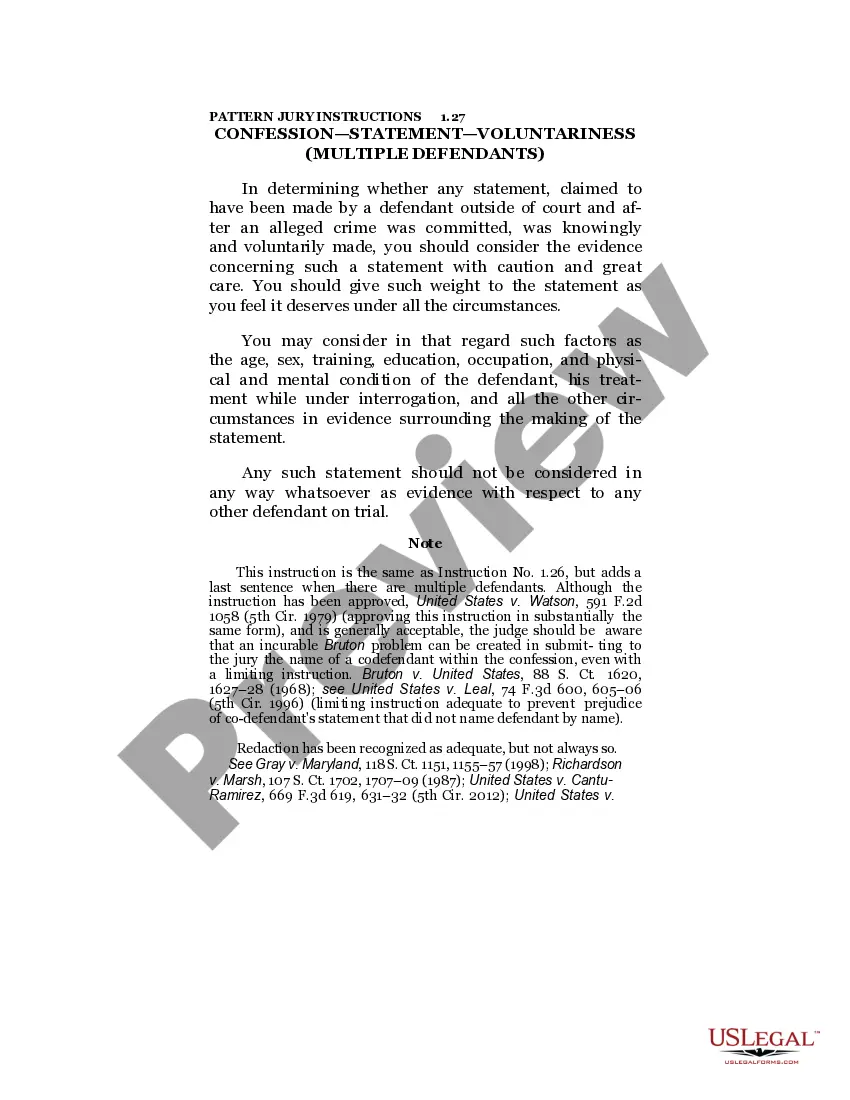
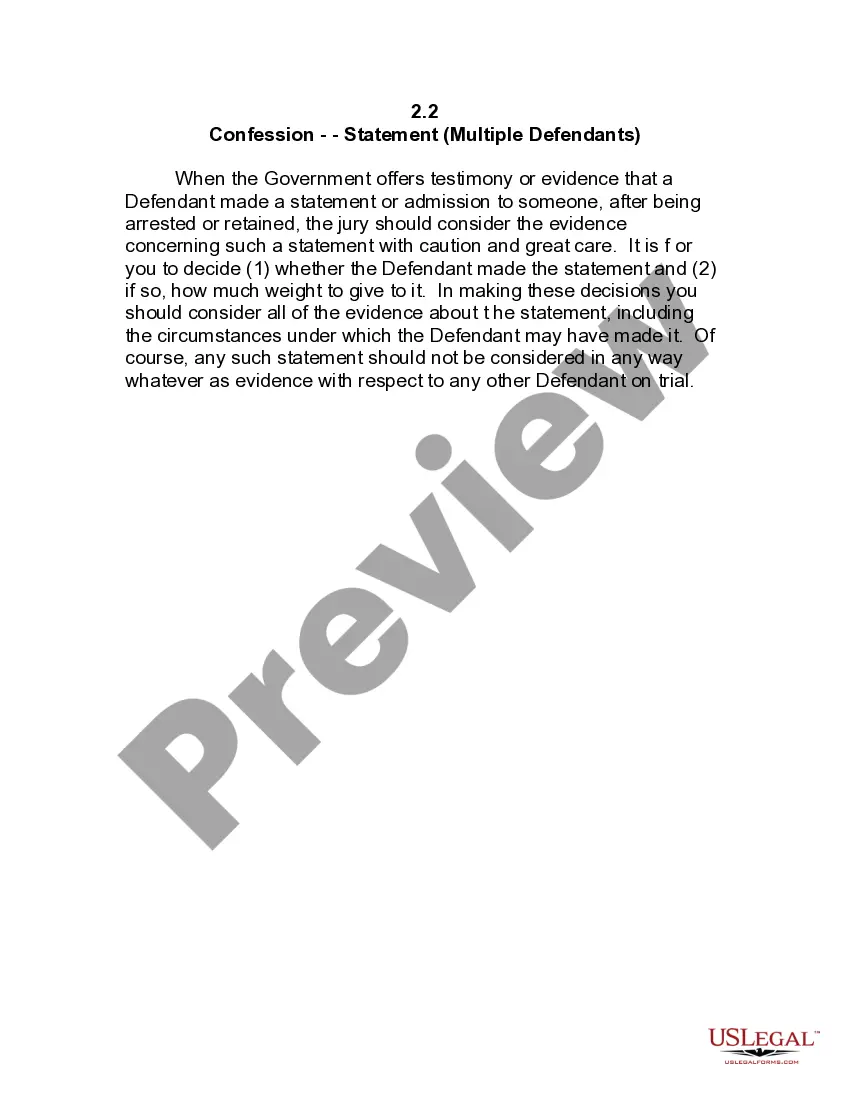
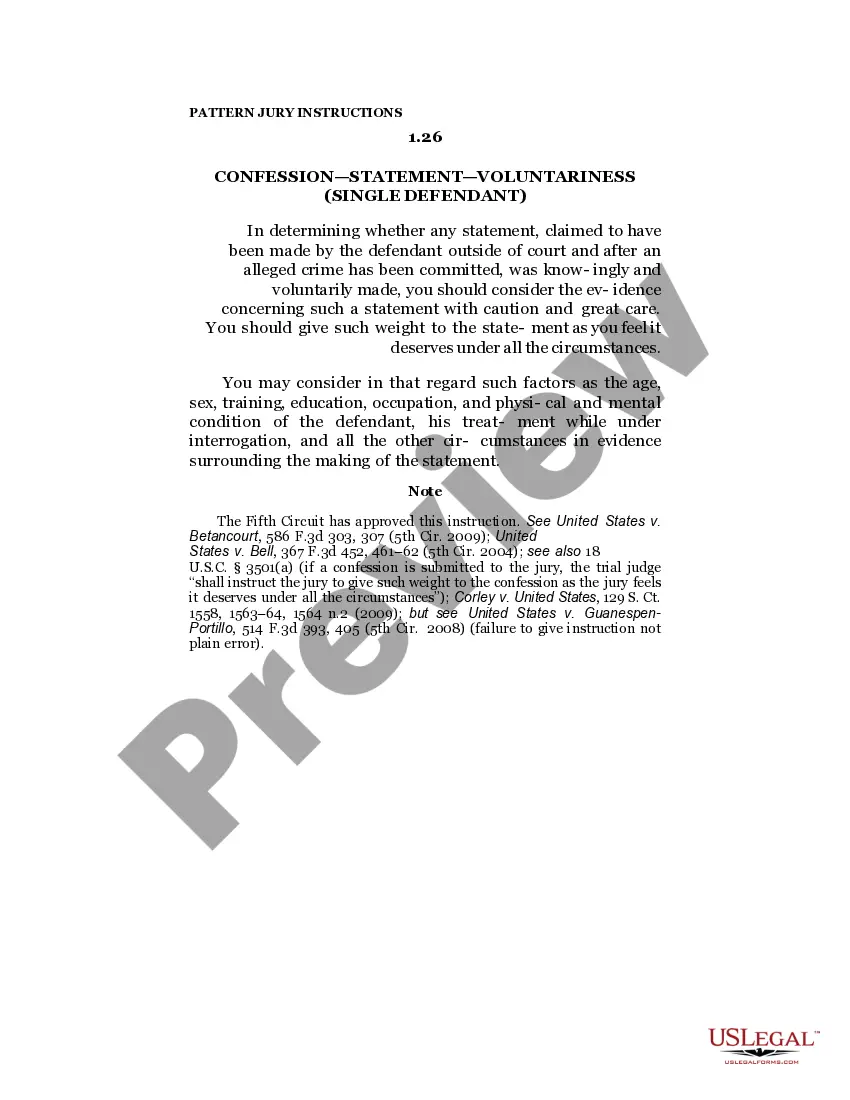
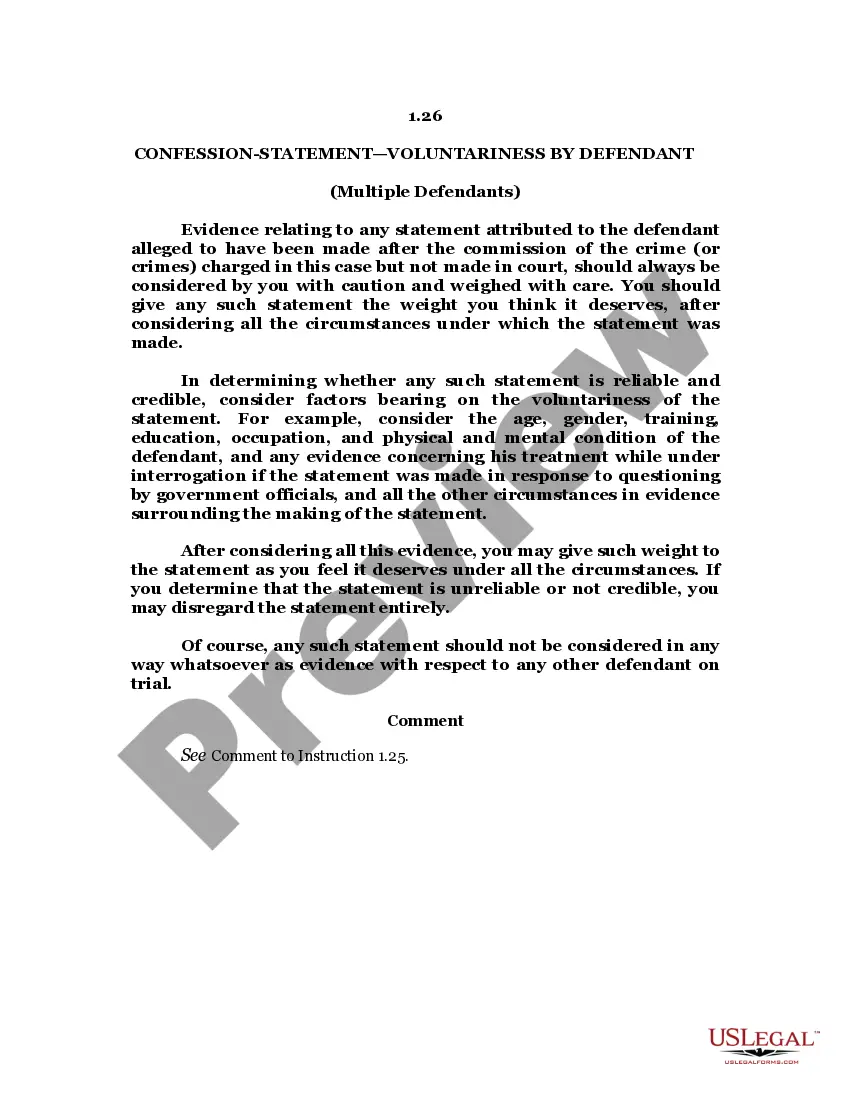
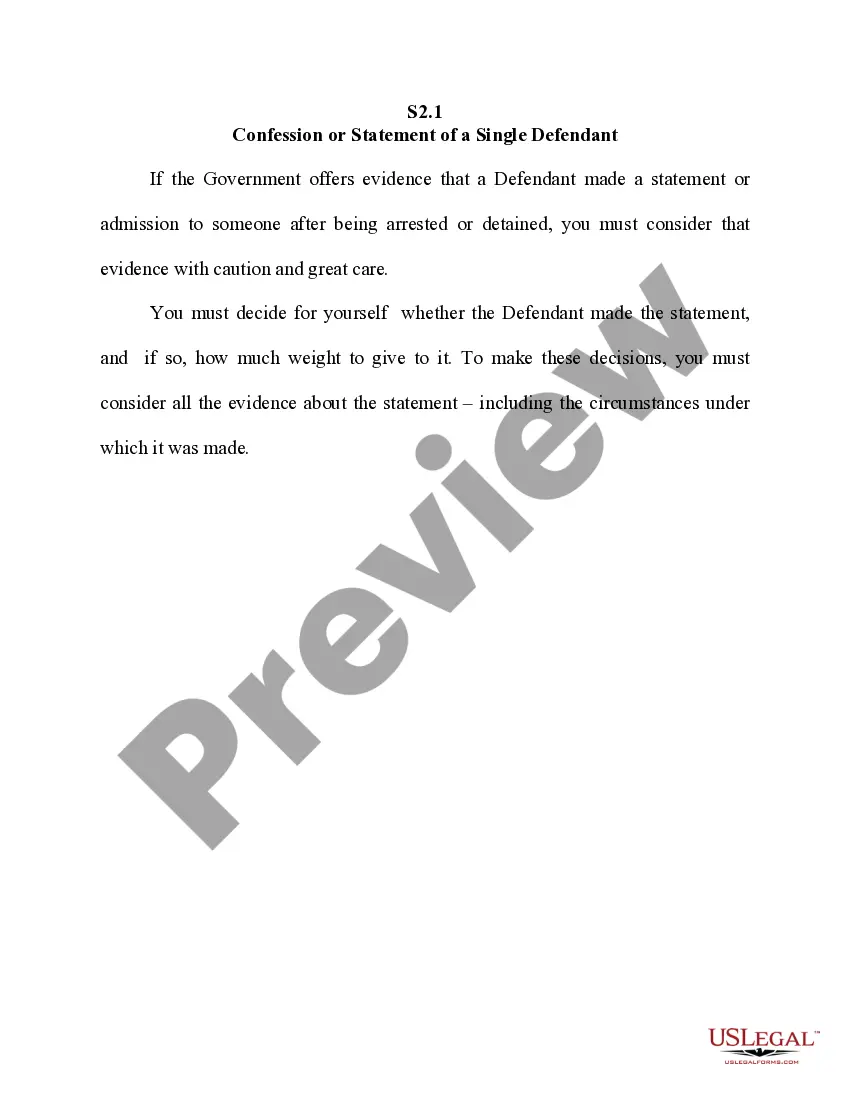
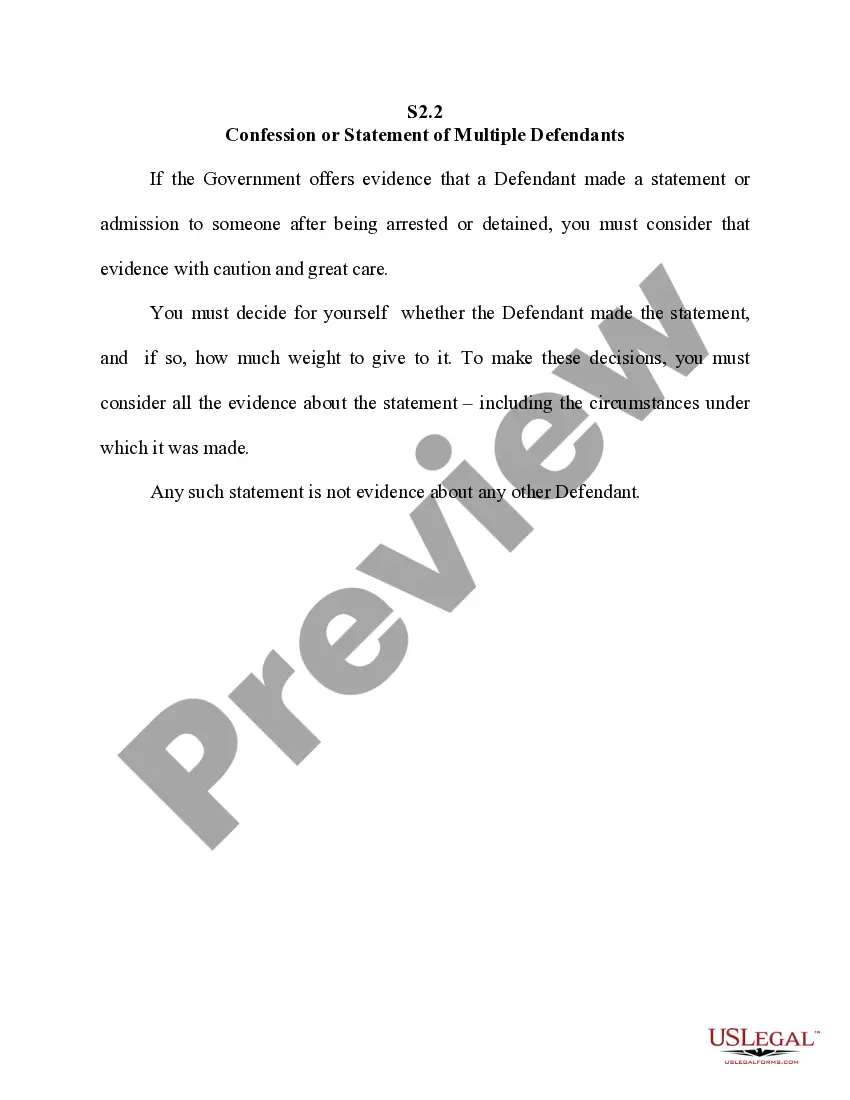
The Confession - Statement - Voluntariness (Multiple Defendants) form is a legal document used in criminal cases involving multiple defendants. This form assesses whether statements made by a defendant were done so voluntarily and knowingly after an alleged crime. It outlines the parameters that a jury must consider regarding the weight of the confession, while emphasizing that the statement cannot be used against co-defendants, ensuring fairness in trial proceedings.
What’s included in this form
- Factors for consideration: age, sex, education, and mental condition of the defendant.
- Details pertaining to the defendantâs treatment during interrogation.
- Guidance on how to weigh statements based on circumstantial evidence.
- Clarification about the exclusivity of confessions among multiple defendants.
- Relevant case law references that provide context to the legal instructions.


When to use this form
This form should be utilized during a criminal trial involving multiple defendants where one or more defendants have made confessions. It is particularly important in situations where the admissibility of these confessions might impact the fairness of the trial or the outcome for the co-defendants.
Who this form is for
- Defense attorneys representing clients in criminal cases.
- Prosecutors who need to assess the admissibility of confessions made by defendants.
- Judges overseeing trials involving multiple defendants and confessions.
- Legal scholars studying case law pertaining to confessions in criminal law.
Completing this form step by step
- Identify the defendants involved in the case.
- Review the statements made by each defendant and gather evidence surrounding them.
- Consider the various factors such as age, mental state, and interrogation conditions.
- Document your findings on whether the statements were made voluntarily.
- Ensure the form is tailored to emphasize the separation of each defendantâs statements.
Is notarization required?
This form does not typically require notarization unless specified by local law. It is advisable to check local regulations to confirm any specific requirements.
Get your form ready online
Our built-in tools help you complete, sign, share, and store your documents in one place.
Make edits, fill in missing information, and update formatting in US Legal Forms—just like you would in MS Word.
Download a copy, print it, send it by email, or mail it via USPS—whatever works best for your next step.
Sign and collect signatures with our SignNow integration. Send to multiple recipients, set reminders, and more. Go Premium to unlock E-Sign.
If this form requires notarization, complete it online through a secure video call—no need to meet a notary in person or wait for an appointment.
We protect your documents and personal data by following strict security and privacy standards.

Make edits, fill in missing information, and update formatting in US Legal Forms—just like you would in MS Word.

Download a copy, print it, send it by email, or mail it via USPS—whatever works best for your next step.

Sign and collect signatures with our SignNow integration. Send to multiple recipients, set reminders, and more. Go Premium to unlock E-Sign.

If this form requires notarization, complete it online through a secure video call—no need to meet a notary in person or wait for an appointment.

We protect your documents and personal data by following strict security and privacy standards.
Avoid these common issues
- Failing to separate the confessions of co-defendants in the documentation.
- Overlooking crucial factors that might indicate coercion during interrogation.
- Using the confession as evidence against other defendants improperly.
Why use this form online
- Accessible anytime, allowing for immediate download and use.
- Easily editable to fit the specific requirements of the case at hand.
- Trusted templates crafted by licensed attorneys ensure legal compliance.
- The form helps to document and assess the voluntariness of confessions, which is crucial for their admissibility in court.
- It protects the rights of defendants, ensuring fair treatment in legal proceedings.
- Understanding the use of this form can assist in avoiding legal pitfalls related to co-defendant statements in trials.
What to keep in mind
- The Confession - Statement - Voluntariness form is essential for ensuring the fair evaluation of confessions in multi-defendant cases.
- Complaints regarding treatment during interrogation can impact the confession's validity.
- Each confession must be analyzed independently to prevent prejudice among defendants.
Looking for another form?
Form popularity
FAQ
The trial judge in determining the issue of voluntariness shall take into consideration all the circumstances surrounding the giving of the confession, including (1) the time elapsing between arrest and arraignment of the defendant making the confession, if it was made after arrest and before arraignment, (2) whether
United States v. Ford, 51 MJ 445 (the prosecution has the burden of establishing the admissibility of a confession, establishing by a preponderance of the evidence that the confession was voluntary).
To determine whether a confession is voluntary, the court must assess the totality of all the surrounding circumstances?both the characteristics of the defendant and the details of the interrogation. Factors to be considered include: The defendant's lack of education. The defendant's age.
Due process. The due process voluntariness test requires that a confession be the result of a free and voluntary choice and not be the product of compulsion. Courts decide whether a confession is voluntary by analyzing the totality of the circumstances.
The court must consider several factors to determine whether a confession was voluntary, including the individual's age, intelligence, education, and mental condition, as well as the circumstances surrounding the confession, such as the length of the interrogation, the presence of any promises or threats, and the
Finally, confessions obtained with duress are inherently unreliable. Voluntariness is determined by a factfinder (judge or jury) by examining and taking into consideration the totality of the circumstances.
A confession is considered voluntary when made of the free will and of the accused, without fear or threat of harm and without hope or promise of benefit, reward, or immunity. Confessions generally include details of the crime.
Individuals who are highly suggestible tend to have poor memories, high levels of anxiety, low self-esteem, and low assertiveness, personality factors that also make them more vulnerable to the pressures of interrogation and thus more likely to confess falsely.