This Notice of Default in Payment of Rent as Warning Prior to Demand to Pay or Terminate for Non-Residential or Commercial Property form is for use by a Landlord to inform Tenant of Tenant's default in the payment of rent as a warning prior to a pay or terminate notice. The form advises the Tenant of the due date of rent and the consequences of late payment. This form may be used where you desire to remind the Tenant of payment terms, the default, demand payment and inform the Tenant that under the laws of this state or lease the Landlord may terminate in rent is not paid timely.
Maine Notice of Default in Payment of Rent as Warning Prior to Demand to Pay or Terminate for Residential Property
State:
Maine
Control #:
ME-1300LT
Format:
Word;
Rich Text
Instant download
Description
Free preview
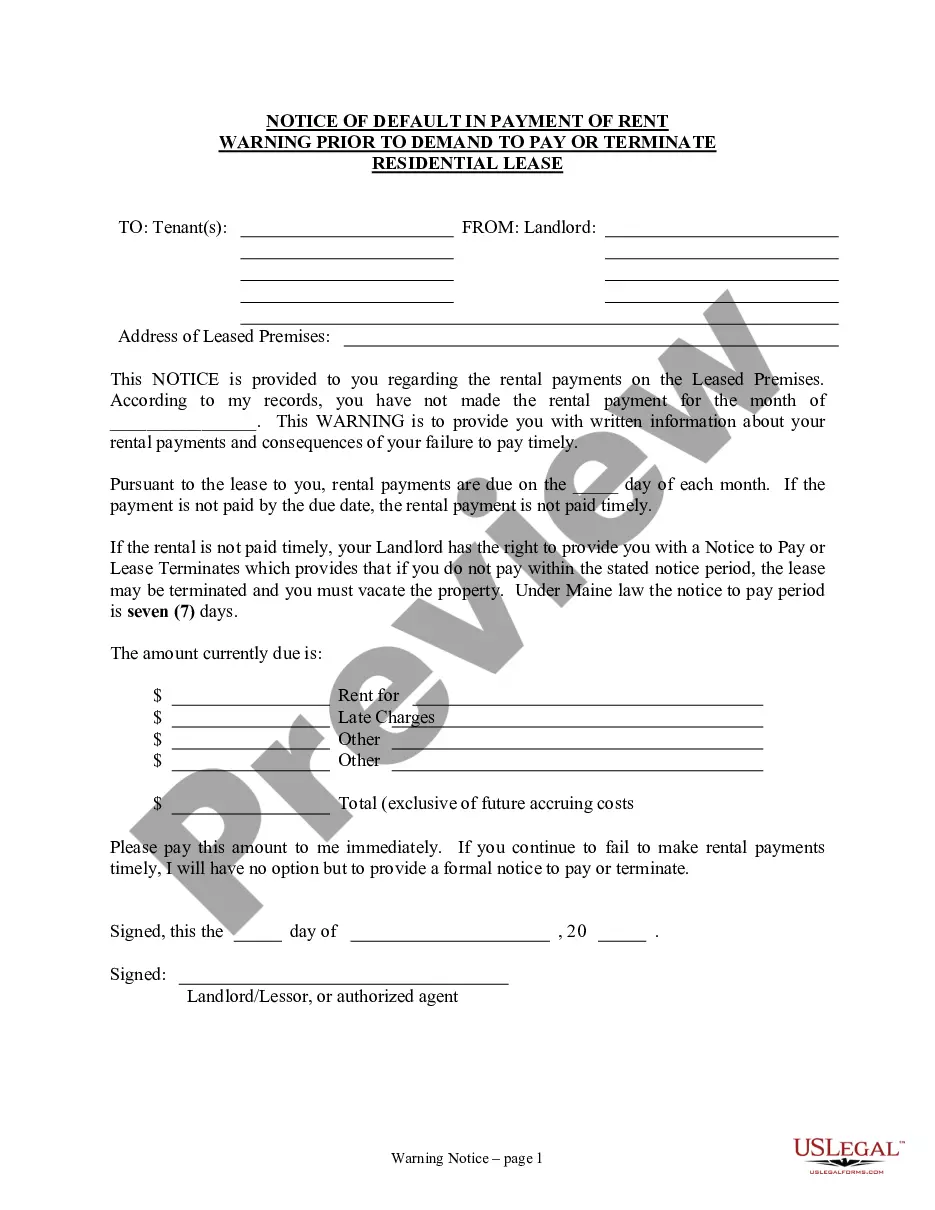
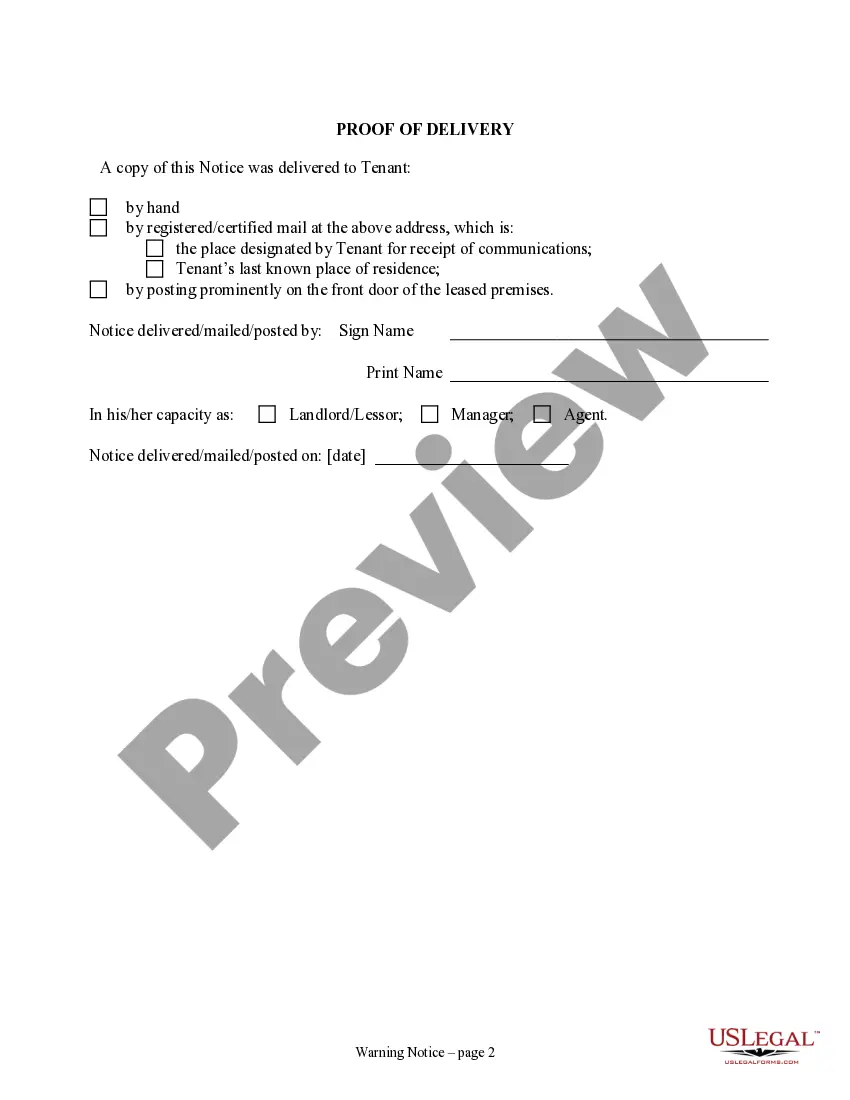
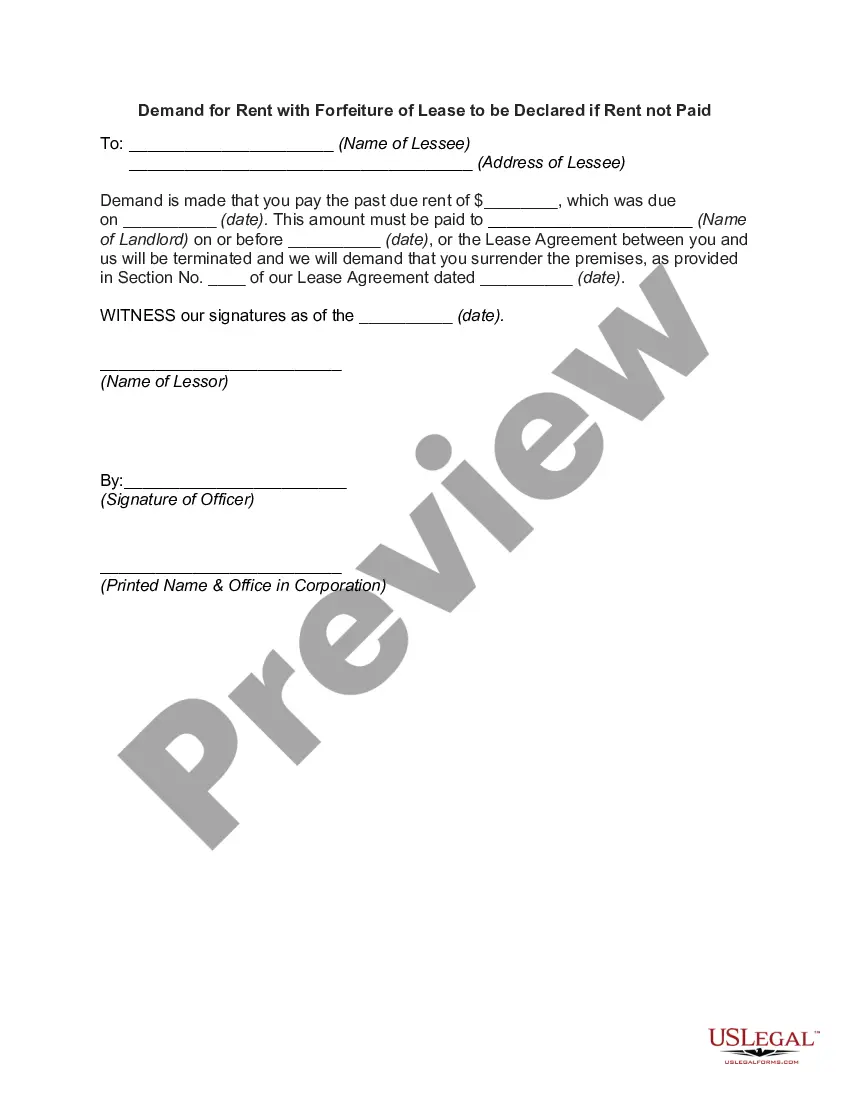
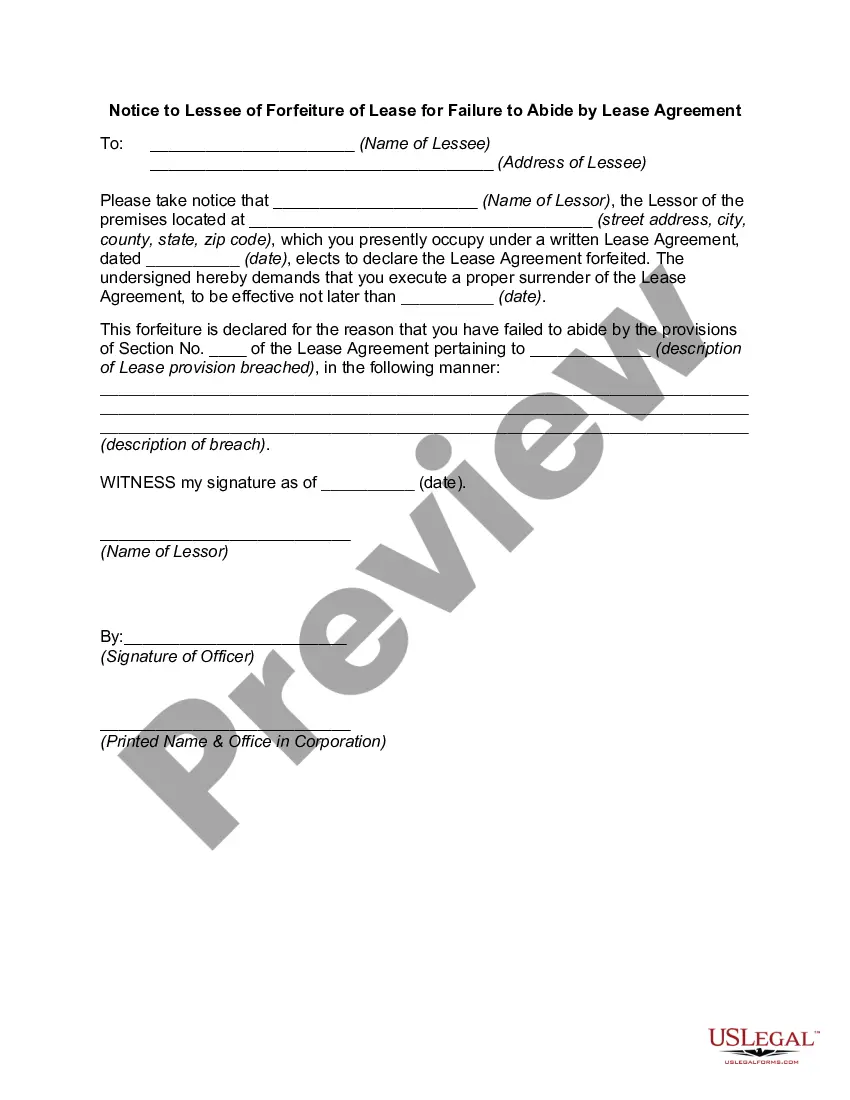

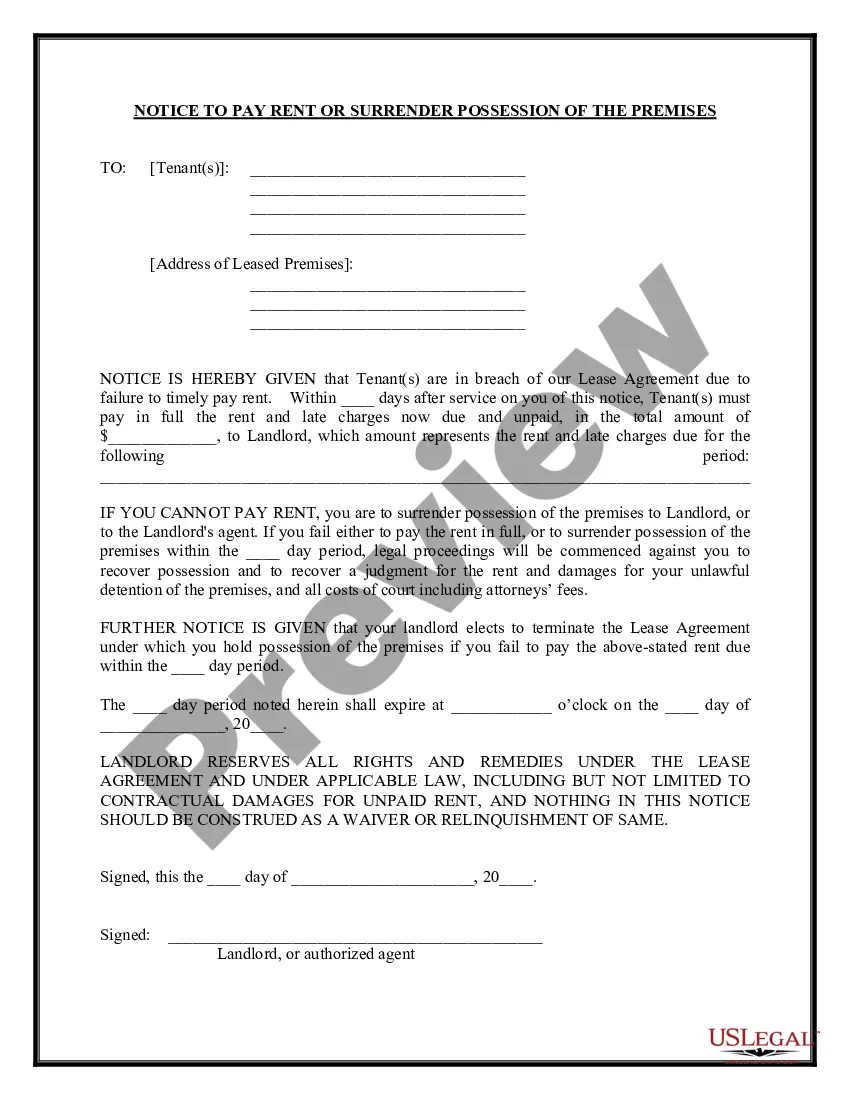

How to fill out Maine Notice Of Default In Payment Of Rent As Warning Prior To Demand To Pay Or Terminate For Residential Property?
Greetings to the largest repository of legal documents, US Legal Forms. Here you can discover any template including Maine Notice of Default in Payment of Rent as Warning Prior to Demand to Pay or Terminate for Residential Property and save as many as you desire.
Prepare formal paperwork in just a few hours instead of days or weeks, without incurring significant costs with a lawyer or legal advisor. Obtain the specific state template with just a few clicks and be assured that it was crafted by our experienced legal experts.
If you’re already a registered user, simply Log In to your account and click Download next to the Maine Notice of Default in Payment of Rent as Warning Prior to Demand to Pay or Terminate for Residential Property you need. Since US Legal Forms is an online platform, you will always have access to your saved documents, no matter the device you are using. Locate them within the My documents section.
Once you've finalized the Maine Notice of Default in Payment of Rent as Warning Prior to Demand to Pay or Terminate for Residential Property, forward it to your attorney for validation. It’s an additional step but a crucial one to ensure you're fully protected. Join US Legal Forms today and gain access to thousands of reusable templates.
- If you don’t have an account yet, what are you waiting for? Follow our instructions below to get started.
- If this is a document specific to a state, verify its legality in your residing state.
- Examine the description (if available) to ensure it’s the correct template.
- Explore more details with the Preview option.
- If the template fulfills your requirements, click Buy Now.
- To create an account, select a pricing plan.
- Use a credit card or PayPal account to register.
- Download the document in the format you need (Word or PDF).
- Print the document and complete it with your or your business’s details.
Form popularity
FAQ
The notice of default clause is a contractual provision that outlines the steps a landlord must take if a tenant fails to meet their rental obligations. In the context of Maine, this includes the Notice of Default in Payment of Rent as Warning Prior to Demand to Pay or Terminate for Residential Property. This clause helps protect landlords' rights while also providing tenants the opportunity to rectify their payment issues before further actions are taken. Accessing tools and templates through platforms like US Legal Forms can assist landlords in drafting compliant and effective notices.
Evicting a tenant in Maine typically involves a multi-step process that can take several weeks to months, depending on the circumstances. After issuing the Notice of Default in Payment of Rent as Warning Prior to Demand to Pay or Terminate for Residential Property, landlords must allow tenants time to remedy the situation. If the issue remains unresolved, landlords can file an eviction suit, which may add additional time before reaching a final resolution. Understanding these timelines is crucial for landlords seeking to navigate the eviction process smoothly.
In the context of a lease, default refers to a tenant's failure to fulfill their contractual obligations, such as timely rent payments. When a lease is in default, the landlord may have the right to take legal action, including eviction. Being aware of the conditions that lead to default can help tenants avoid potential legal troubles. The Maine Notice of Default in Payment of Rent as Warning Prior to Demand to Pay or Terminate for Residential Property allows landlords to address these issues proactively.
A default letter is a formal notice sent by a landlord when a tenant has not adhered to the terms of their lease. This letter outlines the specific default, such as unpaid rent, and sets a timeframe for the tenant to rectify the situation. It is vital to convey the seriousness of the issue while also giving the tenant a chance to respond. Issuing a Maine Notice of Default in Payment of Rent as Warning Prior to Demand to Pay or Terminate for Residential Property serves this purpose effectively.
A rent default occurs when a tenant fails to pay the rent on time, violating the lease agreement. This situation creates a legal basis for landlords to pursue eviction actions. Understanding the implications of a rent default is crucial for both landlords and tenants in Maine. By issuing a Maine Notice of Default in Payment of Rent as Warning Prior to Demand to Pay or Terminate for Residential Property, landlords can formally notify tenants of the issue.
Filling out an eviction notice template requires attention to detail. Begin by clearly stating the tenant's name and address. Next, specify the reason for the eviction, such as failing to pay rent, and include the amount owed. Lastly, provide a deadline for the tenant to respond, referencing the Maine Notice of Default in Payment of Rent as Warning Prior to Demand to Pay or Terminate for Residential Property.
Your landlord can evict you if you fall behind with your rent - you could lose your home. Coronavirus (COVID-19) has not changed this, but there are new rules that mean your landlord must give you at least 6 months' notice if they plan to evict you, unless you owe at least 6 months' rent.
Dear (Name of landlord or manager), This letter constitutes my written (number of days' notice that you need to give based on your lease agreement)-day notice that I will be moving out of my apartment on (date), the end of my current lease. I am leaving because (new job, rent increase, etc.)
The date you're submitting your notice. The date you're moving. Information on your current home the address and the landlord's name. A statement declaring that you intend to leave the home. A straightforward statement that you're providing this letter, 30 days out, per your lease agreement.
If you have rent arrears, your landlord may try and evict you. This is called seeking possession. To do this, in most cases they will need to follow a procedure which involves getting a court order. They can't make you leave your home without going to court first.