Sample Letter for Directive - Studies and Investigations
Overview of this form
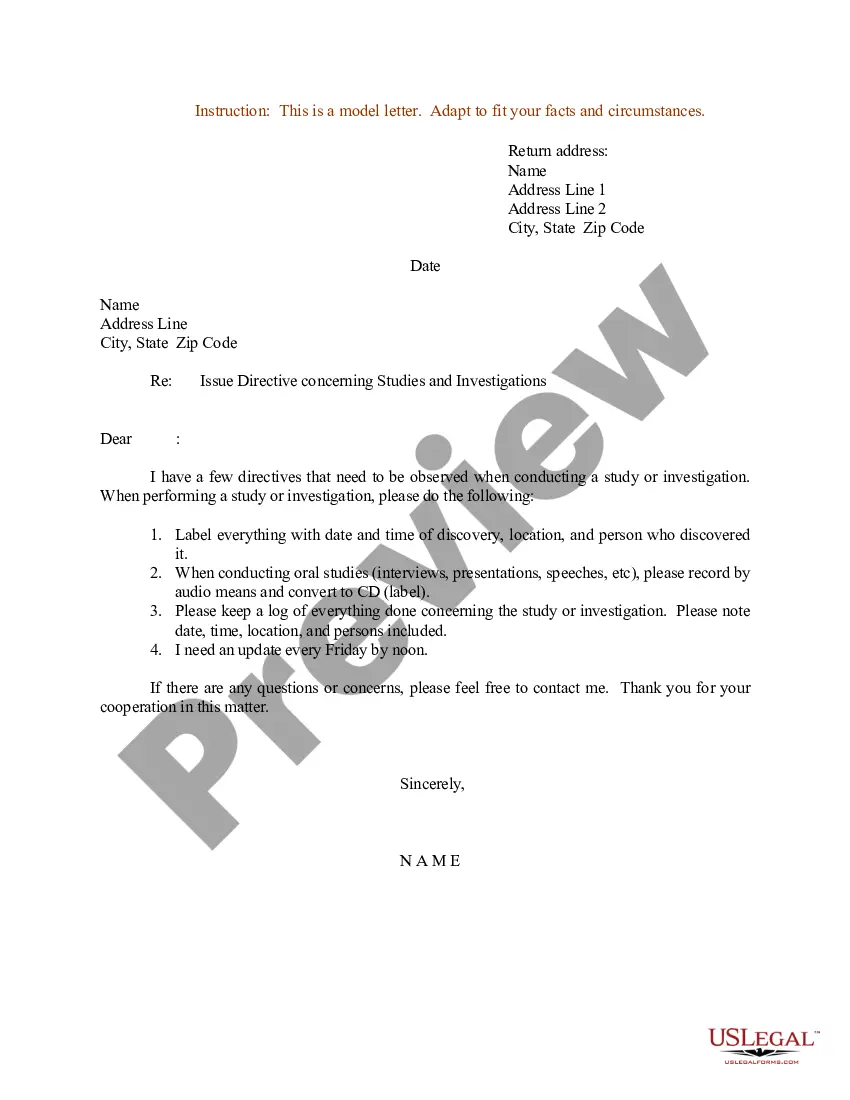
The Sample Letter for Directive - Studies and Investigations is a template letter designed to guide users in issuing directives related to studies and investigations. Unlike other forms that focus on legal agreements, this sample letter provides a structured format for communication, ensuring that all necessary details related to the study are documented and communicated effectively.
Main sections of this form
- Return address: This includes the sender's name and contact details.
- Date: Clearly specifies when the directive is issued.
- Recipient details: The name and address of the person receiving the directive.
- Directive content: Clear instructions regarding the audio recording and documentation of studies.
- Request for updates: Specifies the need for regular updates and communication.
- Closing signature: Space for the sender's name for formal closure.
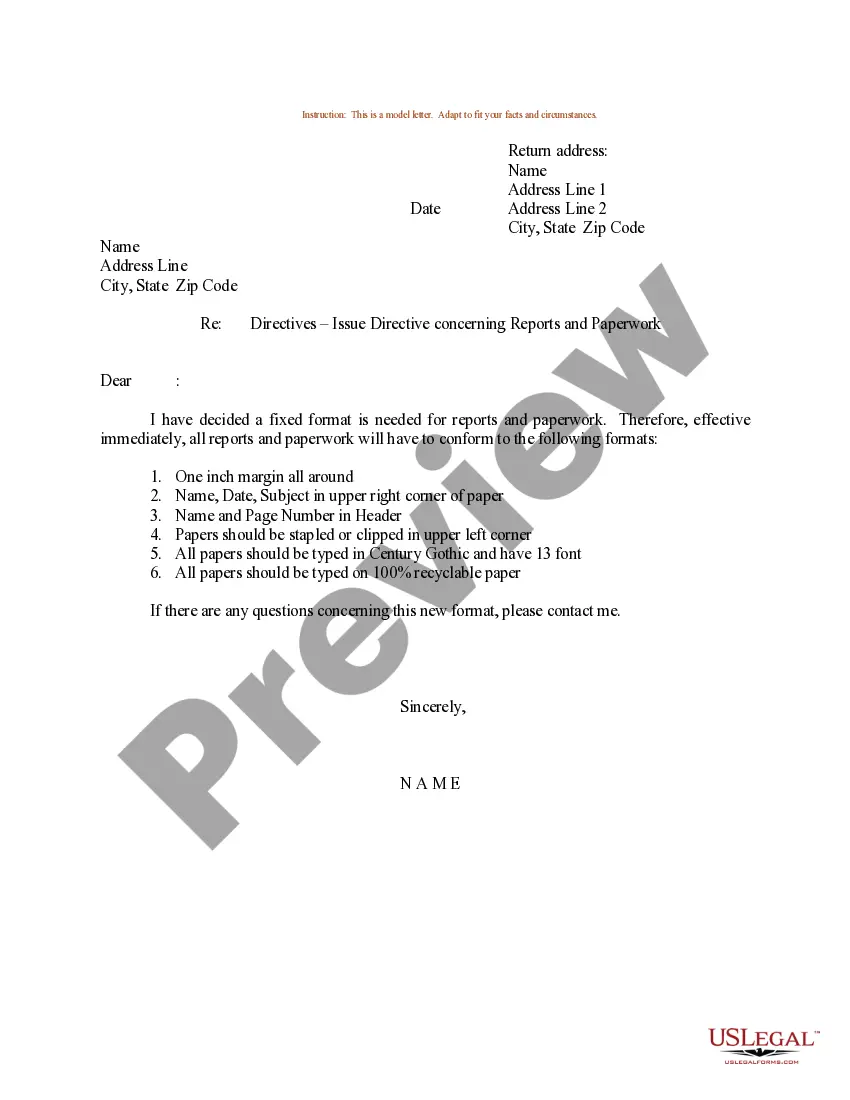
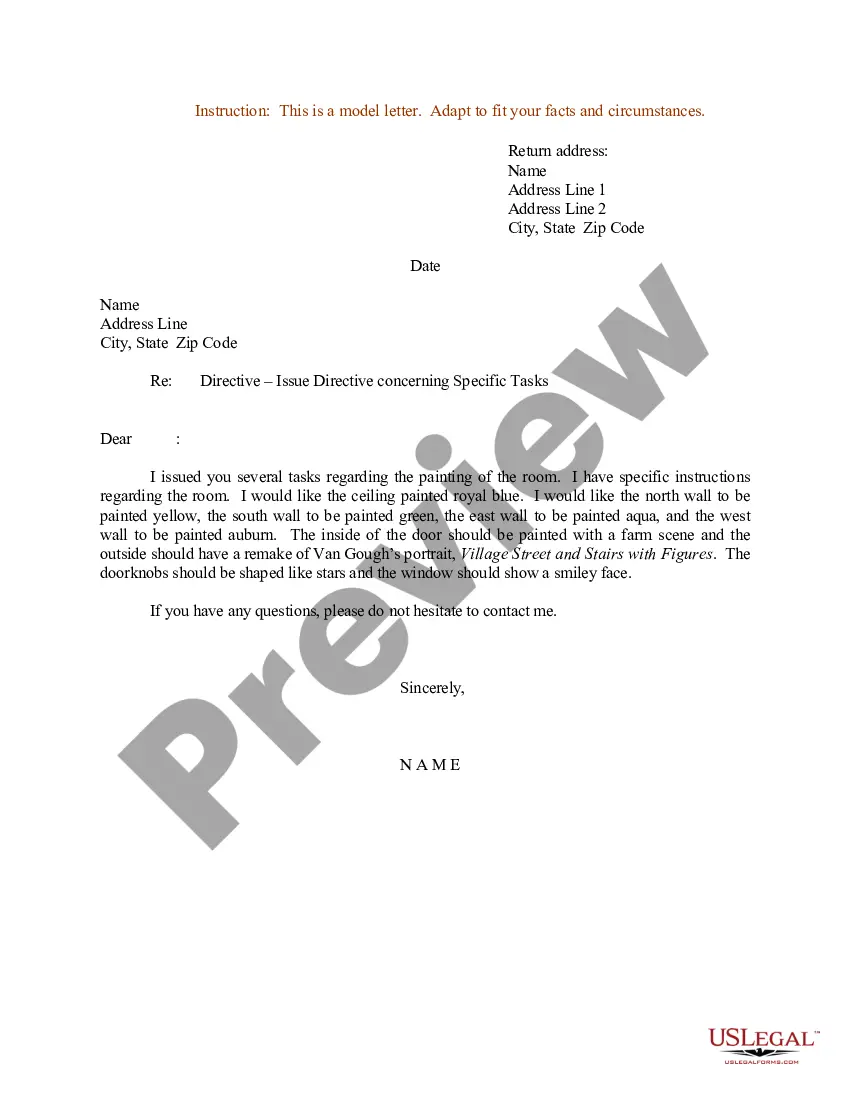
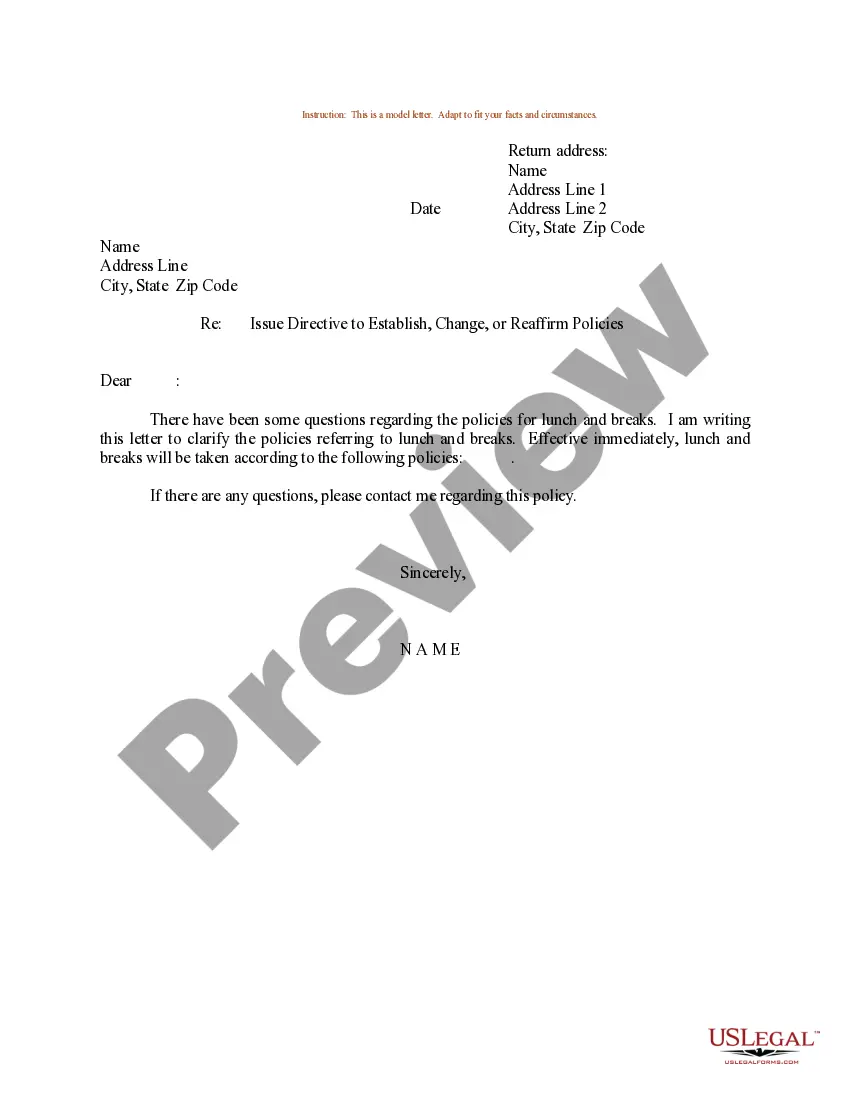
When to use this document
This form is useful when an individual or organization needs to communicate specific directives regarding studies or investigations. It is ideally suited for researchers, project managers, or team leaders who need to outline procedures for conducting interviews or presentations and require accountability through documentation and reporting.
Who should use this form
- Project managers overseeing research studies.
- Researchers conducting interviews or presentations.
- Team leaders responsible for guiding study protocols.
- Any individual or organization requiring formal communication of research directives.
Completing this form step by step
- Identify yourself: Fill in your name and contact information in the return address section.
- Enter the date: Clearly write the date the directive is being sent.
- Provide recipient details: Fill in the recipient's name and address accurately.
- Draft the directive: Clearly state the instructions regarding audio recordings and documentation.
- Specify update requirements: Indicate when updates are needed (e.g., every Friday by noon).
- Sign off: Include your name in the closing section for a formal finish.
Notarization requirements for this form
Notarization is generally not required for this form. However, certain states or situations might demand it. You can complete notarization online through US Legal Forms, powered by Notarize, using a verified video call available anytime.
Get your form ready online
Our built-in tools help you complete, sign, share, and store your documents in one place.
Make edits, fill in missing information, and update formatting in US Legal Forms—just like you would in MS Word.
Download a copy, print it, send it by email, or mail it via USPS—whatever works best for your next step.
Sign and collect signatures with our SignNow integration. Send to multiple recipients, set reminders, and more. Go Premium to unlock E-Sign.
If this form requires notarization, complete it online through a secure video call—no need to meet a notary in person or wait for an appointment.
We protect your documents and personal data by following strict security and privacy standards.

Make edits, fill in missing information, and update formatting in US Legal Forms—just like you would in MS Word.

Download a copy, print it, send it by email, or mail it via USPS—whatever works best for your next step.

Sign and collect signatures with our SignNow integration. Send to multiple recipients, set reminders, and more. Go Premium to unlock E-Sign.

If this form requires notarization, complete it online through a secure video call—no need to meet a notary in person or wait for an appointment.

We protect your documents and personal data by following strict security and privacy standards.
Mistakes to watch out for
- Failing to include the recipient's full address, leading to communication issues.
- Not specifying the date for updates, causing confusion about deadlines.
- Omitting important details regarding the study directives.
- Using vague language that may lead to misinterpretation of the instructions.
Benefits of completing this form online
- Convenience of accessing a ready-to-use template that can be easily customized.
- Editability allows for quick updates to suit specific needs.
- Reliable format ensures that all important details are included systematically.
Legal use & context
- This letter can serve as legally admissible documentation of directives given for studies or investigations.
- Maintaining detailed records as outlined in the letter can protect against potential liabilities.
- The clear structure of this letter enhances its enforceability in professional settings.
Summary of main points
- The Sample Letter for Directive - Studies and Investigations is essential for formalizing communication regarding research directives.
- Ensure all relevant details, including recipient information and directives, are accurately provided.
- Regular updates and clarity in instructions improve accountability and project outcomes.
Looking for another form?

Form popularity
FAQ
A directive memo states a set of instructions or directions for the reader to follow. Directive memos are also used when a change in policy or something of the like happens in the workplace.
We create a directive by decorating a class with the @Directive decorator. The convention is to associate a directive to an element via an attribute selector, that is the name of the attribute wrapped in . We can inject a reference to the element the directive is associated with to the constructor of the directive.
A directive is an order or direction issued for other by an authority. Your reason should be clear and the reason of issuing the letter must be obvious and understandable.You can also mention that you want follow up of the task and when it should be sent.
A directive is defined as an order or an official instruction. When your boss orders you to call a client, this is an example of a directive.
A directive is defined as an order or an official instruction. When your boss orders you to call a client, this is an example of a directive.
My only directive to our group was a strong suggestion we act unanimously. While I wanted to wake Betsy and explain the situation I felt following Julie's directive might free her to be more forthcoming. All have verbal directive particles.
Definition of directive (Entry 2 of 2) : something that serves to direct, guide, and usually impel toward an action or goal especially, government : an authoritative order or instrument issued by a high-level body or official a presidential directive.
Provide Clear Instructions. Once you have a clear idea of what you want to achieve write it clearly. Be Concise and to the Point. Create Your Plan Step-by-Step. One Issue Per Directive. When in Doubt, Refer to Your Previous Directives. Use Exact Numbers.