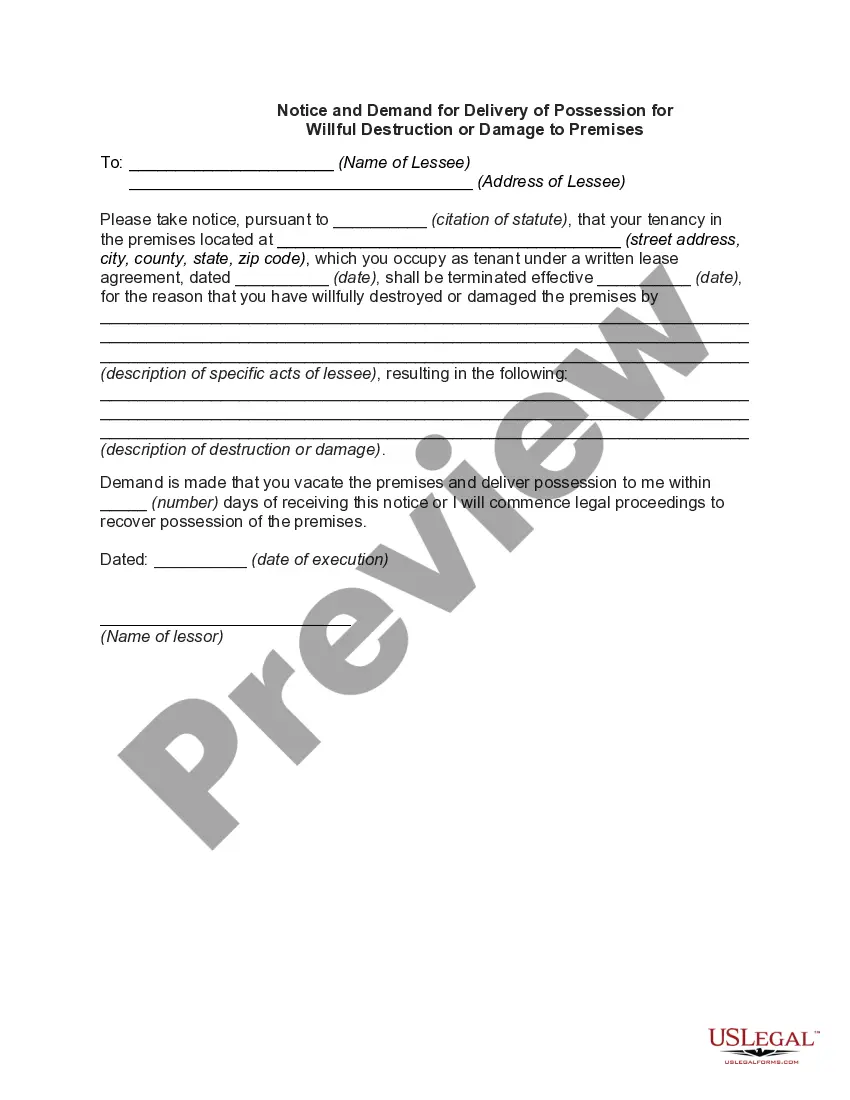
Notice and Demand for Delivery of Possession for Willful Destruction or Damage to Premises
Overview of this form
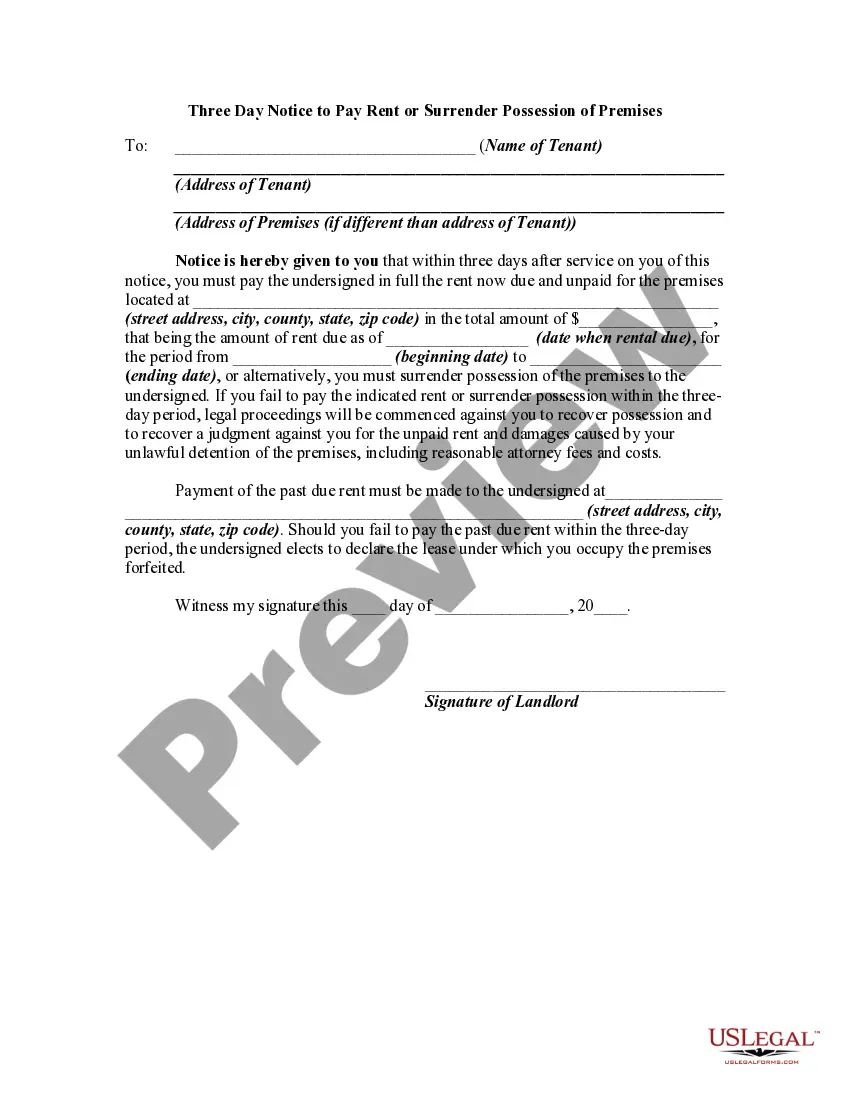
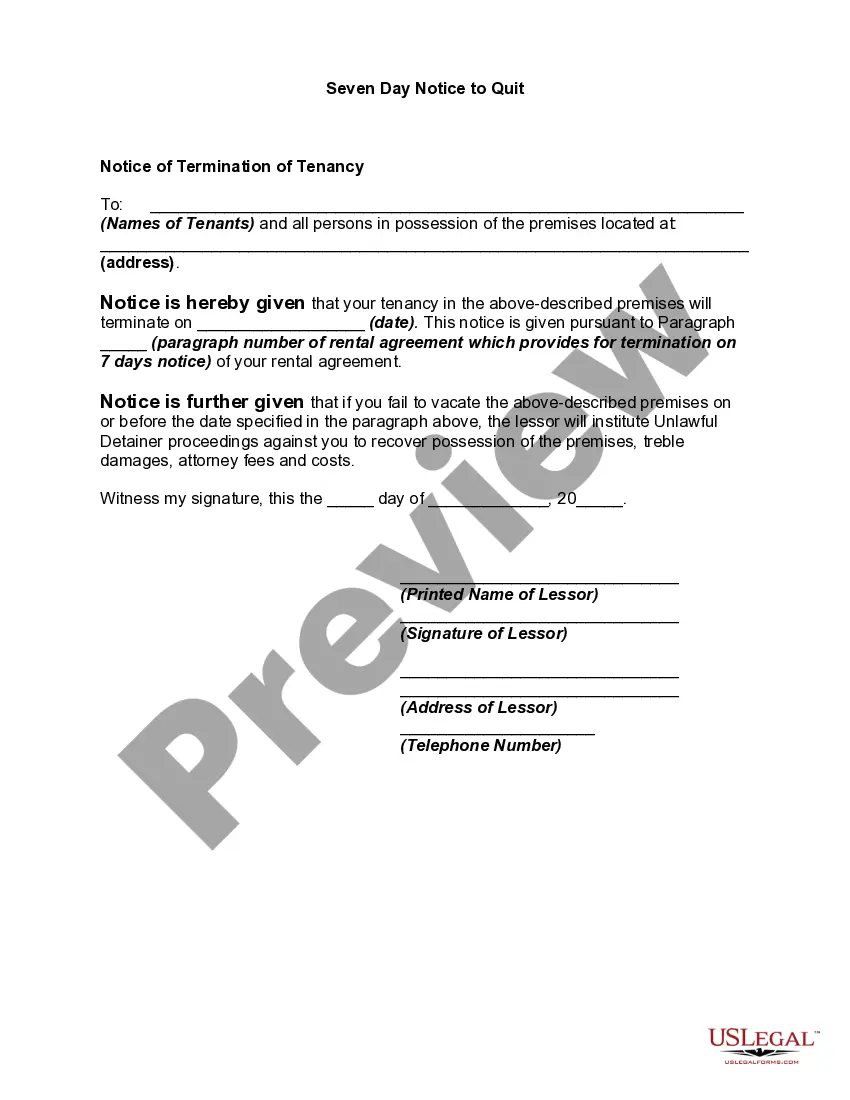
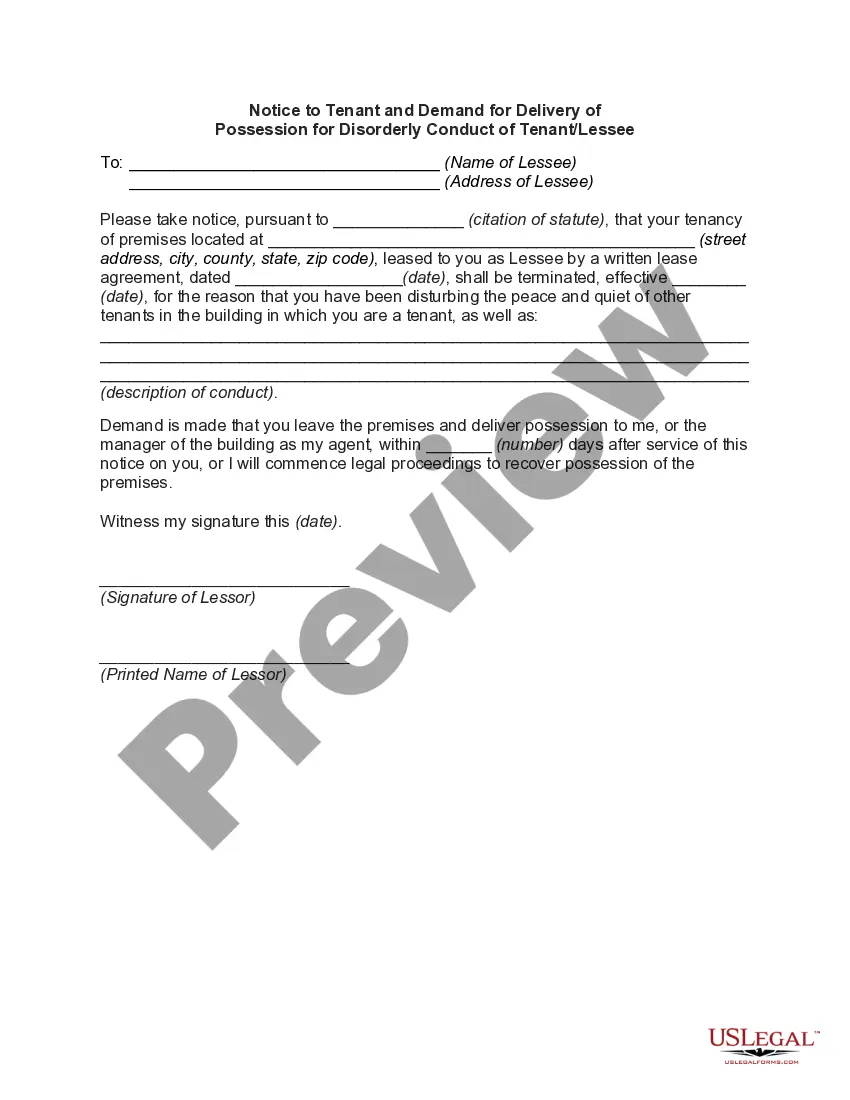
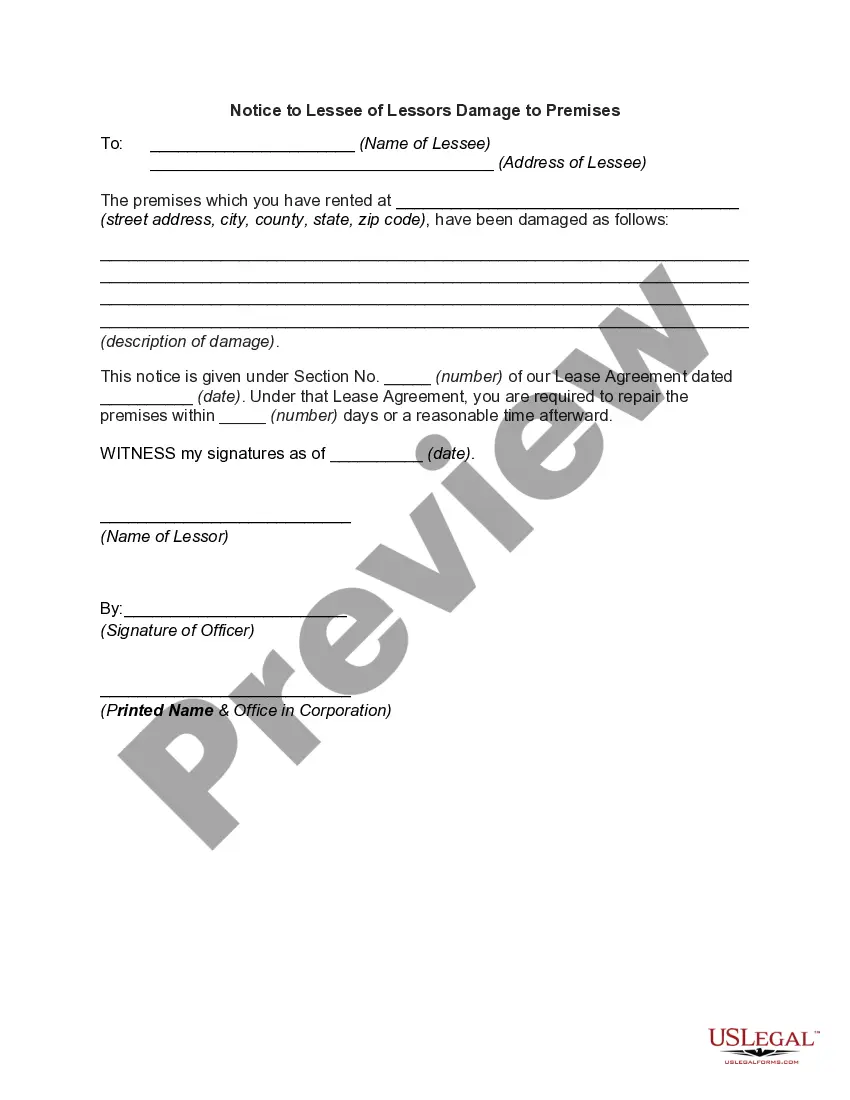
This Notice and Demand for Delivery of Possession for Willful Destruction or Damage to Premises is a legal document used by a lessor (landlord) to formally notify a tenant of destructive behavior that violates their lease agreement. This form outlines the specific damages caused and demands the tenant to vacate the property within a stipulated timeframe. It is essential for landlords seeking legal recourse for property damage caused by tenants.
Form components explained
- Name and address of the lessee (tenant).
- Details of the property being rented.
- Date and citation of applicable statute supporting notice.
- Description of destruction or damage incurred.
- Deadline for tenant to vacate the premises.
- Signature and date of the lessor (landlord).
When this form is needed
This form should be used when a landlord has evidence that a tenant has willfully damaged or destroyed property belonging to the landlord. Examples include significant alterations without consent, excessive damage beyond normal wear and tear, or any malicious activities that harm the premises. Using this form can initiate the process of either securing possession of the property or pursuing further legal action.
Who can use this document
- Landlords or lessors managing rental properties.
- Property management companies overseeing tenant agreements.
- Homeowners renting out residences to tenants.
- Legal representatives acting on behalf of property owners.
Instructions for completing this form
- Enter the name and address of the tenant in the appropriate sections.
- Specify the address of the rental property being affected.
- Cite the relevant statute that supports the termination of the lease.
- Clearly describe the damage or destruction caused by the tenant.
- Indicate the date by which the tenant must vacate.
- Sign and date the document as the lessor (landlord).
Does this document require notarization?
This form does not typically require notarization unless specified by local law. Review local regulations to confirm if notarization is necessary for validity in your jurisdiction.
Get your form ready online
Our built-in tools help you complete, sign, share, and store your documents in one place.
Make edits, fill in missing information, and update formatting in US Legal Forms—just like you would in MS Word.
Download a copy, print it, send it by email, or mail it via USPS—whatever works best for your next step.
Sign and collect signatures with our SignNow integration. Send to multiple recipients, set reminders, and more. Go Premium to unlock E-Sign.
If this form requires notarization, complete it online through a secure video call—no need to meet a notary in person or wait for an appointment.
We protect your documents and personal data by following strict security and privacy standards.
Make edits, fill in missing information, and update formatting in US Legal Forms—just like you would in MS Word.
Download a copy, print it, send it by email, or mail it via USPS—whatever works best for your next step.
Sign and collect signatures with our SignNow integration. Send to multiple recipients, set reminders, and more. Go Premium to unlock E-Sign.

If this form requires notarization, complete it online through a secure video call—no need to meet a notary in person or wait for an appointment.
We protect your documents and personal data by following strict security and privacy standards.
Typical mistakes to avoid
- Failing to provide a complete description of the damage.
- Not including the specific statute citation.
- Leaving out important timeframes for vacating the property.
- Failing to sign the document before serving it to the tenant.
Why use this form online
- Convenient access to trusted legal templates prepared by licensed attorneys.
- Editable format allows you to customize the document quickly.
- Instant download enables immediate use for urgent situations.
- Complies with legal standards ensuring enforceability.
Looking for another form?
Form popularity
FAQ
If you have rent arrears, your landlord may try and evict you. This is called seeking possession. To do this, in most cases they will need to follow a procedure which involves getting a court order.your landlord must give you notice to leave your home, this is called a notice of seeking possession or a notice to quit.
Your landlord must generally have made a claim for possession in the court within 10 months of giving you the notice, if they gave you the notice on or after 29 August 2020.
When a tenant damages property eviction is a legal recourse. You'll want to make sure you follow the proper eviction steps which include serving a proper eviction notice. If a tenant is severely damaging a rental property they are violating the lease and may be evicted for this infraction.
If your tenant has caused damages, here are a few points2026 Landlord's right: Of course, you have the right to claim against any damages caused by your tenant (not to be confused with wear and tear). Tenancy Deposit: the deposit is there to be used against damages.
Following building and housing codes. Keeping the unit safe and sanitary. Disposing of garbage. Maintaining plumbing fixtures. Properly operating all plumbing and electric fixtures. Maintaining appliances supplied by the landlord. Not damaging the unit.
In most cases when a rental property is damaged, you have the right to keep all or part of the security deposit to offset the repair costs. But again, security deposits are heavily regulated by the landlord-tenant laws in your location.
Generally a possession order is enforceable any time up until six years after the possession order was made. After that, you will need to get permission from the court (CPR 83.2(3)(a)).
If you have rent arrears, your landlord may try and evict you. This is called seeking possession. To do this, in most cases they will need to follow a procedure which involves getting a court order.your landlord must give you notice to leave your home, this is called a notice of seeking possession or a notice to quit.
Uninhabitable conditions can include dangerous ones, such as holes in the floor, unsafe or exposed wiring, or non-working air conditioning in dangerously hot summer months. Gross infestations of roaches, fleas or other pests are also uninhabitable conditions.