Employee Evaluation Form for Bartender
Overview of this form
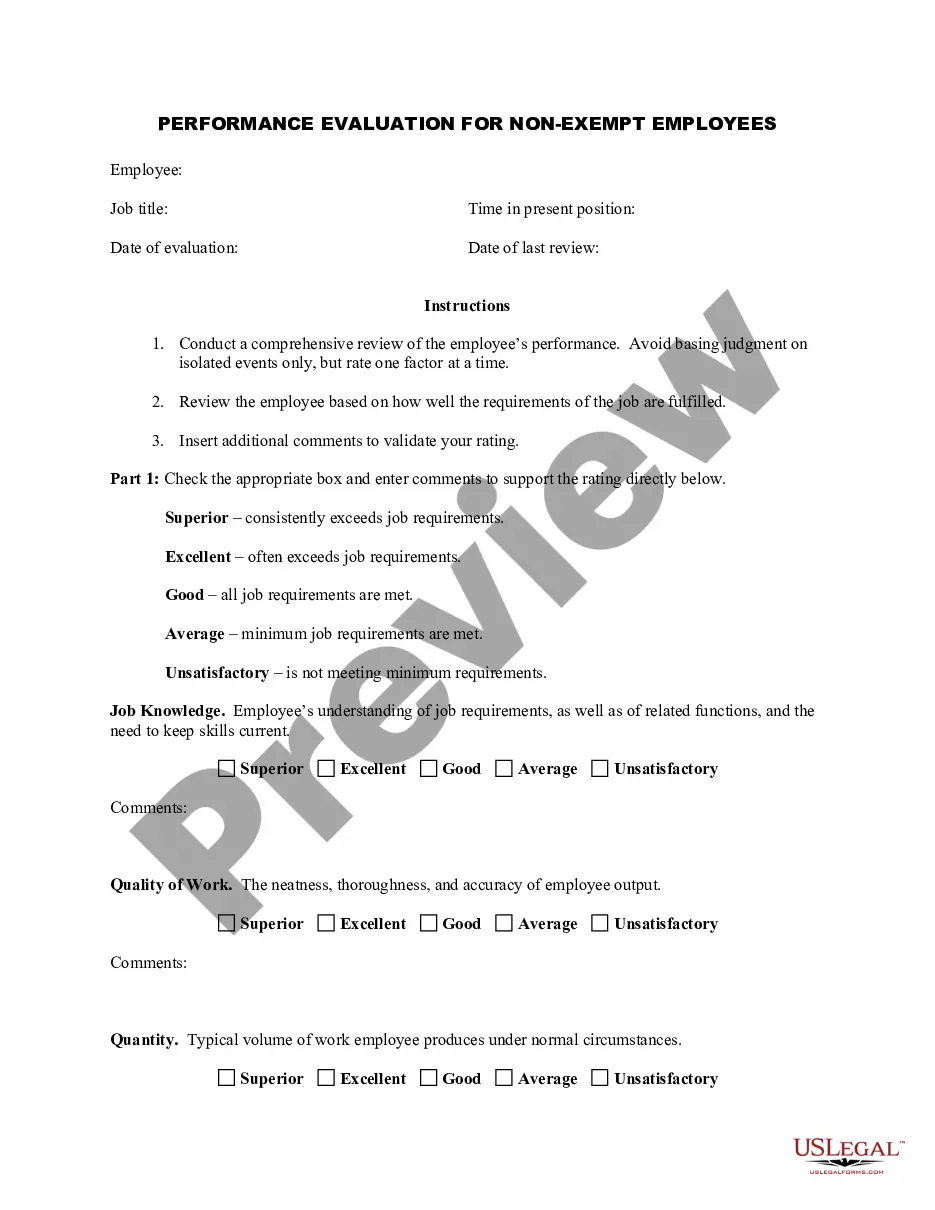
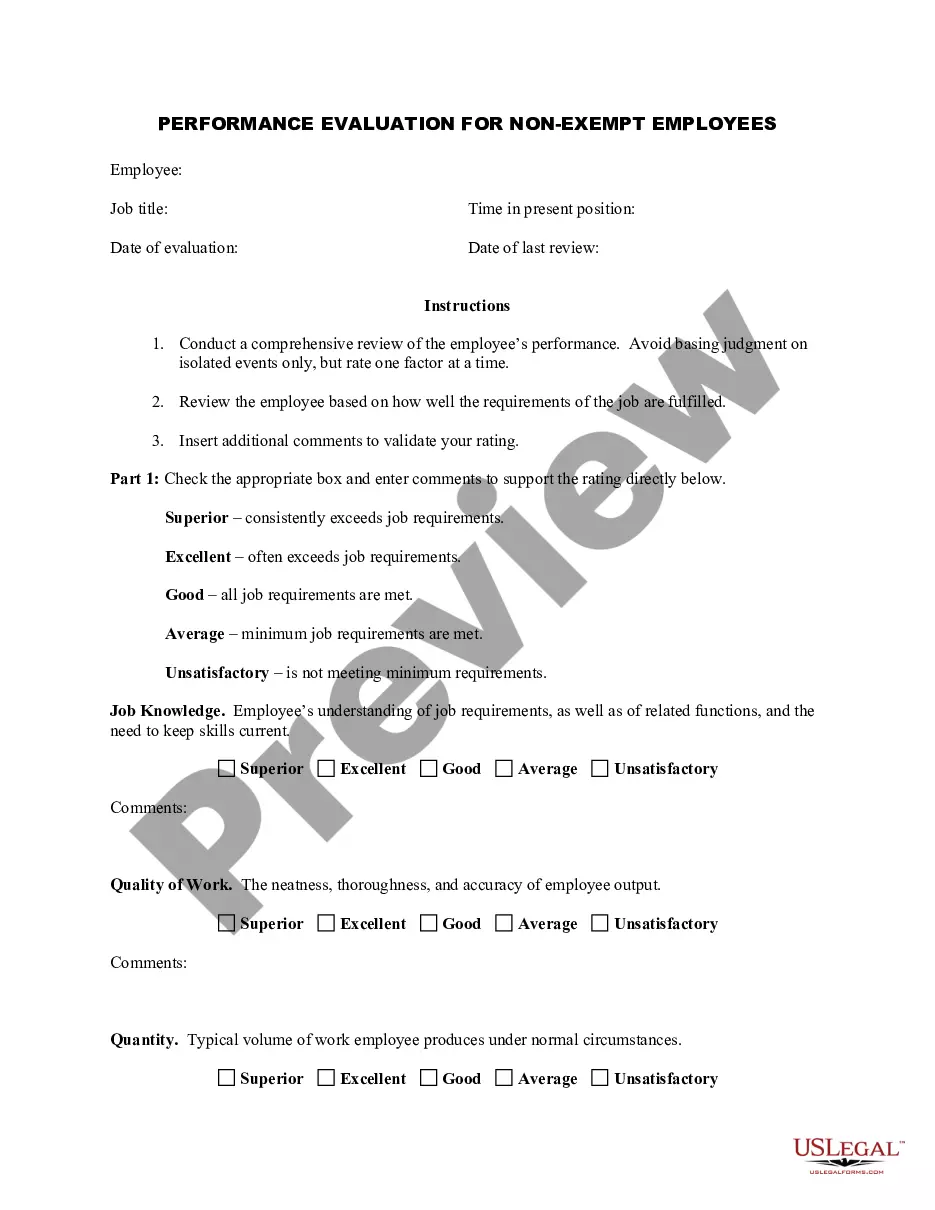
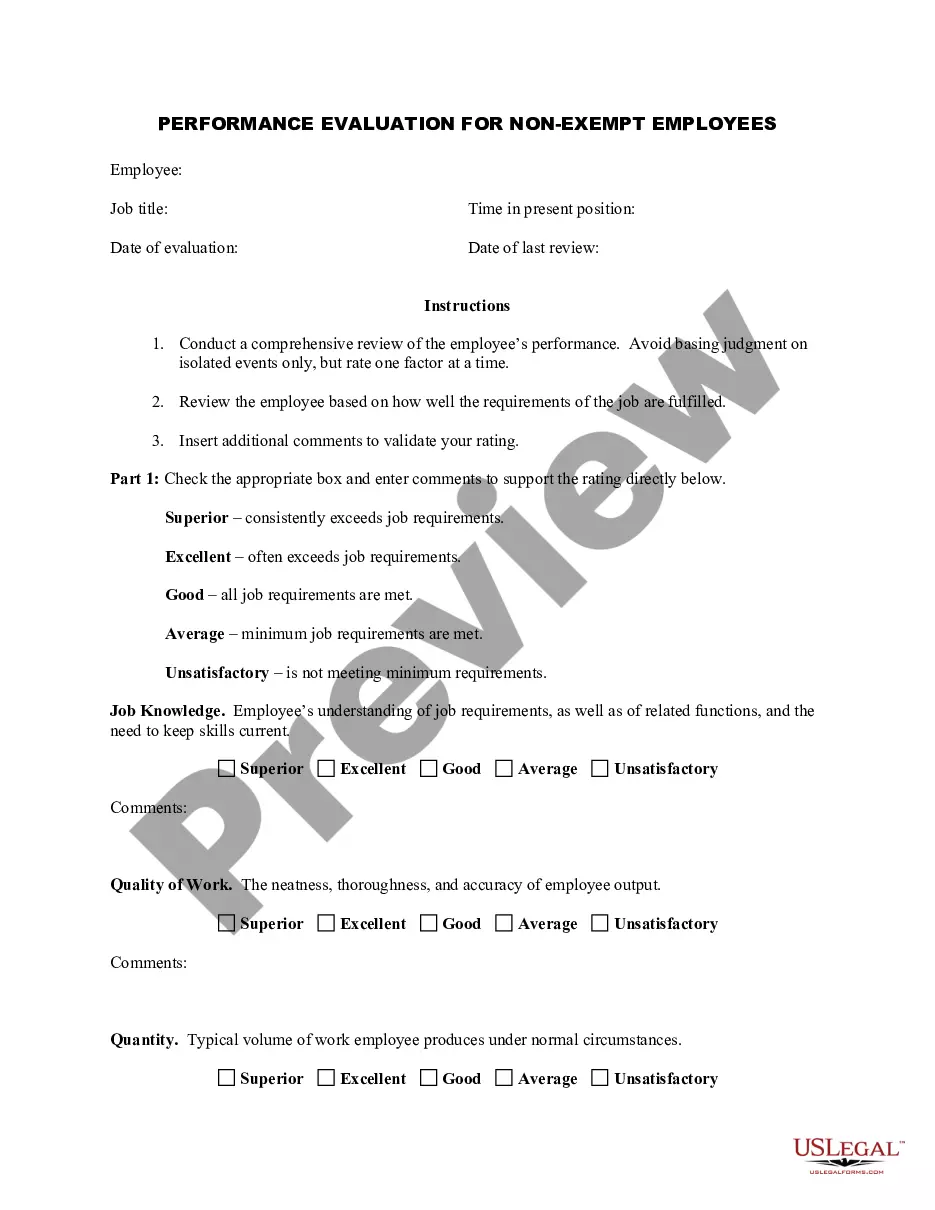
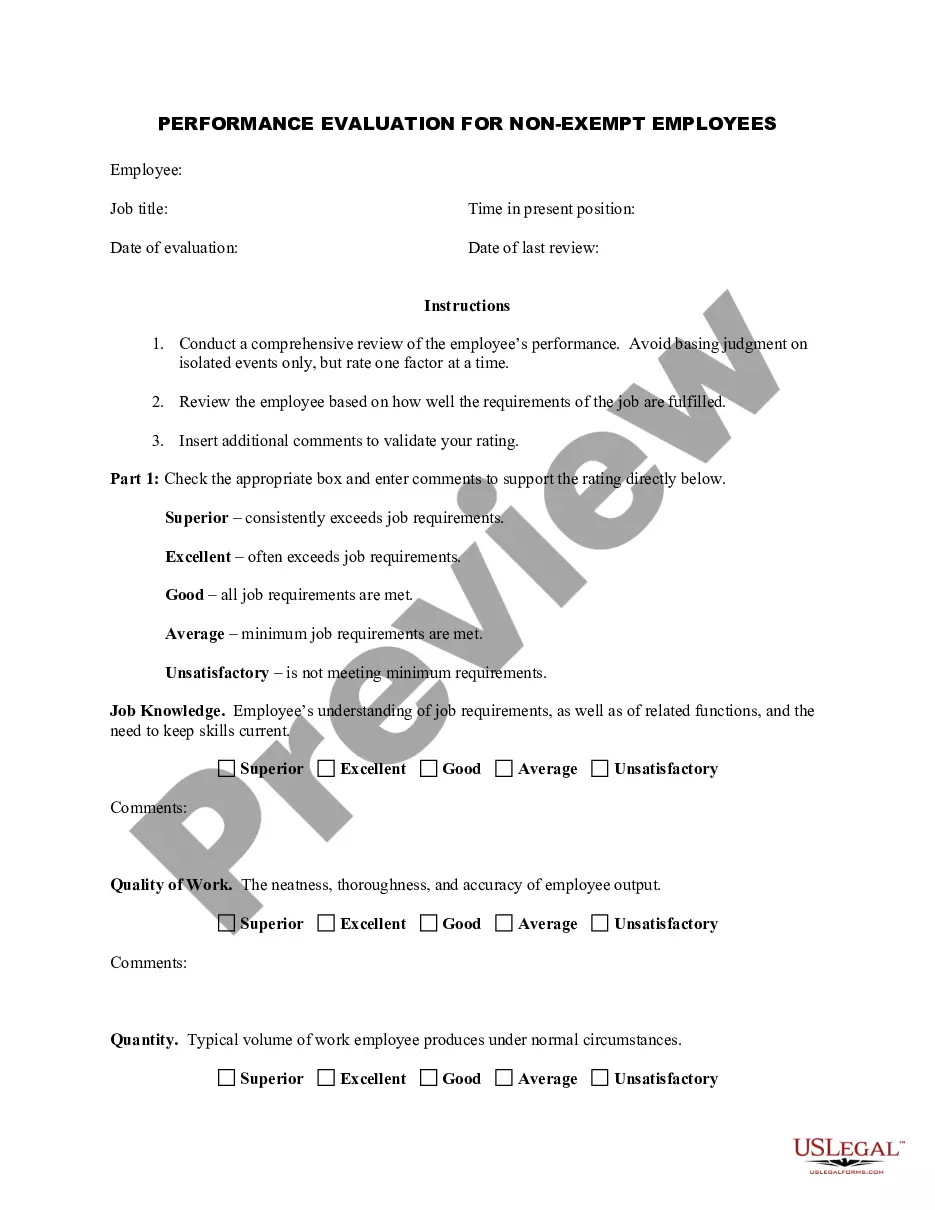
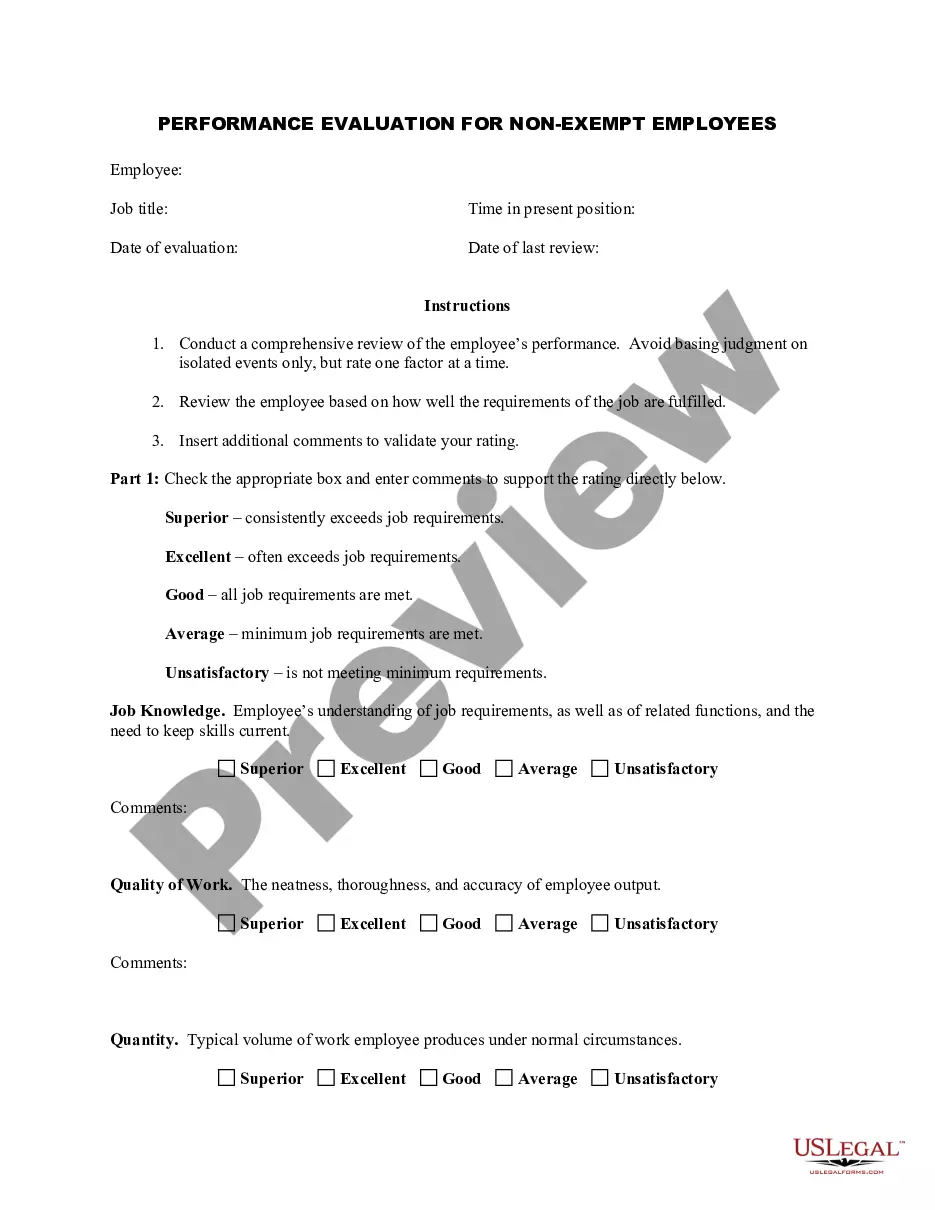
The Employee Evaluation Form for Bartender is a structured document designed to assess the performance of bartenders in a workplace setting. This form enables managers to review and document various aspects of an employeeâs job performance, helping to identify strengths, weaknesses, and areas for improvement. Unlike other generic evaluation forms, this specific template focuses on the unique skills and responsibilities associated with bartending, ensuring a comprehensive assessment tailored to the hospitality industry.
Main sections of this form
- Employee information section, including name, job title, and date of evaluation.
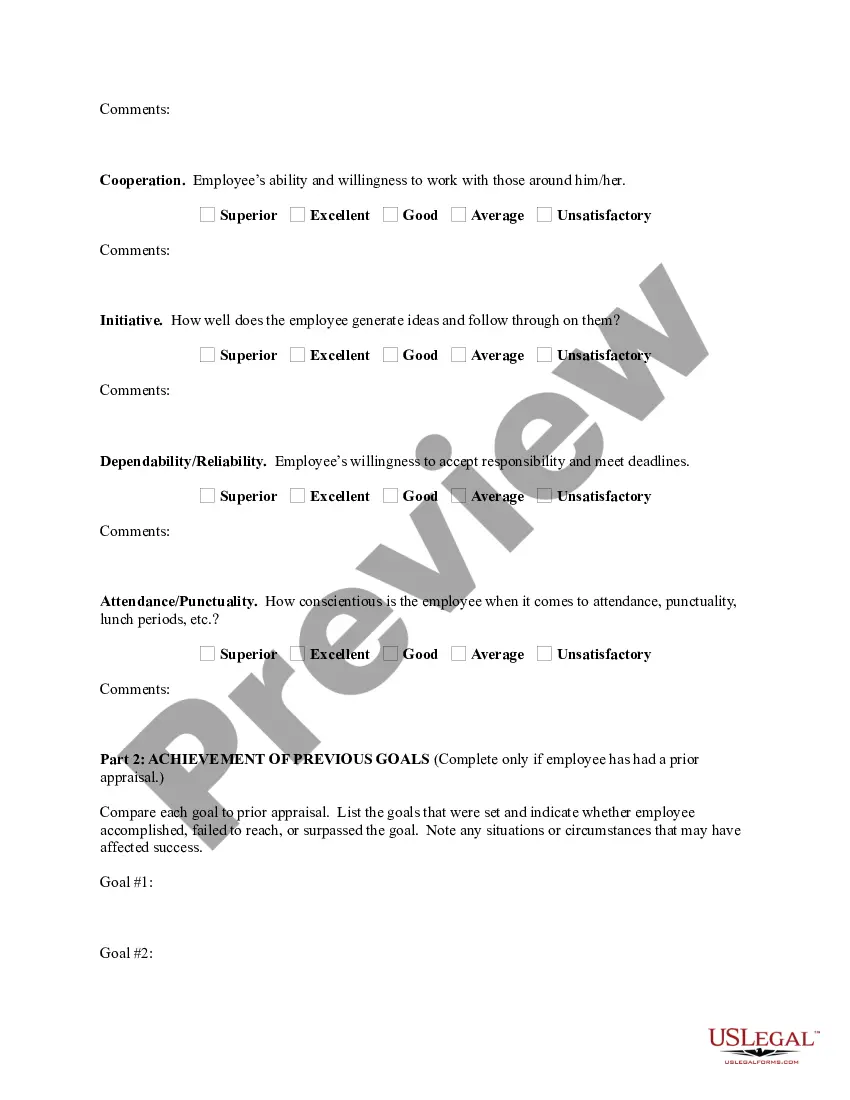
- Assessment categories such as job knowledge, quality of work, quantity of work, cooperation, initiative, and dependability.
- Rating scale for performance assessment ranging from superior to unsatisfactory.
- Space for comments and additional feedback related to each evaluation criterion.
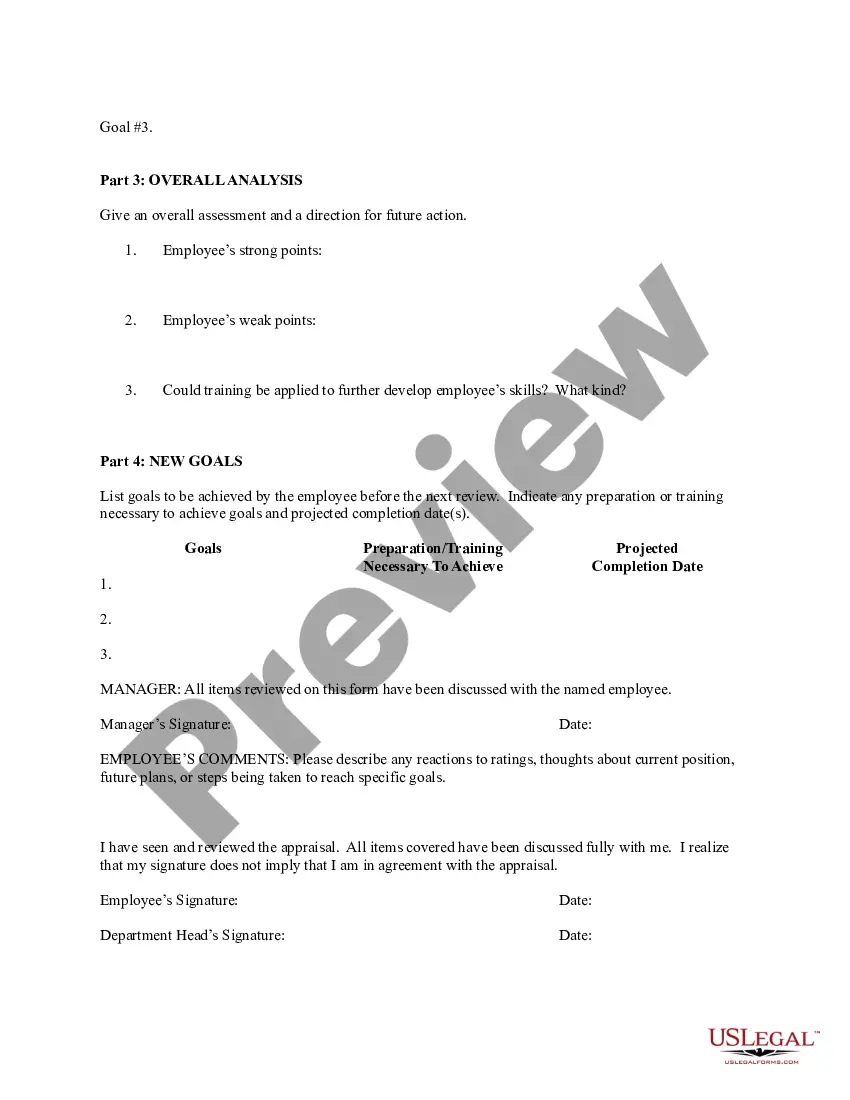
- Goals section to document achievements and set future objectives.
- Signatures of both the manager and the employee involved in the review process.
When to use this document
This form is used during regular performance evaluations of bartenders, typically conducted on an annual basis or prior to promotions and raises. It can also be utilized as a tool for ongoing feedback or when addressing specific performance issues. The form may be particularly valuable at the end of a busy season to assess how well employees coped with high demands or in preparation for next year's staffing decisions.
Who this form is for
This form is intended for use by managers, supervisors, or team leads in establishments serving alcohol, including bars, restaurants, and clubs. It is designed for use with non-exempt employees who are bartenders or similar roles where performance is critical to service quality. It helps them provide structured and constructive feedback to their team members.
Completing this form step by step
- Begin by filling in the employee's personal and job details, including their name, job title, and evaluation date.
- Assess the employee's performance in each category using the provided rating scale and provide specific comments to justify your ratings.
- Discuss the employee's previous goals and achievements from the last appraisal period.
- Provide an overall analysis of the employeeâs performance and highlight key strengths and weaknesses.
- Set new goals for the next review period, including any necessary training or development plans.
- Ensure both the manager and employee sign the form to acknowledge that the evaluation was discussed and understood.
Notarization guidance
This form does not typically require notarization unless specified by local law. It is primarily a performance evaluation document meant for internal use within the company.
Get your form ready online
Our built-in tools help you complete, sign, share, and store your documents in one place.
Make edits, fill in missing information, and update formatting in US Legal Forms—just like you would in MS Word.
Download a copy, print it, send it by email, or mail it via USPS—whatever works best for your next step.
Sign and collect signatures with our SignNow integration. Send to multiple recipients, set reminders, and more. Go Premium to unlock E-Sign.
If this form requires notarization, complete it online through a secure video call—no need to meet a notary in person or wait for an appointment.
We protect your documents and personal data by following strict security and privacy standards.

Make edits, fill in missing information, and update formatting in US Legal Forms—just like you would in MS Word.

Download a copy, print it, send it by email, or mail it via USPS—whatever works best for your next step.

Sign and collect signatures with our SignNow integration. Send to multiple recipients, set reminders, and more. Go Premium to unlock E-Sign.

If this form requires notarization, complete it online through a secure video call—no need to meet a notary in person or wait for an appointment.

We protect your documents and personal data by following strict security and privacy standards.
Common mistakes to avoid
- Failing to provide specific examples to support ratings, making the evaluation less credible.
- Rushing through the assessment without adequate consideration of the employee's actual performance.
- Neglecting to include both positive feedback and areas for improvement.
- Not setting clear and achievable goals for the next evaluation period, which can hinder the employee's growth.
Why use this form online
- Convenient access from any device allows managers to complete evaluations anytime, reducing paperwork hassle.
- Editable format enables easy updates, ensuring that each performance review is customized to the employee's current role.
- Secure storage and retrieval help maintain confidentiality and protect organizational records.
What to keep in mind
- The Employee Evaluation Form for Bartender helps facilitate constructive feedback based on specific performance criteria.
- Structured assessments can enhance communication between management and staff, fostering a positive work environment.
- Regular evaluations are vital for employee development and overall organizational success.
Looking for another form?




Form popularity
FAQ
Level of execution. Quality of work. Level of creativity. Amount of consistent improvement. Customer and peer feedback. Sales revenue generated. Responsiveness to feedback. Ability to take ownership.
Be proud. One major goal of the self-evaluation is to highlight your accomplishments and recollect milestones in your professional development. Be honest and critical. Continuously strive for growth. Track your accomplishments. Be professional.
There are three main methods used to collect performance appraisal (PA) data: objective production, personnel, and judgmental evaluation. Judgmental evaluations are the most commonly used with a large variety of evaluation methods.
Communication. Collaboration and teamwork. Problem-solving. Quality and accuracy of work. Attendance, punctuality and reliability. The ability to accomplish goals and meet deadlines.
Be specific. When you set goals and standards for your workers, spell out exactly what they will have to do to achieve them. Give deadlines. Be realistic. Be honest. Be complete. Evaluate performance, not personality. Listen to your employees.
Self-Evaluation. A self-evaluation requires an employee to judge his or her own performance against predetermined criteria. Behavioral Checklist. 360-Degree Feedback. Management by Objectives. Ratings Scale.
Gather information. List employee responsibilities. Use objective language. Use action verbs. Compare performance ratings. Ask open-ended questions.
Set Performance Standards. Set Specific Goals. Take Notes Throughout the Year. Be Prepared. Be Honest and Specific with Criticism. Don't Compare Employees. Evaluate the Performance, Not the Personality. Have a Conversation.