Minnesota Notice to Judgment Debtor of Creditor's Intent to Levy Upon Earnings in 10 Days
What is this form?
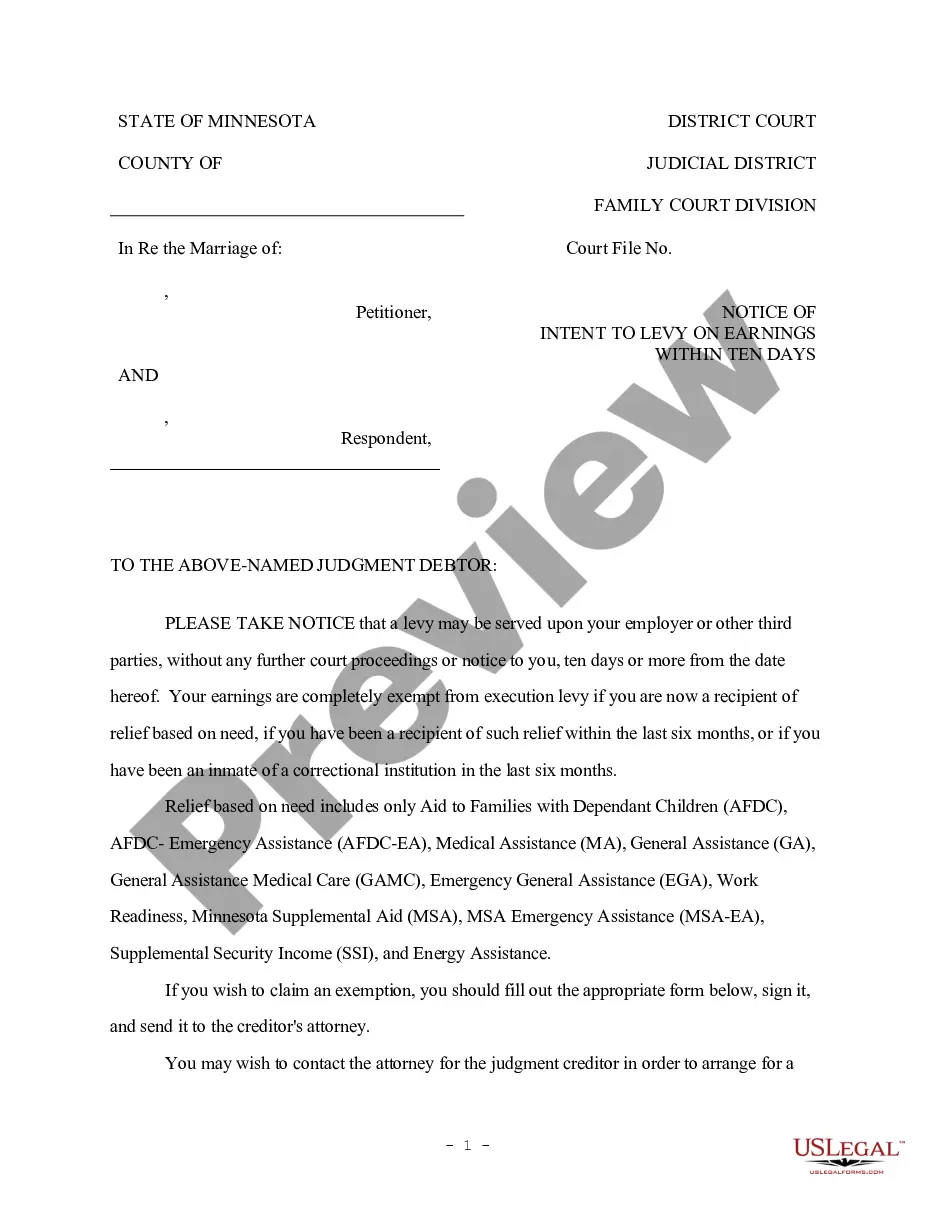
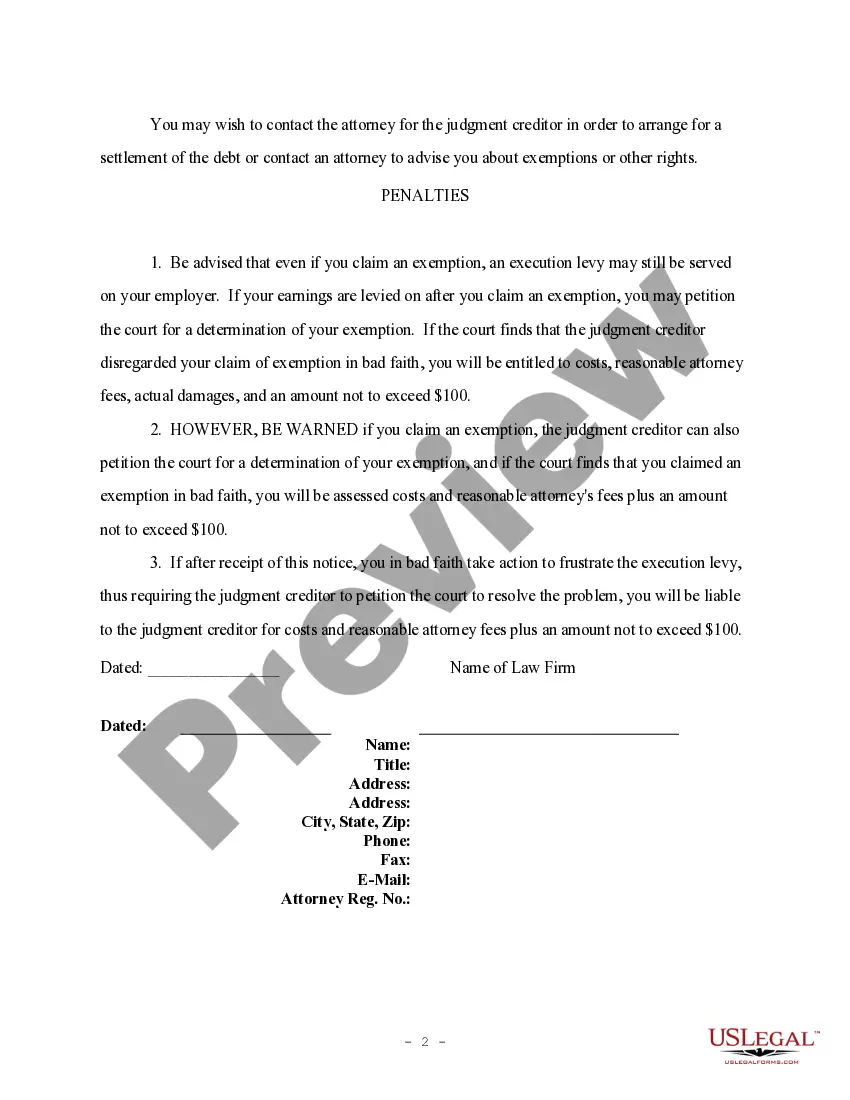
The Notice to Judgment Debtor of Creditor's Intent to Levy Upon Earnings in 10 Days is a legal notification indicating that a creditor intends to garnish the debtorâs wages if the outstanding debt is not settled within ten days. This form serves to inform the debtor of their options and rights regarding the debt, making it distinct from other debt-related notifications, such as general collection letters or default notices.
Key parts of this document
- Identification of the judgment debtor and creditor.
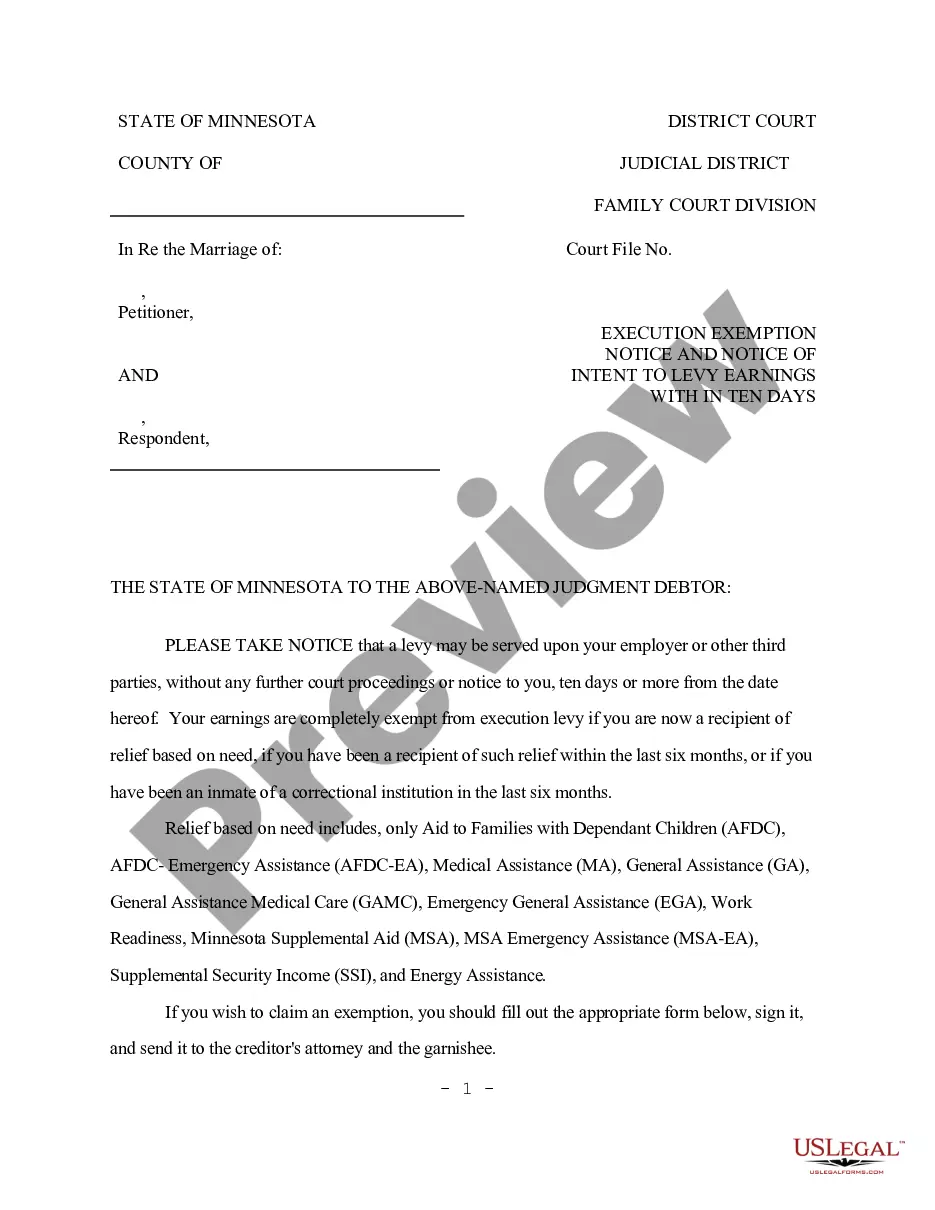
- Details regarding the claim of exemption from wage garnishment.
- Information on the types of relief based on need.
- Instructions for submitting a claim of exemption.
- Signature fields for the judgment debtor to confirm receipt.


Situations where this form applies
This form is necessary when a creditor has obtained a judgment against you and intends to levy your earnings. It is specifically used to notify you of this intent and provide you with an opportunity to respond or claim exemption within ten days. Use this form if you are facing wage garnishment due to unpaid debts and need to understand your legal options.
Who this form is for
- Individuals who have creditors intending to garnish their wages.
- Debtors seeking to protect a portion of their earnings from garnishment.
- Recipients of government assistance programs who wish to claim exemptions.
Steps to complete this form
- Identify both the judgment creditor and your details as the debtor.
- Specify whether you are currently receiving relief based on need, if applicable.
- If you are claiming an exemption, provide the relevant program, case number, and county.
- Sign and date the form to confirm that you have received this notice.
- Mail or deliver a copy of the completed form to the creditor or their attorney.
Notarization guidance
This form does not typically require notarization unless specified by local law. Ensure that you check your state's requirements to confirm.
Get your form ready online
Our built-in tools help you complete, sign, share, and store your documents in one place.
Make edits, fill in missing information, and update formatting in US Legal Forms—just like you would in MS Word.
Download a copy, print it, send it by email, or mail it via USPS—whatever works best for your next step.
Sign and collect signatures with our SignNow integration. Send to multiple recipients, set reminders, and more. Go Premium to unlock E-Sign.
If this form requires notarization, complete it online through a secure video call—no need to meet a notary in person or wait for an appointment.
We protect your documents and personal data by following strict security and privacy standards.

Make edits, fill in missing information, and update formatting in US Legal Forms—just like you would in MS Word.

Download a copy, print it, send it by email, or mail it via USPS—whatever works best for your next step.

Sign and collect signatures with our SignNow integration. Send to multiple recipients, set reminders, and more. Go Premium to unlock E-Sign.

If this form requires notarization, complete it online through a secure video call—no need to meet a notary in person or wait for an appointment.

We protect your documents and personal data by following strict security and privacy standards.
Common mistakes to avoid
- Failing to include necessary program information when claiming an exemption.
- Not signing the form before submission.
- Sending the form to the wrong party or missing the deadline for submission.
Benefits of completing this form online
- Convenient access to the form at any time without the need to visit a legal office.
- Editable fields allow you to customize your responses to fit your specific situation.
- Reliable legal templates drafted by licensed attorneys, ensuring compliance with current laws.
Legal use & context
Using this form properly can help prevent unlawful wage garnishment and protect the debtorâs rights under applicable state laws. It is crucial to follow all instructions and ensure that the form is served correctly to mitigate any potential legal issues.
What to keep in mind
- The form notifies the debtor of impending wage levies due to unpaid debts.
- Debtors have ten days to respond and potentially avoid garnishment.
- Claiming an exemption should be done carefully, with correct program details provided.
Looking for another form?
Form popularity
FAQ
A garnishment judgment will stay on your credit reports for up to seven years, affecting your credit score.
After the sheriff or constable serves the paperwork to execute your judgment, the judgment debtor (the person you are trying to collect from) has ten business days after the Notice of Execution is mailed or his wages are withheld to file with the court to claim any exemptions he believes apply.
How long does a judgment last? A creditor has ten (10) years from the date the judgment was entered to collect the money owed to them by the debtor. A judgment can be "renewed" by the creditor if it is not satisfied (paid) within the 10 years.
You can also stop most garnishments by filing for bankruptcy. Your state's exemption laws determine the amount of income you'll be able to keep.
In Minnesota, the most that can be garnished from your wages is the lesser of: 25% of your disposable earnings, or. the amount by which your weekly disposable earnings exceed the greater of 40 times the federal or state hourly minimum wage.
With these changes, a garnishment that is issued will expire in six (6) months, and then a new garnishment will have to be issued. The old law forced Creditors to file a new garnishment every month for each Debtor.
If you do not return the exemption notice and bank statements to the creditor's attorney within 10 days of receiving notice of the intent to garnish your wages, the creditor can begin to garnish money from your wages, and can continue to do so for up to 70 days.
How long does a judgment last? A creditor has ten (10) years from the date the judgment was entered to collect the money owed to them by the debtor. A judgment can be "renewed" by the creditor if it is not satisfied (paid) within the 10 years.