CONCEALING A MATERIAL FACT IN A MATTER WITHIN THE JURISDICTION OF THE UNITED STATES GOVERNM
Overview of this form
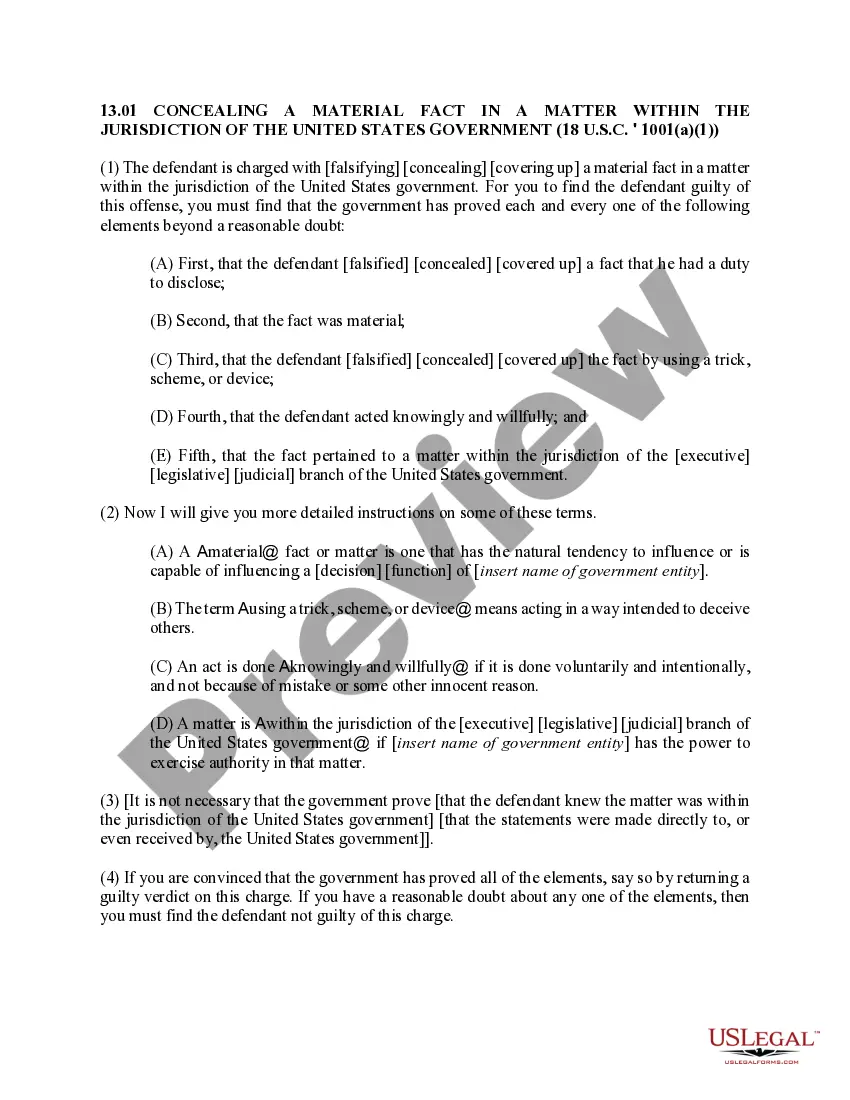
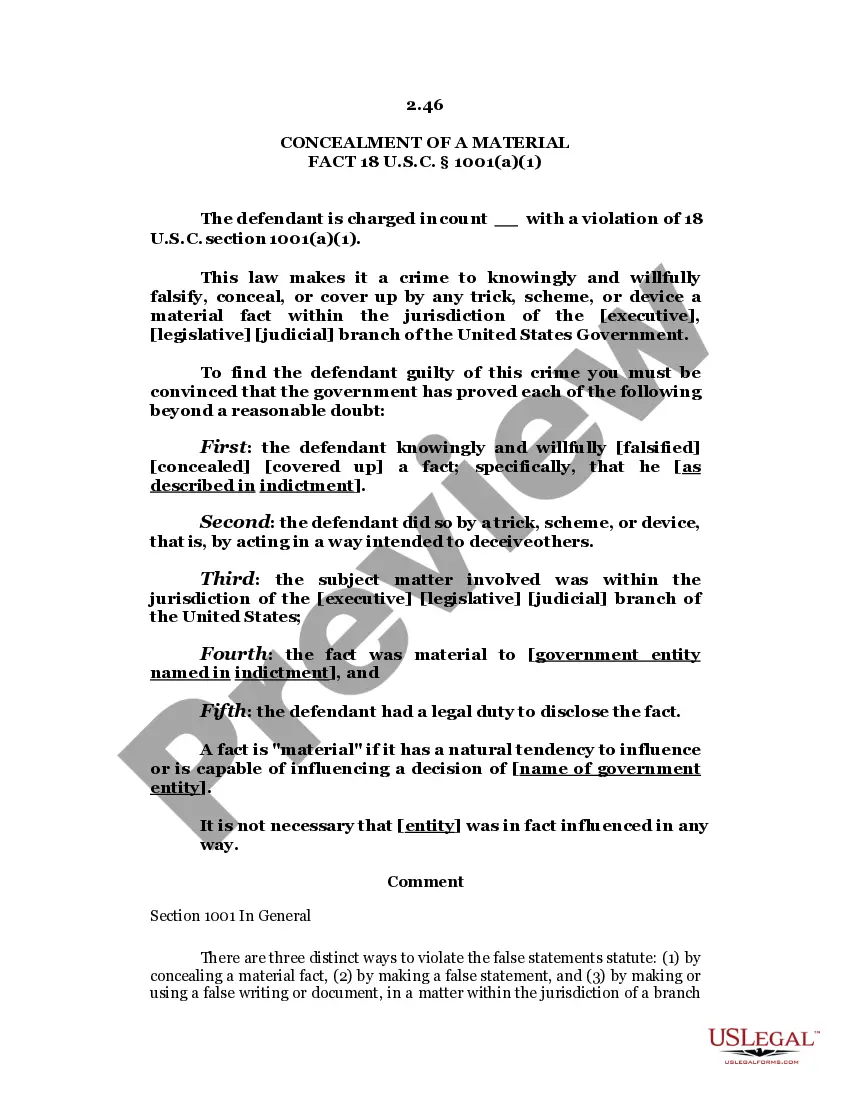
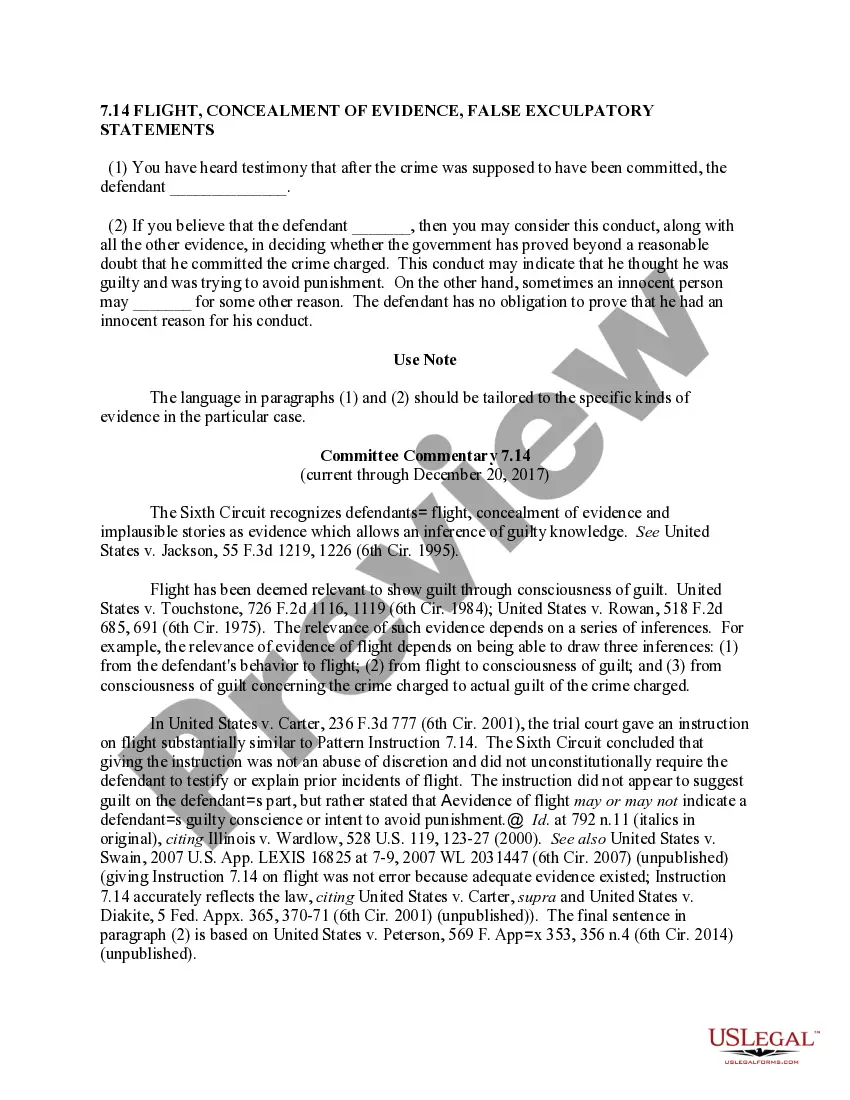
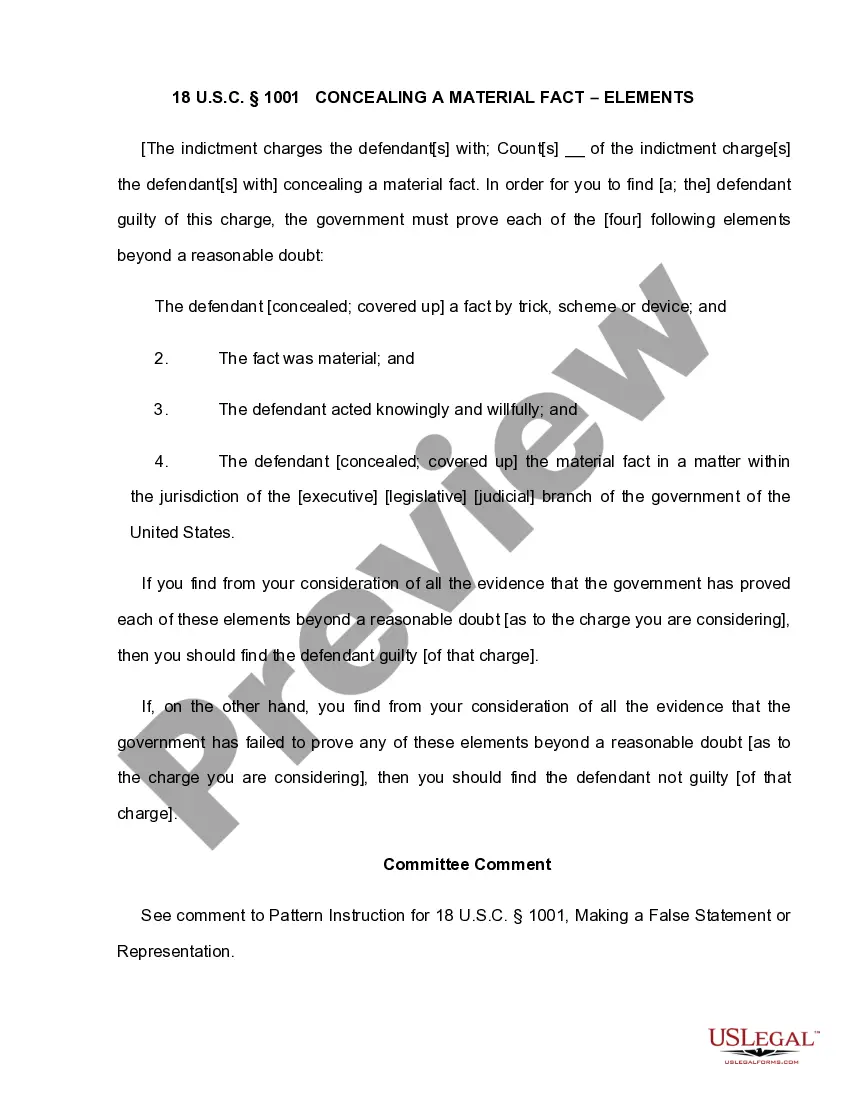
This form addresses the legal implications of concealing a material fact in a matter within the jurisdiction of the United States government. It outlines the elements that must be proven for a charge under 18 U.S.C. 1001(a)(1), distinguishing it from other legal forms that may cover different offenses or circumstances related to false statements or misrepresentations.
Main sections of this form
- Defendant's charge: Falsifying, concealing, or covering up a material fact.
- Elements of the offense: Five specific criteria that must be met to establish guilt.
- Material fact definition: Clarifies what constitutes a material fact capable of influencing government decisions.
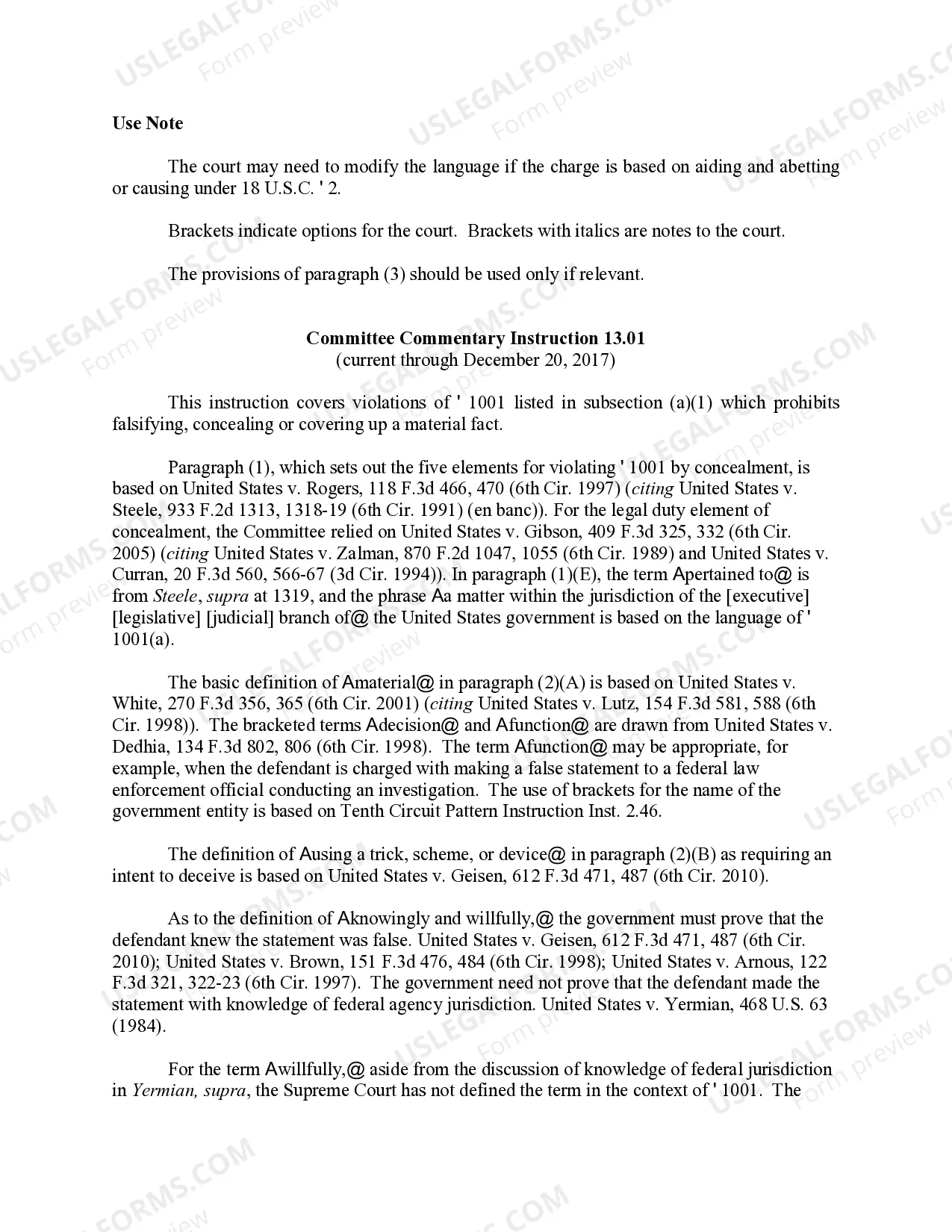
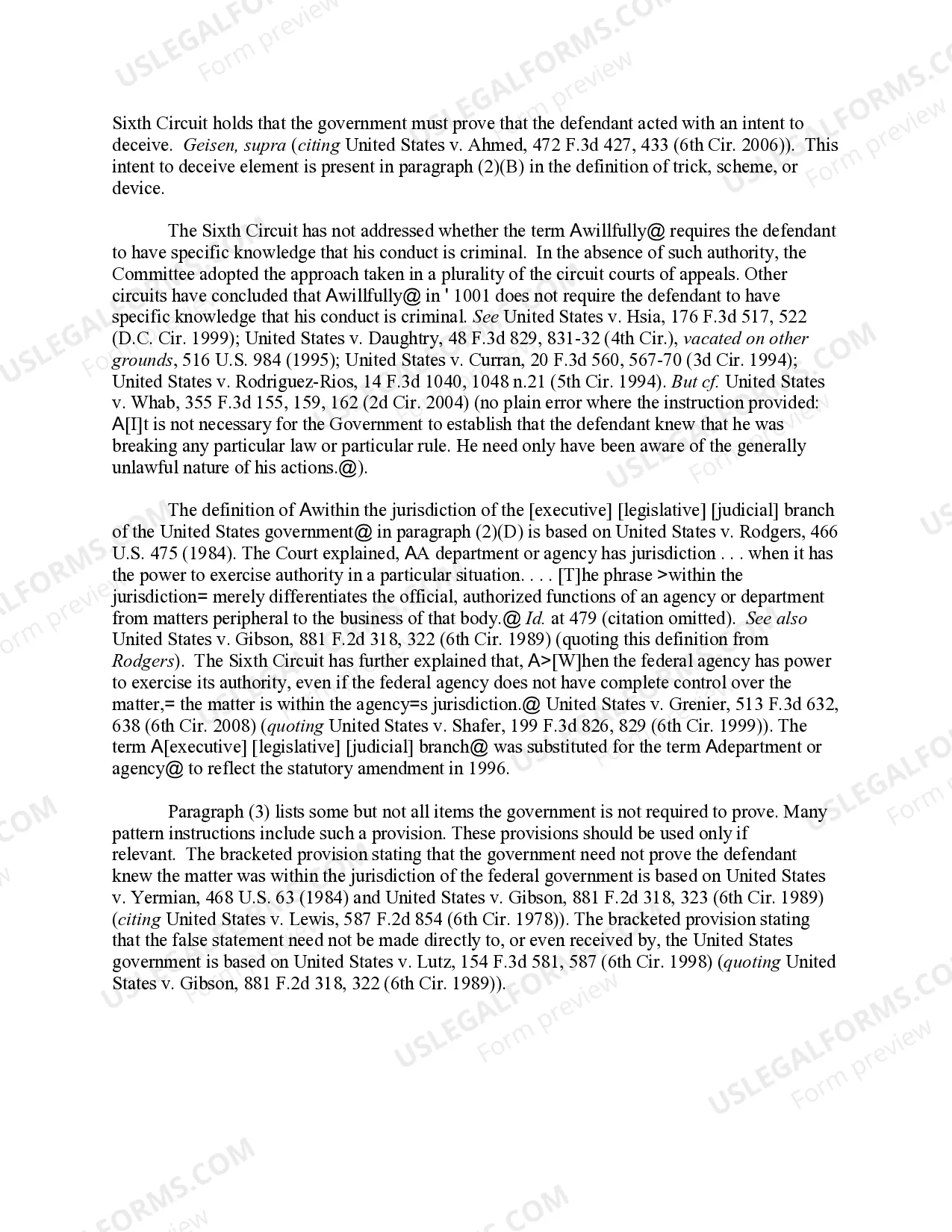
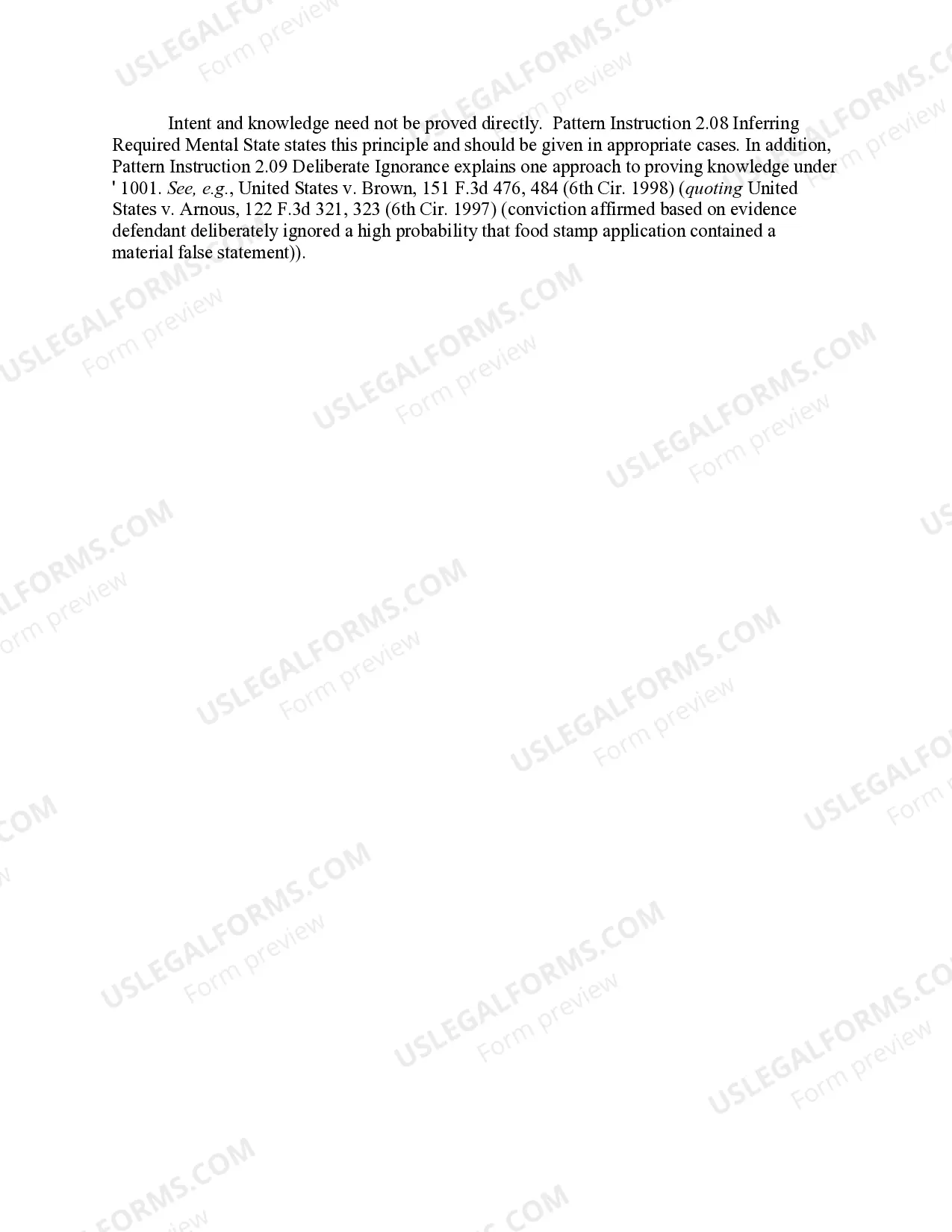
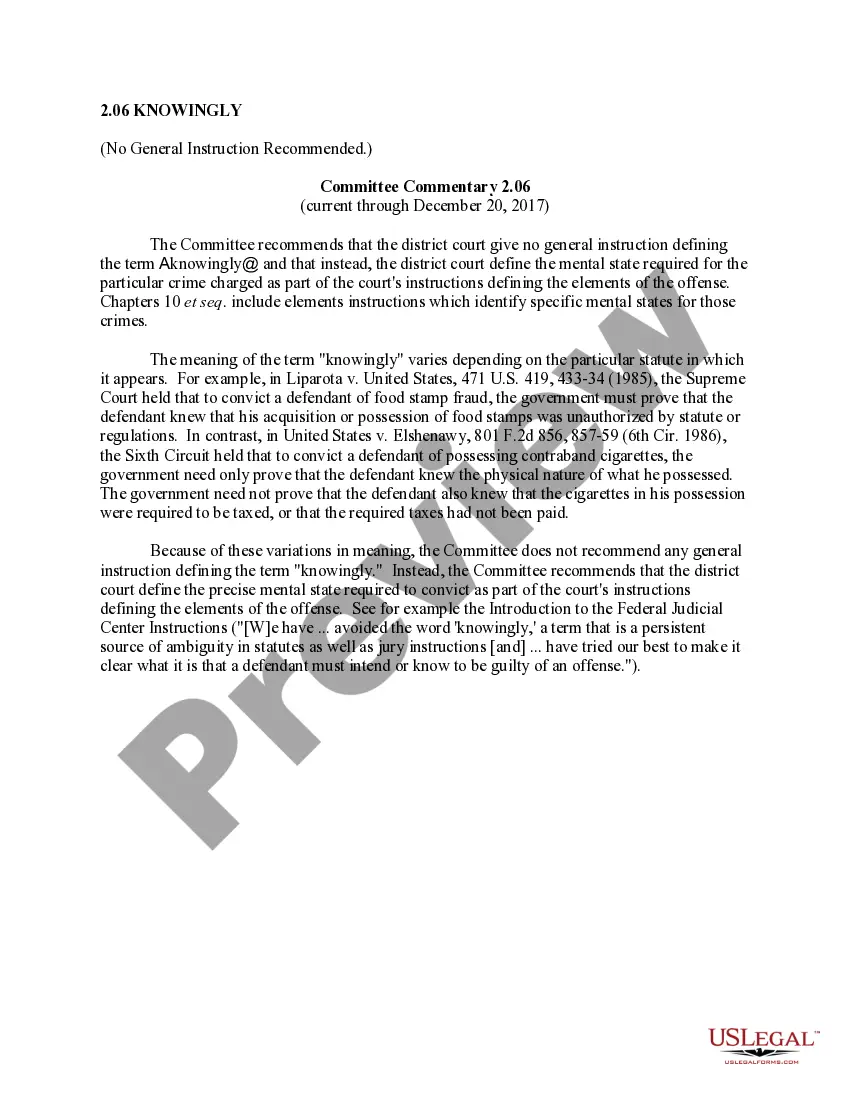
- Intent requirement: The defendant must act knowingly and willfully, with the intent to deceive.
- Jurisdiction context: Indicates what constitutes a matter within the jurisdiction of U.S. government branches.
Common use cases
This form is necessary in instances where someone may face prosecution for concealing crucial information in dealings with federal agencies. It is applicable in criminal defense cases where a defendant is charged with violating federal laws regarding false statements. Using this form aids in understanding the legal ramifications and potential defenses related to this charge.
Intended users of this form
This form is intended for:
- Individuals charged with concealing material facts from the U.S. government.
- Criminal defense attorneys representing clients in federal cases.
- Legal professionals seeking to understand the requirements for such charges.
How to prepare this document
- Identify the defendant: Clearly specify the person charged with the offense.
- Outline the charges: Detail the specific actions that constitute the alleged concealment.
- Include material facts: Describe the material facts that were allegedly concealed.
- Establish intent: Provide evidence or explanations demonstrating the defendant's knowledge and willful action.
- Indicate jurisdiction details: State which part of the U.S. government is relevant to the charges.
Does this form need to be notarized?
This form does not typically require notarization to be legally valid. However, some jurisdictions or document types may still require it. US Legal Forms provides secure online notarization powered by Notarize, available 24/7 for added convenience.
Get your form ready online
Our built-in tools help you complete, sign, share, and store your documents in one place.
Make edits, fill in missing information, and update formatting in US Legal Forms—just like you would in MS Word.
Download a copy, print it, send it by email, or mail it via USPS—whatever works best for your next step.
Sign and collect signatures with our SignNow integration. Send to multiple recipients, set reminders, and more. Go Premium to unlock E-Sign.
If this form requires notarization, complete it online through a secure video call—no need to meet a notary in person or wait for an appointment.
We protect your documents and personal data by following strict security and privacy standards.

Make edits, fill in missing information, and update formatting in US Legal Forms—just like you would in MS Word.

Download a copy, print it, send it by email, or mail it via USPS—whatever works best for your next step.

Sign and collect signatures with our SignNow integration. Send to multiple recipients, set reminders, and more. Go Premium to unlock E-Sign.

If this form requires notarization, complete it online through a secure video call—no need to meet a notary in person or wait for an appointment.

We protect your documents and personal data by following strict security and privacy standards.
Avoid these common issues
- Failing to accurately define what constitutes a material fact.
- Not clearly demonstrating the defendant's intent to conceal.
- Overlooking the requirement for jurisdiction specifics.
- Providing vague or unsubstantiated evidence regarding the concealment.
- Assuming that knowledge of jurisdiction is required for prosecution.
Why use this form online
- Convenient access: Download and complete the form at any time from anywhere.
- Editability: Easily modify the form to suit specific case details as needed.
- Reliability: Forms are created by licensed attorneys, ensuring legal validity.
Looking for another form?
Form popularity
FAQ
A concealment can occur through either purposeful misrepresentation or withholding of material facts. Where the information could not have been known by the other party and it is known to be material by the concealing party, the concealment can give grounds for nullifying the contract.
Prior to amendment, text read as follows: ?Whoever, in any matter within the jurisdiction of any department or agency of the United States knowingly and willfully falsifies, conceals or covers up by any trick, scheme, or device a material fact, or makes any false, fictitious or fraudulent statements or representations,
Section 1001's statutory terms are violated if someone: "falsifies, conceals or covers up by any trick, scheme or device a material fact," "makes any false, fictitious or fraudulent statements or representations,"
Under 18 U.S.C. § 1001, it's a felony crime to: make a ?false statement? to an agent of the federal government related to a federal matter.
1001, Crimes and Criminal Procedures, makes it a criminal offense, subject to a maximum fine of $10,000 or imprisonment for not more than 5 years or both, to knowingly and willfully make or cause to be made any false or fraudulent statements or representations in any matter within the jurisdiction of any agency of the
18 U.S.C. § 1035 is specific to false statements that are ?knowingly and willfully? made in connection with the delivery of or payment for any healthcare programs, benefits, items or services.
Whoever, being a clerk of a district court of the United States, willfully refuses or neglects to make or forward any report, certificate, statement, or document as required by law, shall be fined under this title or imprisoned not more than one year, or both. (June 25, 1948, ch. 645, 62 Stat.
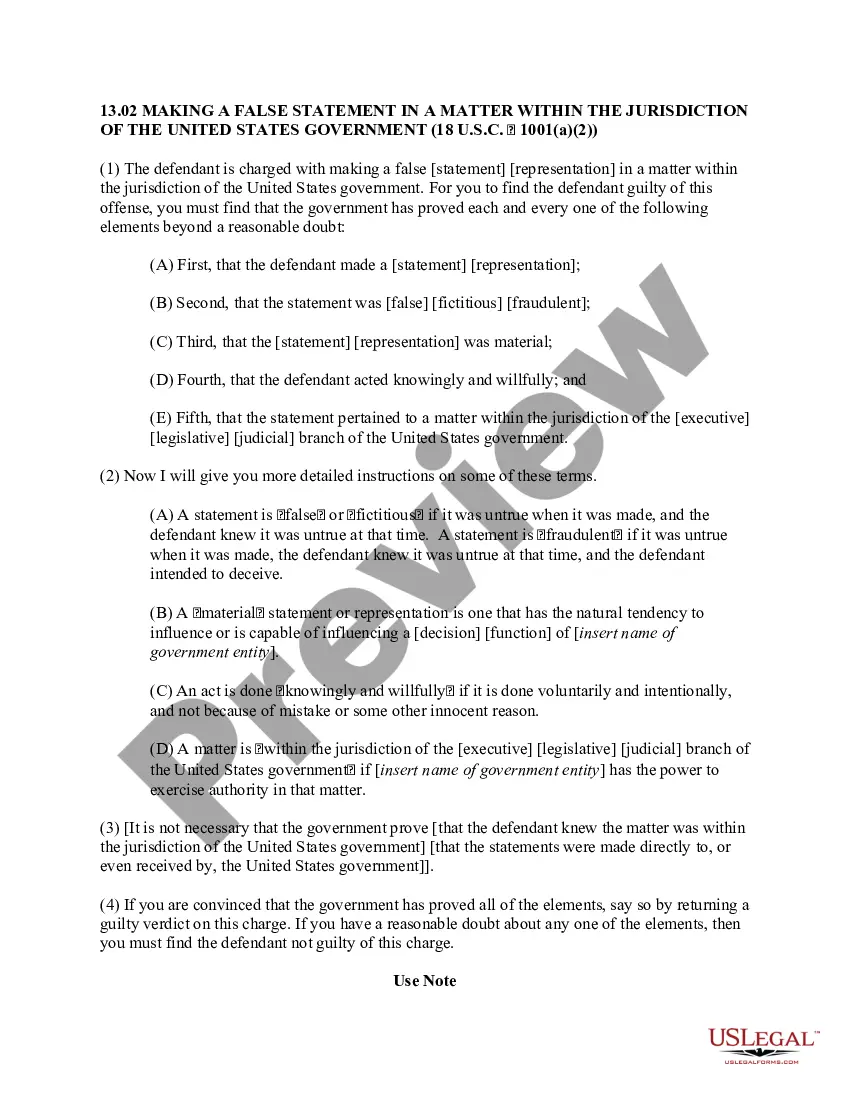
Title 18, United States Code, Section 1001 makes it a crime to: 1) knowingly and willfully; 2) make any materially false, fictitious or fraudulent statement or representation; 3) in any matter within the jurisdiction of the executive, legislative or judicial branch of the United States.