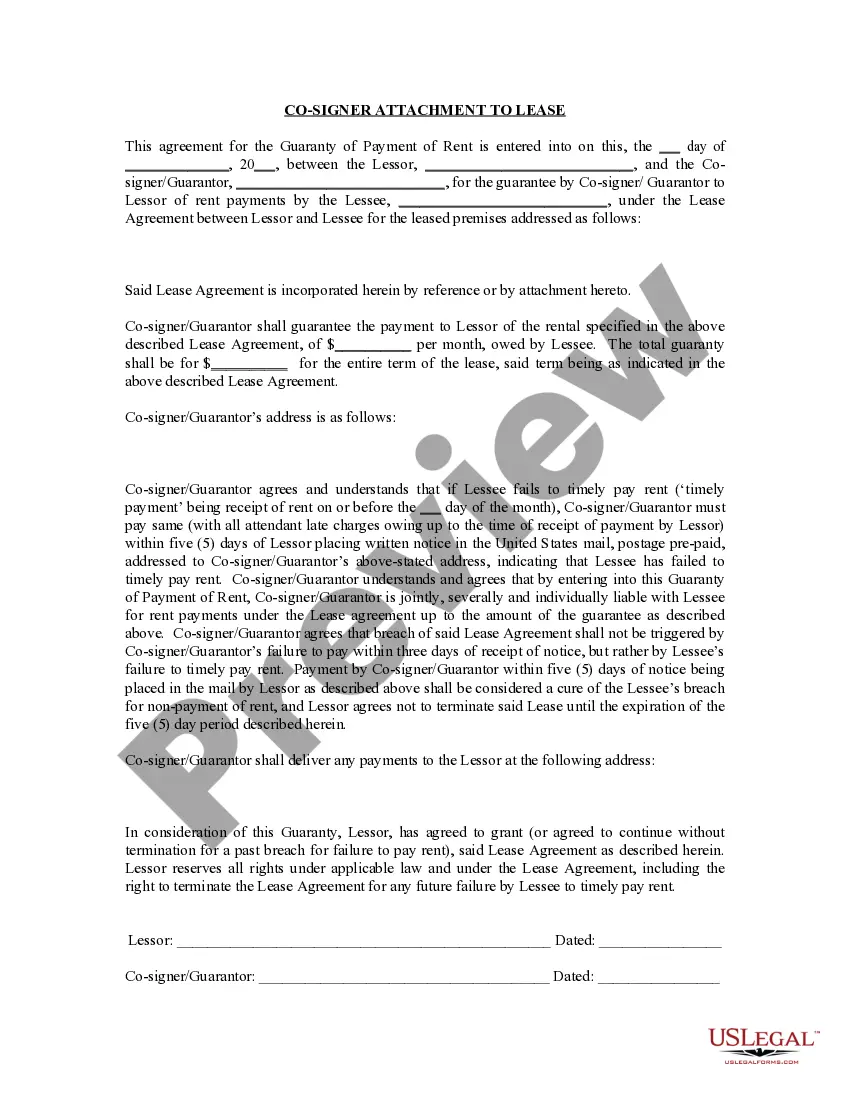
Delaware Guaranty Attachment to Lease for Guarantor or Cosigner
What this document covers
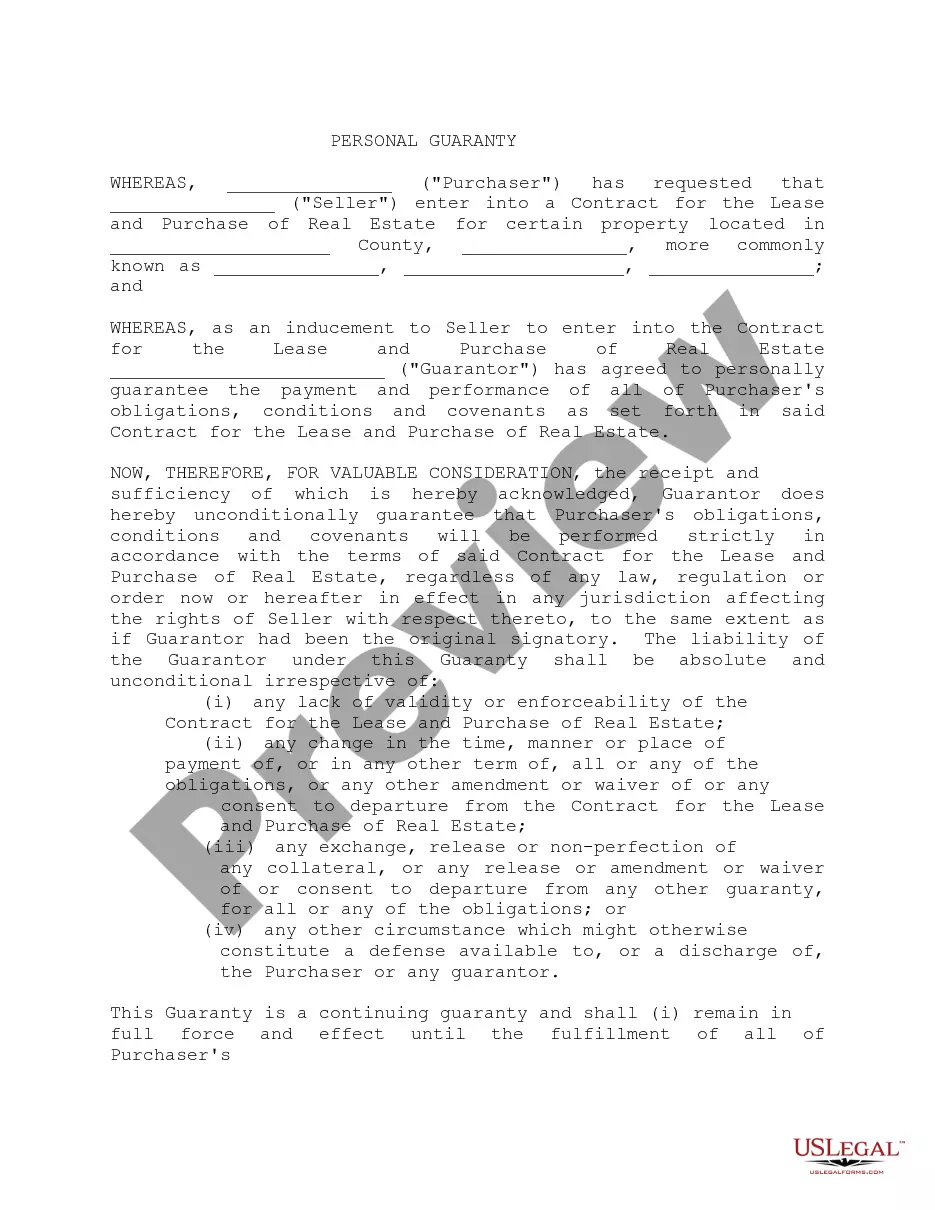
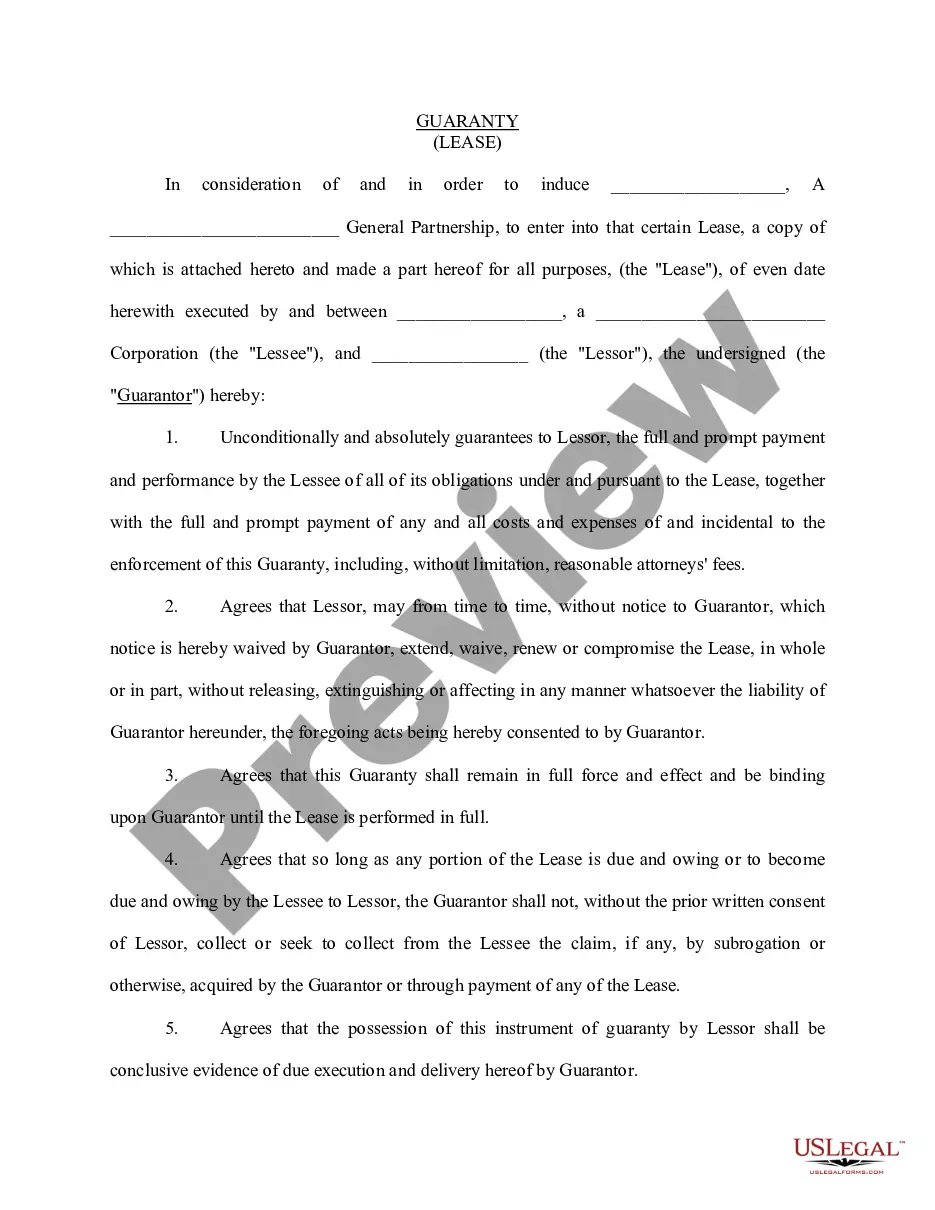
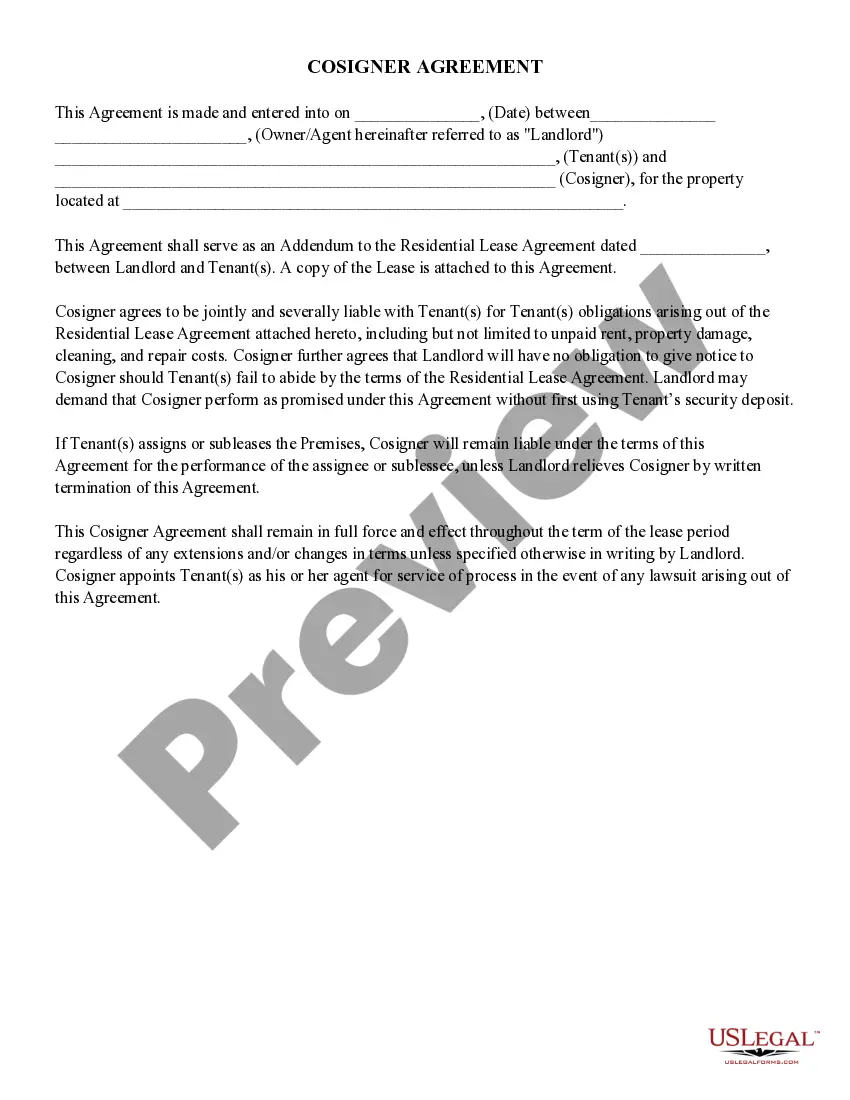
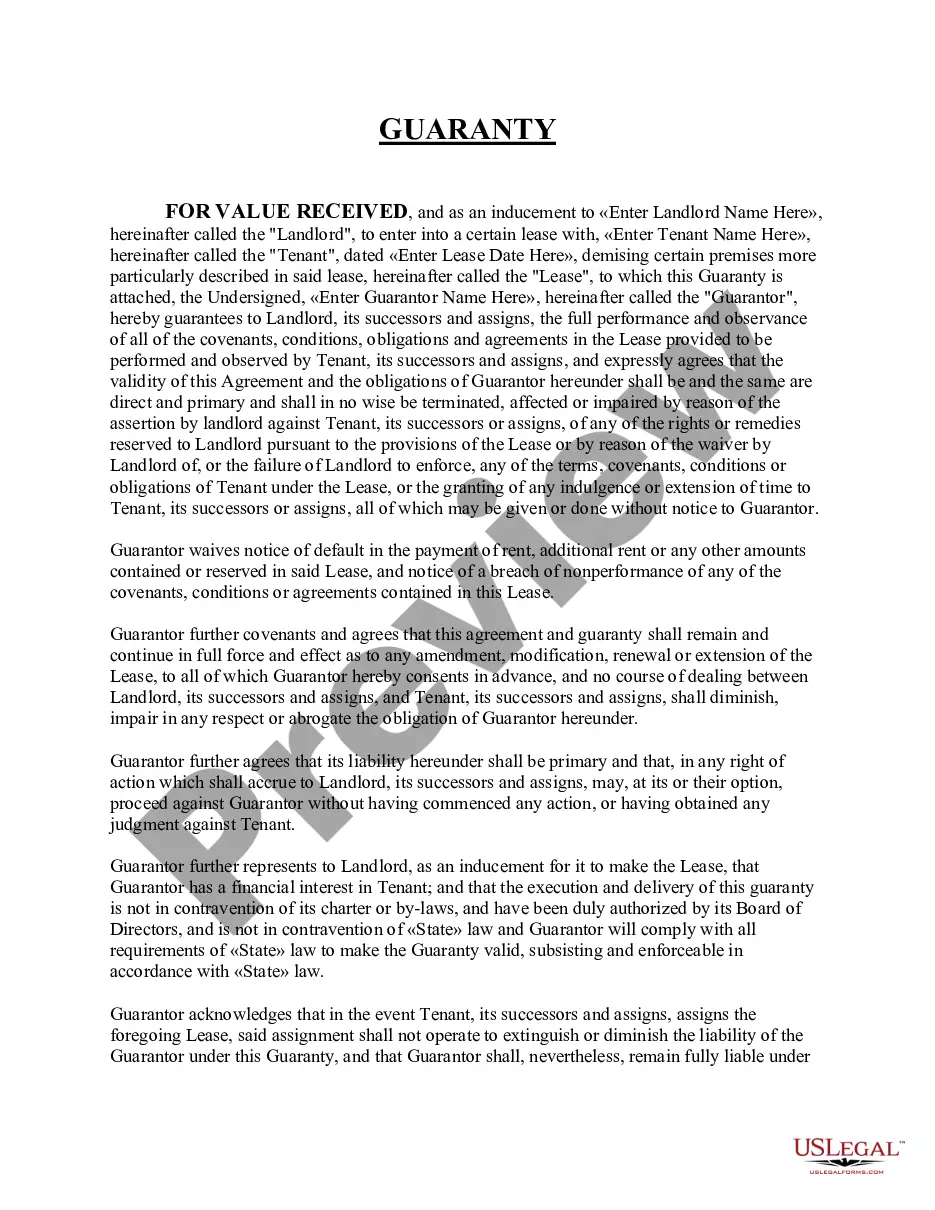
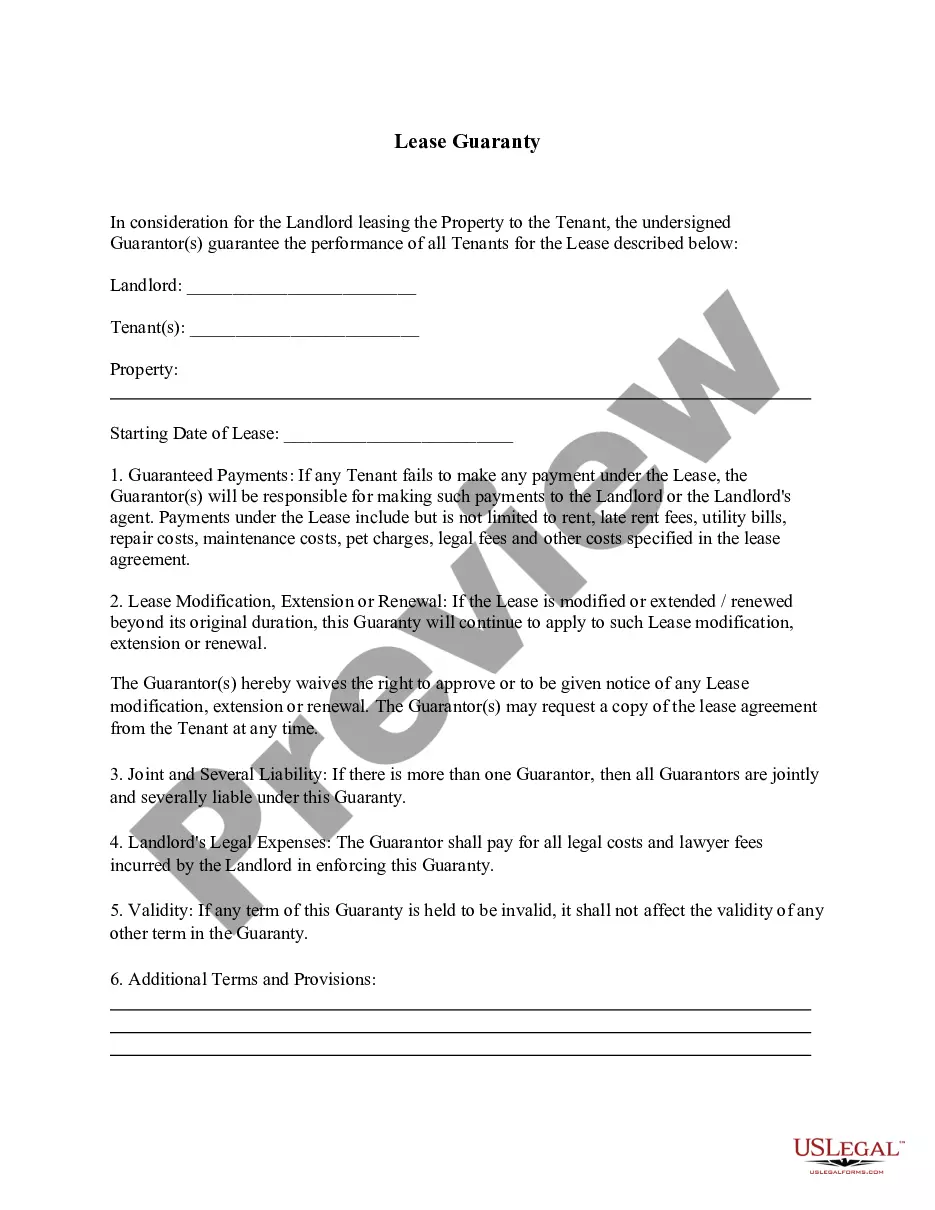
The Guaranty Attachment to Lease for Guarantor or Cosigner is a legal document that allows a third party to co-sign a lease. This guarantor agrees to fulfill the payment obligations of the tenant, should they fail to pay rent. This ensures landlords have additional security and reassurance in the rental agreement. This form is specifically tailored for instances where a guarantor is required, distinguishing it from standard lease agreements that do not include guarantor provisions.
Key components of this form
- Identification of the lessor (landlord) and guarantor (co-signer).
- Address and contact details of the guarantor.
- Dates for signing by both parties.
Situations where this form applies
This form is essential when a tenant does not have sufficient credit history or income to qualify for a rental lease on their own. Situations may include first-time renters, students, or individuals moving to a new area. By having a guarantor sign this document, landlords can reduce their risk and tenants can secure housing that might otherwise be unattainable.
Who should use this form
This form is intended for:
- Landlords seeking to reduce financial risk when renting property.
- Tenants with weak credit or limited financial history.
- Any individual willing to act as a guarantor or co-signer on a lease.
How to prepare this document
- Identify and enter the names of the lessor (landlord) and the co-signer/guarantor.
- Fill in the address of the guarantor as needed.
- Specify the date when the form is completed.
- Ensure both parties provide their signatures and dates to formalize the agreement.
Does this document require notarization?
This form does not typically require notarization unless specified by local law. However, it is advisable to verify if local regulations necessitate notarization for added legal protection.
Get your form ready online
Our built-in tools help you complete, sign, share, and store your documents in one place.
Make edits, fill in missing information, and update formatting in US Legal Forms—just like you would in MS Word.
Download a copy, print it, send it by email, or mail it via USPS—whatever works best for your next step.
Sign and collect signatures with our SignNow integration. Send to multiple recipients, set reminders, and more. Go Premium to unlock E-Sign.
If this form requires notarization, complete it online through a secure video call—no need to meet a notary in person or wait for an appointment.
We protect your documents and personal data by following strict security and privacy standards.

Make edits, fill in missing information, and update formatting in US Legal Forms—just like you would in MS Word.

Download a copy, print it, send it by email, or mail it via USPS—whatever works best for your next step.

Sign and collect signatures with our SignNow integration. Send to multiple recipients, set reminders, and more. Go Premium to unlock E-Sign.

If this form requires notarization, complete it online through a secure video call—no need to meet a notary in person or wait for an appointment.

We protect your documents and personal data by following strict security and privacy standards.
Mistakes to watch out for
- Failing to complete the guarantor's address fully.
- Not including the correct date of signing.
- Having the guarantor sign without understanding their obligations.
Advantages of online completion
- Convenience of immediate access to the document and ability to fill it out at your own pace.
- Editability allows users to customize the form to meet specific needs.
- Reliability of using attorney-drafted documents to ensure legal compliance.
Legal use & context
The Guaranty Attachment to Lease is legally enforceable as long as it is properly completed and signed by all involved parties. Landlords may rely on this document to pursue obligations in case of non-payment by the tenant.
Quick recap
- The Guaranty Attachment to Lease provides extra security for landlords through a co-signer or guarantor.
- Correctly completed forms include accurate names, addresses, and signatures of all parties.
- The form is adaptable to various state laws; verify local requirements for additional guidance.
Looking for another form?


Form popularity
FAQ
The Delaware Guaranty Attachment to Lease for Guarantor or Cosigner is a document that lets a third party co-sign a lease and guarantee the tenant’s rent obligations. It creates a guarantor–landlord relationship, with the guarantor agreeing to cover any unpaid rent if the tenant defaults. The form requires the guarantor’s address, the lessor’s details, and signatures with dates.
Yes. In this form, the guarantor agrees to pay the rental obligations if the tenant fails to pay. The attachment ties the guaranty directly to the lease, naming the guarantor and lessor, and requiring the guarantor’s address, signatures, and dates to be valid.
In this form, the terms guarantor or cosigner describe the same commitment: the party agrees to guarantee the tenant’s rent payments. The document is titled to cover either role, identifying the guarantor and the lessor and requiring signing and dating.
The form is a guaranty attachment designed to secure the lease with a guarantor. It does not specify any assignment of the lease to the guarantor. For an assignment, refer to the lease terms and Delaware law, and consult an attorney if needed.
This form does not incorporate a specific Delaware Code provision. It is a private contract between the landlord and guarantor that attaches to a lease. For state statutory guidance, consult the Delaware Code Title 25 and a qualified attorney to understand any applicable rules.
This form is designed as an attachment to a lease in Delaware, tying the guarantor’s obligation directly to the lease terms. It lists the guarantor’s address, the lessor, and requires signatures and dates, ensuring the guaranty is executed as part of the lease rather than as a separate document.