Employee Evaluation Form for Waiting Staff
Overview of this form
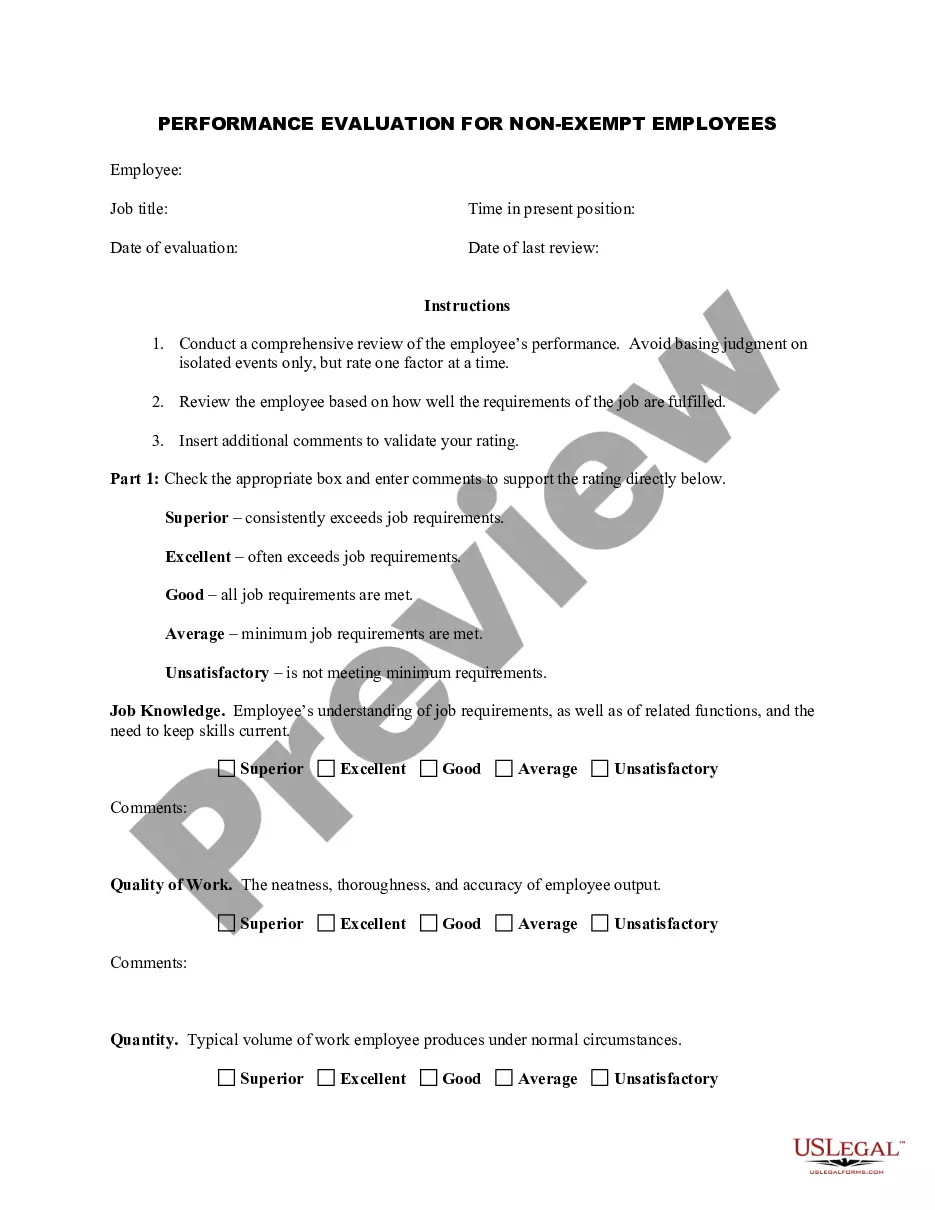
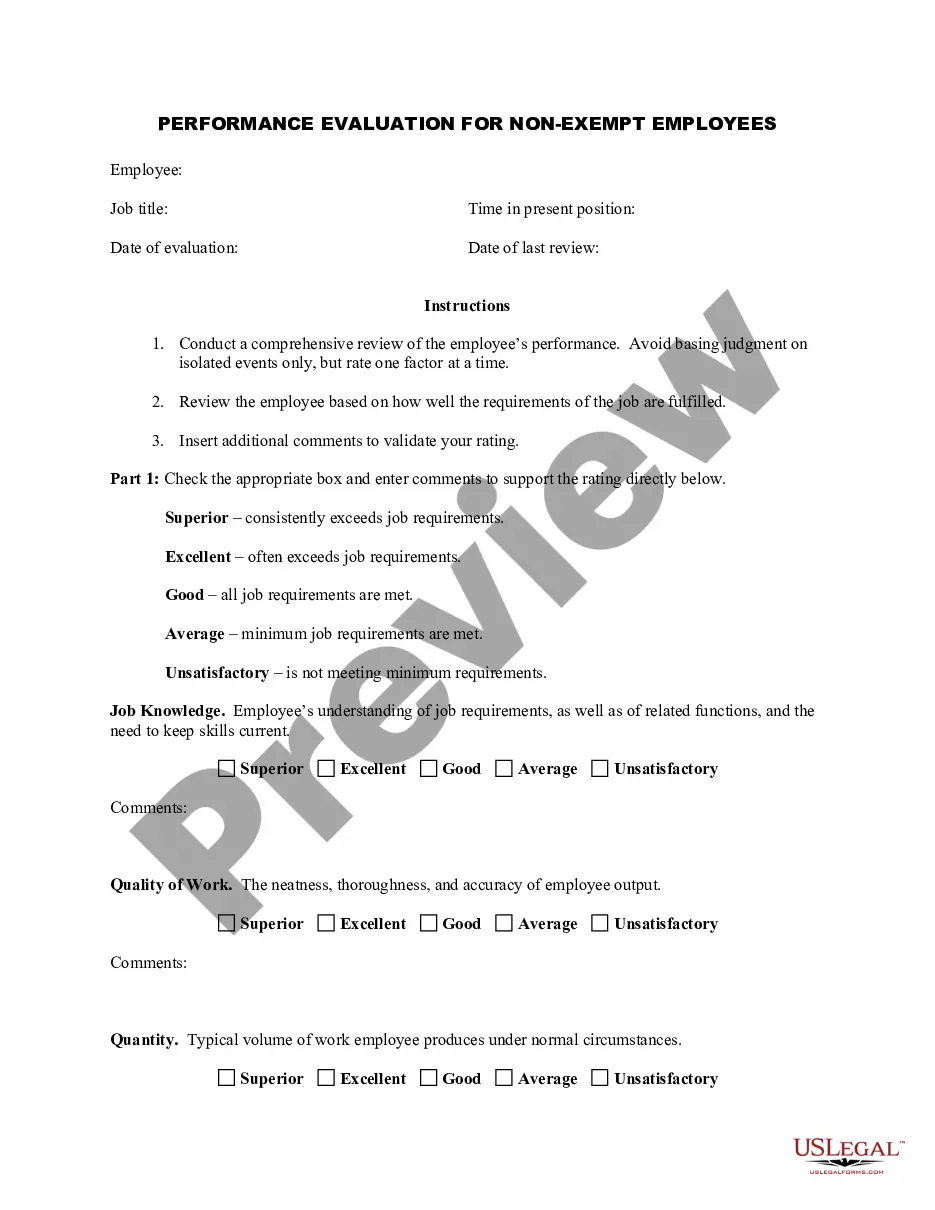
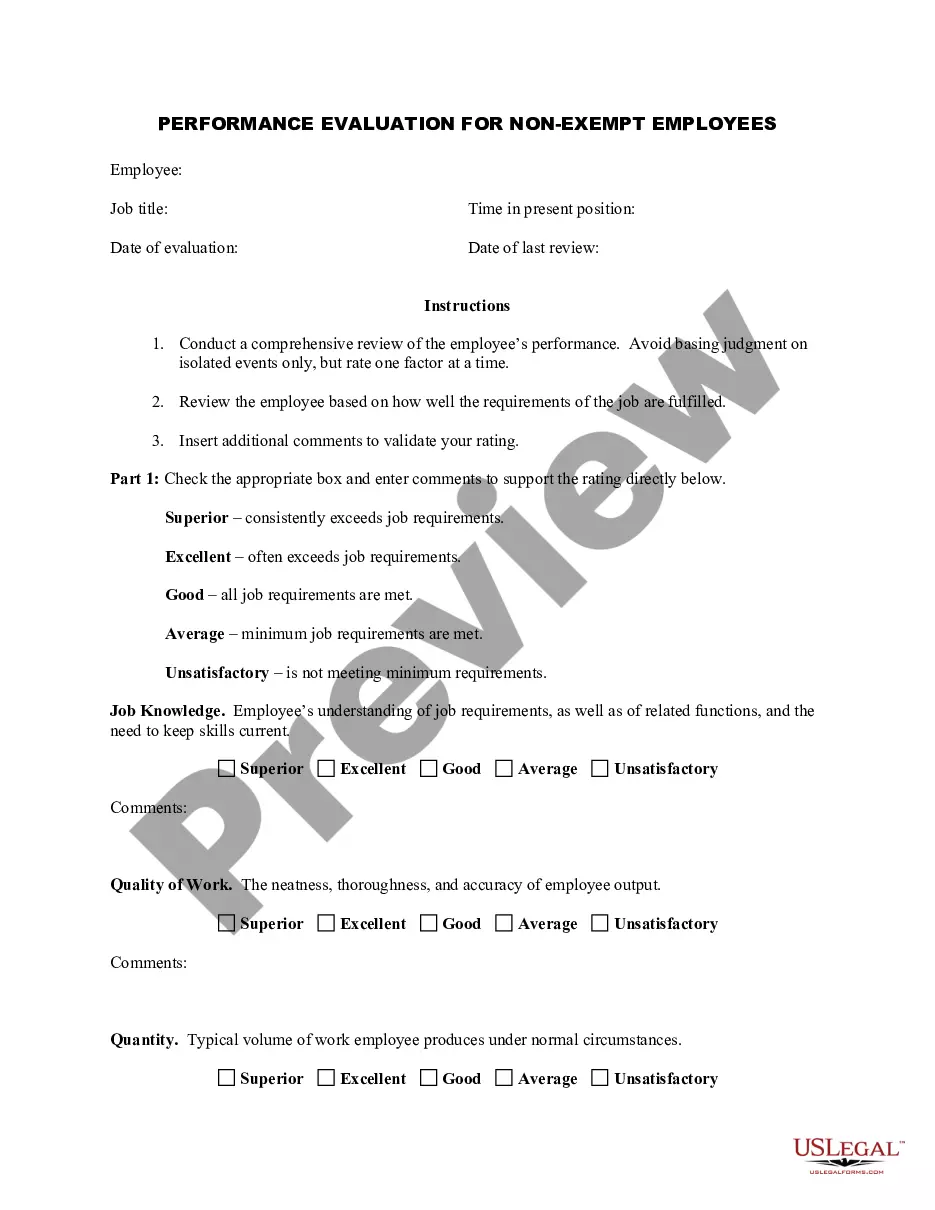
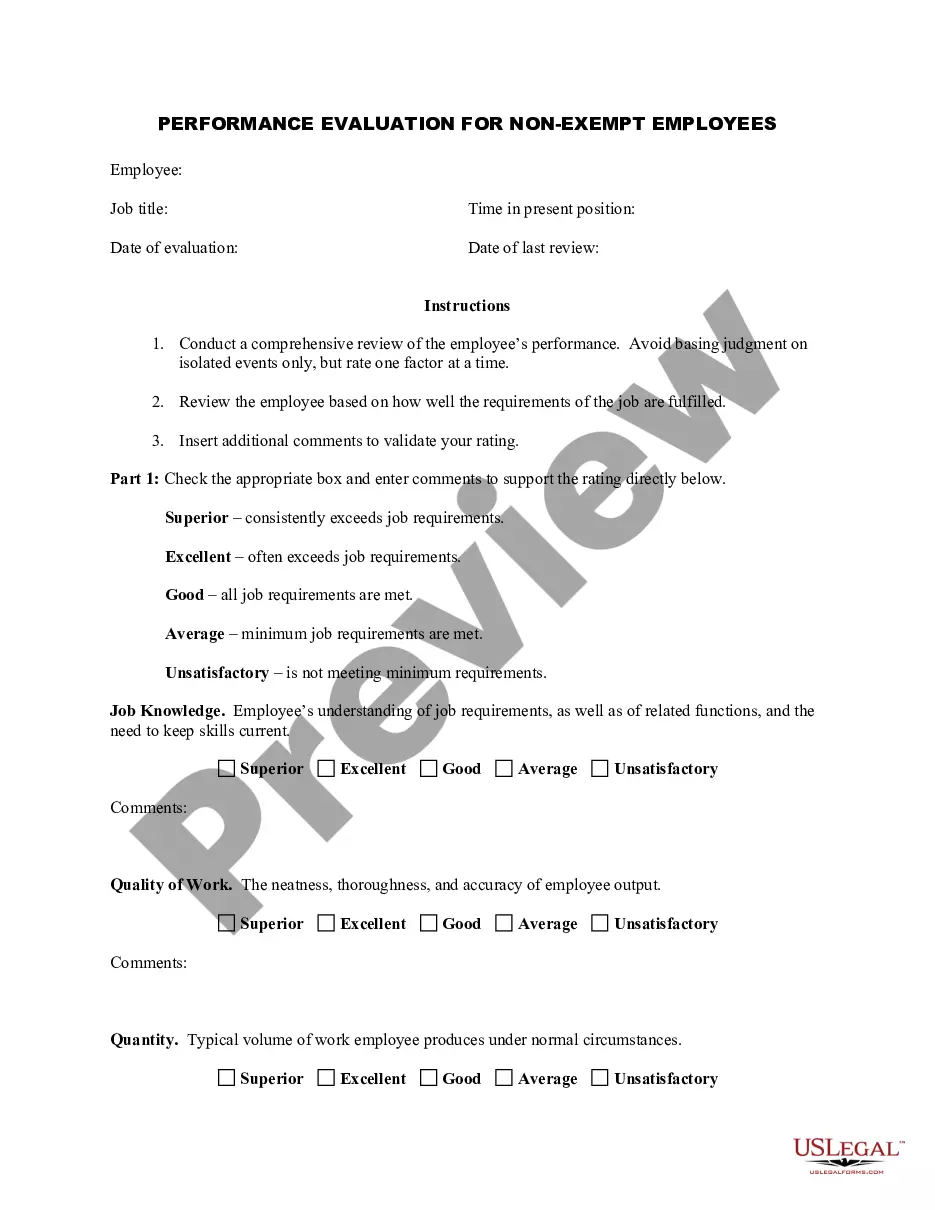
The Employee Evaluation Form for Waiting Staff is a structured document used to assess the performance of non-exempt employees in the waiting staff category. This form helps to evaluate their job performance based on various aspects such as job knowledge, quality of work, cooperation, and initiative. Unlike general performance review forms, this specific evaluation is tailored to the hospitality industry, focusing on skills that are particularly relevant in a dining environment.
Form components explained
- Employee Information: Sections for job title, time in position, and dates of evaluation.
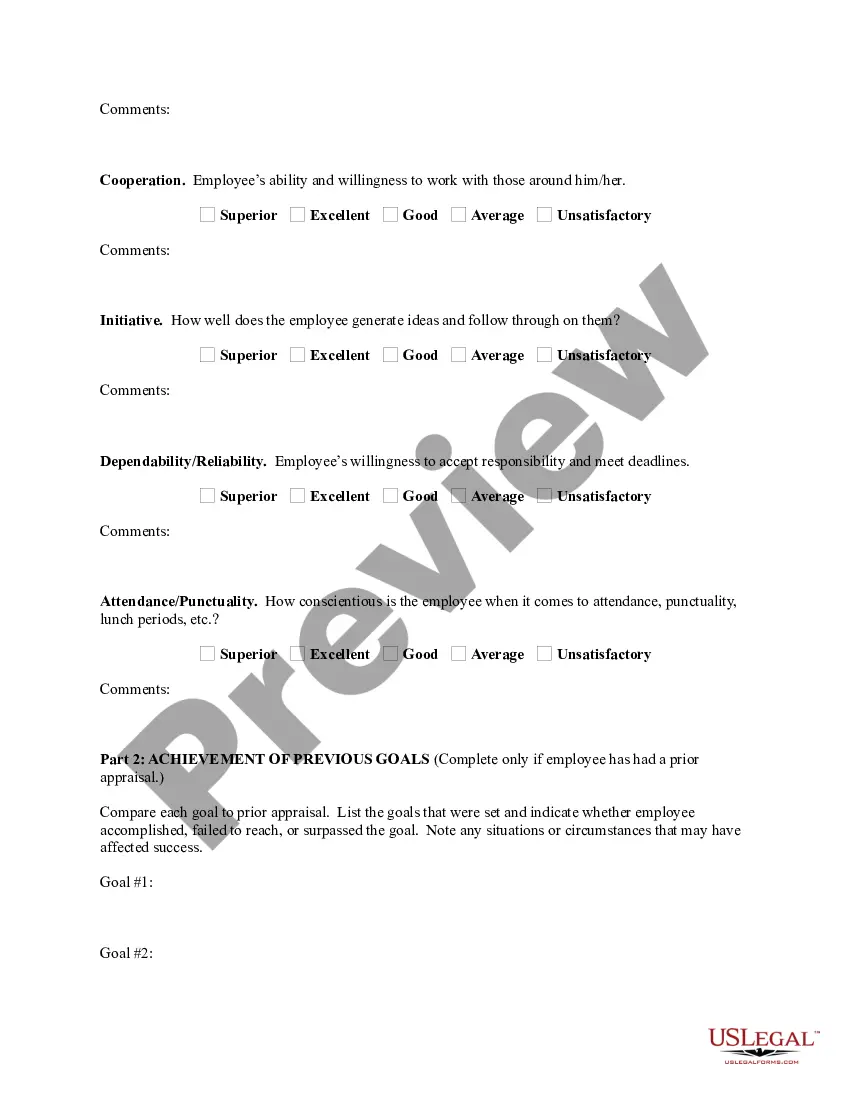
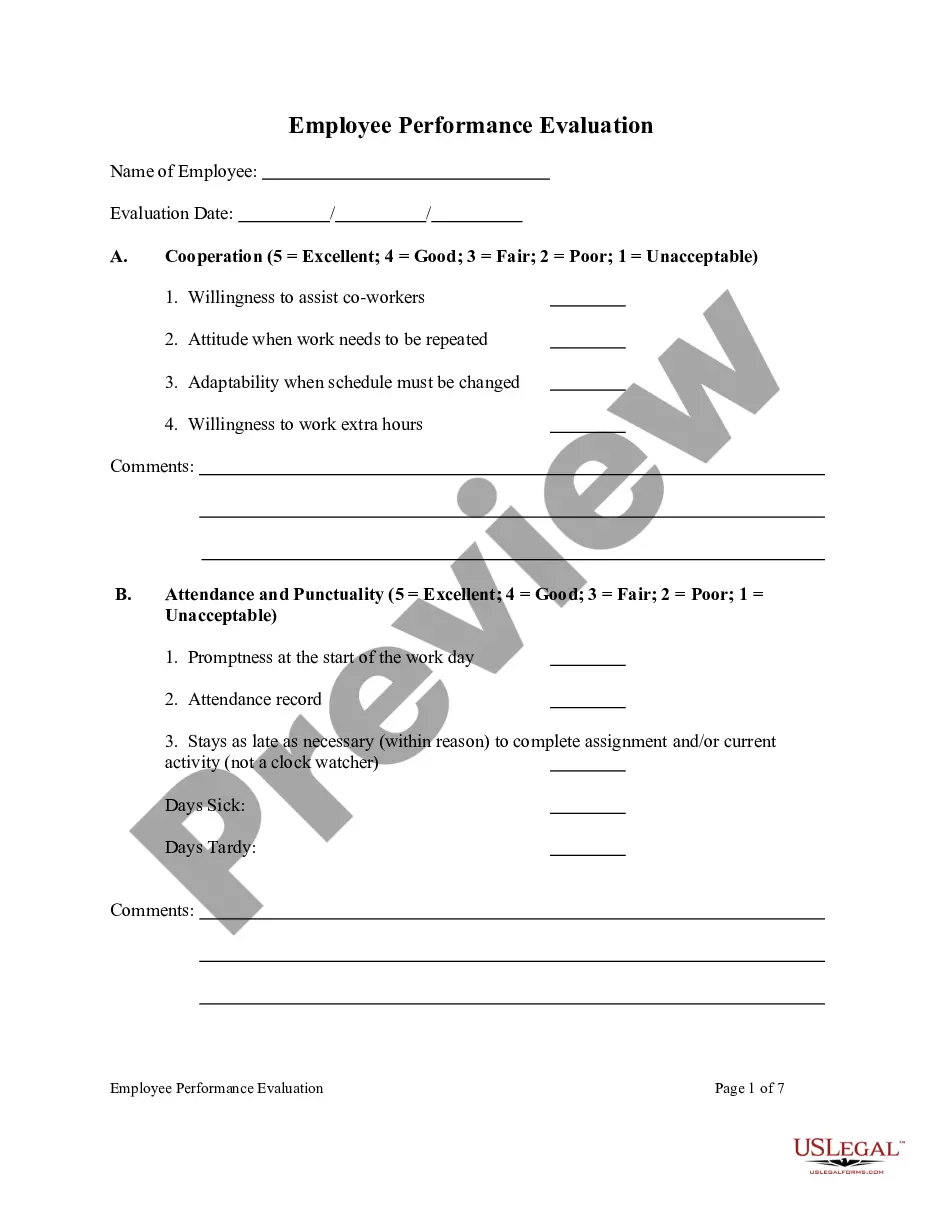
- Performance Categories: Scoring in areas such as job knowledge, quality of work, quantity of work, cooperation, initiative, dependability, and attendance.
- Comments Section: Areas to provide supportive comments for each rating given.
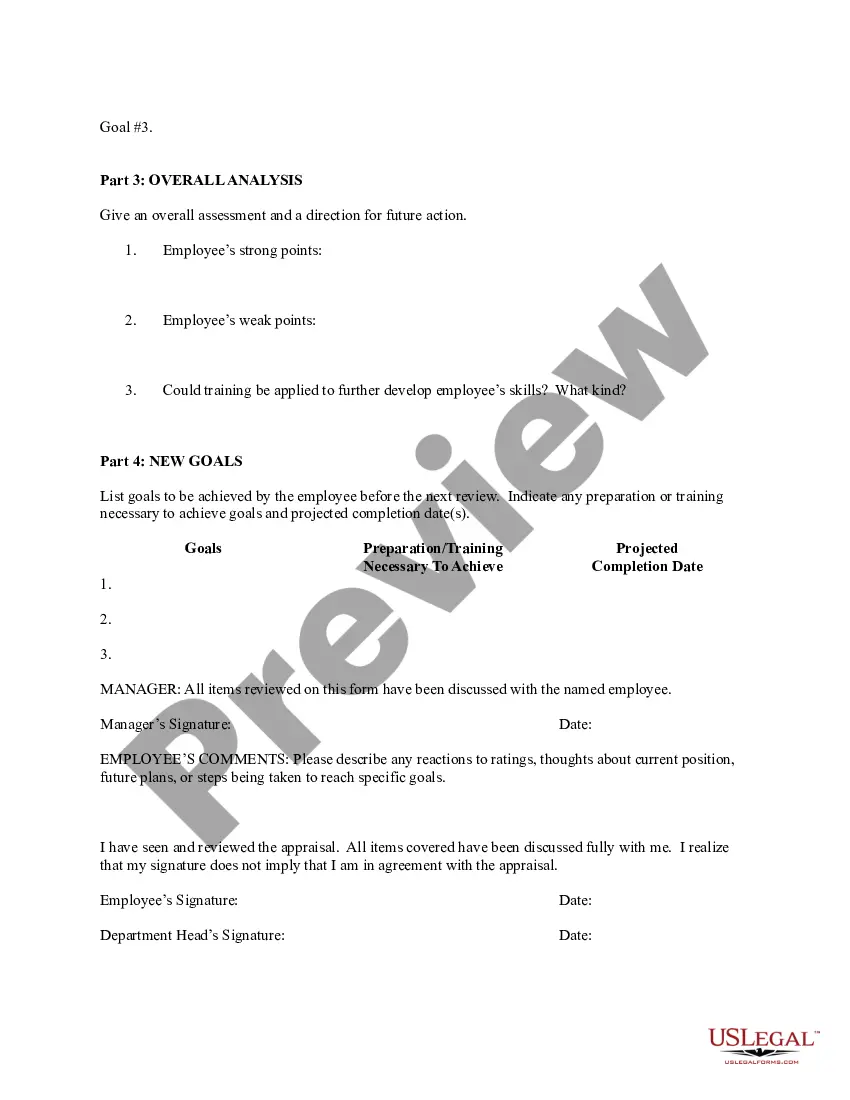
- Achievement Review: Assessment of previously set goals and their outcomes.
- Future Goals: Space to outline new goals and necessary training to achieve them.
Common use cases
This form should be used annually or when evaluating the effectiveness of an employee in the waiting staff position. It is particularly useful during the annual performance review process, or during specific evaluations if employee performance issues arise. This helps ensure that employee evaluations are thorough, fair, and consistent.
Who should use this form
- Managers and supervisors in the hospitality industry responsible for evaluating waiting staff.
- Human resources professionals involved in the performance review process.
- Owners of restaurants and cafes who want to formally assess staff performance.
How to prepare this document
- Complete the employee's information at the top of the form, including job title and evaluation date.
- Score the employee's performance in each category based on observed behavior and job outcomes.
- Provide detailed comments in the designated sections to justify each rating provided.
- In the achievement review section, compare the employee's performance against previously set goals.
- Outline new goals for the upcoming evaluation period, specifying any training needed.
Notarization guidance
This form does not typically require notarization unless specified by local law. However, keeping a record of the signed evaluation is important for both employee and employer references.
Get your form ready online
Our built-in tools help you complete, sign, share, and store your documents in one place.
Make edits, fill in missing information, and update formatting in US Legal Forms—just like you would in MS Word.
Download a copy, print it, send it by email, or mail it via USPS—whatever works best for your next step.
Sign and collect signatures with our SignNow integration. Send to multiple recipients, set reminders, and more. Go Premium to unlock E-Sign.
If this form requires notarization, complete it online through a secure video call—no need to meet a notary in person or wait for an appointment.
We protect your documents and personal data by following strict security and privacy standards.

Make edits, fill in missing information, and update formatting in US Legal Forms—just like you would in MS Word.

Download a copy, print it, send it by email, or mail it via USPS—whatever works best for your next step.

Sign and collect signatures with our SignNow integration. Send to multiple recipients, set reminders, and more. Go Premium to unlock E-Sign.

If this form requires notarization, complete it online through a secure video call—no need to meet a notary in person or wait for an appointment.

We protect your documents and personal data by following strict security and privacy standards.
Mistakes to watch out for
- Failing to provide specific examples when justifying performance ratings.
- Not updating the goals section based on employee growth and review feedback.
- Using the evaluation as a tool for criticism instead of constructive feedback.
Benefits of completing this form online
- Easy access to the form from any device, ensuring all managers can utilize it as needed.
- Streamlined editing options allow for customization and efficiency during the review process.
- Secure storage enhances confidentiality and legal compliance for employee assessments.
Legal use & context
- Properly using this form ensures consistency in performance evaluations, which can protect against legal challenges regarding employment decisions.
- Employers should familiarize themselves with state-specific labor laws regarding performance management and evaluations.
Looking for another form?
Form popularity
FAQ
Communication. Collaboration and teamwork. Problem-solving. Quality and accuracy of work. Attendance, punctuality and reliability. The ability to accomplish goals and meet deadlines.
Gather information. List employee responsibilities. Use objective language. Use action verbs. Compare performance ratings. Ask open-ended questions. Use a point system.
Level of execution. Quality of work. Level of creativity. Amount of consistent improvement. Customer and peer feedback. Sales revenue generated. Responsiveness to feedback. Ability to take ownership.
Set Performance Standards. Set Specific Goals. Take Notes Throughout the Year. Be Prepared. Be Honest and Specific with Criticism. Don't Compare Employees. Evaluate the Performance, Not the Personality. Have a Conversation.
Self-Evaluation. A self-evaluation requires an employee to judge his or her own performance against predetermined criteria. Behavioral Checklist. 360-Degree Feedback. Management by Objectives. Ratings Scale.
There are three main methods used to collect performance appraisal (PA) data: objective production, personnel, and judgmental evaluation. Judgmental evaluations are the most commonly used with a large variety of evaluation methods.
Make it easy to use. Ensure that the information your evaluation form seeks is clear and concise. Determine the focus of the form. There needs to be a clear purpose. Establish a clearly defined rating scale.
Knowing the steps of service. Immediately greeting customers at the door. A very friendly attitude. Of course, good hygiene. Understanding food safety. Being aware of Allergens. Teamwork Everyone always helps each other.