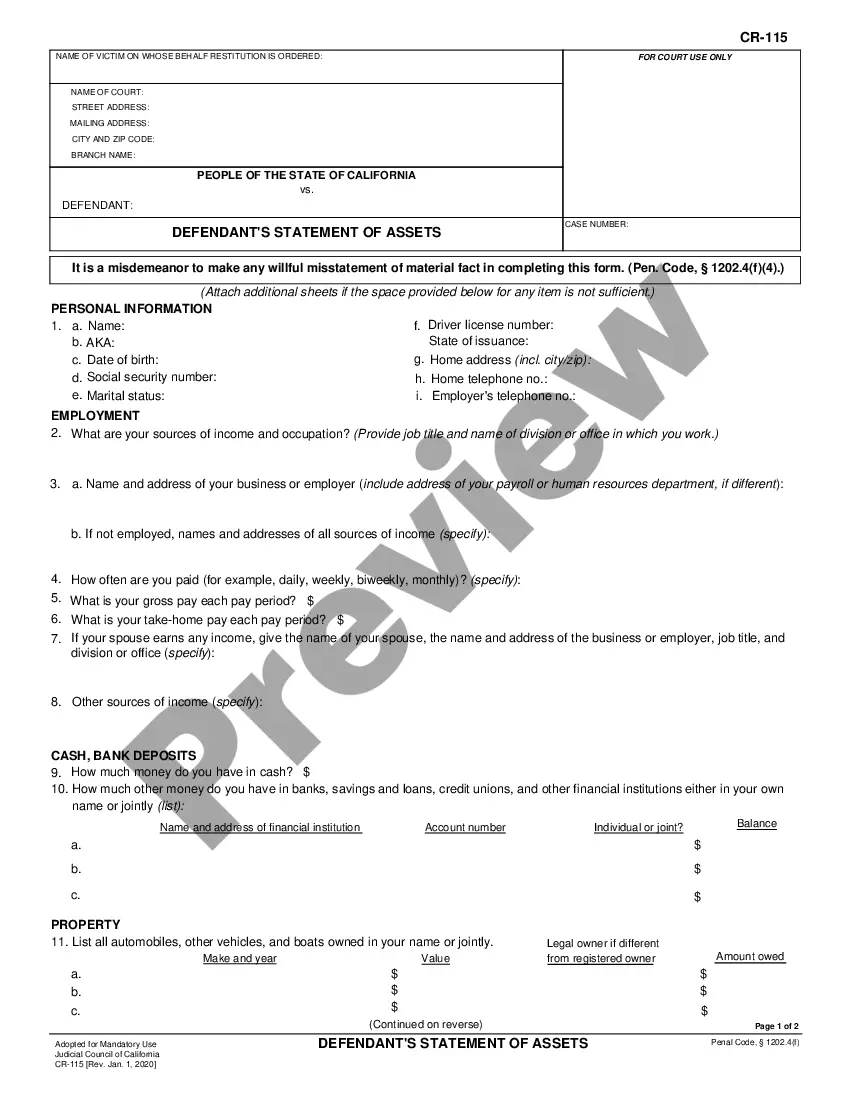
Employee Performance Evaluation
Understanding this form
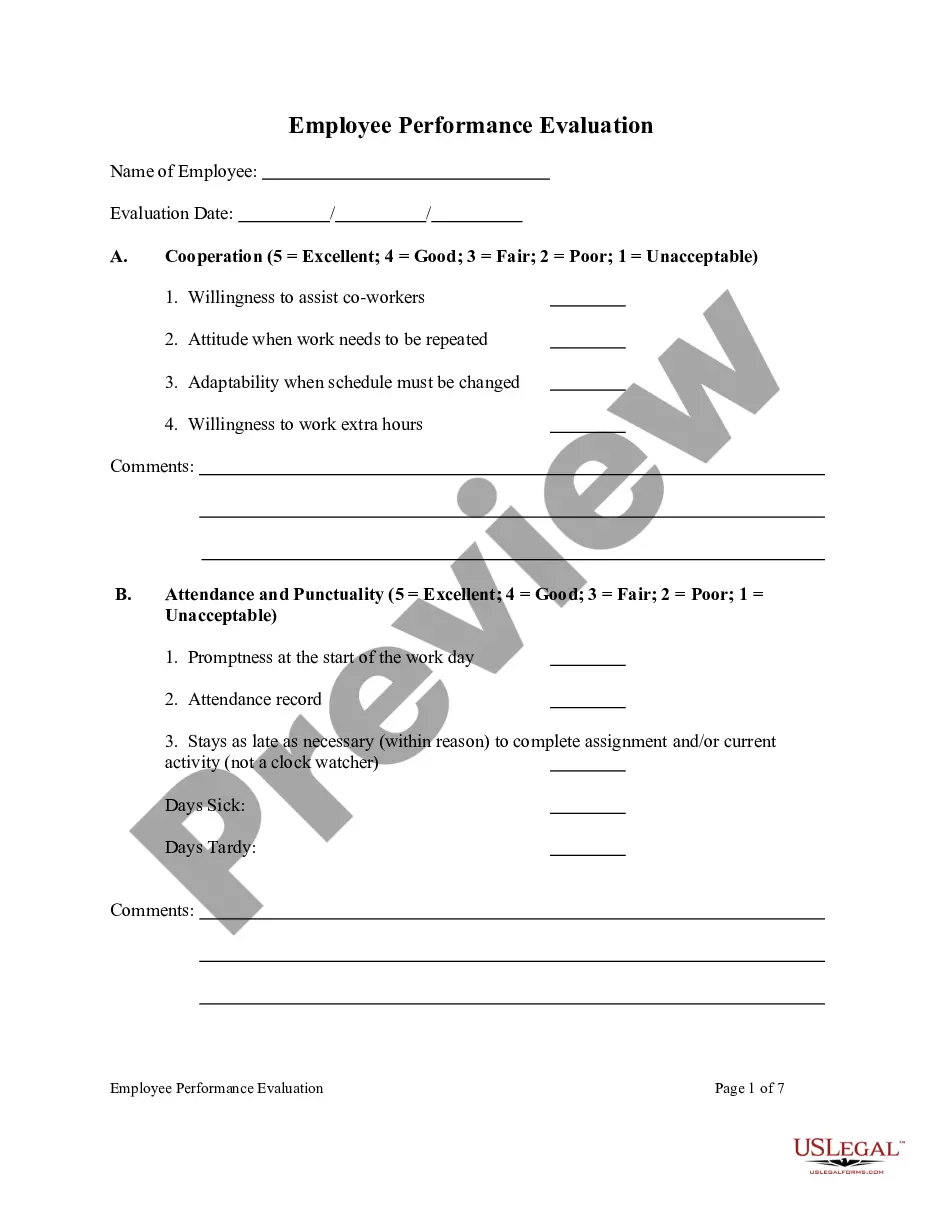
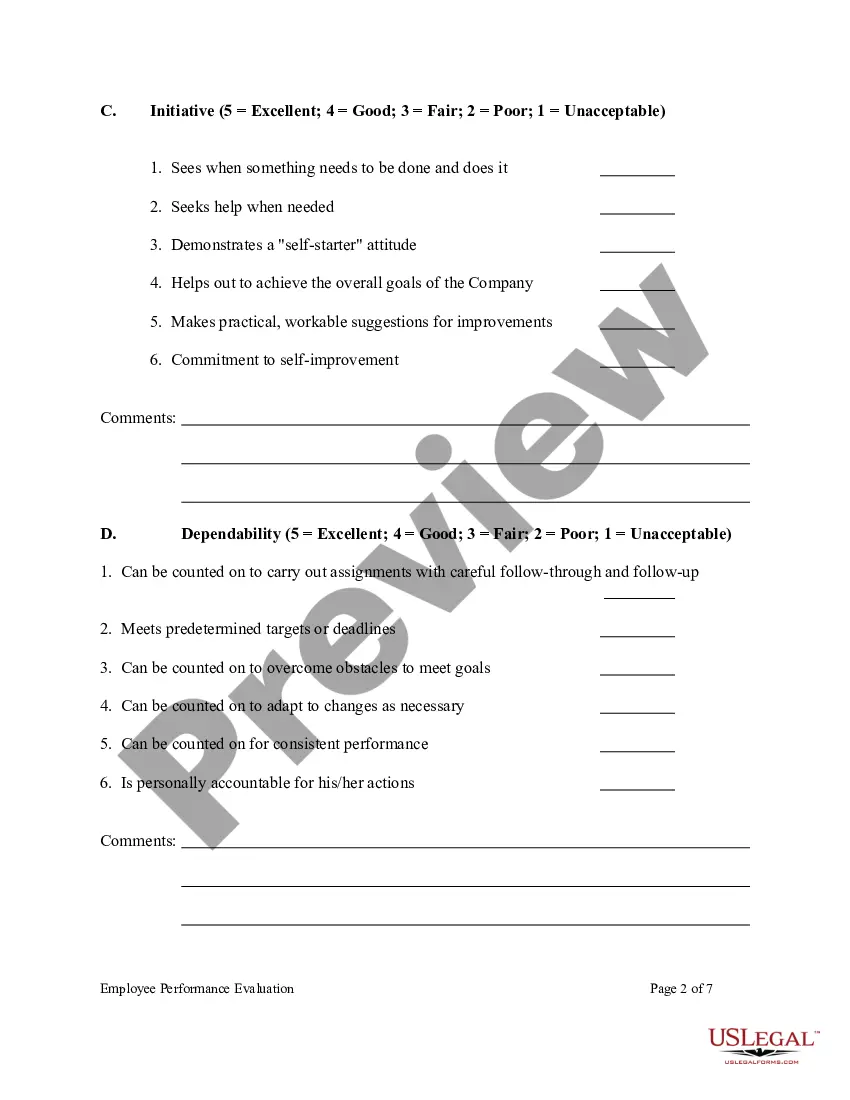
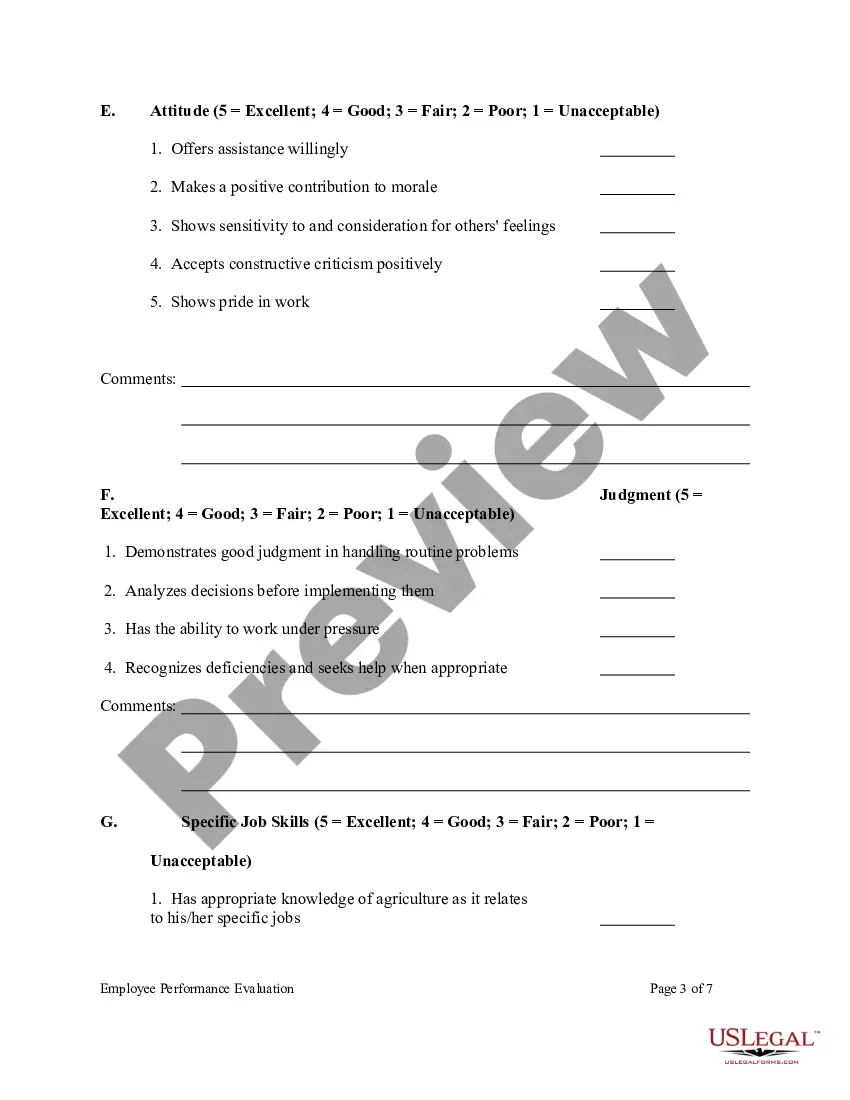
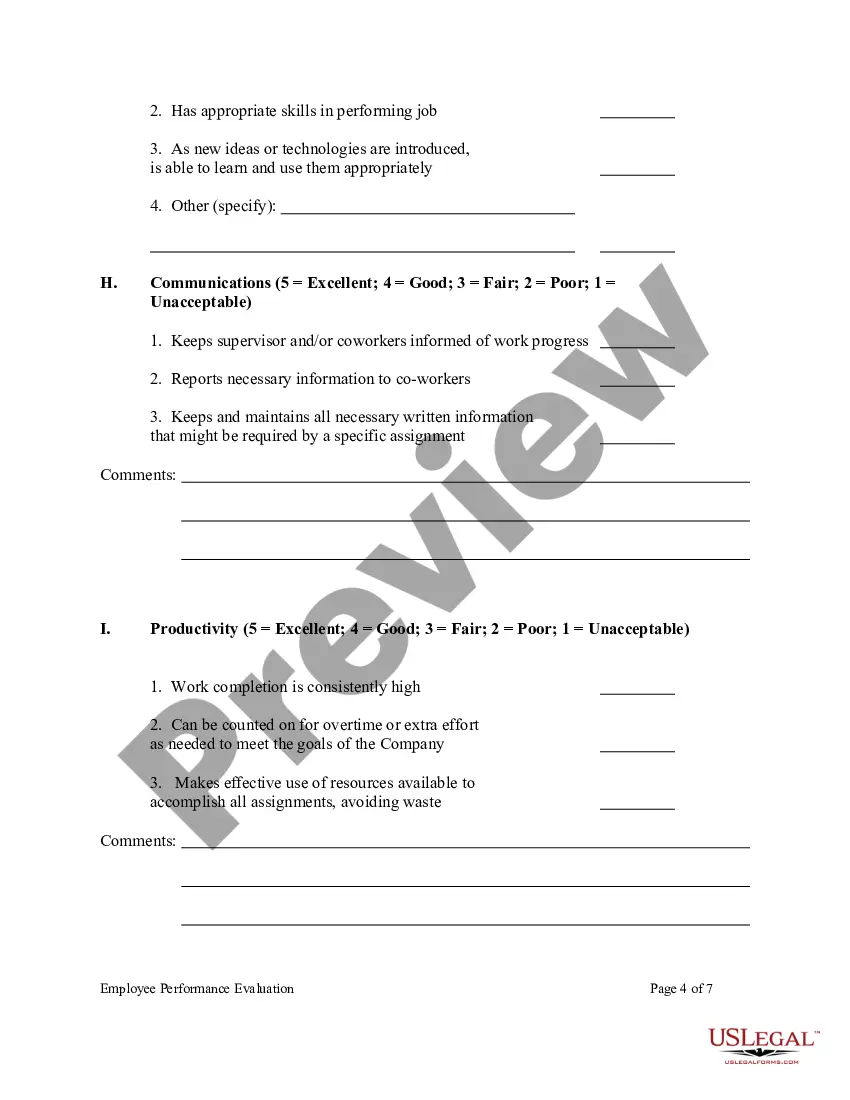
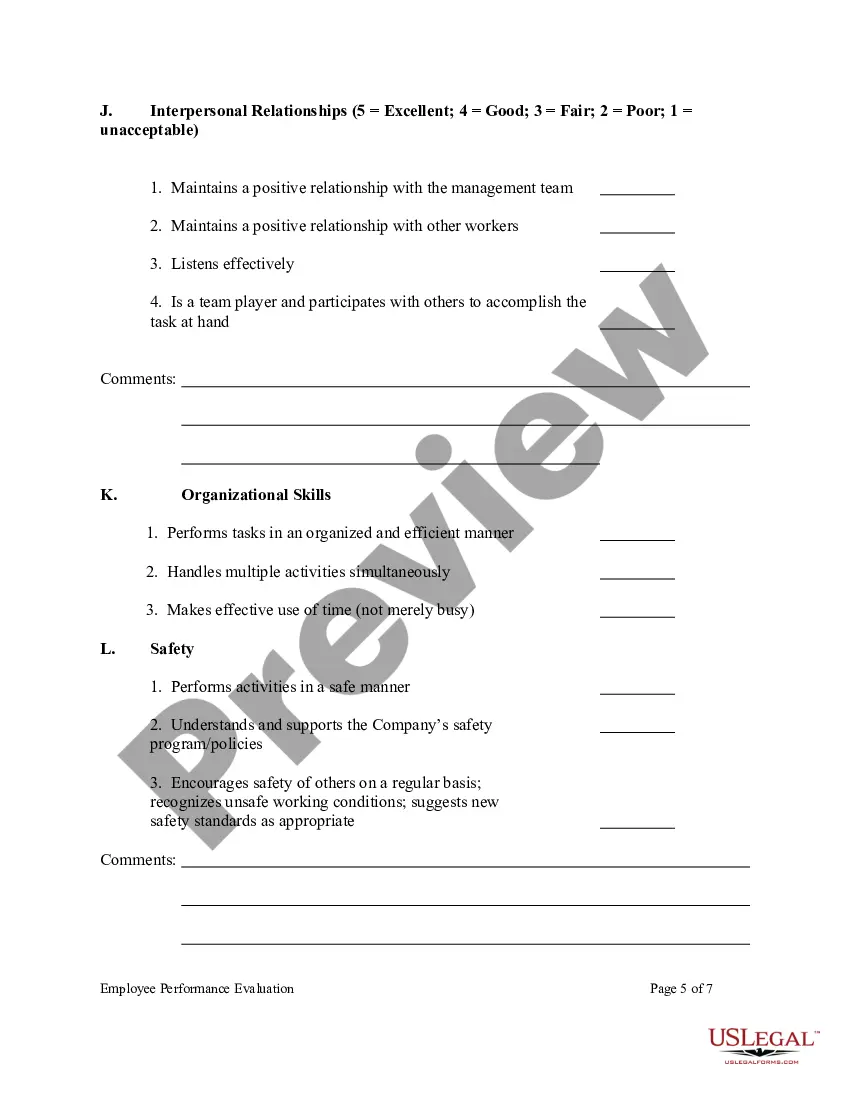
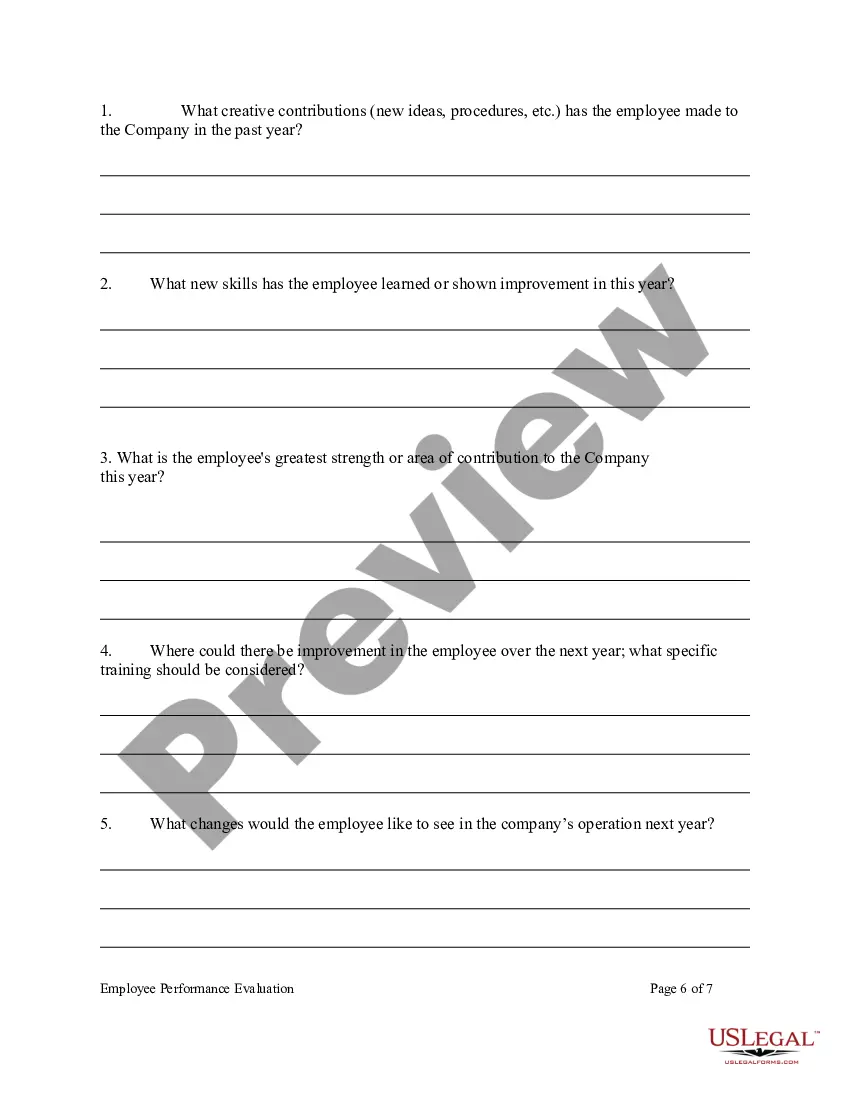
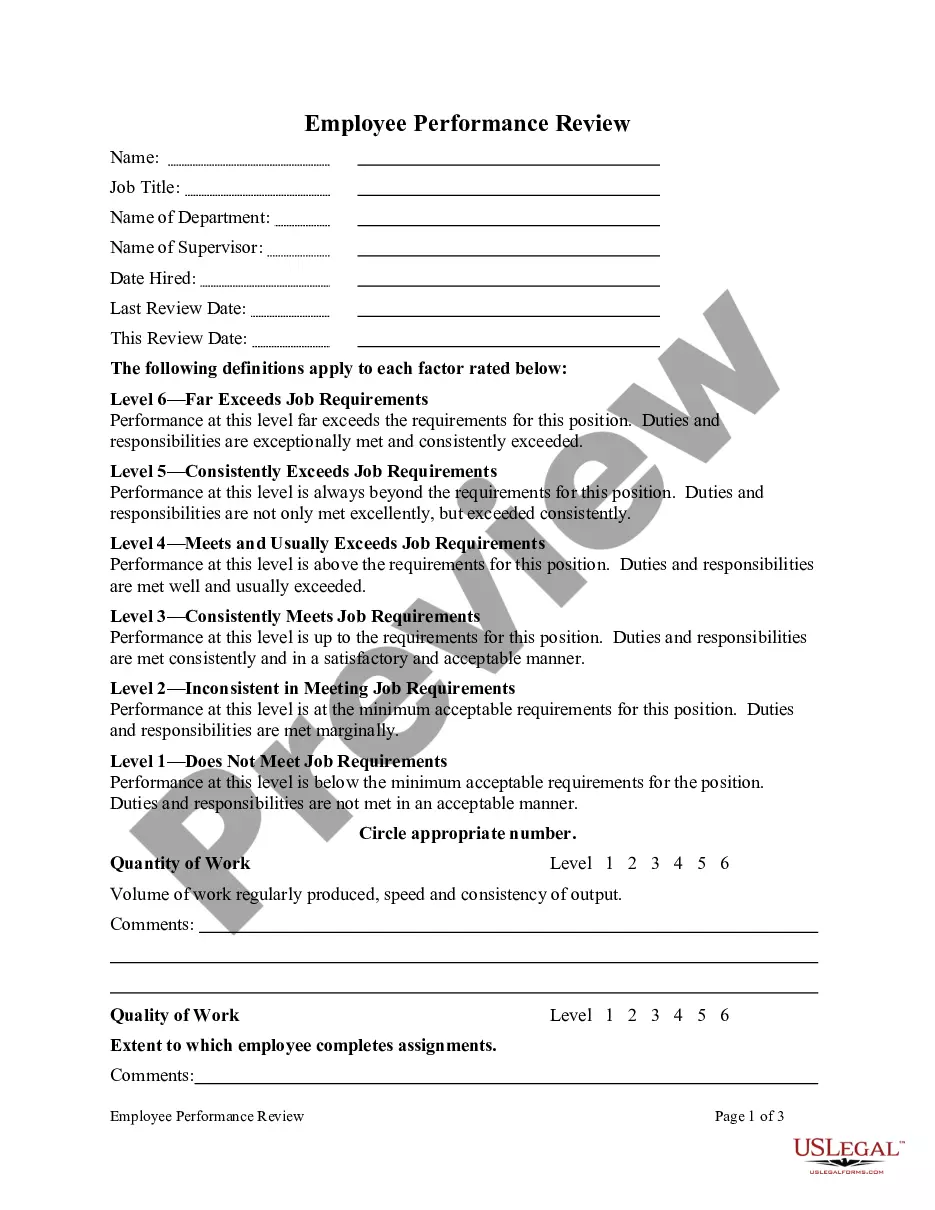
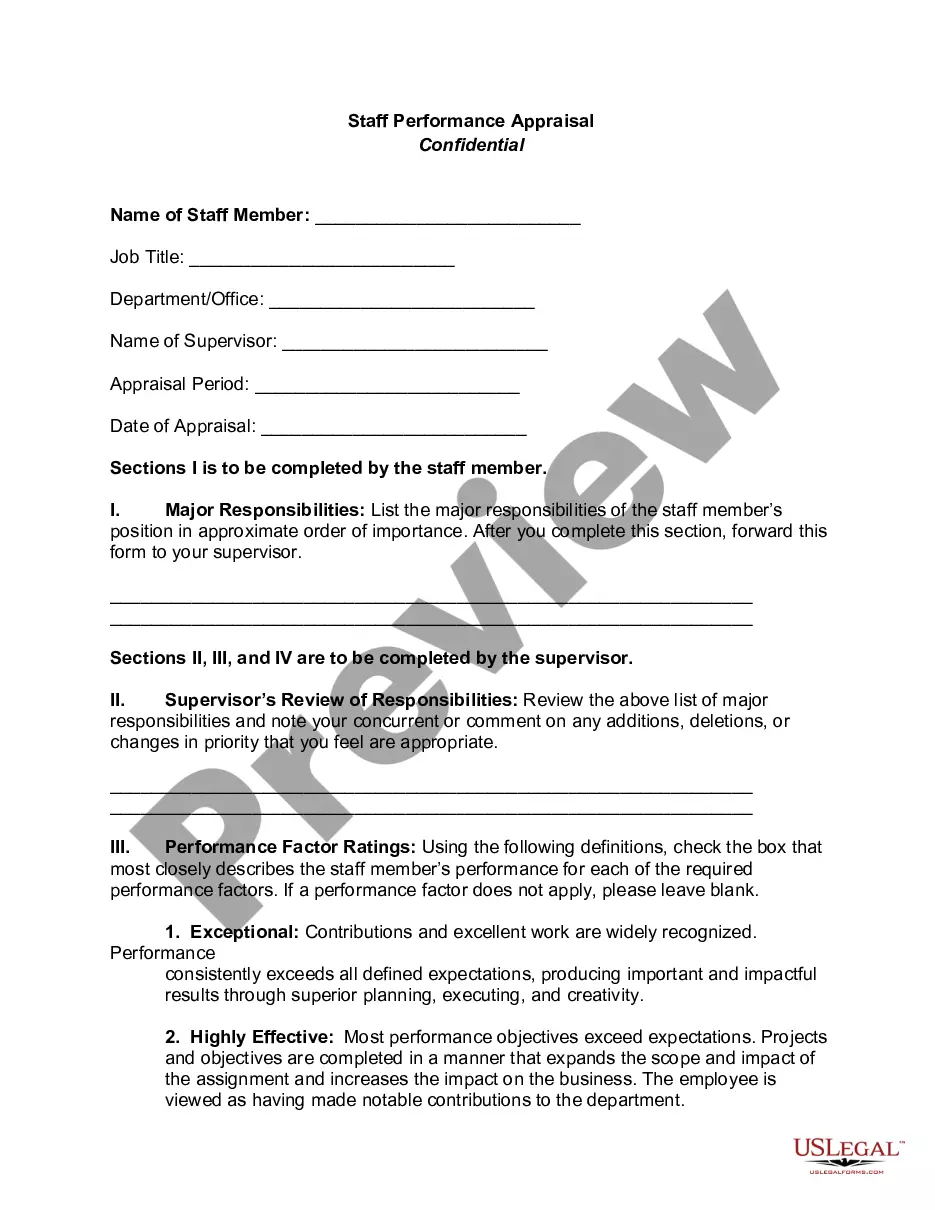
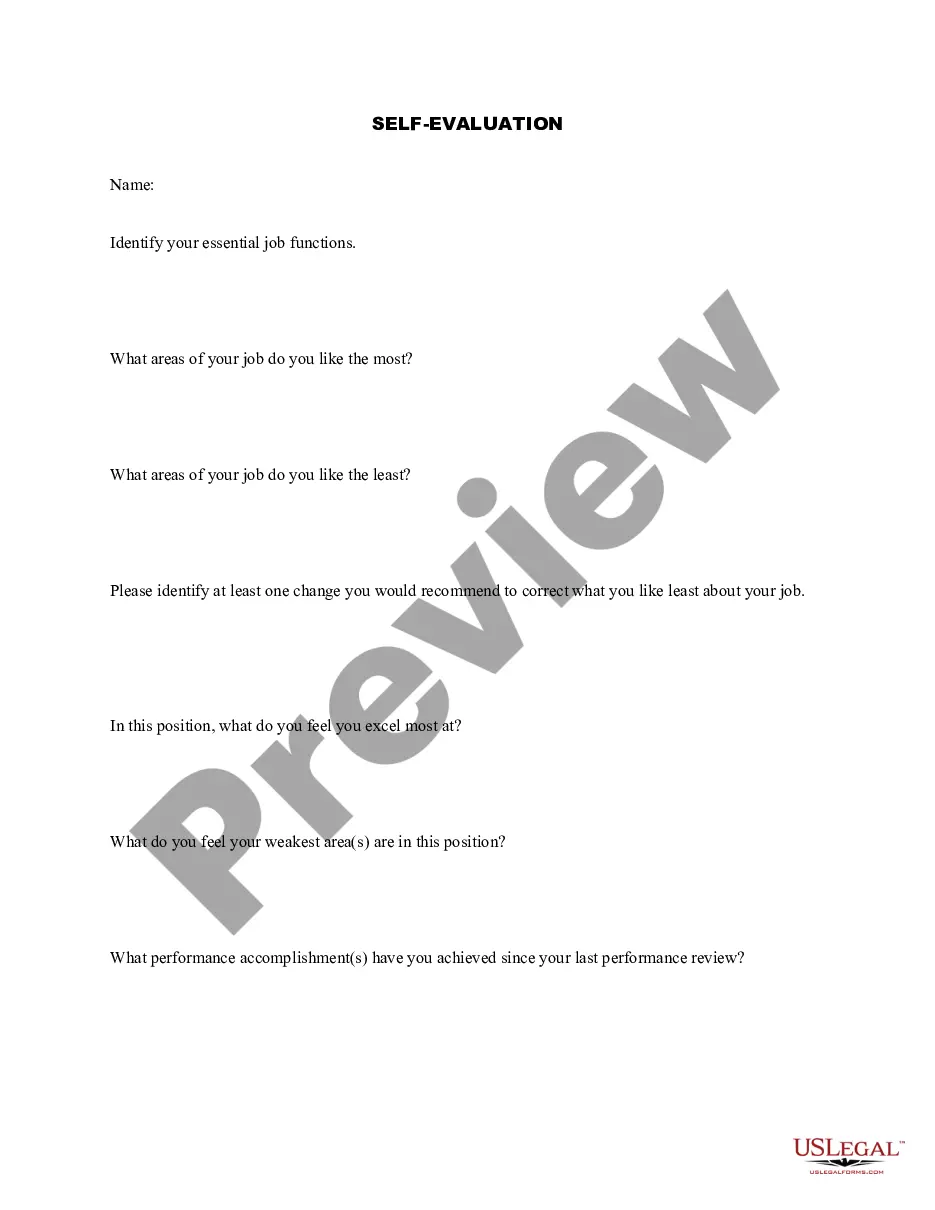
The Employee Performance Evaluation form is a structured document used by employers to assess the performance of their employees. This form helps to ensure clarity and consistency in evaluating employee achievements, strengths, and areas for improvement. It is distinct from informal reviews or casual feedback sessions, providing a more formalized assessment process that can be documented and referred to later.
Main sections of this form
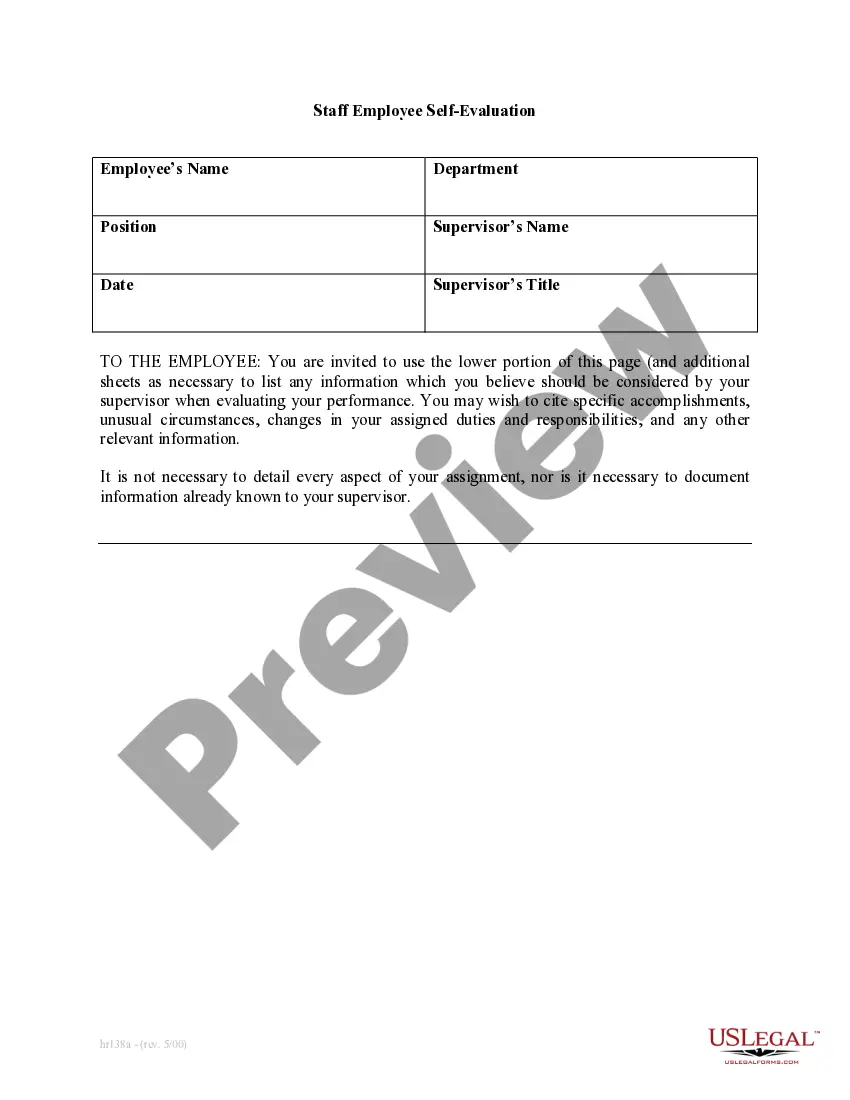
- Employee information: Name, position, and department details.
- Evaluation criteria: Key performance indicators and competencies to be assessed.
- Performance ratings: Scales or categories for rating employee performance.
- Comments section: Space for detailed feedback from supervisors.
- Goals and development: Identifying future objectives and training opportunities.
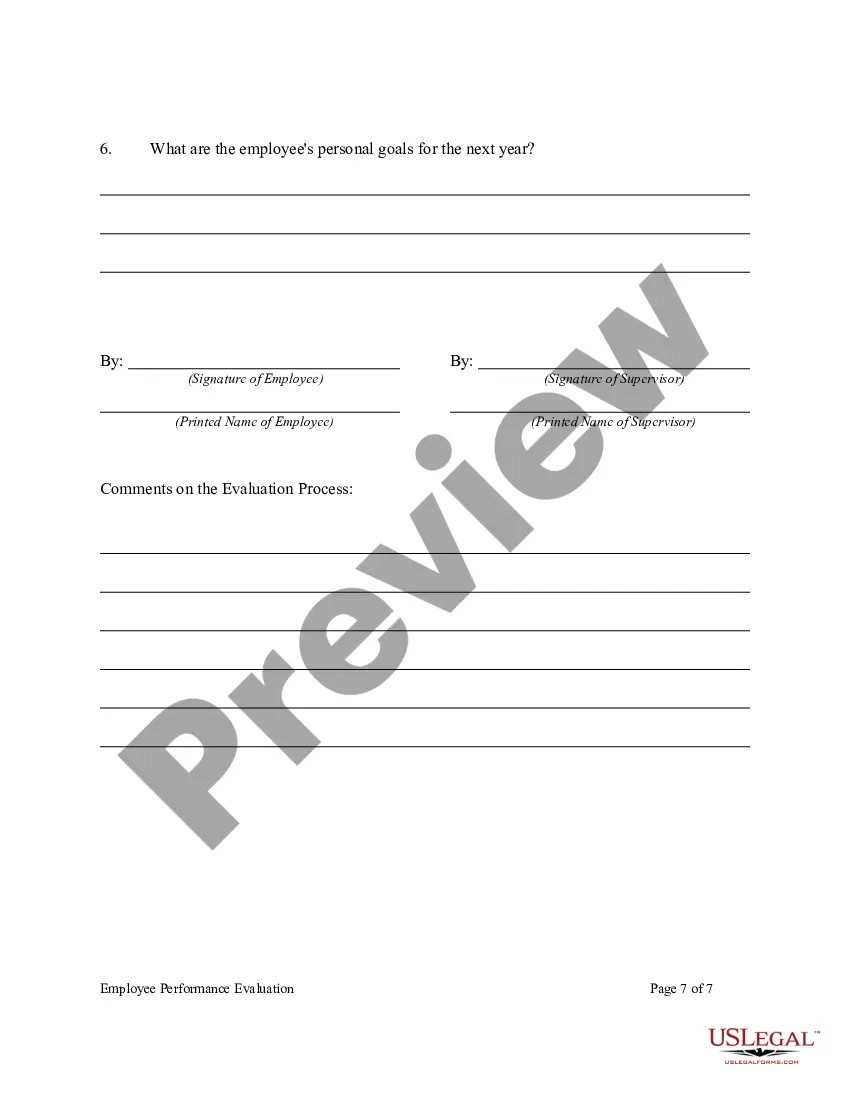
- Signatures: Confirmation from both the evaluator and the employee.
When to use this form
This form should be used during scheduled performance evaluations, typically conducted annually or biannually. It is essential when implementing formal reviews to provide meaningful feedback, set goals for the forthcoming period, and facilitate discussions about career development with employees. Additionally, it can be helpful when addressing performance issues or making promotion decisions.
Intended users of this form
This form is intended for:
- Managers and team leaders conducting performance evaluations.
- Human resources professionals overseeing employee assessments.
- Organizations implementing a formal performance management system.
- Business owners who want to document employee performance for accountability.
Steps to complete this form
- Identify the employee: Fill in the employee's name, position, and department.
- Establish evaluation criteria: List the key performance indicators relevant to the employee's role.
- Rate performance: Utilize the provided rating scales to assess each criterion.
- Add comments: Offer specific feedback on the employee's performance, including strengths and areas for improvement.
- Set goals: Discuss and document future objectives for the employee.
- Obtain signatures: Have both the evaluator and employee sign the form to acknowledge the evaluation.
Does this form need to be notarized?
This form does not typically require notarization unless specified by local law. Employers should verify if any state-specific requirements apply.
Get your form ready online
Our built-in tools help you complete, sign, share, and store your documents in one place.
Make edits, fill in missing information, and update formatting in US Legal Forms—just like you would in MS Word.
Download a copy, print it, send it by email, or mail it via USPS—whatever works best for your next step.
Sign and collect signatures with our SignNow integration. Send to multiple recipients, set reminders, and more. Go Premium to unlock E-Sign.
If this form requires notarization, complete it online through a secure video call—no need to meet a notary in person or wait for an appointment.
We protect your documents and personal data by following strict security and privacy standards.

Make edits, fill in missing information, and update formatting in US Legal Forms—just like you would in MS Word.

Download a copy, print it, send it by email, or mail it via USPS—whatever works best for your next step.

Sign and collect signatures with our SignNow integration. Send to multiple recipients, set reminders, and more. Go Premium to unlock E-Sign.

If this form requires notarization, complete it online through a secure video call—no need to meet a notary in person or wait for an appointment.

We protect your documents and personal data by following strict security and privacy standards.
Common mistakes
- Failing to provide specific examples in feedback.
- Using vague rating criteria that do not accurately reflect performance.
- Neglecting to address areas for improvement.
- Not allowing employees to respond to their evaluations.
Benefits of completing this form online
- Convenience: Access and complete the form anytime, anywhere.
- Editability: Easily modify and update the evaluation as needed.
- Reliability: Online forms provide a secure and structured format to ensure consistency.
Looking for another form?
Form popularity
FAQ
Creativity and innovation. There are two ways that creativity are essential in the workplace: creative thinking and creative problem-solving. Adaptability. Communication. Accountability. Attendance and punctuality. Productivity and quality of work. Achievement. Cooperation.
Highlight your accomplishments. Gather data to showcase your achievements. Align yourself with the company. Reflect objectively on any mistakes. Set goals. Ask for anything you need to improve. Get a second opinion.
Be Positive And Honest. Two-way Communication. Set Specific Achievable Goals. Achievements. Interpersonal Skills. Attendance And Punctuality. Communication Skills.
Reflect on feedback. Make a list of your top accomplishments and identify areas for improvements. Gather analytics to show impact. Make a commitment to improve. Set a SMART goal for yourself. Create a plan of action. Communication. Job Performance.
Pull out your annual goals. Include additional achievements. Pore over the next level's JD. Stay objective and honest. Mindfully highlight the mistakes. Don't be a know-it-all.
Communication. Collaboration and teamwork. Problem-solving. Quality and accuracy of work. Attendance, punctuality and reliability. The ability to accomplish goals and meet deadlines.
Pull out your annual goals. Include additional achievements. Pore over the next level's JD. Stay objective and honest. Mindfully highlight the mistakes. Don't be a know-it-all.
Be proud. One major goal of the self-evaluation is to highlight your accomplishments and recollect milestones in your professional development. Be honest and critical. Continuously strive for growth. Track your accomplishments. Be professional.
1 Know how the self-evaluation is going to be used. 2 Write out a list of your accomplishments. 3 Gather analytics if you can. 4 Write out a list of your struggles. 5 Narrow your accomplishments list down. 6 Don't forget to align your review with your manager's or team's goals.