California Mutual Wills containing Last Will and Testaments for Man and Woman living together not Married with No Children
Overview of this form
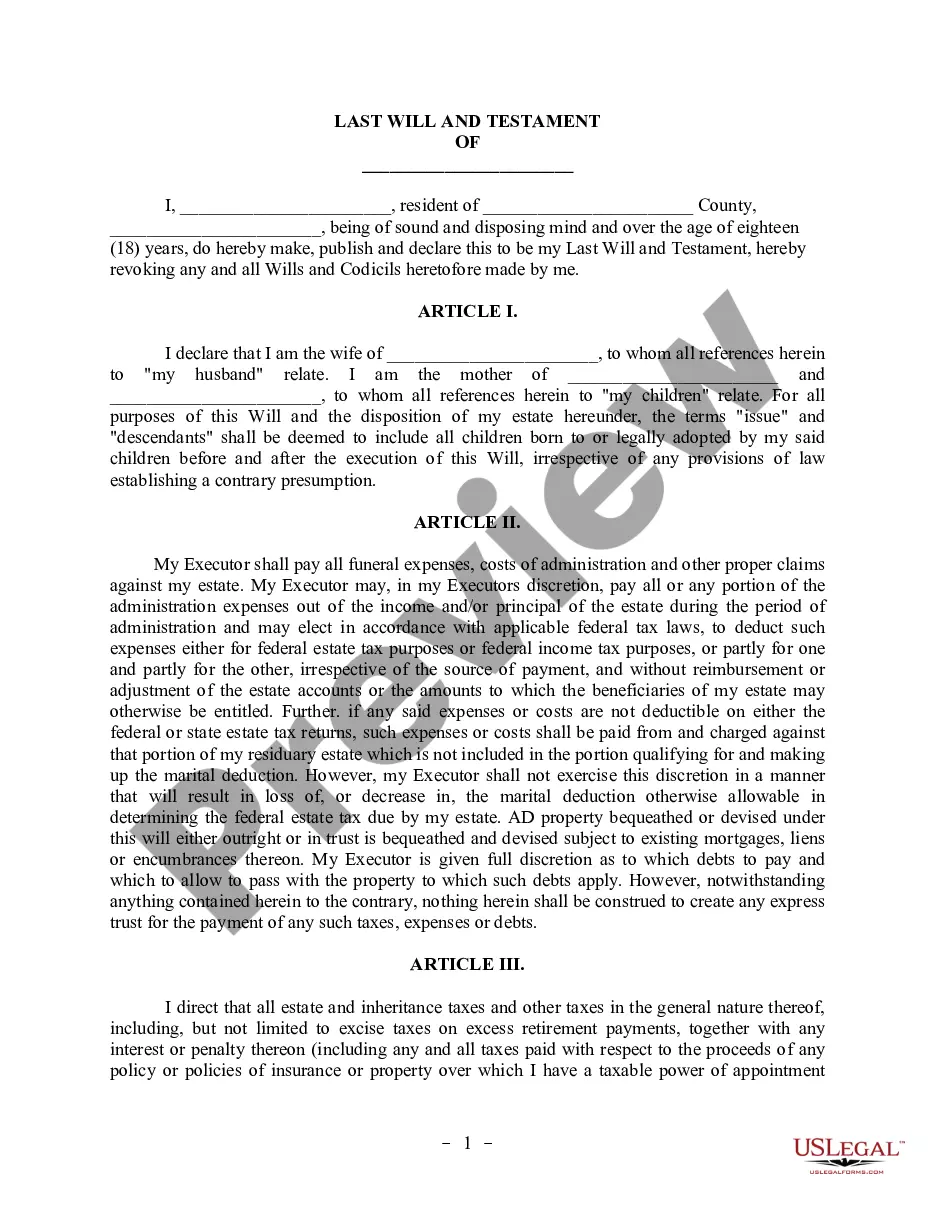
This Mutual Wills package contains two Last Will and Testament forms specifically designed for a man and a woman living together who are not married and have no children. It allows each party to designate the other as a beneficiary of their property. This form is essential for couples who wish to ensure that their assets pass to each other upon death, similar to married couples, while clarifying their intentions in a legally binding document.
Form components explained
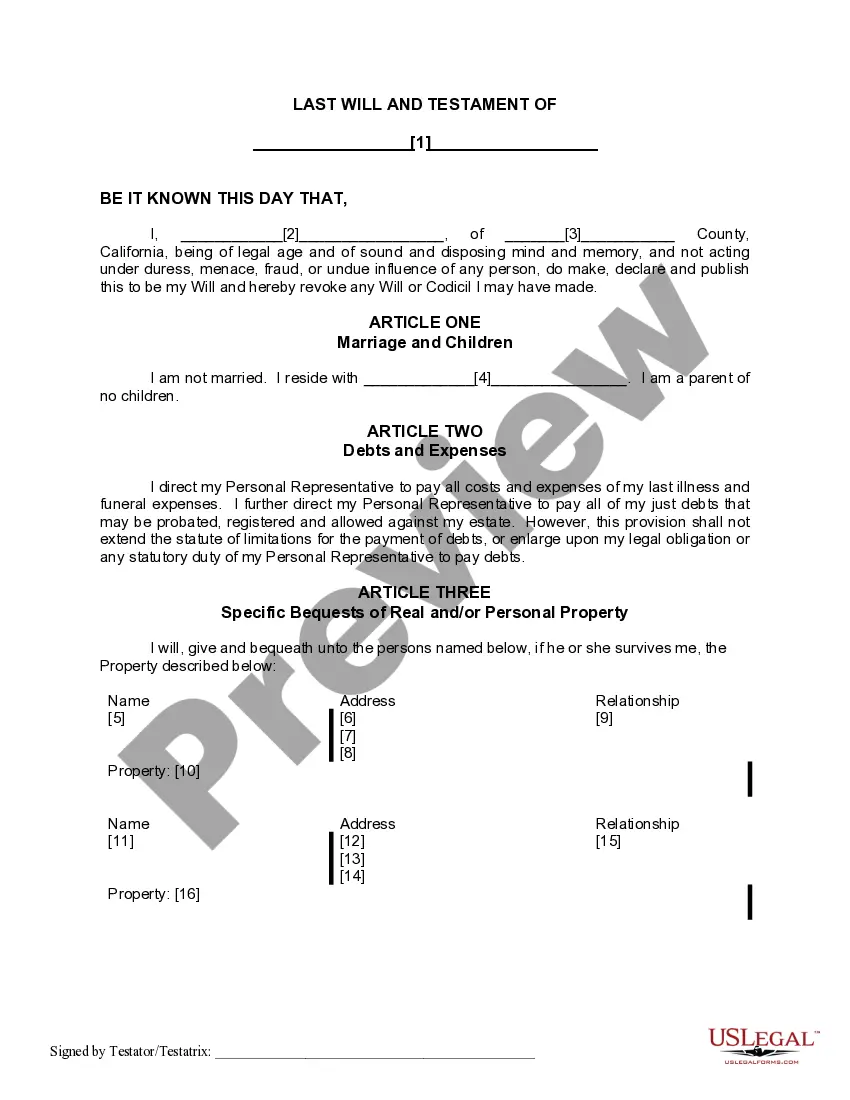
- Introduction: Establishes the individual's identity and marital status, stating that they are not married and have no children.
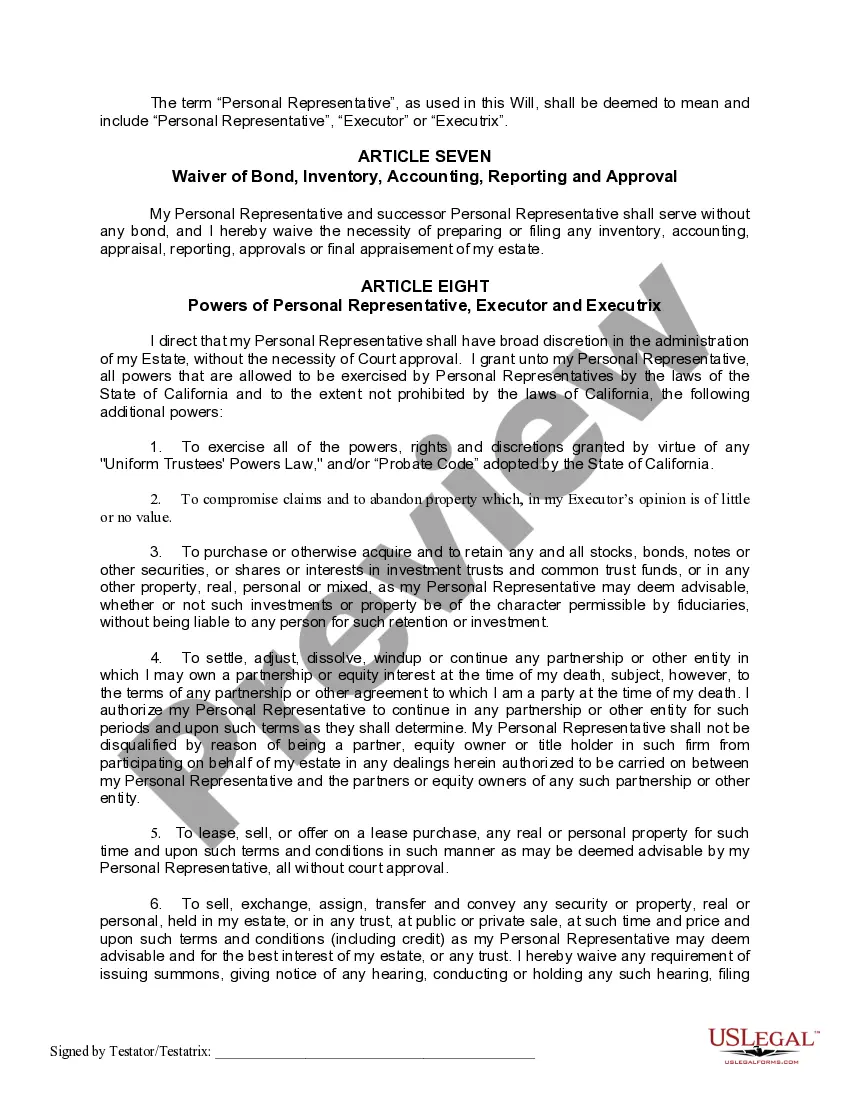
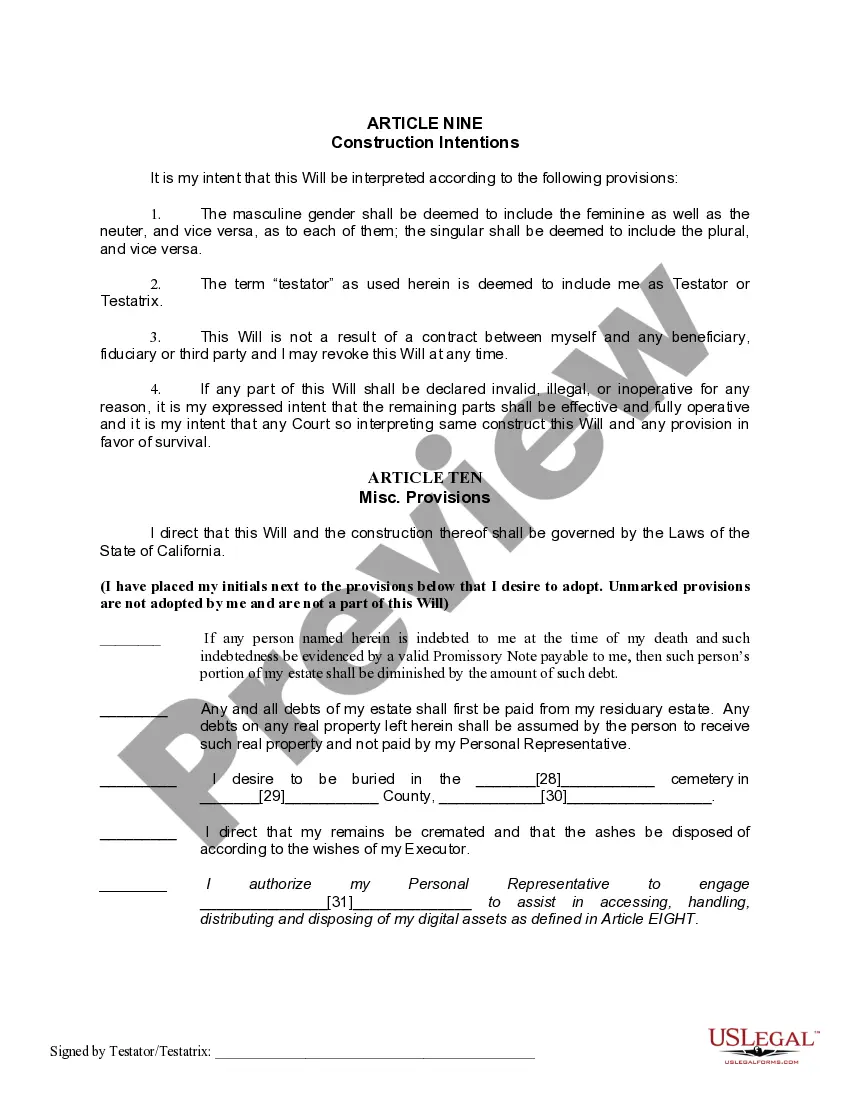
- Debts and Expenses: Instructions for the payment of last illness and funeral expenses, as well as outstanding debts.
- Specific Bequests: Allows for the designation of specific properties to named beneficiaries.
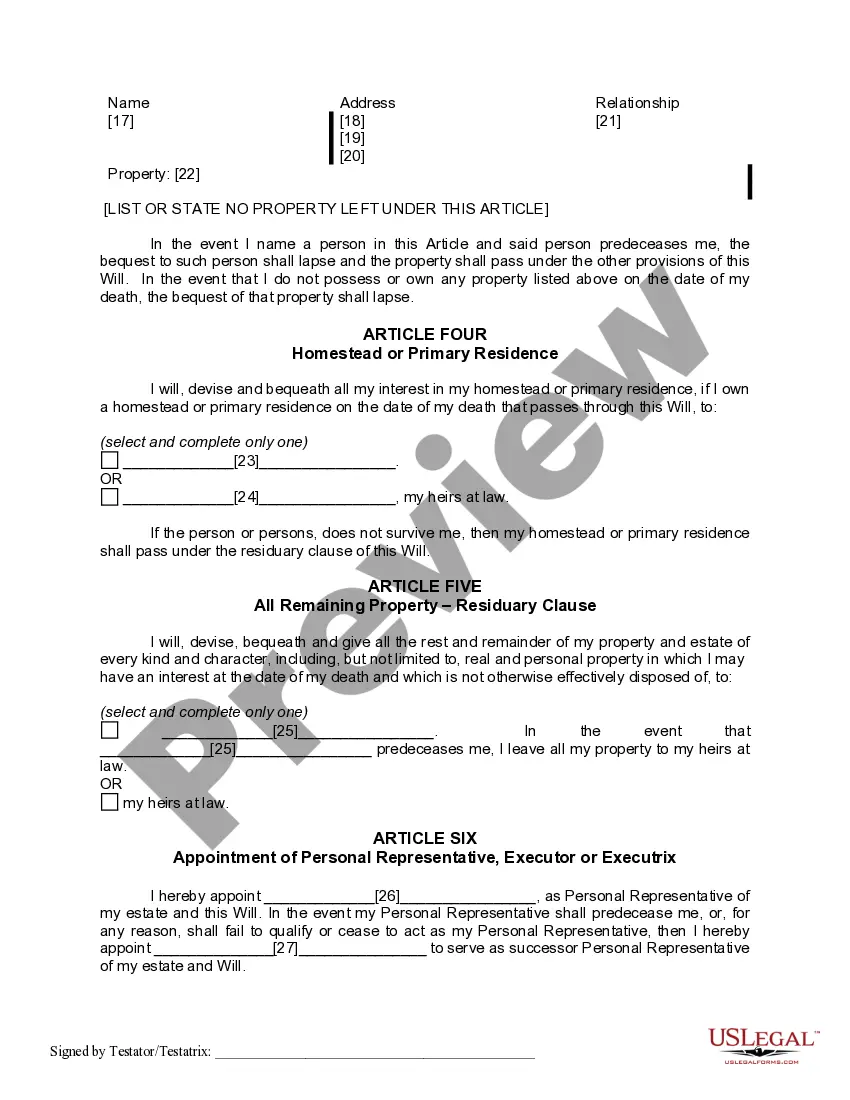
- Homestead Clause: Addresses the distribution of the primary residence or homestead.
- Residue Clause: Covers all remaining property not specifically bequeathed.
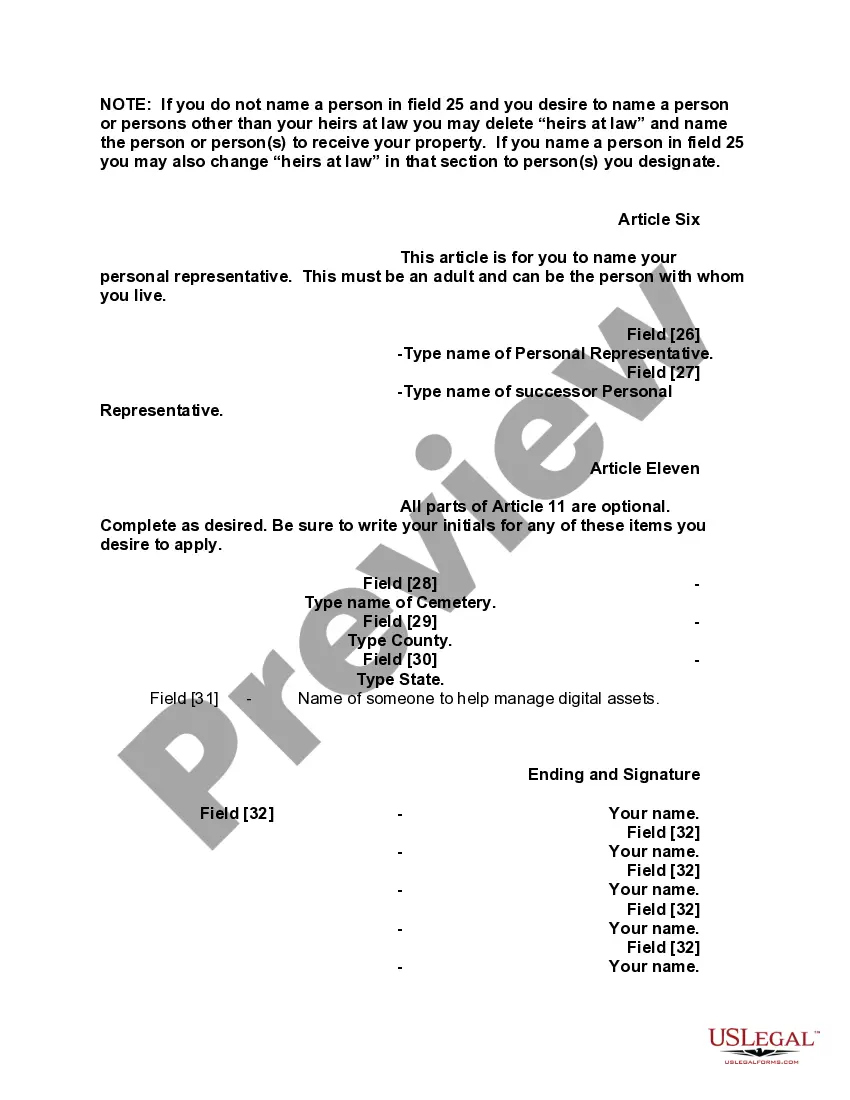
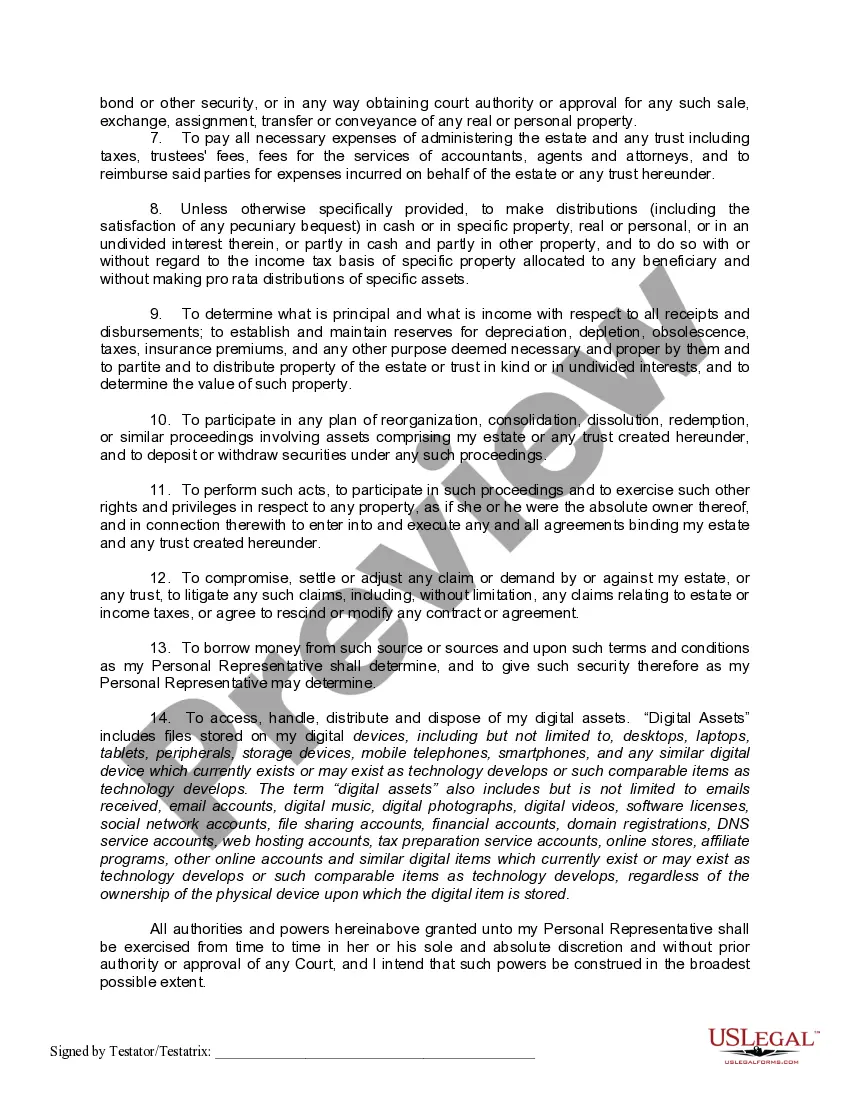
- Appointment of Personal Representative: Designates an individual to oversee the execution of the will.


When this form is needed
This form is used when an unmarried couple living together wants to create mutual wills. It is particularly relevant if they want to ensure that their respective assets pass to one another rather than being distributed according to state intestacy laws or potentially conflicting wishes. Common scenarios include property ownership, joint assets, or when one partner wishes to provide for the other in the event of their death.
Who can use this document
- Unmarried couples living together without children.
- Partners who want to ensure their assets are passed to one another without legal complications.
- Individuals seeking to formalize their wishes regarding asset distribution upon death.
- Those who have shared properties or joint ownership interests in assets.
Completing this form step by step
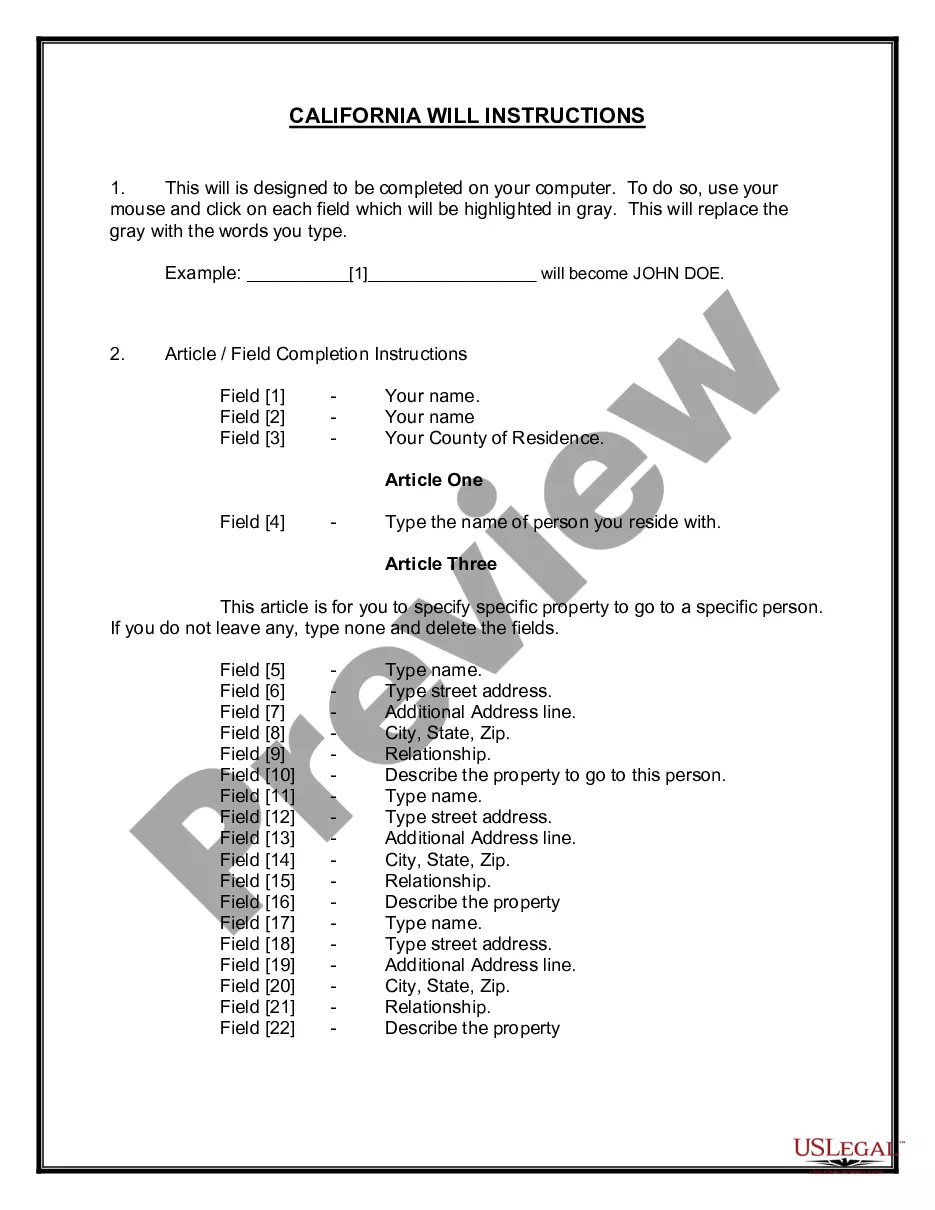
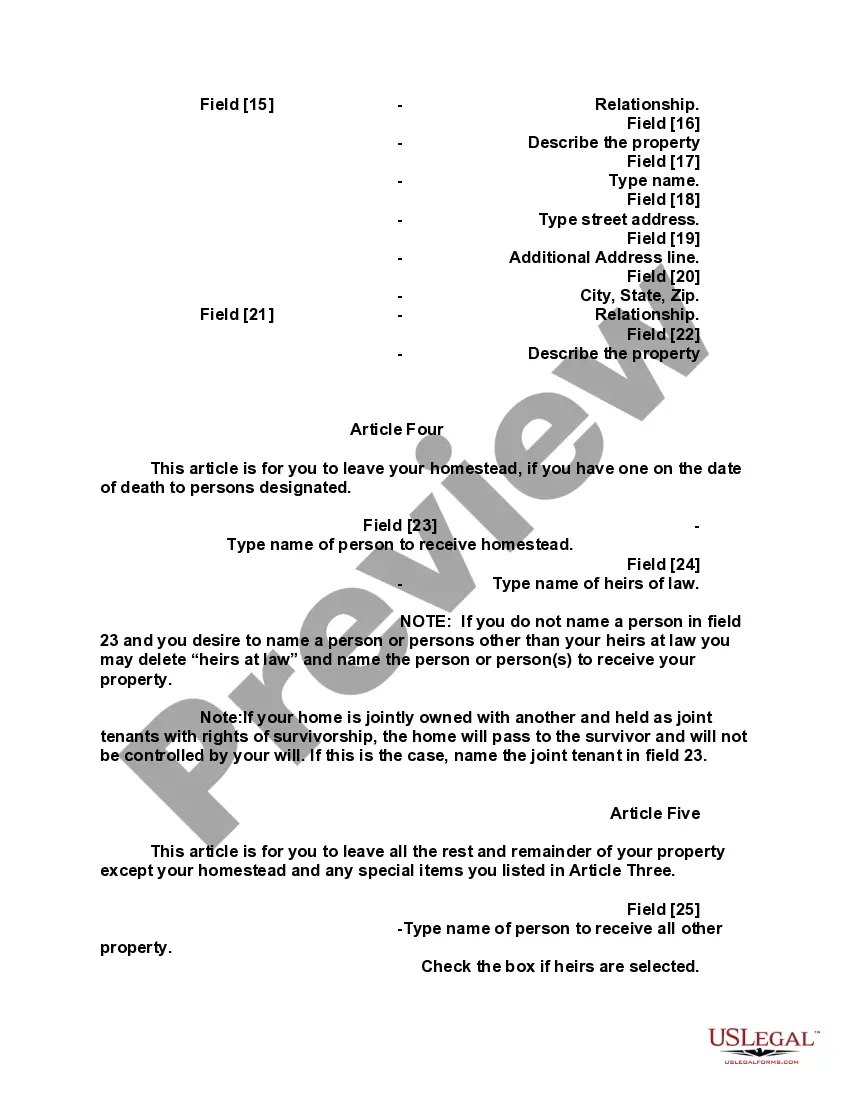
- Identify the parties involved: Enter the names of both individuals in the designated sections.
- Complete property designations: Specify any specific property you wish to leave to your partner or others.
- Designate a Personal Representative: Choose someone responsible for enforcing the will.
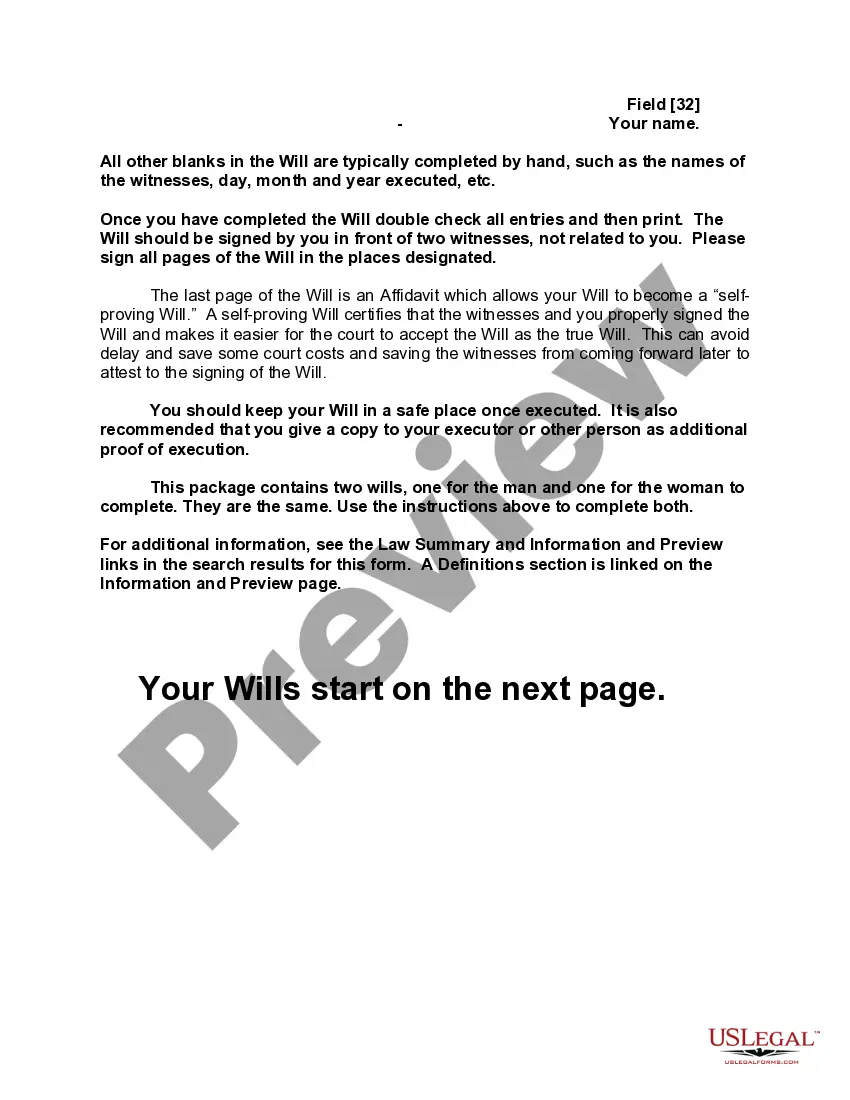
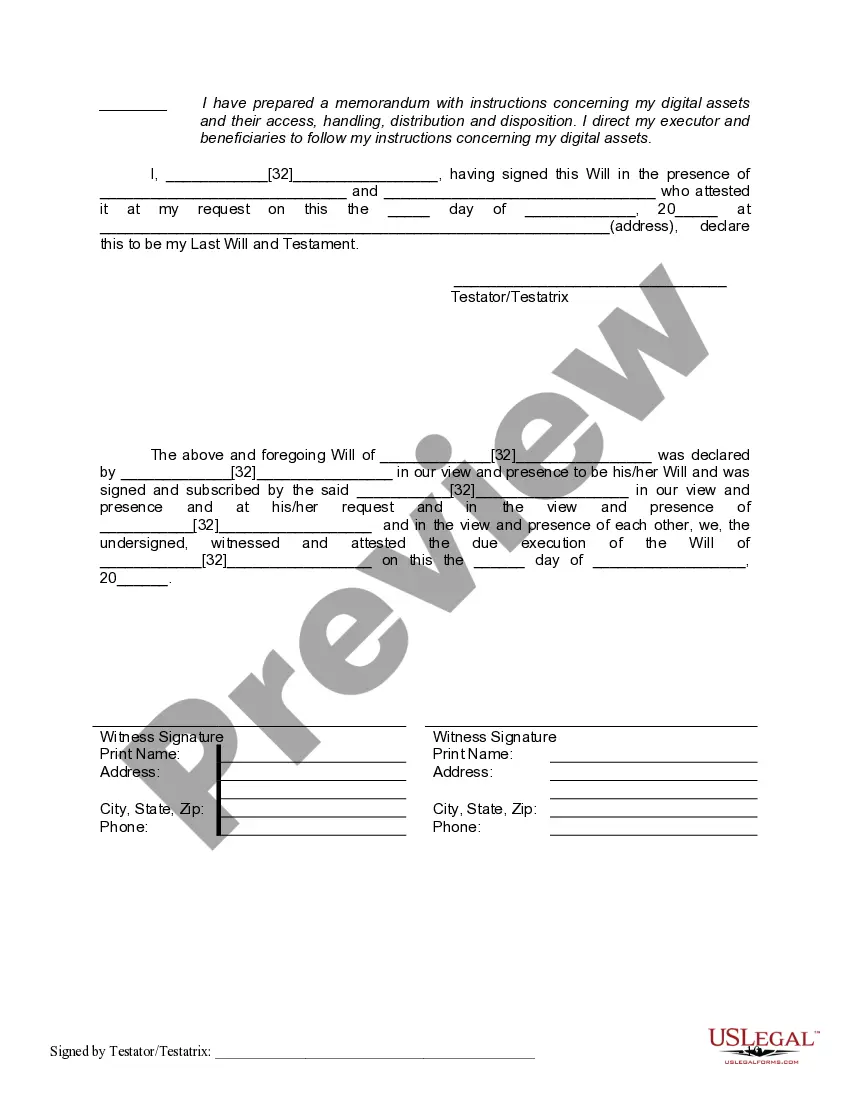
- Sign the will in front of two non-related witnesses: Ensure that all parties sign in each other's presence.
- Include a self-proving affidavit if required: This may involve a notary public depending on your state's laws.
Notarization guidance
This form usually doesn’t need to be notarized. However, local laws or specific transactions may require it. Our online notarization service, powered by Notarize, lets you complete it remotely through a secure video session, available 24/7.
Get your form ready online
Our built-in tools help you complete, sign, share, and store your documents in one place.
Make edits, fill in missing information, and update formatting in US Legal Forms—just like you would in MS Word.
Download a copy, print it, send it by email, or mail it via USPS—whatever works best for your next step.
Sign and collect signatures with our SignNow integration. Send to multiple recipients, set reminders, and more. Go Premium to unlock E-Sign.
If this form requires notarization, complete it online through a secure video call—no need to meet a notary in person or wait for an appointment.
We protect your documents and personal data by following strict security and privacy standards.

Make edits, fill in missing information, and update formatting in US Legal Forms—just like you would in MS Word.

Download a copy, print it, send it by email, or mail it via USPS—whatever works best for your next step.

Sign and collect signatures with our SignNow integration. Send to multiple recipients, set reminders, and more. Go Premium to unlock E-Sign.

If this form requires notarization, complete it online through a secure video call—no need to meet a notary in person or wait for an appointment.

We protect your documents and personal data by following strict security and privacy standards.
Common mistakes
- Failing to have two witnesses sign the will as required for validity.
- Not clearly naming beneficiaries or specific properties in the will.
- Overlooking state-specific witnessing or notarization requirements.
- Not reviewing the will regularly or after significant life changes.
Benefits of completing this form online
- Convenience: Easily fill out the form on your computer, avoiding the hassle of hand-writing.
- Editability: Make changes as needed before finalizing your will.
- Reliable templates: Access professionally drafted forms created by licensed attorneys.
- Accessibility: Download and complete the forms from the comfort of your home at any time.
Legal use & context
- This mutual will serves as a legally binding document that reflects the wishes of both partners regarding their assets.
- In the absence of a valid will, state laws may dictate asset distribution, which could differ from the partners' intentions.
- Ensuring proper witness signatures and notarial features (if applicable) helps to avoid potential disputes after one partner's passing.
What to keep in mind
- This form provides mutual wills for couples living together, offering a structured way to outline property distribution.
- Couples can ensure their assets are distributed per mutual agreements without declaring marriage.
- Completion requires specific personal information and proper witnessing for validity.
- Notarization is necessary to reinforce the will's legal standing and facilitate the probate process.
Looking for another form?
Form popularity
FAQ
If your partner passes away and you weren't married, you may not have any legal claim to their estate without a will. California's laws typically favor family members for inheritance prior to considering unmarried partners. Therefore, it is beneficial to establish California Mutual Wills containing Last Will and Testaments for Man and Woman living together not Married with No Children to protect your rights and ensure you receive what's rightfully yours.
If your partner dies and you are not married, California law may not automatically grant you inheritance rights. Without estate planning, you might have to rely on legal statutes that favor relatives over partners. To prevent this uncertainty, it's wise to create California Mutual Wills containing Last Will and Testaments for Man and Woman living together not Married with No Children to outline your intentions clearly.
The '7 year rule' in California refers to certain legal presumptions regarding property ownership and marriage duration. If couples live together as if married for seven years, they may be presumed to have mutual ownership of property acquired during that time. However, for unmarried couples, having California Mutual Wills containing Last Will and Testaments for Man and Woman living together not Married with No Children ensures clarity in asset distribution.
If you are not married and do not have a will, California law dictates how your assets are distributed, and typically your parents or siblings may inherit. This can be problematic if you intend to leave everything to your partner. Utilizing California Mutual Wills containing Last Will and Testaments for Man and Woman living together not Married with No Children allows you to designate your partner as the beneficiary, ensuring your wishes are followed.
In California, unmarried partners have certain rights, but these can be limited compared to married couples. For example, without a will, an unmarried partner may not automatically inherit property. Creating California Mutual Wills containing Last Will and Testaments for Man and Woman living together not Married with No Children helps clarify these rights and ensures both partners are protected.
Yes, even a married couple with no children should consider creating a will. A will allows you to clearly state how you want your assets distributed after your passing. It ensures your wishes are honored and provides peace of mind. California Mutual Wills containing Last Will and Testaments for Man and Woman living together not Married with No Children can help couples safeguard their interests.
Having separate wills allows each partner to tailor their estate plans according to their specific wishes and needs. This flexibility becomes crucial when circumstances change, such as acquiring new assets or having different beneficiaries. California Mutual Wills containing Last Will and Testaments for Man and Woman living together not Married with No Children can certainly provide an option, but individual wills often provide a clearer and more effective way to manage one's estate. Using services like uslegalforms ensures you create the best plan for both parties.
A joint will can limit the flexibility of estate planning since it binds both parties to the terms even after one passes away. This setup may lead to potential disputes among heirs or complicate future decisions regarding asset distribution. Furthermore, California Mutual Wills containing Last Will and Testaments for Man and Woman living together not Married with No Children might not accommodate unexpected changes in life circumstances. Therefore, it is wise to consider individual wills for more adaptability.
When one person passes away, a joint will typically is no longer valid. The surviving partner often has to navigate the legal process to settle the estate. In California, mutual wills containing Last Will and Testaments for Man and Woman living together not Married with No Children can simplify this process. It is essential to ensure clarity in your estate plans, so utilizing a platform like uslegalforms can help create a clear framework for mutual wills.
When partners have different wills, it can lead to confusion about their final wishes. If one partner passes away, their will typically takes precedence over any prior agreements. This situation highlights the importance of clear communication and legal documentation. To avoid potential issues, using California Mutual Wills containing Last Will and Testaments for Man and Woman living together not Married with No Children through uslegalforms can provide clear guidelines.