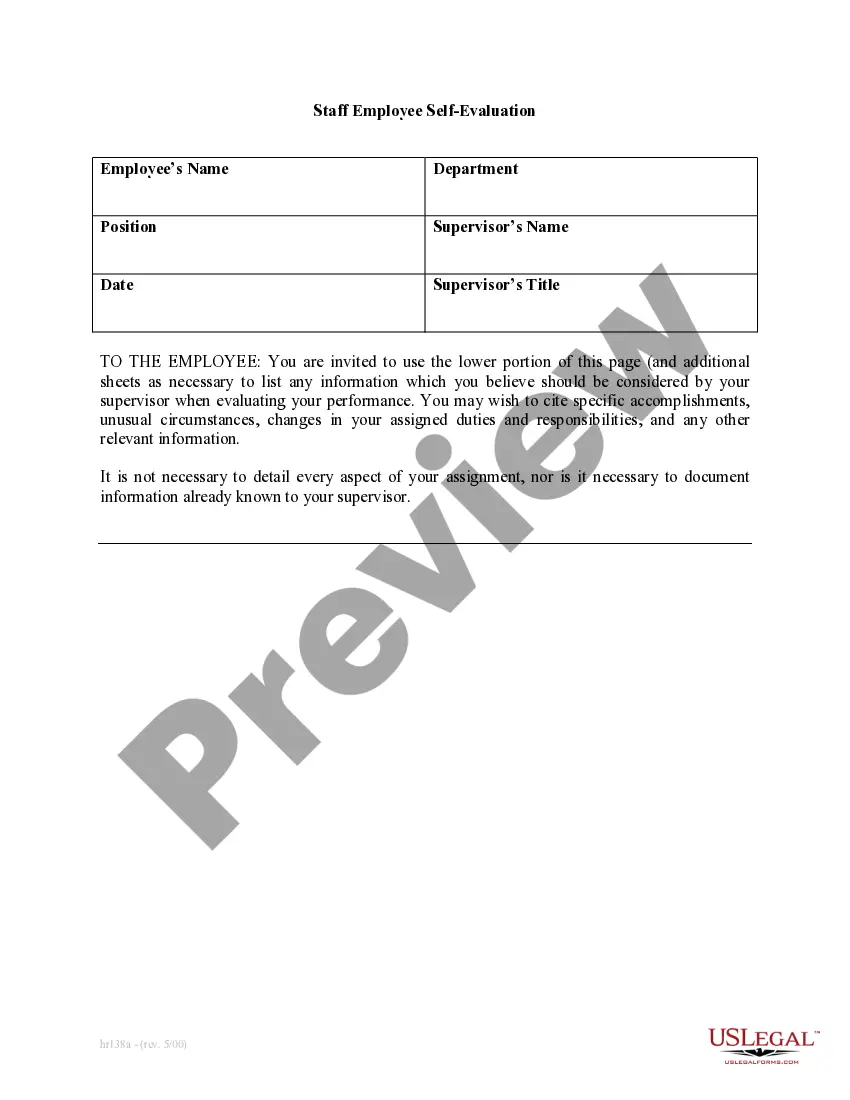
Staff Employee Self-Evaluation
What this document covers
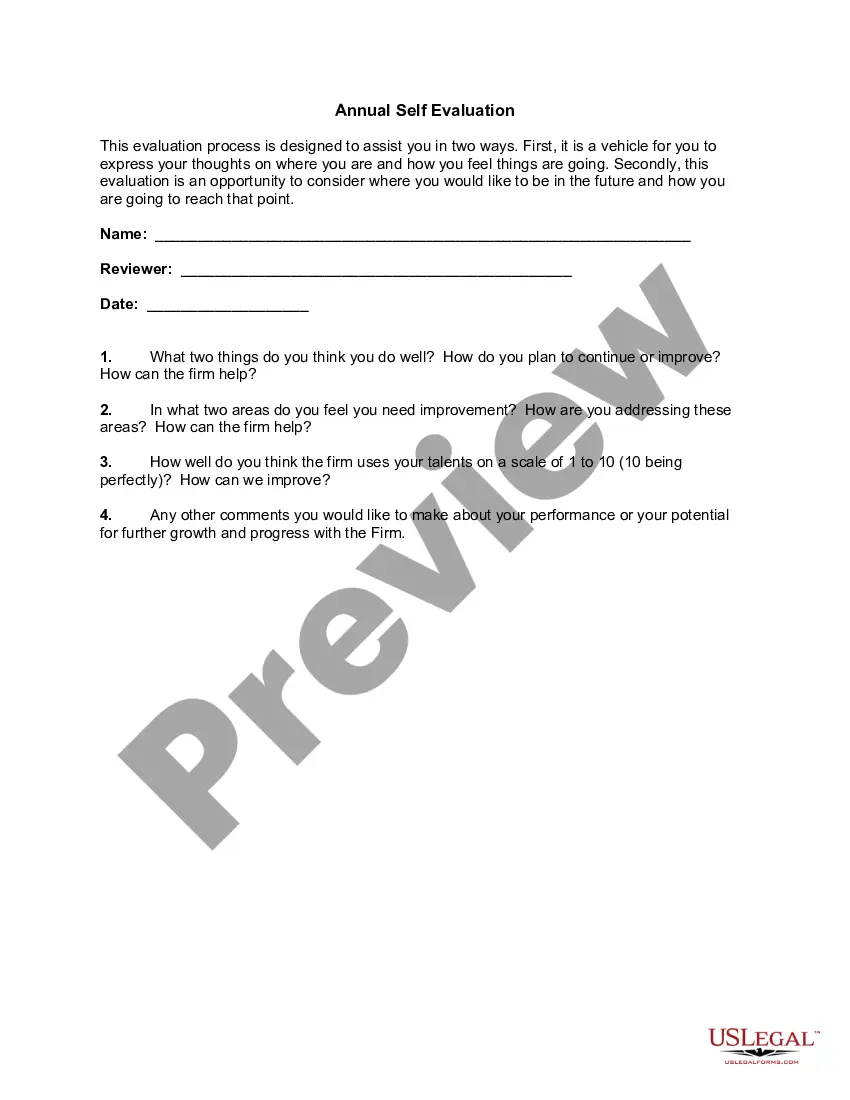
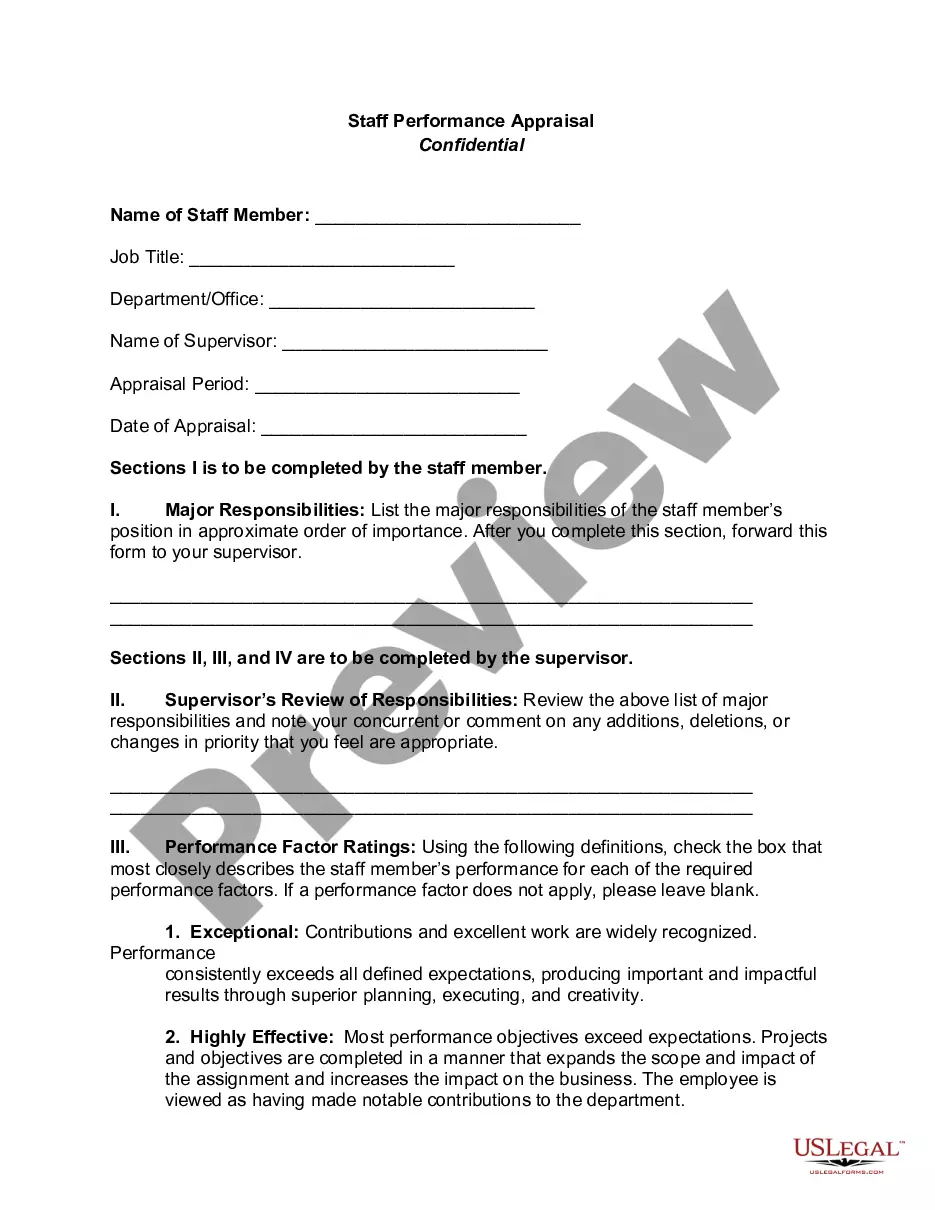
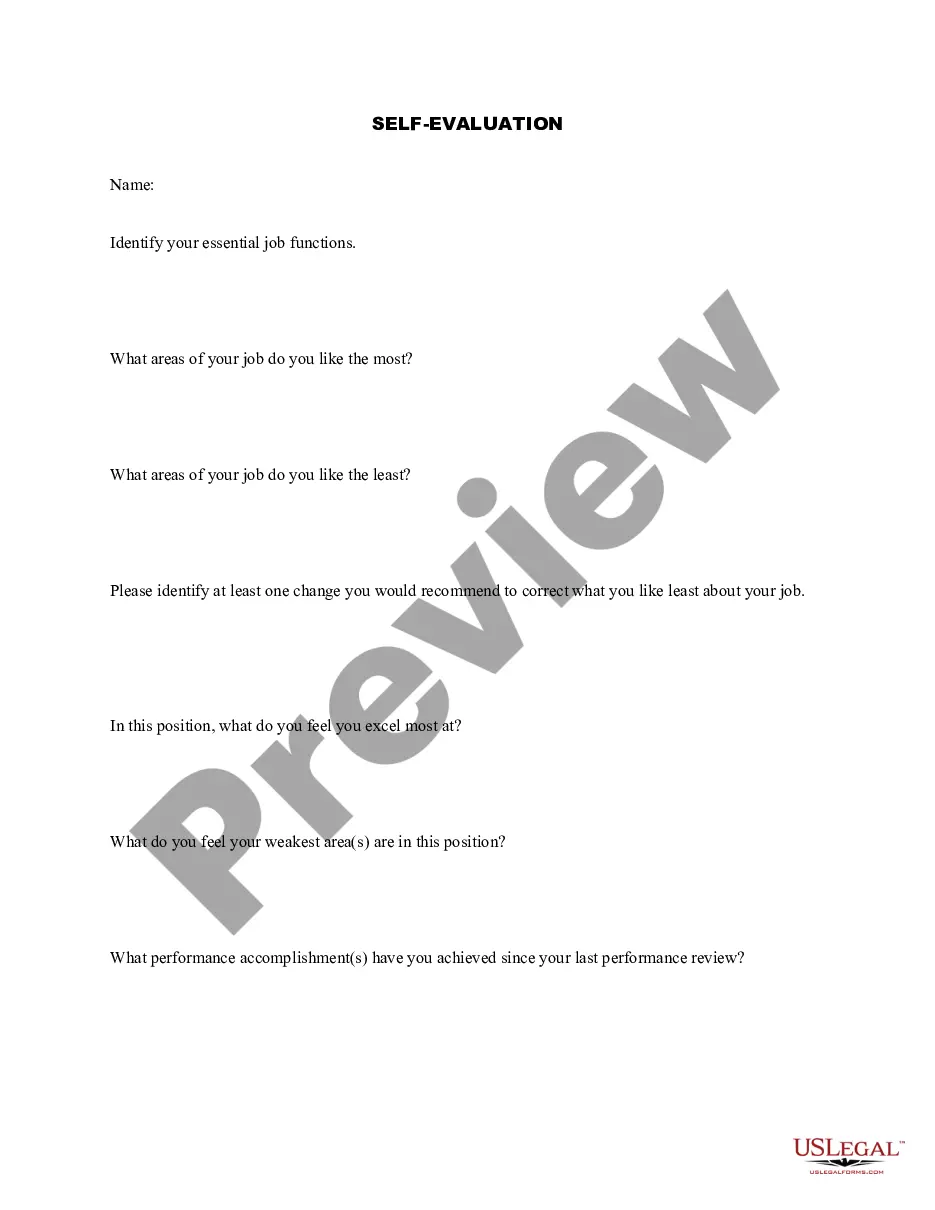
The Staff Employee Self-Evaluation form is a tool for employees to assess their own job performance in preparation for an upcoming performance review with management. This form stands out by allowing employees to reflect on their contributions and identify areas for improvement, which fosters a more constructive review process. It is different from other evaluations because it focuses solely on the employee's perspective rather than solely on management's observation.
Form components explained
- Personal information: The employee provides their name, position, and department.
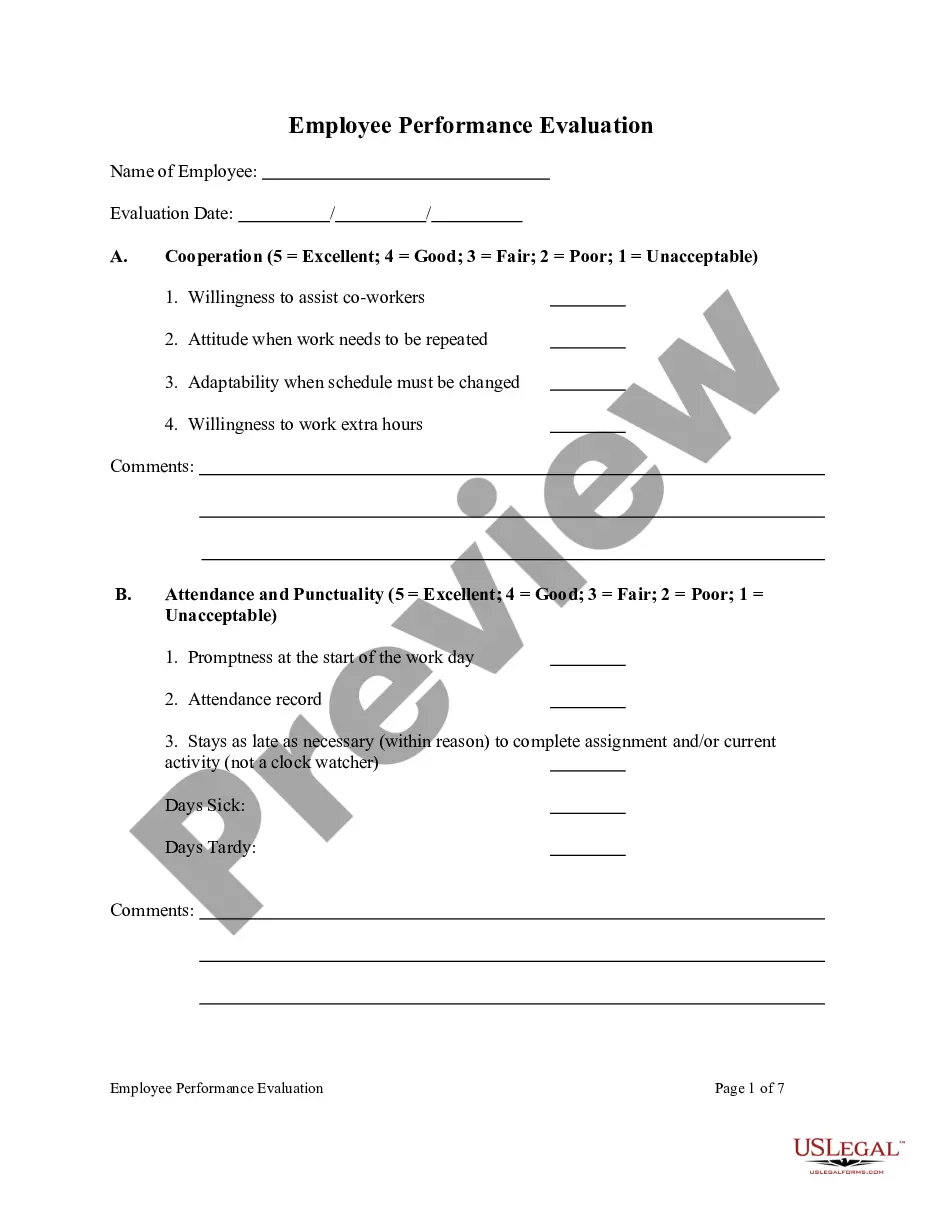
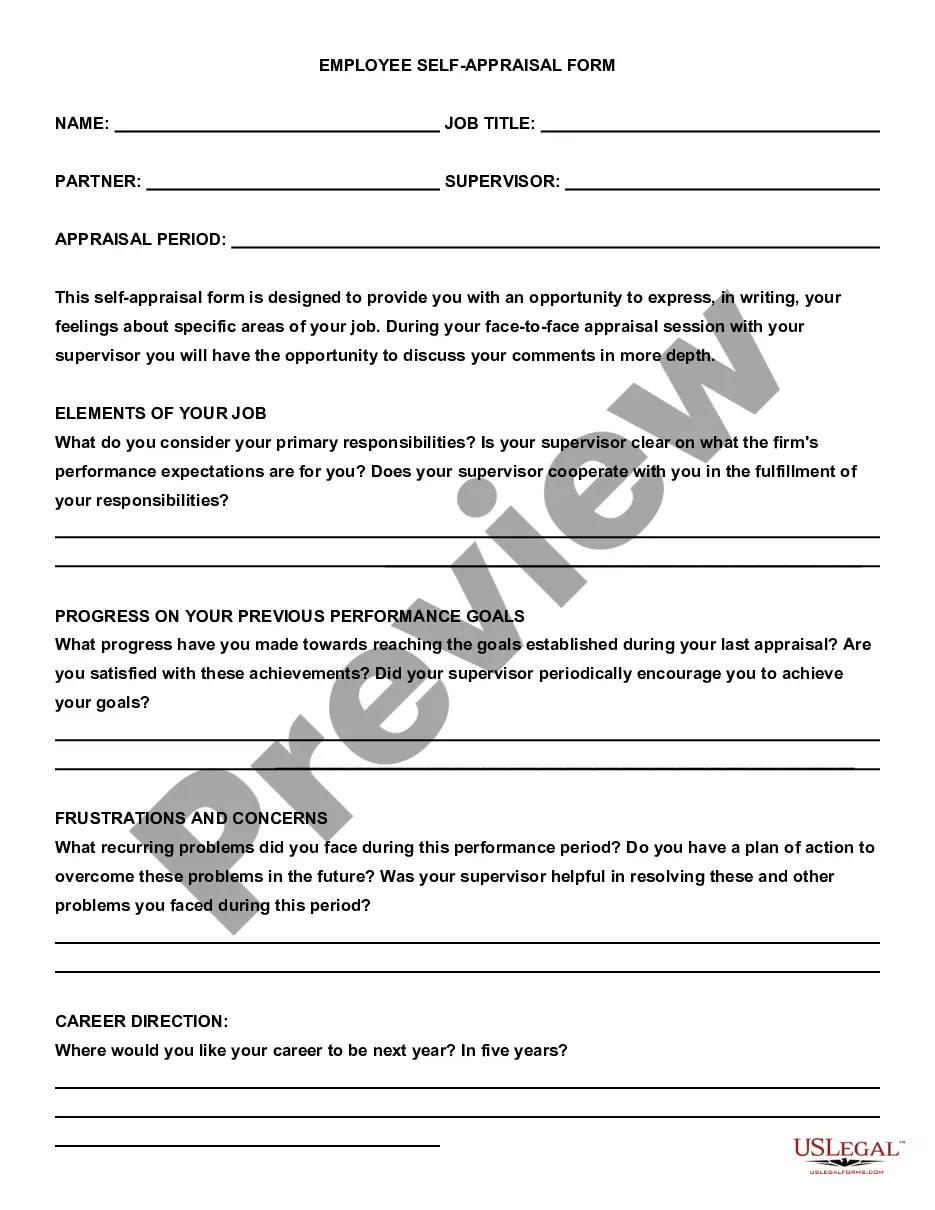
- Self-assessment sections: Areas for the employee to evaluate their performance on key responsibilities.
- Goal setting: Space to outline personal goals for the upcoming review period.
- Overall reflection: A summarization section for the employee to express insights about their performance and growth.
- Signature: A declaration section where the employee signs to confirm the accuracy of the self-evaluation.
When to use this document
This form is ideal for employees who are preparing for a formal performance review. It can be especially useful when the review process is structured and requires input from employees as part of the evaluation. Utilizing this form helps to ensure that employees are actively involved in their performance management and can clearly communicate their achievements and areas for development.
Who can use this document
- Employees seeking to evaluate their performance before a review.
- Managers looking to encourage self-reflection among team members.
- Human resources professionals involved in performance management.
How to complete this form
- Enter your personal details, including name, position, and department.
- Carefully assess your performance on key responsibilities using the provided sections.
- Set and outline specific personal goals for the upcoming evaluation period.
- Reflect on your overall performance and write insights in the summarization section.
- Sign and date the form to affirm the accuracy of your self-evaluation.
Is notarization required?
This form does not typically require notarization unless specified by local law. However, it is essential to ensure that any signed form reflects the employee's genuine self-assessment for it to be meaningful during the performance review process.
Get your form ready online
Our built-in tools help you complete, sign, share, and store your documents in one place.
Make edits, fill in missing information, and update formatting in US Legal Forms—just like you would in MS Word.
Download a copy, print it, send it by email, or mail it via USPS—whatever works best for your next step.
Sign and collect signatures with our SignNow integration. Send to multiple recipients, set reminders, and more. Go Premium to unlock E-Sign.
If this form requires notarization, complete it online through a secure video call—no need to meet a notary in person or wait for an appointment.
We protect your documents and personal data by following strict security and privacy standards.

Make edits, fill in missing information, and update formatting in US Legal Forms—just like you would in MS Word.

Download a copy, print it, send it by email, or mail it via USPS—whatever works best for your next step.

Sign and collect signatures with our SignNow integration. Send to multiple recipients, set reminders, and more. Go Premium to unlock E-Sign.

If this form requires notarization, complete it online through a secure video call—no need to meet a notary in person or wait for an appointment.

We protect your documents and personal data by following strict security and privacy standards.
Common mistakes
- Being overly critical or too lenient in self-assessments.
- Failing to provide specific examples of achievements and challenges.
- Neglecting to set realistic and measurable goals.
Advantages of online completion
- Convenience: Easily download and fill out the form at your own pace.
- Editability: Modify your self-evaluation as needed before finalizing.
- Reliability: Access forms drafted by licensed attorneys, ensuring legal validity.
Main things to remember
- The Staff Employee Self-Evaluation form aids in preparation for performance reviews.
- It allows employees to assess their performance and set goals.
- The form is applicable across multiple states and has flexible usage guidelines.
Looking for another form?
Form popularity
FAQ
5 Narrow your accomplishments list down. 6 Don't forget to align your review with your manager's or team's goals. 7 Stay positive when describing your challenges. 8 Keep the focus on you. 9 Don't forget to ask for growth opportunities.
Check Your Attitude. "Attitude is very important," says employment consultant Rick Waters. Be Reflective. Assess Your Performance Against the Job Specifications. Keep a File. Find out the Supervisor's Expectations. Get Feedback From Others. Be a Team Player. Plan Ahead.
Review past and present performance. If you only do formal reviews once a year, it's easy to provide feedback only for things that are fresh in your mind. Be honest and clear. Provide concrete examples. Choose your words carefully. End on a positive note.
Listens carefully to what others are saying without interrupting them. Always questions what the team is doing to try to ensure that everyone is benefiting. Respects the ideas and opinions that the other team members have to say. Offers workable solutions to the various problems and ideas being faced by the team.
Give an instance you contributed actively to a group problem and what was the result? Do you always take credit for what others have done or you appreciate their efforts? How well do you work while you are on a team or a group?
Be proud. One major goal of the self-evaluation is to highlight your accomplishments and recollect milestones in your professional development. Be honest and critical. Continuously strive for growth. Track your accomplishments. Be professional.
Check Your Attitude. "Attitude is very important," says employment consultant Rick Waters. Be Reflective. Assess Your Performance Against the Job Specifications. Keep a File. Find out the Supervisor's Expectations. Get Feedback From Others. Be a Team Player. Plan Ahead.
Use numbers to your advantage. Include figures that add value to your work, if possible. Mention results. Take the company's objectives into account. Record your achievements in real-time. Take your time.
Your self-evaluation is an opportunity to highlight how you used your unique strengths to accomplish your goals while also being honest about areas you could improve. Before writing your self-evaluation, take the time to compare your job description to your recent performance. Where did you excel?