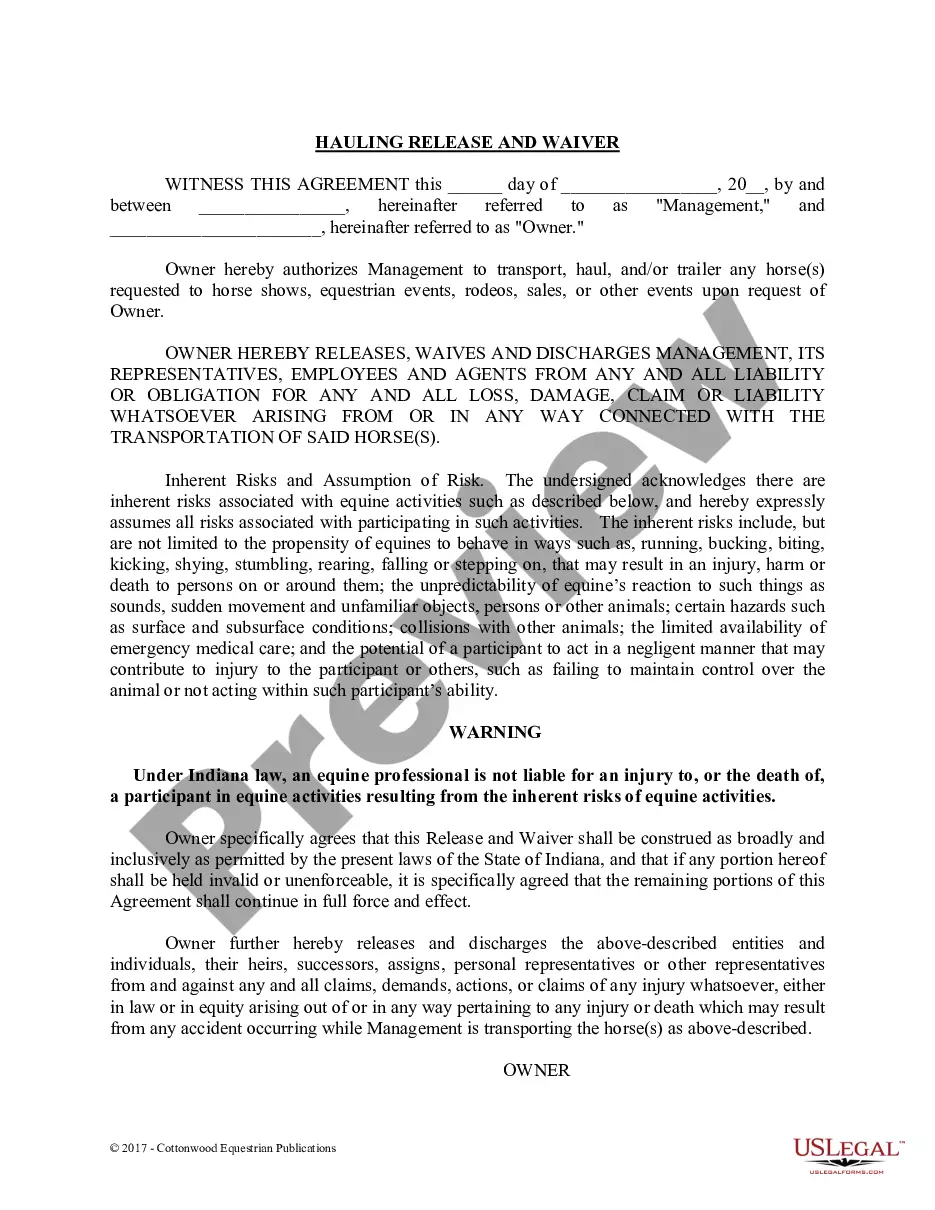
User Oriented Software License Agreement
What this document covers
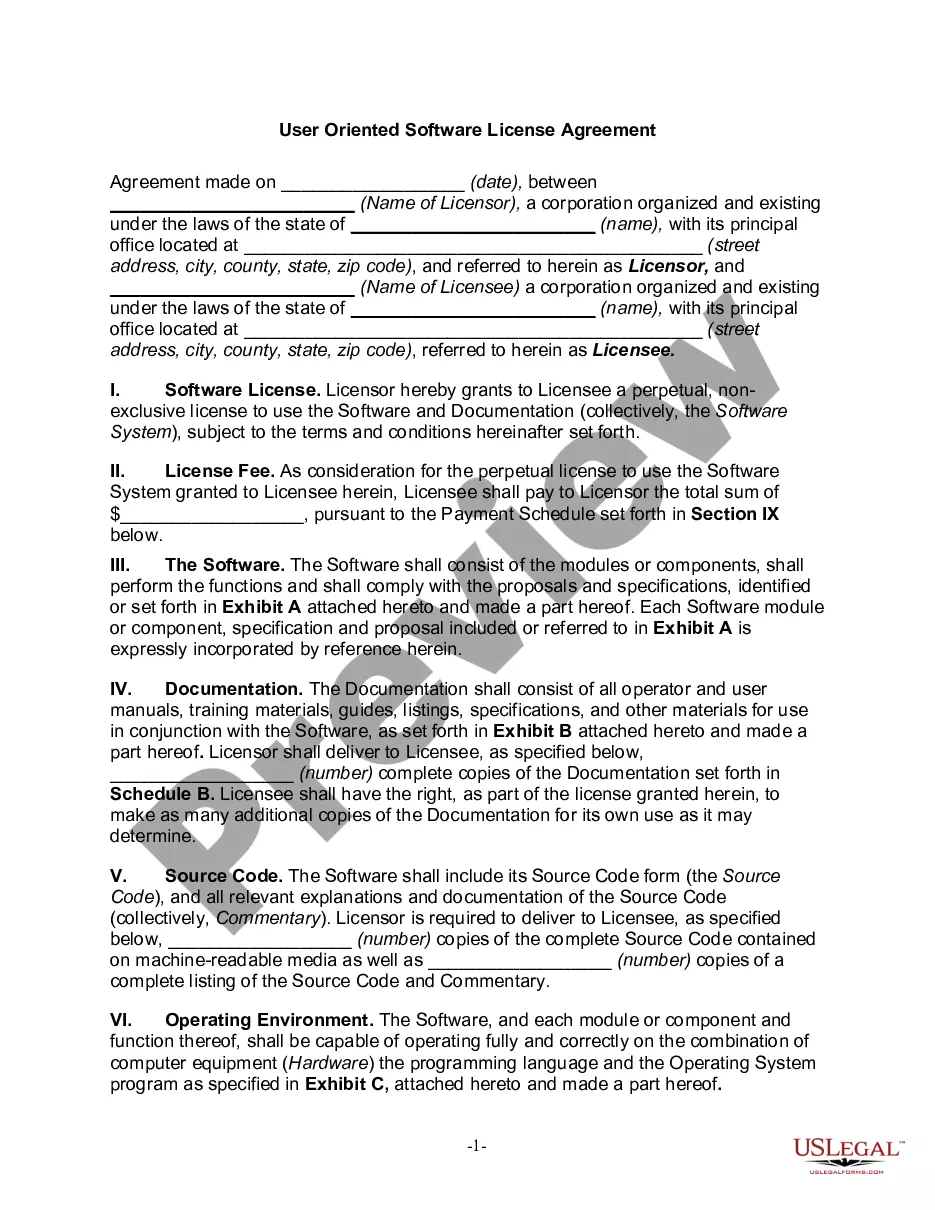
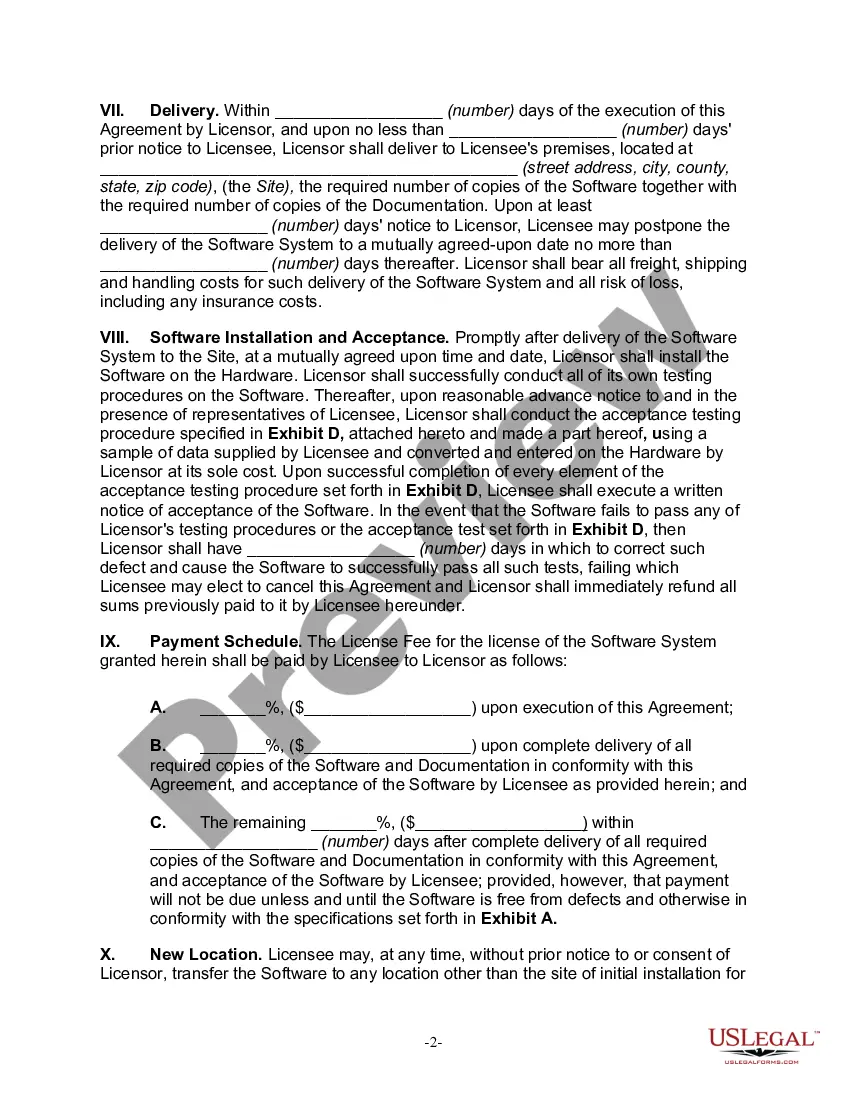
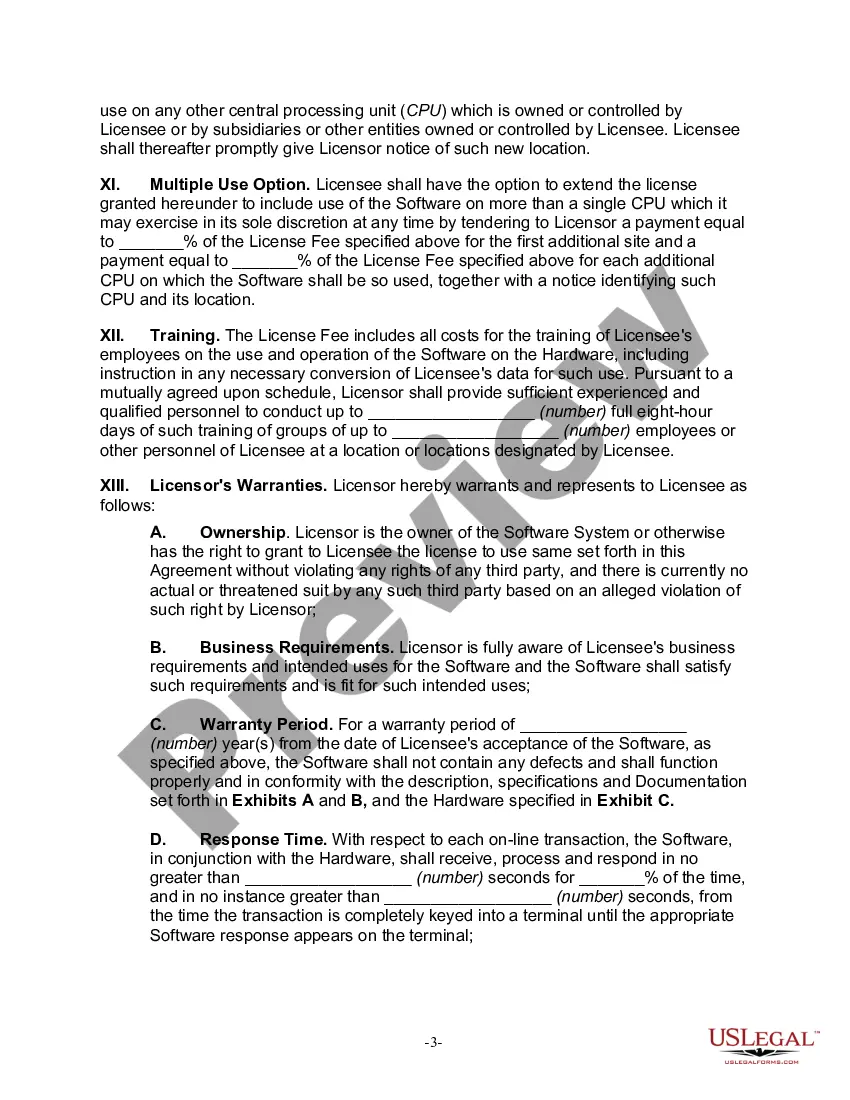
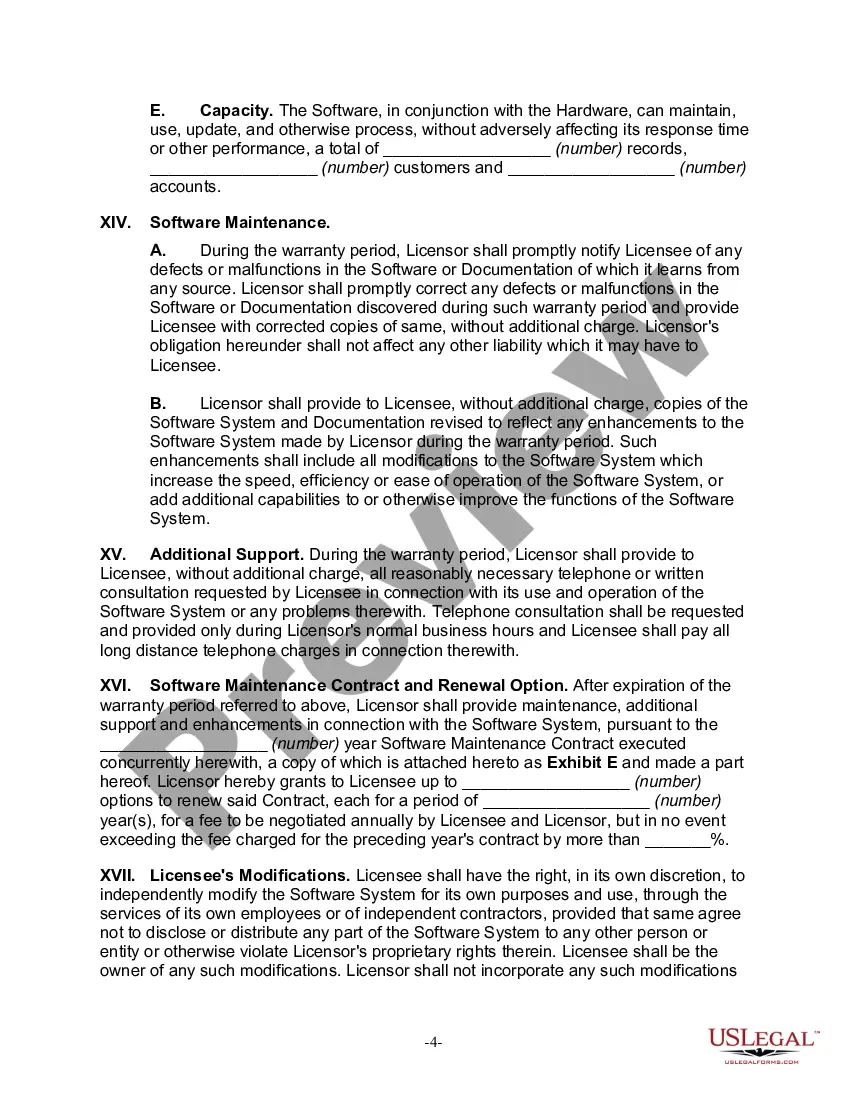
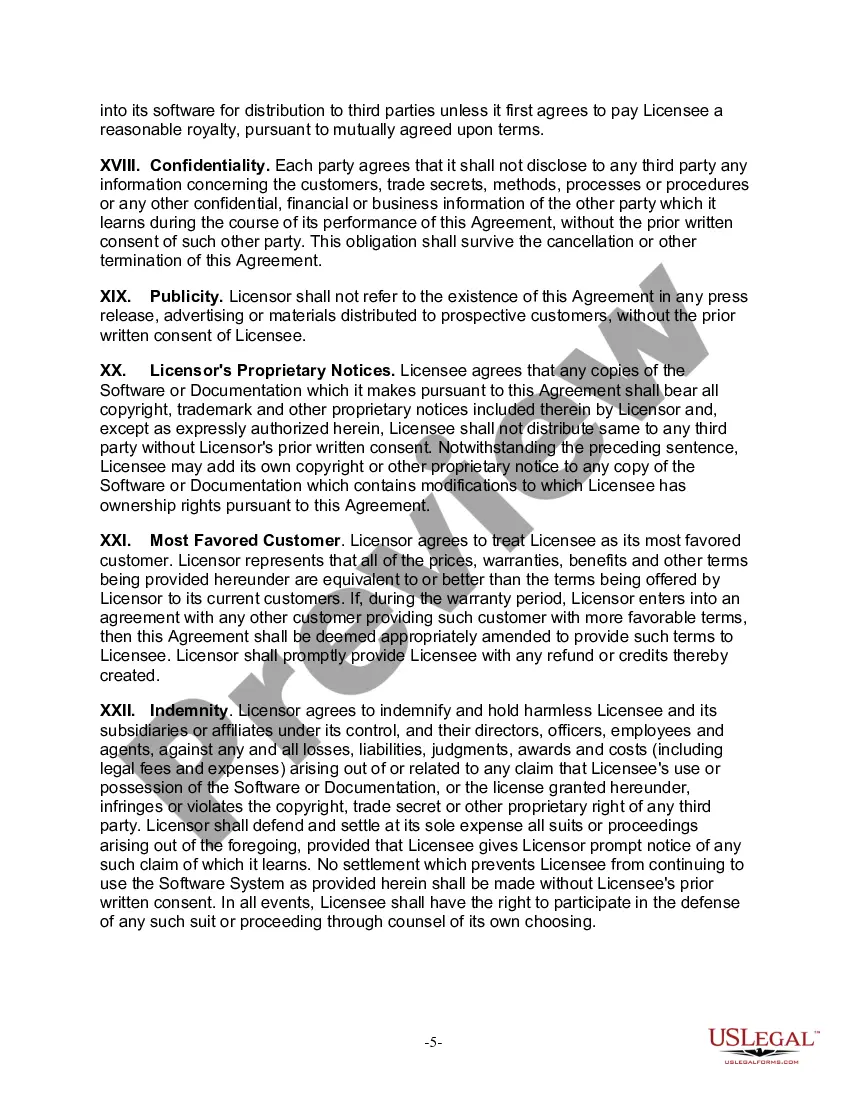
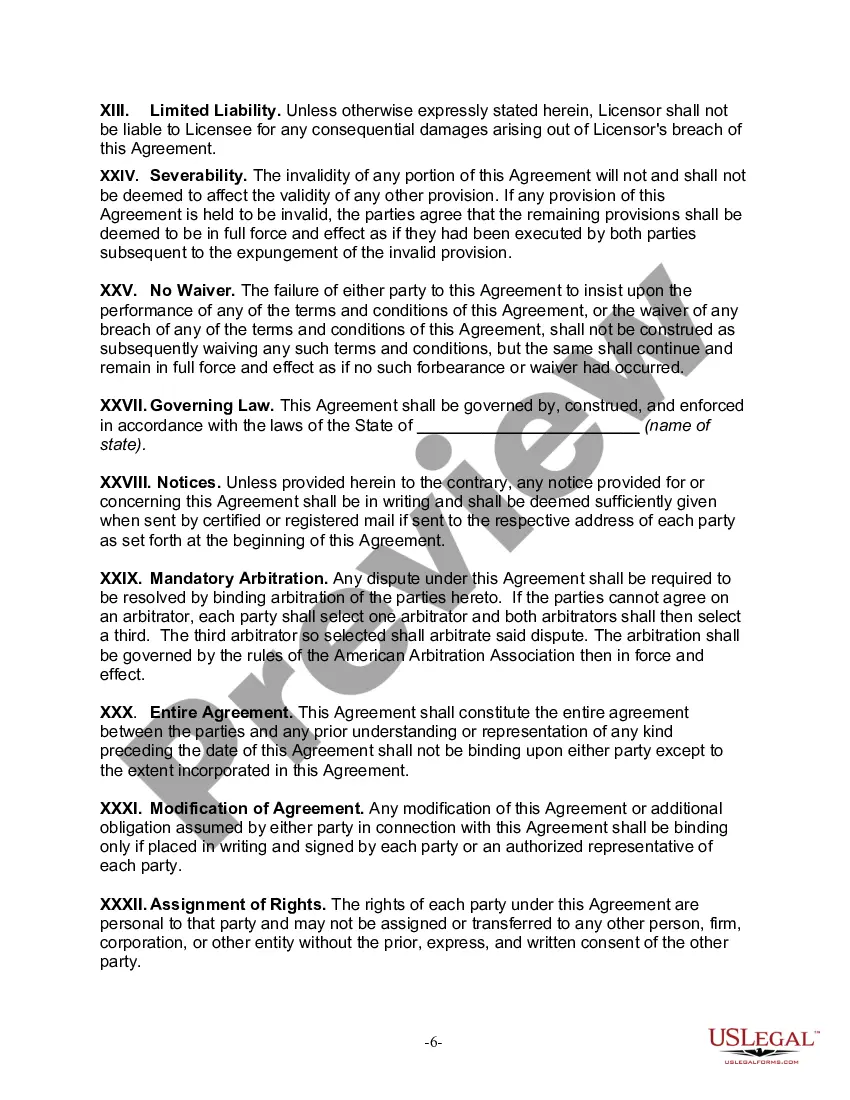
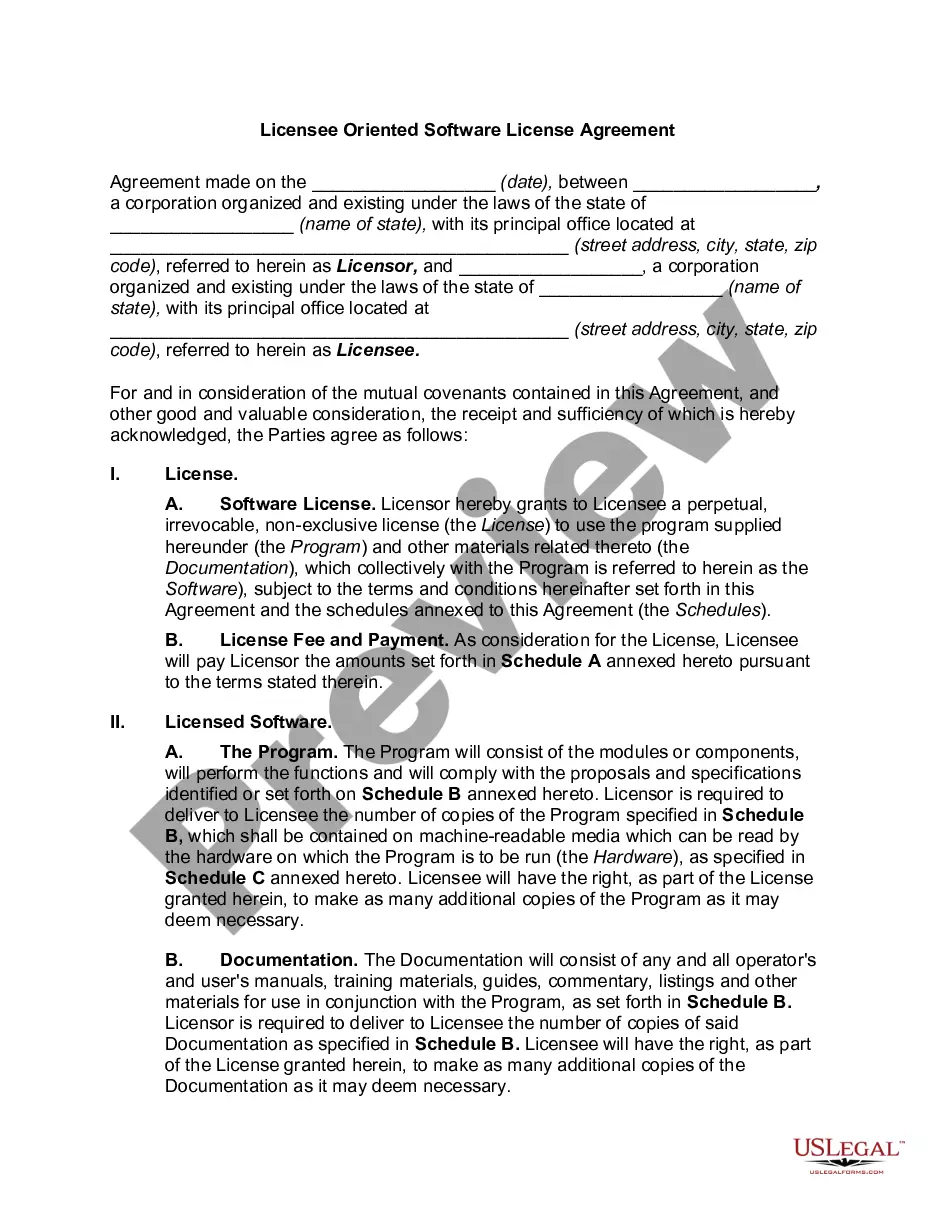
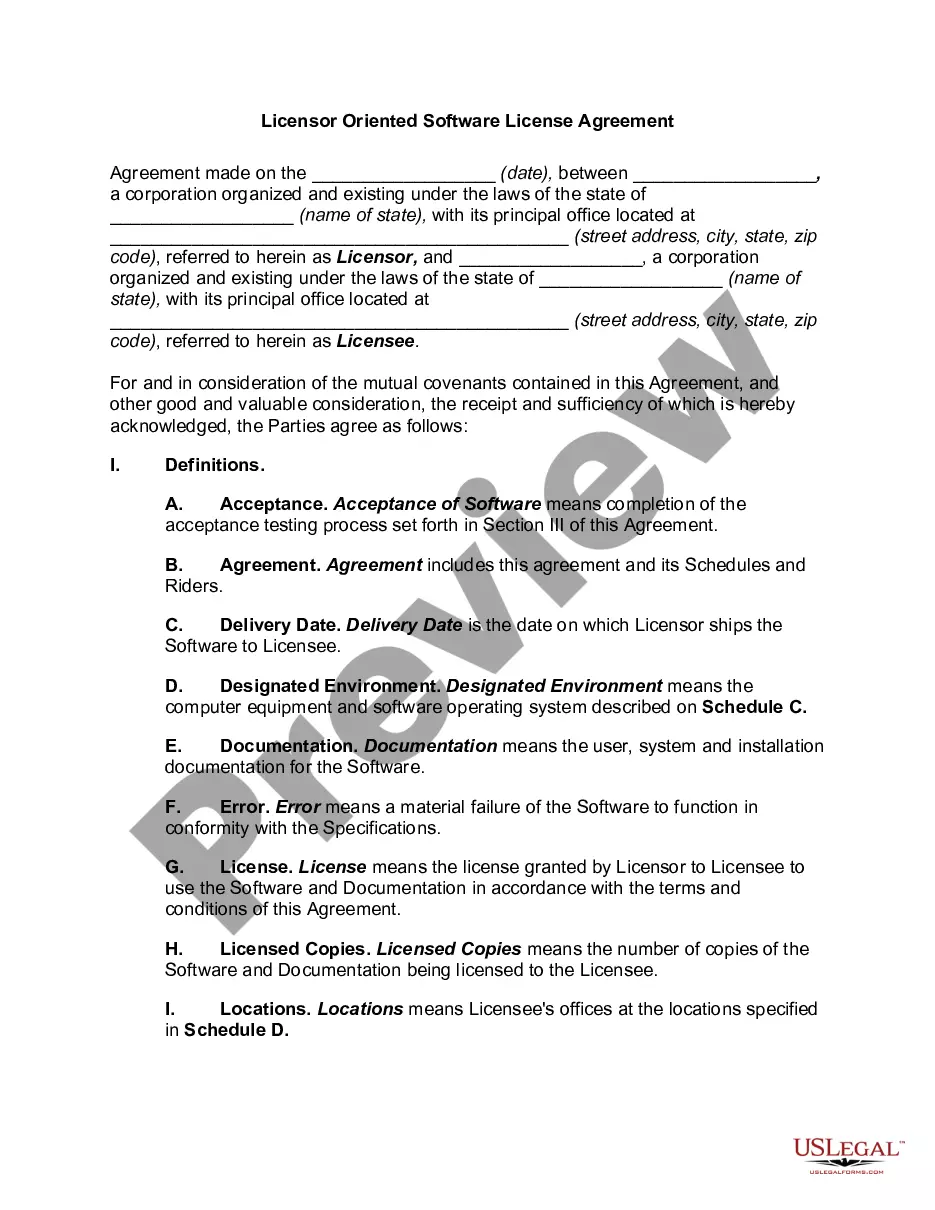
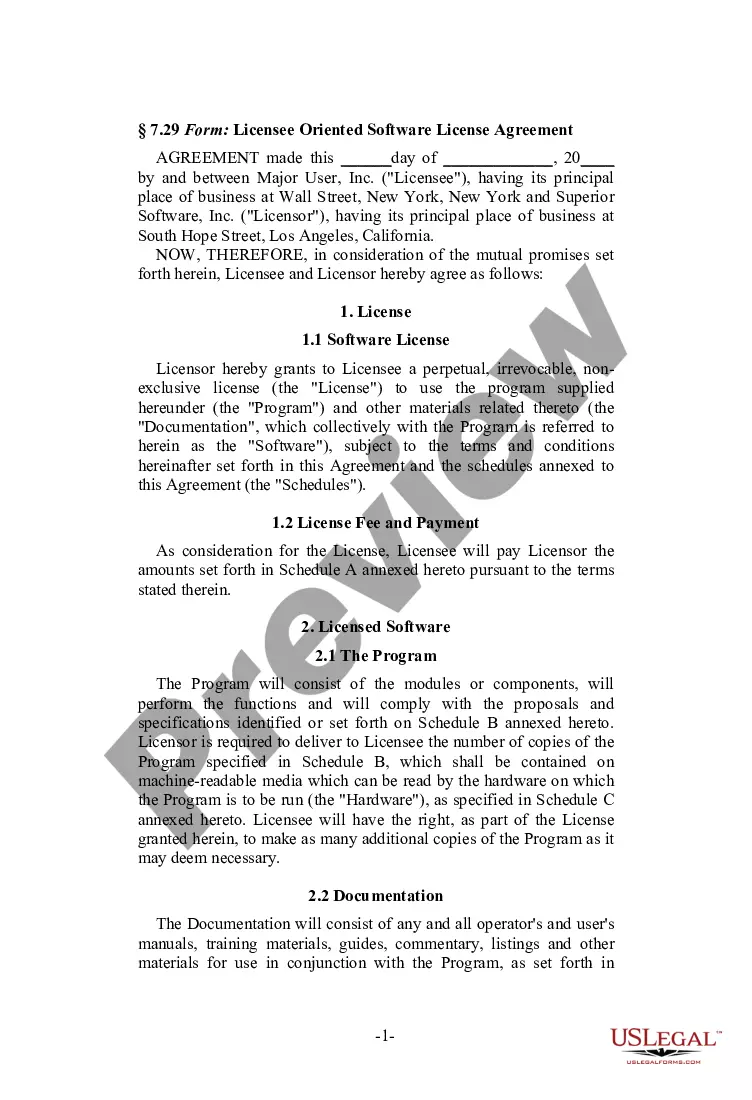
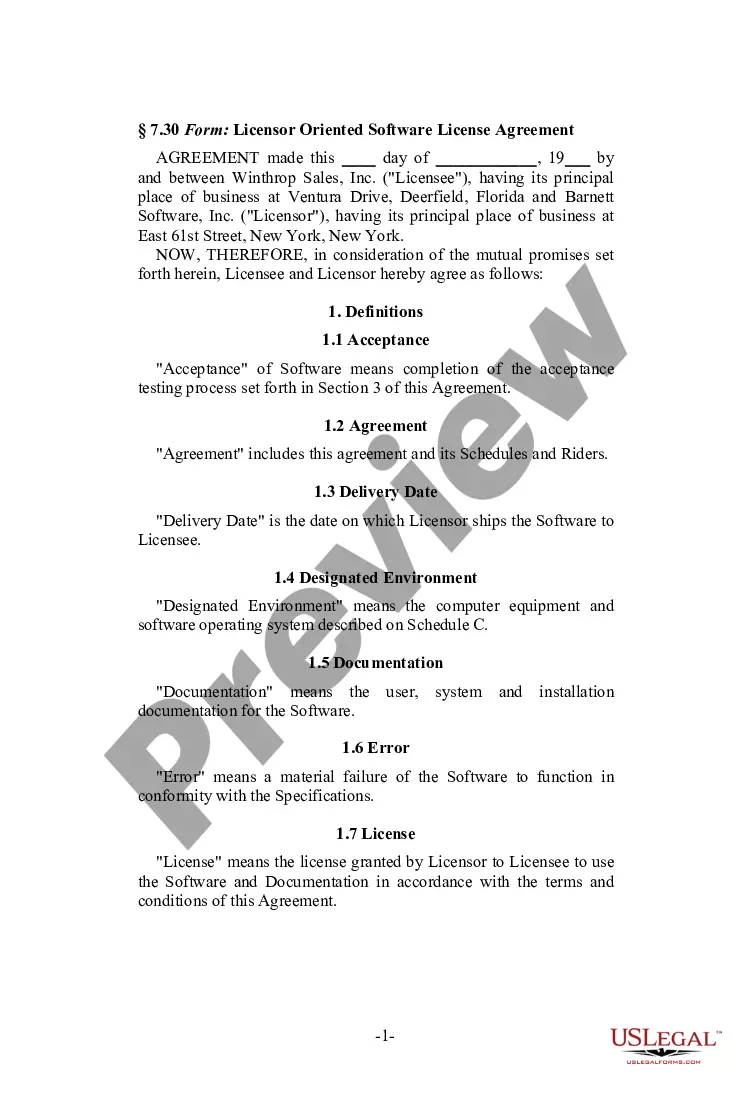
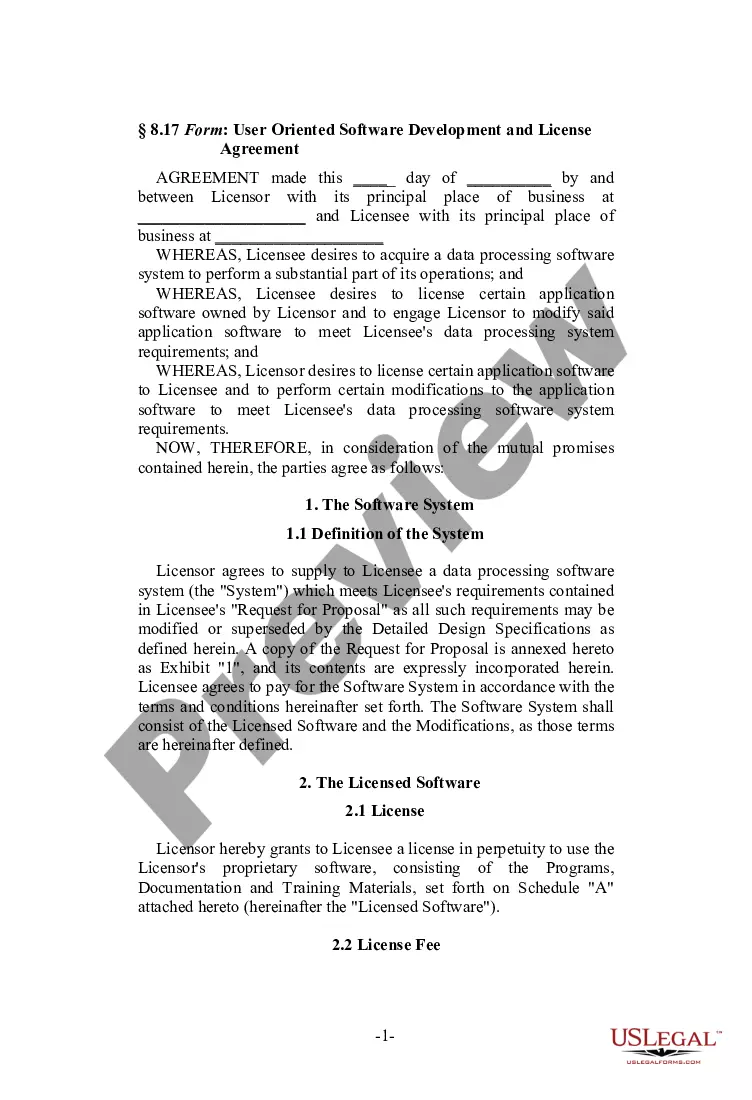
The User Oriented Software License Agreement is a legal document that outlines the terms under which software is licensed from the Licensor to the Licensee. This agreement covers the rights and responsibilities regarding the use of software, including fees, documentation, source code, and warranties. It differs from other software agreements by being specifically tailored to user-oriented licenses, ensuring clarity in usage and compliance.
Main sections of this form
- Software License: Grants a non-exclusive, perpetual license for use of the software.
- License Fee: Details the payment structure for the license.
- Documentation: Specifies the manuals and guides provided alongside the software.
- Source Code: Includes the right to access the softwareâs source code and related documentation.
- Warranties: Addresses the Licensor's obligations regarding software functionality and defects.
- Indemnity: Protects Licensee from third-party claims regarding software rights infringement.
When to use this document
This form is essential when a business or individual wants to obtain a license for software developed by another entity. It is particularly useful in situations where software is a critical part of operations, such as in tech start-ups, software development firms, and businesses in need of specific software solutions for their processes.
Intended users of this form
- Businesses seeking to license software for operational needs.
- Software developers who want to offer their products under specific licensing terms.
- Corporations looking to clarify usage rights and responsibilities in software agreements.
How to complete this form
- Identify the parties: Enter the names and addresses of both the Licensor and Licensee.
- Specify the software: Detail the software components and their functions as per Exhibit A.
- Outline the payment schedule: Fill in the payment amounts and due dates as outlined in Section IX.
- Document delivery terms: State the number of days for software delivery and installation.
- List warranty periods and acceptance criteria: Define the warranty duration and acceptance testing process.
Notarization requirements for this form
This form does not typically require notarization unless specified by local law.
Get your form ready online
Our built-in tools help you complete, sign, share, and store your documents in one place.
Make edits, fill in missing information, and update formatting in US Legal Forms—just like you would in MS Word.
Download a copy, print it, send it by email, or mail it via USPS—whatever works best for your next step.
Sign and collect signatures with our SignNow integration. Send to multiple recipients, set reminders, and more. Go Premium to unlock E-Sign.
If this form requires notarization, complete it online through a secure video call—no need to meet a notary in person or wait for an appointment.
We protect your documents and personal data by following strict security and privacy standards.

Make edits, fill in missing information, and update formatting in US Legal Forms—just like you would in MS Word.

Download a copy, print it, send it by email, or mail it via USPS—whatever works best for your next step.

Sign and collect signatures with our SignNow integration. Send to multiple recipients, set reminders, and more. Go Premium to unlock E-Sign.

If this form requires notarization, complete it online through a secure video call—no need to meet a notary in person or wait for an appointment.

We protect your documents and personal data by following strict security and privacy standards.
Common mistakes
- Failing to clearly outline the software functionalities in Exhibit A.
- Neglecting to specify acceptance testing criteria, leading to disputes over software quality.
- Omitting the payment schedule or failing to align it with delivery milestones.
Advantages of online completion
- Convenient access to legal templates that can be downloaded and completed as needed.
- Editability allows for customization according to specific needs and scenarios.
- Reliable assurance that the form is drafted by licensed attorneys, ensuring legal compliance.
Looking for another form?
Form popularity
FAQ
Public domain. This is the most permissive type of software license. Permissive. LGPL. Copyleft. Proprietary.
An end-user license agreement (EULA) is a license that gives a user the right to use a software application in some manner. EULAs are designed to enforce specific software use limitations, such as only using the software on one computer.
An end-user license agreement (EULA, /02c8ju02d0l0259/) is a legal contract entered into between a software developer or vendor and the user of the software, often where the software has been purchased by the user from an intermediary such as a retailer.
Wisegeek explains software licensing as a type of contract which exists between the person of company who produces a type of software, and the end user, or person who purchases or downloads the software to use. This means that there are many different types of software licenses.
User agreements like EULAs are legally binding contracts between the software author and the end-user. End User License Agreements are enforceable as long as it is clear that it is a contract and both parties can understand the terms.
An End User License Agreement (EULA) and Terms and Conditions (T&C) are both legally binding contracts. Many websites should have both. An EULA is the agreement between someone who downloads software (the licensor, or end user) and the developer.
An End User License Agreement (EULA) is a legal contract between a software application author or publisher and the user of that application.The user can refuse to enter into the agreement by returning the software product for a refund or clicking "I do not accept" when prompted to accept the EULA during an install.
Perhaps the key difference between a EULA and a software license agreement is that a EULA is often meant for scenarios where many users could be using the software on a continuous basis and a software license agreement is more often used for business-to-business, often times for finite engagements.