Employee Performance Review
What this document covers
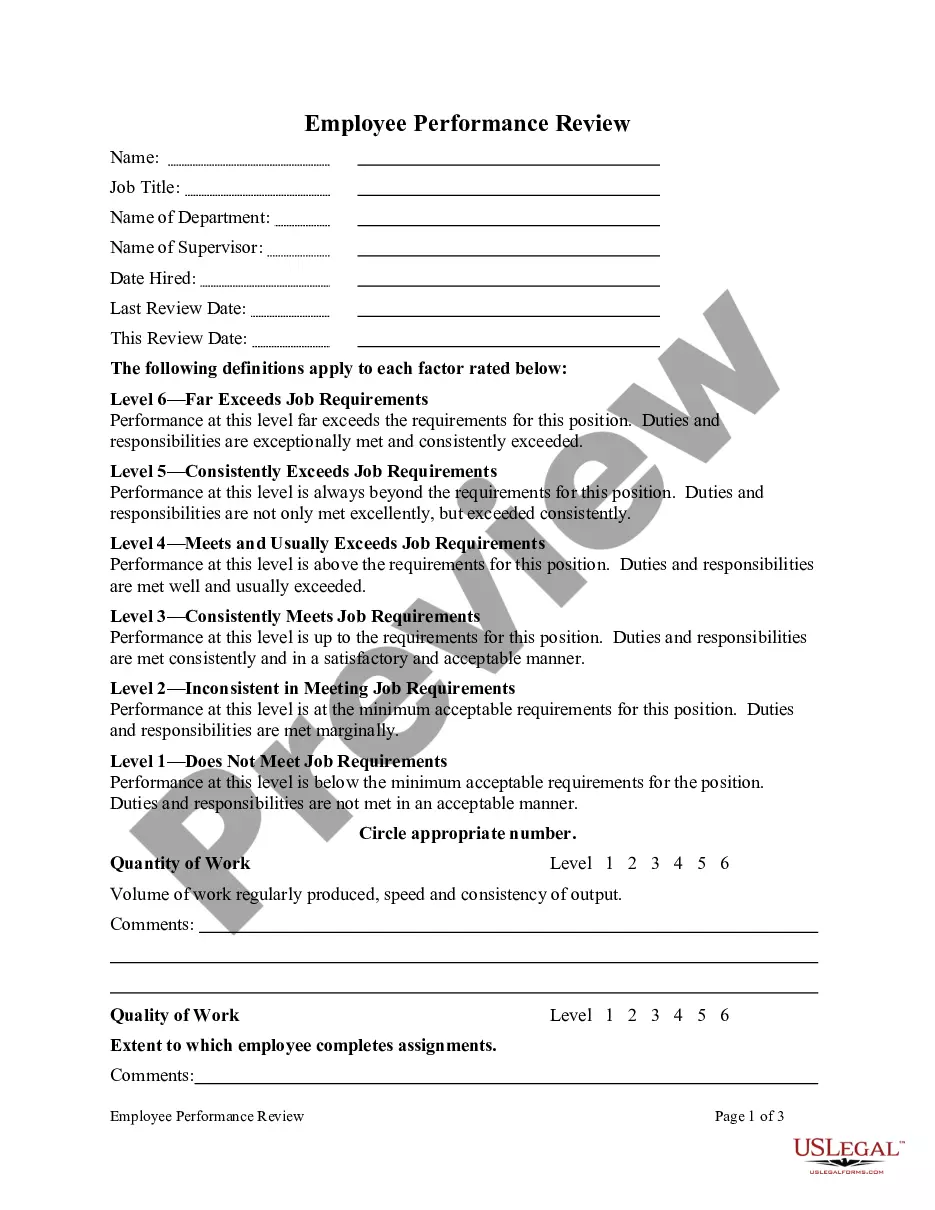
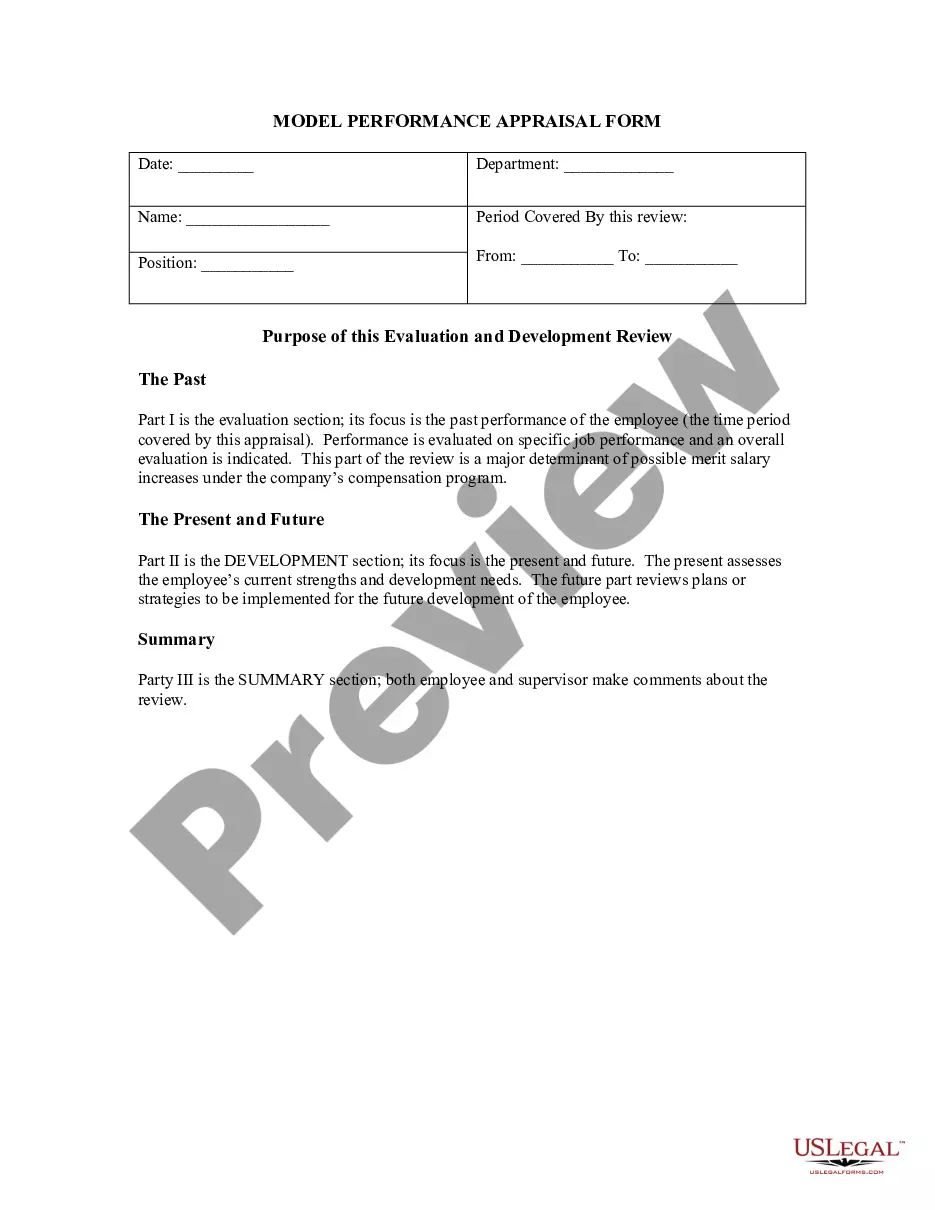
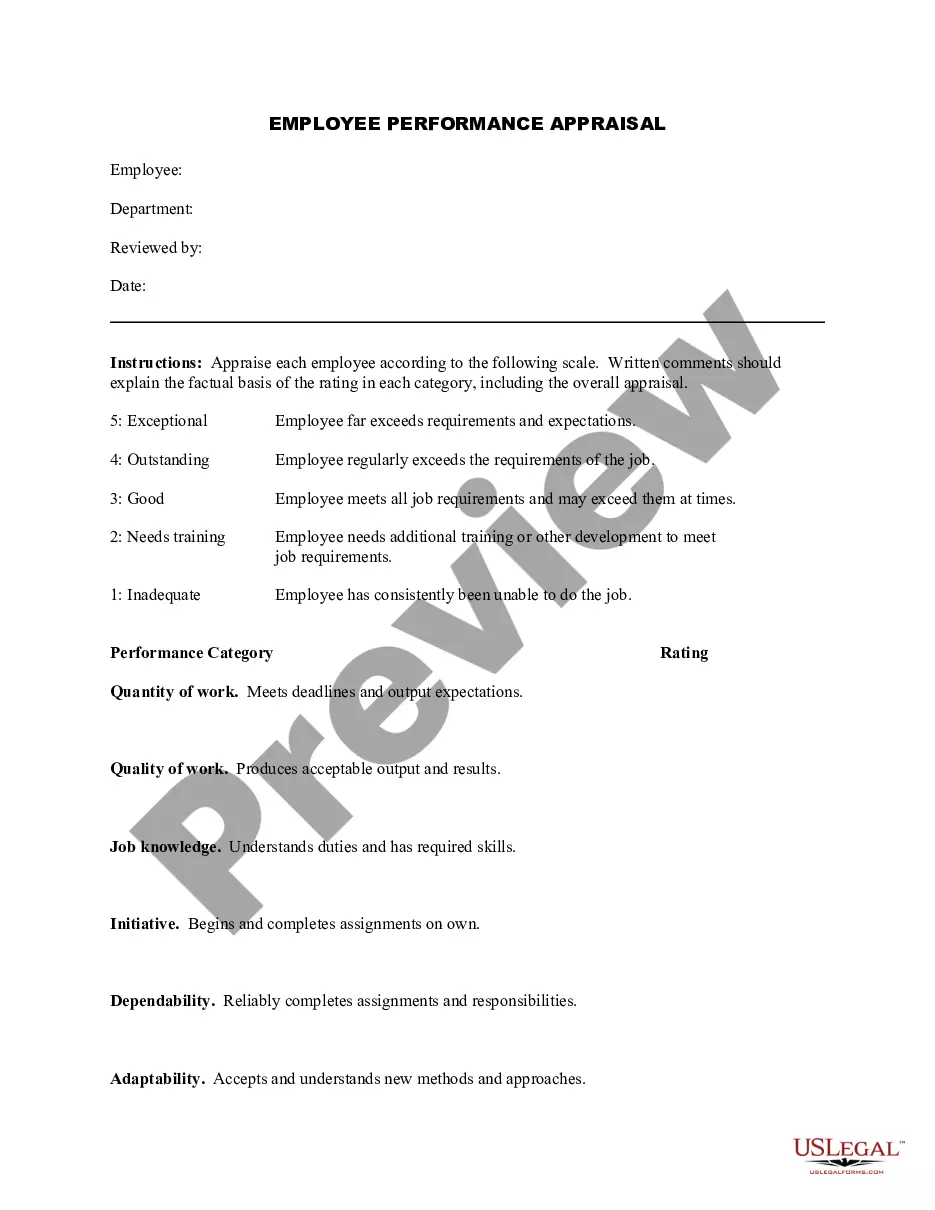
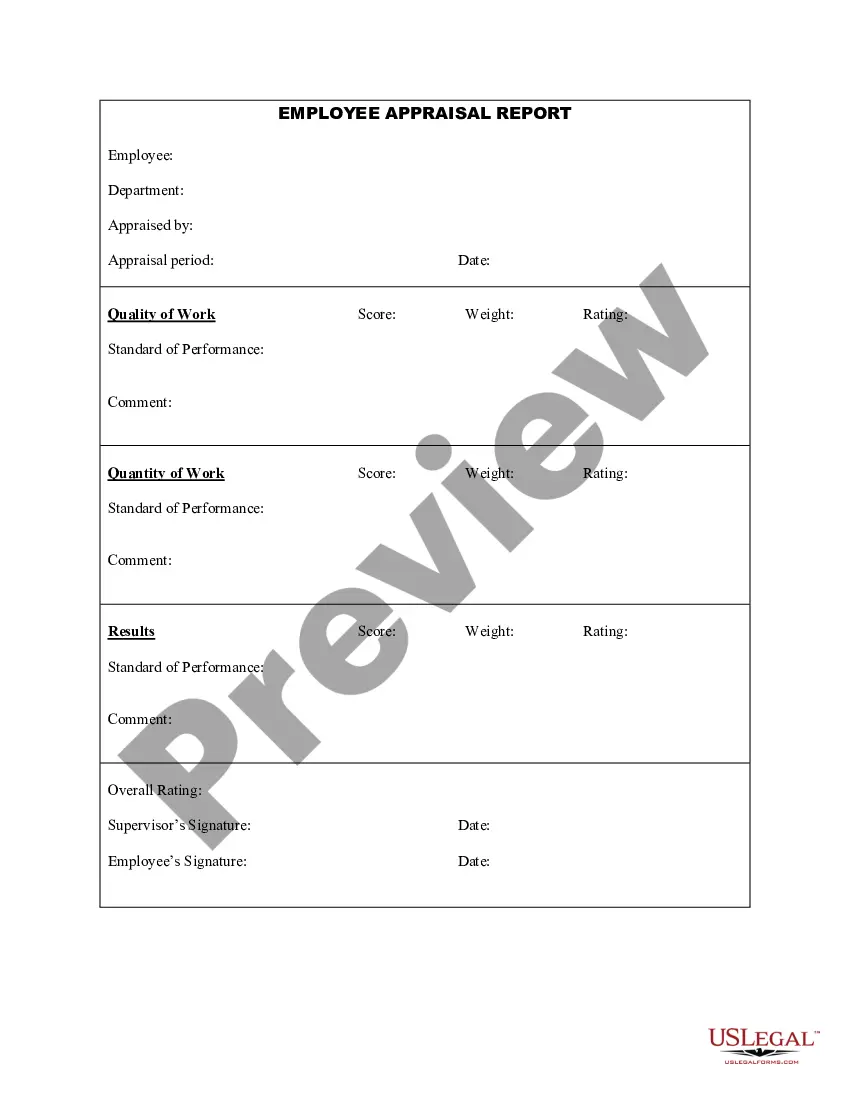
The Employee Performance Review form is a structured document used to evaluate and document an employee's job performance over a specific period. This form is designed to provide clear feedback on an employee's strengths and areas for improvement, distinguishing it from informal feedback or conversations. Utilizing this performance review can help employers set expectations, recognize achievements, and guide professional development for employees.
What’s included in this form
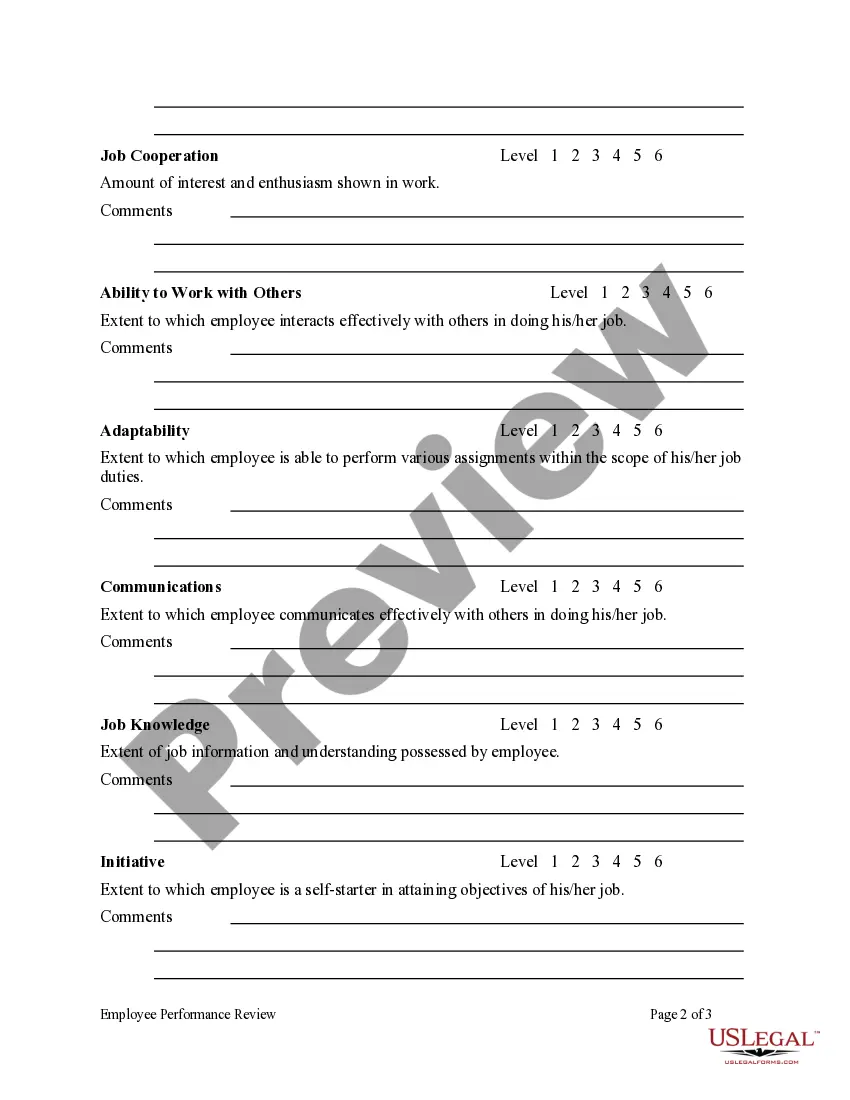
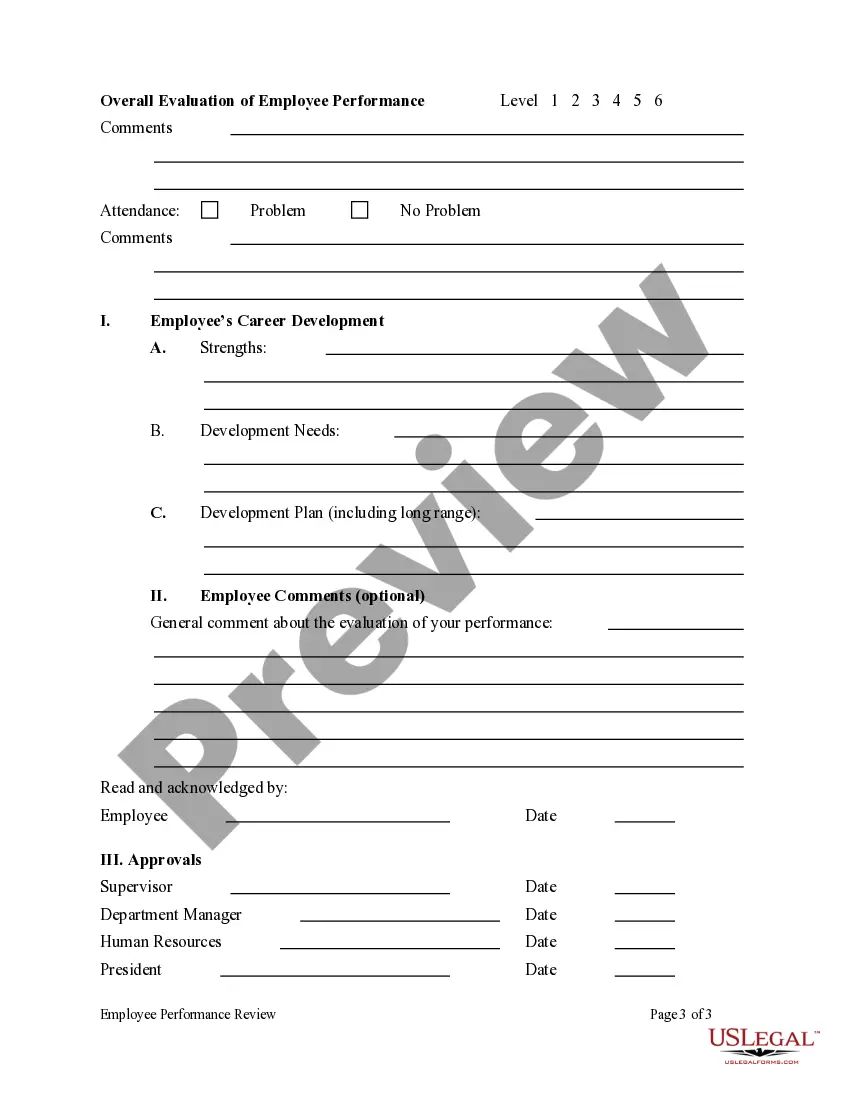
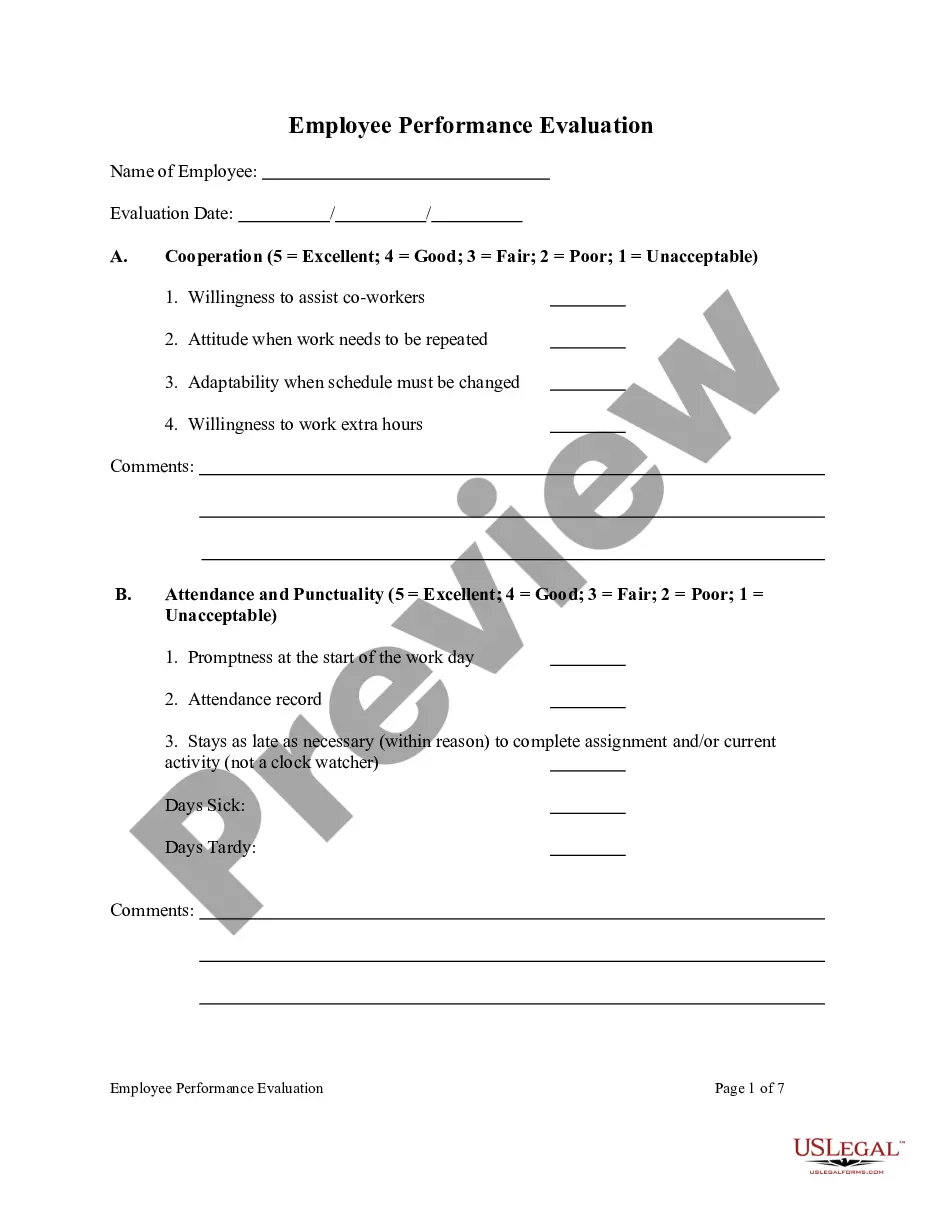
- Performance Levels: Ranges from Level 1 (Does Not Meet Job Requirements) to Level 5 (Consistently Exceeds Job Requirements).
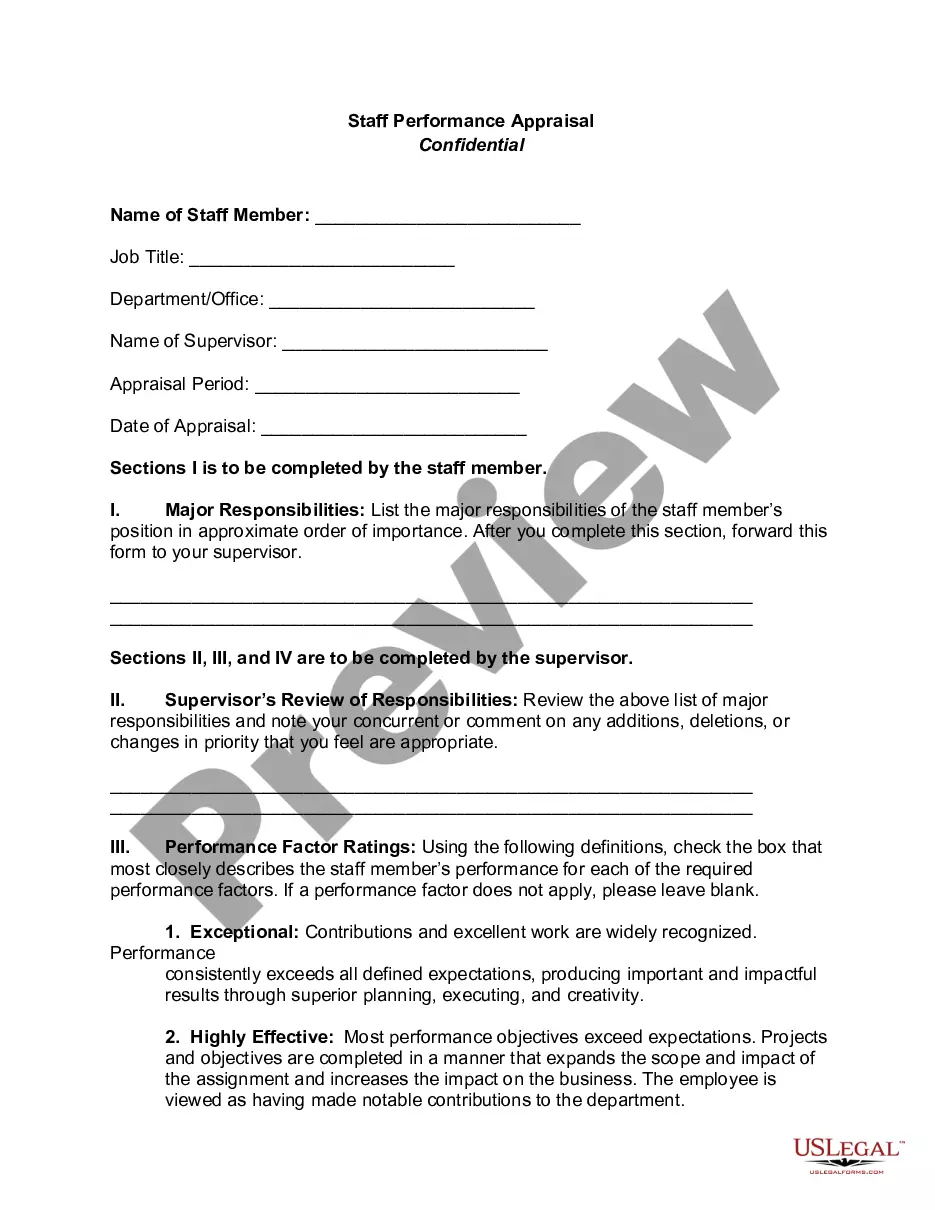
- Comments Section: Opportunity for personalized feedback on performance.
- Goals and Objectives: Space for setting future performance goals and development plans.
- Reviewer Information: Details about the reviewer to ensure accountability and clarity.
- Employee Acknowledgment: A section for employees to acknowledge receipt of the review.
When to use this form
This form should be used during regular performance evaluation cycles, typically on an annual or semi-annual basis. It is essential when an employer wants to formally document employee performance, provide constructive feedback, or evaluate the fulfillment of job responsibilities. In addition, it can be employed during promotions, employee onboarding, or following a probation period.
Who this form is for
- Managers or supervisors responsible for employee evaluations.
- Human resources professionals involved in performance management.
- Team leaders overseeing group performance.
- Organizations looking to standardize performance reviews.
Steps to complete this form
- Identify the employee: Fill in the employee's name, position, and department.
- Choose a performance level: Select the appropriate performance level based on the employee's performance.
- Add comments: Provide specific examples to support the chosen performance level.
- Set future goals: Outline development goals and expectations for the upcoming review period.
- Obtain signatures: Have the evaluator and employee sign the review to acknowledge its completion.
Is notarization required?
This form does not typically require notarization unless specified by local law. Always check with your organizationâs policies or local regulations to ensure adherence to any required procedures.
Get your form ready online
Our built-in tools help you complete, sign, share, and store your documents in one place.
Make edits, fill in missing information, and update formatting in US Legal Forms—just like you would in MS Word.
Download a copy, print it, send it by email, or mail it via USPS—whatever works best for your next step.
Sign and collect signatures with our SignNow integration. Send to multiple recipients, set reminders, and more. Go Premium to unlock E-Sign.
If this form requires notarization, complete it online through a secure video call—no need to meet a notary in person or wait for an appointment.
We protect your documents and personal data by following strict security and privacy standards.

Make edits, fill in missing information, and update formatting in US Legal Forms—just like you would in MS Word.

Download a copy, print it, send it by email, or mail it via USPS—whatever works best for your next step.

Sign and collect signatures with our SignNow integration. Send to multiple recipients, set reminders, and more. Go Premium to unlock E-Sign.

If this form requires notarization, complete it online through a secure video call—no need to meet a notary in person or wait for an appointment.

We protect your documents and personal data by following strict security and privacy standards.
Avoid these common issues
- Not providing specific examples to support performance ratings.
- Failing to set clear goals for future performance.
- Overlooking the importance of employee acknowledgment.
- Not allowing employees the opportunity to provide feedback on their performance.
Advantages of online completion
- Convenience: The form can be accessed and completed from any device at any time.
- Editability: Users can easily modify and customize the form for specific needs.
- Reliability: Legally vetted by licensed attorneys, ensuring compliance with current employment laws.
Legal use & context
- This form serves as a formal record of employee performance evaluations, which may be important for legal compliance in employment practices.
- Documented evaluations can be used in performance-related decisions, including promotions and terminations.
- Failure to conduct regular performance reviews may affect an organization's defense in employment disputes.
Main things to remember
- The Employee Performance Review form is essential for evaluating and documenting employee performance objectively.
- Standardized assessments help ensure fairness and clarity in employee evaluations.
- Effective use of this form can lead to improved employee performance and satisfaction.
Looking for another form?
Form popularity
FAQ
Be proud. One major goal of the self-evaluation is to highlight your accomplishments and recollect milestones in your professional development. Be honest and critical. Continuously strive for growth. Track your accomplishments. Be professional.
Make it specific. If your positive feedback is vague, they won't know which of their skills are good and which ones they need to improve. Give it in a timely manner. Let others see it. Praise everyone eventually. Explain their impact. Give the right amount of praise.
"You're a likable person." "You can come off a bit bossy at times." "You need to pay more attention to your tone." "You need to take the emotion out of it." "There's nothing more you can be doing." "You could have done a better job with project."
Some examples of positive feedback are contractions in child birth and the ripening of fruit; negative feedback examples include the regulation of blood glucose levels and osmoregulation.
Review past and present performance. If you only do formal reviews once a year, it's easy to provide feedback only for things that are fresh in your mind. Be honest and clear. Provide concrete examples. Choose your words carefully. End on a positive note.
When writing positive feedback, you should make sure you're being specific about a team member's skills or contributions. Explain the impact they've had on your company, and make sure to express your gratitude.
Talk about your achievements. Talk about a raise. Ask about the development of the business. Set clear goals. Give feedback to your manager. Ask how you can help. Suggest tools you need to do your job. Ask for clarification.
3. You said/you did2026 It's communication 101 when discussing a sensitive topic, never lead with you statements. In a performance review, this might include statements like you said I was going to get a raise, you didn't clearly outline expectations, etc.