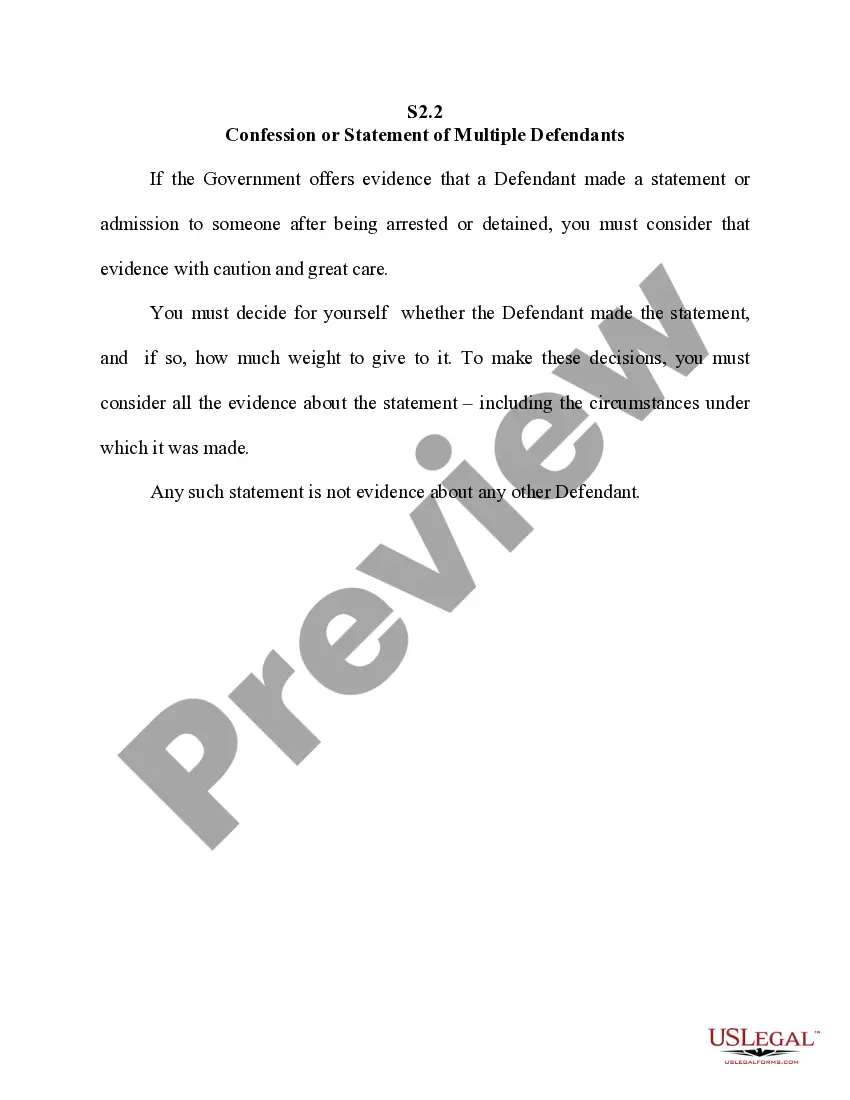
Confession or Statement of Multiple Defendants
Understanding this form
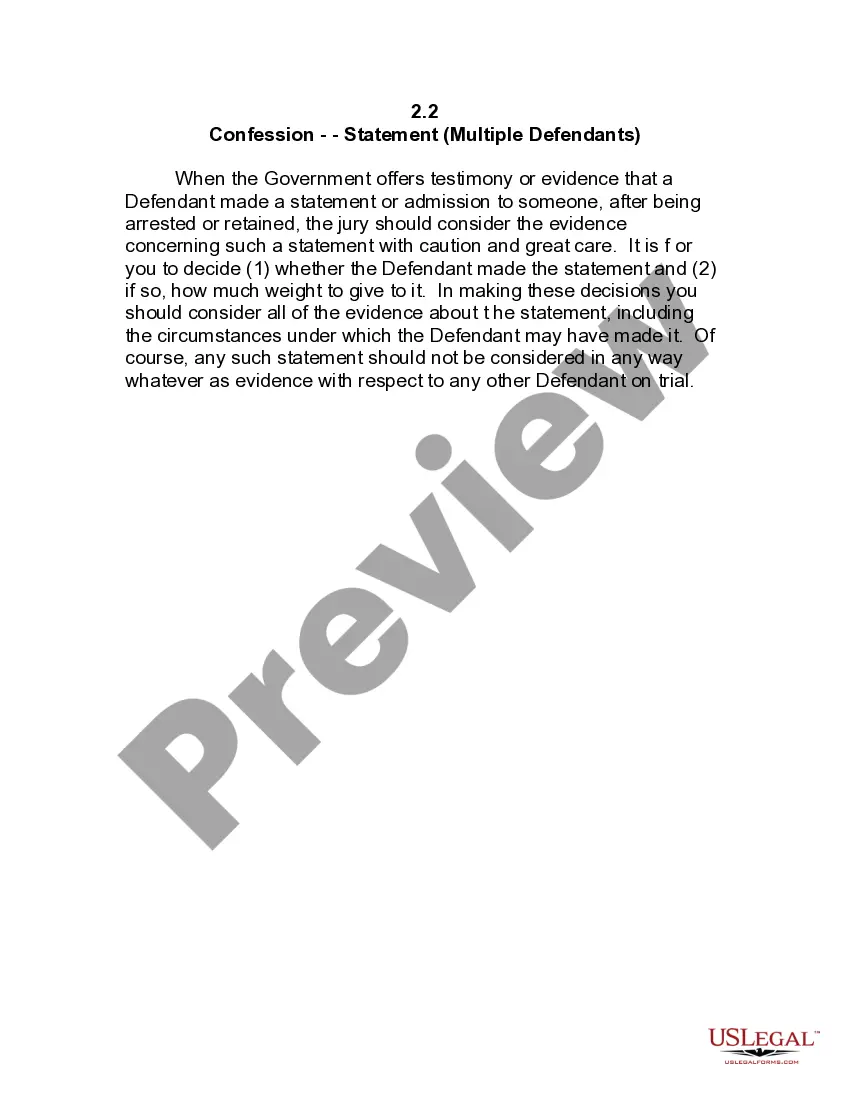
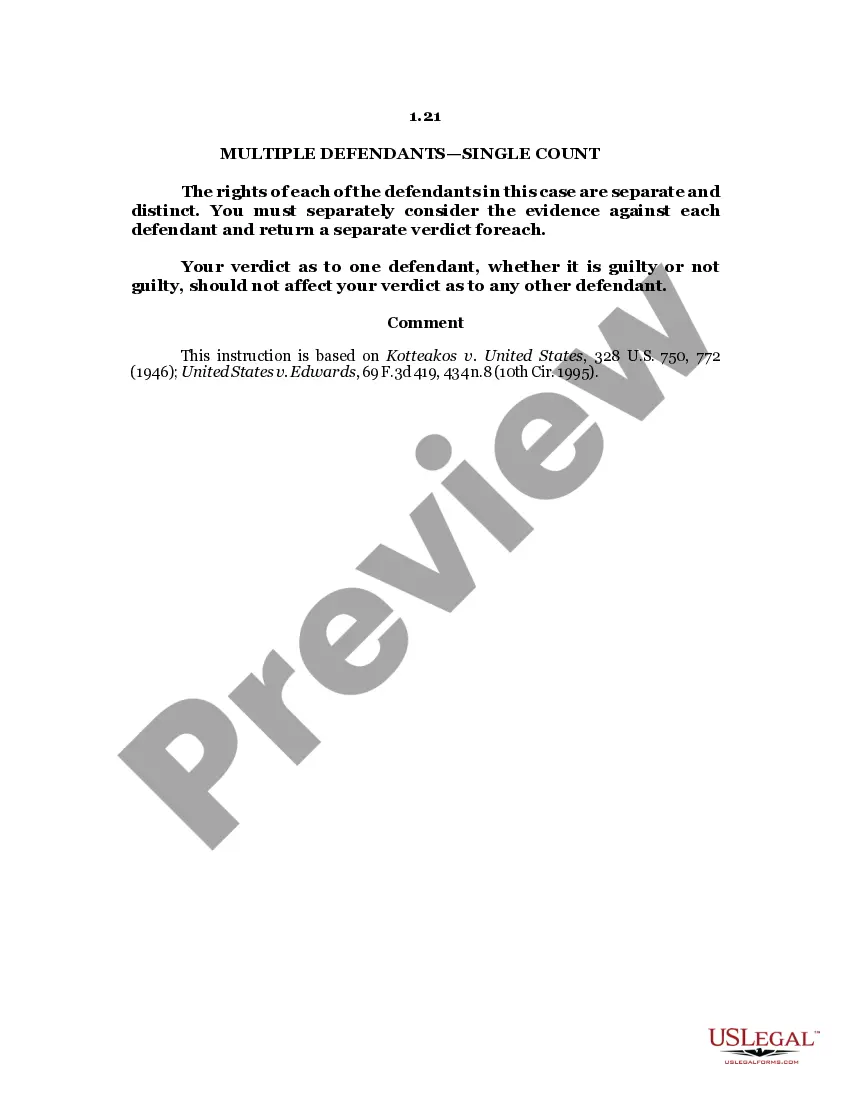
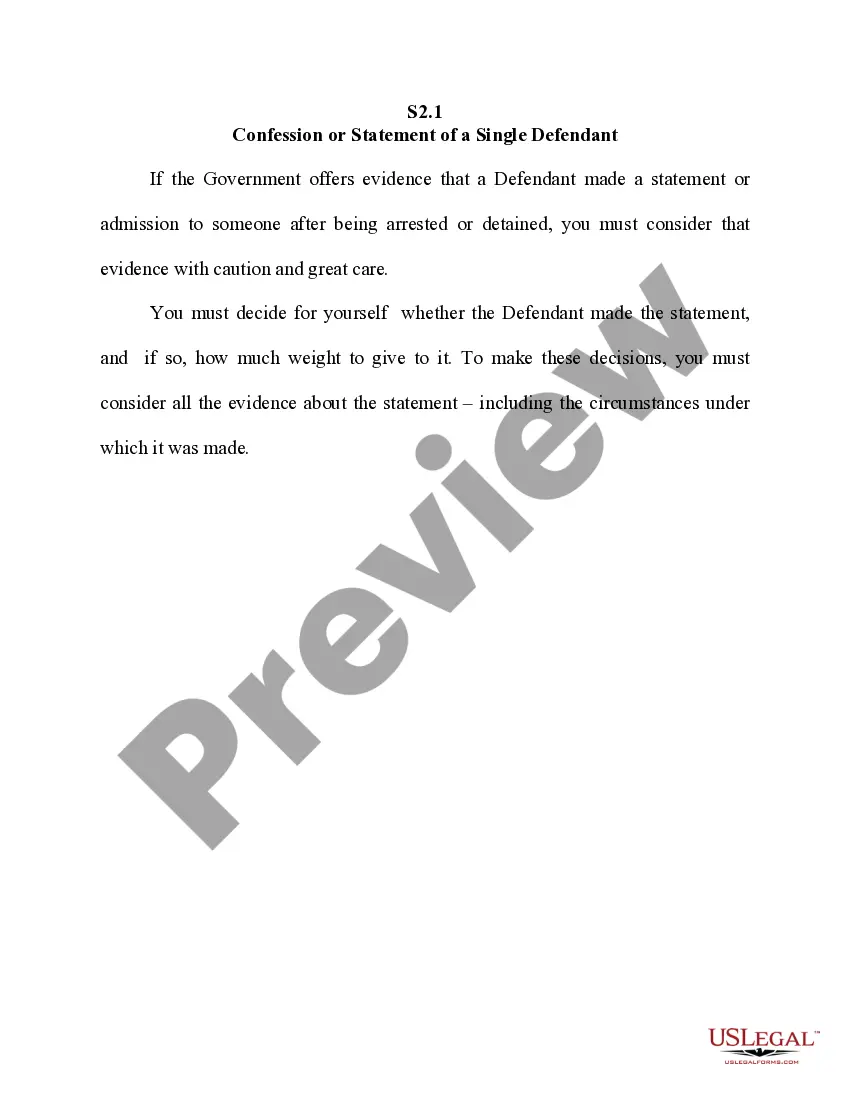
The Confession or Statement of Multiple Defendants form is a legal document that provides instructions on how to assess confessions or admissions made by defendants in a legal context. It is designed to assist juries in evaluating statements made by multiple defendants, emphasizing the importance of careful consideration when assessing such testimonies. This form is distinct as it specifically addresses the unique circumstances involving statements from multiple defendants in cases tried within the federal court system.
Form components explained
- Instructions for juries regarding the treatment of statements made by defendants during legal proceedings.
- Guidance on evaluating the circumstances surrounding a defendant's confession or admission.
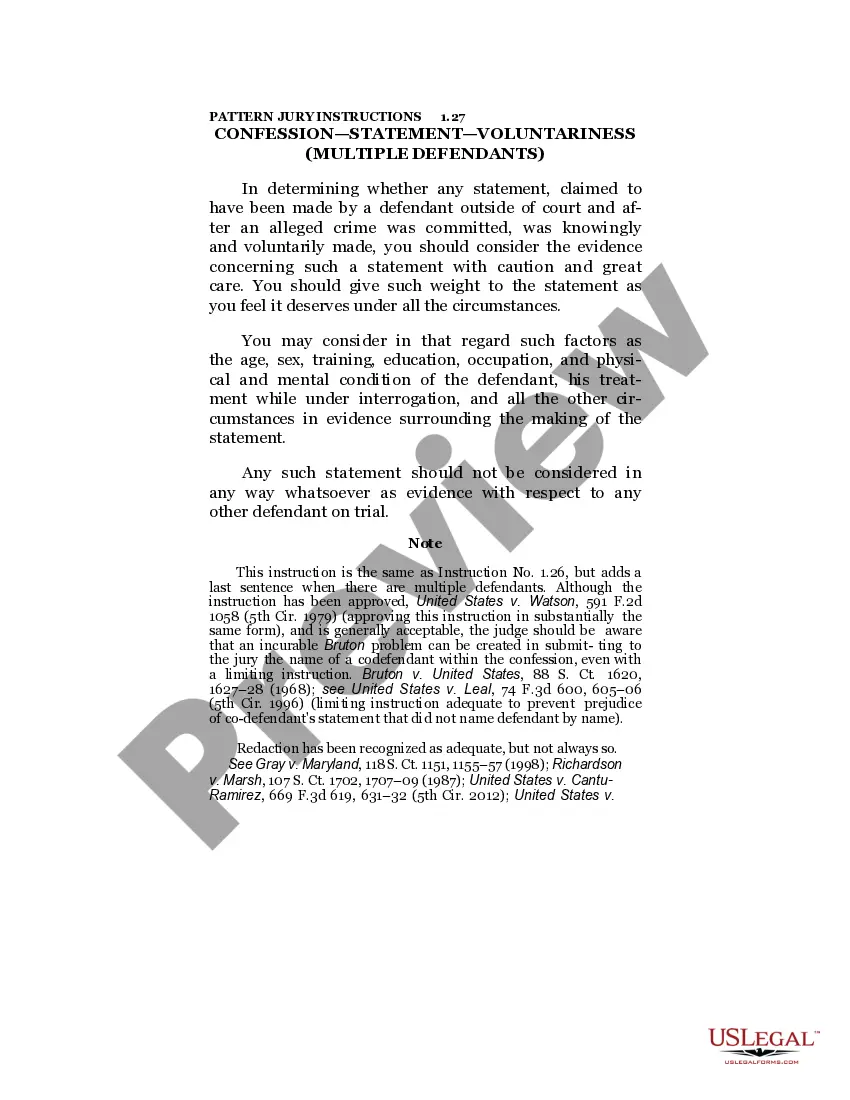
- Clarification that a statement by one defendant cannot be used as evidence against another defendant.
Situations where this form applies
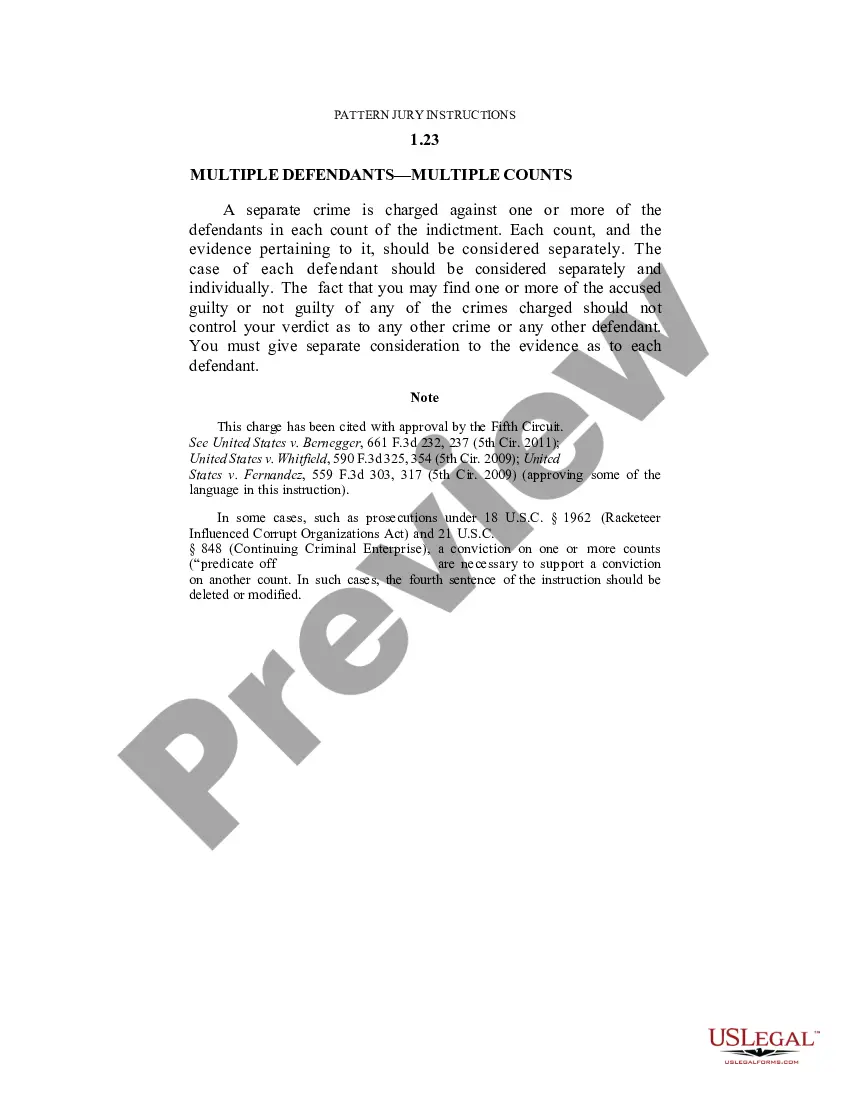
This form should be used in criminal trials where multiple defendants are being tried together, especially if one or more defendants have made confessions or admissions. It provides jurors with the necessary legal framework to understand how to weigh such evidence carefully and avoid biases against any individual defendant based on the statements of others.
Who can use this document
- Judges presiding over criminal trials involving multiple defendants.
- Jury members who need guidance on handling evidence of confessions in a way that adheres to legal standards.
- Legal professionals, including attorneys, who require a reference for jury instruction on defendant statements.
Steps to complete this form
- Identify the defendants involved in the case.
- Review the circumstances under which each confession was made.
- Assess and determine if the confession was made voluntarily and accurately.
- Evaluate the relevance of each confession, considering its impact on the respective defendantâs case.
- Document the jury's decision related to the statements and their respective weights in the overall case.
Does this form need to be notarized?
This form does not typically require notarization unless specified by local law. It is primarily used as guidance for juries and does not serve as evidence or declaration that would typically require a notary.
Get your form ready online
Our built-in tools help you complete, sign, share, and store your documents in one place.
Make edits, fill in missing information, and update formatting in US Legal Forms—just like you would in MS Word.
Download a copy, print it, send it by email, or mail it via USPS—whatever works best for your next step.
Sign and collect signatures with our SignNow integration. Send to multiple recipients, set reminders, and more. Go Premium to unlock E-Sign.
If this form requires notarization, complete it online through a secure video call—no need to meet a notary in person or wait for an appointment.
We protect your documents and personal data by following strict security and privacy standards.

Make edits, fill in missing information, and update formatting in US Legal Forms—just like you would in MS Word.

Download a copy, print it, send it by email, or mail it via USPS—whatever works best for your next step.

Sign and collect signatures with our SignNow integration. Send to multiple recipients, set reminders, and more. Go Premium to unlock E-Sign.

If this form requires notarization, complete it online through a secure video call—no need to meet a notary in person or wait for an appointment.

We protect your documents and personal data by following strict security and privacy standards.
Avoid these common issues
- Failing to distinguish between confessions made by different defendants.
- Giving undue weight to a confession based solely on its existence, without considering other evidence.
- Ignoring the specific context or circumstances under which a confession was obtained.
Benefits of completing this form online
- Convenient access to legal resources that can be downloaded and used immediately.
- Editability allows customization to fit specific case needs.
- Reliability provided by templates drafted by licensed attorneys ensures adherence to legal standards.
Legal use & context
- This form is essential in maintaining fair trial rights for defendants in joint situations.
- It serves as a guideline for jurors to avoid bias from one defendant's statements affecting another's case.
Main things to remember
- The form addresses the complexities associated with multiple defendantsâ statements in a single case.
- It emphasizes careful evaluation of evidence to uphold legal integrity.
- Understanding limitations on the use of statements can help protect the rights of all defendants involved.
Looking for another form?
Form popularity
FAQ
The Crawford Rule: Testimonial statements by witnesses who are not subject to cross- examination at trial may not be admitted unless the witness is unavailable and there has been a prior opportunity for cross-examination. long for additional cases to reach the high Court or for the Court to agree to hear them.
When you're arrested with someone else that means you have a co-defendant. At your first appearance the judge is likely to tell you that you aren't allowed any contact with your co-defendant. That means you can't talk to one another or be around each other.
There's cases called Aranda-Bruton Rule. These cases stand for the proposition that yes, at a preliminary hearing a co-defendant's statement can come in against another co-defendant and against them as an admission even if the defense attorney doesn't have an opportunity to cross-examine that co-defendant.
When to Sever Trials. A defendant generally does not have a right to a separate trial upon request, except in some narrow situations such as death penalty cases. However, a defendant can ask a judge to sever a joint trial if proceeding jointly would jeopardize their right to a fair trial.
Simply put, a ?co-defendant? is simply someone who is also charged in your case. He or she may have the same charges you have, have slightly different charges, or have completely different charges. It all depends on the facts of your case.
The Bruton rule, summarized. A defendant's right under the Confrontation Clause is violated under Bruton when there is a joint trial of co-defendants and the testimonial statement of a co-defendant who does not testify at trial is used to implicate the other co-defendant in the crime or crimes on trial.
Yes. Generally, courts will make sure that all those involved in a drug incident will be prosecuted together. That means that you would typically find out who the co-defendants are in your case very early on. That can be important information.
Co-defendants often have conflicting interest in a criminal case. A prosecutor may offer a co-defendant a plea agreement to testify against or "flip" against the other co-defendants in a case. If the case proceeds to trial, lawyers for a co-defendant may have different strategies for defending the case.