Lease Termination Letter for Business
Understanding this form
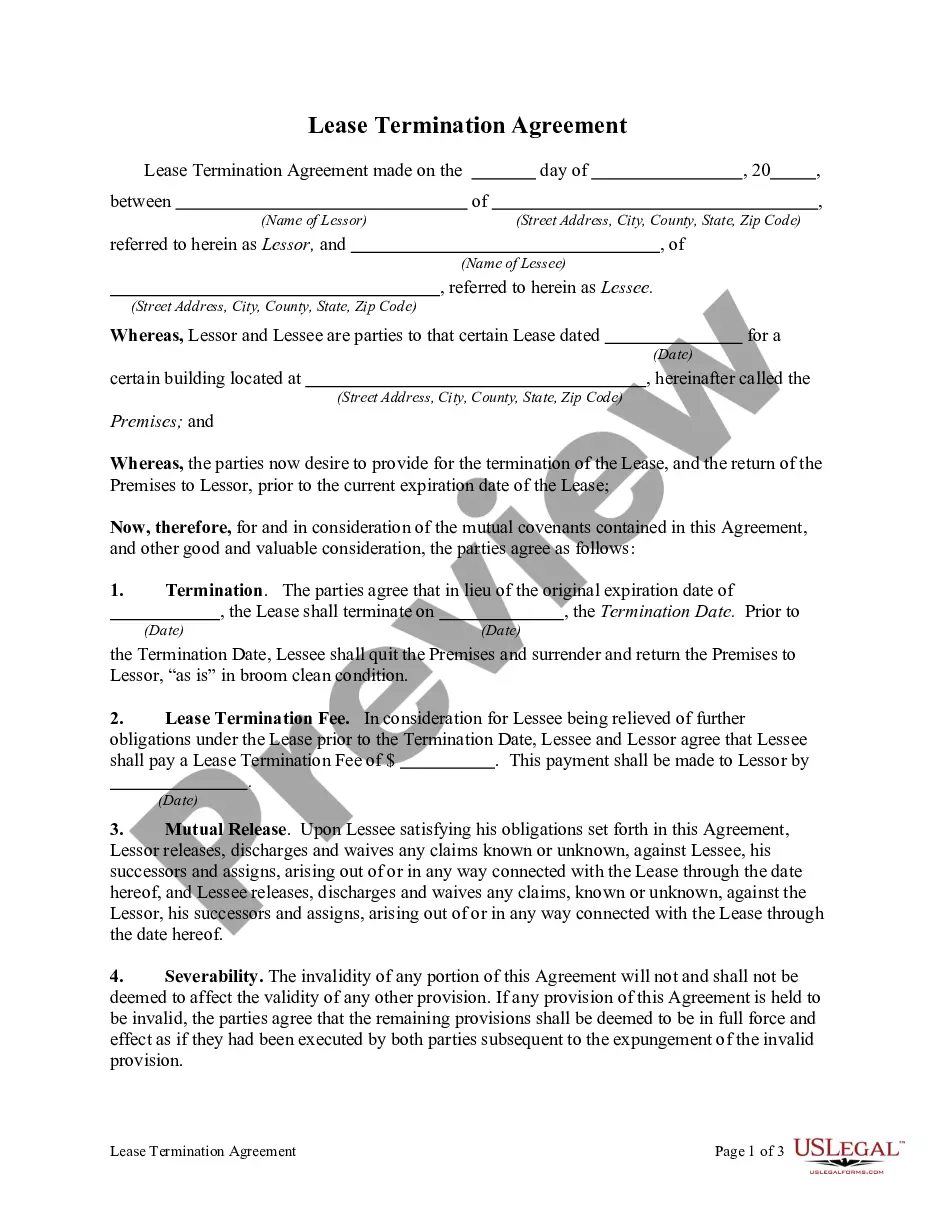
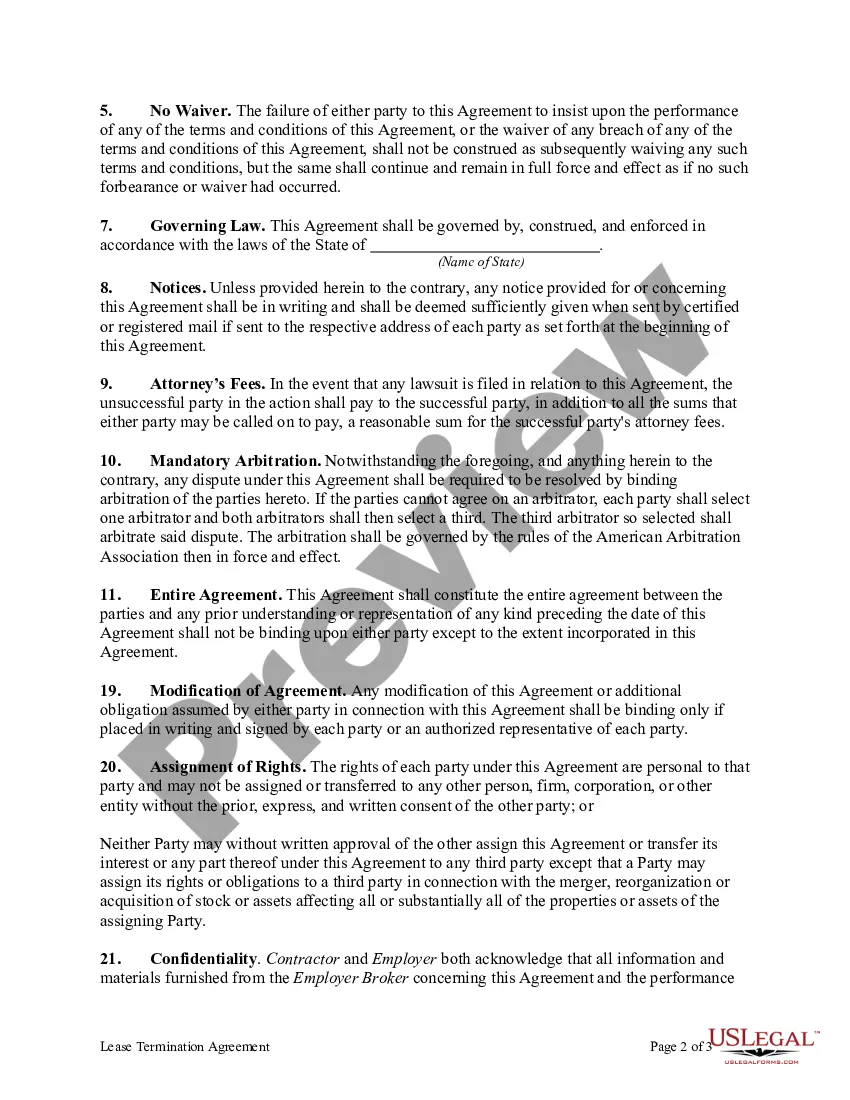
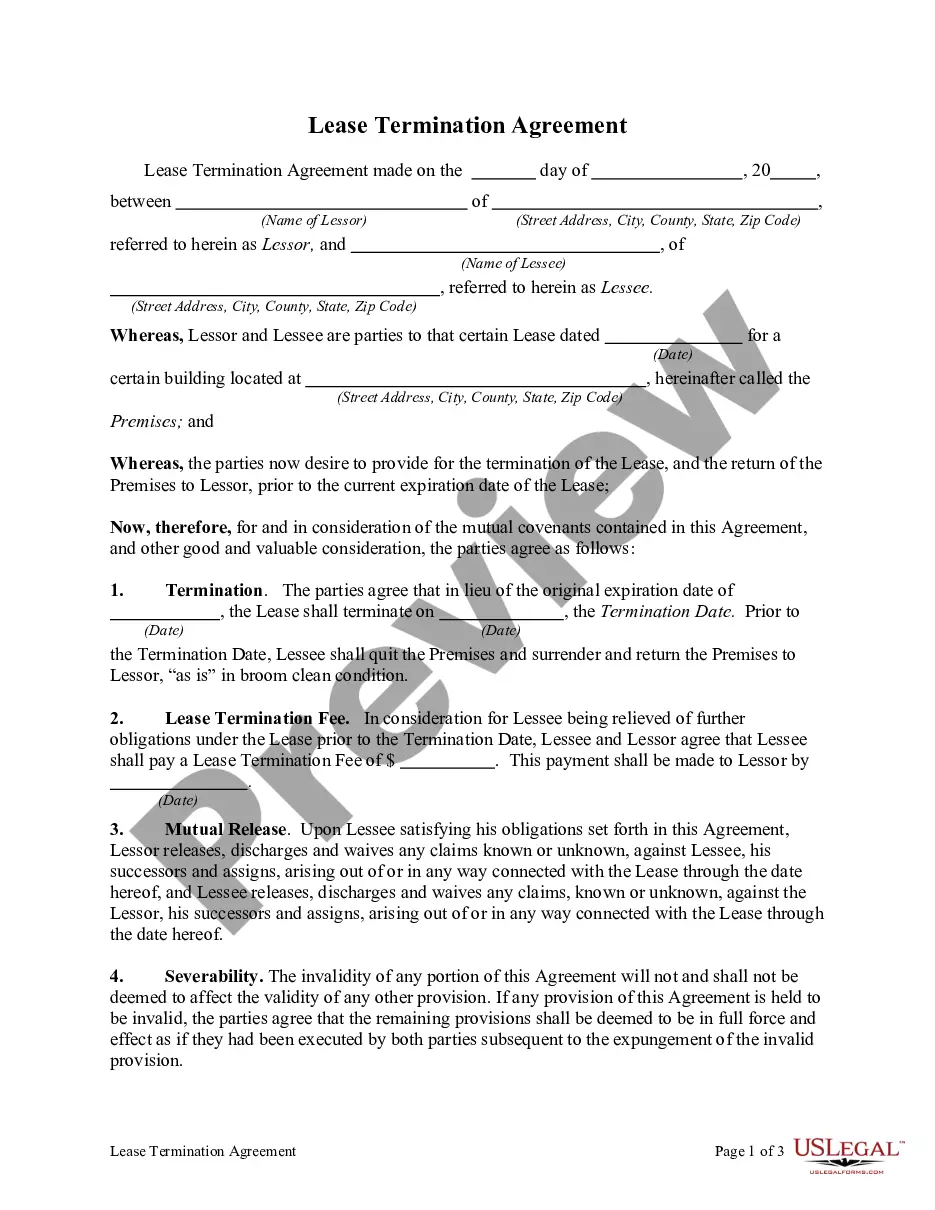
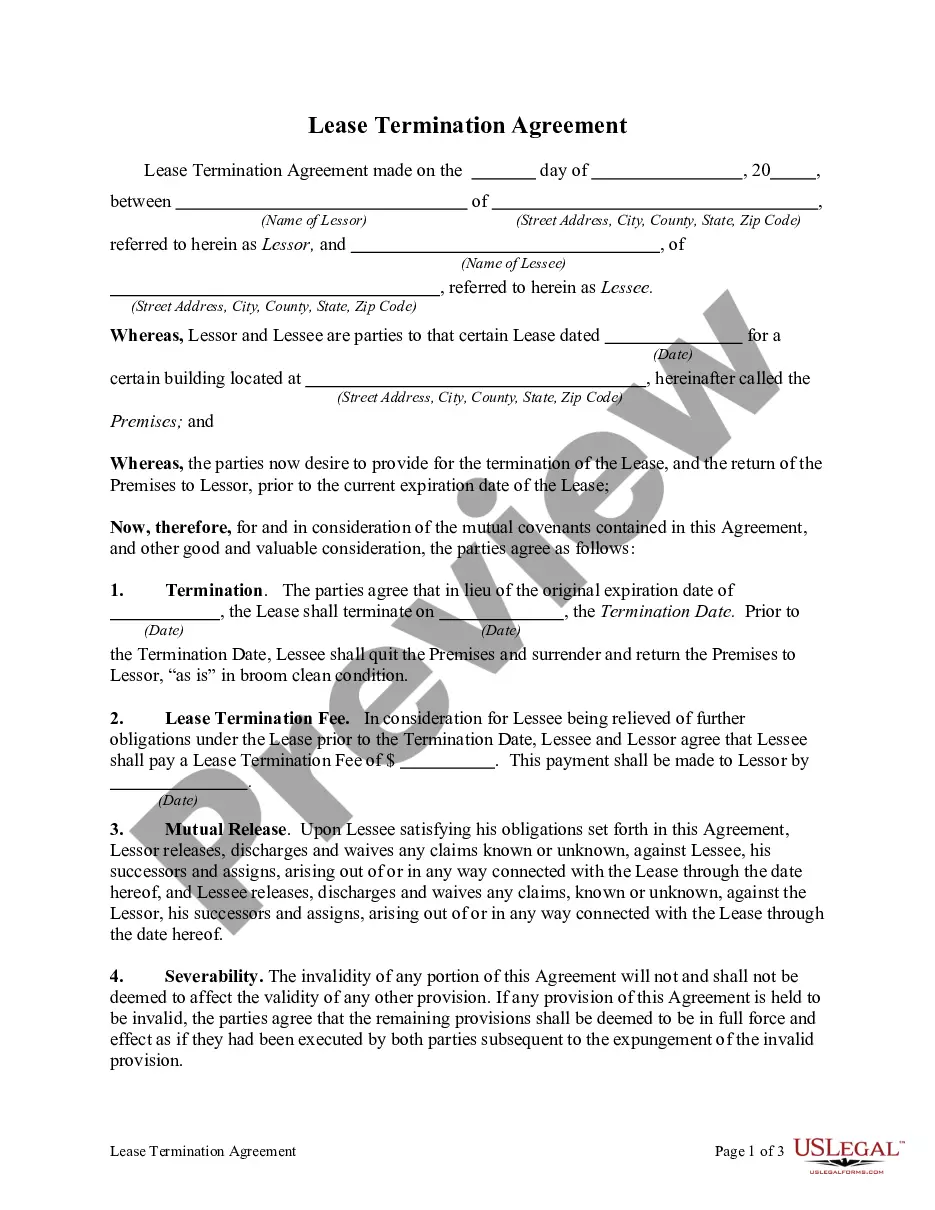
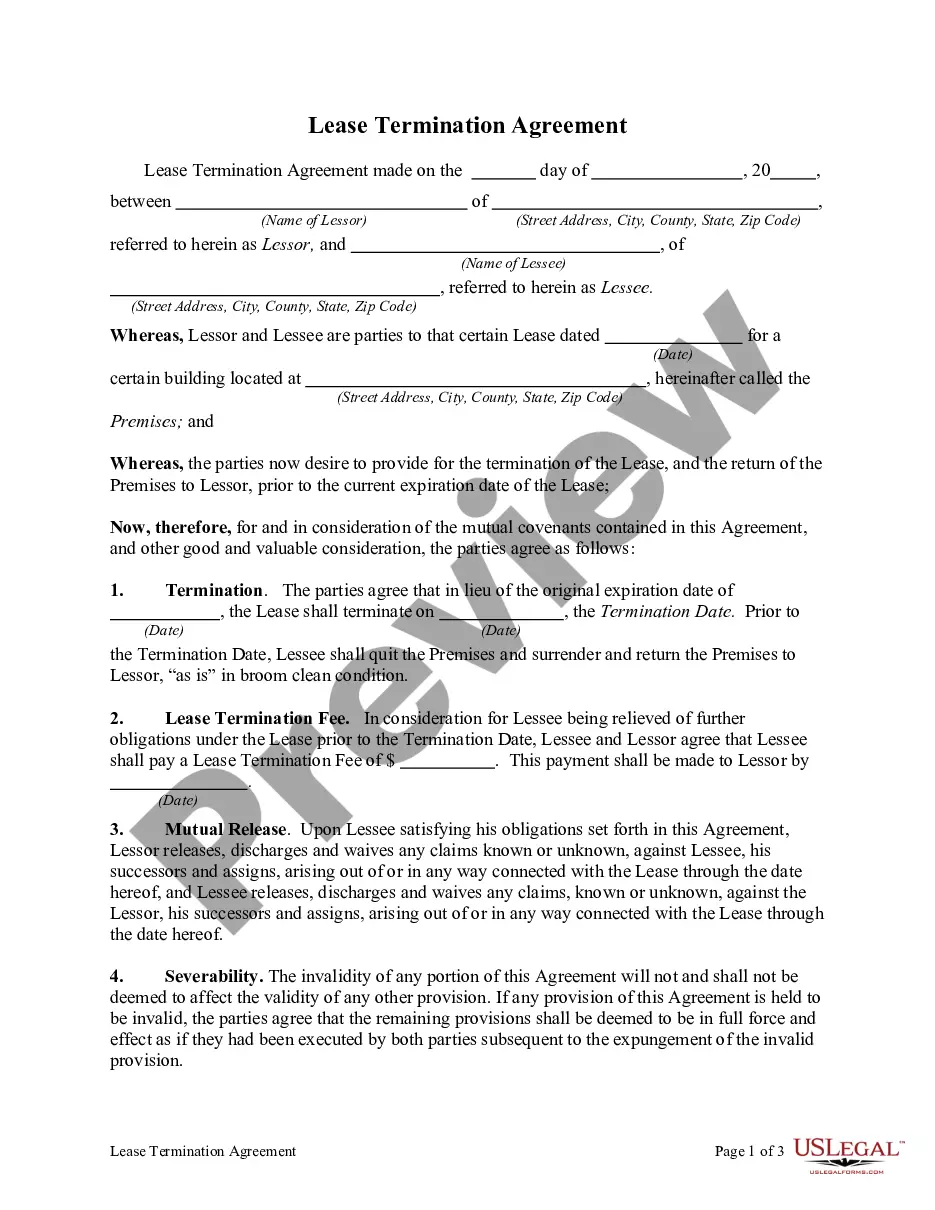
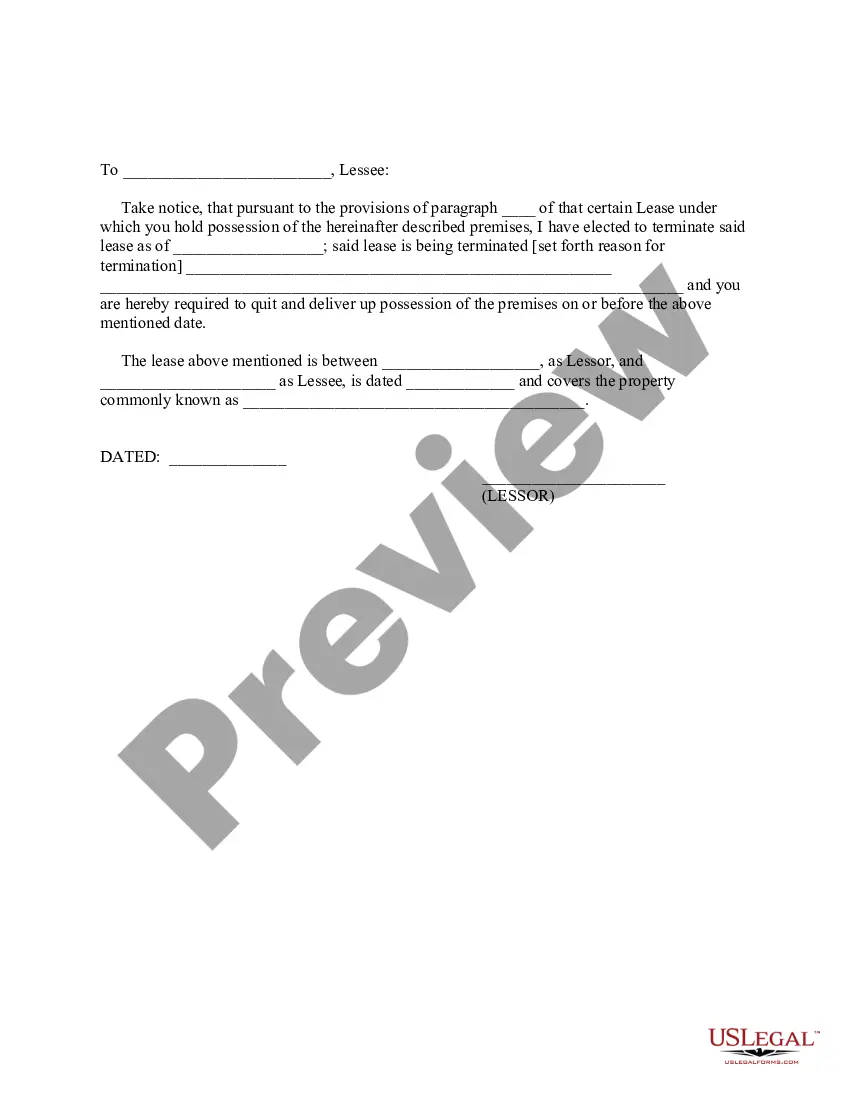
The Lease Termination Letter for Business is a formal document used to conclude a Lease or Rental Agreement between a landlord and tenant. This letter serves as notification of intent to terminate the lease, ensuring both parties agree to end the contractual relationship. It is important to use this form to clarify the terms of termination, distinguish it from other lease-related documents, and provide a clear record of the agreement between the parties.
What’s included in this form
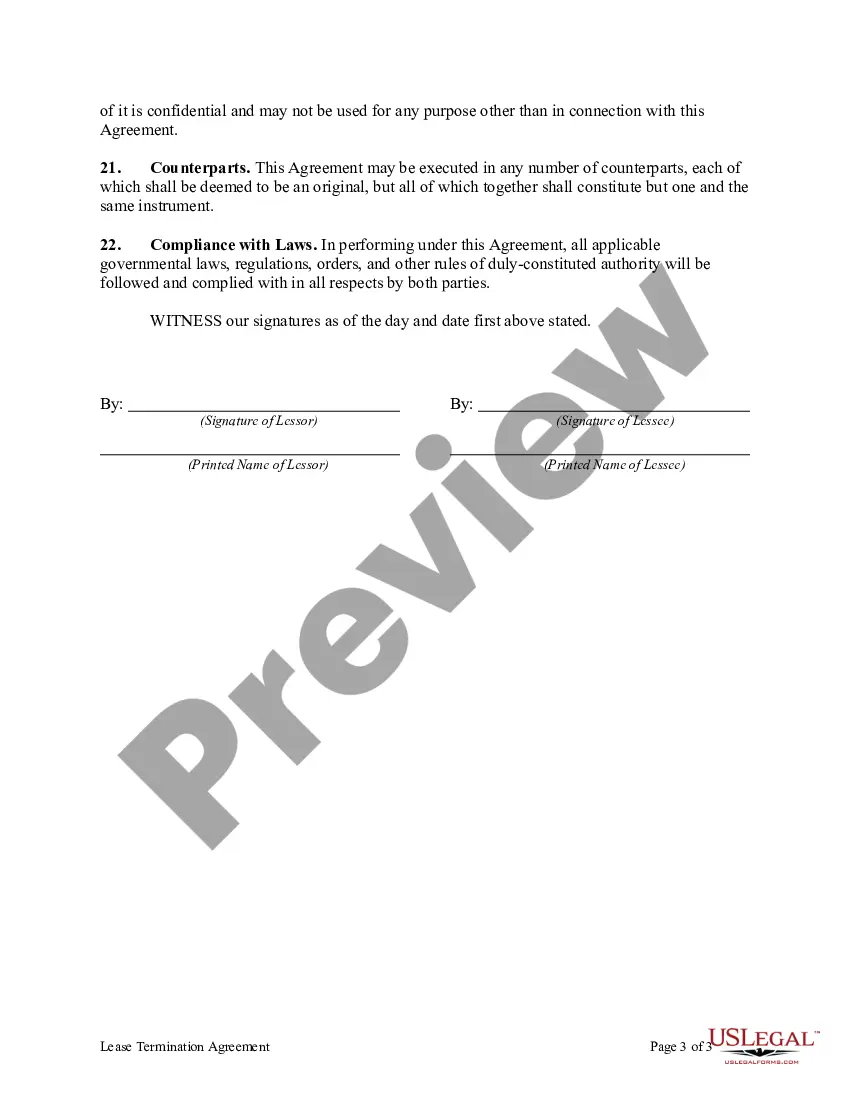
- Termination clause: Outlines the effective date of lease termination.
- Severability clause: Ensures that if any part of the agreement is invalid, the rest remains enforceable.
- Attorneys' fees clause: Establishes that the unsuccessful party in a legal dispute pays the successful party's legal costs.
- Mandatory arbitration clause: Details the process for resolving disputes through arbitration rather than court litigation.
- Modification of agreement: Specifies that changes must be in writing and signed by both parties.
- Confidentiality clause: Protects sensitive information shared during the lease term.
When to use this document
This lease termination letter is necessary when a business owner or tenant wishes to formally notify their landlord that they intend to end their lease agreement. Common scenarios include relocating to a new space, downsizing, or closing the business. Using this form ensures that both parties have a recorded agreement on the termination, minimizing potential disputes regarding rental obligations post-termination.
Who this form is for
- Business tenants wishing to end their lease agreement.
- Landlords seeking formal notice of lease termination from their tenants.
- Business owners considering relocation or closure who need to conclude their rental commitments.
How to prepare this document
- Identify the parties involved: Clearly state the names and addresses of both the landlord and tenant.
- Specify the property: Include the address or description of the leased business space.
- Enter the termination date: Clearly indicate when the lease will officially end.
- Include any additional terms: If applicable, outline any agreements regarding the return of the security deposit or final rent obligations.
- Sign and date the letter: Ensure both parties sign the document to validate the agreement.
Does this form need to be notarized?
This form does not typically require notarization unless specified by local law. However, it may provide additional legal protection if notarized, confirming the identities of the parties involved.
Get your form ready online
Our built-in tools help you complete, sign, share, and store your documents in one place.
Make edits, fill in missing information, and update formatting in US Legal Forms—just like you would in MS Word.
Download a copy, print it, send it by email, or mail it via USPS—whatever works best for your next step.
Sign and collect signatures with our SignNow integration. Send to multiple recipients, set reminders, and more. Go Premium to unlock E-Sign.
If this form requires notarization, complete it online through a secure video call—no need to meet a notary in person or wait for an appointment.
We protect your documents and personal data by following strict security and privacy standards.

Make edits, fill in missing information, and update formatting in US Legal Forms—just like you would in MS Word.

Download a copy, print it, send it by email, or mail it via USPS—whatever works best for your next step.

Sign and collect signatures with our SignNow integration. Send to multiple recipients, set reminders, and more. Go Premium to unlock E-Sign.

If this form requires notarization, complete it online through a secure video call—no need to meet a notary in person or wait for an appointment.

We protect your documents and personal data by following strict security and privacy standards.
Common mistakes
- Failing to provide adequate notice as stipulated in the lease agreement.
- Not signing the form or lacking signatures from both parties.
- Overlooking specific state laws that may affect the termination process.
- Not retaining a copy for both the landlord and tenant.
Advantages of online completion
- Convenient access to a professionally drafted legal template.
- Editable format to customize the form for specific needs.
- Instant download feature allows immediate use.
- Comprehensive guidance through the completion process.
Quick recap
- The Lease Termination Letter for Business formalizes the end of a lease agreement.
- It serves to protect both parties by providing clarity and minimizing disputes.
- Completion of this form is straightforward, requiring only basic information from both parties.
Looking for another form?

Form popularity
FAQ
Surrender of the lease This can be done formally, by deed, but this is not always necessary. If the landlord and tenant agree that the lease will be surrendered and they act in a way that is inconsistent with the lease continuing, the lease will be surrendered 'by operation of law'.
Look for a clause: Re-read your lease and look for either a bailout clause or a co-tenancy clause. Ask: If you are in a good space in a popular area, your landlord will be more inclined to an early termination of the lease than if you are in a bad space in a hard-to-rent location.
You and your landlord agree to terminate early. Enter into a deed of surrender to explicitly release you from all lease obligations. You have an early termination clause or break clause in the lease. You may be able to transfer or assign the lease with your landlord's agreement.
Components of the Letter Include your name and the rental address, and date the letter. Don't date it and hold onto it; date it for the day you are giving it to the landlord to start the 60 days. Address the letter to the landlord with a subject line of "60-Day Notice to Vacate."
Dear (Name of landlord or manager), This letter constitutes my written (number of days' notice that you need to give based on your lease agreement)-day notice that I will be moving out of my apartment on (date), the end of my current lease. I am leaving because (new job, rent increase, etc.)
Your name, and the landlord's name and address. The date you're writing the letter. Informing the landlord you're breaking your lease early. The reason why you're breaking your lease. The building and apartment you're vacating. The date by which you're vacating.
The address of the property (The landlord may have many properties to manage. The specific date you plan to vacate. The date you plan to surrender the keys. The date you plan to have the utilities turned off. A request for property inspection. A forwarding address.