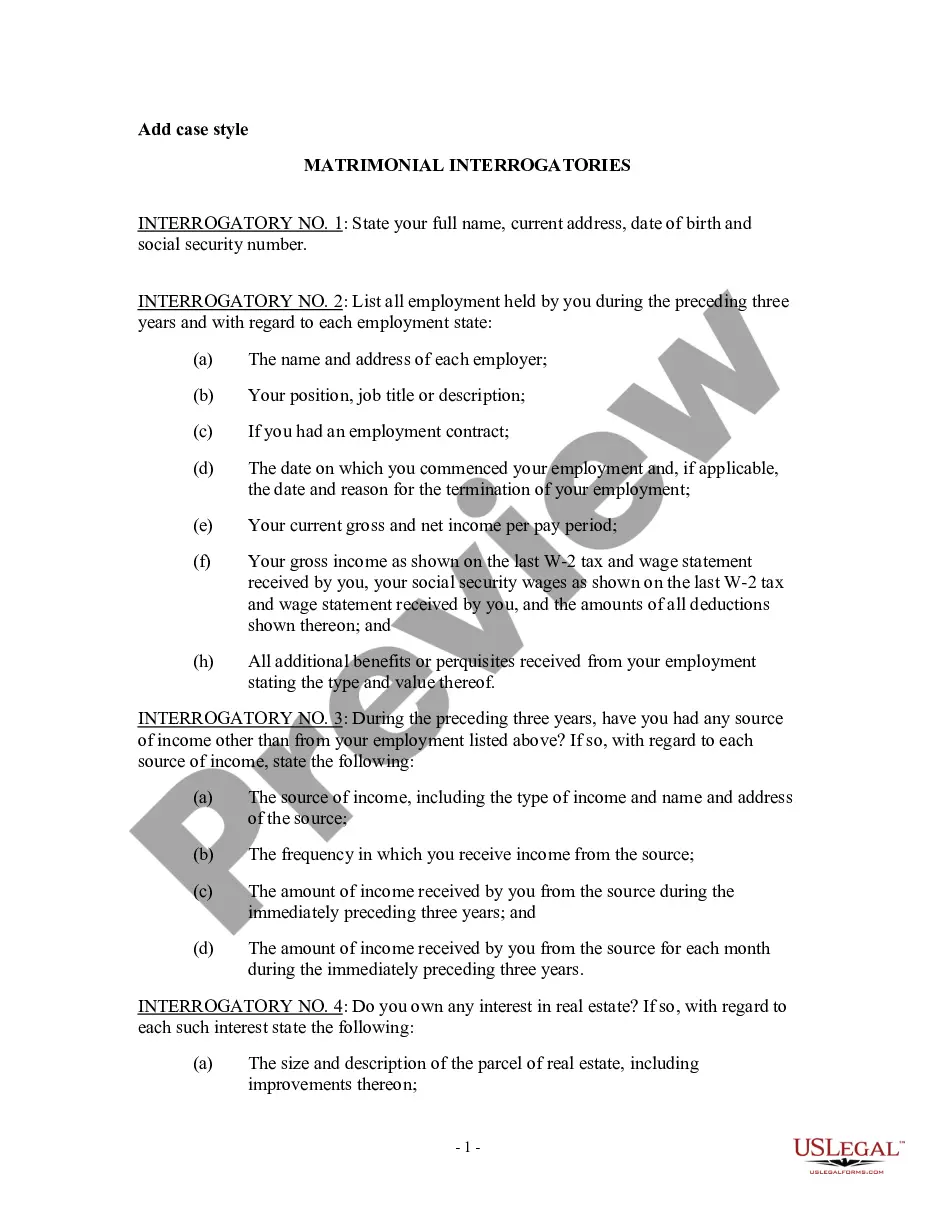
Affidavit of Heirship - Descent
Overview of this form
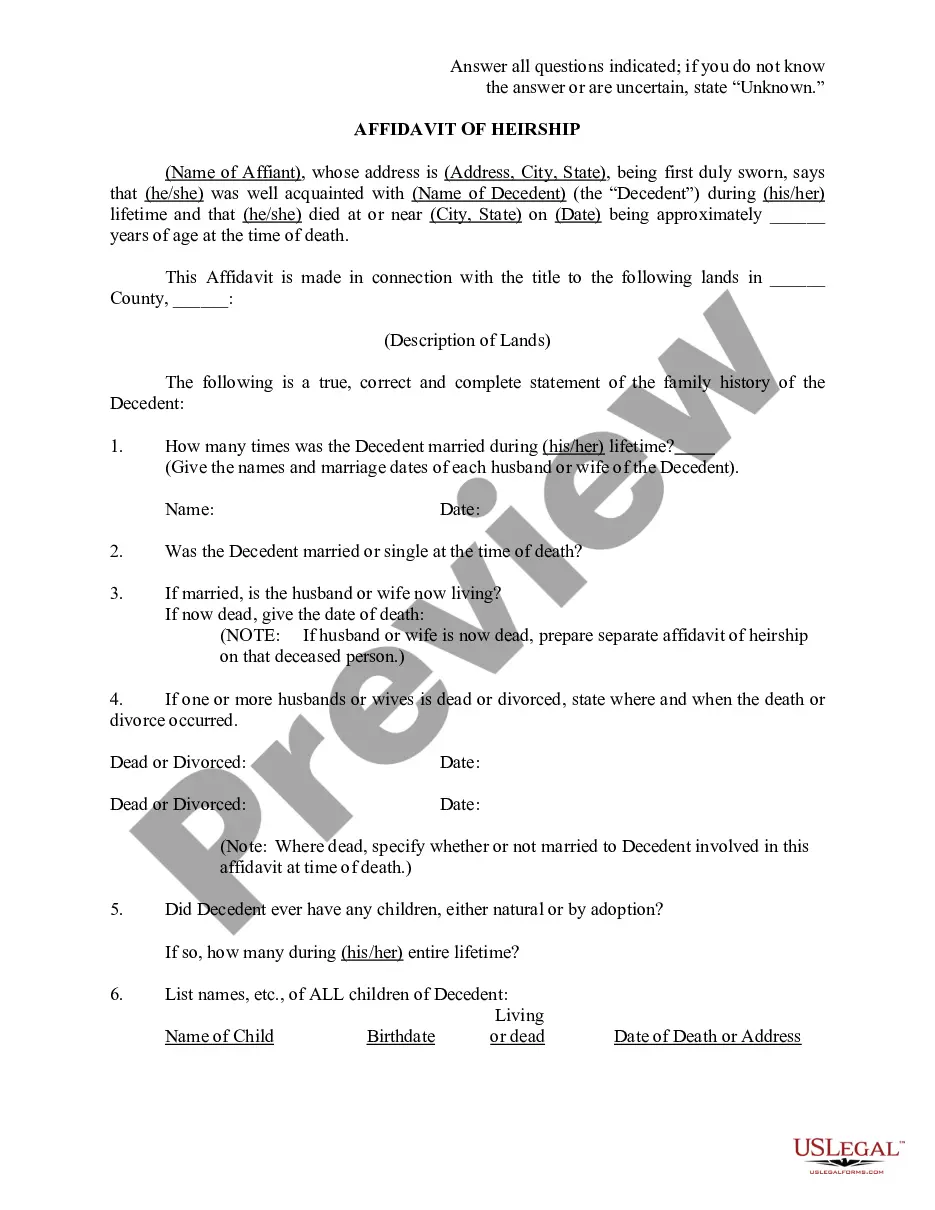
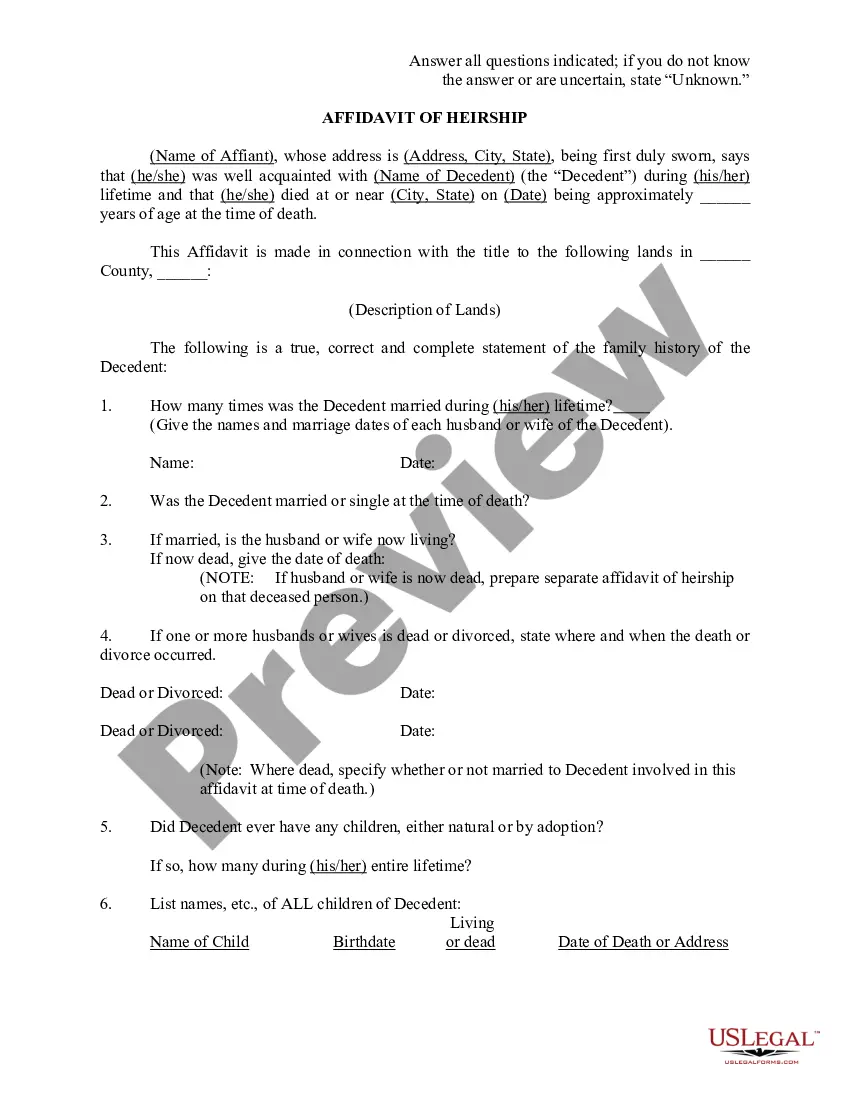
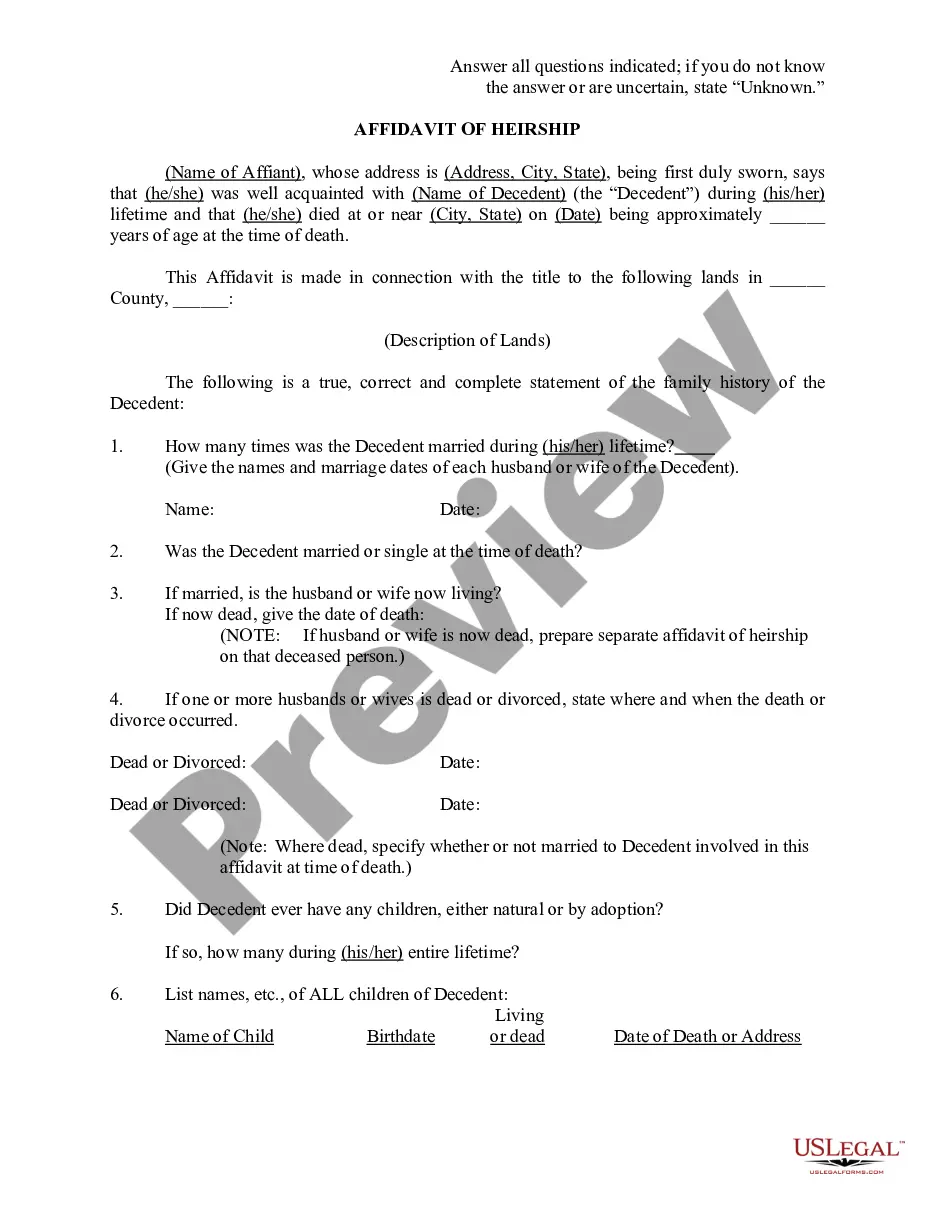
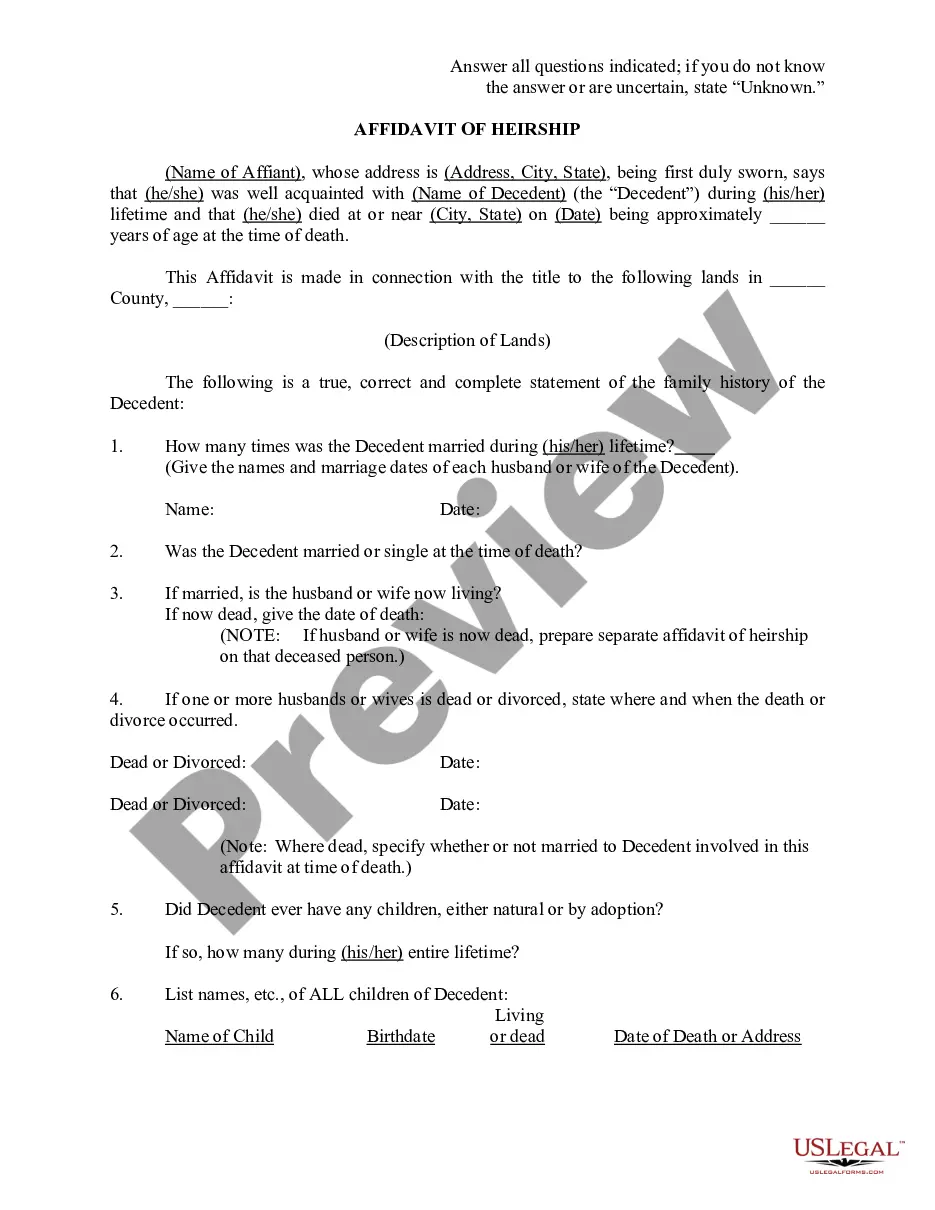
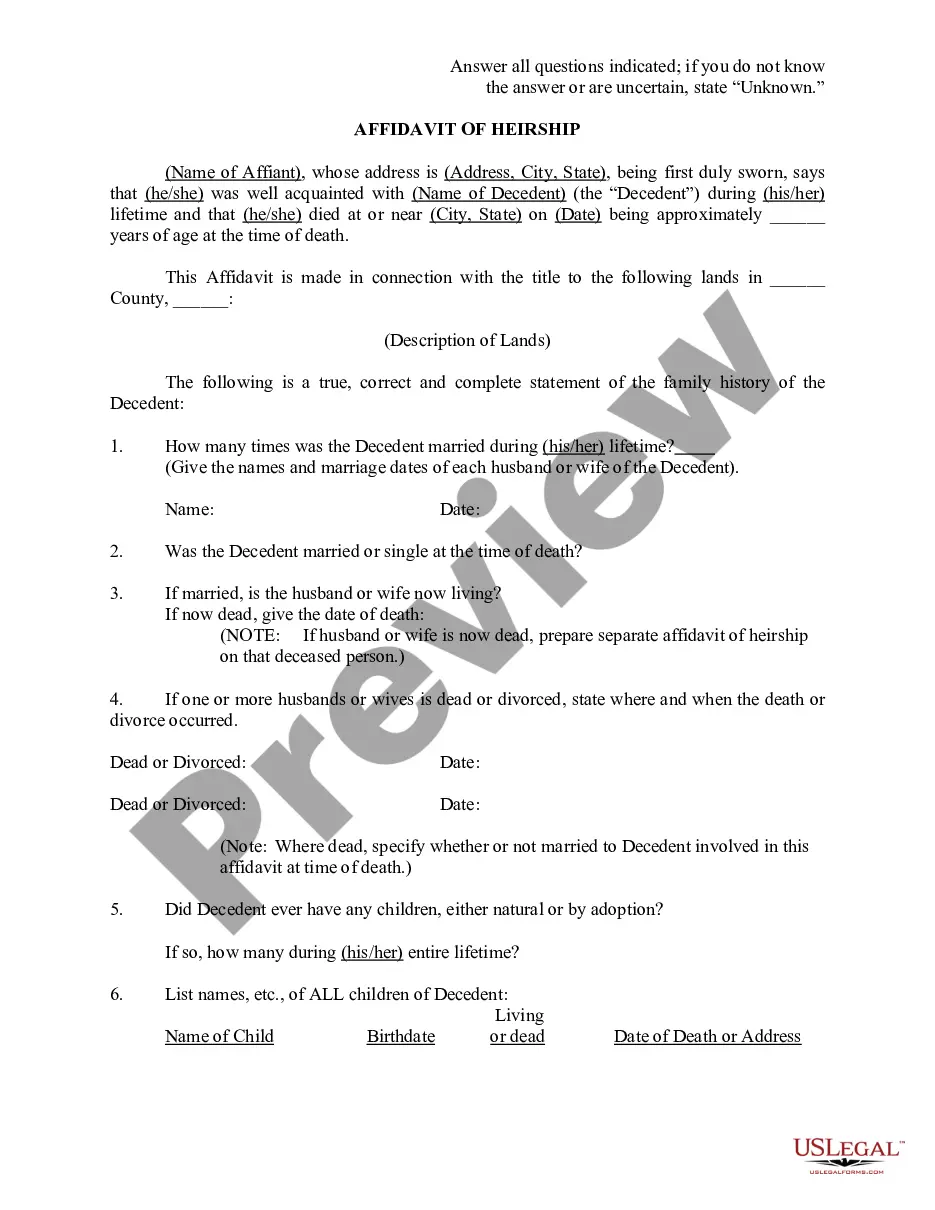
The Affidavit of Heirship - Descent is a legal document used to confirm the heirship of a deceased individual. This affidavit serves as a sworn statement of facts made by a person (the affiant) who has knowledge of the decedent's familial relationships and can attest to their heirs. Unlike a will, which outlines the decedent's wishes regarding asset distribution, this form focuses on establishing the heirs when no will exists or when it is necessary to clarify the heirs' identities for property title transfer purposes.
What’s included in this form
- Name of the affiant and their address
- Name and details of the deceased, including date of death and age at passing
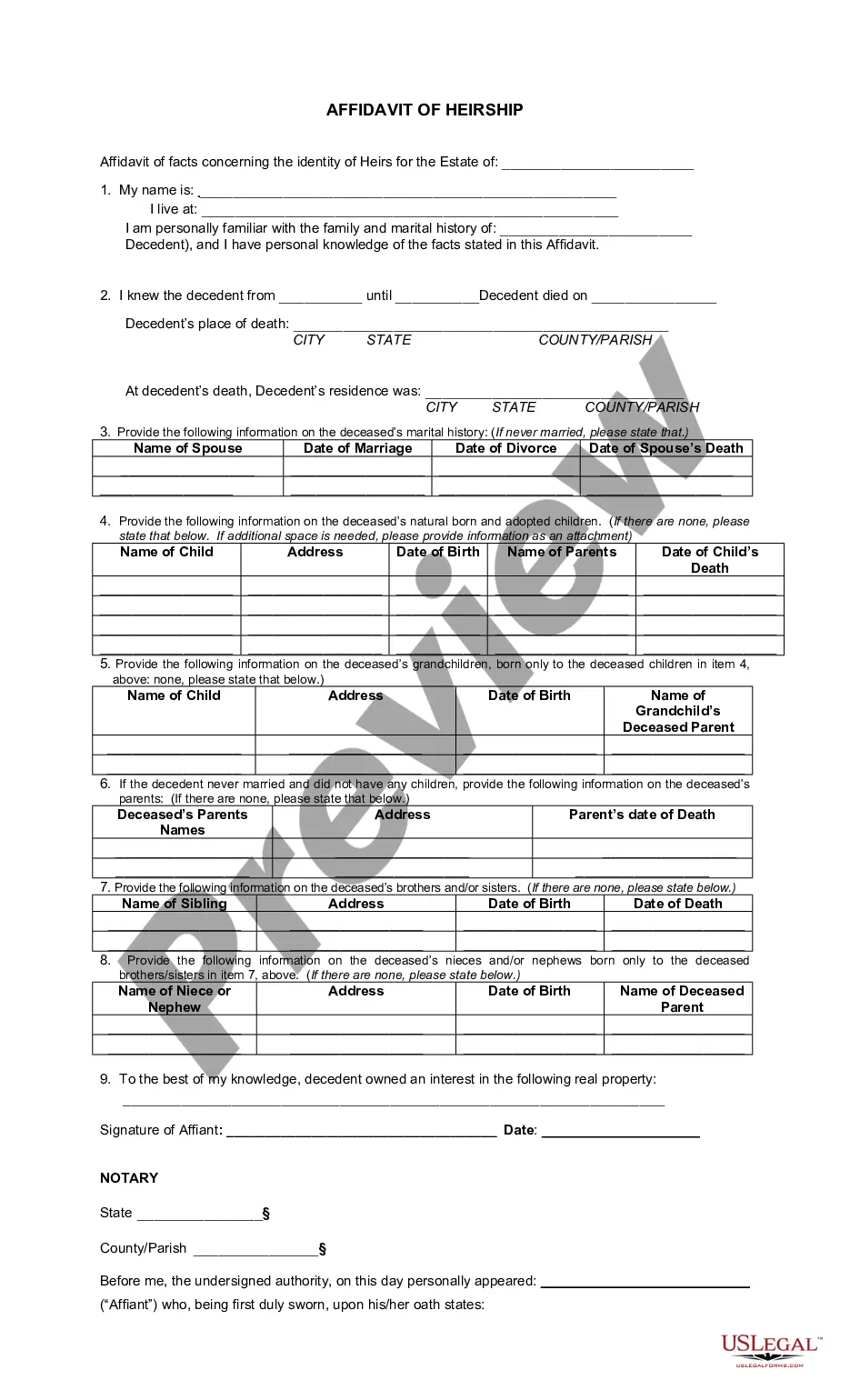
- Information about the decedent's marital history and surviving spouse
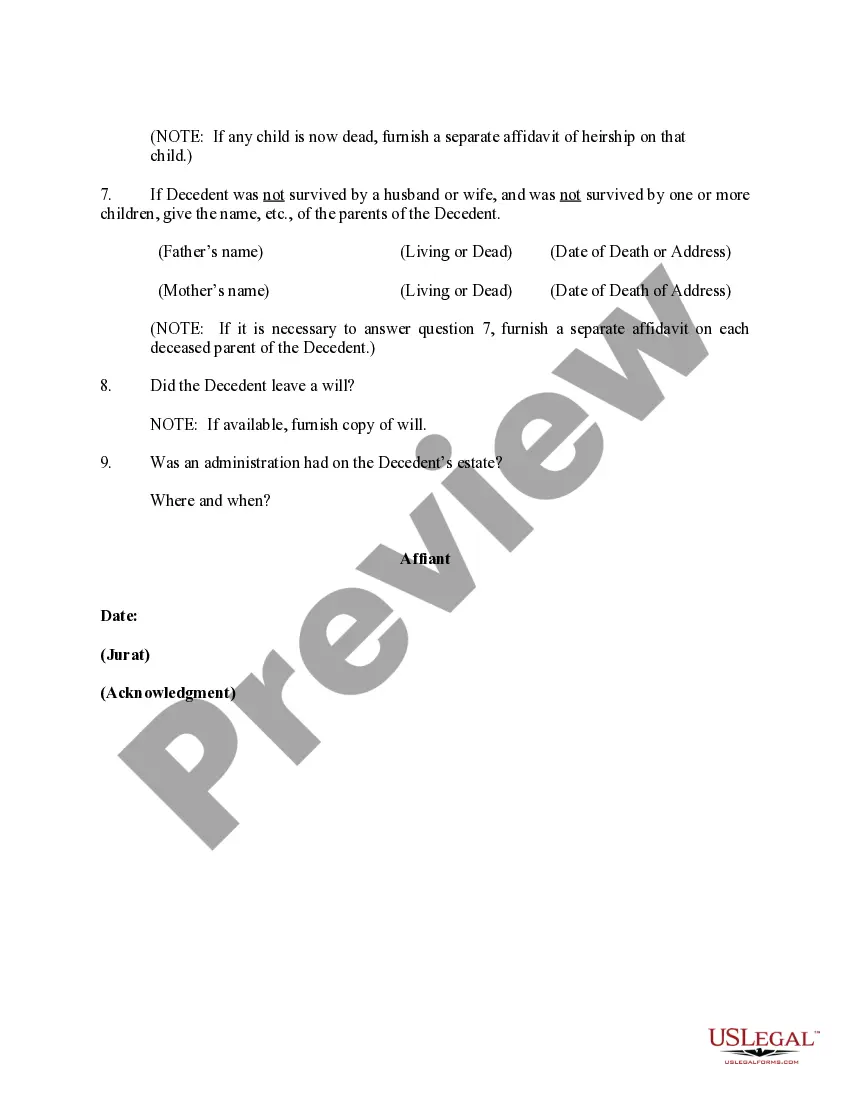
- Details of the decedent's children, both biological and adopted
- Information about the decedent's parents if no spouse or children are available
- Verification of whether the decedent left a will
When to use this document
This form is typically used when an individual passes away without a will or when the heirs of an estate need to be formally identified for purposes of inheriting property. It may be necessary in situations such as transferring real estate, settling a deceased person's financial matters, or when legal claims to an estate are being established. It is particularly relevant when there are questions regarding who is entitled to the decedent's assets.
Who can use this document
- Individuals who were close to a deceased person and can provide accurate information on their family relationships
- Potential heirs seeking to clarify their status in relation to the estate of a deceased individual
- Executors or estate administrators needing to confirm heirship for estate settlement purposes
- Anyone involved in the transfer of property following the death of an individual
How to complete this form
- Identify the affiant by entering their name and address at the beginning of the form.
- Provide details about the deceased, including their full name, date of death, and age at the time of death.
- Document the marital history of the decedent, including the names and marriage dates of spouses.
- List all children of the decedent, indicating whether they are living or deceased, along with their birth dates and any relevant death dates.
- State whether the decedent had a will and include any pertinent details regarding the administration of their estate.
- Sign the affidavit in the presence of a notary public to validate the document.
Notarization guidance
Yes, this form must be notarized to be legally valid. Notarization ensures that the affidavit is acknowledged by a certified official, lending credibility to the statements made. US Legal Forms offers integrated online notarization services, allowing you to complete this step securely and conveniently without the need for travel.
Get your form ready online
Our built-in tools help you complete, sign, share, and store your documents in one place.
Make edits, fill in missing information, and update formatting in US Legal Forms—just like you would in MS Word.
Download a copy, print it, send it by email, or mail it via USPS—whatever works best for your next step.
Sign and collect signatures with our SignNow integration. Send to multiple recipients, set reminders, and more. Go Premium to unlock E-Sign.
If this form requires notarization, complete it online through a secure video call—no need to meet a notary in person or wait for an appointment.
We protect your documents and personal data by following strict security and privacy standards.

Make edits, fill in missing information, and update formatting in US Legal Forms—just like you would in MS Word.

Download a copy, print it, send it by email, or mail it via USPS—whatever works best for your next step.

Sign and collect signatures with our SignNow integration. Send to multiple recipients, set reminders, and more. Go Premium to unlock E-Sign.

If this form requires notarization, complete it online through a secure video call—no need to meet a notary in person or wait for an appointment.

We protect your documents and personal data by following strict security and privacy standards.
Common mistakes to avoid
- Failing to collect accurate and complete information about the decedent's family relationships.
- Omitting details about previous marriages or children, which can lead to disputes among heirs.
- Not obtaining the necessary notarization for the affidavit.
- Forgetting to include all required supporting documents, such as a copy of the will if one exists.
Benefits of completing this form online
- Convenience of downloading the form from home at any time.
- Editability allows users to fill out the form at their own pace.
- Access to templates drafted by licensed attorneys, ensuring legal validity.
- Easy to store and share electronically with relevant parties.
Main things to remember
- The Affidavit of Heirship - Descent is essential for establishing heirs without a will.
- Accurate information gathering is crucial to avoid disputes among heirs.
- Notarization is required for the affidavit to be legally recognized.
- This form helps facilitate the transfer of property to rightful heirs.
Looking for another form?

Form popularity
FAQ
The Affidavit of Heirship - Descent is a sworn statement by someone with knowledge of the decedent’s family that identifies the decedent’s rightful heirs. It’s used when there is no valid will or to confirm heirs for property title transfers and estate settlement, helping heirs prove their status and enable transfer of real estate or assets.
A typical example includes the affiant’s name and address, the decedent’s name and death date, details about the surviving spouse and children, whether the decedent had parents if needed, and a statement that the decedent left no will or that a will was found.
The affiant, a person with knowledge of the decedent’s family relationships (often a relative or trusted associate), prepares the document, listing the affiant’s contact details, the decedent’s information, and the heirs’ details such as spouse and children.
Yes, the Affidavit of Heirship - Descent can be prepared without a lawyer, but accuracy is crucial. Notarization or witnesses may be required, and consulting an attorney is advisable if family history is complex or if the document will be used to transfer real estate.
To obtain the Affidavit of Heirship - Descent, download the form, fill in the affiant’s details, the decedent’s name and death, marital history, surviving children, and whether a will exists, then have it notarized and file as required to establish heirs for title transfer.
This form specifically handles descent and identification of heirs for property transfers when there is no will, emphasizing spouse and children details, and including a verification of whether the decedent left a will, which may not be present in a generic heirship affidavit.