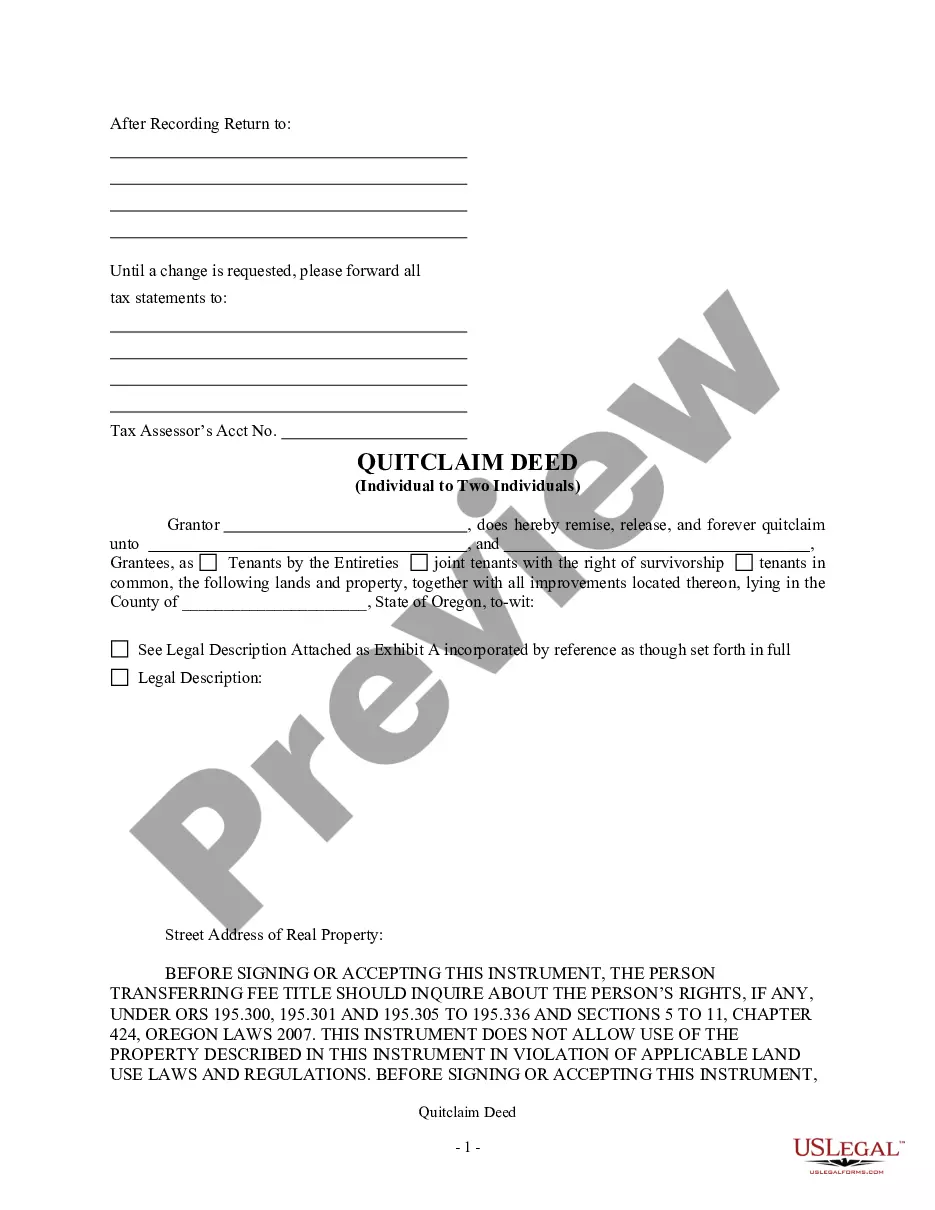
Affidavit of Heirship for Small Estates
Overview of this form
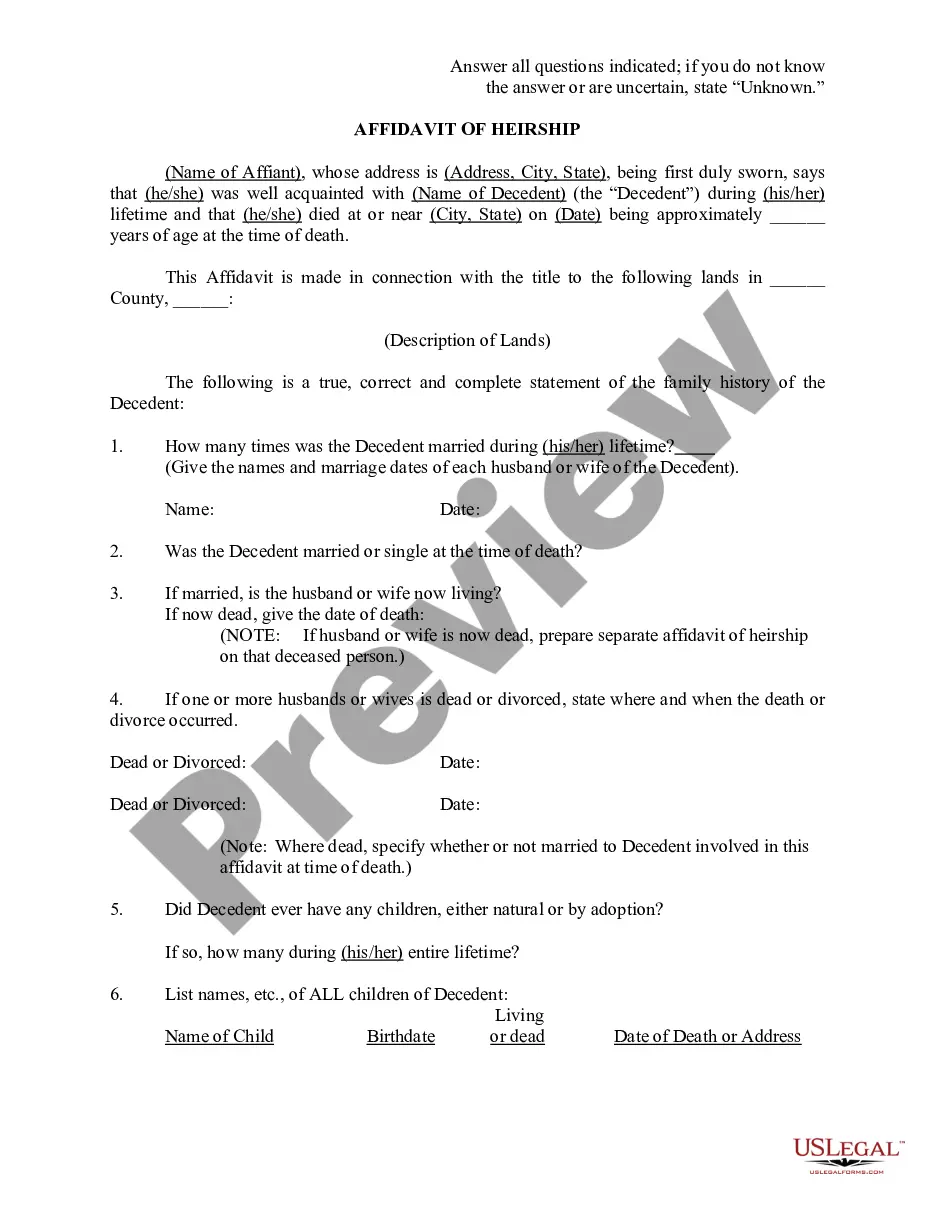
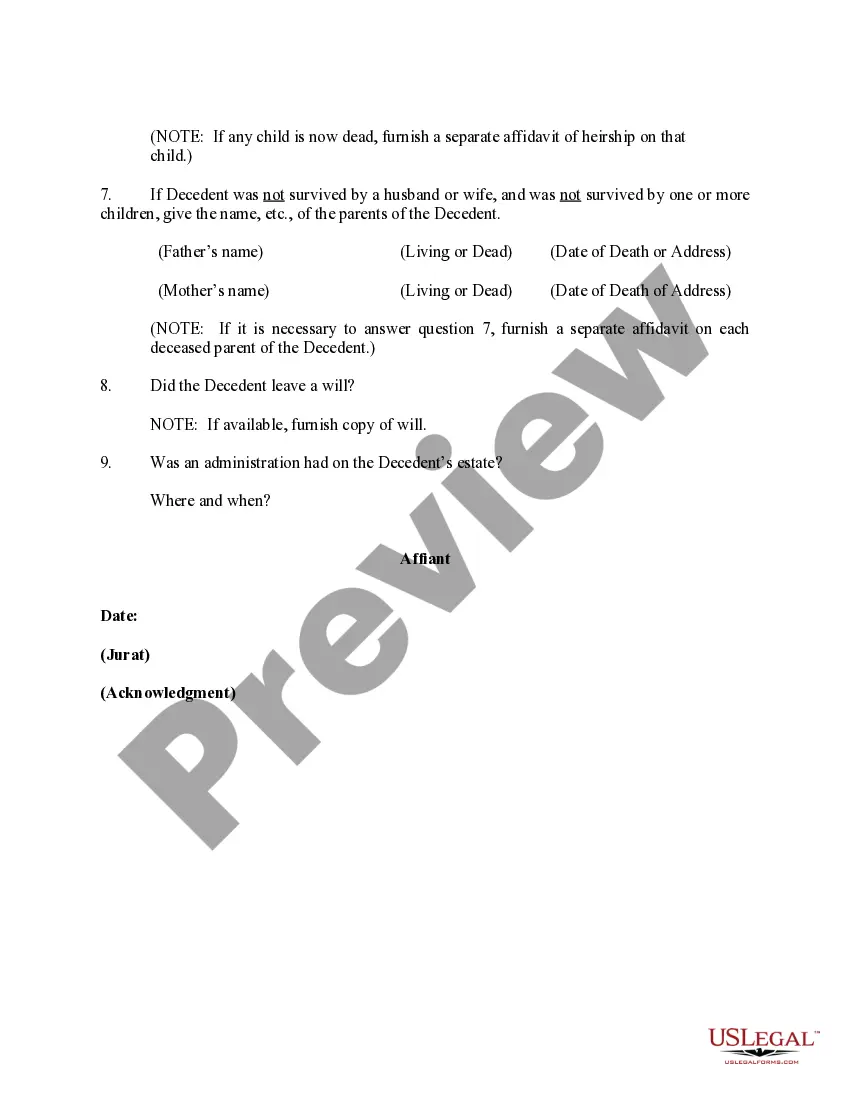
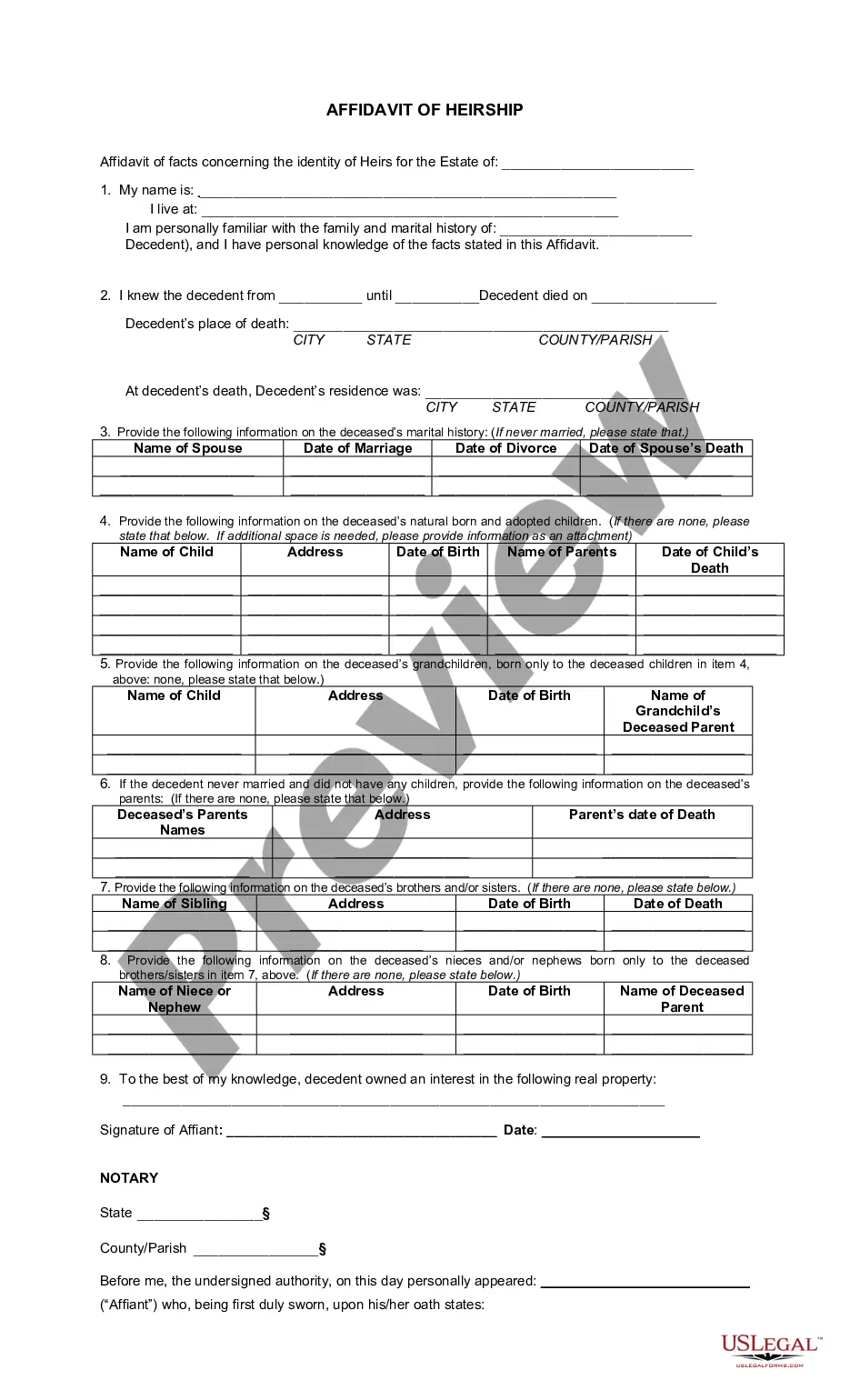
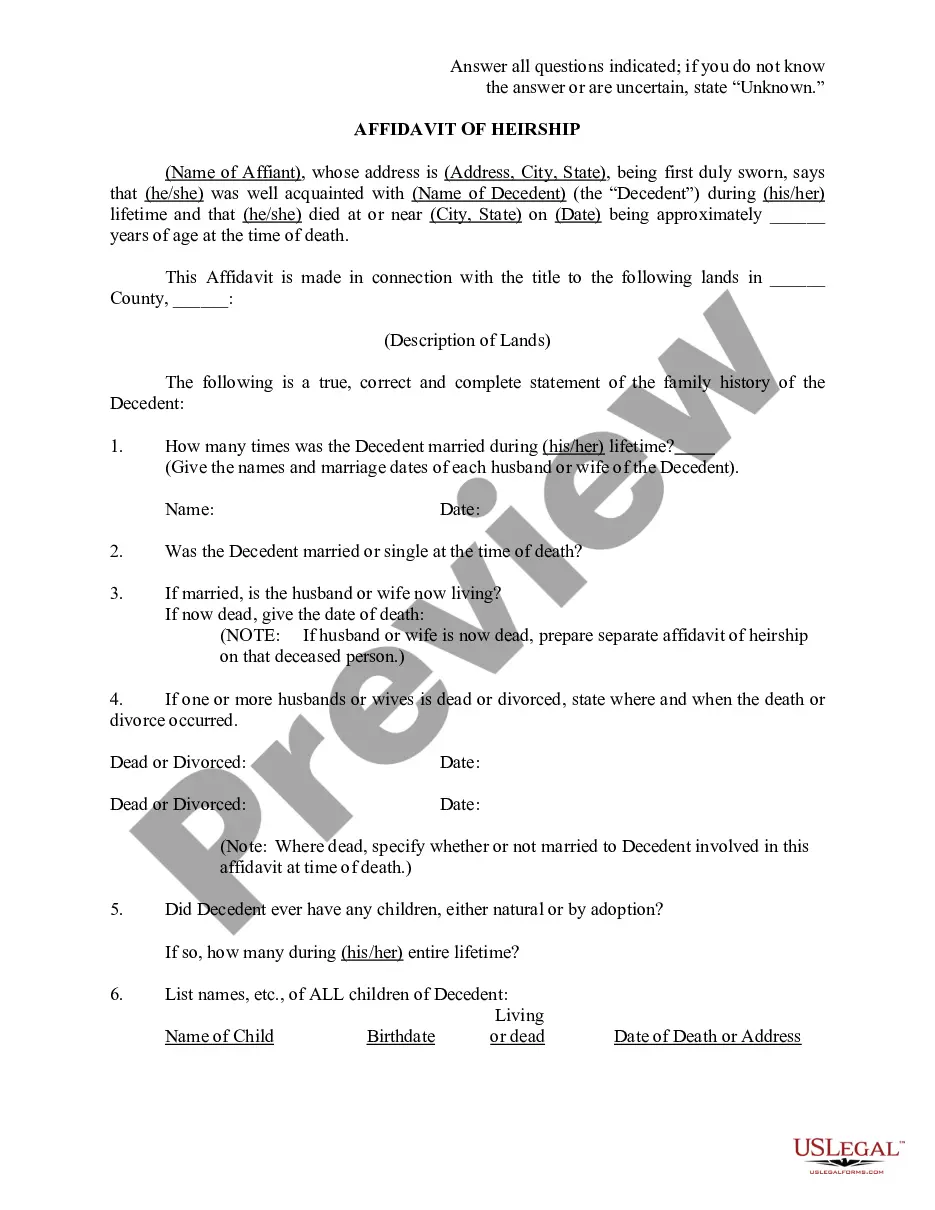
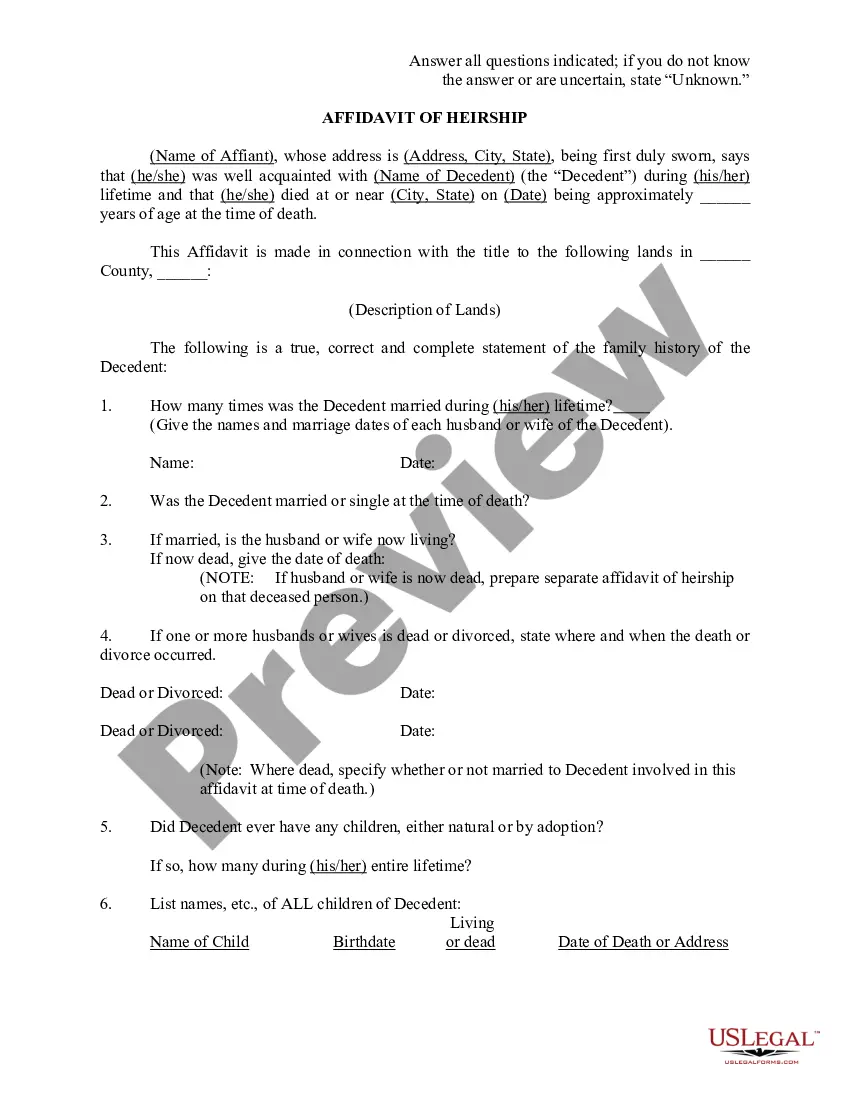
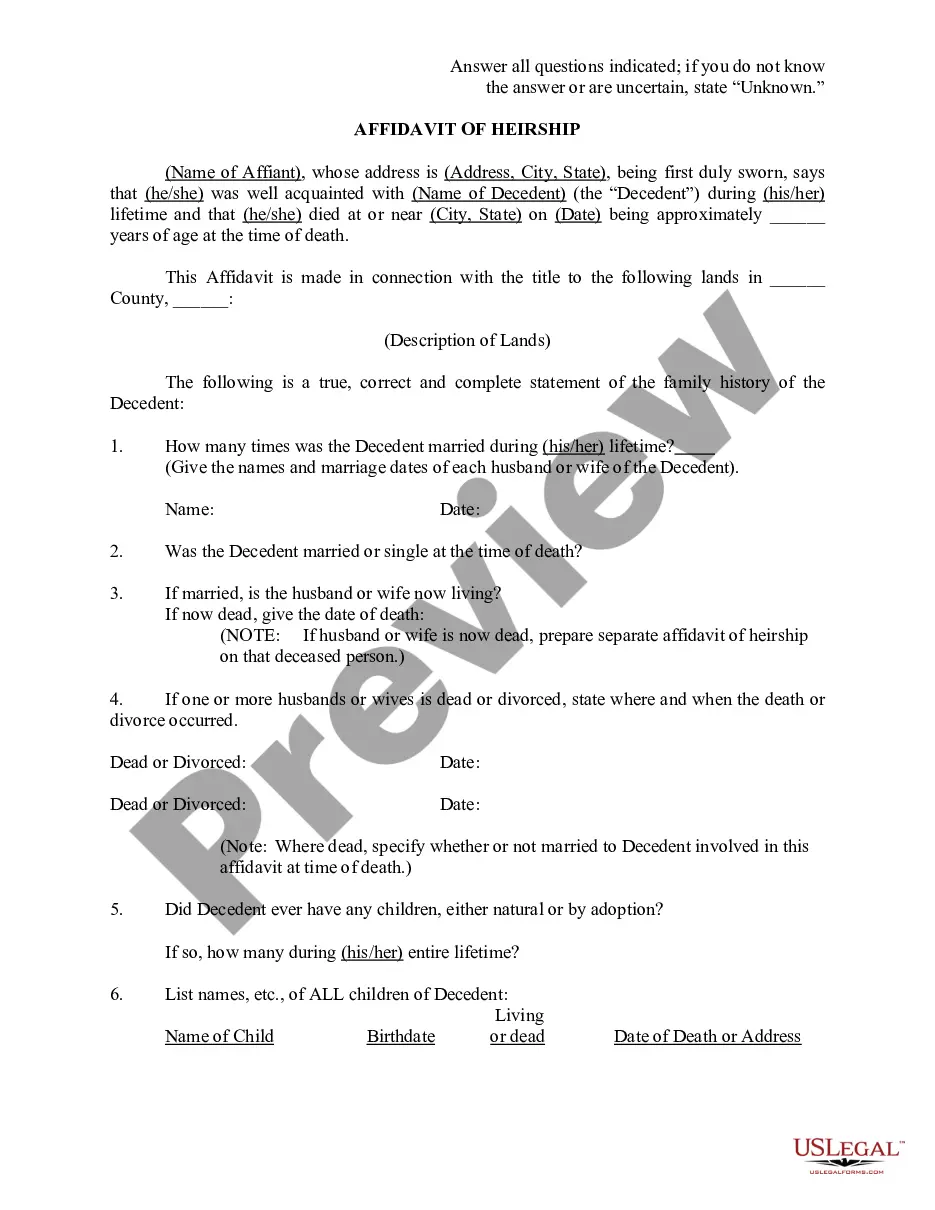
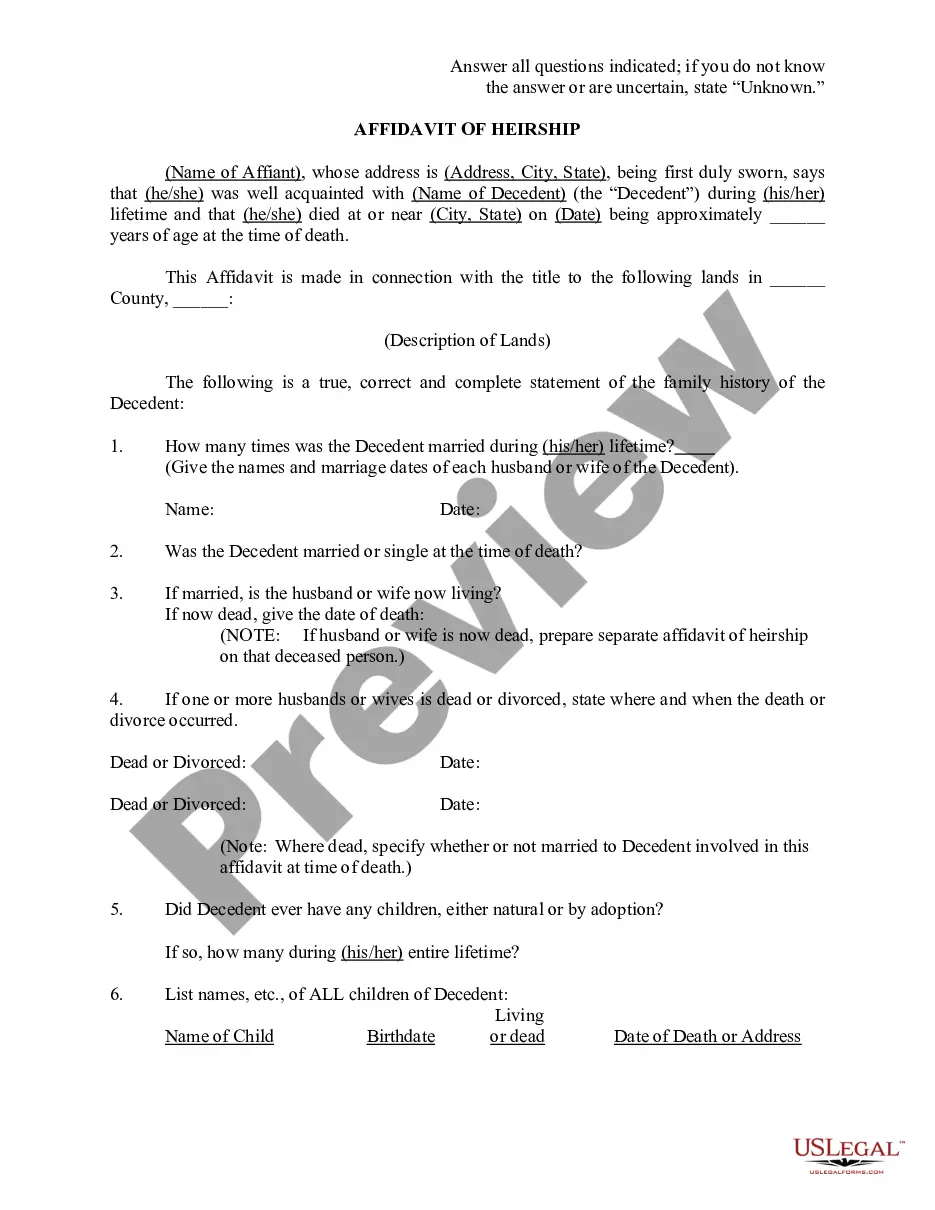
The Affidavit of Heirship for Small Estates is a legal document used to establish the heirs of a deceased individual, particularly when the estate's value falls below a certain threshold. This form acts as a sworn statement, detailing the family history of the decedent and confirming the identities of the heirs. It is distinct from a will or trust, as it is used primarily in situations where no formal probate proceedings are necessary for small estates.
What’s included in this form
- Affiant's details including name and address.
- Information about the decedent including name, date of death, and age.
- Details on the marriage history of the decedent.
- Listing of the decedent's children and their status (living or deceased).
- Information about the decedent's parents if there are no surviving spouse or children.
- Confirmation regarding the existence of a will and any estate administration.
When to use this form
This form is typically used when a person has passed away, and their estate qualifies as a small estate under state law. It is particularly useful when there is no will, or when the assets are minimal, and heirs need legal acknowledgment of their inheritance. Use this form to clarify heirship during property transfers, bank account access, or any other situations requiring proof of who inherits the deceased's estate.
Who can use this document
- Individuals who need to affirm their status as heirs of a deceased person.
- Family members or close friends of the decedent who have knowledge of the family history.
- Those handling a small estate without legal representation or formal probate proceedings.
Steps to complete this form
- Enter the affiant's name and address at the top of the form.
- Provide the decedent's name, date of death, and age at the time of passing.
- Detail the marriage history of the decedent, including names and dates.
- List all children of the decedent, indicating if they are living or deceased.
- If applicable, include the names and status of the decedent's parents.
- Complete the final sections regarding the existence of a will and any estate administration.
Notarization guidance
Yes, this form must be notarized to be legally valid. A notary public must witness the signing of the affidavit, confirming the identities of the signers and ensuring the document's authenticity. US Legal Forms offers integrated online notarization services, making it easy and convenient to complete this process securely.
Get your form ready online
Our built-in tools help you complete, sign, share, and store your documents in one place.
Make edits, fill in missing information, and update formatting in US Legal Forms—just like you would in MS Word.
Download a copy, print it, send it by email, or mail it via USPS—whatever works best for your next step.
Sign and collect signatures with our SignNow integration. Send to multiple recipients, set reminders, and more. Go Premium to unlock E-Sign.
If this form requires notarization, complete it online through a secure video call—no need to meet a notary in person or wait for an appointment.
We protect your documents and personal data by following strict security and privacy standards.

Make edits, fill in missing information, and update formatting in US Legal Forms—just like you would in MS Word.

Download a copy, print it, send it by email, or mail it via USPS—whatever works best for your next step.

Sign and collect signatures with our SignNow integration. Send to multiple recipients, set reminders, and more. Go Premium to unlock E-Sign.

If this form requires notarization, complete it online through a secure video call—no need to meet a notary in person or wait for an appointment.

We protect your documents and personal data by following strict security and privacy standards.
Common mistakes to avoid
- Failing to provide accurate information about the decedent's marital and familial status.
- Not including details on all children, especially stepchildren or adopted children.
- Omitting to notarize the form when required under certain state laws.
Advantages of online completion
- Convenience of downloading the form any time from your home.
- Editability allows you to complete the form at your own pace.
- Access to templates drafted by licensed attorneys ensures reliability.
Summary of main points
- An Affidavit of Heirship for Small Estates establishes legal inheritance without a complex probate process.
- It is essential to include detailed and accurate information about the decedent's family.
- Provide notarization for the form to ensure its legitimacy.
Looking for another form?
Form popularity
FAQ
When you use a small estate affidavit , you have to pay the decedent's bills before paying money to anyone else. For example, the decedent might have owed money to a credit card company when they died. If you use the small estate affidavit, you must give money from the estate to pay the credit card company.
A fee of $15 for the first page and $4 for each additional page is common. Ask if you can file the two affidavits of heirship as one document. Some counties let you file the two affidavits of heirship as one document if the decedent and property descriptions are the same.
To be able to file a small estate affidavit in Texas for a loved one, when no will was executed, you must be a person who would inherit under Texas intestacy law (this is generally the spouse and children, or other close relatives if there are no spouse or children).
The Illinois small estate affidavit provides a streamlined way for an heir-at-law of a decedent to gather and distribute the assets of the estate of a person who died, provided that no other petition to open an estate in probate court has been filed and that the assets of the person who died do not exceed $100,000.
In most states, however, there is the option to use a small estate affidavit when the assets of the estate are under a certain dollar amount, which varies by state. An attorney is not required to file a small estate affidavit, although it may be helpful to consult with one prior to filing the small estate affidavit.
A fee of $15 for the first page and $4 for each additional page is common. Ask if you can file the two affidavits of heirship as one document. Some counties let you file the two affidavits of heirship as one document if the decedent and property descriptions are the same.
Guadalupe County Small Estate Affidavit Checklist Individuals then fill out a form without reading the statute and without understanding Texas intestacy law. They pay a $261 filing fee and expect approval.
Fortunately, not all property needs to go through this legal process before it passes to your heirs.The quick rule of thumb is probate is not required when the estate is small, or the property is designed to pass outside of probate. It doesn't matter if you leave a will.