Agreement between Creditors and Debtor for Appointment of Receiver
Overview of this form
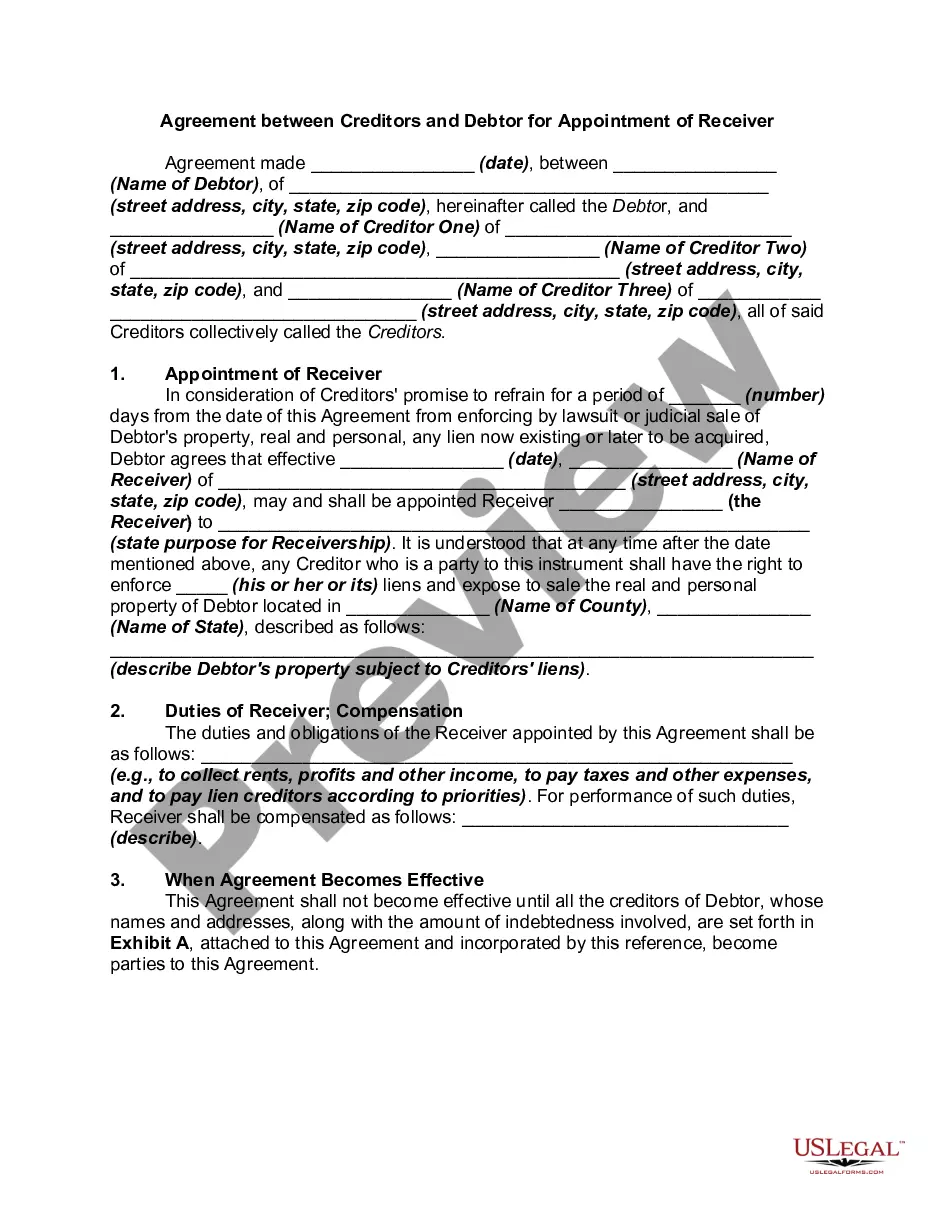
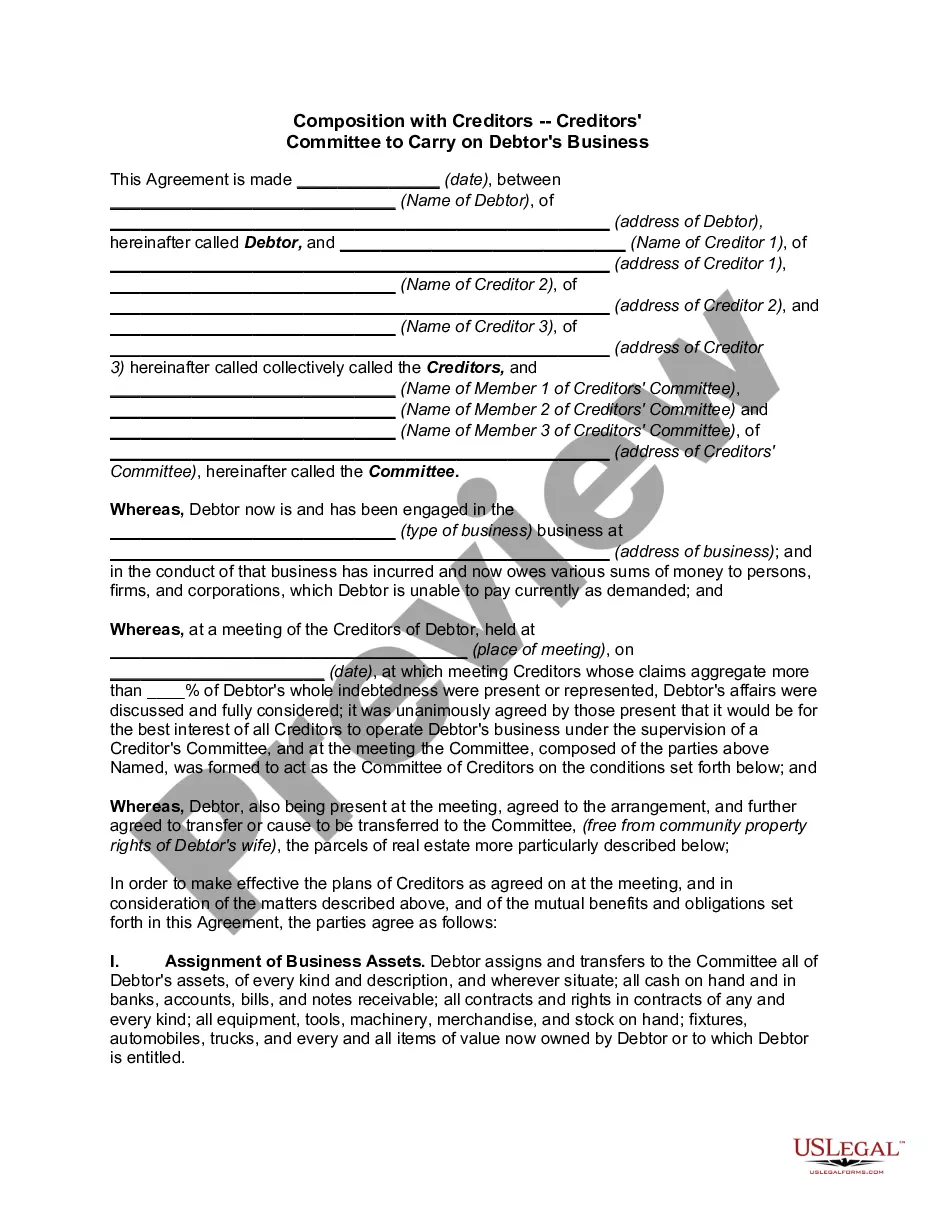
The Agreement between Creditors and Debtor for Appointment of Receiver is a legal document outlining the terms under which a receiver is appointed to manage the property of a debtor facing insolvency or disputes regarding their property. This form enables creditors and the debtor to formally agree on the appointment of a receiver who will take control of the debtor's assets for specified purposes, distinct from other legal agreements or court orders involving receivership.
Main sections of this form
- Date of the agreement and parties involved, including debtor and creditors.
- Appointment of the receiver, including the receiver's name and purpose for their appointment.
- Details about the debtor's property and the rights of creditors during receivership.
- Duties and compensation structure for the appointed receiver.
- Conditions under which the agreement becomes effective, requiring all creditors to be involved.
Situations where this form applies
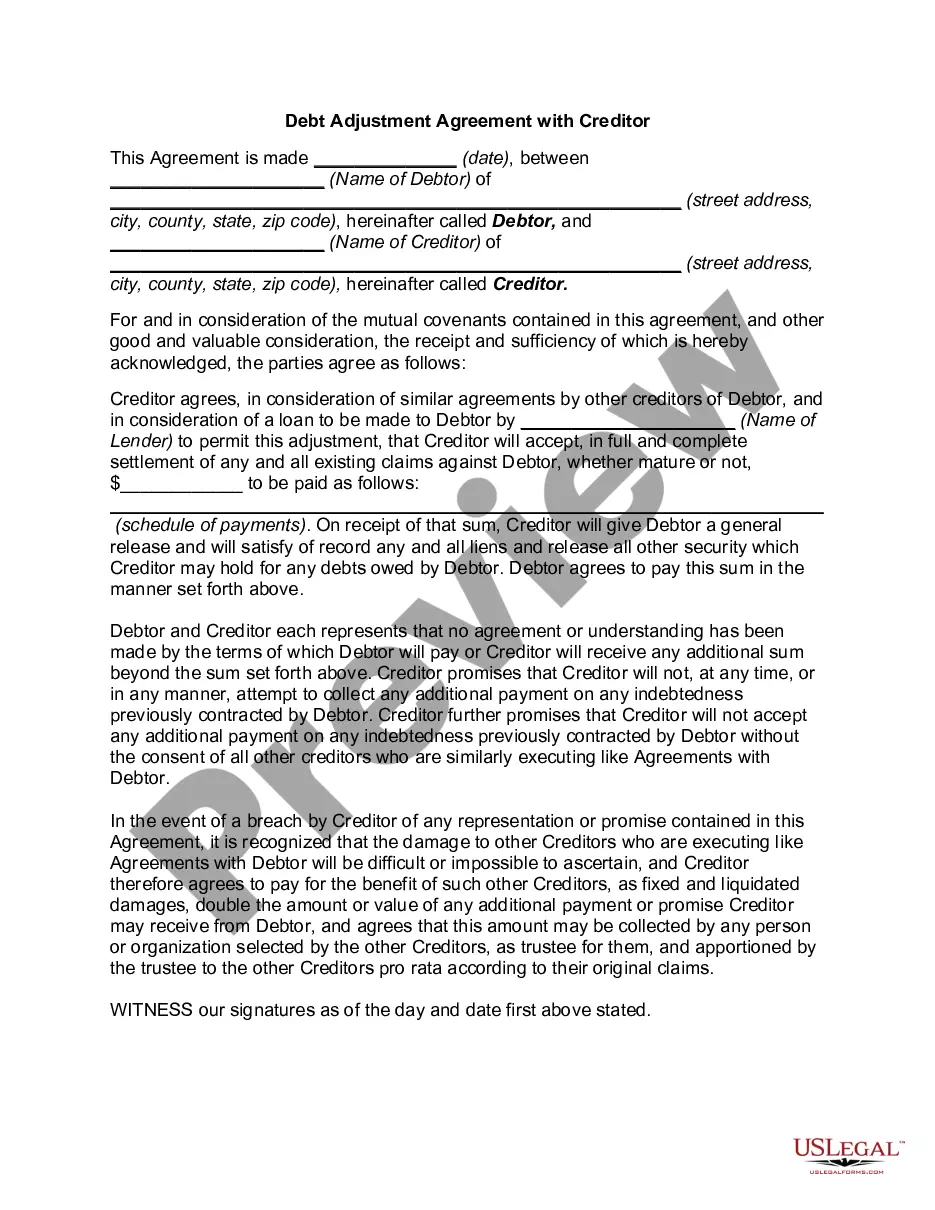
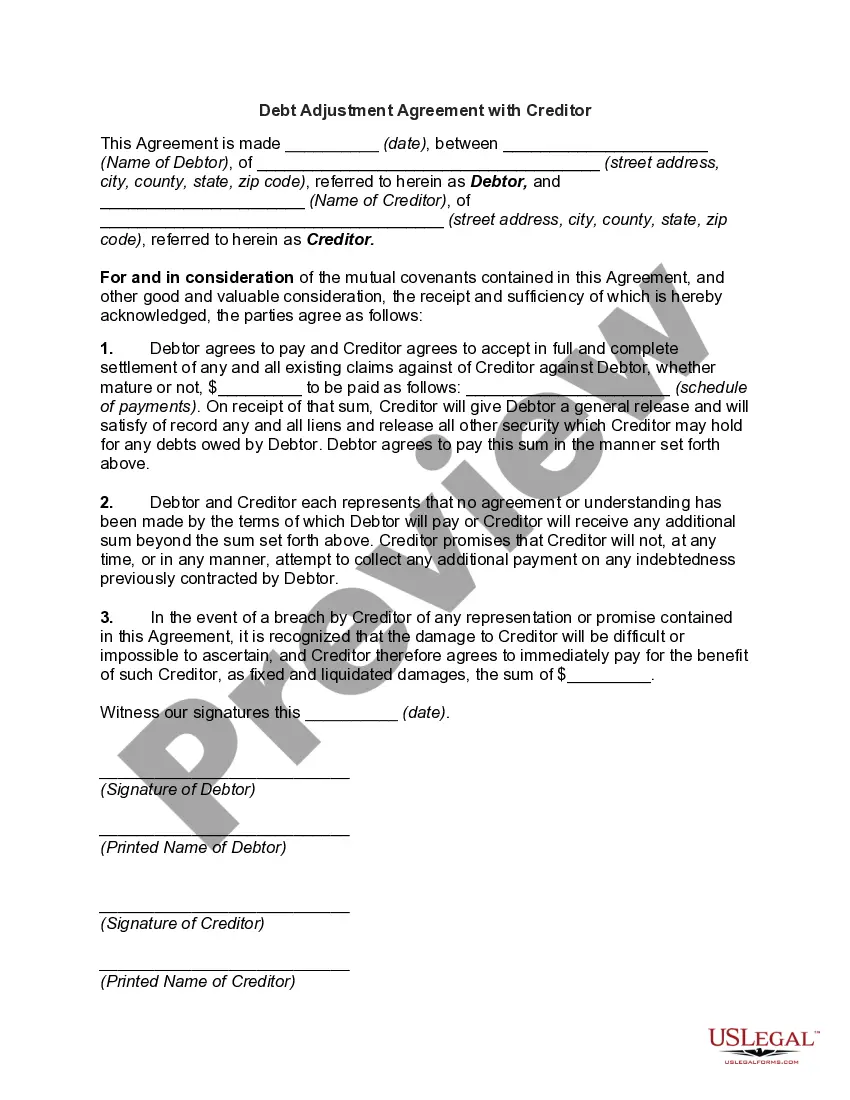
This form is necessary when a debtor is unable to cover their debts, and creditors wish to appoint a receiver to manage the debtor's property. It is used to formalize the agreement to establish a receiver who can handle the debtor's assets, ensuring creditors can recover funds while providing the debtor some structure for managing their debts. Situations may include ongoing disputes over property, insolvency issues, or when the debtor requests assistance in fulfilling obligations to creditors.
Intended users of this form
This agreement should be used by:
- Debtors who are facing financial difficulties and wish to designate a receiver.
- Creditors seeking a formal agreement to manage the debtor's property and assets.
- Attorneys or legal representatives advising clients on managing debts and creditor rights.
How to complete this form
- Identify and enter the full names and addresses of all parties involved, including the debtor and each creditor.
- Specify the date of agreement and the name and address of the appointed receiver.
- Detail the purpose for the receivership clearly, stating what the receiver is expected to manage or oversee.
- Describe the duties of the receiver, including how they will be compensated for their services.
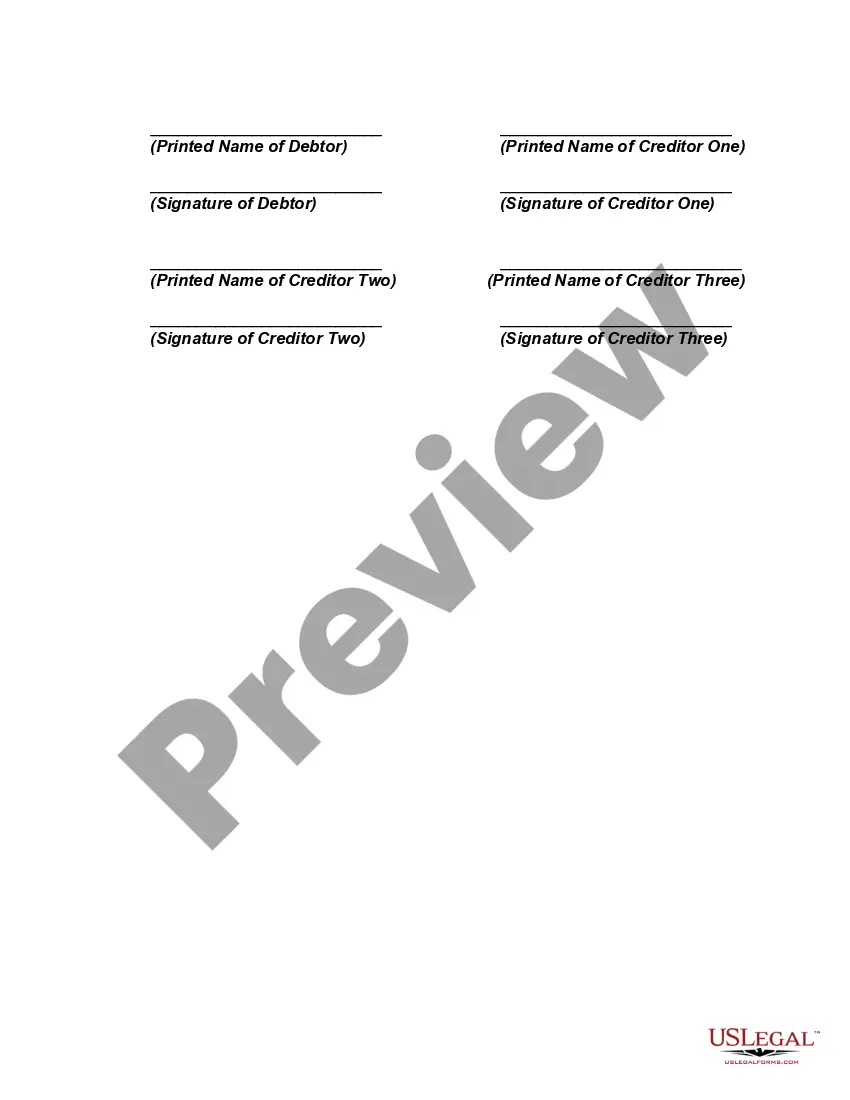
- Ensure all creditors listed in Exhibit A sign the agreement to validate it.
Is notarization required?
This form does not typically require notarization unless specified by local law. However, having it notarized can help verify signatures and enhance its legal enforceability.
Get your form ready online
Our built-in tools help you complete, sign, share, and store your documents in one place.
Make edits, fill in missing information, and update formatting in US Legal Forms—just like you would in MS Word.
Download a copy, print it, send it by email, or mail it via USPS—whatever works best for your next step.
Sign and collect signatures with our SignNow integration. Send to multiple recipients, set reminders, and more. Go Premium to unlock E-Sign.
If this form requires notarization, complete it online through a secure video call—no need to meet a notary in person or wait for an appointment.
We protect your documents and personal data by following strict security and privacy standards.

Make edits, fill in missing information, and update formatting in US Legal Forms—just like you would in MS Word.

Download a copy, print it, send it by email, or mail it via USPS—whatever works best for your next step.

Sign and collect signatures with our SignNow integration. Send to multiple recipients, set reminders, and more. Go Premium to unlock E-Sign.

If this form requires notarization, complete it online through a secure video call—no need to meet a notary in person or wait for an appointment.

We protect your documents and personal data by following strict security and privacy standards.
Common mistakes
- Failing to include all creditor names and addresses, which can invalidate the agreement.
- Not clearly defining the purpose of the receivership, leading to confusion later.
- The agreement not being signed by all parties, which can render the appointment void.
Benefits of using this form online
- Convenience of accessing and filling out the form from anywhere at any time.
- Editability allows users to customize the form easily to fit their unique situation.
- Reliability and assurance that the document has been drafted with legal accuracy.
Legal use & context
- This agreement is legally binding once all parties have signed, provided the conditions for effectiveness are met.
- The receiver acts on behalf of the creditors to manage and preserve the debtor's assets.
- Failure to follow stipulated procedures could affect enforceability and result in legal disputes.
Summary of main points
- The Agreement between Creditors and Debtor for Appointment of Receiver allows for a structured approach to managing a debtor's assets.
- All parties, especially creditors, must agree and sign the document for it to be effective.
- Understand local laws that may influence the formâs terms and requirements.
Looking for another form?
Form popularity
FAQ
A receivership is a process by which a creditor (usually a financial institution), who holds a charge on the assets of a company as security for its debts, appoints a Receiver to recover the money due to it.Typically, the Receiver will then realise those assets and pay off the debenture holder.
Unsecured creditors have no role in setting or approving the receiver's fees. ASIC, a liquidator, voluntary administrator or deed administrator of the company may apply to the court for the receiver's remuneration to be reviewed.
A court appoints a receiver to protect property controlled by a person sued in a court case. The SEC typically recommends the appointment of a receiver in cases in which the SEC fears a company or an individual may dissipate or waste corporate property and assets.
(b) A receiver may be appointed by the court in which an action or proceeding is pending, or by a judge thereof, in the following cases: (1) In an action by a vendor to vacate a fraudulent purchase of property, or by a creditor to subject any property or fund to the creditor's claim, or between partners or others
How is an LPA receiver appointed? A Law of Property Act receiver is appointed by the holder of a fixed charge to protect and potentially sell the secured asset so their outstanding debt can be repaid. This appointment can be made when a mortgage payment is overdue.
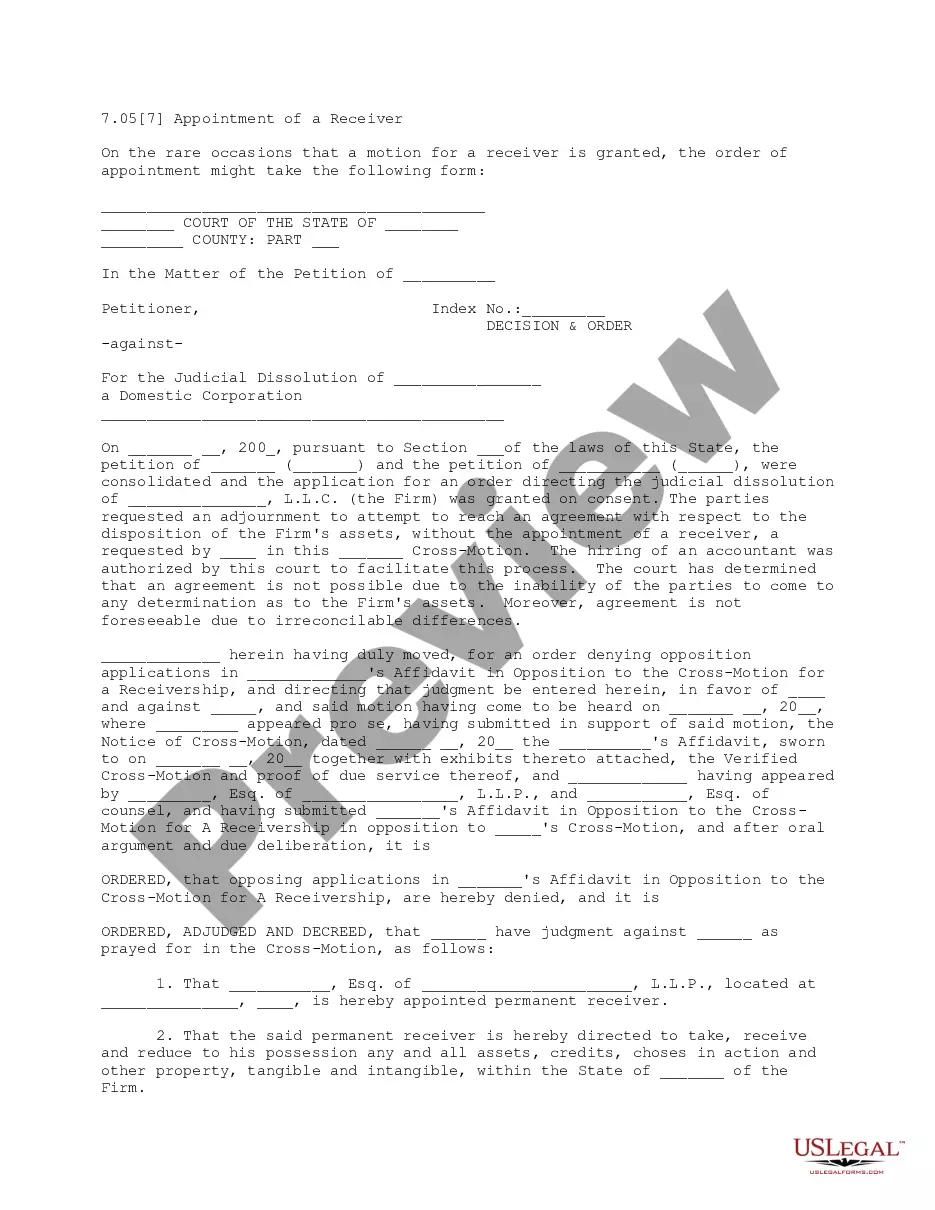
A Receiver is an officer appointed by the Court who is given custody of specified assets with direction to liquidate them and distribute the proceeds. A Court order is typically required to appoint a Receiver, and the terms of the order describe the Receiver's duties and powers.
The powers of a receiver appointed by the court are set out in Rule 272.In practice however a court will often appoint a person registered as an official liquidator. The applicants seeking the appointment of a receiver may nominate a person to act as receiver. This right has long been recognised by the court15.
Yes, according to (Order 40 rule 5), a collector can be appointed as a receiver if the revenue generated from the property is received by the government, the court can appoint a collector as a receiver with his consent if the court thinks that management of such property by collector will promote the interests of those
However, corporate receiverships are the most common form of receivership. They usually arise when a secured creditor appoints a Receiver to a debtor that has defaulted pursuant to the terms of a loan contract. The power to appoint a Receiver is provided for in a security document such as a charge or mortgage.