Joint Drafting Clauses: Contract for Real Property
Understanding this form
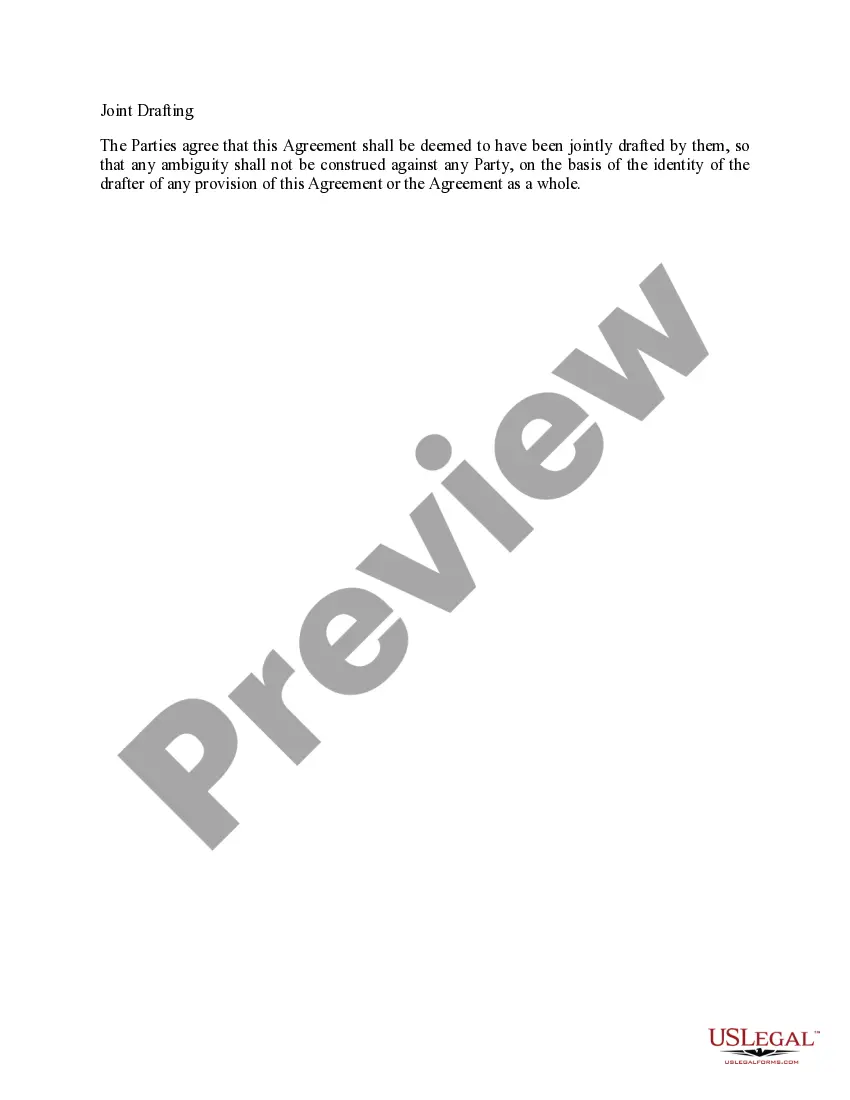
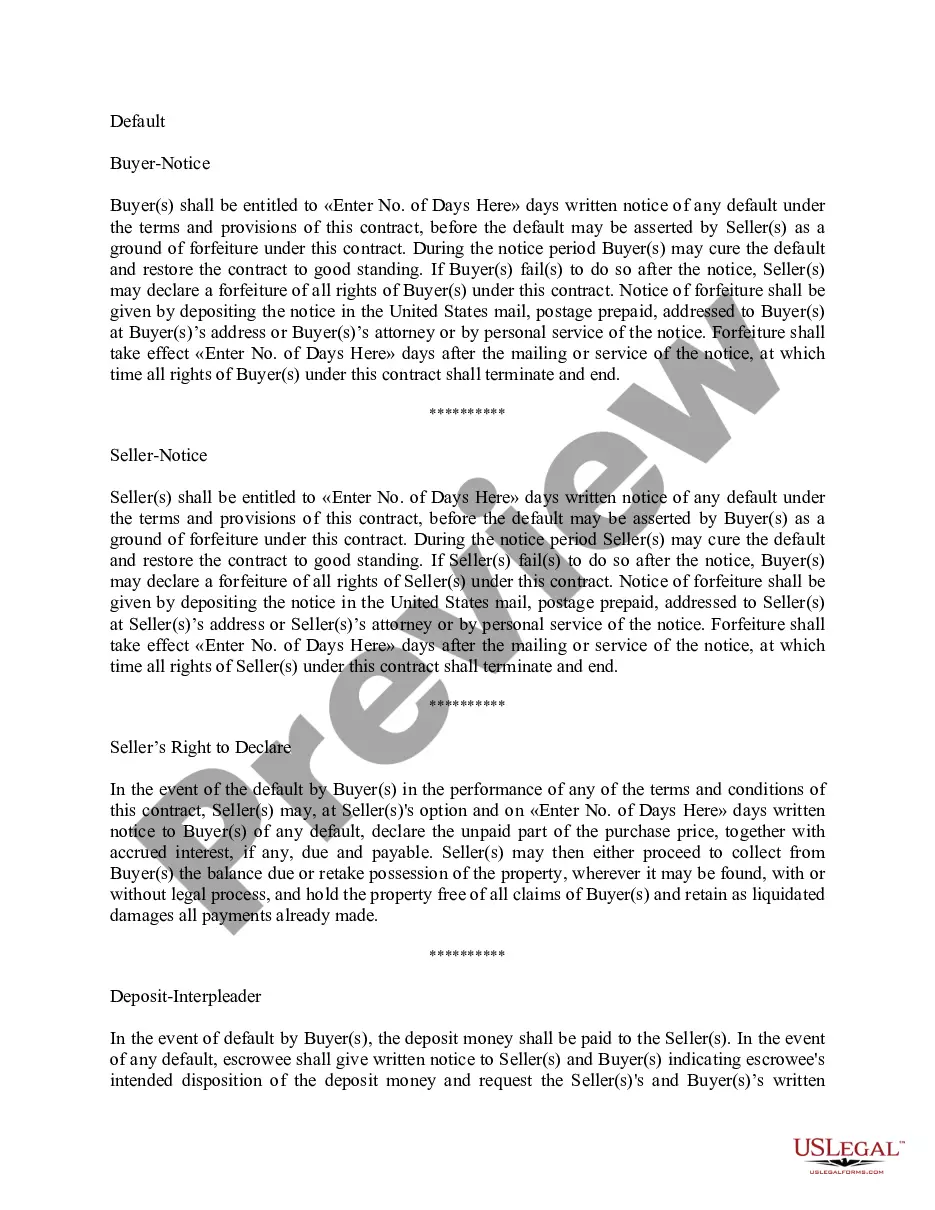
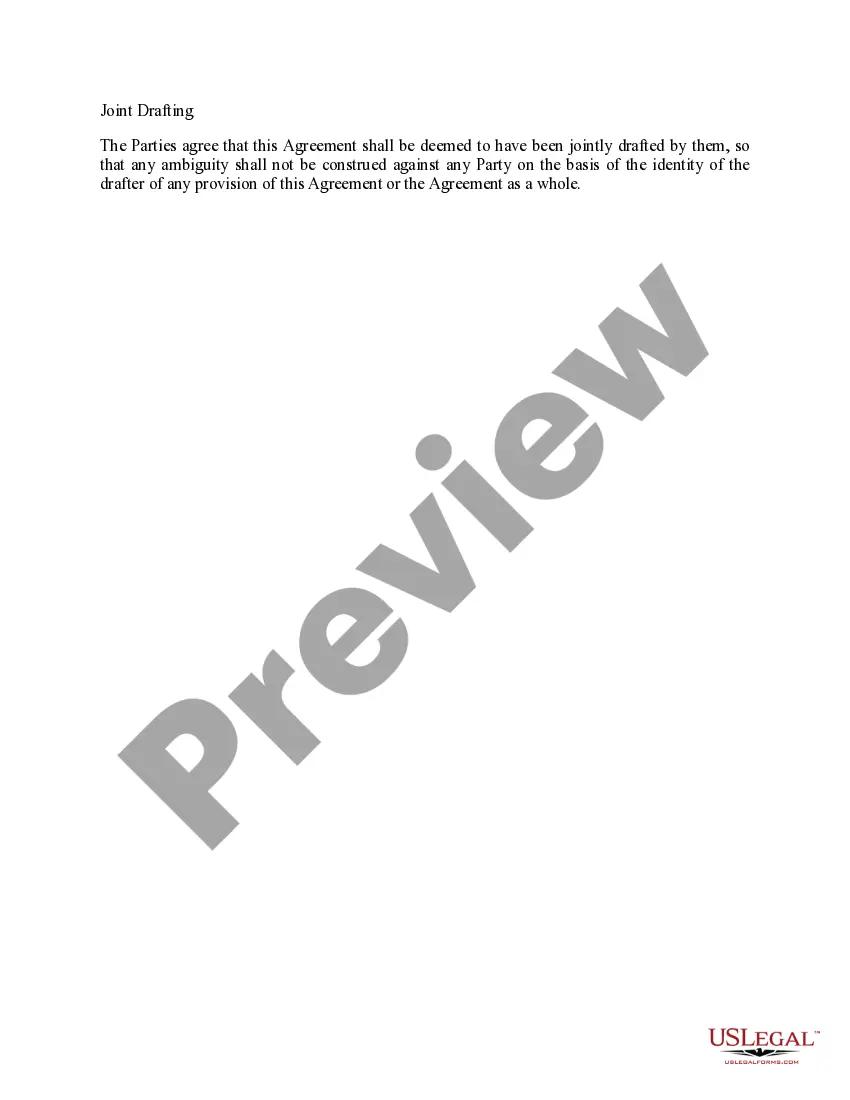
The Joint Drafting Clauses: Contract for Real Property is a legal document that outlines the conditions under which a contract for real property is enforceable. This form serves to clarify that the contract has been jointly drafted by all parties, ensuring that no ambiguity can be construed against any party based on who drafted a specific provision. By including this joint drafting clause, parties can minimize disputes and ensure that the contract's terms are interpreted fairly.
What’s included in this form
- Agreement Statement: Declares that the contract is jointly drafted to prevent disputes regarding the interpretation of clauses.
- Definition of Parties: Identifies all parties involved in the contract.
- Ambiguity Clause: States that if there is any ambiguity in the contract language, it will not be interpreted against one party solely because they drafted it.
When to use this document
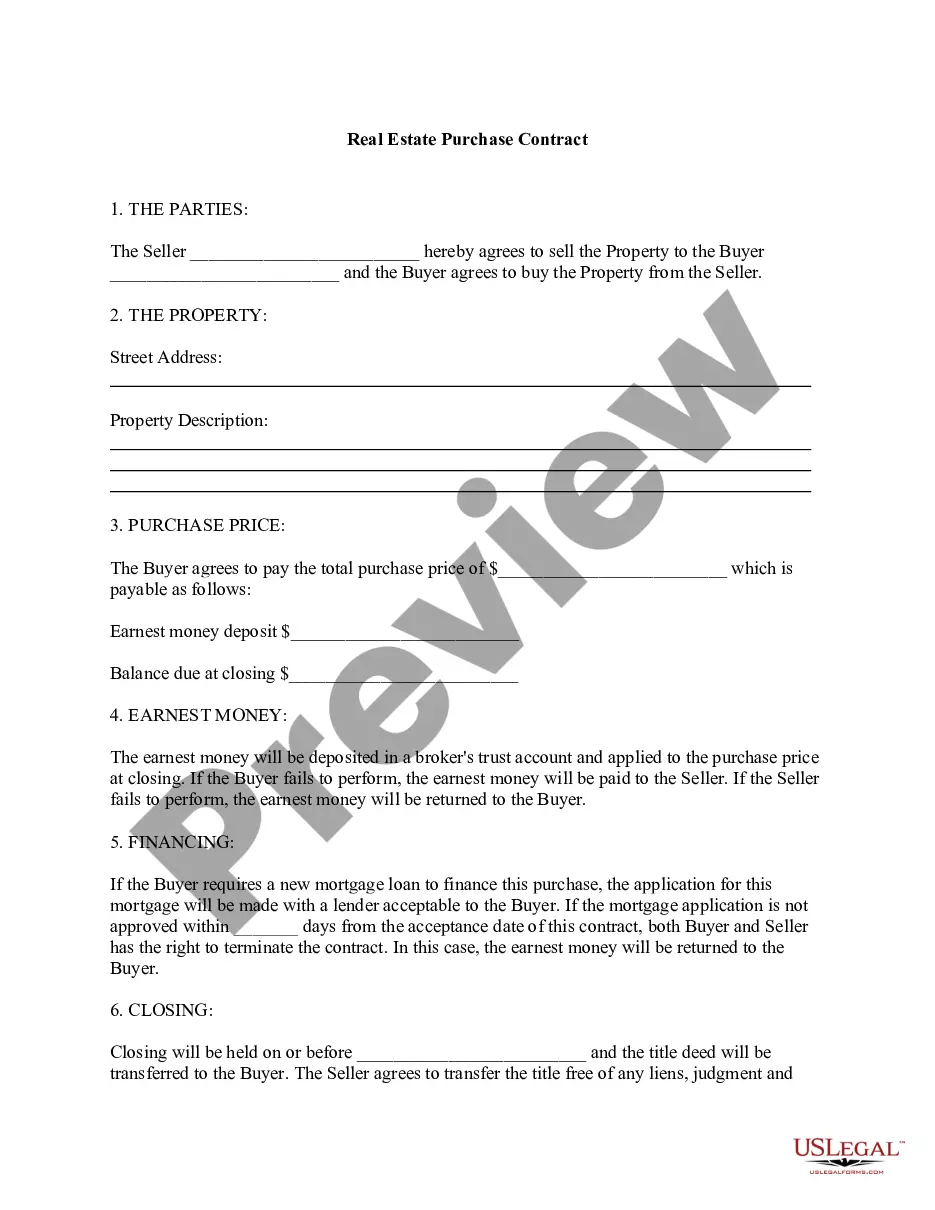
This form is useful in situations where multiple parties are entering into a contract for the sale, lease, or transfer of real property. It is typically employed when there is a need to clarify each party's intentions and to avoid future disputes regarding contract interpretation. By using this form, parties can create a clear understanding that the contract is a collaborative effort, thereby enhancing its enforceability in legal settings.
Who should use this form
- Real estate buyers and sellers looking to enter into a property contract.
- Lessors and lessees involved in leasing agreements for real property.
- Attorneys and legal representatives drafting contracts related to real estate transactions.
How to complete this form
- Identify the parties: Clearly state the names and addresses of all parties involved in the contract.
- Specify the property: Describe the real property that is the subject of the contract, including any relevant details.
- Include the joint drafting clause: Insert the agreed-upon wording that establishes the intent of joint drafting.
- Review for clarity: Ensure that all terms and conditions are clearly articulated and free of ambiguity.
- Sign the agreement: Have all parties date and sign the document to indicate their consent.
Does this document require notarization?
This form does not typically require notarization unless specified by local law. It's important to check your state's regulations to confirm if notarization is necessary for the enforceability of your contract.
Get your form ready online
Our built-in tools help you complete, sign, share, and store your documents in one place.
Make edits, fill in missing information, and update formatting in US Legal Forms—just like you would in MS Word.
Download a copy, print it, send it by email, or mail it via USPS—whatever works best for your next step.
Sign and collect signatures with our SignNow integration. Send to multiple recipients, set reminders, and more. Go Premium to unlock E-Sign.
If this form requires notarization, complete it online through a secure video call—no need to meet a notary in person or wait for an appointment.
We protect your documents and personal data by following strict security and privacy standards.

Make edits, fill in missing information, and update formatting in US Legal Forms—just like you would in MS Word.

Download a copy, print it, send it by email, or mail it via USPS—whatever works best for your next step.

Sign and collect signatures with our SignNow integration. Send to multiple recipients, set reminders, and more. Go Premium to unlock E-Sign.

If this form requires notarization, complete it online through a secure video call—no need to meet a notary in person or wait for an appointment.

We protect your documents and personal data by following strict security and privacy standards.
Avoid these common issues
- Failing to include all parties in the agreement, which can lead to enforceability issues.
- Not clearly specifying the property details, making the contract ambiguous.
- Omitting the joint drafting clause entirely, which could result in disputes over interpretation.
Advantages of online completion
- Convenience: Easily download and complete at your convenience without needing to visit a legal office.
- Editability: Customize the form to suit your specific agreement and needs.
- Reliability: The form has been drafted by licensed attorneys, ensuring that it meets legal standards.
Legal use & context
- Joint drafting clauses can improve clarity and help in resolving disputes over contract terms.
- Such clauses are recognized in many jurisdictions, enhancing the enforceability of the contract as a whole.
- Understanding your rights and obligations under the terms can help prevent legal issues in property transactions.
Summary of main points
- The Joint Drafting Clauses: Contract for Real Property ensures collaborative drafting and clarifies interpretations.
- Utilizing this form can minimize potential disputes during real estate transactions.
- Complete the form carefully, ensuring all parties are accurately represented and aware of their rights.
Looking for another form?
Form popularity
FAQ
2019), "A contract or a provision in a contract is ambiguous if it is reasonably susceptible to more than one interpretation or construction." In other words, if both parties' interpretation is reasonable given the written language of the agreement, the contract may be ambiguous.
Drafting of a contract is the step-by-step inclusion of specific clauses, terms and conditions that are expressed as per the needs and wants of the party/parties to the contract.
Intrinsic ambiguity is when there is a conflict between two or more provisions in the contract. For example, if a contract says ?the buyer will pay for the damages? and ?the seller will pay for the repairs,? these provisions conflict with each other and create an ambiguity.
Contra proferentem is a rule of contract interpretation that states an ambiguous contract term should be construed against the drafter of the contract. The term contra proferentem is derived from a Latin phrase meaning ?against the offeror.?
The Company and Executive acknowledge and agree that this Agreement was jointly drafted by the Company on the one side and by Executive on the other side. Neither party, nor any party's counsel, shall be deemed the drafter of this Agreement in any proceeding that may hereafter arise between them.
The contra proferentem rule, also known as ?interpretation against the draftsman? broadly states that where there is doubt about the meaning of the contract, the words will be construed against the person who put them forward.
The contra proferentem rule is a legal doctrine in contract law which states that any clause considered to be ambiguous should be interpreted against the interests of the party that created, introduced, or requested that a clause be included.
None of the Parties shall be considered to be the drafter of this Agreement or any provision hereof for the purpose of any statute, case law, or rule of interpretation or construction that would or might cause any provision to be construed against the drafter hereof.