Mississippi Jury Instruction - Proximate Cause - Negligence
Overview of this form
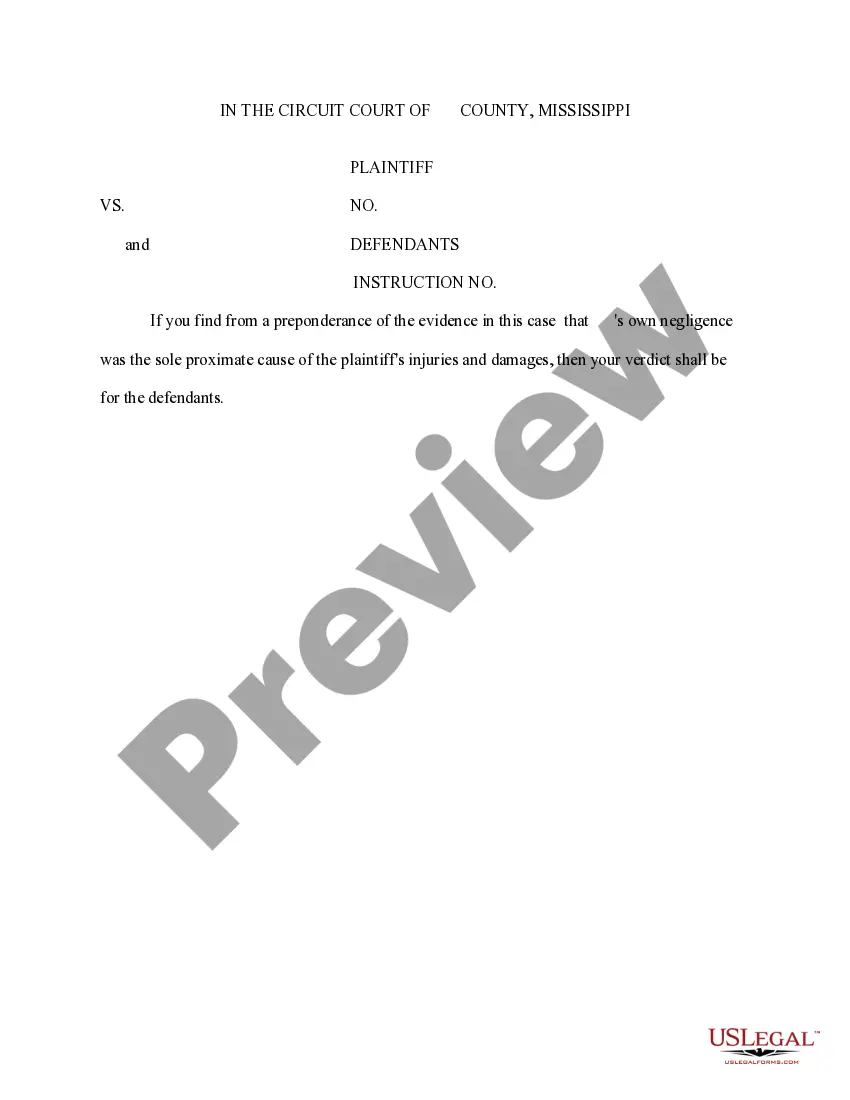
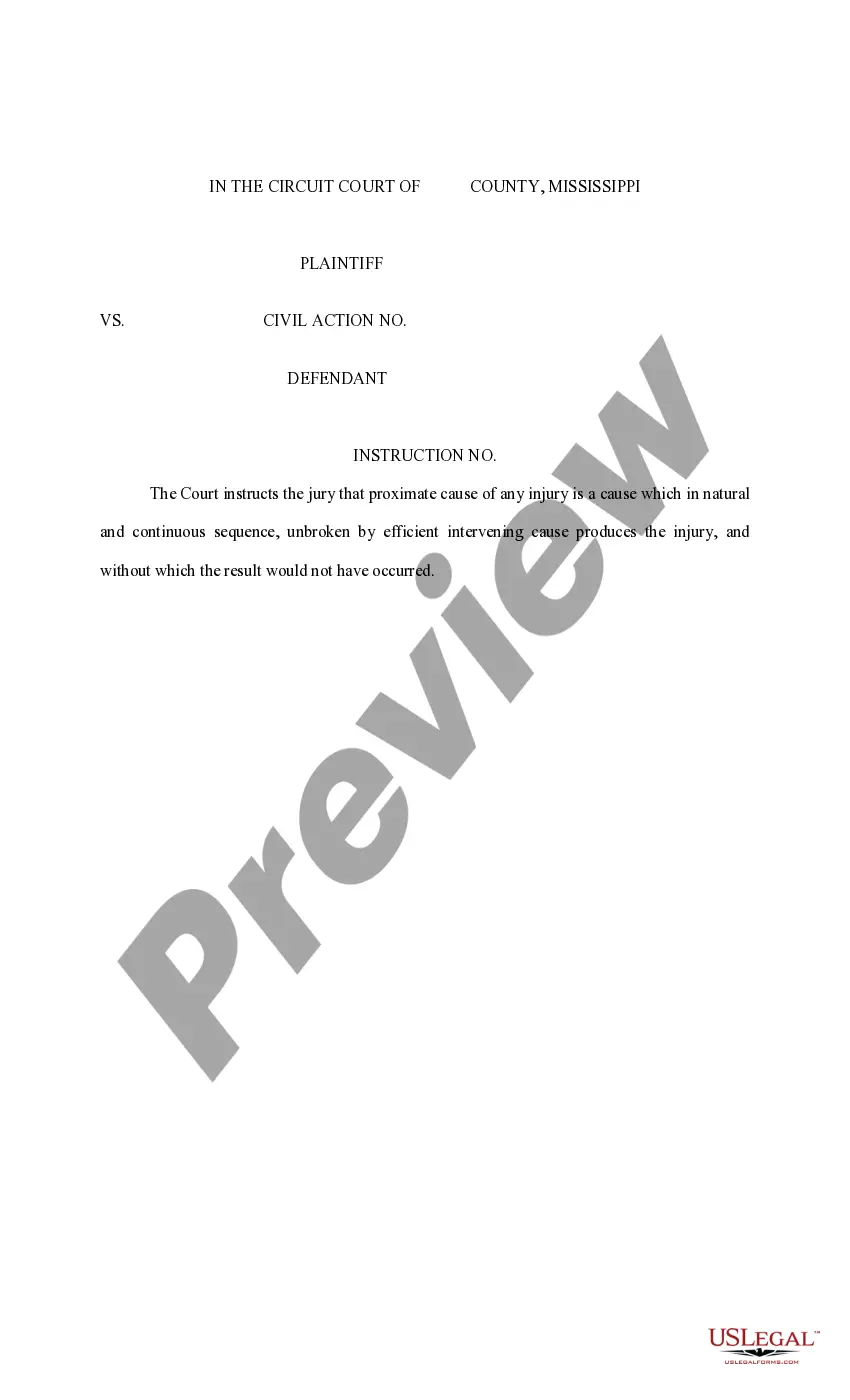
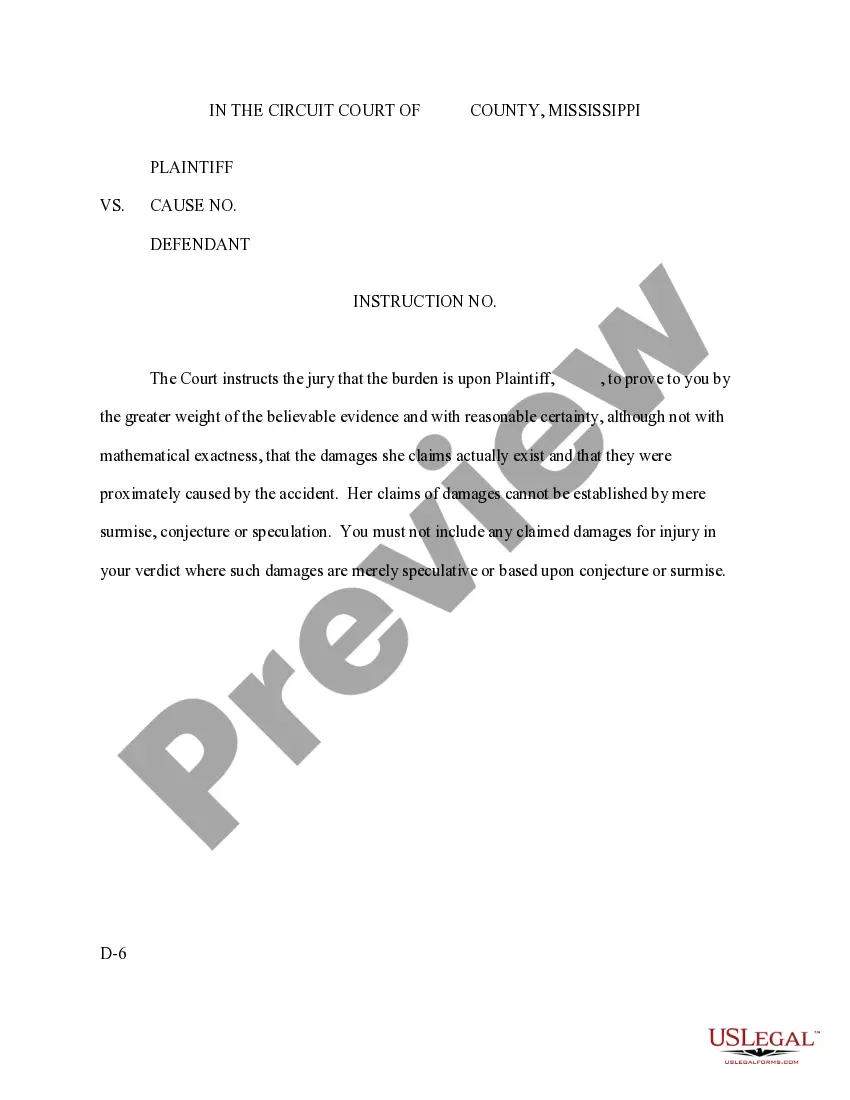
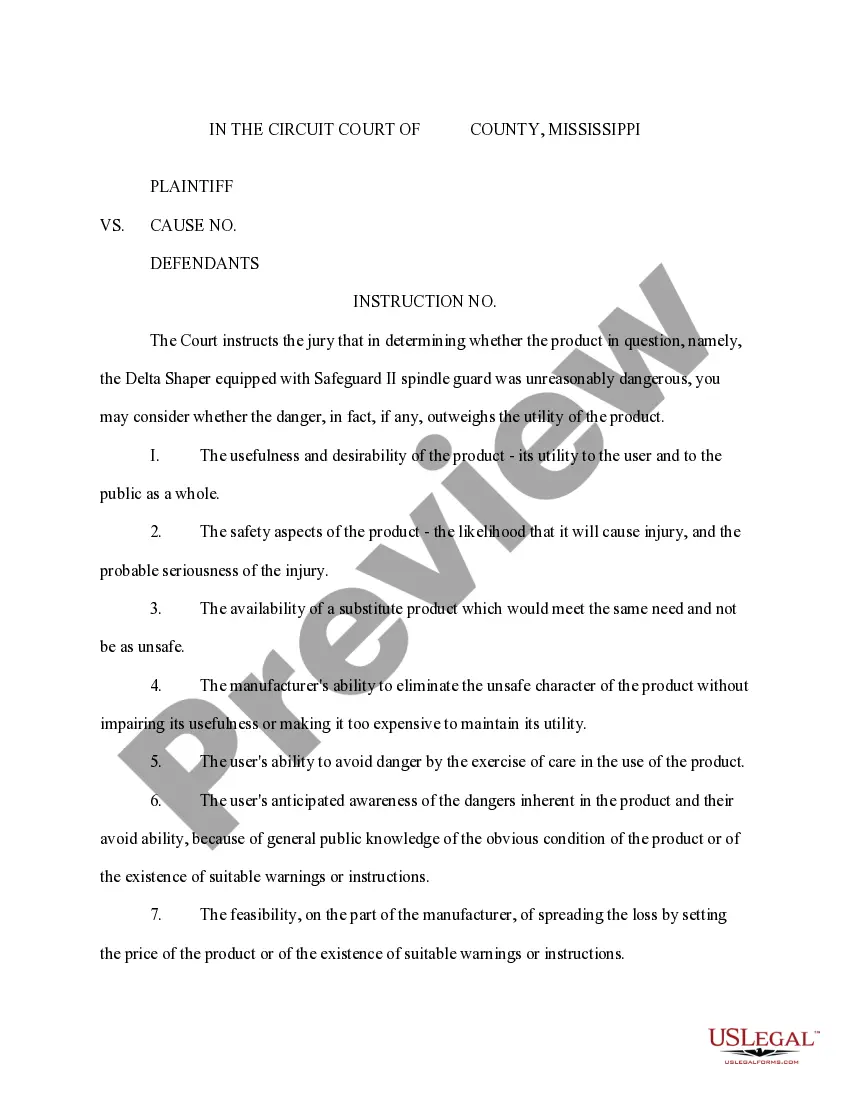
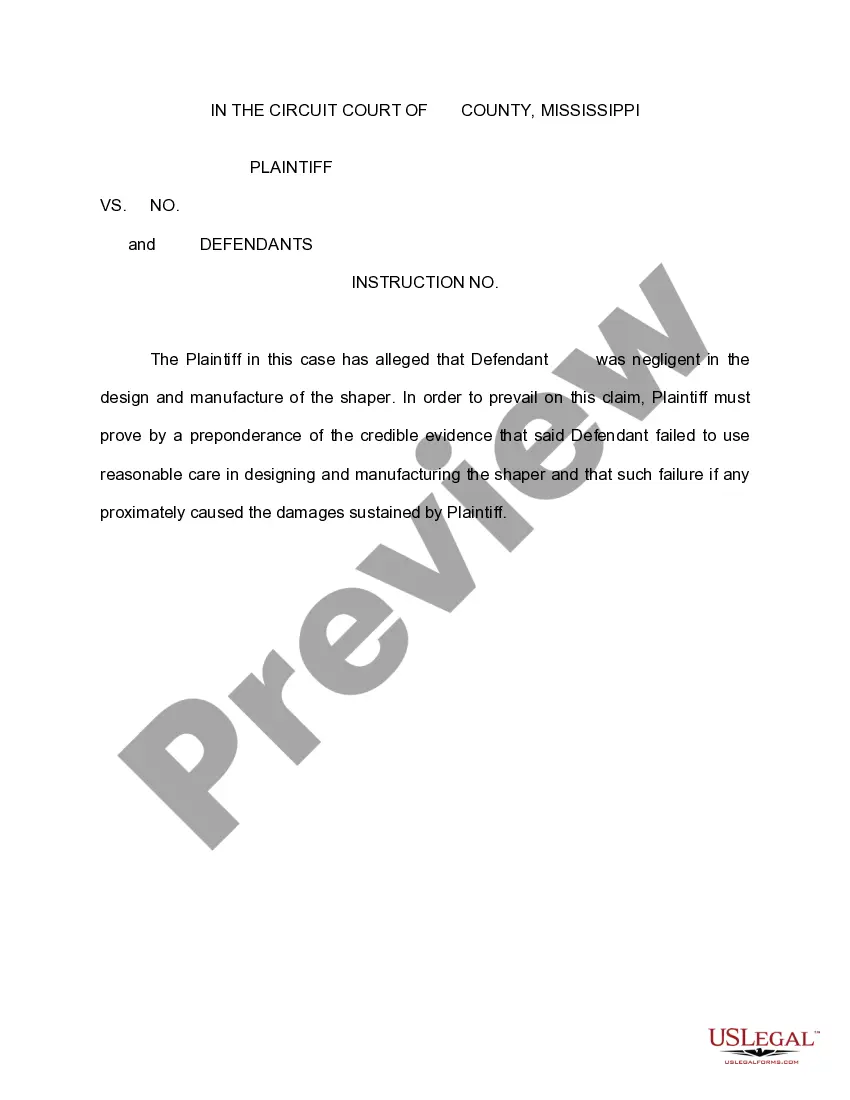
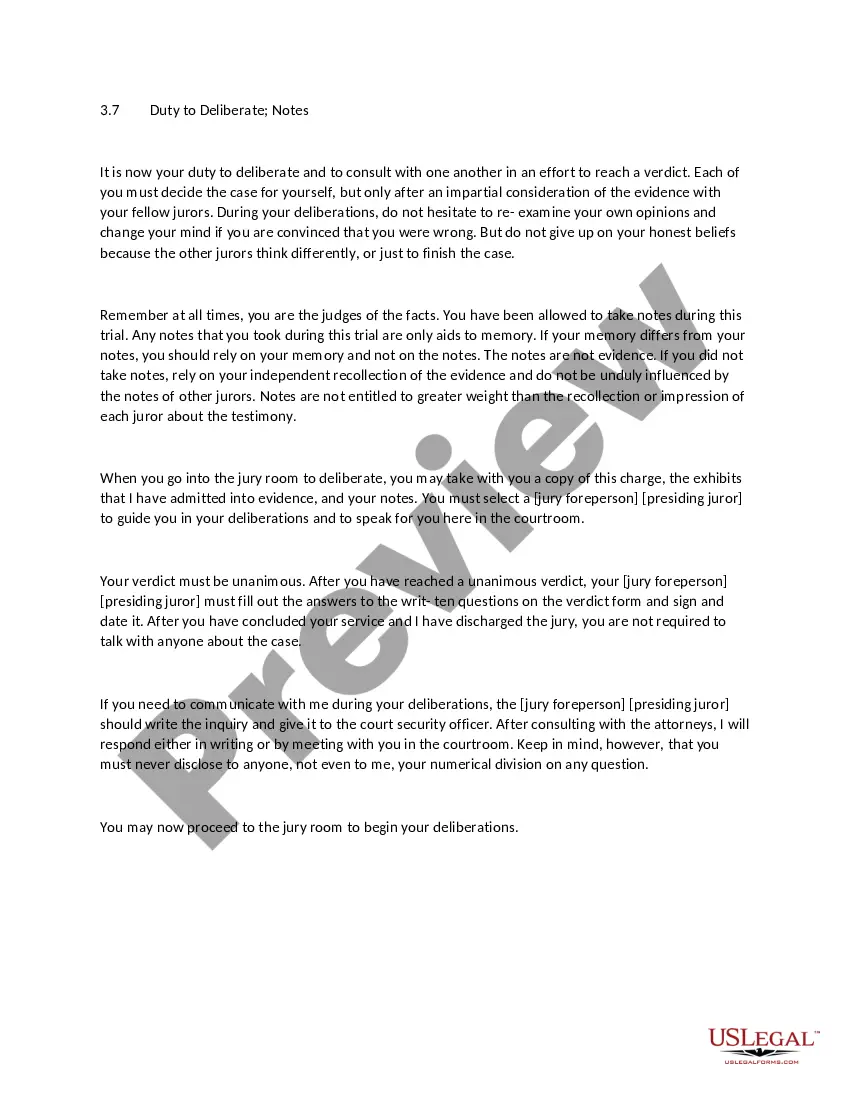
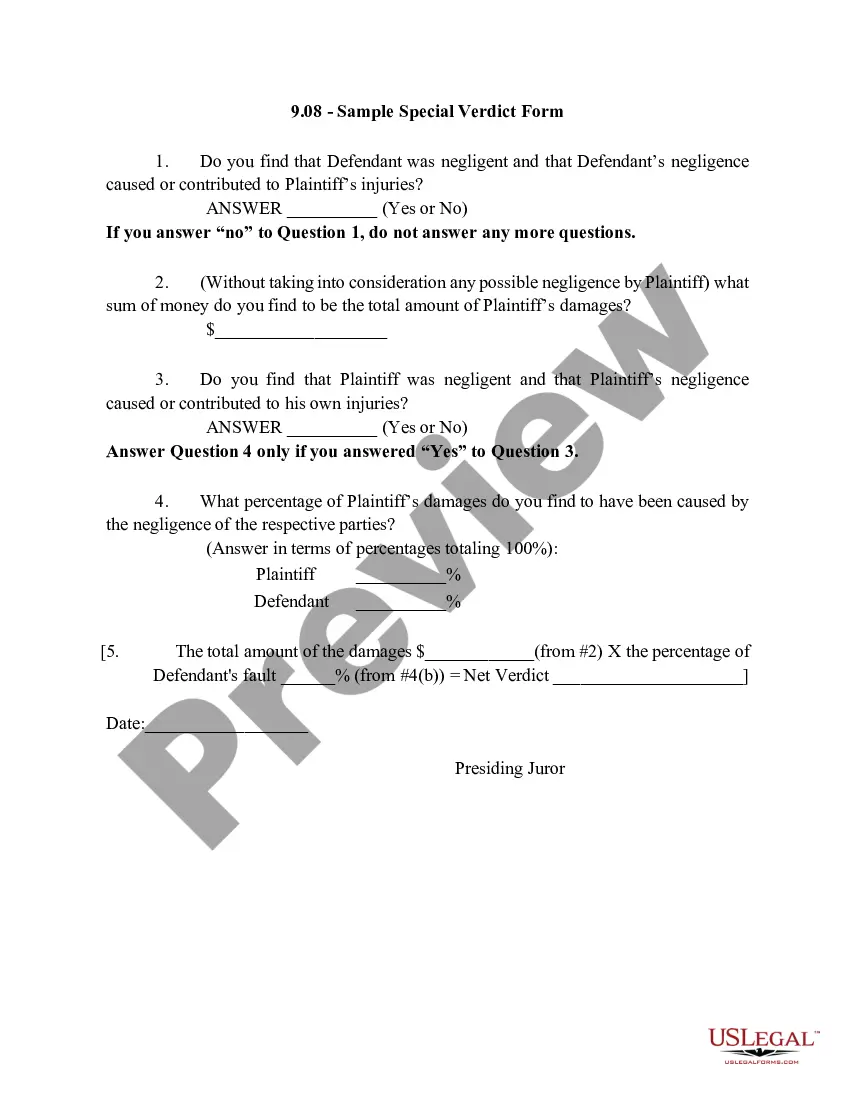
The Jury Instruction - Proximate Cause - Negligence is a specific legal document used in Mississippi court cases to guide jurors in understanding the concept of proximate cause in negligence claims. This form outlines the circumstances under which a defendant's negligence may be deemed the sole cause of a plaintiff's injuries, influencing the jury's verdict. It is important for ensuring that jurors have a clear and accurate framework for making their decisions based on the presented evidence.
Form components explained
- Case title: Identifies the parties involved in the legal action.
- Instruction number: Specifies the unique identification for the jury instruction.
- Preponderance of evidence: Outlines the standard by which the jury must evaluate the evidence.
- Proximate cause clause: Defines the circumstances under which a defendant's negligence is linked to the plaintiff's injuries.
- Verdict direction: Provides guidance on how jurors should decide the case based on the findings.
When to use this form
This jury instruction form is used during negligence trials when it needs to be established whether a defendant's actions were the direct cause of the plaintiff's injuries. It is applicable in cases involving personal injury, property damage, or other civil matters where negligence is claimed. This helps jurors understand their responsibilities in determining liability based on the facts presented at trial.
Who this form is for
- Judges seeking to provide clear guidance to jurors during a negligence trial.
- Legal professionals representing clients in negligence cases.
- Law students and educators studying jury instructions and negligence law.
- Parties involved in litigation who need clarity on jury instructions related to proximate cause.
Steps to complete this form
- Identify the parties involved in the case and fill in the case title header.
- Enter the instruction number as provided on the form.
- Articulate the preponderance of evidence standard clearly in the case context.
- Specify the clause that defines proximate cause as it applies to the defendant's actions.
- Include instructions on how jurors should approach their verdict based on the evidence presented.
Does this form need to be notarized?
In most cases, this form does not require notarization. However, some jurisdictions or signing circumstances might. US Legal Forms offers online notarization powered by Notarize, accessible 24/7 for a quick, remote process.
Get your form ready online
Our built-in tools help you complete, sign, share, and store your documents in one place.
Make edits, fill in missing information, and update formatting in US Legal Forms—just like you would in MS Word.
Download a copy, print it, send it by email, or mail it via USPS—whatever works best for your next step.
Sign and collect signatures with our SignNow integration. Send to multiple recipients, set reminders, and more. Go Premium to unlock E-Sign.
If this form requires notarization, complete it online through a secure video call—no need to meet a notary in person or wait for an appointment.
We protect your documents and personal data by following strict security and privacy standards.

Make edits, fill in missing information, and update formatting in US Legal Forms—just like you would in MS Word.

Download a copy, print it, send it by email, or mail it via USPS—whatever works best for your next step.

Sign and collect signatures with our SignNow integration. Send to multiple recipients, set reminders, and more. Go Premium to unlock E-Sign.

If this form requires notarization, complete it online through a secure video call—no need to meet a notary in person or wait for an appointment.

We protect your documents and personal data by following strict security and privacy standards.
Typical mistakes to avoid
- Failing to align the instruction's language with current case law in Mississippi.
- Neglecting to clarify the standard of proof required for the jury.
- Overcomplicating the language, making it difficult for jurors to understand.
- Inadequately specifying how the proximate cause relates to the evidence presented.
Why use this form online
- Convenience of immediate access to a legally relevant jury instruction.
- Editability allows for customization based on specific case details.
- Reliability from professionally drafted language reflecting legal standards.
Looking for another form?

Form popularity
FAQ
Proximate cause is a key principle of insurance and is concerned with how the loss or damage actually occurred and whether it is indeed as a result of an insured peril.The important point to note is that the proximate cause is the nearest cause and not a remote cause.
For example, if a texting driver strikes a motorcyclist, the driver's actions caused the accident. Proximate cause, however, has to be determined by law as the primary cause of injury. So, without the proximate cause the injury would not exist.
Among the elements that the plaintiff suing for negligence will have to prove is that the defendant's violation of a duty was the actual and proximate cause of his or her injuries.Proximate cause means legal cause, or one that the law recognizes as the primary cause of the injury.
The actions of the person (or entity) who owes you a duty must be sufficiently related to your injuries such that the law considers the person to have caused your injuries in a legal sense. If someone's actions are a remote cause of your injury, they are not a proximate cause.
There are two components of proximate cause: actual cause (which answers the question of who was the cause in fact of the harm or other loss) and legal cause (which answers the question of whether the harm or other loss was the foreseeable consequence of the original risk).
In law, a proximate cause is an event sufficiently related to an injury that the courts deem the event to be the cause of that injury.Cause-in-fact is determined by the "but for" test: But for the action, the result would not have happened.
There are two types of causation in the law: cause-in-fact, and proximate (or legal) cause. Cause-in-fact is determined by the "but for" test: But for the action, the result would not have happened.For an act to be deemed to cause a harm, both tests must be met; proximate cause is a legal limitation on cause-in-fact.
Causation is generally a question of fact for the jury. (Hoyem v.It is also a question of fact when the issue is whether the defendant's negligence was a substantial factor in causing injuries inflicted during a criminal attack by a third party.
The question of proximate cause in most tort cases is to be resolved by the jury. The jury is the finder of fact. The jury is called upon to decide whether the negligent conduct was a near cause. If the jury answers that question with a Yes then the plaintiff wins.